As of press time, Ethereum (ETH) is trading around $2,452, up 2.69% on the daily chart, extending its weekly gain of 29%. After a surge to $2,546 at one point, the Ethereum price has retraced and now appears to be in a consolidation phase. The price of the altcoin has been fluctuating between $2,400 and $2,500.
Amidst these market changes, some individuals and institutions have positioned themselves strategically, while others have opted to cash out.
Abraxas Capital increases its Ethereum holdings by $173 million.
Abraxas Capital has been actively shorting the market. Despite the recent price surge, the firm seems to anticipate another round of correction.
Consequently, the firm has established a short position of $783 million on the Hyperliquid platform. However, given the risks associated with such high leverage, the firm has turned to the spot market for hedging.
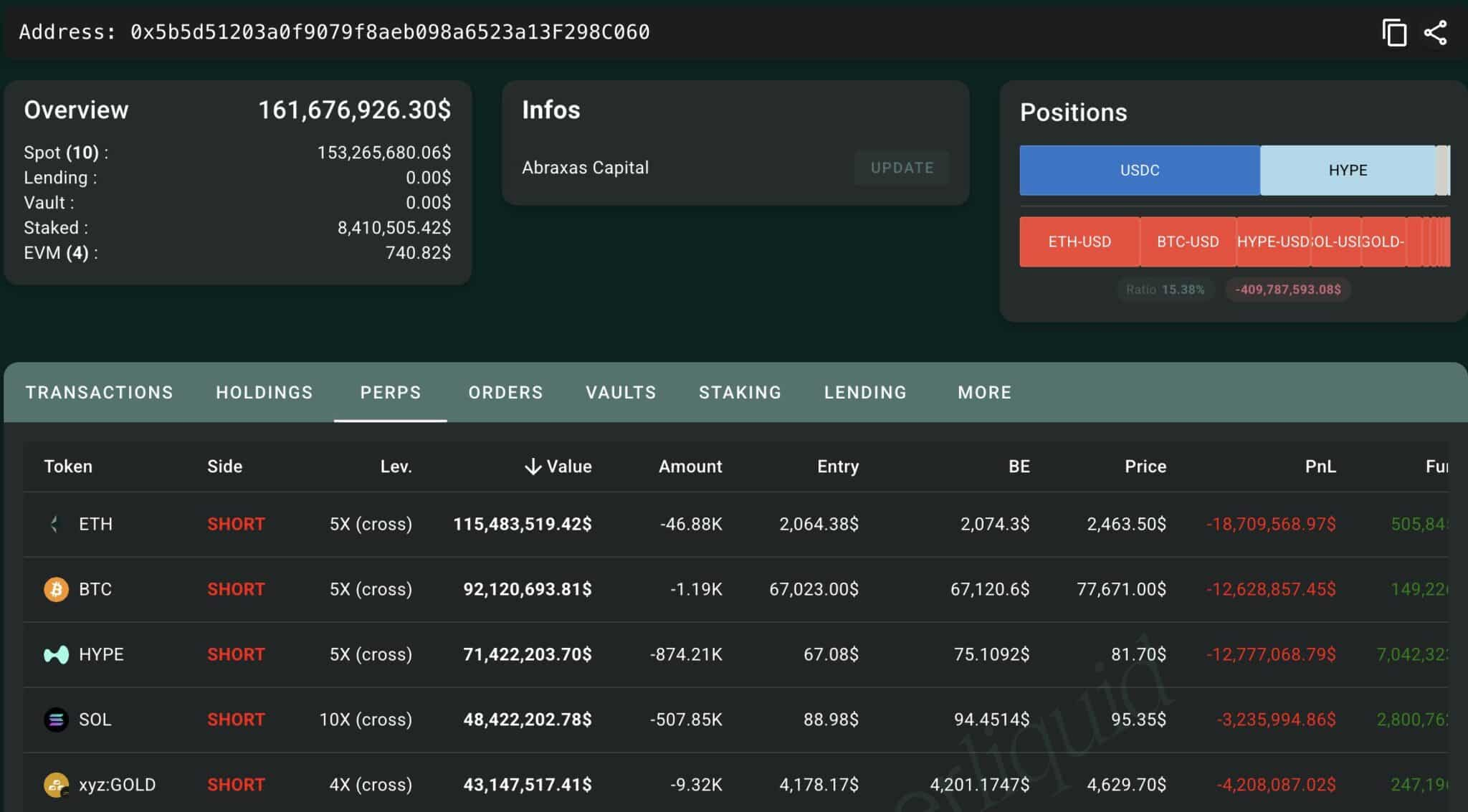
According to Lookonchain data, Abraxas Capital purchased 73,872 ETH worth $173.17 million from Binance over the past four days.
This move indicates a complex risk management strategy, hoping one side can absorb the risk from the other. Typically, such a large spot purchase would increase demand, thereby alleviating market pressure.
Why is Ethereum still under pressure?
Interestingly, as the market rebounded, investors who were previously at a loss significantly increased their selling.
For example, Binance's net flow has remained positive for five consecutive days. The net flow for all exchanges has also remained positive for two consecutive days, currently standing at around 2300.
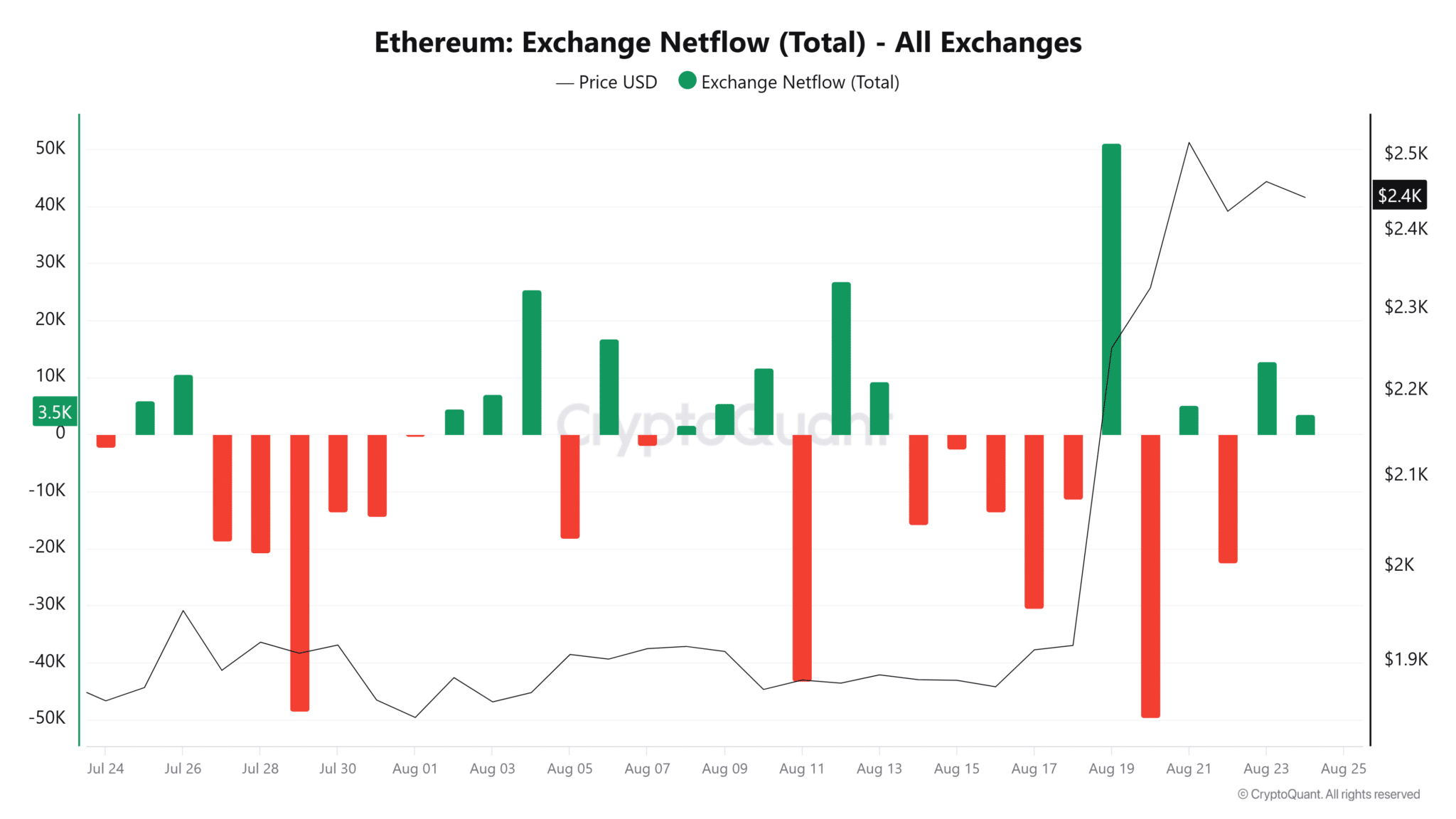
Sustained positive net flow suggests traders are predominantly selling. This market behavior typically weakens market structure and leads to unfavorable price action.
The continuous inflow of funds to exchanges has significantly increased the supply available for immediate sale. In fact, the Exchange Supply Ratio (ESR) for Binance has climbed to a monthly high of 0.0328.
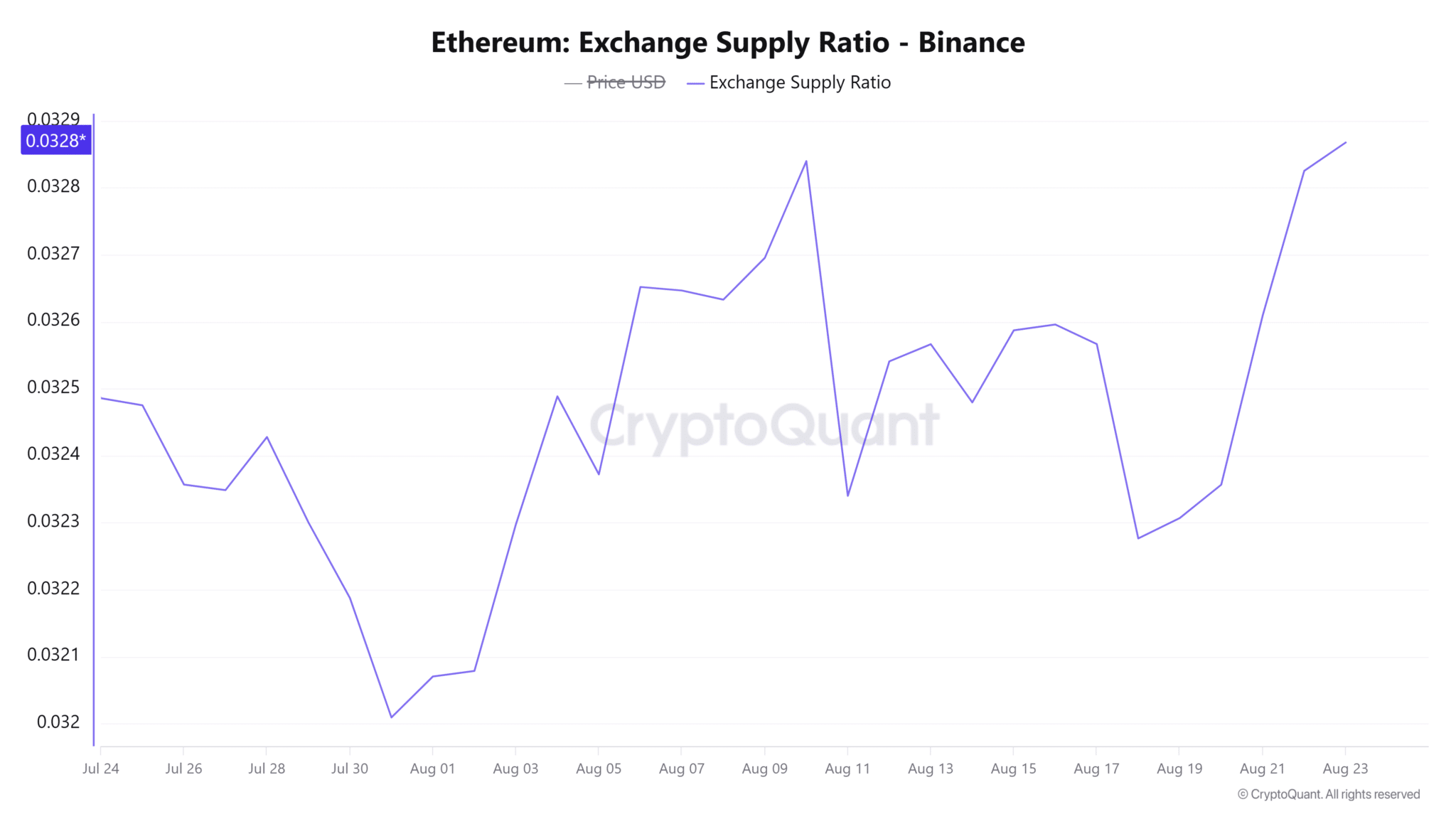
The rise in ESR confirms that the number of traders currently selling ETH exceeds the number of buyers. In this context, Ethereum's supply remains tight.
What's next for Ethereum?
Although sellers remain active on exchanges, their pressure does not seem overwhelming. Demand from large buyers like Abraxas Capital is absorbing the pressure, keeping the market in a state of equilibrium.
The tension between Ethereum bulls and bears explains the recent sideways movement. Beyond that, the market structure leans bullish, with the uptrend remaining strong.
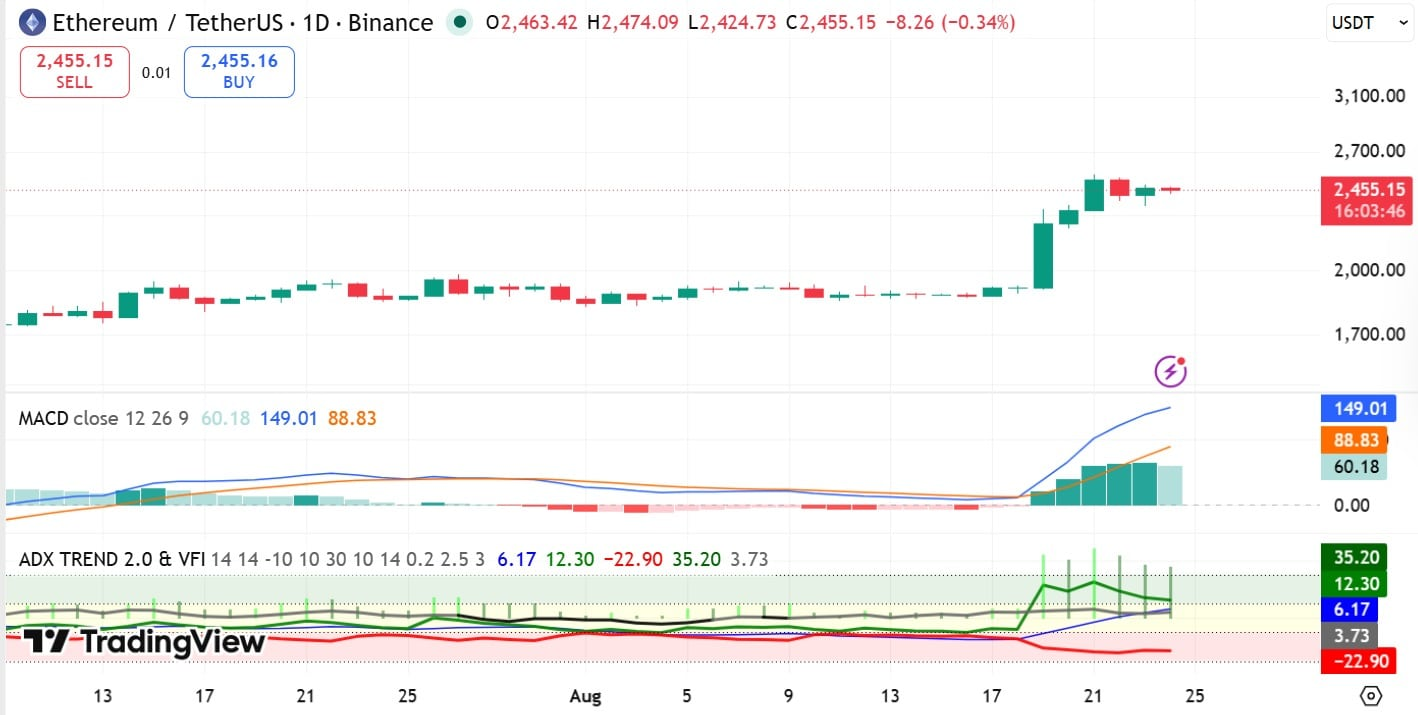
The MACD indicator maintains its upward trend, reaching the highest level since August 2025. With the MACD value at 149, it indicates strong upward momentum.
The ADX trend indicator confirms this momentum, with the +DI around 12, while the D- is at -22, and the contraction/expansion is at 35.
These indicators suggest that Ethereum is likely to break out of its current range, with a target price of $2,800. However, if selling persists, Ethereum might fail to hold the $2,400 level and could potentially drop to $2,200.
Final Summary
Over the past 4 days, Abraxas Capital purchased 73,872 ETH worth $173.17 million from Binance.
Ethereum currently faces significant pressure, but the trend is bullish and likely to continue, with the next target price at $2,800.