Debate: Korean Workers Fear Unemployment, While Musk Envisions a Society 'Without Work'?

marsbitPublicado em 2026-08-03Última atualização em 2026-08-03

Resumo

While South Korean auto workers fear job losses from robotics, Elon Musk envisions a future where AI and robots render most work optional. This article explores the growing tension between immediate anxieties over automation and long-term visions of a post-work society. The piece begins with recent strikes at Hyundai's Korean plants, where unions, amid standard wage negotiations, also sought job guarantees against advancing robotics—specifically mentioning Boston Dynamics' Atlas. This reflects how anxiety about technological displacement is emerging even before robots are fully capable of replacing skilled labor on assembly lines. The author argues that while current robotics still struggle with the nuanced, experiential knowledge of veteran workers, the *perception* of imminent replacement is fueling social conflict prematurely. This modern "Luddite" sentiment is compared to the 19th-century English textile workers who smashed machines. Historically, Luddites weren't simply anti-technology; they were protesting the rapid devaluation of their skills and the unequal distribution of productivity gains. Similarly, today's workers ask who will bear the cost of transition and share in the new wealth created by machines. In contrast, figures like Elon Musk propose an optimistic endpoint: with AI and robotics driving extreme abundance, the link between work and survival could break. He suggests concepts like "Universal High Income" could allow society to share the technological b...

Over 200 years ago, British textile workers took up hammers to smash machines. More than two centuries later, similar sentiments have emerged in a South Korean automobile factory.

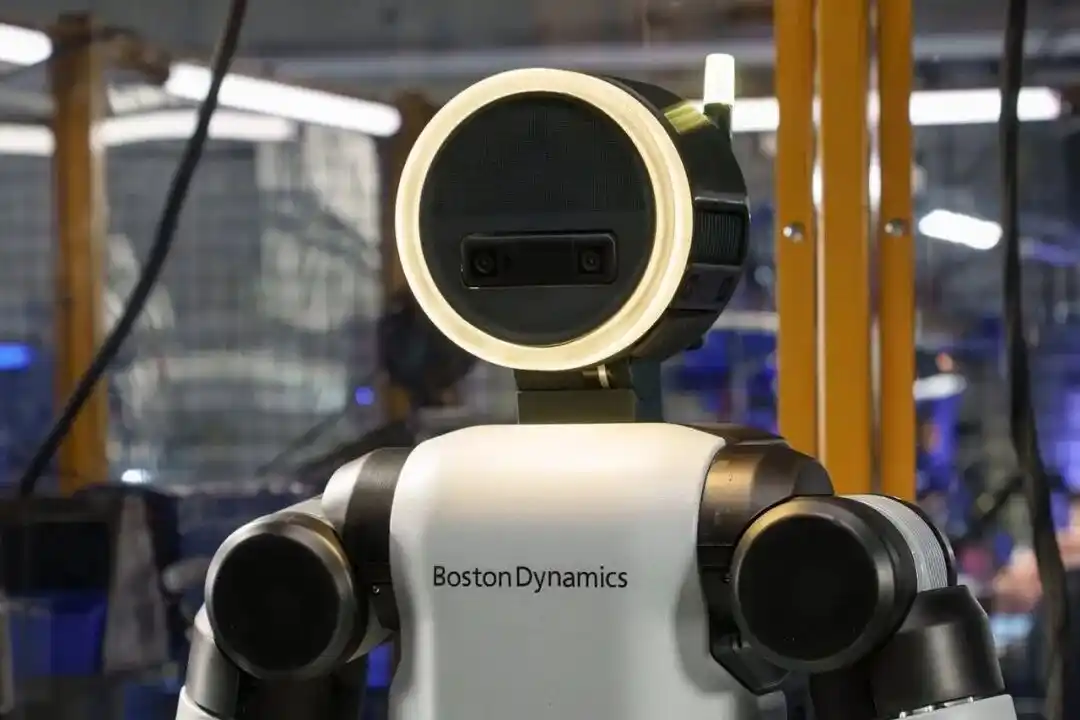
In July of this year, the union at Hyundai Motor's South Korean operations launched a series of partial strikes. On the surface, this appears to be a familiar labor-management negotiation: wage increases, performance bonuses, and retirement age were all among the union's demands. However, this year, an issue with a distinctly contemporary feel was added—job security in the age of AI and robotics. As early as the strike vote stage in June, the Hyundai Motor union proposed seeking employment guarantees concerning advanced robotics technology. Korean media subsequently linked this demand to Hyundai Motor Group's planned introduction of Boston Dynamics' Atlas humanoid robots. Ultimately, over 86% of the approximately 40,000 union members voted in favor of striking.

Therefore, simply summarizing this incident as "Hyundai workers protesting robots taking their jobs" is not entirely accurate. The actual strikes in July were primarily triggered by the breakdown of negotiations over wages and other labor-management issues; robots were not the sole or even the most direct catalyst for this round of strikes. However, another fact is equally noteworthy: robots have officially entered the union's negotiation purview. Even before they have been deployed on a large scale on Hyundai's production lines, they have already prompted tens of thousands of industrial workers to start contemplating a question that once seemed quite distant—what happens to people?

This scene easily evokes the "Luddite movement" during the British Industrial Revolution two centuries ago. But what is truly worth discussing today may no longer be "whether humans are about to start smashing machines again," but rather a more subtle misalignment: robots may still be a long way from truly replacing large numbers of skilled industrial workers, yet social conflicts surrounding robot replacement have already emerged prematurely.

And just as this anxiety appears early, a recent interview with Elon Musk coincidentally presents an almost diametrically opposite vision of the future. In a latest interview published by The Economist, Musk once again discussed the long-term outcome of AI and robotics: digital AI will take on an increasing amount of cognitive labor, while robots become the physical-world execution end for AI. Following this trajectory, eventually, almost all necessary work could potentially be performed by machines.

While Hyundai Motor workers worry about Atlas taking away some jobs on the production line, Musk imagines a day when the vast majority of work no longer requires human completion.

The real point of divergence thus becomes clear: the issue may not only be whether robots will replace labor, but also how humanity understands "losing work." Today's society is still built on a solid chain—work generates income, income supports consumption and life, therefore losing work inherently means losing economic security.

What Musk describes is a different scenario: when AI and robots push the productive capacity for goods and services to a sufficiently high level, society enters a state of "extreme abundance," where the cost of supplying food, housing, transportation, healthcare, and a multitude of services continuously declines. People no longer necessarily have to sell their labor to obtain means of subsistence, and work gradually transforms from a means of survival into a personal choice.

This is also the context for his repeated proposals in recent years for "Universal High Income." AI and robots create immense productivity, with the technological dividend ultimately translating into universal prosperity. Robots "taking jobs" might even become a prerequisite for humanity to break free from the necessity of "having to work to live."
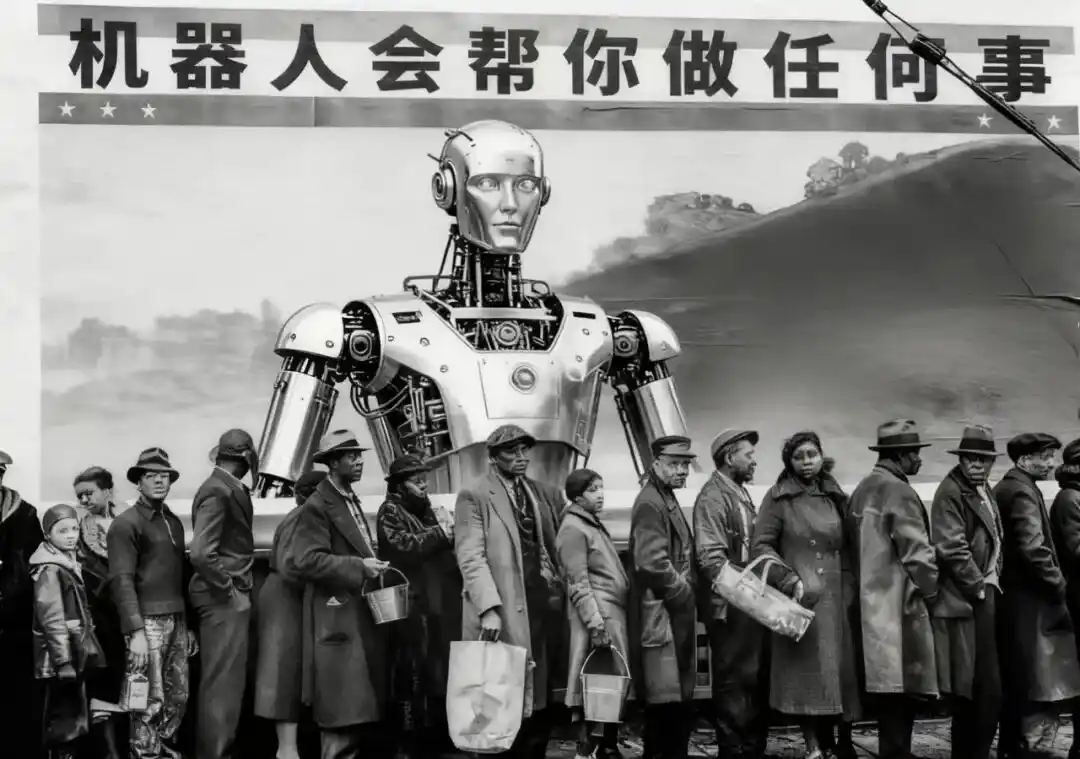
Thus, Luddism sees the unemployment risk behind machines, while Musk sees the potential for freedom behind machines; Hyundai Motor workers hope to protect their jobs before robots enter the factory, while Musk anticipates robots ultimately eliminating the very necessity of "having to work." These two seemingly contradictory logics also sharpen the same question: as machines create increasing wealth, who ultimately shares in this wealth?

Robots Aren't Skilled Workers Yet, But Unemployment Anxiety Has Arrived First

The concerns of Hyundai Motor workers are not hard to understand. The Hyundai Motor Group has publicly displayed an aggressive robotics strategy, and Boston Dynamics' Atlas is also continuously progressing from lab demonstrations towards industrial operations. Against this industrial backdrop, an automobile worker seeing Atlas lifting, walking, and handling components, and then seeing companies continuously emphasize AI, smart manufacturing, and automation, will naturally ask: five years from now, will the person standing next to this production line still be me?

Social media has further compressed this anxiety into a highly transmissible logical chain: companies buy robots, robots enter factories, human workers are laid off. An advance in a robot's capability, a procurement plan, or an experimental video can quickly be combined into a story of "a certain profession's countdown." Long-term technological trends are folded into an imminent reality, so the imagination of robot replacement outpaces the robots themselves.

The problem is, real industrial production is far from that simple. Automobile manufacturing is already one of the most automated industries globally. Highly standardized processes like welding, painting, stamping, and material handling have been covered by industrial robots for decades. What humanoid robots today truly need to conquer are precisely the areas traditional automation has never fully resolved: flexible assembly, harness operation, cross-station mobility, temporary anomaly handling, and the vast array of subtle and complex variations between different parts and working conditions.

The most valuable aspect of a skilled industrial worker is far from merely having two arms. How to install a part when it has slight dimensional variation, what a change in feel during tightening signifies, where to check first when a machine makes a certain sound, how to compensate in the next step after a slight deviation in the previous process—these experiences formed over years constitute the immense tacit knowledge in industrial production. They are rarely fully written into SOPs, yet they determine whether a production line can truly operate stably.

This is precisely one of the hardest barriers for current robots to cross. Being able to pick up a part in a demo environment is a completely different engineering problem from being able to perform the same action stably thousands of times over eight consecutive hours; being able to complete an assembly once does not mean being able to meet the yield rate, cycle time, safety requirements, and costly downtime risks demanded by a real production line. For many robotics companies, the journey from "can do" to "can do stably long-term" remains a lengthy path to industrialization.

Therefore, from the perspective of current technological reality, the notion that "tens of thousands of automobile workers will immediately be replaced by humanoid robots" is clearly an oversimplification. A more realistic situation today might be this: the long-term possibilities of technology are being prematurely realized in public discourse, and people are beginning to feel uneasy about that future even before robots truly possess comprehensive replacement capabilities.

But this does not mean the anxieties of the Hyundai Motor workers in South Korea are meaningless. On the contrary, when a technology has the potential to redefine production relations, the fermentation of social sentiment often precedes the technology's large-scale maturity. This prematurely emerging anxiety may not be accurately predicting tomorrow, but it likely already poses a question that will eventually need to be answered seriously.

Re-understanding Luddism: What They Feared Was Never Just a Machine

"Luddism" is often used as a slightly pejorative term today. People who reject new technology are labeled Luddites; those who express concerns about AI or robots are also easily categorized as conservative or anti-technology. Over time, Luddism has almost become synonymous with "technological backlash."

But the historical Luddite movement was far more complex than this label suggests. During the rapid mechanization of the British textile industry in the early 19th century, many participants in the Luddite movement were themselves skilled artisans with years of training. Machines did not bring only higher production efficiency; they simultaneously disrupted existing skill systems, wage structures, and labor relations. Once-scarce craftsmanship could rapidly depreciate, low-skilled laborers could enter production with the help of machines, the bargaining power of skilled workers declined, and the livelihoods of some were directly impacted. Machines ultimately became the most tangible object of their anger.
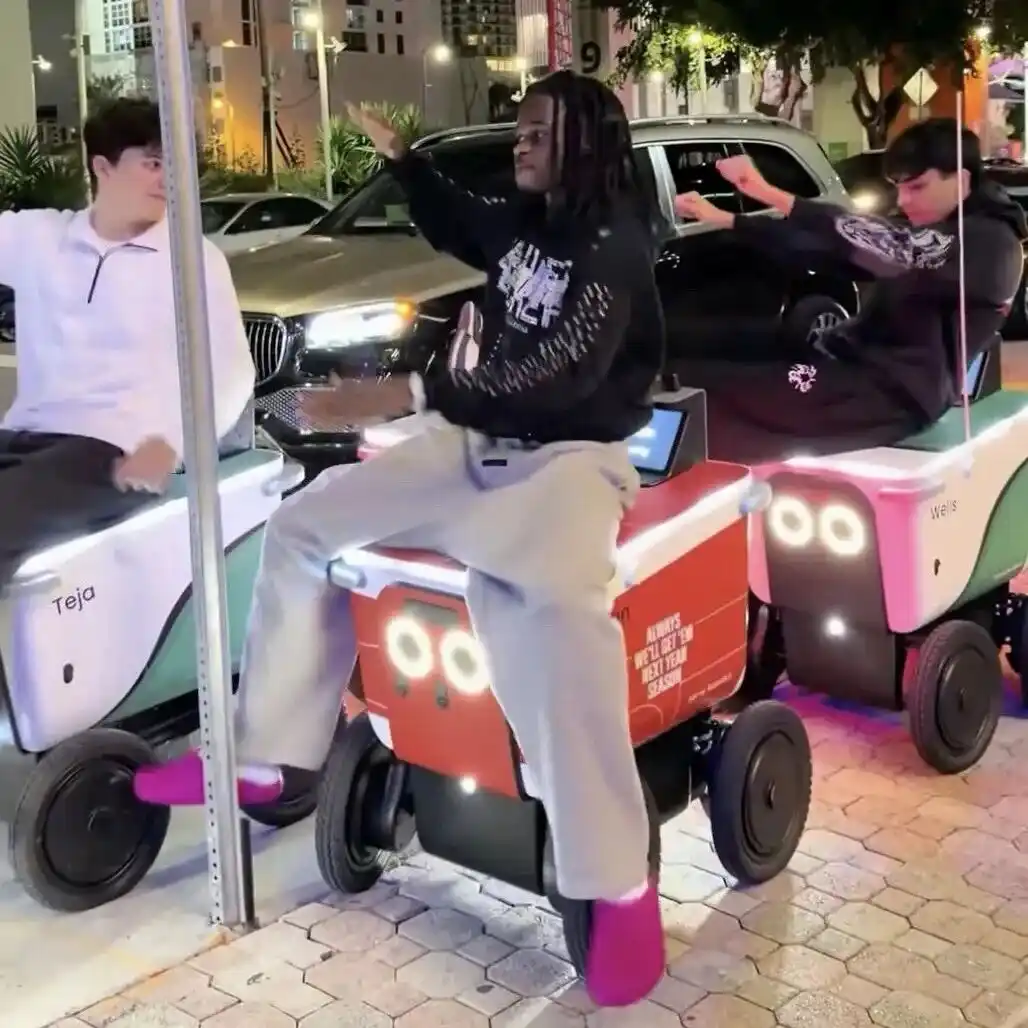
Looking back more than 200 years later, we of course know that machines did not destroy human society. The Industrial Revolution ultimately created an economic scale far larger than the handicraft era and gave rise to many professions that did not exist before. Therefore, judging the Luddites from today's perspective seems easy: they overestimated the threat posed by machines and underestimated the capacity of technological progress to create new opportunities.

Yet this "hindsight correctness" overlooks a very important issue. Standing before a worker in 1811, he did not know how much the global economy would grow in 100 or even 200 years, nor did he know when new occupations would emerge. What he could feel was that his wages were falling, his skills were depreciating, and his next job was uncertain. The overall benefits brought by technological progress typically take a long time to diffuse, but the costs incurred by technological substitution can be concentrated on a specific group of people in a very short time.

Today's Hyundai Motor workers facing Atlas are essentially in a similar position. Robotics companies might tell them automation can improve efficiency, economists might explain that new technologies ultimately create new jobs, tech companies might depict a future where humans are freed from repetitive labor—these assertions may all hold true. But the questions workers truly care about are more concrete: when will my position disappear? How much will the skills I've accumulated over 20 years be worth in five years? Will part of the productivity gains the company achieves through robots become benefits for employees? If industrial transformation indeed incurs costs, why should those costs first fall upon those being replaced?

Therefore, understanding the re-emergence of Luddite sentiment in the robotics era as some people fearing new technology again is an overly simplistic and labeled view. Textile workers 200 years ago and automobile workers today are essentially asking the same question: after machines create greater efficiency, who ultimately shares in that efficiency?

The Hardest Part Is Never the Endgame, But How to Get There

What Musk describes is a society where "work becomes optional." According to his estimation, by around 2036, the productivity brought by AI and robots may already be so high that "money" itself becomes less important than it is today, and people will no longer necessarily have to work for survival; labor will become more of a choice.

Such an endgame is certainly attractive enough, but it carries an extremely important implicit condition: the immense productivity created by robots and the resulting material abundance it brings must ultimately be shareable by the entire society.

Some do not believe in this viewpoint. As the renowned scholar Zhang Xiaoyu states in "Technology and Civilization: Our Era and Future," "If slave laborers benefited from technological progress, it was only because the development of productivity brought about by technological progress turned past luxuries into today's mass consumer goods."

If machines belong to a few companies, computing power is concentrated in a few enterprises, data and capital are likewise concentrated in a few entities, and the goods and services created by robots are still distributed entirely dependent on the existing income system, then continuously increasing production efficiency will not automatically grant each individual more wealth.

After all, during the last wave of the internet boom, the term "techno-elite" had already become a label for Silicon Valley entrepreneurs.

This is also why Musk ultimately had to propose "Universal High Income." In a sense, he appears to stand at the other extreme of Luddism, yet still needs to answer the question posed by the Luddite movement two centuries ago—how should the wealth created by machines be distributed.

What is truly complex may not be the distant endgame Musk depicts. If one day robots can indeed perform the vast majority of necessary labor, society might already have formed new income systems, security frameworks, and social contracts matching that reality. The stage most prone to conflict is actually the intermediate phase leading to that future—the "painful transition period" many foresee—which is happening today.
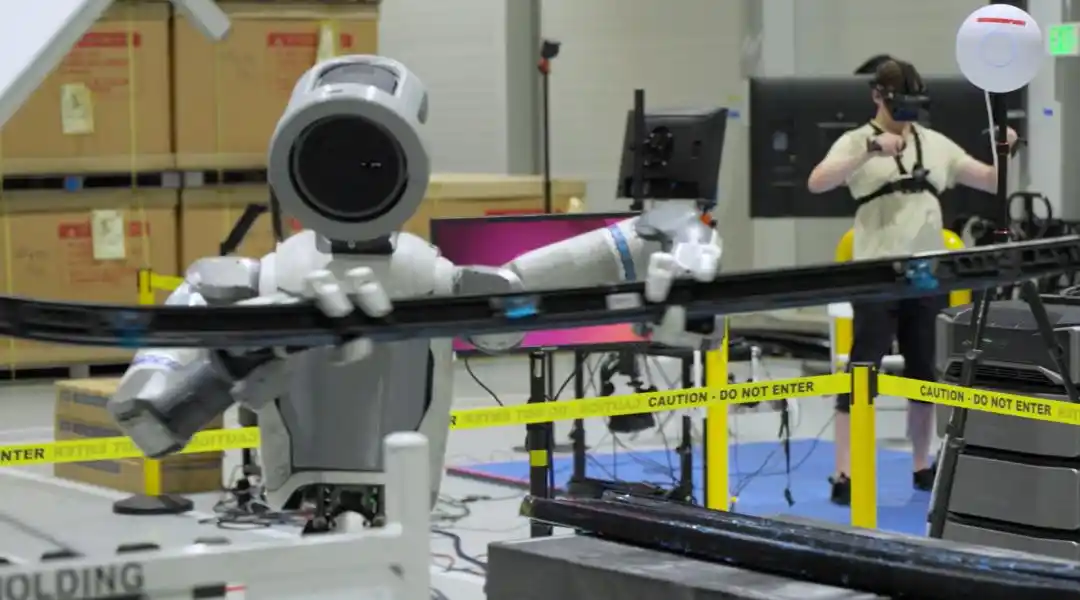
Robots won't suddenly jump from replacing 0% of jobs to replacing 100% in a single day. A more likely scenario is that they first replace 5%, then 10%; some highly standardized positions diminish first, certain skills begin to depreciate, some people become direct beneficiaries of the productivity红利 (dividend) through AI and robots, while others bear the costs of transition first. The worst-case scenario is that companies achieve higher profits, but retraining systems for workers are not yet mature; new jobs are emerging, but not necessarily in the places where people lost their old jobs.

Technological capabilities usually improve along a continuous curve, but social institutions do not automatically upgrade in sync with technology. This is why Michael Burry, the investor原型 (prototype) for "The Big Short," in response to Musk's views on AI, robots, and Universal High Income, left that impactful statement: "Before that happens, there will be a revolution."

Whether this statement is overly pessimistic is certainly debatable, but it at least accurately points out the process most easily glossed over in Musk-style futurism: how exactly do we navigate the several decades from today's society, which relies on labor for income, to that future society where work is optional?

The anxiety of Hyundai Motor workers occurs precisely at the very beginning of this long transitional path.

Wood Straightened by the Ink Line: Technology Also Needs Its Own "Rules and Frameworks"

Therefore, the "Luddism" reappearing in the robotics era need not be simply mocked. Smashing machines certainly cannot halt the industrial revolution; history has long proven that when a technology can continuously improve production efficiency and reduce costs, it is ultimately difficult to exclude from society through resistance. The same holds for today's humanoid robots; as long as costs continue to fall, reliability improves, and return on investment gradually becomes viable, their entry into factories, warehouses, commercial services, and even household life will become a long-term industrial trend.

But acknowledging the irreversibility of the trend does not mean society can only sit back and let technology determine everything. The industrial civilization of the past two centuries has never consisted solely of advancements in engines, electricity, computers, and robots. The eight-hour workday, minimum wage, occupational safety, labor contracts, social insurance, product liability, and various industrial standards are also part of the institutional legacy created by the Industrial Revolution. Many rules were initially seen as restrictions on efficiency but ultimately formed the foundation upon which technology could enter society on a large scale.
The development measures, management measures, and industry guidelines increasingly emerging today around artificial intelligence, robotics, data, security, and ethics are precisely part of the process of rediscovering boundaries in this new round of technological revolution. As robots truly enter production and daily life, these rules will become increasingly concrete: what kind of labor-management consultation should precede robots entering production lines, how should productivity gains from automation be distributed, who bears the retraining costs for those displaced by technological substitution, how is liability determined after a robot causes a safety incident, which high-risk scenarios must retain human-in-the-loop—these questions will ultimately become part of robot industrialization.

They may not seem as exciting as robots running, doing backflips, or completing a complex operation, but they are likely to determine whether robots can truly pass through the final gate between technological demonstration and industrial application.

"Wood is straightened by the ink line; metal is sharpened on the whetstone." The ink line may seem to restrict the direction of the wood, yet it also allows it to ultimately become a pillar. Norms are similar for technology. Genuinely mature technological optimism does not require pretending that technology creates no problems. The more a society believes robots can ultimately create immense productivity, the more it should place discussions about benefit distribution, employment transition, safety liability, and human dignity on the table for early debate, before that productivity is released on a massive scale.

So perhaps the anxiety of the Hyundai Motor workers in South Korea has indeed arrived somewhat early. Today's humanoid robots are still a considerable engineering distance away from becoming a truly reliable automobile worker capable of long-term substitution for a skilled human worker. But discussions about how society should face them once they truly enter factories are not early at all.

They should perhaps start even earlier.

This article is from the WeChat public account "AI Wu Zao," author: Peng Kunfang

Criptomoedas em alta

Perguntas relacionadas

QWhat is the main conflict highlighted in the article between Korean auto workers and Elon Musk's vision?

AThe article highlights a fundamental conflict between immediate anxiety and long-term optimism regarding technological disruption. Korean auto workers at Hyundai are anxious about robots potentially taking their jobs in the near future, seeking employment guarantees. In contrast, Elon Musk envisions a distant future where AI and robots create such material abundance that work becomes optional, necessitating concepts like 'Universal High Income.'

QWhy does the article argue that comparing the Hyundai workers' concerns to 'Luddism' is an oversimplification?

AThe article argues it's an oversimplification because the original Luddites and modern workers are not merely 'anti-technology.' Their core concern is the same: who benefits from the increased productivity created by machines? They fear that the costs of technological transition (job loss, skill devaluation) will be borne by workers, while the profits and efficiency gains are captured by capital owners, without a fair redistribution mechanism.

QWhat key technical challenge does the article identify for humanoid robots like Boston Dynamics' Atlas to fully replace skilled auto workers?

AThe key challenge is mastering the vast amount of 'tacit knowledge' possessed by skilled workers. This includes handling part tolerances, interpreting sensory feedback (sound, touch) during assembly, compensating for variations, and managing unforeseen anomalies. Moving from a one-time demonstration to performing these complex, judgment-based tasks reliably for thousands of cycles under real production pressure and safety constraints remains a significant engineering hurdle.

QAccording to the article, what is the 'most difficult' part of reaching Elon Musk's vision of a post-work society?

AThe most difficult part is the transitional period or 'growing pains.' The article states that the hardest phase is not the distant endpoint where work is optional, but the decades-long middle stage where robots incrementally replace 5%, then 10% of jobs. Conflict may arise if social institutions (retraining, income support, new labor contracts) fail to evolve synchronously with technological capabilities, leaving displaced workers to bear the costs while benefits are concentrated.

QWhat historical parallel does the article draw to suggest that regulations and social frameworks are necessary for the robotics revolution?

AThe article draws a parallel to the Industrial Revolution, which produced not just engines and machines but also crucial social and institutional frameworks like the eight-hour workday, minimum wage, workplace safety standards, and social insurance. Similarly, for robots to be widely integrated, society needs to proactively establish rules for fair benefit sharing, retraining responsibilities, safety liability, and ethical deployment, forming the necessary 'guardrails' for sustainable technological adoption.

Leituras Relacionadas

Once-Popular Web3 Enters Wave of Layoffs

The once-hot Web3 industry is experiencing a severe wave of layoffs. While many companies attribute job cuts to AI-driven restructuring, the primary reason is often financial pressure. The Web3 sector, at the intersection of tech and finance, has been hit particularly hard. Employees at major cryptocurrency exchanges report sudden, impersonal layoffs—often with system access revoked overnight—and minimal or no severance. Common tactics include setting impossible performance targets or terminating employees for minor policy violations. The working atmosphere has become toxic, marked by intense monitoring, excessive meetings, and management obsessed with control and internal politics rather than product innovation. The industry's core business model is collapsing. Exchange revenue from trading fees and listing charges has plummeted due to a decline in quality projects and retail investor exodus. Events like the massive forced liquidation on October 10th further shattered confidence. Competition from on-chain derivatives platforms and prediction markets is intensifying the downturn. As layoffs continue, displaced workers struggle to find new opportunities. Many transition to the AI sector, but face significant bias from traditional finance and even some AI firms, which view crypto industry experience with suspicion. The current downturn appears more structural than cyclical, driven by unsustainable practices, internal strife, and a failure to innovate, raising questions about the industry's future trajectory.

marsbitHá 6m

Once-Popular Web3 Enters Wave of Layoffs

marsbitHá 6m

Sales Drop 26% But Prices Rise? Xiaomi's Dilemma

Xiaomi, facing a significant 26.3% year-on-year decline in global smartphone shipments in Q2 2026, has implemented its third price hike of the year. On August 2nd, prices were raised for nine models, including the flagship Mi 17 series (up 400-500 yuan) and Redmi K90/Turbo 5 series (up 300 yuan). This move completes a pattern where cost pressure, originating from surging memory chip prices, has climbed from entry-level to mid-range and now flagship products. The primary driver is a severe supply squeeze on consumer-grade DRAM and NAND flash memory, as major manufacturers like Samsung shift advanced capacity to more profitable HBM for AI applications. According to Xiaomi President Lu Weibing, memory prices for the same configuration have skyrocketed nearly fourfold since Q1 2025, adding roughly 1500 yuan to the cost of a mainstream 12GB+512GB phone. IDC estimates consumer memory costs have risen nearly 300% year-on-year. While the price increases hurt demand and contributed to the sales slump, Xiaomi's strategy of reducing entry-level models and upgrading its product mix also played a role. Domestically, its market share in China fell to 12% (5th place), while leaders Huawei and Apple saw shipments grow over 24%. To mitigate future risks, Xiaomi is accelerating its in-house "Surge" chip development and optimizing memory configurations across its lineup. Xiaomi is not alone; major brands like OPPO, vivo, and Apple have already raised prices in 2026, with industry insiders predicting another round of increases (200-800 yuan) in the second half. A full-scale industry-wide涨价 cycle is underway, forcing both manufacturers and consumers to recalibrate their strategies and purchasing decisions amid sustained cost pressures.

marsbitHá 17m

Sales Drop 26% But Prices Rise? Xiaomi's Dilemma

marsbitHá 17m

Three Consecutive Quarters of Decline: The Crypto Market is Experiencing Its Longest Ebb Since 2022

The cryptocurrency market experienced its third consecutive quarterly decline in Q2 2026, marking its longest downturn since 2022, according to a CoinGecko report. The total market capitalization fell 12.6% to $2.1 trillion, a retreat of roughly 52% from its October 2025 peak. Multiple indicators signal an orderly capital exit from the sector. For the first time since Q3 2023, the total stablecoin market cap shrank (-1.6% to $305.1B), indicating funds are leaving the ecosystem entirely, not just rotating to safer crypto assets. Trading volumes on centralized exchanges dropped 27.9%, while DeFi's Total Value Locked (TVL) plummeted 23.4%. Both Bitcoin (-14.2%) and Ethereum (-25.4%) underperformed traditional risk assets like equities in Q2, breaking from previous correlative narratives. Ethereum saw its first-ever three-quarter losing streak, with its market share falling to around 10%. A few areas saw growth. Prediction market volumes surged 48.7%, largely driven by sports betting. Hyperliquid's HYPE token entered the top 10 by market cap, and tokenized collectibles platforms grew, though primarily via gamified mechanics. Despite a ~9.8% Bitcoin rebound in July, historical trends suggest caution for August. The market, now ~49% below its 2025 high, is undergoing a measured retreat. Its recovery hinges on future Federal Reserve policy and the industry's ability to develop sustainable revenue streams beyond speculation.

marsbitHá 31m

Three Consecutive Quarters of Decline: The Crypto Market is Experiencing Its Longest Ebb Since 2022

marsbitHá 31m

Trading

Spot

Artigos em Destaque

O que é DOGE M

Doge Matrix ($doge m): A Nova Raça de Criptomoeda Orientada pela Comunidade Introdução No panorama em constante evolução das criptomoedas, novos projetos surgem constantemente, cada um visando captar o interesse de investidores e entusiastas. Um dos mais recentes entrantes neste domínio é o Doge Matrix, representado pelo símbolo de ticker $doge m. Este projeto atraiu atenção graças às suas raízes na popular cultura de memes em torno do Dogecoin, estabelecendo o seu lugar dentro do espaço web3. Este artigo visa fornecer uma análise abrangente do Doge Matrix, cobrindo a sua visão geral, criador, investidores, funcionalidade, cronologia e aspetos notáveis. O que é o Doge Matrix ($doge m)? O Doge Matrix é um projeto de criptomoeda orientado pela comunidade que aparentemente se baseia no apelo generalizado do Dogecoin, uma moeda digital conhecida pelo seu mascote Shiba Inu e pelas suas origens em memes. Embora os objetivos gerais do Doge Matrix não estejam extensivamente definidos, caracteriza-se por um compromisso em aproveitar o envolvimento e o apoio da comunidade. Ao contrário das criptomoedas tradicionais que muitas vezes enfatizam a utilidade ou o valor intrínseco através de tecnologias subjacentes, o Doge Matrix posiciona-se dentro de um espaço que abraça o fenómeno cultural das criptomoedas, apelando particularmente àqueles que se identificam com a ética dos ativos baseados em memes. Aproveitando as forças da comunidade Dogecoin, o Doge Matrix opera como parte de um ecossistema mais amplo, convidando à participação e ao envolvimento de utilizadores que partilham um interesse pela criptomoeda e pelo espaço digital. Quem é o Criador do Doge Matrix ($doge m)? A identidade do criador do Doge Matrix permanece desconhecida. Esta falta de transparência não é uma ocorrência incomum no espaço das criptomoedas, onde alguns projetos são lançados sem revelar as identidades dos seus fundadores. A ausência de informação sobre a equipa fundadora pode levantar questões entre potenciais investidores sobre a responsabilidade e a direção do projeto. Quem são os Investidores do Doge Matrix ($doge m)? Atualmente, não há informações disponíveis publicamente que detalhem os investidores ou as fundações de investimento que apoiam o Doge Matrix. O projeto parece depender principalmente do apoio da comunidade em vez de investimento institucional. Este modelo alinha-se com a natureza orientada pela comunidade da iniciativa, promovendo um ambiente onde a direção do projeto é moldada pelos seus participantes em vez de ser ditada por um pequeno grupo de financiadores. Como Funciona o Doge Matrix ($doge m)? Os detalhes sobre os mecanismos operacionais do Doge Matrix são um tanto vagos, refletindo uma tendência mais ampla de projetos no espaço das moedas meme, onde funcionalidades inovadoras nem sempre são claramente articuladas. No entanto, o Doge Matrix parece ser projetado para aproveitar o ecossistema existente de criptomoedas, incentivando a participação dos utilizadores enquanto se liga às referências culturais familiares associadas ao Dogecoin. As suas características potencialmente únicas derivam das interações da comunidade em vez de avanços tecnológicos, enfatizando experiências partilhadas e colaboração entre os detentores de tokens. Embora as inovações exatas não tenham sido explicitamente delineadas, o projeto parece criar um espaço onde os membros da comunidade podem interagir, partilhar ideias e impulsionar o potencial do projeto para a frente. Cronologia do Doge Matrix ($doge m) Refletir sobre a cronologia do projeto revela eventos notáveis que definiram a sua jornada até agora: 25 de Novembro de 2024: O Doge Matrix alcançou o seu valor máximo histórico, marcando um marco significativo na sua história inicial. 1 de Janeiro de 2025: Por outro lado, o Doge Matrix atingiu o seu valor mínimo histórico, ilustrando a volatilidade frequentemente associada às criptomoedas, especialmente nas fases iniciais do ciclo de vida de um projeto. Em Curso: O projeto continua a ser ativamente negociado e apoiado pela sua comunidade, embora marcos ou objetivos futuros específicos ainda não tenham sido divulgados. Pontos Chave Sobre o Doge Matrix ($doge m) Foco na Comunidade No coração do Doge Matrix está um compromisso com o envolvimento da comunidade. O projeto prospera na premissa de colaboração e objetivos partilhados entre os seus membros, enfatizando a importância do esforço coletivo. Ao contrário de projetos centralizados que muitas vezes têm uma estrutura de liderança definida, o Doge Matrix apresenta atualmente uma abordagem mais fluida à governança, onde a voz de cada membro da comunidade importa. Volatilidade O mercado de criptomoedas é notório pela sua volatilidade, e o Doge Matrix não é exceção. A sua história de preços reflete flutuações significativas entre valores altos e baixos, o que é típico de muitas novas criptomoedas, mas sublinha os riscos associados ao investimento em tokens emergentes. Falta de Informação Detalhada Uma das características mais marcantes do Doge Matrix é a escassez de informação detalhada sobre os seus fundamentos tecnológicos e mecanismos operacionais. Esta ambiguidade exige que potenciais investidores realizem uma diligência prévia minuciosa antes de se envolverem com o projeto. Conclusão Em resumo, o Doge Matrix ($doge m) ilustra uma nova onda de projetos de criptomoeda que dependem fortemente do envolvimento da comunidade e da relevância cultural. Embora falte em certos pormenores—como liderança clara, objetivos definidos e funcionalidade detalhada—o projeto conseguiu gerar interesse dentro da comunidade cripto, aproveitando o apelo estabelecido da cultura de memes. Como em qualquer investimento no espaço das criptomoedas, compreender os riscos inerentes e realizar uma pesquisa abrangente é essencial para potenciais participantes. O Doge Matrix serve como um lembrete da natureza dinâmica, por vezes imprevisível, da indústria cripto, marcada por uma evolução constante e entusiasmo por iniciativas orientadas pela comunidade.

569 Visualizações TotaisPublicado em {updateTime}Atualizado em 2025.02.03

O que é DOGE M

O que é $M

Compreender o Mantis ($M): Uma Nova Era na Interoperabilidade entre Cadeias No panorama em constante evolução do Web3 e das criptomoedas, novos projetos esforçam-se por oferecer soluções inovadoras destinadas a melhorar a experiência do utilizador e expandir as possibilidades funcionais dentro do ecossistema financeiro descentralizado. Um desses projetos que está a ganhar atenção é o Mantis ($M), um protocolo pioneiro fundado nos princípios da interoperabilidade entre cadeias e liquidações baseadas em intenções. Este artigo explora os aspetos essenciais do Mantis, incluindo a sua funcionalidade central, criadores, apoio ao investimento, características inovadoras e marcos críticos. O que é o Mantis ($M)? O Mantis é descrito como um protocolo de liquidação de intenções multi-domínio que simplifica as interações entre cadeias, permitindo que os utilizadores executem transações financeiras complexas em várias plataformas de blockchain de forma contínua. O protocolo opera através de três camadas principais: Expressão de Intenção: Os utilizadores podem articular os seus objetivos de transação utilizando linguagem natural facilitada pelo DISE LLM, um modelo avançado de linguagem de IA. Por exemplo, um utilizador pode expressar o desejo de trocar Ethereum (ETH) por Solana (SOL) com uma tolerância de slippage específica de 1%. Execução: Esta camada utiliza uma rede de solucionadores que competem para satisfazer as intenções dos utilizadores. As transações são executadas utilizando mecanismos como Coincidência de Vontades (CoWs) e Leilões de Fluxo de Ordens (OFAs), que garantem que as exigências dos utilizadores sejam atendidas de forma otimizada. Liquidação: Aproveitando o protocolo de Comunicação Inter-Blockchain (IBC), o Mantis permite transações atómicas entre cadeias, permitindo que os utilizadores operem em várias cadeias suportadas, incluindo Ethereum, Solana e Cosmos. O Mantis é projetado para introduzir geração de rendimento nativa para ativos inativos, utilizando provas criptográficas para manter a integridade das transações ao longo de todo o processo. Criadores e Equipa de Desenvolvimento O Mantis foi concebido pela Composable Foundation, uma organização orientada para a pesquisa notável pela sua ênfase em soluções de interoperabilidade de blockchain. Esta fundação colabora com instituições académicas de prestígio, incluindo a Universidade de Harvard e a Universidade de Lisboa, contribuindo para extensos esforços de pesquisa e desenvolvimento que informam a arquitetura e funcionalidade do Mantis. O compromisso da Composable Foundation em fomentar a inovação no espaço da blockchain posiciona o Mantis como uma solução robusta para a crescente demanda por interoperabilidade entre várias redes de blockchain. Investidores e Apoio Embora detalhes específicos sobre investidores individuais não tenham sido divulgados publicamente, o Mantis conta com um apoio substancial de várias entidades, incluindo: Subsídios de ecossistemas de cadeias habilitadas para IBC, que apoiam o crescimento e integração do protocolo dentro dos ecossistemas de finanças descentralizadas. Parcerias estratégicas com fornecedores de infraestrutura que melhoram as capacidades de rede do Mantis e as estratégias de implementação. Financiamento através do tesouro da Composable Foundation, garantindo apoio financeiro sustentado para o desenvolvimento contínuo e custos operacionais. Esses esforços colaborativos refletem um consenso entre as partes interessadas sobre a importância de melhorar a funcionalidade entre cadeias e o potencial utilitário das inovações infraestruturais do Mantis. Inovações Chave O Mantis distingue-se através de várias inovações pioneiras que melhoram a sua funcionalidade e utilidade: Intenções Agnósticas em Relação à Cadeia: Os utilizadores podem iniciar transações a partir de qualquer cadeia suportada enquanto liquidam em outra. Esta flexibilidade empodera os utilizadores, promovendo uma maior interação entre diferentes plataformas. Interface Potenciada por IA: A integração do DISE LLM permite que os utilizadores realizem operações DeFi complexas utilizando linguagem natural, simplificando assim as interações e tornando a tecnologia blockchain acessível a um público mais amplo. Captura de MEV Inter-Domínio: O Mantis cria um mercado interno para valor máximo extraível (MEV) através de competições entre solucionadores. Esta abordagem inovadora permite uma maior eficiência e extração de valor em transações complexas. Camada de Liquidação Modular: O protocolo suporta vários métodos de verificação, incluindo provas de conhecimento nulo e rollups otimistas, proporcionando uma estrutura versátil que pode adaptar-se a tecnologias de blockchain emergentes. Cronologia Histórica O desenvolvimento do Mantis é marcado por vários marcos críticos que traçam a sua trajetória e crescimento: | Ano | Marco | |————|————————————————————————| | 2022 | Desenvolvimento do conceito inicial dentro da divisão de pesquisa da Composable Foundation. | | Q3 2024 | Lançamento da testnet com capacidades de ponte entre Solana e Ethereum. | | Q1 2025 | Evento de Geração de Token (TGE) antecipado juntamente com o lançamento da mainnet. | | Q2 2025 | Integração esperada do DISE LLM e expansão das capacidades entre cadeias. | | 2025 H2 | Apoio planeado para mais de 15 cadeias através de mais atualizações do IBC. | Esta cronologia delineia a evolução do Mantis, desde discussões conceituais até à implementação ativa e fases de crescimento futuro. Estratégia de Crescimento do Ecossistema A estratégia do Mantis para o crescimento do ecossistema inclui várias iniciativas destinadas a incentivar a participação dos utilizadores e o envolvimento dos desenvolvedores: Sistema de Créditos: Os utilizadores podem ganhar créditos do protocolo ao fornecer liquidez e participar em programas de referência. Esses créditos são resgatáveis por incentivos no futuro, promovendo uma comunidade de utilizadores robusta. Kit de Desenvolvimento de Software Modular (SDK): Este kit de ferramentas capacita os desenvolvedores a criar aplicações baseadas em modelos orientados por intenções utilizando a infraestrutura do Mantis, promovendo assim a inovação dentro do seu ecossistema. Modelo de Governança: À medida que o protocolo amadurece, os detentores de tokens $M terão voz na governança do protocolo, permitindo-lhes votar em atualizações e alterações propostas, aumentando assim o envolvimento da comunidade e a descentralização. O Mantis representa um avanço significativo no domínio da arquitetura entre cadeias. Ao integrar de forma contínua algoritmos avançados de IA com uma estrutura de liquidação robusta, o Mantis procura abordar os problemas de fragmentação dentro de ecossistemas multi-cadeia. A sua abordagem inovadora prioriza a melhoria das experiências dos utilizadores, enquanto adere aos princípios fundamentais de descentralização e segurança, estabelecendo um novo padrão para a futura interoperabilidade das tecnologias blockchain. À medida que o Mantis continua a sua jornada de crescimento e implementação, promete ser um projeto a observar de perto no competitivo panorama do Web3 e das finanças descentralizadas. Com o seu foco em ultrapassar fronteiras e elevar o envolvimento dos utilizadores, o Mantis está posicionado para ser uma parte integral dos desenvolvimentos futuros no espaço das criptomoedas.

150 Visualizações TotaisPublicado em {updateTime}Atualizado em 2025.03.18

O que é $M

Como comprar M

Bem-vindo à HTX.com!Tornámos a compra de MemeCore (M) simples e conveniente.Segue o nosso guia passo a passo para iniciar a tua jornada no mundo das criptos.Passo 1: cria a tua conta HTXUtiliza o teu e-mail ou número de telefone para te inscreveres numa conta gratuita na HTX.Desfruta de um processo de inscrição sem complicações e desbloqueia todas as funcionalidades.Obter a minha contaPasso 2: vai para Comprar Cripto e escolhe o teu método de pagamentoCartão de crédito/débito: usa o teu visa ou mastercard para comprar MemeCore (M) instantaneamente.Saldo: usa os fundos da tua conta HTX para transacionar sem problemas.Terceiros: adicionamos métodos de pagamento populares, como Google Pay e Apple Pay, para aumentar a conveniência.P2P: transaciona diretamente com outros utilizadores na HTX.Mercado de balcão (OTC): oferecemos serviços personalizados e taxas de câmbio competitivas para os traders.Passo 3: armazena teu MemeCore (M)Depois de comprar o teu MemeCore (M), armazena-o na tua conta HTX.Alternativamente, podes enviá-lo para outro lugar através de transferência blockchain ou usá-lo para transacionar outras criptomoedas.Passo 4: transaciona MemeCore (M)Transaciona facilmente MemeCore (M) no mercado à vista da HTX.Acede simplesmente à tua conta, seleciona o teu par de trading, executa as tuas transações e monitoriza em tempo real.Oferecemos uma experiência de fácil utilização tanto para principiantes como para traders experientes.

671 Visualizações TotaisPublicado em {updateTime}Atualizado em 2026.06.02

Como comprar M

Discussões

Bem-vindo à Comunidade HTX. Aqui, pode manter-se informado sobre os mais recentes desenvolvimentos da plataforma e obter acesso a análises profissionais de mercado. As opiniões dos utilizadores sobre o preço de M (M) são apresentadas abaixo.

活动图片