交给曲线,别和周期对抗:宏观分析大师 Raoul Pal 的加密 10 年投资复盘

marsbitPublicado em 2026-07-29Última atualização em 2026-07-29

Resumo

Raoul Pal, co-founder and CEO of Real Vision, reflects on his 13-year journey in crypto, detailing costly mistakes like selling Bitcoin early due to FUD, which cost him significant potential gains. His key lesson: adopt a long-term perspective, ignore noise, and hold assets through volatility. He distinguishes between Bitcoin as a "vault"—a scarce store of value targeting the global savings pool (like gold)—and smart contract platforms (Ethereum, Solana, Sui) as "rails" for the future machine economy. These platforms will coordinate transactions among AI agents and underpin global asset markets (real estate, debt, equities), representing a market opportunity orders of magnitude larger than Bitcoin's. Addressing bearish sentiment, Pal argues that current pessimism stems from delayed market cycles, not a broken thesis. With economic indicators turning positive (e.g., ISM expansion), conditions are aligning for crypto's growth. His advice: understand the assets, believe in network adoption, and withstand periodic drawdowns. Let the exponential curve work—don't fight the cycle.

作者:Raoul Pal,Real Vision 联合创始人兼 CEO

原标题:《Where Crypto Fits in the Exponential Age》

编译:胡韬,ChainCatcher

现在刷刷你的信息流,你会发现气氛一片惨淡。周期结束了,加密货币已死,四年的周期模式破灭了,所有劝你买入的人都错了。价格走势与人们的预期大相径庭,而当价格让人摸不着头脑时,人们就会变得悲观。这种情况屡见不鲜。

这部电影我看过无数遍了,结局早已注定。我在加密货币领域摸爬滚打了十三年,几乎犯遍了所有可能犯的错误。所以,在我告诉你我为什么依然看好加密货币之前,先让我说说我是如何搞砸的,因为真正的教训就蕴藏在这些错误之中。

我于 2013 年开始涉足比特币,当时价格是每枚 200 美元。但买入本身并不是重点。在我购买任何一枚比特币之前,我坐下来写了一份报告,这份报告后来成为有史以来第一份关于比特币的宏观估值报告。

以后来的标准来看,这种方法很粗糙。我把地上和地下黄金的储量(就像评估一种商品的价值一样)套用到比特币上。如果比特币最终成为黄金的等价物,根据数学计算,每枚比特币的价值将达到一百万美元,而黄金的价格则大致与今天持平。

那篇文章迅速在硅谷和金融界传开,因为之前没有人为比特币构建过宏观框架。它根本不存在。而且我不仅写了这篇文章,还把它推荐给了我所有的GMI订阅用户,包括对冲基金和家族办公室。在2013年,以200美元的价格向这些受众推荐比特币,可不是一件轻松的事。

这就是我当时的论文,我得承认,我为此付费获得了发表的权利:

它今天值 200 美元,我觉得它可能值 100 万美元,即便保守扣除90%因我自己愚蠢或市场不确定性带来的折价,算它十年内值10万美元吧。

事实证明,我的估计大致正确。我们到达了目的地。

但预测正确目的地和预测正确旅程是两件截然不同的事。

事情是这样的。我以一个绝佳的价格买入,它翻了一番,又翻了两番,然后暴跌了84%。好吧,我告诉自己,这是长期投资,我什么也不做。然后到了2017年底,它又开始飙升,有一天我看了看屏幕,发现它已经涨到了一个我简直不敢相信的数字。于是,我卖掉了。

为什么?因为恐慌、不确定和怀疑(FUD)。分叉风波、“这只是泡沫”的声音、以及那个告诉我我是个英雄,成功完成了10倍跳水,应该赢得胜利,然后我又把一切都拱手让人的情绪推了回去的小声音。

我卖掉了。然后它又涨了10倍,而我却没买。

我努力装作不觉得自己像个十足的白痴,但实际上我确实觉得自己很蠢。

情况变得更糟了,因为当股市再次暴跌时,我在新冠疫情期间又重新买入,还自以为是地认为恐慌性买入是个天才。其实不然。我之前在两千美元的时候卖出,然后在八九千美元的时候又买入。买入、逢高卖出、围绕仓位进行的那些看似巧妙的小交易......所有这些都让我自己阻碍了唯一有效的策略。

我算过一次。如果我当初什么都不做,那最初的20万美元现在应该值一亿美元左右。这就是复利的力量,也证明了我真是个十足的傻瓜。资产发挥了它的作用,而我却一直在把它搞砸。

这就是我付出八位数收益代价才得到的教训:

拉远镜头,消除噪音,拿住。死人是任何经纪公司最好的客户,因为他们什么都不碰。

这就是我的坦白。现在,我明白了一些当时我并没有完全理解的事情。

比特币就是金库

我过去几周写的关于货币贬值的文章都与此相关。人口结构变化导致债务增加,债务导致货币贬值,而你的现金相对于长期资产每年会贬值约 8%。如果你想了解完整的传导机制,可以回顾我之前探讨货币贬值的文章。简而言之,持有现金就像持有一块正在融化的冰块,理性的做法是拥有无法印制的东西。

比特币是其中最纯粹的一种。两千一百万枚,永存,没有任何委员会可以投票决定是否增发。它是人类有史以来创造的最难得的货币。它是价值储存的载体,是金库。

但金库的容量是有限的,了解这个上限至关重要。比特币的潜在市场是全球寻求安全避风港的储蓄池。你可以把它想象成价值约35万亿美元的黄金,再加上人们为了保值而持有的其他资产的一部分。比特币的目标是随着时间的推移,占据这个市场池中越来越大的份额,我认为它确实做到了。它唯一真正的竞争对手是Zcash,这是基于相同理念的私有加密货币,最终可能会占据10%的份额。剩下的份额则归比特币所有。

所以,金库是真实存在的,它运转良好,而且拥有它绝对是一项极好的资产。但问题是,金库只是故事的一半,而且只是其中较小的一部分。

经济在此基础上发展起来。

比特币不可编程。它的设计初衷就是专注于做好一件事,除此之外别无他用。智能合约平台则完全不同。这类平台有很多,但我支持的是以太坊、Solana 和 Sui 这三个。人们犯的最大错误就是把它们和比特币统称为“加密货币”,然后问哪个币胜出。

人们忽略的一点是,他们甚至都不是在竞争同一个职位。比特币解决的是存储问题,而智能合约平台解决的是协调问题。

我的《指数级时代(Exponential Age)》框架文章解释说,人工智能、机器人、能源和加密货币正同时进入各自发展曲线的陡峭阶段,经济即将停止依靠人力运转,转而依靠机器运转。数十亿人工智能代理将持续进行交易、购买计算资源、相互结算,其速度之快,人类根本无法企及。

现在问一个显而易见的问题:它们通过什么进行交易?肯定不是银行系统。你不可能依靠三天结算、周末关门的代理银行和清算所来运行机器经济。代理商需要可编程、即时且始终在线的支付轨道。这就是智能合约平台的作用。它是指数时代带来的机器经济的结算层。

所以这并非押注某种加密货币,而是押注下一代经济赖以运行的基础设施。这种代币并非货币,而是你在这个网络——数字时代的协调层——中的股份。

这意味着你不能用评估比特币的方式来评估它们,更不能像评估一家企业那样评估它们。它们不是一家公司,而是一个经济体,而一个经济体的价值取决于其内部的活动量。

现在把这两个潜在市场放在一起比较,因为这就是全部论点的精髓所在。

比特币正在觊觎全球储蓄。这笔奖金价值约35万亿美元,堪比黄金,值得拥有。

智能合约平台就像轨道,最终将支撑全球房地产(约400万亿美元)、全球债务(约325万亿美元)和全球股票(约125万亿美元)的交易。这不仅仅是更大的利益,而是数量级上的飞跃。

所以结论不言而喻。所有成功的智能合约平台加起来的总价值最终应该会是比特币的数倍。这并非因为比特币失败了——它并没有失败,它完美地完成了它的使命。而是因为建立在金库之上的经济体系,其规模远大于金库本身。金库存放着你的积蓄,而轨道则承载着整个经济体系。

但它们只是实用型代币而已。

我能理解这种反对意见,因为这是最常见的看空理由,值得认真对待,而不是轻易驳斥。这种论点是这样的:比特币的设计初衷就是为了保值,这是它的全部目的,所以它像货币一样积累价值。以太坊、Solana 和 Sui 只是实用工具,是金融基础设施,而基础设施不会像纯粹的货币资产那样积累价值。技术不错,但投资价值不高。

但逻辑反过来也成立。纯粹的价值储存手段受限于寻求投资的储蓄池规模。这个数字很大,但上限是固定的。而基础设施资产的价值则受限于其上可构建的事物总量,而且每次有人推出新功能,这个上限都会不断提高。低费用并不意味着低价值。它们是使用现有基础设施的成本,而这些基础设施的价值恰恰在于其成本足够低,可以大规模使用。

这里存在一个至关重要的区别。基于以太坊构建的应用、借贷协议、交易所,都是企业。它们有收入,有竞争优势,你可以用现金流来合理评估它们的价值。但以太坊本身并非如此。以太坊的价值来源于所有构建在其上的业务的总和。关闭以太坊,你失去的不仅仅是一家公司,而是所有二层网络、大部分稳定币市场、整个去中心化金融(DeFi)领域,所有的一切将同时消失。这才是价值所在。它是所有业务赖以生存的基础,而不是其中某一家业务本身。

同样的逻辑也能解释为什么二层网络(Layer 2)不像一层网络(Layer 1)那样积累价值。二层网络从底层链租用安全保障,并将大部分盈余返还给底层链。在以太坊上构建一个蓬勃发展的二层网络,实际上只是在增加以太坊的价值。最终,价值会归于底层链。

那么,为什么大家都看跌呢?

回到我们最初的情绪。如果长期前景如此光明,为什么现在感觉却如此糟糕?

市场格局此前一直很合适:流动性增加,金融环境宽松......但出乎所有人意料的是,回报并未如期而至。10月10日的暴跌以及政府停摆带来的混乱破坏了市场结构,导致市场延迟。而人们往往将延迟解读为市场消亡。

整个过程中没有任何环节出现问题。加密货币当前交易价格与流动性预期值之间的差距(我们称之为“缺口”)持续时间比我预期的要长,但缺口是会闭合的,而不是会消失的。

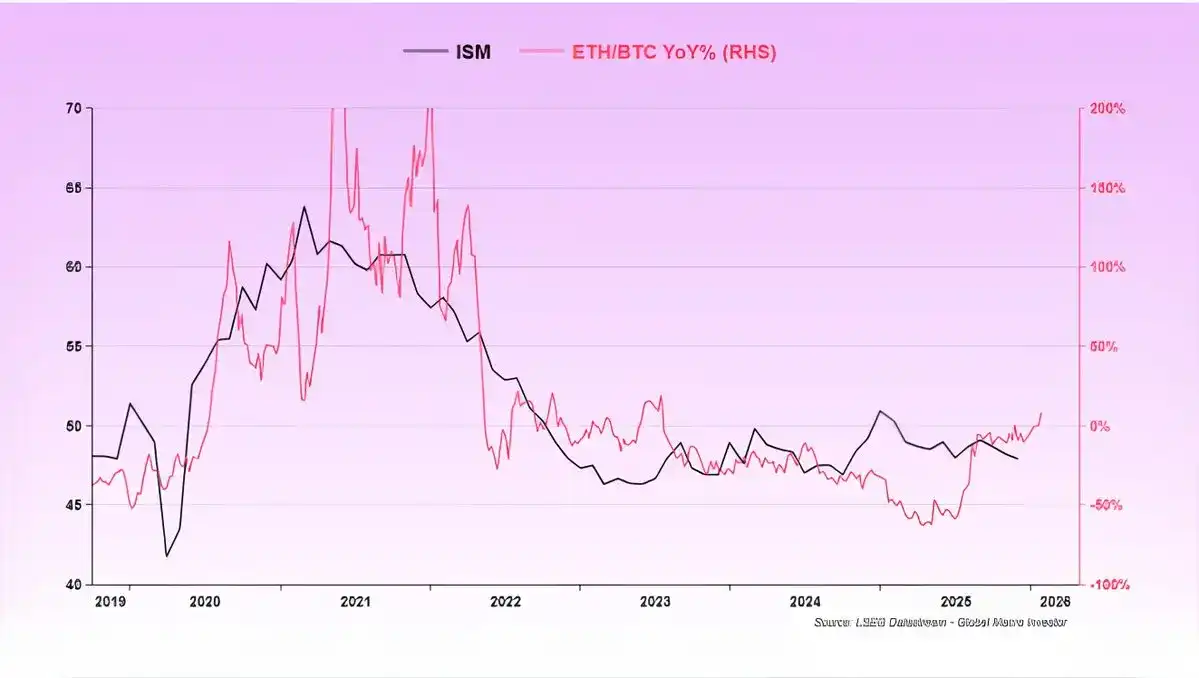
我们刚刚走出了ISM指数低于50的历史低谷,当时商业周期几乎停滞不前。加密货币市场受交易活动和投资驱动,这意味着它需要商业周期的支撑。很长一段时间以来,它都未能从这种支撑中恢复过来。此外,比特币的交易价格一直低于其整体流动性水平,正如它周期性出现的情况一样。比特币本身比流动性波动更大,因此在流动性过热时,其价格会过度上涨;而在流动性过冷时,其价格则会下跌。但从长远来看,它与流动性的相关性约为87%。
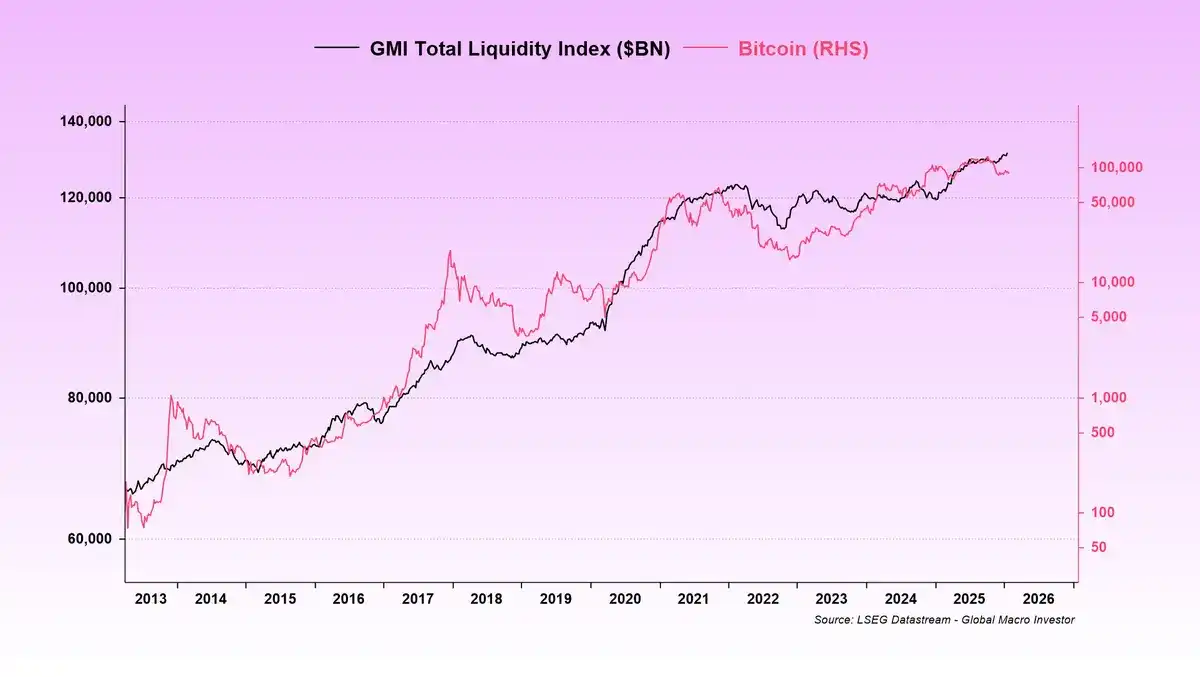
目前市场行情低迷,人们认为加密货币的投资理论已经失效。但事实并非如此。商业周期已经转变。ISM 指数已连续六个月处于扩张期,截至 7 月份数据为 53.3,而历史经验表明,加密货币正是在这种环境下蓬勃发展。当经济周期上升时,人们会转向风险更高的投资,加密货币领域的情况也与其他领域一样。垃圾债券的表现优于国债,小盘股的表现优于大盘股,以太坊和智能合约平台的表现优于比特币,这是因为经济活动增加会推高区块空间的需求,而储蓄增加则会推高比特币的需求。
我实际用这一切做什么呢?

我不会给你提供投资组合,也不会告诉你市场何时触底。十三年的经验告诉我,我无法预测市场时机,你也一样,假装自己可以,最终只会让你以两千美元的价格卖掉。

我要告诉你的是,我前面那番坦白究竟是什么意思。这是一场长期博弈,而且充满情感,因为我们所有人的生计都与此息息相关。最终的赢家并非交易技巧最高的人,而是那些真正了解自己所持资产、坚信网络普及是必然趋势,并且能够像钟表一样准时挺过每隔几年就会出现的50%跌幅的人。

拉远镜头。消除干扰。掌控金库,掌控轨道,让曲线来完成我花了十年时间试图战胜的工作。

Perguntas relacionadas

QWhat is Raoul Pal's main investment lesson from his 13 years in cryptocurrency?

AHis main lesson is to zoom out, ignore the noise, and hold. He learned this after realizing that if he had simply held his initial $200,000 Bitcoin investment from 2013 without trading, it would be worth around $100 million. The best strategy is long-term conviction and weathering the periodic downturns.

QAccording to Pal, what is the fundamental difference between Bitcoin and smart contract platforms like Ethereum?

ABitcoin's role is to be a 'vault' or a pure store of value, competing for the global savings pool (like gold). Smart contract platforms are the 'rails' or coordination layer for the future machine economy, enabling programmable, instant transactions for AI agents and other automated systems. They serve entirely different purposes.

QWhy does Pal believe the total value of successful smart contract platforms will ultimately be multiples of Bitcoin's value?

AHe argues that Bitcoin's potential market is the global savings pool (approx. $35T, akin to gold). Smart contract platforms, however, will underpin the transaction of global real estate (~$400T), debt (~$325T), and equities (~$125T). The economy built *on top* of the vault (the rails) is orders of magnitude larger than the vault itself.

QHow does Pal respond to the argument that smart contract platform tokens are just 'utility tokens' with limited investment value?

AHe counters that while a pure store of value is limited by the size of the savings pool, an infrastructure asset's value is limited by the total amount that can be built on top of it, a ceiling that constantly rises. The value of a platform like Ethereum stems from the sum of all businesses built on it, not from being a single business itself.

QWhat is Pal's explanation for the current bearish sentiment in crypto markets despite the positive long-term thesis?

AHe attributes it to a delayed market cycle and misinterpretation. A shock in October and government dysfunction disrupted market structure, causing a delay in expected returns. Furthermore, the commercial cycle was in a deep trough (ISM below 50), which crypto needs for activity and investment. He believes the cycle has now turned (ISM expanding), which is historically when crypto thrives.

Leituras Relacionadas

The Disappearing Buy Button

"The Vanished 'Buy' Button" In June 2026, major Chinese online brokers Futu and Tiger were barred from allowing mainland Chinese users to purchase or deposit funds for US stocks, following a multi-department regulatory crackdown. This move, part of China's long-standing capital controls, aims to stem the outflow of domestic capital to support the development of local technology sectors, particularly in AI, where China perceives itself to be lagging. The restriction highlights a growing divergence between national economic strategy and individual investor needs. With slowing wage growth and a deflating property market, Chinese retail investors saw US tech stocks—which dominate global indices and capture a quarter of global economic growth—as a crucial avenue for wealth preservation. Domestically, the A-share market has only recently seen its technology sector surpass the long-dominant financial sector in index weight, reflecting a state-directed shift toward "new quality productive forces." The crackdown mirrors past actions against cryptocurrencies and tech deals, prioritizing financial stability and onshore control. It also aims to funnel liquidity and listings to Hong Kong and mainland exchanges to retain economic sovereignty. This regulatory gap creates an opportunity for decentralized finance. The emerging narrative shifts from "banking the unbanked" to "brokering the unbrokered"—using crypto and tokenized real-world assets (RWAs), like stocks, to provide global access to productive assets for those excluded by traditional finance, from Chinese散户 to users in other restricted markets. Simultaneously, the AI era is reshaping global capital flows. US tech giants act as "macro hedge funds," issuing cheap foreign-currency debt to fund expansion, leveraging their superior credit. However, non-US AI supply chain players (e.g., in semiconductors) are also rising. The competition for asset ownership and low-cost financing rights is intensifying, making access to capital a new societal divide as AI devalues routine intellectual labor. Finance remains in the "business of hope," but its gates are being redrawn.

marsbitHá 7m

The Disappearing Buy Button

marsbitHá 7m

According to Strategy, MSTR Has Delivered an Annual Return of 42% Since Adopting the 'Bitcoin Standard,' Even Though Its Treasury Is Underwater

According to Strategy (formerly MicroStrategy) Executive Chairman Michael Saylor, the company's stock MSTR has delivered a 42% annualized return since August 10, 2020, when it adopted its "Bitcoin standard" strategy. This performance surpasses that of Bitcoin itself, the "Magnificent Seven" tech stocks, and the S&P 500 over the same period. Saylor frequently highlights this to demonstrate the success of transforming the software firm into a leveraged Bitcoin investment vehicle. Despite this strong long-term stock performance, Strategy's core Bitcoin treasury position is currently at a loss. As of July 29, the company holds 843,775 BTC, purchased for an average of $75,476 per coin, implying an unrealized loss of approximately $11.4 billion. The disparity arises because MSTR stock acts as a leveraged proxy for Bitcoin, allowing for high annualized returns over a multi-year period even when recent purchases are underwater. To address its increasingly complex capital structure, which now includes multiple classes of preferred stock, Strategy introduced a new reporting framework on July 24. Key metrics include "Net BTC per Share," "$BTC Hurdle ARR" (the annual Bitcoin yield needed to cover financing costs), and "$BTC Floor ARR" (the minimum yield to maintain a sustainable leverage ratio). The company continues to accumulate Bitcoin and recently bolstered its dollar reserves by $525 million to strengthen coverage for preferred stock dividends.

cryptonews.ruHá 7m

According to Strategy, MSTR Has Delivered an Annual Return of 42% Since Adopting the 'Bitcoin Standard,' Even Though Its Treasury Is Underwater

cryptonews.ruHá 7m

Base Launches 'Human Verification', Is the Airdrop on the Agenda?

Base has launched "Base Verify Onchain," a new verification mechanism aimed at solving the problem of Sybil attacks and duplicate participation in on-chain activities like airdrops, rewards, voting, or minting. While blockchains can track wallet addresses, they cannot determine if multiple wallets belong to the same person. The system works by connecting off-chain identity verification with on-chain smart contract rules. Developers can set specific eligibility criteria in their contracts (e.g., requiring a verified X account or a Coinbase One membership). Users connect their wallet and sign a message, which is sent to Base Verify's off-chain service. This service checks if the user meets the pre-set conditions against verified credentials. If they do, it issues a short-lived cryptographic proof containing an identityHash. The application then submits this proof to the smart contract. The contract verifies the proof's validity, checks expiration, and crucially, uses the identityHash to ensure the same verified identity cannot participate more than once, even if using a different wallet address. This identityHash is unique per application contract, preventing cross-application tracking. Base Verify Onchain is positioned as a tool for reliably enforcing participation rules ("who" and "how many times") in specific on-chain scenarios. It is not a general identity system or KYC solution. Its announcement has sparked speculation about a potential future Base token airdrop, for which this tool could be used to prevent abuse. However, Base has previously stated that work on a network token is still in early exploration stages.

marsbitHá 22m

Base Launches 'Human Verification', Is the Airdrop on the Agenda?

marsbitHá 22m

Trading

Spot
活动图片