Multicoin Co-founder: Is Decentralization Always Slower Than Centralization? PropAMM Is Breaking This Bias

marsbitPublicado em 2026-03-13Última atualização em 2026-03-13

Resumo

In a recent article, Multicoin Capital co-founder Kyle Samani argues that PropAMM (Proactive Automated Market Maker) on Solana represents one of the most significant innovations in market microstructure in decades. It challenges the long-held belief that decentralized systems are inherently slower than centralized ones due to global node communication. In traditional centralized exchanges (CEXs), market makers co-locate servers and engage in constant bidirectional communication with the exchange to update orders, resulting in latency. In contrast, PropAMM runs market-making algorithms directly on the Solana blockchain, eliminating the need for inter-server messaging. Price updates occur within the same physical silicon, drastically reducing latency. PropAMM already offers narrower spreads for SOL-USDC spot trading than major CEXs. Samani predicts it will dominate on-chain trading across spots, perpetuals, and prediction markets in 2024. Current challenges include non-deterministic routing and lack of guaranteed best execution for takers, but solutions from aggregators like Jupiter and dFlow are expected. Upcoming Solana upgrades—such as higher compute limits, reduced slot times, and lower network latency—will further enhance PropAMM performance, solidifying its advantage over traditional systems.

Author: Kyle Samani, Multicoin Co-founder

Compiled by: Azuma, Odaily Planet Daily

Editor's Note: The man who knows how to hype Solana best, Multicoin Capital's former co-founder Kyle Samani, who recently made a high-profile exit, is back!

Last night, Kyle Samani posted a long Thread on his personal X account. In the post, Samani once again demonstrated his highly persuasive "hype" (not derogatory here) rhetoric, using "efficiency"—a weak point in the decentralization narrative—as a breakthrough. He detailed how Solana's PropAMM will catch up with or even surpass traditional centralized models in efficiency, arguing that PropAMM is one of the most important innovations in market microstructure in recent years, or even decades.

Below is the original content:

PropAMM is one of the most important innovations in market microstructure in recent years, and perhaps even one of the most significant in decades.

To help everyone grasp this conclusion, let's first look at how market makers (MMs) quote prices on traditional centralized exchanges (CEXs).

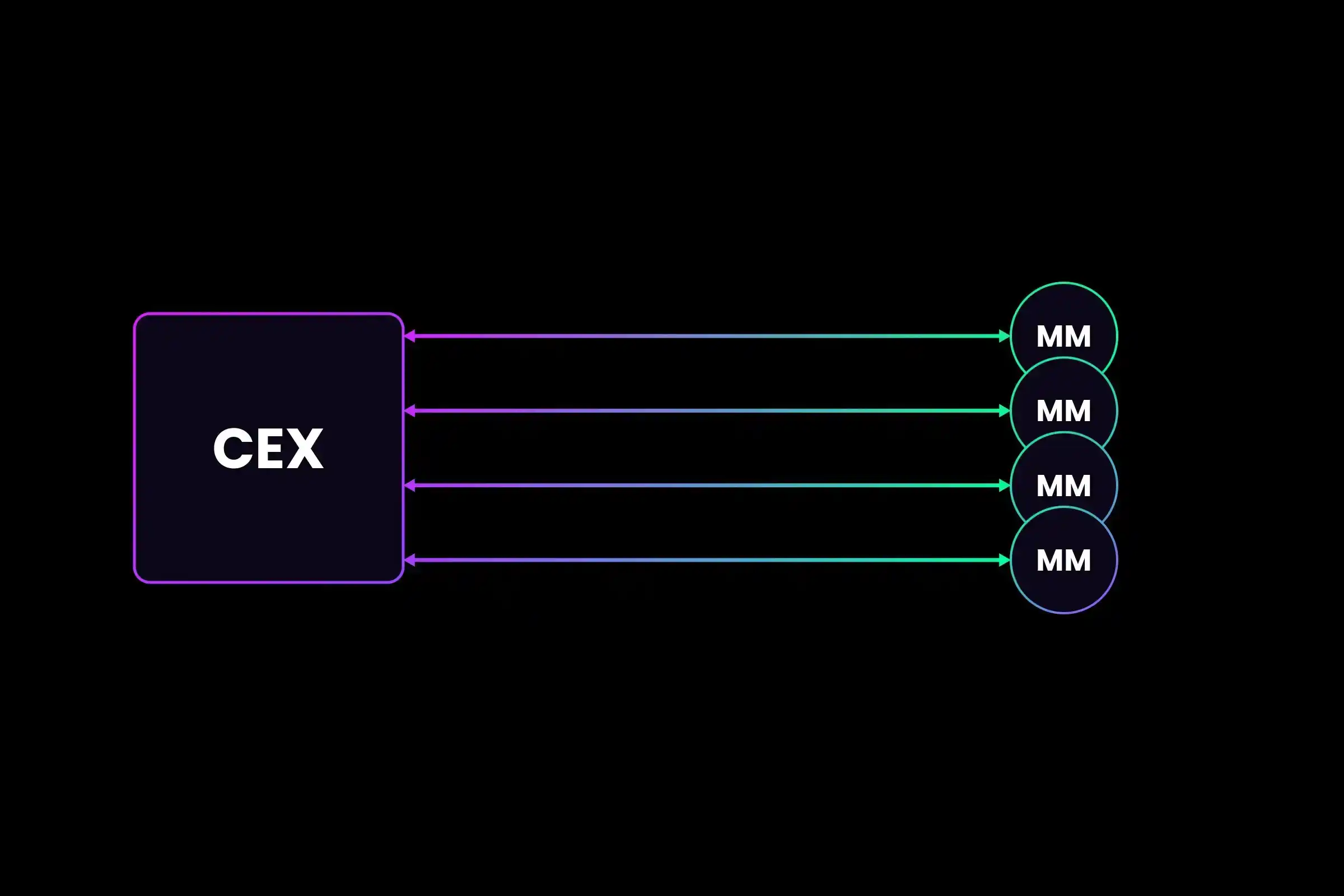
Market makers typically engage in physical co-location with the trading platform. Each market maker runs an algorithm on a server and connects to another server running the exchange's system via a network cable of uniform length (e.g., 50 meters).

A massive stream of data is constantly exchanged between market makers and the trading platform. Whenever a market maker sends an order to the exchange—whether it's a limit order, cancellation, or market order—the exchange must broadcast this information to all other market makers; then, other market makers resend their orders based on the new information; this cycle repeats indefinitely.

Here is a simple diagram.
Now let's look at how PropAMM works on the Solana mainnet.

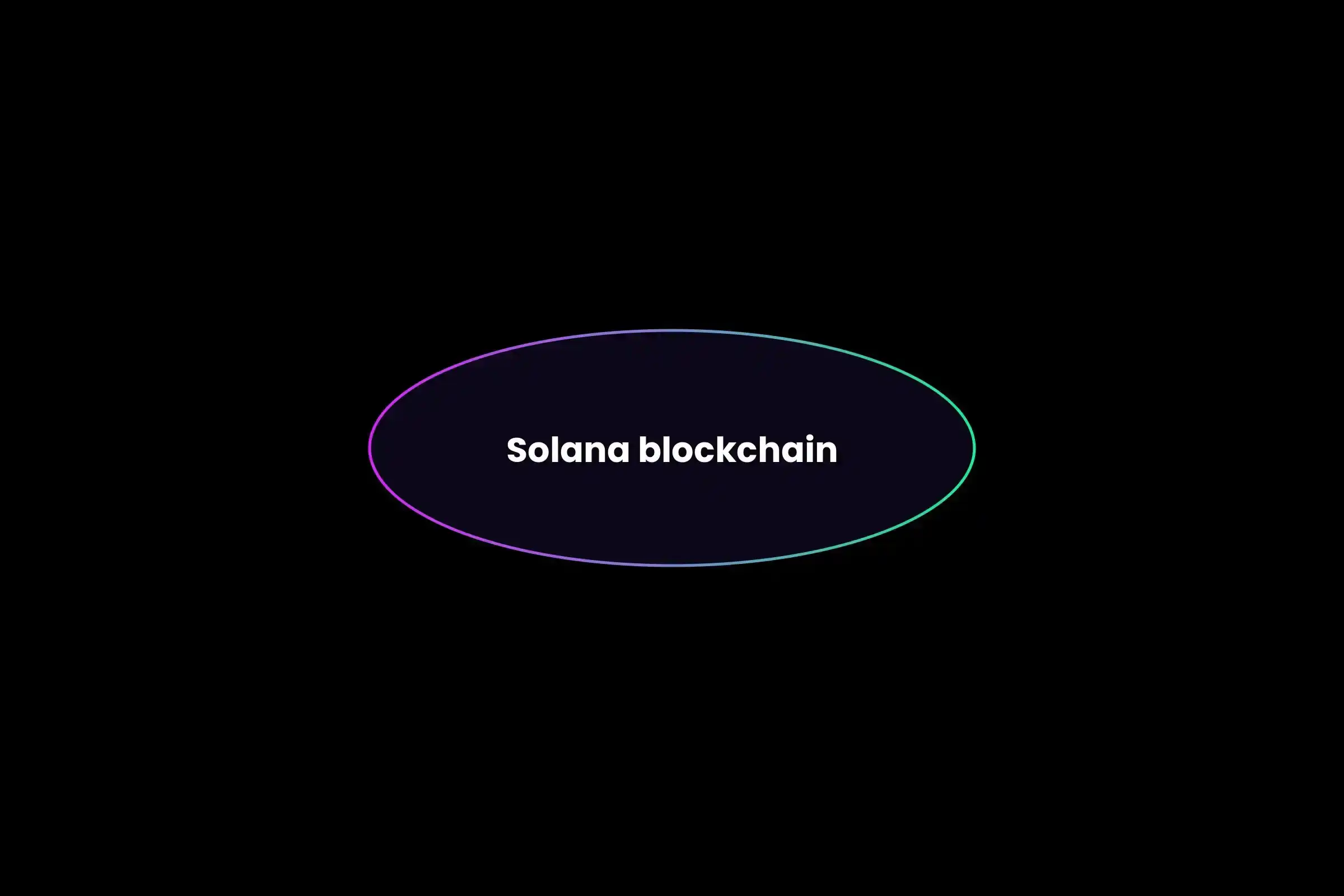
The beauty of PropAMM on Solana is that the blockchain itself directly "hosts" the market maker algorithms. This means the system no longer needs to send billions of messages back and forth between market makers and the exchange; the market-making algorithms will run directly on the same physical machine as the exchange.

Here is the new diagram. (That's right, only the Solana blockchain is needed!)
There has long been a common view in the cryptocurrency industry that decentralized systems must be slower (with higher latency) than centralized systems because they require communication between global nodes.

But if you reframe the issue, on-chain hosted algorithms could actually have lower latency than traditional centralized financial exchanges.

Why is that? The reason is that the latency required for PropAMM to update prices only involves electrons moving within the same physical silicon chip. For example, if the last market order causes a change in the SOL-USD price, this information is immediately visible to all PropAMMs and used to price the next market order. Everything happens within the same silicon chip; there is no longer a need for two-way communication between servers.

It's worth noting that PropAMM does require frequent oracle updates, but this is not a problem and does not change the overall fact described above.

The most critical point remains that when the trading platform—in this case, the Solana blockchain—directly hosts the PropAMM algorithms, the market makers' pricing changes in real-time within the same physical silicon chip.

PropAMM has already become the dominant mechanism for SOL-USDC spot quotes on Solana, with narrower spreads than all major CEXs. I expect this market structure to become the dominant model for on-chain trading this year, including spot, perpetual contracts (perps), and even prediction markets.

The biggest challenge for PropAMM is that there is currently no way to ensure that takers always get the best execution, because:

· The algorithms of all PropAMMs are not public (which is reasonable, as traditional market-making algorithms are also proprietary);

· When routing trades between multiple PropAMMs, the results are non-deterministic.

However, this problem can be solved. I expect all relevant aggregator teams to launch solutions this year, such as Jupiter and dFlow for spot, and Phoenix for contracts.

Current PropAMMs are still under-optimized and constrained by various limitations of the Solana blockchain itself. This year, Solana will roll out a series of major upgrades that will significantly enhance PropAMM performance, including:

1. Higher CU (Compute Unit) limits per transaction and larger transaction sizes;

2. Higher CU limits per block;

3. Alpenglow: Reducing slot time from 400ms to 100–150ms;

4. DoubleZero: Reducing global network latency;

5. Application-controlled execution;

6. Multiple concurrent leaders.

If PropAMMs on the Solana mainnet can already offer narrower quotes than all CEXs without these upgrades, imagine how powerful they will become as these upgrades are gradually implemented.

Related reading: The Turnaround of Kyle Samani, the "Best Crypto Investor in History," and a Mirror of a Decade Ago


Perguntas relacionadas

QWhat is PropAMM and why is it considered a major innovation in market microstructure?

APropAMM is a mechanism on Solana where market maker algorithms are hosted directly on the blockchain, eliminating the need for constant communication between market makers and exchanges. It is considered a major innovation because it reduces latency by running algorithms on the same physical hardware as the exchange, potentially outperforming traditional centralized systems in efficiency.

QHow does PropAMM achieve lower latency compared to traditional centralized exchanges?

APropAMM achieves lower latency by hosting market maker algorithms directly on the Solana blockchain, allowing price updates to occur within the same physical silicon. This eliminates the bidirectional communication delays between market makers and exchanges in traditional systems, as all operations happen internally on the same hardware.

QWhat are the current challenges faced by PropAMM in ensuring best execution for takers?

AThe main challenges are that PropAMM algorithms are not publicly disclosed (similar to traditional market makers), and trading routing across multiple PropAMMs is non-deterministic, making it difficult to guarantee the best execution for takers automatically.

QWhich Solana upgrades are expected to enhance PropAMM performance in the future?

AKey Solana upgrades include higher CU limits per transaction, larger transaction sizes, increased CU per block, Alpenglow (reducing slot time to 100-150ms), DoubleZero (reducing global network latency), application-controlled execution, and multiple concurrent leaders.

QHow has PropAMM already demonstrated its effectiveness on Solana's mainnet?

APropAMM has become the dominant mechanism for SOL-USDC spot quotes on Solana, offering narrower spreads than all major centralized exchanges (CEXs), showcasing its efficiency and potential to lead on-chain trading in spots, perpetuals, and prediction markets.

Leituras Relacionadas

From 'Collective Intelligence' to 'Super Individuals': How AI is Reshaping DAOs and the Ethereum Ecosystem?

From "Collective Intelligence" to "Super-Individual": How AI is Reshaping DAOs and the Ethereum Ecosystem AI is fundamentally transforming how work and governance are structured in Web3. While DAOs have long symbolized decentralized collective intelligence, AI is now enabling a shift toward the "individual + AI" unit, where a single person, augmented by AI agents, can perform tasks that previously required entire teams—such as research, trading, asset management, and governance. This shift raises a critical question: Is this beneficial for DAOs and the broader crypto ecosystem? AI addresses key DAO challenges like inefficient information processing, complex decision-making, and high participation costs by automating governance processes, analyzing proposals, and executing on-chain operations. This allows DAOs to operate with smaller core teams while significantly improving efficiency. For AI to participate in the on-chain economy, it requires asset custody, transaction execution, and trusted settlement—capabilities native to blockchain. Initiatives like Ethereum Foundation’s dAI team and the ERC-8004 standard aim to establish trust and verification for AI agents in a decentralized context. Wallets are evolving into "Agent Wallets," enabling non-custodial authorizations, cross-chain asset management, and human-AI collaboration through restricted sub-wallets and automated execution within set limits. Ethereum is positioning itself as the financial infrastructure for the AI economy, offering a trusted settlement layer for AI-driven activities. With its growing staking economy and mature DeFi ecosystem, Ethereum could serve as the neutral base where AI agents across platforms settle value and establish trust. In summary, AI and crypto convergence is reshaping organizations and infrastructure: AI amplifies individual capability and automates execution, while blockchain provides secure and decentralized settlement. Ethereum and crypto wallets are poised to become key interfaces connecting humans, AI, and the on-chain world.

marsbitHá 21m

From 'Collective Intelligence' to 'Super Individuals': How AI is Reshaping DAOs and the Ethereum Ecosystem?

marsbitHá 21m

Trading

Spot
Futuros
活动图片