Author: Deep Thought Circle
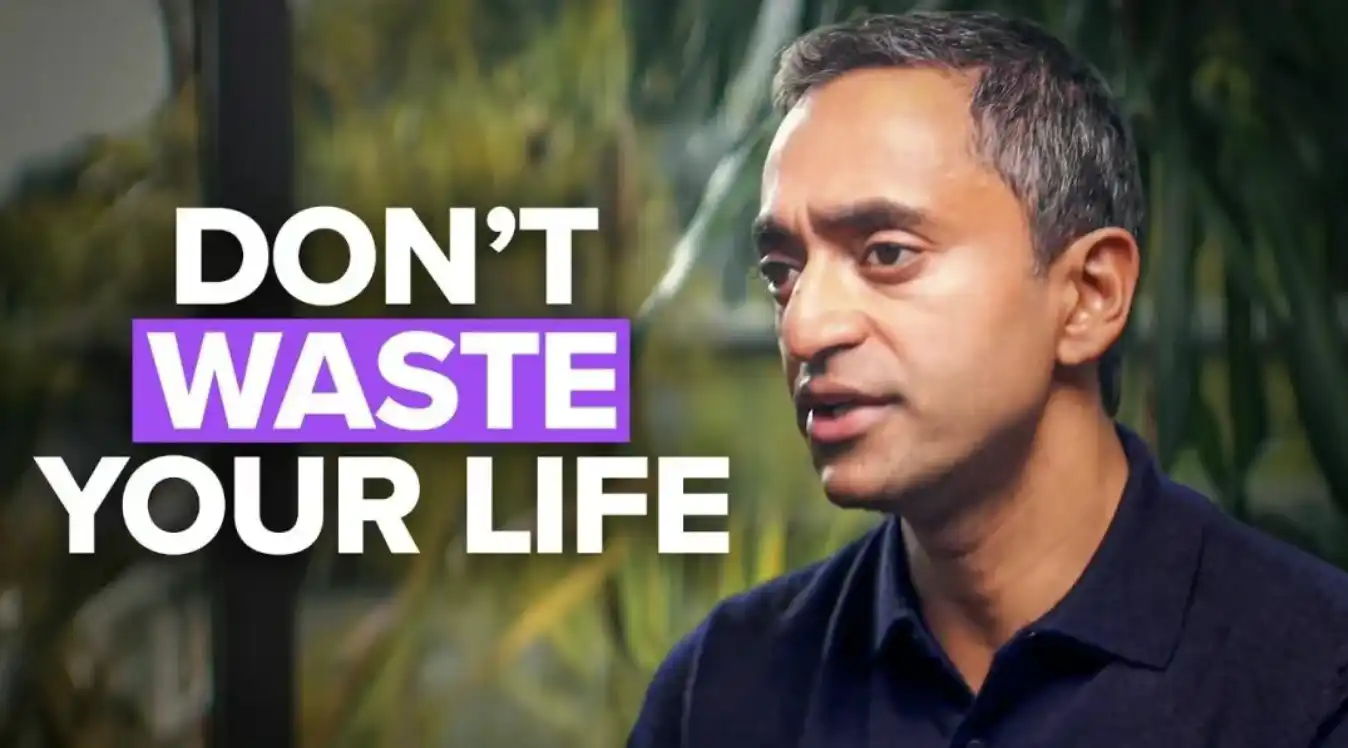
Have you ever thought that the goals you strive so hard to pursue might be the very things holding you back from success? Promotions, salary increases, titles, social status—these seemingly natural life milestones might actually be trapping you in an elaborately designed pitfall. Recently, I watched a video where Chamath Palihapitiya, an early Facebook executive and well-known investor, summarized his 30 years of business experience in 13 minutes. One sentence he said completely shocked me: "It took me 30 years to realize that all the goals I desperately pursued were stupid." This isn't some clichéd motivational talk; it's the profound reflection of a billionaire after countless successes and failures.
Chamath's resume is legendary in itself. He was a core member of Facebook's growth team and later founded the venture capital firm Social Capital, investing in countless successful tech companies. When someone like this tells you that most of what he pursued over the past 30 years was wrong, what would you think? When I first heard this viewpoint, I was resistant. Because it completely颠覆了 the success principles we've been taught since childhood. We are educated to set goals, make plans, and achieve milestones step by step. But Chamath tells us that this way of thinking is itself problematic.
Why Goals Become Your Enemy
Chamath's first core point made me think for a long time: you can never stop. This sounds strange, but he explains that most people frame life as a series of goals. The problem with goals is that when you achieve enough of them, you think, "I've made it, I can stop now." This mindset causes people to lose motivation at some point, to lose the reason to keep moving forward.
I deeply understand this feeling. At a certain stage in my career, after achieving some self-set goals, I did feel a sense of emptiness. That "what next?" confusion made me unsure of what to do next. Chamath observed that many people he once greatly respected stopped in their 50s. They were no longer active in the industry, no longer challenged themselves, no longer learned new things. In his words, "they are no longer in the arena."
Conversely, he cited the example of Buffett. Buffett is still working at 95 and only recently began to step back. And Charlie Munger essentially passed away on the job. What do these people have in common? They are not committed to achieving a series of goals, but to continuous learning, constant risk-taking, and associating with interesting people. It is this mindset that keeps them sharp and vibrant.
This viewpoint made me re-examine my career planning. I did set many specific goals in the past: reach a certain position by a certain age, earn a certain income, achieve a certain level of financial freedom. But now I realize that these goals themselves might be harmful. Because once achieved, you lose the motivation to continue. But if you focus on the process—continuous learning, constant growth, challenging yourself—you will never stop.
Chamath said if someone had told him this earlier, he would have made very different decisions. He would have optimized less for money, taken more risks, even more than when he was young. This sentence is particularly interesting because it reveals a counterintuitive truth: true success is not achieved by optimizing short-term goals, but by long-term commitment to the process.
Three Boundary Conditions: How to Live in the Process
If you want to abandon a goal-oriented life and embrace a process-oriented life, Chamath believes you need to set some very good boundary conditions. These boundary conditions are not goals, but principles, bottom lines you cannot violate under any circumstances. He proposed three specific boundary conditions, each of which resonated deeply with me.
The first boundary condition is: No debt. This sounds simple, but Chamath explains that debt is something that will make you stop. It will make you stop learning, stop taking risks, make you start pursuing short-term goals, most obviously pursuing money. All these short-term optimizations will have a huge impact on your life in the next 20, 30, 40 years.
I completely agree with this view. Debt is not just a financial burden, but also a psychological shackle. When you are in debt, your decisions become distorted. You might放弃 an interesting but lower-paying opportunity for a boring but high-paying job, just because you need to pay off debt. You might stay longer at a company you don't like because you need a stable cash flow. Debt robs you of the freedom of choice, and the freedom of choice is the most important prerequisite for living in the process.
Chamath specifically mentioned a phenomenon that is especially dangerous for the younger generation: people spend a lot of time on social media, watching people who are essentially lying to you展示 their fake lives. Too many people are deceived by this fake life, thinking it is real life, and then start pursuing the same lifestyle. All of this revolves around money. No one is praised by society for being终身 committed to the process. Perhaps Kobe Bryant was an exception, but unfortunately he is no longer with us.
This passage reminded me of the wealth-flaunting content on social media. Designer bags, luxury cars, extravagant travel—this content constantly刺激 young people's consumption desires. To live this kind of life, many people go into debt to consume,透支 the future. But in fact, many of those展示ing luxurious lives on social media are themselves burdened with huge debts, or their lives are far less glamorous than they appear. Pursuing this fake lifestyle will eventually trap you in a debt trap, preventing you from focusing on what truly matters.
The second boundary condition is: Manage your life with humility. Chamath said this was a lesson it took him a long time to learn. What does humility mean? It means you must be extremely honest about today's reality. Because only then can you truly see the essence of things, can you share the truth with others, and create genuine resonance with them.
This viewpoint touched me. Humility is not self-deprecation, but an honest assessment of your own capabilities and limitations. In entrepreneurship and work, I have seen too many cases of failure due to lack of humility. Some people are overconfident, unwilling to admit their mistakes, and end up going down a dead end. Some are afraid to expose their weaknesses, always trying to project a perfect image, and end up losing the opportunity to connect sincerely with others. True humility is admitting "I don't know," being willing to learn, daring to say "I was wrong."
The third boundary condition is: Surround yourself with people younger than you. Chamath said young people see the world completely differently. Their biases are different, their mental frameworks are different. Although often he feels he has learned enough and doesn't need to be told he's wrong, the opposite is true. The more time he spends with young people, the more he realizes that everything he knows is trapped at a certain point in time.
This is a very profound insight. Our knowledge and experience always have a shelf life. What is correct today may be obsolete tomorrow. Methods that work today may fail tomorrow. And young people are like an early warning system for the future; they can help you see how the world is changing. Chamath said that at some point, the way he thinks things should work will be completely opposite to how they actually work. This realization requires courage because it means admitting that your knowledge is becoming outdated.
I have had similar experiences. When I communicate with people ten years younger than me, I am often shocked by their views. Their understanding of technology, their use of social media, their acceptance of new business models far exceed my imagination. If I cling to my own认知 and refuse to listen to young people's opinions, I will quickly become rigid and outdated.
Those Stupid Goals
Chamath frankly listed the "stupid goals" he pursued in the past. When he was a director, he wanted to be a VP. When he was a VP, he wanted to be a SVP. When he was a SVP, he wanted to become a principal at a venture capital firm, then a general partner. At Facebook, he was part of the management team, he wanted more equity. These were all stupid goals.
This confession震撼 me. Because these goals don't seem stupid at all. They are things most professionals dream of. From director to VP, from employee to partner, from management to more equity—isn't this exactly the career path we are taught to pursue? But Chamath says these stupid goals took him away from being 100% his true self. They turned him into a caricature of himself,放大 certain small aspects of himself, making them represent a larger version of himself. Not only to himself, but to those around him as well.
I understand what he means. When you pursue these external goals, you subconsciously adjust your behavior to meet the expectations of that role. You might suppress some of your traits, amplify others, because you think it will help you achieve the goal. But in this process, you gradually lose yourself. You become a distorted version of yourself striving to achieve goals, not the most authentic, complete you.
Chamath admitted that these things can only be learned through time. Everyone in their 40s and 50s will nod in agreement when they hear what he says. But everyone in their 20s and 30s will think "this isn't for me." So you have two choices: the easy way or the hard way. The easy way is to do these few simple things. The hard way is to spend 30 years learning this lesson yourself.
This reminds me of a classic paradox: when we are young, we have time and energy but lack wisdom and experience; when we are old, we have wisdom and experience but have lost time and energy. If we could understand these principles when young, how much time and energy could we save? But the problem is, these principles often must be truly understood through personal experience. Just hearing others say it is not enough.
Optionality: Maintaining Freedom of Choice
One of the most important principles Chamath proposed is: Maintain optionality at all costs. He said he strives to maintain optionality in business, in negotiations. Finding win-win spaces is a very powerful thing that has helped him greatly.
What does optionality mean? It means keeping your options open, not trapping yourself on a single path. When you have optionality, you can flexibly adjust according to changing circumstances. When an opportunity is not suitable, you can say no. When a better opportunity arises, you can seize it immediately. And when you lose optionality, you are trapped. You must accept the option in front of you, even if it is not the best.
Chamath explained that the benefit of maintaining optionality is that it protects relationships, protects others' self-esteem, protects others' emotions. It forces him to be more restrained, to listen more and speak less. It turns out that many people self-destruct by doing stupid things. And for him, this framework has helped him avoid that situation to the greatest extent.
I deeply agree with this view. In my career, the decisions that maintained optionality always led to better results. For example, I once refused a high-paying job that required a long-term contract, opting instead for a flexible but lower-paying opportunity. A few months later, a better opportunity appeared, and because I wasn't bound by a contract, I was able to seize it immediately. Colleagues who accepted long-term contracts could only watch the opportunity slip away.
Debt is the biggest enemy that destroys optionality. When you are in debt, you must make monthly payments, which means you must have a stable income. This need limits your choices. You may have to accept a job you don't like, simply because it provides a stable income. If you have no debt, you have the freedom to explore, to take risks, to pursue opportunities that may not bring immediate income but are more valuable in the long run.
Chamath also shared a more philosophical thought. He said, if we truly live in a simulated world, one level of the game is actually to show you the existence of these secrets and give you a chance. He is almost 50 now and finds these secrets being revealed to him. He said "Wow, this is incredible. I didn't know this when I was young, even if someone tried to tell me, I ignored it." So he is just offering this advice, knowing most people will also ignore it, but eventually everyone will go through this process.
This metaphor is interesting. Life is indeed like a game, some secrets are only unlocked after you reach a certain level. But the irony is, when you truly understand these secrets, you may have missed the best time to use them. That's why listening to the advice of elders is so important, even if you can't fully understand it at the time.
Complete Honesty in Relationships
When talking about interpersonal relationships, Chamath shared the most important lesson he learned: It is crucial to marry someone who 100% supports you. And the only way to get that support is to be completely honest.
He admitted that honesty is very difficult for many people. He himself didn't know how to be completely honest. He would share most things, but not everything. This was part of the lifestyle he learned in his family. But if you don't learn this lesson, it will come back to bite you.
Chamath said that in relationships, having your co-founder, your wife by your side is really important. He went through a divorce, saying it was almost like a family member dying. What was missing in the first marriage? It was the lack of completely raw, unfiltered, pure honesty. When things were good, they could celebrate together. But when things were bad, you could point it out, name it. And they didn't do that. The second marriage is completely different; he said finding this kind of relationship is a blessing.
This passage reminded me of many problems in marital or partner relationships. Many people think that保留 some secrets, glossing over some truths is necessary in a relationship, to protect the other person or maintain peace. But Chamath's experience tells us the opposite. Lack of complete honesty plants time bombs in relationships. Small problems accumulate into big ones because they are not pointed out in time. Misunderstandings ferment into resentment because they are not clarified.
What does complete honesty mean? It means when you feel dissatisfied, you speak up. When you make a mistake, you admit it. When you are afraid, you confess. This requires great courage because honesty makes you vulnerable. But only through this vulnerability can you build truly deep connections. Only when your partner knows the real you, including your weaknesses and fears, can they truly support you.
The same is true in business relationships. The most successful partnerships are often built on complete honesty. When you can坦率地 discuss disagreements with your partners, admit mistakes, share concerns, then you can face challenges together and make the best decisions.
Career Advice for Young People
Chamath offered very specific advice for young and ambitious people. The first and most important one: You must go to Broadway (here meaning the main stage).
He explained, depending on what you want to do, if you want to go into politics, you need to go to Washington D.C. It might take one or two turns to get there, maybe you need to go to the state capital first, but start there, then go to Washington. If you want to do finance, you need to go to New York or London. If you want to do cryptocurrency, you might need to go to Abu Dhabi. If you want to do tech, simply put, you need to go to Silicon Valley. There are no shortcuts to these decisions.
This advice seems simple, but executing it requires courage. It means you might need to leave your hometown, leave your comfort zone, and start over in an unfamiliar city. But Chamath's point is, you must go where the fish are. If you want to catch big fish, you can't stay in a small pond.
I strongly agree with this view. The impact of geographical location on career development is far greater than most people imagine. In the right place, you will meet the right people,接触 the right opportunities, learn the right things. In Silicon Valley, you are surrounded by entrepreneurs and investors, and you will naturally absorb that startup culture. In New York, you will接触 elites in finance and media. And if you stay in a place unrelated to your career goals, you will miss too many opportunities.
Chamath's second piece of advice is: Don't optimize for compensation. This is why you need to live humbly. You should optimize for opportunity. When an opportunity to work with people smarter than you arises, and it feels like it might be a rocket ship, you jump on and hold tight. When you don't do this, but put all other nonsense first, you will fail, and eventually you will look back, and you will be miserable. But that's because you let all these stupid indirect factors get in the way.
This advice is completely opposite to what we are taught from childhood. We are taught to fight for the best salary, to bargain for our worth. But what Chamath is saying is that in the early stages of a career, opportunities for learning and growth are far more important than salary. A low-paying job that allows you to grow quickly is more valuable in the long run than a high-paying job that keeps you stagnant.
Chamath specifically mentioned young people talking about work-life balance. He said he doesn't even understand what that means. When you are in a vibe state and a flow state, it means you are working in a way that gives you a sense of purpose, you are living in a way that gives you a sense of purpose, you are blending them together. This is what you want. You are in a continuous process, constantly adding things that make your life better.
This view might be controversial, but I understand what he means. True work-life balance is not strictly separating work and life, working 8 hours a day and then completely disconnecting. It is finding a way of working where work itself becomes a meaningful part of your life. When you love your work, when it aligns with your values, when it gives you a sense of accomplishment, the boundary between work and life becomes blurred, but this is not a bad thing.
The Rat and Water Experiment
Chamath shared a震撼ing experiment. Scientists put rats into large jars filled with water and measured how long it took for them to drown. On average, it was about four and a half minutes. Then they repeated the experiment. They put the rat in, and about 30 seconds before the rat was about to drown, they pulled it out. They dried it off, comforted it, and then put the rat back in the water. This time the same rat could survive in the water for an average of 60 hours.
What is the difference between a rat that drowns in 4 minutes and a rat that survives 60 hours? No one knows for sure, except what we can speculate, and that is the brain. It is the brain that unlocked the resilience and survival ability within the rat. This is what everyone should find: a place that allows you to go deep into your brain and unlock levels you thought were impossible for you.
This experiment deeply moved me. What did the rat know the second time it was put in the water? It knew someone would come to save it. It had hope. And hope increased its survival ability by nearly 800 times. What does this tell us? It tells us that human potential far exceeds our imagination. When we believe it is possible, when we have hope, we can do things we thought were impossible.
Chamath said Navy Seals talk about this, athletes talk about this. But in business, the great thing is that we have no expiration date. Unlike a Navy Seal or an athlete who has a physical expiration date of 10 to 15 years, we can play this game forever. So you must find a place that allows you to be that rat struggling in the water for 60 hours, because it will profoundly change you in a way you can only understand by experiencing it. Then you will look at other people, and you just don't understand why no one gets this.
This passage reminded me of the common characteristics of truly successful people. They have all experienced some kind of test, some experience that made them break through their perceived limits. It might be an extremely challenging project, a resurgence after a failure, completing a seemingly impossible task under extreme pressure. These experiences changed them, made them realize their potential far exceeded their imagination.
And the beauty of business is that, unlike sports which have age limits, you can pursue this breakthrough indefinitely. A 60-year-old can still start a business, a 70-year-old can still learn new skills, an 80-year-old can still contribute. Buffett and Munger are the best examples. This quality of having no expiration date makes business the perfect stage for lifelong learning and growth.
Status is a Trap
Chamath's view on status is perhaps the most颠覆性 in the entire video. He said, the most important thing about status is: it is completely man-made, completely irrelevant. It is something people use to deceive others into wasting precious time. If you know this, one of the most powerful things you can do is to ignore all the ways society tries to give you status.
Why? Because what society is actually doing is putting a small hook in you to pull you back. If you start to believe in these things, these are things that are externally validated by others. Then someone is able to exercise some degree of judgment over you. Maybe small, maybe large. When you chase enough of these things, chase enough status, you become completely subject to people who don't care about your best interests.
Chamath said he learned this the hard way, because there were many things he always wanted because he thought they were important. Getting on this list, entering that club, being invited to this event. But all these things are unimportant because they are completely artificial. You扭曲 yourself, sometimes you even bend your expectations and behavior to be part of it or be recognized, and then you become less complete.
This view made me reflect a lot. Our society is filled with various status symbols. Prestigious degrees, titles at big companies,豪华 offices, expensive cars, membership in exclusive clubs. We are taught to pursue these things because they represent success. But Chamath tells us these are all traps.
Why are they traps? Because once you start caring about these status symbols, you adjust your behavior based on them. You will do things that enhance your status, even if that's not what you really want to do. You will avoid doing things that might damage your status, even if it might be the right choice. You will care about how others see you, care about your position in various rankings. This caring will bind you, make you lose freedom.
Chamath said status is a completely man-made, corrosive thing that society uses to stop you. The more you can摆脱 it, it becomes a superpower. This view might sound radical, but think about those who truly change the world, many don't care about traditional status symbols. They follow their curiosity, do what they think is important, not what society thinks is important.
I am also trying to摆脱 the attachment to status. I find that when I stop caring about how others view my choices, I feel freer. I can pursue projects that truly interest me, even if they don't bring me traditional signs of success. I can associate with anyone I find interesting, regardless of their social status. This freedom is priceless.
My Thoughts
After watching Chamath's分享, I spent a long time digesting these viewpoints. They challenged many assumptions I had taken for granted for years. I always thought setting clear goals was the key to success, but now I realize that过度 focusing on goals might make me miss what's truly important—the process of continuous growth.
I also started to re-examine my definition of success. In the past I might have measured success by position, income, social status. But now I ask myself: Am I continuously learning? Am I challenging myself? Am I doing things I find meaningful? If the answer is yes, then I am successful, no matter what my title is, no matter how much money is in my bank account.
Chamath's experience also made me think about the value of time. He said it took him 30 years to learn these lessons. I am in my 30s now; if I can understand and apply these principles now, how much time and energy could I save? But I also realize that some lessons may indeed require time and experience to truly internalize. The important thing is to keep an open mind, be willing to learn from the experience of predecessors, even if I can't fully understand it yet.
Finally, I want to say that the advice Chamath shared is not about要求 everyone to become a billionaire or build great companies. It's about how to live a more fulfilling, authentic, and meaningful life. No matter what your career goals are, these principles apply: focus on the process rather than goals, maintain a humble and learning attitude, protect your freedom of choice, be honest in relationships, ignore status symbols imposed by society.
I believe if more people could understand and practice these principles, we would see a different world. A world where people work not for external recognition but for internal growth. A world where people are not climbing someone else's defined ladder of success but walking their own unique path. This might be a harder choice, but it is definitely a more meaningful choice.