Ripple’s Move To Privacy: How A Re-organization Of The XRP Ledger Will Affect The Network

bitcoinistPublicado em 2026-06-01Última atualização em 2026-06-01

Resumo

Ripple's former CTO David Schwartz discussed how the XRP Ledger (XRPL) could respond to potential state-level attacks. While acknowledging that authoritarian regimes could cause temporary disruptions by targeting the validator network, Schwartz argued that long-term control is unlikely due to the network's decentralized structure, where Ripple-run validators comprise less than 20%. The network's resilience hinges on its ability to replace compromised validators. For sustained threats, Schwartz proposed a theoretical two-layer consensus reorganization. An inner layer of validators would handle daily operations, while an outer layer would manage changes to the validator set. This outer layer could operate more discreetly and infrequently, potentially using anonymizing services like Tor, making it harder to target. The core point is that the XRPL community could adapt its structure to maintain operations even under significant external pressure.

Ripple CTO Emeritus David Schwartz has laid out a rare look at how the XRP Ledger could respond if it ever came under pressure from a state-level actor.

The discussion started with a question about whether an authoritarian regime could use or attack the XRP Ledger by targeting its validator network. Schwartz did not dismiss the risk entirely, and according to him, if the pressure ever became serious enough, the XRP Ledger could be reorganized around a more resilient validator structure.

State-Level Attacks May Only Disrupt XRPL Temporarily

The XRP Ledger has operated without a major outage across more than 70 million closed ledgers, but that reliability record may soon be tested in ways its creators never anticipated, one of which may be authoritarian regimes and state-level interference.

Schwartz acknowledged that the threat to blockchain networks from state actors is real. State-level actors, he said, could cause temporary disruptions to blockchains, including the XRP Ledger, but long-term damage is a different matter entirely. The responses were made to a question on the social media platform X, where an XRP community member asked if an authoritarian regime like Putin’s would co-opt or disrupt the UNL/validator network to weaponize the ledger.

However, according to the Ripple CTO emeritus, long-term control from external forces would be much harder if the broader XRPL community stays active enough to respond. Ripple-run validators account for less than 20% of the total network, which means any concentrated attack on Ripple’s own infrastructure would leave the validator set intact.

The XRPL network’s survival in that type of scenario would depend less on whether one validator is attacked and more on whether the network can keep replacing compromised or pressured operators. The attack would only become truly serious if a hostile actor could make people too afraid to run validators at all.

How Reorganizing The XRP Ledger Will Affect The Network

Schwartz also described a possible longer-term change to XRPL’s consensus structure in the event of an attack by an authoritarian regime. His example was a two-layer consensus algorithm, where the inner layer will handle normal network activity, and the outer layer will only come into play when the network needs to change the Unique Node List (UNL) of the inner layer.

The inner validators would keep the XRP Ledger running day to day. If those validators were attacked or compromised, the effect would be minimal, as they will be easily replaced. The outer validators would serve a lighter and less frequent role, stepping in mainly when changes are needed to the validator set.

Targeting the outer validators would also be harder because they would not need to operate constantly in the same visible way. They could be kept lightweight, appear only when needed, and operate through anonymizing services such as Tor or I2P.

XRP trading at $1.30 on the 1D chart | Source: XRPUSDT on Tradingview.com

Perguntas relacionadas

QWhat did Ripple CTO Emeritus David Schwartz say about the possibility of an authoritarian regime targeting the XRP Ledger?

AHe acknowledged that state-level actors could cause temporary disruptions to the XRP Ledger, but long-term damage is a different matter. He suggested that if pressure became serious enough, the network could reorganize around a more resilient validator structure.

QWhat is the proposed two-layer consensus structure described by Schwartz to protect against state-level attacks?

AThe proposed structure involves an inner layer of validators that handles normal daily operations, and an outer layer of validators. The outer layer only activates when changes are needed to the Unique Node List (UNL) of the inner layer, making them harder to target as they operate less frequently and can use anonymizing services.

QAccording to the article, what would determine the XRP Ledger's survival in the event of a state-level attack targeting its validators?

ASurvival would depend less on a single validator being attacked and more on the network's ability to keep replacing compromised or pressured validator operators. An attack would only become critical if it made people too afraid to run validators at all.

QWhy would an attack concentrated on Ripple's own validators likely not cripple the XRPL network?

ABecause Ripple-run validators account for less than 20% of the total network. Therefore, attacking them would leave the majority of the validator set intact, and the network could continue operating.

QWhat role would the outer layer of validators play in the proposed reorganization of the XRP Ledger?

AThe outer layer of validators would serve a lighter, less frequent role. They would step in mainly when changes are needed to the validator set (the inner layer's Unique Node List) and could operate in a more hidden manner using anonymizing services.

Leituras Relacionadas

Why Not Short Even When Bearish? Munger Did the Math on a 'Losing Trade'

Why Not Short Even When Bearish? Charlie Munger's Calculated "Loss-Making Account" Many traders, drawn to speculative tools like futures contracts, often face repeated failures. As the article notes, unless one is a genius, such instruments should be avoided for long-term profit-seeking. Similarly, the practice of short selling is viewed with caution. The author firmly states a policy of not shorting, even when bearish, preferring to simply wait. The core reason? Successful short selling requires exceptionally difficult conditions to profit. Legendary investors Warren Buffett and Charlie Munger have themselves reflected on painful short-selling experiences. Munger highlights two critical flaws in the mathematical logic of shorting: 1. Asymmetrical Risk/Reward: A long position has a maximum loss of 100% but unlimited upside. A short position caps profit at 100% (if a stock falls to zero) but carries theoretically unlimited loss potential. 2. The "Promoter" Problem: Fraudulent or struggling companies can prolong their decline. As Munger said, "You can run out of money before the promoter runs out of ideas," meaning short sellers may be forced to cover positions at a loss before the company's true fate unfolds. The article cites Stanley Druckenmiller, a famed hedge fund manager. He once shorted 12 companies that all eventually went bankrupt. However, intense market rallies forced him to cover his positions within three weeks, resulting in massive losses—$200 million of his capital plus an additional $600 million. He concluded he likely never made money shorting in his career. His experience perfectly illustrates Munger's points: facing unlimited losses and being wiped out before being proven right. The conclusion is clear: for most investors, complex instruments like short selling and derivatives are not viable paths to stable, long-term gains. Self-reflection is advised before repeatedly wasting time and capital on such speculative strategies.

marsbitHá 12m

Why Not Short Even When Bearish? Munger Did the Math on a 'Losing Trade'

marsbitHá 12m

For Hedging, Buy Gold and Oil; For Explosive Growth, Buy AI; Bitcoin, the 'Outdated' Asset, Enters a Bear Market

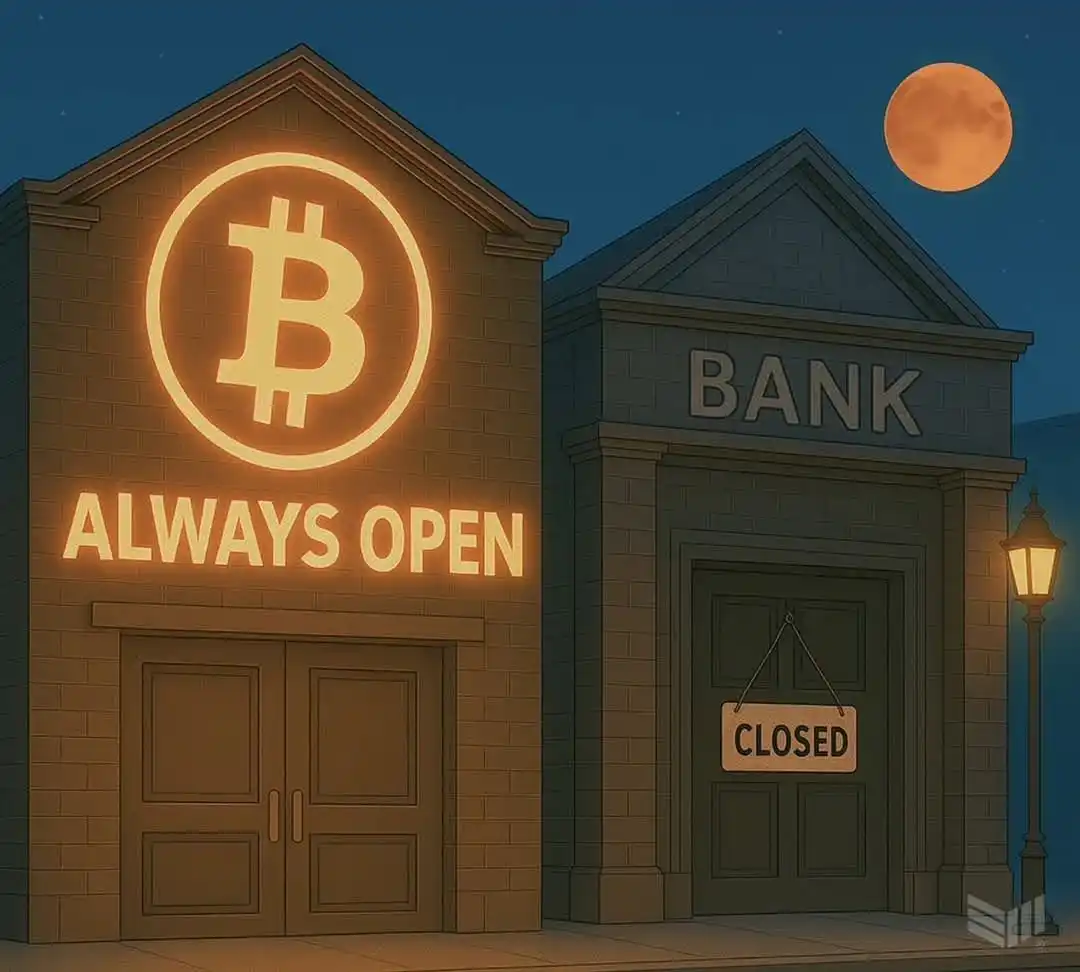
Bitcoin’s price has recently fallen sharply, hitting a two-month low near $66,000, with Ethereum also dropping to a three-month low. While surface explanations point to ETF outflows, geopolitical tensions, and corporate selling, a deeper issue is emerging: Bitcoin is losing a crucial asset competition. For years, Bitcoin thrived in a low-rate environment where investors sought alternatives amid inflation fears and dissatisfaction with traditional options. Now, the market landscape has shifted, leaving Bitcoin stuck in an "awkward middle ground," facing challenges on three fronts: 1. **As an inflation hedge, gold is winning.** Investors worried about persistent inflation are turning to tangible assets like gold, energy stocks, and commodity producers, which offer more direct pricing power and physical backing. 2. **For growth exposure, AI is winning.** Those seeking high growth now favor AI-related companies with actual revenues and profits, an area where Bitcoin's lack of cash flow puts it at a disadvantage. 3. **Within crypto, infrastructure and stablecoins are winning.** Even investors wanting crypto exposure have alternatives like exchanges, stablecoin issuers, and tokenization firms, whose performance is directly tied to real-world adoption and offers clearer operational leverage. The recent market reaction to inflation warnings highlights this shift. Instead of boosting Bitcoin as "digital gold," such news now drives flows toward traditional inflation-sensitive assets. Therefore, recent events like ETF outflows and corporate selling are seen not as causes, but as symptoms of this new reality. Capital has more compelling options, and investors are becoming more selective. The emerging bear case for Bitcoin is no longer about it being a fraud or failed technology, but rather that **scarcity alone is no longer enough**. It is no longer seen as the best hedge, the best growth asset, or the only crypto play.

marsbitHá 28m

For Hedging, Buy Gold and Oil; For Explosive Growth, Buy AI; Bitcoin, the 'Outdated' Asset, Enters a Bear Market

marsbitHá 28m

SaaS Battle Royale: The Survivors Who Win All Share One Common Trait

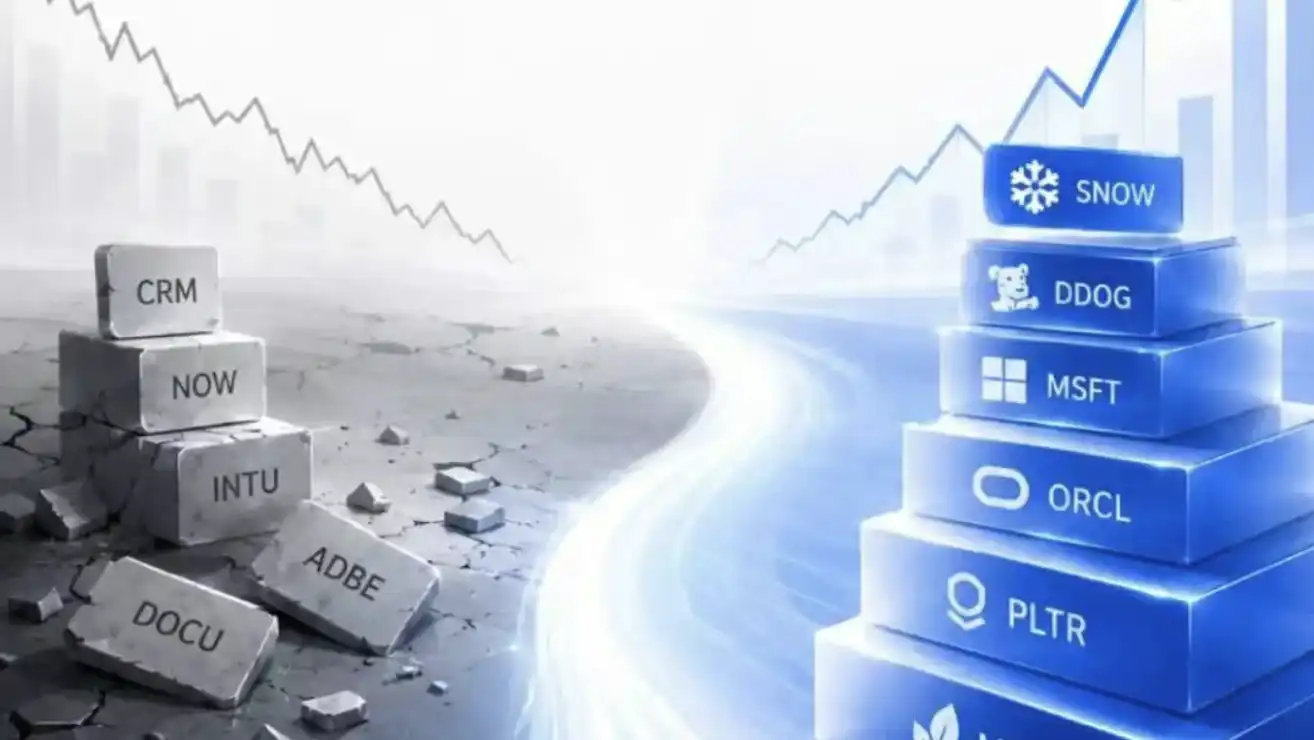
**Summary** The AI revolution has triggered a "SaaS apocalypse," forcing a brutal market shakeout. The key dividing line is the pricing model. Companies like Snowflake and Datadog, which charge based on consumption (e.g., data processed or compute used), are thriving. AI workloads actively *generate* more demand for their services, fueling growth. Datadog's accelerating revenue is a prime example. Microsoft and Palantir, as platform/ecosystem players, also benefit by acting as essential channels for AI deployment. In contrast, traditional SaaS firms built on per-seat or per-task licensing (e.g., Intuit, Adobe) face direct pressure, as AI threatens to automate the very human tasks their software supports. Companies like Salesforce, a per-seat giant, are caught in the middle. While showing strong AI monetization (e.g., its Agentforce platform) and experimenting with consumption-based "Flex Credits," its stock remains under pressure, illustrating that the market rewards *completed* transitions, not just the intent. The recent Microsoft Build conference underscored key trends: AI is evolving from an assistant to an autonomous "agent," and platform providers like Microsoft are consolidating their control. The market's recovery is highly selective, focused on identifying which companies are "fed by AI" versus "eaten by AI." Future focus will be on the diffusion of this recovery to transforming companies and the real-world adoption data of AI agents like Microsoft Copilot.

marsbitHá 45m

SaaS Battle Royale: The Survivors Who Win All Share One Common Trait

marsbitHá 45m

Trading

Spot
Futuros

Artigos em Destaque

O que é XRP 2.0

XRP 2.0: Uma Nova Fronteira no Landscape das Criptomoedas Introdução ao XRP 2.0 No reino em constante evolução das criptomoedas, novos projetos surgem continuamente, lutando por atenção e adoção. Uma dessas iniciativas promissoras é o XRP 2.0, um novo projeto de criptomoeda concebido para aproveitar a tecnologia de blockchain avançada e as metodologias de criptografia robustas. Embora o nome tenha paralelos com o XRP da Ripple, é crucial notar que o XRP 2.0 opera de forma independente, focando em melhorar a segurança das transações, a privacidade e a escalabilidade. À medida que o panorama financeiro digital abraça cada vez mais soluções descentralizadas, o XRP 2.0 visa contribuir de forma significativa para a web3 e a expansão global dos projetos de criptomoedas. O que é o XRP 2.0? No seu núcleo, o XRP 2.0 é um projeto de criptomoeda que visa criar um ecossistema de moeda digital seguro e descentralizado. Sua tecnologia fundamental integra princípios de blockchain sofisticados com técnicas de criptografia de ponta. O objetivo abrangente do XRP 2.0 é estabelecer-se como uma plataforma confiável e eficiente que possibilita a execução rápida de transações, priorizando a proteção de privacidade aprimorada para os seus usuários. O projeto é promovido como uma solução para muitas limitações enfrentadas pelas criptomoedas existentes, propondo um sistema que pode lidar com um volume maior de transações com velocidade e privacidade melhoradas. Esta versatilidade posiciona o XRP 2.0 como um concorrente significativo em um mercado repleto de várias moedas digitais. Quem é o Criador do XRP 2.0? A identidade do criador por trás do XRP 2.0 foi identificada como 'Wilbur.' No entanto, detalhes abrangentes sobre Wilbur ou a sua entidade associada permanecem elusivos. O anonimato de muitos criadores de criptomoedas não é um fenômeno incomum na indústria, muitas vezes concebido para manter um grau de privacidade e segurança. Quem são os Investidores do XRP 2.0? Até agora, informações específicas relacionadas às fundações ou organizações de investimento que apoiam o XRP 2.0 não estão disponíveis publicamente. No setor das criptomoedas, o apoio de investidores reputados pode influenciar significativamente a credibilidade e o sucesso de um projeto, no entanto, a transparência em relação aos apoiantes financeiros do XRP 2.0 não foi estabelecida. Como Funciona o XRP 2.0? O XRP 2.0 destaca-se por empregar uma combinação de tecnologia blockchain e algoritmos de criptografia avançados que asseguram transações seguras e descentralizadas. Sua estrutura inovadora inclui características únicas projetadas para fomentar o envolvimento dos usuários e ampliar as funcionalidades além das transações convencionais de criptomoedas. Entre essas características, o XRP 2.0 incorpora capacidades potenciadas por IA, como funcionalidades de texto-para-imagem e texto-para-fala. Estas adições são projetadas para melhorar a experiência interativa dos usuários, promovendo uma maior aplicabilidade em vários setores. Ao unir avanços tecnológicos com um design centrado no utilizador, o XRP 2.0 pretende captar a atenção de uma diversa gama de indivíduos e empresas que procuram integrar soluções de criptomoedas em suas estruturas operacionais. Cronologia do XRP 2.0 Compreender o XRP 2.0 requer examinar os marcos que definiram sua jornada até agora: 23 de Julho de 2023: O XRP 2.0 é apresentado como um novo projeto de criptomoeda, visando revolucionar as capacidades de transação seguras e descentralizadas no domínio do blockchain. 8 de Setembro de 2023: O lançamento de outro projeto, XRP20, ocorre, marcando o surgimento de um token ERC-20 na blockchain Ethereum que permanece não relacionado ao XRP 2.0. 13 de Novembro de 2023: O XRP Ledger passa por uma atualização significativa com o lançamento da versão 2.0.0 do software do servidor rippled. É importante notar que este desenvolvimento está desconectado do projeto de criptomoeda XRP 2.0. Pontos-chave sobre o XRP 2.0 Para destilar a essência do XRP 2.0, vários fatores críticos emergem: Características Únicas: A inclusão de características como texto-para-imagem e texto-para-fala potenciadas por IA diversifica ainda mais as aplicações potenciais do XRP 2.0. Tecnologia Blockchain: A estrutura utiliza mecanismos de blockchain avançados e protocolos de criptografia, assegurando um ambiente seguro e descentralizado para transações. Escalabilidade e Privacidade: O XRP 2.0 prioriza proteção de privacidade aprimorada nos processos de transação e a escalabilidade necessária para acomodar uma base de utilizadores crescente. Sem Afiliação com a Ripple: Importante, apesar do seu nome, o XRP 2.0 não tem qualquer lealdade ou colaboração com o XRP da Ripple, distinguindo sua estrutura operacional e objetivos dentro do ecossistema das criptomoedas. Conclusão O XRP 2.0 representa uma empreitada ambiciosa no domínio das criptomoedas, visando oferecer uma combinação de segurança, privacidade e eficiência em transações digitais. Ao integrar tecnologias sofisticadas e características amigáveis ao utilizador, o projeto propõe-se a ampliar os horizontes do que as criptomoedas podem alcançar na economia digital atual. Embora o anonimato do seu criador e a falta de investidores divulgados possam levantar questões para alguns, o foco do XRP 2.0 em funcionalidades avançadas e descentralização aumenta seu apelo num mercado de criptomoedas cada vez mais congestionado. À medida que o panorama das criptomoedas continua a evoluir, o XRP 2.0 pode ainda emergir como um jogador crucial na expansão de soluções de blockchain seguras e escaláveis.

99 Visualizações TotaisPublicado em {updateTime}Atualizado em 2024.12.03

O que é XRP 2.0

Como comprar XRP

Bem-vindo à HTX.com!Tornámos a compra de XRP (XRP) simples e conveniente.Segue o nosso guia passo a passo para iniciar a tua jornada no mundo das criptos.Passo 1: cria a tua conta HTXUtiliza o teu e-mail ou número de telefone para te inscreveres numa conta gratuita na HTX.Desfruta de um processo de inscrição sem complicações e desbloqueia todas as funcionalidades.Obter a minha contaPasso 2: vai para Comprar Cripto e escolhe o teu método de pagamentoCartão de crédito/débito: usa o teu visa ou mastercard para comprar XRP (XRP) instantaneamente.Saldo: usa os fundos da tua conta HTX para transacionar sem problemas.Terceiros: adicionamos métodos de pagamento populares, como Google Pay e Apple Pay, para aumentar a conveniência.P2P: transaciona diretamente com outros utilizadores na HTX.Mercado de balcão (OTC): oferecemos serviços personalizados e taxas de câmbio competitivas para os traders.Passo 3: armazena teu XRP (XRP)Depois de comprar o teu XRP (XRP), armazena-o na tua conta HTX.Alternativamente, podes enviá-lo para outro lugar através de transferência blockchain ou usá-lo para transacionar outras criptomoedas.Passo 4: transaciona XRP (XRP)Transaciona facilmente XRP (XRP) no mercado à vista da HTX.Acede simplesmente à tua conta, seleciona o teu par de trading, executa as tuas transações e monitoriza em tempo real.Oferecemos uma experiência de fácil utilização tanto para principiantes como para traders experientes.

1.6k Visualizações TotaisPublicado em {updateTime}Atualizado em 2026.06.02

Como comprar XRP

Discussões

Bem-vindo à Comunidade HTX. Aqui, pode manter-se informado sobre os mais recentes desenvolvimentos da plataforma e obter acesso a análises profissionais de mercado. As opiniões dos utilizadores sobre o preço de XRP (XRP) são apresentadas abaixo.

活动图片