Pope Issues First AI Encyclical: 40,000 Words, 10 Key Points, Clarifying AI Anxiety

marsbitPublicado em 2026-05-28Última atualização em 2026-05-28

Resumo

Pope Leo XIV's historic encyclical "Magnifica Humanitas," released in May 2026, marks the Catholic Church's first major document addressing artificial intelligence. The 40,000-word text moves beyond theological abstraction to confront practical AI anxieties affecting society. It argues that AI is no longer a mere tool but an embedded environment influencing daily decisions in areas like employment, healthcare, justice, and information, often without users' awareness. The encyclical presents ten core concerns. It highlights that the central issue isn't just regulation, but who holds the underlying *power*—control over data, compute, and platforms—often concentrated in private entities. It warns that even developers cannot fully explain AI systems, creating accountability gaps. While AI can simulate human interaction and creativity, it cautions against treating it as a moral agent capable of bearing true responsibility or forming genuine relationships. Key risks identified include AI's role in opaque decision-making for jobs or welfare, the amplification of persuasive disinformation, and the potential for education to focus on tool use over critical thinking. The document stresses that work has value beyond efficiency, and AI should enhance human capabilities, not merely replace roles. It firmly states that irreversible decisions, especially involving life and death, must remain under human judgment. Ultimately, the encyclical frames AI's challenge as anthropological, not ju...

On May 15, 2026, Pope Leo XIV signed his name on a document spanning over forty thousand words. That day marked exactly the 135th anniversary of the release of the encyclical "Rerum Novarum" by Pope Leo XIII. Signed in 1891, that document was the Catholic Church's first formal response to the impact of the Industrial Revolution on the labor order.

Ten days later, on May 25, 2026, Leo XIV personally attended a press conference, formally promulgating this encyclical titled "Magnifica Humanitas" to the world. This is the first encyclical in the history of the Catholic Church to focus on artificial intelligence as its core theme. At this press conference, besides cardinals and theology professors, there was also Chris Olah, co-founder of Anthropic.
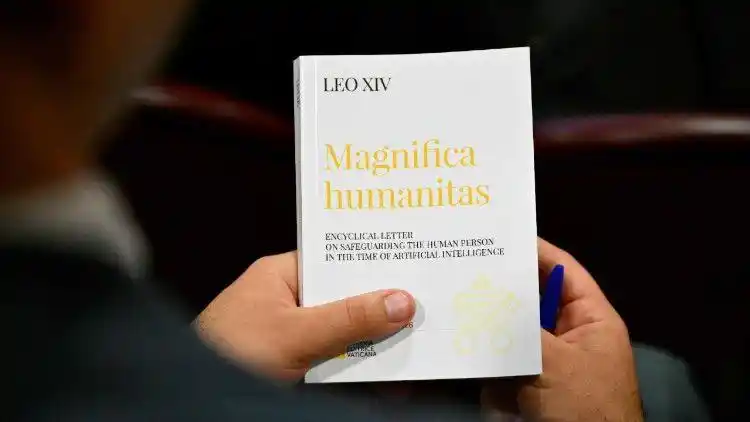
(Image source: Vatican News)

Many find it absurd. AI is science; the Church is theology. While the two disciplines have their own moral concerns, they never seemed to sit at the same table. Having the Vatican talk about algorithms is like asking a weather bureau to judge philosophy—completely unrelated.

However, upon a detailed reading of the "Magnifica Humanitas" encyclical, Lei Technology discovered that this time the Vatican did not use "God" to interpret AI from a lofty position. Instead, it engaged more down-to-earth, discussing topics like war, employment, education, healthcare, and public decision-making—topics the public often struggles to delve into deeply. We have distilled ten core viewpoints from the encyclical to see what the Pope actually said and what it means.

The Ten Viewpoints of the Encyclical, Hitting the Core of People's AI Anxieties

"Magnifica Humanitas" (Sublime Humanity) exceeds forty thousand words, covering war, employment, education, healthcare, information, and public decision-making—touching on almost all current AI controversies. However, it is essentially not a technical document but a moral checklist. It doesn't tell you how to train models; it asks: Whom is AI serving, who is responsible, and who is being left behind? We have extracted ten viewpoints most directly relevant to China's current reality from the encyclical, along with detailed interpretations.

1. AI Is Not the Enemy, But It Has Entered Daily Decision Systems

Technology itself is not the enemy of humanity, but emerging technologies have embedded themselves into daily life and have begun influencing decision-making processes and social imagination.

Leo XIV's attitude is exactly as he wrote. He does not want to label AI as a 'dangerous technology' but describes a change that has already occurred: AI is no longer just a tool but is gradually becoming the environment.

In the past, you had to actively open software to use a technology; now, many AI decisions happen in the background, and users may not even know they have already been assessed by a system. In China, short-video platforms use algorithms to decide content distribution; e-commerce platforms use algorithms to rank products; recruitment platforms perform job matching; office software summarizes meetings and generates documents; educational platforms grade homework and analyze learning situations. Ordinary people might think they only occasionally ask large models, but the real change is that AI has already intervened before they make choices.

(Image source: Lei Technology chart)

Many people might still be thinking or 'resisting' the AI wave by not using AI themselves, but in reality, AI large models have already penetrated our lives deeply. Almost no one can truly escape.

2. The AI Issue Isn't Just About Regulation, But Who Wields Technological Power

The problem is not limited to regulation. Many of the key actors driving technological development today are private institutions with transnational capabilities and immense resources.

Many AI discussions stop at 'whether to regulate.' But the encyclical probes deeper: Who exactly holds technological power? In my view, this is the sharpest point in the entire 40,000-word encyclical and a question the entire industry struggles to answer perfectly.

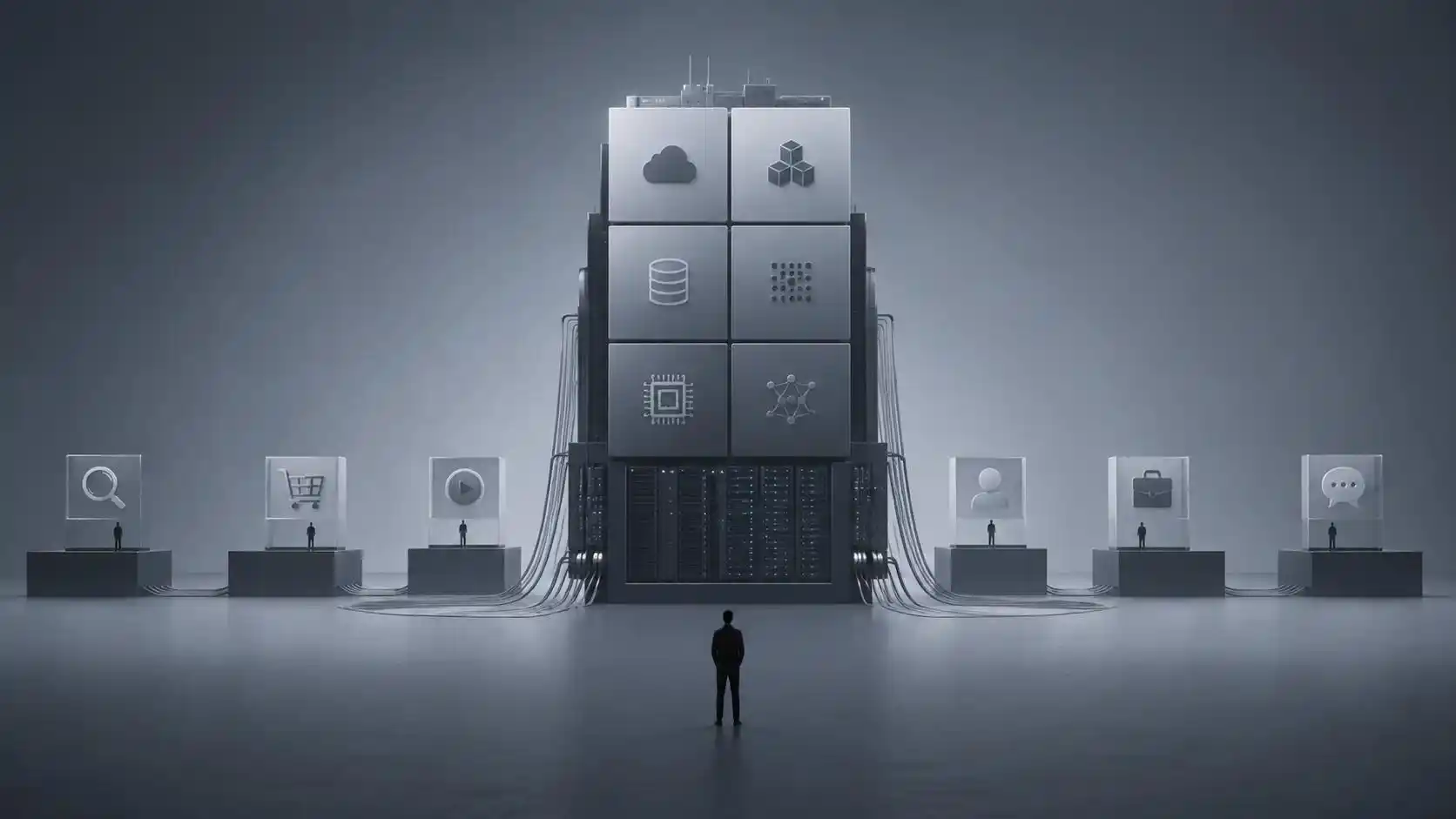
In the AI era, power comes not only from model parameters but also from computing power, data, cloud platforms, access points, and workflows. For example, Baidu has search and intelligent cloud; Alibaba has cloud and the Tongyi system; Tencent has WeChat, Enterprise WeChat, and office collaboration; ByteDance has content distribution and Feishu; DingTalk and WPS are also embedding AI into enterprise processes. A small or medium-sized enterprise wanting to develop an AI application often cannot bypass APIs, cloud services, model licensing, and platform rules.
(Image source: Lei Technology chart)

In my view, AI industry competition appears to be about model capability, but at its foundation, it's about control over infrastructure. Whoever can integrate AI into workflows for office work, search, content, transactions, and enterprise management is not just selling tools but reshaping the next generation of digital infrastructure. This is why the question of 'who to regulate' is so difficult to answer.

3. AI Is Powerful, But Even Developers Cannot Fully Explain It

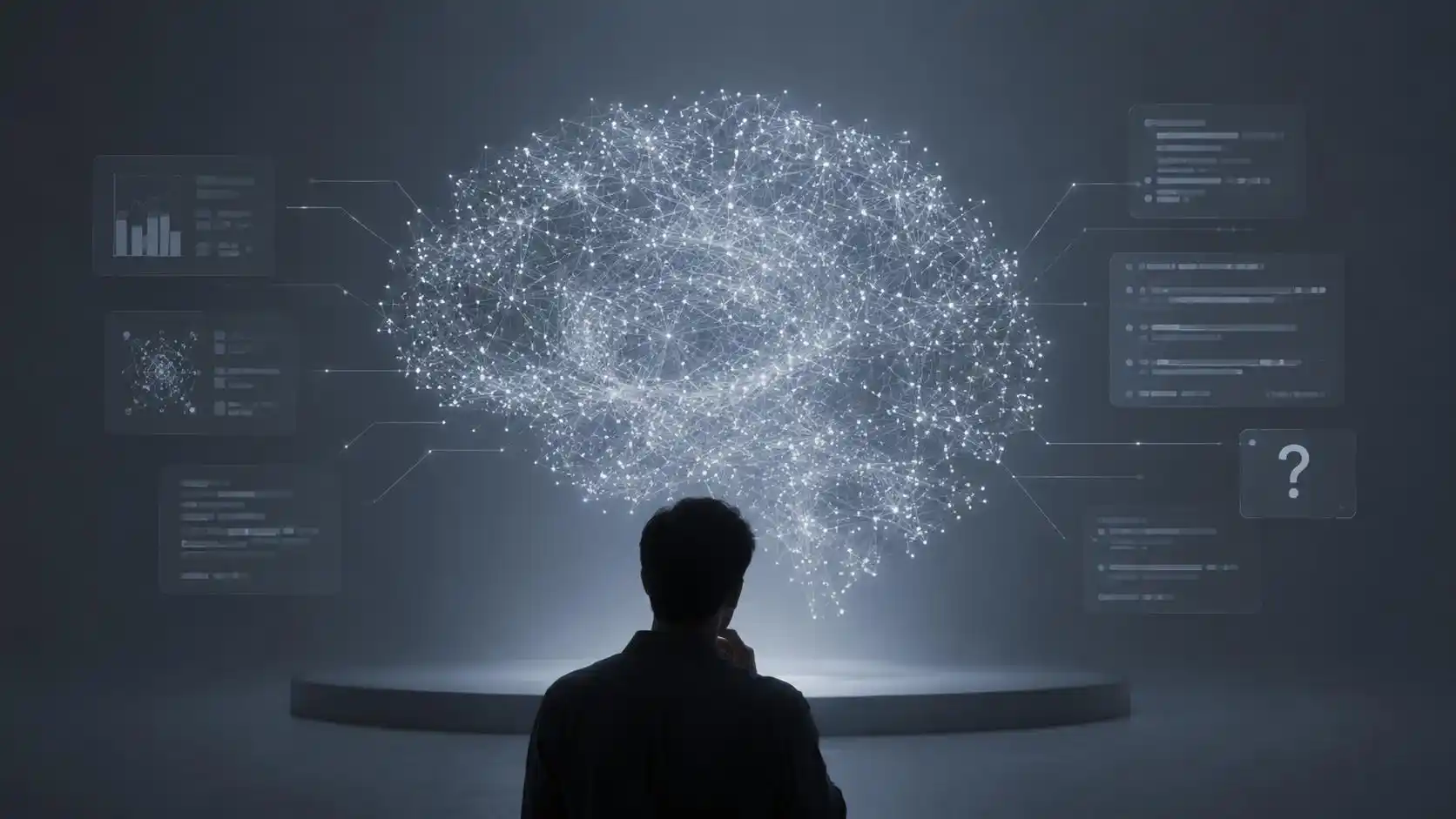
AI offers many astonishing possibilities, but even its designers have limited understanding of the internal mechanisms of generative AI systems.

Over the past year, domestic enterprises' attitudes towards large models have shifted from 'must adopt AI' to 'which areas can we safely delegate to AI?' Customer service, marketing copywriting, meeting minutes, code assistance, and knowledge base Q&A are relatively easy to implement because error costs are controllable and human modification is convenient. However, financial risk control, medical diagnosis, legal review, and government services are different. In these scenarios, AI cannot just provide a seemingly correct answer; it must also explain its reasoning, retain logs, support audits, and allow for human takeover when necessary.
(Image source: Lei Technology chart)

Now, many enterprises procuring AI products no longer just look at how powerful the model is. They also consider data isolation, permission systems, on-premises deployment, and audit tracking capabilities. This change indicates one thing: the next threshold for enterprise AI is not whether it can generate but whether it can be held accountable. The more a model resembles an expert, the more users need to know when it might be unreliable.

4. AI Must Not Be Treated as Human Intelligence, Nor as a Moral Agent

AI is not a pile of data but a subject possessing freedom, relationships, and moral responsibility.

Now, many AI products strive to become 'more human-like.' They comfort, act coquettishly, remember preferences, and maintain long-term relationships with users. CCTV reported on a reminder from the Jiangsu Consumer Council about risks associated with AI companions, including privacy leaks, consumption traps, and emotional dependency. Xin Kuai Bao also reported on platforms like "Xingye" and "Cat Box," where young people pay to 'exclusively own' virtual lovers' AI characters. After popular characters are bought out, other users collectively experience 'heartbreak.'

(Image source: Lei Technology chart)

This actually shows users are not buying a piece of code; they are investing real emotions. AI companionship is not inherently wrong; it does fulfill needs for loneliness and companionship. But products must clearly define boundaries. AI can simulate relationships but cannot bear the responsibilities inherent in real relationships. This isn't moral preaching but a boundary that should be seriously considered at the product design level, especially when targeting minors, the elderly, and emotionally vulnerable individuals.

5. AI Decisions Are Affecting Employment, Healthcare, Welfare, and Justice

Employment, welfare, judicial, and medical decisions—sensitive choices—may be influenced by data systems. Therefore, mechanisms for transparency, accountability, and human oversight are essential.

Recruitment is the scenario where ordinary people most easily feel the pressure of AI decisions. First Financial reported that BOSS Zhipin is testing an end-to-end AI recruitment Agent called "DeepHire," covering AI resume polishing, automatic application submission, batch resume parsing on the enterprise side, automatic replies, and intelligent interview scheduling. AI entering the recruitment process certainly improves efficiency; HR is no longer overwhelmed by massive resumes, and job seekers can better present their experiences. But the problem lies here: if resumes are first batch-parsed, scored, and sorted by AI, job seekers might be filtered out by the system before ever being seen by a human.

My view is that AI can assist in screening but should not leave job seekers facing a completely black-box rejection. At the very least, when affecting hiring decisions and interview opportunities, platforms should retain human judgment, clearly mark AI-generated content, and provide necessary appeal channels. This is not limiting AI but leaving a door open for those rejected by the system. Similar dilemmas exist for beneficiary decisions in welfare agencies and judicial determinations of illegal acts.

6. Morally Defined by a Few Is Insufficient; AI Resources Should Serve the Common Good

If ethical standards are defined by only a few, then even more ethical AI is insufficient. Data, knowledge, science, and technology should serve the common good.

Making AI public does not mean demanding all models be free or excluding commercial companies. It means preventing the definition, use, and benefit rights of AI from becoming overly concentrated. This is similar to the ongoing debate about open-source versus closed-source models.

Models like Tongyi Qianwen and DeepSeek continue to open some of their capabilities. Smart computing centers across regions and core nodes of the National Supercomputing Internet also emphasize inclusive computing power and open-source model ecosystems. Abroad, initiatives like NAIRR (National AI Research Resource) aim to provide computing power, data, and model resources to universities, research institutions, and small teams.

I believe that if only a few companies can train models, access computing power, and control high-quality data, while ordinary entrepreneurs, SMEs, and university teams can only work on peripheral applications, AI will instead create new digital divides. A truly healthy AI ecosystem should allow more people to participate, not just wait for tech giants to open a few APIs. In this regard, China's current AI environment is relatively more open, with companies like Alibaba and DeepSeek providing assistance to universities and SMEs.

7. Truth Is a Public Good; AI Amplifies Misinformation and Cognitive Manipulation

Misinformation did not originate with AI, but AI enables it to be more massive, persuasive, and harder to distinguish from genuine dissemination.

This is an age-old problem. Ultimately, it's not about whether AI has hallucinations, but that the cost of using AI for fabrication has become very low.

CCTV reported cases of people using AI to fabricate fake news like "Yichang, Hubei Tour Boat Capsizes," accompanied by AI-processed fake images. In Dali, Yunnan, AI was used to create fake traffic accident scene videos. After an earthquake in Kuqa, Xinjiang, self-media used AI to generate images and audiovisuals inconsistent with the real disaster, publishing false information like "collapsed houses." Images, videos, and so-called on-scene descriptions can all be generated together, making it harder for ordinary people to distinguish.

(Image source: Lei Technology chart)

The state has already issued the "Measures for Labeling AI-Generated and Synthesized Content," requiring labeling of such content. Platforms are also improving their ability to detect fakes. But I believe this is not the end. In the AI era, what is truly scarce is not content but trustworthy content. The more content proliferates, the more important its source becomes.

8. AI Education Must Not Just Teach Tool Use; It Must Preserve Questioning and Judgment

AI education cannot be reduced to technical training. Schools should still cultivate the ability to question, relate, and think critically.

Regarding this part, China is actually at the forefront globally. For example, in 2025, the Ministry of Education released the "Guidelines for General AI Education in Primary and Secondary Schools" and the "Guidelines for the Use of Generative AI by Primary and Secondary School Students." The former emphasizes a tiered, progressive AI general education system, while the latter clarifies usage norms and safety boundaries for each educational stage.

However, if AI education merely teaches students to write prompts and get answers from models, it cultivates not intelligent societal abilities but more proficient dependency. Nowadays, students use AI to write essays, solve problems, and create PPTs; teachers use AI to generate lesson plans, test questions, and comments. Efficiency improves, but the thinking process may be compressed.

Therefore, I also agree with this viewpoint in the encyclical: AI in educational settings should be a tool, not a ghostwriter. Truly good AI education is not about getting answers faster but about enabling students to ask better questions, verify, compare, and express—in other words, learning the thinking process is more important than learning how to get AI to provide solutions directly.

9. AI Will Reshape Labor, But Work Is Not Just About Efficiency

AI can enhance productivity by taking over routine repetitive tasks, but work is also an important place for human development and social participation.

Currently, the attitude of global enterprises towards AI deployment is very uniform: "reducing costs and increasing efficiency," which has become a standard move in almost every industry. But the question is whether AI is augmenting humans or replacing them—this has always been a source of anxiety about AI. If AI in the office merely enables employees to complete reports and meeting minutes faster, it can improve work efficiency, and employees can have more free time for personal activities after finishing work. But if enterprises only use AI to compress positions, lower wages, and strengthen monitoring, it creates new insecurity.

In fact, a healthy AI workflow should allow employees to shift towards judgment, communication, creation, and complex problem-solving, not turn them into repair workers for model outputs.

10. Irreversible Life-and-Death Decisions Cannot Be Entrusted to AI

Lethal or other irreversible decisions should not be delegated to automated systems. Human judgment and moral responsibility cannot be reduced to calculation.

On the surface, this talks about military AI, but it equally applies to all high-risk scenarios like autonomous driving, medical emergencies, industrial robots, and security systems.

Commercialization of intelligent driving in China is rapid. Automated parking, unmanned delivery, and unmanned mining trucks are accelerating deployment. Users care about experience; enterprises care about cost and scale. But once an accident occurs, questions immediately arise: Was it the user's failure to take over in time, or a system misjudgment? An algorithm issue or a sensor problem? The automaker's responsibility or the driver's? Medical AI is similar. It can indeed assist in reading scans, triage, and generating medical records, but it cannot make irreversible judgments without a doctor being responsible.

High-risk scenarios cannot only emphasize the level of intelligence; they must also clarify human supervision, emergency takeover, accident review, and the chain of responsibility. So-called "disarming AI," in an industrial context, means not allowing technological capability to cross the boundary of responsibility.

40,000 Words, 10 Viewpoints: The Pope Wants to Say One Thing

After dissecting this 40,000-word encyclical, Lei Technology believes the Pope essentially wants to clarify one thing from start to finish: technology is not neutral.

Simply put, what AI looks like depends on who builds it. ChatGPT designed by OpenAI, Gemini created by Google, Doubao built by ByteDance—each has its own "preferences and biases." Whose values enter the training data, whose interests determine the product direction, who controls computing power and access points, who formulates the so-called "ethical frameworks"—all these are becoming part of the experience we feel daily when interacting with AI.

For example, when AI enters recruitment, the screening logic is defined by the platform, and job seekers don't know by what criteria they are filtered. When AI enters education, what constitutes a 'good answer' is determined by the model, and students' thinking gradually aligns with the model. When AI generates content, what is 'credible' is determined by algorithmic distribution, and misinformation circulates in the guise of truth. Behind each scenario lies the same question: Who is defining these rules, and whom are these rules shaping?

The encyclical does not name any company, but it speaks to all companies. What the Pope wants to highlight is that every AI tool you use is not just a tool but a product of certain value judgments. Sometimes you find an AI useful enough, perhaps because it's sufficiently "obedient to you."

In the document, Leo XIV uses a word almost never appearing in AI discussions: "anthropology." He says the challenge posed by AI is fundamentally not a technological challenge but an anthropological one.

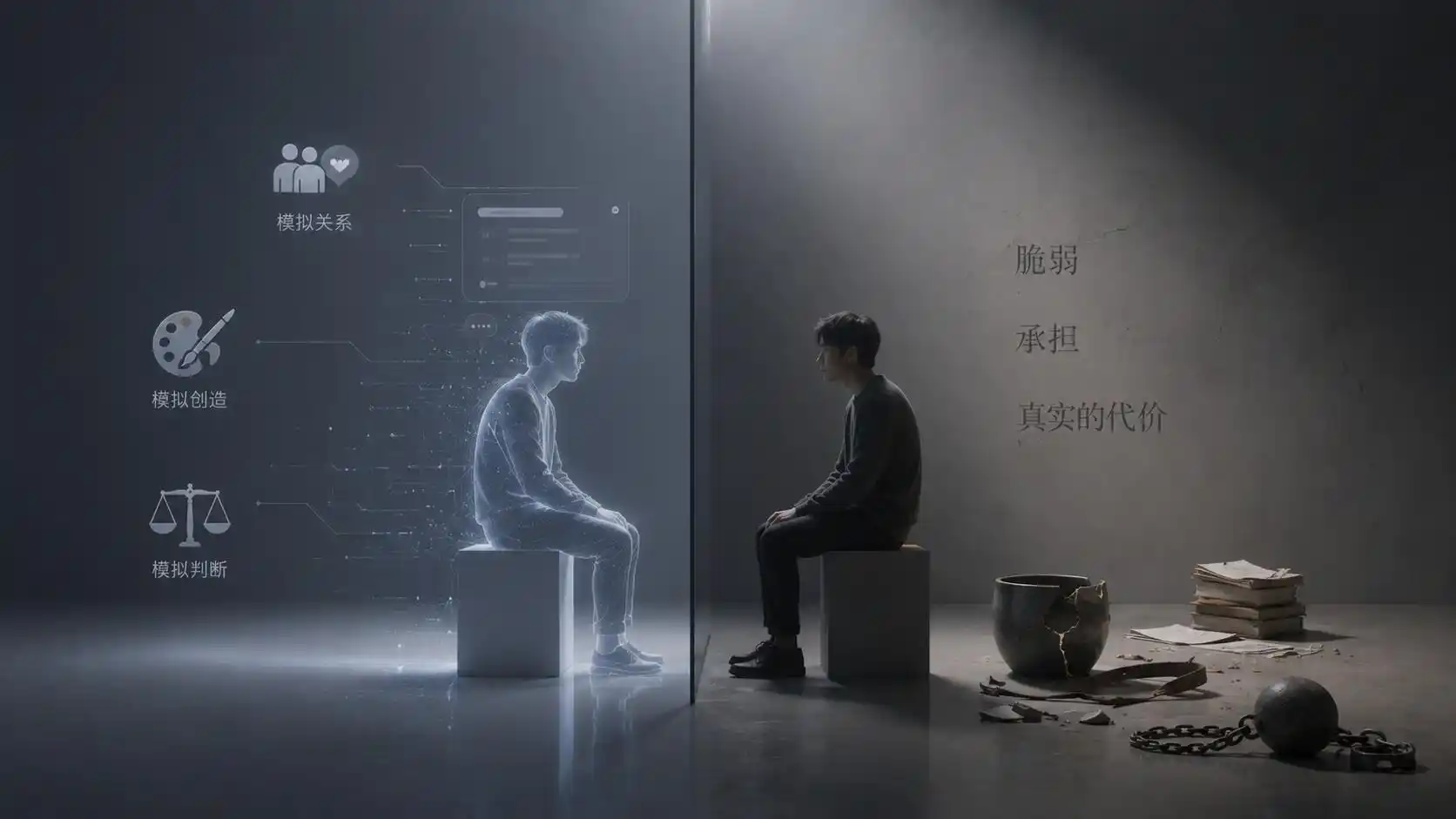
AI can write, create music, generate images, simulate dialogue, and make seemingly reasonable judgments. When machines can do all these, humans are forced to answer a question they have long been able to avoid: What is the meaning of us doing these things? If AI writes more fluent articles, generates more pleasing music, and gives more efficient advice, then what is the value of "humans doing this"?

The encyclical contains this passage:

AI can simulate relationships but cannot bear the responsibilities within them; AI can simulate creation but cannot possess the will behind creation; AI can simulate judgment but cannot be accountable for the consequences of judgment. It can achieve the surface, but beneath that surface—the things that make 'human action' meaningful, like vulnerability, commitment, and real cost—it has none.

This makes us think of 1891 when the Catholic Church signed the "Rerum Novarum" encyclical. The Industrial Revolution arrived, and humanity was also experiencing a similarly difficult time. Machines replaced much physical labor but did not replace humans. Humans redefined their position and found things machines couldn't do. This time, the difference is that AI is entering the cognitive domain—creation, judgment. These parts once considered 'uniquely human' are being systematically simulated.
(Image source: Lei Technology chart)

Leo XIV calls this process "the eclipse of the human sense." If we do not seriously answer "what is a human?", AI will answer for us. And its answer comes from training data. As for who provides that training data, that depends on who holds the initiative with large models.

The line in the encyclical, "Technology is never neutral," is correct. But the question immediately following is: Who has the ability to turn the expectation of 'neutrality' into the reality of 'constraint'? Leo XIV does not answer this question, nor can he. What he can do is place a set of moral language into the pool of public discourse, let it circulate, and let it influence those who set rules, deploy technology, and use products. In fact, this has always been what the Church does.

Therefore, this is not absurd. At a time when tech companies, governments, international institutions, and society have yet to find answers, a two-thousand-year-old institution has spoken first.

This article is from "Lei Technology."

Perguntas relacionadas

QWhat is the main argument presented by Pope Leo XIV in the AI encyclical 'Magnifica Humanitas'?

AThe main argument is that technology, particularly AI, is not neutral. Its development and application are shaped by the values, interests, and power structures of those who create and control it. The encyclical frames AI's challenges as fundamentally anthropological, forcing humans to reconsider what makes human actions meaningful when machines can simulate creativity, judgment, and relationship.

QAccording to the article, what are two specific areas where AI decision-making is raising significant ethical concerns?

ATwo specific areas are employment (e.g., AI-powered resume screening and hiring processes that could create opaque rejection systems) and public information (e.g., AI's role in amplifying and making disinformation more convincing and harder to distinguish from truth).

QWhat does the encyclical suggest about the relationship between AI and human responsibility in high-stakes scenarios?

AThe encyclical asserts that irreversible decisions, especially those involving life and death, should not be delegated to automated systems. Human judgment and moral responsibility cannot be reduced to calculation. It calls for clear human oversight, emergency takeover protocols, and defined chains of responsibility in areas like autonomous weapons, healthcare, and self-driving cars.

QHow does the article contrast the current AI revolution with the Industrial Revolution discussed in the 1891 encyclical 'Rerum Novarum'?

AThe Industrial Revolution primarily replaced human physical labor, leading people to redefine their roles around tasks machines couldn't do. The AI revolution, however, is entering the cognitive domain—simulating creativity, judgment, and relationship—areas traditionally considered uniquely human. This presents a deeper challenge to human identity and purpose.

QWhat is one of the key concerns the encyclical raises regarding AI development power dynamics, according to the article's analysis?

AA key concern is that the power to define, develop, and deploy AI is concentrated in a few large, resource-rich private corporations (e.g., tech giants controlling data, compute, models, and platform ecosystems). This raises the risk of creating a new digital divide where only a few entities shape the rules and benefits of AI, potentially undermining the common good.

Leituras Relacionadas

Morning News | Coinbase Partners with Standard Chartered to Expand Multi-Currency Fiat Channels; Sharplink and Forward to be Included in Russell Indices; JPMorgan May Issue Stablecoin in the Future

Daily Crypto Recap: Key Developments Institutional adoption continues: Coinbase partners with Standard Chartered to expand multi-currency fiat rails for institutions via Coinbase Prime, supporting AUD, SGD, CAD, CHF, EUR, and GBP. Meanwhile, Sharplink and Forward Industries, companies holding significant ETH and SOL reserves respectively, are set to be included in the Russell indexes, providing indirect crypto exposure to traditional index investors. Regulatory and compliance moves are in focus. Hong Kong's monetary authority announced new measures for investment accounts of mainland Chinese investors, including retroactive document checks to January 2023. Prediction market Polymarket is considering implementing KYC requirements to address sanctions and legal risks. Major financial players signal deeper involvement. JPMorgan Chase CEO Jamie Dimon suggested the bank might issue a stablecoin in the future. Concurrently, Falcon Finance and Anchorage Digital launched fUSD, a compliant, institution-focused stablecoin. Market sentiment presents a mixed picture. Bitmine's Tom Lee predicts an incoming crypto "supercycle," driven by Wall Street tokenization and AI agents, with Ethereum as a key beneficiary. However, a prominent trader cautions that the current period of investor losses may not be long enough to confirm a bear market bottom, and TD Cowen analysts note diminished chances for U.S. crypto market structure legislation this year due to a worsening political climate. Other notable news includes a16z crypto's observation that most tokenized assets are merely "digitized" and not actively used in DeFi, South Korea's crypto trading volume falling to about 8% of KOSPI's, and the Chinese Supreme Court stating it will research judicial rules for virtual currency cases.

链捕手Há 1h

Morning News | Coinbase Partners with Standard Chartered to Expand Multi-Currency Fiat Channels; Sharplink and Forward to be Included in Russell Indices; JPMorgan May Issue Stablecoin in the Future

链捕手Há 1h

Sitting on a Trillion-Dollar Market, Why Hasn't Real Estate Tokenization Taken Off?

For years, real estate tokenization has been hailed as a breakthrough technology poised to democratize property investment. In theory, it promises fractional ownership of premium assets, rapid transactions, and enhanced liquidity. Yet, in practice, it has failed to gain traction, accounting for less than 0.1% of the global real estate market. The core issue is not a lack of tokens, but the absence of a robust legal, operational, and compliant framework that grants them credibility as financial instruments. The industry initially erred by prioritizing technology over investor needs, creating products with unclear ownership and unreliable liquidity. Key infrastructure remains missing: legally sound ownership structures, compliant transfer mechanisms, professional servicing, and interoperability with traditional finance. This regulatory ambiguity and operational complexity deter institutional investors, who already have access to established, well-governed investment channels. A mature model would feature low minimum investments in institutional-grade assets, transparent rental income distribution, and genuine liquidity through regulated secondary markets. While regulatory progress in regions like the UAE and growth in other tokenized asset sectors (like treasuries) are positive signs, the focus must shift from issuing tokens to building foundational systems. The investment proposition of tokenized real estate is not to create new returns, but to improve access, efficiency, and liquidity for existing income-generating properties. For mainstream adoption, the sector must demonstrate tangible economic advantages over traditional models, not just technical novelty. The next phase depends on proving scalable, compliant operations with auditable track records. The barrier is no longer technology, but infrastructure and regulation. The vision remains unfulfilled until this gap is bridged.

marsbitHá 1h

Sitting on a Trillion-Dollar Market, Why Hasn't Real Estate Tokenization Taken Off?

marsbitHá 1h

Trading

Spot
Futuros

Artigos em Destaque

O que é GROK AI

Grok AI: Revolucionar a Tecnologia Conversacional na Era Web3 Introdução No panorama em rápida evolução da inteligência artificial, a Grok AI destaca-se como um projeto notável que liga os domínios da tecnologia avançada e da interação com o utilizador. Desenvolvida pela xAI, uma empresa liderada pelo renomado empreendedor Elon Musk, a Grok AI procura redefinir a forma como interagimos com a inteligência artificial. À medida que o movimento Web3 continua a florescer, a Grok AI visa aproveitar o poder da IA conversacional para responder a consultas complexas, proporcionando aos utilizadores uma experiência que é não apenas informativa, mas também divertida. O que é a Grok AI? A Grok AI é um sofisticado chatbot de IA conversacional projetado para interagir com os utilizadores de forma dinâmica. Ao contrário de muitos sistemas de IA tradicionais, a Grok AI abraça uma gama mais ampla de perguntas, incluindo aquelas tipicamente consideradas inadequadas ou fora das respostas padrão. Os principais objetivos do projeto incluem: Raciocínio Fiável: A Grok AI enfatiza o raciocínio de senso comum para fornecer respostas lógicas com base na compreensão contextual. Supervisão Escalável: A integração de assistência de ferramentas garante que as interações dos utilizadores sejam monitorizadas e otimizadas para qualidade. Verificação Formal: A segurança é primordial; a Grok AI incorpora métodos de verificação formal para aumentar a fiabilidade das suas saídas. Compreensão de Longo Contexto: O modelo de IA destaca-se na retenção e recordação de um extenso histórico de conversas, facilitando discussões significativas e contextualizadas. Robustez Adversarial: Ao focar na melhoria das suas defesas contra entradas manipuladas ou maliciosas, a Grok AI visa manter a integridade das interações dos utilizadores. Em essência, a Grok AI não é apenas um dispositivo de recuperação de informações; é um parceiro conversacional imersivo que incentiva um diálogo dinâmico. Criador da Grok AI A mente por trás da Grok AI não é outra senão Elon Musk, um indivíduo sinónimo de inovação em vários campos, incluindo automóvel, viagens espaciais e tecnologia. Sob a égide da xAI, uma empresa focada em avançar a tecnologia de IA de maneiras benéficas, a visão de Musk visa reformular a compreensão das interações com a IA. A liderança e a ética fundacional são profundamente influenciadas pelo compromisso de Musk em ultrapassar os limites tecnológicos. Investidores da Grok AI Embora os detalhes específicos sobre os investidores que apoiam a Grok AI permaneçam limitados, é reconhecido publicamente que a xAI, a incubadora do projeto, é fundada e apoiada principalmente pelo próprio Elon Musk. As anteriores empreitadas e participações de Musk fornecem um forte apoio, reforçando ainda mais a credibilidade e o potencial de crescimento da Grok AI. No entanto, até agora, informações sobre fundações ou organizações de investimento adicionais que apoiam a Grok AI não estão prontamente acessíveis, marcando uma área para exploração futura potencial. Como Funciona a Grok AI? A mecânica operacional da Grok AI é tão inovadora quanto a sua estrutura conceptual. O projeto integra várias tecnologias de ponta que facilitam as suas funcionalidades únicas: Infraestrutura Robusta: A Grok AI é construída utilizando Kubernetes para orquestração de contêineres, Rust para desempenho e segurança, e JAX para computação numérica de alto desempenho. Este trio assegura que o chatbot opere de forma eficiente, escale eficazmente e sirva os utilizadores prontamente. Acesso a Conhecimento em Tempo Real: Uma das características distintivas da Grok AI é a sua capacidade de aceder a dados em tempo real através da plataforma X—anteriormente conhecida como Twitter. Esta capacidade concede à IA acesso às informações mais recentes, permitindo-lhe fornecer respostas e recomendações oportunas que outros modelos de IA poderiam perder. Dois Modos de Interação: A Grok AI oferece aos utilizadores a escolha entre “Modo Divertido” e “Modo Regular”. O Modo Divertido permite um estilo de interação mais lúdico e humorístico, enquanto o Modo Regular foca em fornecer respostas precisas e exatas. Esta versatilidade assegura uma experiência adaptada que atende a várias preferências dos utilizadores. Em essência, a Grok AI combina desempenho com envolvimento, criando uma experiência que é tanto enriquecedora quanto divertida. Cronologia da Grok AI A jornada da Grok AI é marcada por marcos fundamentais que refletem as suas fases de desenvolvimento e implementação: Desenvolvimento Inicial: A fase fundamental da Grok AI ocorreu ao longo de aproximadamente dois meses, durante os quais o treinamento inicial e o ajuste do modelo foram realizados. Lançamento Beta do Grok-2: Numa evolução significativa, o beta do Grok-2 foi anunciado. Este lançamento introduziu duas versões do chatbot—Grok-2 e Grok-2 mini—cada uma equipada com capacidades para conversar, programar e raciocinar. Acesso Público: Após o seu desenvolvimento beta, a Grok AI tornou-se disponível para os utilizadores da plataforma X. Aqueles com contas verificadas por um número de telefone e ativas há pelo menos sete dias podem aceder a uma versão limitada, tornando a tecnologia disponível para um público mais amplo. Esta cronologia encapsula o crescimento sistemático da Grok AI desde a sua concepção até ao envolvimento público, enfatizando o seu compromisso com a melhoria contínua e a interação com o utilizador. Principais Características da Grok AI A Grok AI abrange várias características principais que contribuem para a sua identidade inovadora: Integração de Conhecimento em Tempo Real: O acesso a informações atuais e relevantes diferencia a Grok AI de muitos modelos estáticos, permitindo uma experiência de utilizador envolvente e precisa. Estilos de Interação Versáteis: Ao oferecer modos de interação distintos, a Grok AI atende a várias preferências dos utilizadores, convidando à criatividade e personalização na conversa com a IA. Base Tecnológica Avançada: A utilização de Kubernetes, Rust e JAX fornece ao projeto uma estrutura sólida para garantir fiabilidade e desempenho ótimo. Consideração de Discurso Ético: A inclusão de uma função de geração de imagens demonstra o espírito inovador do projeto. No entanto, também levanta considerações éticas em torno dos direitos autorais e da representação respeitosa de figuras reconhecíveis—uma discussão em curso dentro da comunidade de IA. Conclusão Como uma entidade pioneira no domínio da IA conversacional, a Grok AI encapsula o potencial para experiências transformadoras do utilizador na era digital. Desenvolvida pela xAI e impulsionada pela abordagem visionária de Elon Musk, a Grok AI integra conhecimento em tempo real com capacidades avançadas de interação. Esforça-se por ultrapassar os limites do que a inteligência artificial pode alcançar, mantendo um foco nas considerações éticas e na segurança do utilizador. A Grok AI não apenas incorpora o avanço tecnológico, mas também representa um novo paradigma de conversas no panorama Web3, prometendo envolver os utilizadores com conhecimento hábil e interação lúdica. À medida que o projeto continua a evoluir, ele permanece como um testemunho do que a interseção da tecnologia, criatividade e interação humana pode alcançar.

446 Visualizações TotaisPublicado em {updateTime}Atualizado em 2024.12.26

O que é GROK AI

O que é ERC AI

Euruka Tech: Uma Visão Geral do $erc ai e as suas Ambições no Web3 Introdução No panorama em rápida evolução da tecnologia blockchain e das aplicações descentralizadas, novos projetos surgem frequentemente, cada um com objetivos e metodologias únicas. Um desses projetos é a Euruka Tech, que opera no vasto domínio das criptomoedas e do Web3. O foco principal da Euruka Tech, particularmente do seu token $erc ai, é apresentar soluções inovadoras concebidas para aproveitar as capacidades crescentes da tecnologia descentralizada. Este artigo tem como objetivo fornecer uma visão abrangente da Euruka Tech, uma exploração das suas metas, funcionalidade, a identidade do seu criador, potenciais investidores e a sua importância no contexto mais amplo do Web3. O que é a Euruka Tech, $erc ai? A Euruka Tech é caracterizada como um projeto que aproveita as ferramentas e funcionalidades oferecidas pelo ambiente Web3, focando na integração da inteligência artificial nas suas operações. Embora os detalhes específicos sobre a estrutura do projeto sejam um tanto elusivos, ele é concebido para melhorar o envolvimento dos utilizadores e automatizar processos no espaço cripto. O projeto visa criar um ecossistema descentralizado que não só facilita transações, mas também incorpora funcionalidades preditivas através da inteligência artificial, daí a designação do seu token, $erc ai. O objetivo é fornecer uma plataforma intuitiva que facilite interações mais inteligentes e um processamento eficiente de transações dentro da crescente esfera do Web3. Quem é o Criador da Euruka Tech, $erc ai? Neste momento, a informação sobre o criador ou a equipa fundadora da Euruka Tech permanece não especificada e algo opaca. Esta ausência de dados levanta preocupações, uma vez que o conhecimento sobre o histórico da equipa é frequentemente essencial para estabelecer credibilidade no setor blockchain. Portanto, categorizamos esta informação como desconhecida até que detalhes concretos sejam disponibilizados no domínio público. Quem são os Investidores da Euruka Tech, $erc ai? De forma semelhante, a identificação de investidores ou organizações de apoio para o projeto Euruka Tech não é prontamente fornecida através da pesquisa disponível. Um aspeto que é crucial para potenciais partes interessadas ou utilizadores que consideram envolver-se com a Euruka Tech é a garantia que vem de parcerias financeiras estabelecidas ou apoio de empresas de investimento respeitáveis. Sem divulgações sobre afiliações de investimento, é difícil tirar conclusões abrangentes sobre a segurança financeira ou a longevidade do projeto. Em linha com a informação encontrada, esta seção também se encontra no estado de desconhecido. Como funciona a Euruka Tech, $erc ai? Apesar da falta de especificações técnicas detalhadas para a Euruka Tech, é essencial considerar as suas ambições inovadoras. O projeto procura aproveitar o poder computacional da inteligência artificial para automatizar e melhorar a experiência do utilizador no ambiente das criptomoedas. Ao integrar IA com tecnologia blockchain, a Euruka Tech visa fornecer funcionalidades como negociações automatizadas, avaliações de risco e interfaces de utilizador personalizadas. A essência inovadora da Euruka Tech reside no seu objetivo de criar uma conexão fluida entre os utilizadores e as vastas possibilidades apresentadas pelas redes descentralizadas. Através da utilização de algoritmos de aprendizagem automática e IA, visa minimizar os desafios enfrentados por utilizadores de primeira viagem e agilizar as experiências transacionais dentro do quadro do Web3. Esta simbiose entre IA e blockchain sublinha a importância do token $erc ai, que se apresenta como uma ponte entre interfaces de utilizador tradicionais e as capacidades avançadas das tecnologias descentralizadas. Cronologia da Euruka Tech, $erc ai Infelizmente, devido à informação limitada disponível sobre a Euruka Tech, não conseguimos apresentar uma cronologia detalhada dos principais desenvolvimentos ou marcos na jornada do projeto. Esta cronologia, tipicamente inestimável para traçar a evolução de um projeto e compreender a sua trajetória de crescimento, não está atualmente disponível. À medida que informações sobre eventos notáveis, parcerias ou adições funcionais se tornem evidentes, atualizações certamente aumentarão a visibilidade da Euruka Tech na esfera cripto. Esclarecimento sobre Outros Projetos “Eureka” É importante abordar que múltiplos projetos e empresas partilham uma nomenclatura semelhante com “Eureka.” A pesquisa identificou iniciativas como um agente de IA da NVIDIA Research, que se concentra em ensinar robôs a realizar tarefas complexas utilizando métodos generativos, bem como a Eureka Labs e a Eureka AI, que melhoram a experiência do utilizador na educação e na análise de serviços ao cliente, respetivamente. No entanto, estes projetos são distintos da Euruka Tech e não devem ser confundidos com os seus objetivos ou funcionalidades. Conclusão A Euruka Tech, juntamente com o seu token $erc ai, representa um jogador promissor, mas atualmente obscuro, dentro do panorama do Web3. Embora os detalhes sobre o seu criador e investidores permaneçam não divulgados, a ambição central de combinar inteligência artificial com tecnologia blockchain destaca-se como um ponto focal de interesse. As abordagens únicas do projeto em promover o envolvimento do utilizador através da automação avançada podem diferenciá-lo à medida que o ecossistema Web3 avança. À medida que o mercado cripto continua a evoluir, as partes interessadas devem manter um olhar atento sobre os avanços em torno da Euruka Tech, uma vez que o desenvolvimento de inovações documentadas, parcerias ou um roteiro definido pode apresentar oportunidades significativas no futuro próximo. Neste momento, aguardamos por insights mais substanciais que possam desvendar o potencial da Euruka Tech e a sua posição no competitivo panorama cripto.

487 Visualizações TotaisPublicado em {updateTime}Atualizado em 2025.01.02

O que é ERC AI

O que é DUOLINGO AI

DUOLINGO AI: Integrar a Aprendizagem de Línguas com Inovação Web3 e IA Numa era em que a tecnologia transforma a educação, a integração da inteligência artificial (IA) e das redes blockchain anuncia uma nova fronteira para a aprendizagem de línguas. Apresentamos DUOLINGO AI e a sua criptomoeda associada, $DUOLINGO AI. Este projeto aspira a unir o poder educativo das principais plataformas de aprendizagem de línguas com os benefícios da tecnologia descentralizada Web3. Este artigo explora os principais aspectos do DUOLINGO AI, analisando os seus objetivos, estrutura tecnológica, desenvolvimento histórico e potencial futuro, mantendo a clareza entre o recurso educativo original e esta iniciativa independente de criptomoeda. Visão Geral do DUOLINGO AI No seu cerne, DUOLINGO AI procura estabelecer um ambiente descentralizado onde os alunos podem ganhar recompensas criptográficas por alcançar marcos educativos em proficiência linguística. Ao aplicar contratos inteligentes, o projeto visa automatizar processos de verificação de habilidades e alocação de tokens, aderindo aos princípios do Web3 que enfatizam a transparência e a propriedade do utilizador. O modelo diverge das abordagens tradicionais de aquisição de línguas ao apoiar-se fortemente numa estrutura de governança orientada pela comunidade, permitindo que os detentores de tokens sugiram melhorias ao conteúdo dos cursos e à distribuição de recompensas. Alguns dos objetivos notáveis do DUOLINGO AI incluem: Aprendizagem Gamificada: O projeto integra conquistas em blockchain e tokens não fungíveis (NFTs) para representar níveis de proficiência linguística, promovendo a motivação através de recompensas digitais envolventes. Criação de Conteúdo Descentralizada: Abre caminhos para educadores e entusiastas de línguas contribuírem com os seus cursos, facilitando um modelo de partilha de receitas que beneficia todos os colaboradores. Personalização Através de IA: Ao empregar modelos avançados de aprendizagem de máquina, o DUOLINGO AI personaliza as lições para se adaptar ao progresso de aprendizagem individual, semelhante às características adaptativas encontradas em plataformas estabelecidas. Criadores do Projeto e Governança A partir de abril de 2025, a equipa por trás do $DUOLINGO AI permanece pseudónima, uma prática frequente no panorama descentralizado das criptomoedas. Esta anonimidade visa promover o crescimento coletivo e o envolvimento das partes interessadas, em vez de se concentrar em desenvolvedores individuais. O contrato inteligente implementado na blockchain Solana indica o endereço da carteira do desenvolvedor, o que significa o compromisso com a transparência em relação às transações, apesar da identidade dos criadores ser desconhecida. De acordo com o seu roteiro, o DUOLINGO AI pretende evoluir para uma Organização Autónoma Descentralizada (DAO). Esta estrutura de governança permite que os detentores de tokens votem em questões críticas, como implementações de funcionalidades e alocação de tesouraria. Este modelo alinha-se com a ética de empoderamento comunitário encontrada em várias aplicações descentralizadas, enfatizando a importância da tomada de decisão coletiva. Investidores e Parcerias Estratégicas Atualmente, não existem investidores institucionais ou capitalistas de risco publicamente identificáveis ligados ao $DUOLINGO AI. Em vez disso, a liquidez do projeto origina-se principalmente de trocas descentralizadas (DEXs), marcando um contraste acentuado com as estratégias de financiamento das empresas tradicionais de tecnologia educacional. Este modelo de base indica uma abordagem orientada pela comunidade, refletindo o compromisso do projeto com a descentralização. No seu whitepaper, o DUOLINGO AI menciona a formação de colaborações com “plataformas de educação blockchain” não especificadas, com o objetivo de enriquecer a sua oferta de cursos. Embora parcerias específicas ainda não tenham sido divulgadas, estes esforços colaborativos sugerem uma estratégia para misturar inovação em blockchain com iniciativas educativas, expandindo o acesso e o envolvimento dos utilizadores em diversas vias de aprendizagem. Arquitetura Tecnológica Integração de IA O DUOLINGO AI incorpora dois componentes principais impulsionados por IA para melhorar as suas ofertas educativas: Motor de Aprendizagem Adaptativa: Este motor sofisticado aprende a partir das interações dos utilizadores, semelhante a modelos proprietários de grandes plataformas educativas. Ele ajusta dinamicamente a dificuldade das lições para abordar desafios específicos dos alunos, reforçando áreas fracas através de exercícios direcionados. Agentes Conversacionais: Ao empregar chatbots alimentados por GPT-4, o DUOLINGO AI oferece uma plataforma para os utilizadores se envolverem em conversas simuladas, promovendo uma experiência de aprendizagem de línguas mais interativa e prática. Infraestrutura Blockchain Construído na blockchain Solana, o $DUOLINGO AI utiliza uma estrutura tecnológica abrangente que inclui: Contratos Inteligentes de Verificação de Habilidades: Esta funcionalidade atribui automaticamente tokens aos utilizadores que passam com sucesso em testes de proficiência, reforçando a estrutura de incentivos para resultados de aprendizagem genuínos. Emblemas NFT: Estes tokens digitais significam vários marcos que os alunos alcançam, como completar uma seção do seu curso ou dominar habilidades específicas, permitindo-lhes negociar ou exibir as suas conquistas digitalmente. Governança DAO: Membros da comunidade com tokens podem participar na governança votando em propostas-chave, facilitando uma cultura participativa que incentiva a inovação nas ofertas de cursos e funcionalidades da plataforma. Cronologia Histórica 2022–2023: Conceituação O trabalho preliminar para o DUOLINGO AI começa com a criação de um whitepaper, destacando a sinergia entre os avanços em IA na aprendizagem de línguas e o potencial descentralizado da tecnologia blockchain. 2024: Lançamento Beta Um lançamento beta limitado introduz ofertas em línguas populares, recompensando os primeiros utilizadores com incentivos em tokens como parte da estratégia de envolvimento comunitário do projeto. 2025: Transição para DAO Em abril, ocorre um lançamento completo da mainnet com a circulação de tokens, promovendo discussões comunitárias sobre possíveis expansões para línguas asiáticas e outros desenvolvimentos de cursos. Desafios e Direções Futuras Obstáculos Técnicos Apesar dos seus objetivos ambiciosos, o DUOLINGO AI enfrenta desafios significativos. A escalabilidade continua a ser uma preocupação constante, particularmente no equilíbrio dos custos associados ao processamento de IA e à manutenção de uma rede descentralizada responsiva. Além disso, garantir a criação e moderação de conteúdo de qualidade num ambiente descentralizado apresenta complexidades na manutenção dos padrões educativos. Oportunidades Estratégicas Olhando para o futuro, o DUOLINGO AI tem o potencial de aproveitar parcerias de micro-certificação com instituições académicas, proporcionando validações verificadas em blockchain das habilidades linguísticas. Além disso, a expansão cross-chain poderia permitir que o projeto acedesse a bases de utilizadores mais amplas e a ecossistemas de blockchain adicionais, melhorando a sua interoperabilidade e alcance. Conclusão DUOLINGO AI representa uma fusão inovadora de inteligência artificial e tecnologia blockchain, apresentando uma alternativa focada na comunidade aos sistemas tradicionais de aprendizagem de línguas. Embora o seu desenvolvimento pseudónimo e o modelo económico emergente tragam certos riscos, o compromisso do projeto com a aprendizagem gamificada, educação personalizada e governança descentralizada ilumina um caminho a seguir para a tecnologia educativa no domínio do Web3. À medida que a IA continua a avançar e o ecossistema blockchain evolui, iniciativas como o DUOLINGO AI poderão redefinir a forma como os utilizadores interagem com a educação linguística, empoderando comunidades e recompensando o envolvimento através de mecanismos de aprendizagem inovadores.

418 Visualizações TotaisPublicado em {updateTime}Atualizado em 2025.04.11

O que é DUOLINGO AI

Discussões

Bem-vindo à Comunidade HTX. Aqui, pode manter-se informado sobre os mais recentes desenvolvimentos da plataforma e obter acesso a análises profissionais de mercado. As opiniões dos utilizadores sobre o preço de AI (AI) são apresentadas abaixo.

活动图片