If someone tells you that AGI (Artificial General Intelligence) has been achieved, how would you determine if they are telling the truth or just bragging?
In the secret agreement exposed between OpenAI and Microsoft, the yardstick is financial statements—an AI system capable of generating at least $100 billion in profit qualifies as AGI. In Jensen Huang's words, the yardstick is time—inevitable within five years; Musk has repeatedly predicted "achieving it next year."
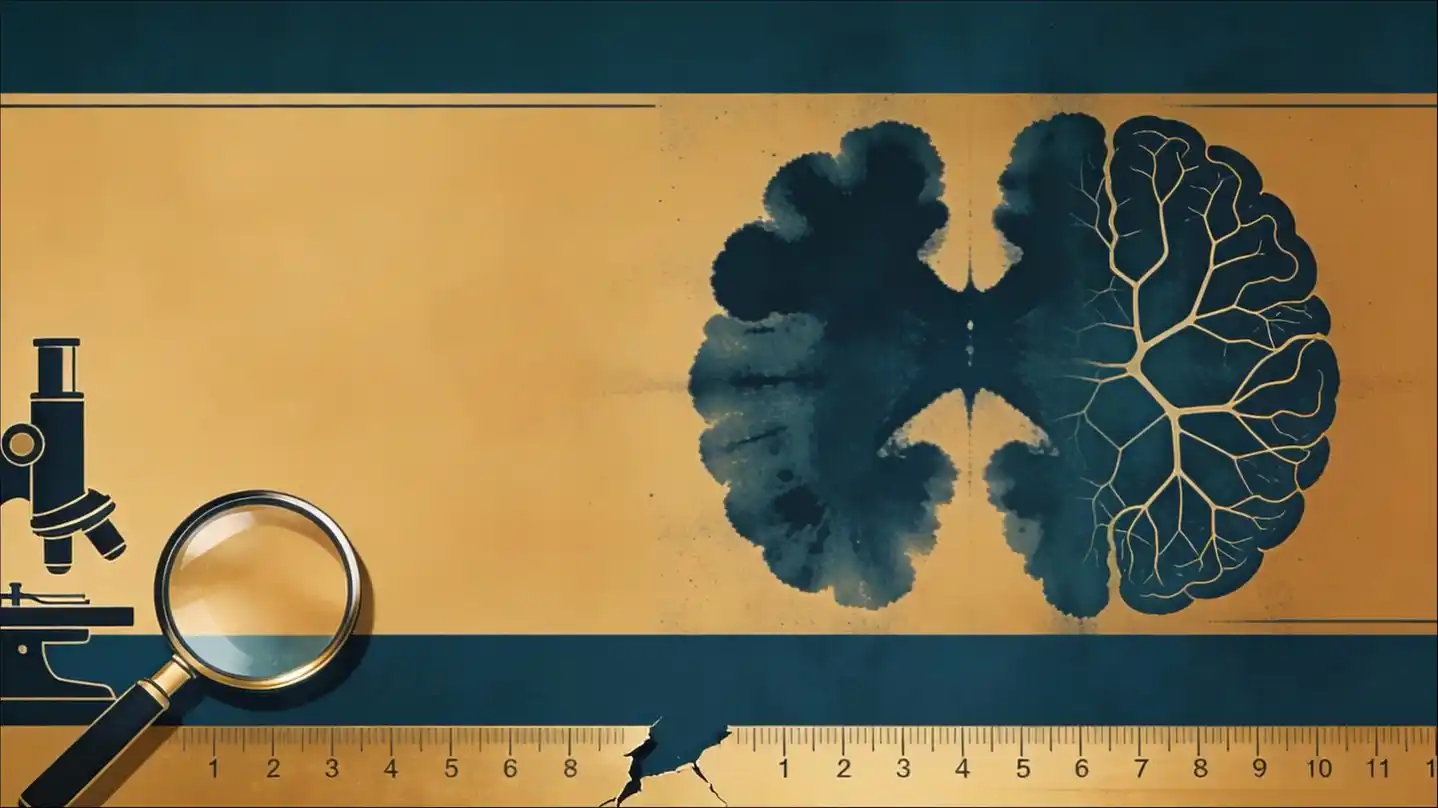
The fact that industry leaders speak different languages doesn't stem from anyone lying, but from the absence of a universally accepted yardstick for AGI itself. As noted by a researcher with independent thinking in the AGI field, Bennett, in his paper, AGI has been reduced by hype and speculation to a "Rorschach inkblot test"—everyone sees only their own imagination, not objective facts; Santa Fe Institute scientist Melanie Mitchell also believes this debate can only be clarified through long-term scientific research. (Paper link: https://arxiv.org/pdf/2503.23923)
This is the most absurd predicament in the current AI industry: we are sprinting at full speed toward a goal whose finish line hasn't even been clearly drawn.
2025, Who is Redrawing the Starting Line for AGI?
Facing this definition vacuum, academia began intensively "filling the gap" in 2025. Scholars like Bengio emphasized "versatility" and "proficiency"; DeepMind proposed "distributed AGI," attempting to break the myth of a single, all-powerful entity.
However, Australian National University researcher Michael Timothy Bennett, in a paper submitted to arXiv at the end of March, provided an extremely provocative yet most incisive answer.
He pointed out that previous definitions, circling round and round, still grapple with the benchmark of an "educated adult." Bennett adopted scholar Pei Wang's definition of intelligence—viewing intelligence as adaptive capability under limited resources—fundamentally leaping out of the "human-like" framework and defining AGI as an "artificial scientist."
He proposed that true AGI should be a system capable of adapting widely, efficiently, and scientifically to new environments and tasks, like a human scientist, under real-world constraints such as computation, memory, and energy.
The subtext of this statement is: the criterion for judging AGI should not be how well it imitates humans, but how strong its ability is to "discover new knowledge."
Why is a new yardstick urgently needed? Because the old yardsticks—the Turing test and human benchmark tests—have been aced by large models, yet we are moving farther away from true general intelligence.
In 2025, if you ask a top-tier large model "which is larger, 9.11 or 9.9," it might still confidently tell you that 9.11 is larger because 11 is greater than 9. When solving complex mathematical inequality proofs, even if a large model guesses the correct answer, its reasoning process is often logically flawed.
Bennett pinpointed the root cause: current large models follow the "scale-maximizing approximation" route—using vast amounts of data and computing power to pre-store approximate answers for various tasks in the network weights. Once encountering out-of-distribution problems, they immediately falter.
More fatally, large models lack "proactive capabilities." They cannot actively conduct experiments to verify hypotheses, autonomously construct causal chains, or make trade-offs between "continued exploration" and "exploiting the known."
Returning to the comparison between 9.11 and 9.9—the large model isn't incapable of arithmetic; it simply hasn't built a causal model for number comparison. It is merely using probabilities to guess the most similar text fragment it has seen.
The chasm between "mimicry ability" and "adaptive ability" is precisely what the new AGI standard aims to measure.
The New Calibration of Intelligence: Deconstructing the "Artificial Scientist"
The reason Bennett's set of criteria deserves attention is that he downgraded AGI from a vague philosophical proposition to a quantifiable engineering problem.
In his view, a true AGI's behavioral pattern should perfectly align with the research paradigm of a human scientist:
First, from "Puppet on Strings" to "Active Experimenter."
Today's AI is a completely passive learner, only able to "see" the data fed to it by humans. But a scientist is not. If locked in an unfamiliar room, a scientist wouldn't just stand there waiting for information; they would push the door, pull the handle, check the windows—this is "active experimentation." True AGI must be capable of autonomously planning experiments and acquiring key information through proactive interaction.
Second, from "Knowing That" to "Knowing Why."
This is the biggest shortcoming of current AI. Large models are extreme "correlation learners." They know "rain" often accompanies "wet ground," but don't know which causes which. Only by understanding causality can they infer, when the sky is clear but the ground is wet, that a sprinkler truck passed by rather than rain is imminent. Without causal understanding, AI can only operate within the distribution of its training data, which has nothing to do with being "general."
Third, Walking the Tightrope Between "Exploration" and "Exploitation."
If it only explores without exploiting, it cannot solve immediate problems despite mastering vast knowledge; if it only exploits without exploring, it is helpless when the environment changes. AGI must dynamically balance this contradiction under resource constraints—knowing what it doesn't know and allocating computing power accordingly.
Furthermore, Bennett added a highly realistic dimension: energy constraints. Including "energy" in the definition means he draws a clear bottom line: true intelligence is not about possessing unlimited resources, but about elegantly adapting under limited resources. An AI that requires consuming an entire nuclear power plant to solve a new problem is just an expensive calculator, not AGI.
Route Reset Towards AGI: Farewell to the Singular Scaling Law
Based on the above framework, Bennett deconstructs the current meta-methods for building intelligent systems into three categories:
Scale-maxing: The mainstream route for current large models, frantically stacking parameters, data, and computing power. But the bottleneck is already apparent: extremely low sample and energy efficiency.
Simp-maxing (Simplicity-maximizing): Pursuing the ultimate simplicity of model structure, believing in Occam's razor. But simplicity is a property of form, not function—the "simplest" under different Turing machines may be entirely different, making it difficult to escape the trap of subjectivity.
W-maxing (Constraint-Weakening-maximizing): Weakening functional constraints as much as possible, allowing the system to find optimal solutions on its own. Experiments show that W-maxing alone can achieve 110%-500% generalization rate improvements on specific tasks, but it requires searching an infinite hardware morphology space, making optimization extremely difficult.
Bennett's conclusion is extremely clear: although Scale-maxing currently dominates absolutely, AGI will never be achieved through the brute-force aesthetics of a single route; it must be a fusion of multiple meta-methods.
If the definition of an "artificial scientist" is widely accepted, the AI industry will undergo a profound paradigm shift.
The evaluation criteria will completely change. We no longer need to see how many more points a large model surpasses on human exam leaderboards. Instead, we need to establish a set of "adaptability benchmarks": throw the AI into an unseen physical environment and see if it can discover patterns with limited interaction; give it a new game and see if it can understand the rules faster than humans; even have it tackle real scientific problems and see if it can autonomously propose hypotheses and design experiments to verify them. The core is no longer "how much you know," but "how much you can discover."
Technical routes will also shift accordingly. The simple Scaling Law will soon hit its ceiling because passively received data cannot feed causality. Search and approximation, scale maximization and constraint weakening—the achievement of AGI will necessarily be a fusion of various tools and meta-methods, not an extension of a single route.
The importance of Bennett's paper lies not in him providing the ultimate answer to AGI, but in him cleaning a corner of the blurred mirror named "intelligence." He shows us that achieving AGI is not a linear iteration of large models, but a route reset.
What should AGI actually look like? The answer lies not in conversations that increasingly resemble humans, but in the ability to actively ask "why" and personally verify the answers. When AI truly walks out of the mist of the "Rorschach inkblot test," it will no longer merely mimic human appearance but possess the spirit of a scientist.(This article was first published on Titanium Media APP, Author | Silicon Valley Tech News, Editor | Zhao Hongyu)