Alibaba 'Stocks Up', ByteDance 'Trains'

marsbitPublicado em 2026-06-01Última atualização em 2026-06-01

Resumo

"In late May, two closely timed events in China's AI industry clearly revealed the divergent strategic approaches of two tech giants: Alibaba and ByteDance. Alibaba is aggressively integrating AI into its existing commercial ecosystem, prioritizing immediate monetization. Its Qwen App now fully integrates with Taobao, leveraging the platform's 4-billion-item database for AI-powered shopping features like virtual try-on and price comparison. Internally, Alibaba has reorganized to incentivize AI-driven business growth, notably through the 'Agentic Commerce Trust Protocol' to enable AI-agent transactions. Financially, it emphasizes ROI, with CEO Daniel Wu stating every AI chip purchased is generating revenue. Alibaba's strategy bets that foundational AI model capabilities won't be leapfrogged in the next five years, allowing its 'AI-as-a-utility' approach to succeed. In stark contrast, ByteDance's Seed division focuses on pushing the frontiers of AGI with a long-term, research-oriented mindset. Its video generation model, Seedance 2.0, topped international benchmarks. The division, led by researchers Wu Yonghui and product head Zhu Wenjia, is tasked with 'exploring the upper limits of intelligence,' even considering open-sourcing its models—a rare move among Chinese firms. ByteDance is investing heavily, with reports of its 2026 capital expenditure plan being nearly triple that of 2024, funded by its substantial private profits. This allows it to pursue projects like an 8-mont...

In the last week of May, two adjacent events in the AI industry laid out the two different postures of Chinese tech giants on the same card table.

On May 11th, Alibaba's Qianwen App and Taobao were fully integrated—users can chat and shop within Qianwen, or directly invoke AI features for virtual try-on, price comparison, and coupon hunting within Taobao. Qianwen gained access to Taobao's 4-billion-item product library and 20 years of e-commerce scenario data.

Nine days later, from May 20th to 21st, Alibaba Cloud held a summit at Hangzhou's Xizi Hotel. Wu Yongming upgraded the entire "chip-cloud-model-inference-application" five-layer stack in one go, launching the self-developed Zhenwu M890 chip, the flagship model Qwen3.7-Max, the new entry point Qianwen Cloud, and the Agentic Cloud. At the end of the conference, he said, "Capital expenditure over the next five years will far exceed the previous plan of 380 billion yuan."

Rewinding to 3 months earlier, ByteDance's Jiemeng AI released Seedance 2.0, which topped the Artificial Analysis Video Arena benchmark with an Elo score of 1269, surpassing Google Veo 3, OpenAI Sora 2, and Runway Gen-4.5. Feng Ji (creator of Black Myth: Wukong) publicly called it the "strongest AI video model." Looking further ahead, on May 27th, foreign media reported that ByteDance's capex ceiling for 2026 is 470 billion RMB (approx. $70 billion USD), potentially reaching $100 billion USD under ideal conditions—nearly 3 times the $25 billion USD in 2024.

Alibaba is building the "water, electricity, and gas" and the "retail checkout counter" of the AI era, while ByteDance is building the "Nobel Prize laboratory" of the AI era.

One aims for immediate deployment, the other is built on a 5+ year horizon.

Both are called AI strategies, but their paths are completely different.

Alibaba Loaded AI, Piece by Piece, into the Checkout Counter

The biggest change at Alibaba this year isn't in chips or models, but in organization.

In March 2024, Ant Group's CFO Han Xinyi became Ant Group's President; on March 1st, 2025, he officially took over the CEO role from Jing Xiandong, who focused on his Chairman duties. After taking over, Han Xinyi launched three strategies: "AI First + Alipay Dual Flywheel + Accelerated Globalization." Half a year later, Ant Group split into four independent entities—Ant International, OceanBase, and Ant Digital Technology—each with its own board and operating independently in the market. A few months later, on February 2nd, 2026, Han Xinyi sent a company-wide email announcing the "AI Credit" special incentive scheme—teams and individuals making groundbreaking contributions in AI would receive an additional bonus on top of their regular performance incentives.

The meaning of this series of moves is very clear: break down the organization until it can run fast, align incentives with AI, and then start stocking the shelves.

What exactly is being stocked?

Ant's AI Payment—by the Spring Festival of February 2026, transaction volume exceeded 120 million, and user numbers surpassed 100 million, making it the world's first AI-native payment product to achieve both milestones. Ant's health assistant "Afu" reached 30 million MAU. Taotian integrated with the Qianwen App, turning AI try-on, price comparison, and coupon hunting into consumer shopping actions. Industry rumors suggest that mid-sized Taobao merchants in internal testing reported that after AI price comparison went live for a week, they proactively lowered prices on three SKUs—AI isn't for merchants; it's for consumers to get the best deals from merchants.

Even more noteworthy is the ACT Protocol.

On January 16th, 2026, six business units—Alipay, Qianwen App, Taobao Flash Sales, Rokid, Damai, and Alibaba Cloud Bailian—jointly released the "Agentic Commerce Trust Protocol," building trust infrastructure for "AI spending money on behalf of users." It's rare in Alibaba's history for six BUs to jointly release a protocol. Two years ago, during Zhang Yong's era, Taotian and Alibaba Cloud fought even over data sharing; now they stand together in the same press release for an AI protocol—this is the organizational surgery Wu Yongming completed in one year.

The return on this organizational surgery is in the financial reports.

Alibaba's Q4 revenue grew +3%, while Cloud external revenue grew +40%. This Cloud external revenue number is key—it represents not Alibaba consuming its own cloud compute, but others paying for Alibaba's compute power. A +40% curve means Alibaba's infrastructure investment has a cash flow channel for payback. Alibaba Cloud SVP Liu Weiguang said at the summit "building China's largest AI factory," whose core customers are Moonshot, MiniMax, Kimi, Zhipu—and also include DeepSeek.

Which cloud do domestic large language models run on in China? A significant portion run on Alibaba Cloud.

MaaS revenue is about to replace ECS as Alibaba Cloud's largest product line—this means Alibaba Cloud's growth engine has already switched from traditional cloud computing to AI services.

Wu Yongming's exact words: "Currently, there is almost not a single empty GPU card in Alibaba's servers."

That statement is fierce. It's fierce because it's not just a CEO's bold claim; it's a public company's promise to the capital markets: every card purchased with capex is generating revenue.

But the cost must also be stated.

The prerequisite for Alibaba's ability to "stock up" like this is that the models just need to be good enough—not necessarily the best globally, just capable of handling business and monetization. Qwen3.7-Max closely follows the capability line of DeepSeek and Kimi but hasn't created a generational gap. In terms of academic influence in international AI foundational model original research, Alibaba is relatively low-key—Qwen's open-source version has high download counts on HuggingFace, but in terms of paper weight on "where the next-generation architecture should go," Alibaba contributes far less than ByteDance. If one day the generational gap in foundational models is widened 5x by ByteDance, OpenAI, or Anthropic, all the AI loaded into today's checkout counters will become outdated hardware needing upgrade and replacement.

Alibaba's bet is: within 5 years, foundational model capabilities won't widen to a 5x generational gap.

ByteDance Locked AI Inside the Seed Department

ByteDance takes another posture.

There are two parallel lines within the Seed department. One is Zhu Wenjia, responsible for model applications—products like Doubao, Jiemeng, and Kouzi fall under him. The other is Wu Yonghui, responsible for AI foundational research exploration—the AGI roadmap belongs to him. When they first shared the stage at a company-wide meeting, the goal set was just one sentence: "The Seed department's most important goal is to explore the upper limit of intelligence."

They also projected an even rarer stance: "Considering promoting open source."

Among domestic tech giants, the word "open source" is usually only spoken repeatedly in the Linux era. ByteDance daring to mention open source in the AGI era means it no longer expects to charge for foundational models—it wants to turn foundational models into the global technological foundation itself.

The external evidence is Seedance 2.0.

Released on February 10th, 2026, this video generation model topped the Artificial Analysis Video Arena with an Elo score of 1269, surpassing Google Veo 3, OpenAI Sora 2, and Runway Gen-4.5. It uses a dual-branch diffusion transformer architecture to achieve native multimodal capabilities—processing text, images, audio, and video inputs uniformly, generating 60-second movie-quality multi-shot videos with native audio, with 2K video generation speed 30% faster than peers. Feng Ji's public comment wasn't a PR piece; he posted it on his own Weibo—a judgment from a game creator after using it.

The internal evidence is even harder.

The Top Seed talent program, launched in May 2024, targets fresh PhD graduates; expanded in July of the same year to research interns among current PhD students. A daily salary of 2000 RMB to attract genius youths, openly competing with DeepSeek in Silicon Valley and Tsinghua campuses. Industry rumors say a former ByteDance Seed intern mentioned at a dinner that on his first day, his KPI wasn't about DAU or revenue, but "to rank in the top three on a certain international benchmark by year-end"—this kind of KPI was something he'd never seen in other companies he'd been at.

And then there's the 8-month paper.

The Doubao large model team spent 8 months on a systematic experiment titled "How Far Are Video Generation Models From World Models?". The conclusion was humble: "Video generation models can memorize training cases but cannot yet truly understand physical laws." This paper carries no commercial conversion, purely academically answering a question that might take 5-7 years to materialize.

How much does it cost ByteDance to do these things every year?

In December 2025, the Financial Times reported ByteDance's 2026 capex plan at 160 billion; on May 9th, the South China Morning Post reported 200+ billion (+25%); on May 27th, Bloomberg reported a maximum of 470 billion ($70 billion USD). Three upward revisions within 5 months, each a major jump, the latest number being 2.8x that of 2024. According to Bloomberg, funding comes from ByteDance's estimated 2025 profit of about $50 billion USD—ByteDance internally has reservations about the accuracy of that figure—meaning after spending this year's profit, it would need to borrow another $20 billion USD. Under ideal conditions, it could reach $100 billion USD (approx. 6,781 billion RMB).

Does ByteDance have enough money to burn?

Yes. It can withstand it because it's not publicly listed and doesn't have to justify ROI to the capital markets every quarter.

But does it have enough patience?

Not necessarily. Doubao just started testing paid features; that Titanium Media headline was "ByteDance Puts the Brakes on Doubao's Free Model." Doubao's DAU surpassed 100 million, becoming the product in ByteDance's history to reach that milestone with the least promotion spend, meaning logically it should have the least pressure to monetize—yet internally they've started considering inserting ads. This shows that even for a non-listed company, after burning for three years, the balance sheet starts to exert pressure.

Industry rumors suggest that VCs who invested in Doubao early on later privately commented that ByteDance's biggest change in the past two years isn't that its models got stronger, but that it truly started believing "technological leadership will make money come on its own." This kind of belief wasn't in this company's past dictionary.

But belief is one thing; belief can't be eaten. Seedance 2.0 topping the charts is one thing; turning Seedance 2.0 into the next Douyin is another—the latter is something ByteDance hasn't yet proven.

"Selling Goods" and "Making Products" Are Not Philosophies; They're Origins

Writing this far requires a counter-consensus.

The mainstream narrative is: Alibaba is pragmatic short-term, ByteDance is idealistic long-term; Alibaba is shrewder, ByteDance is more visionary. There's truth to this side—Alibaba's +40% Cloud external revenue is real, and ByteDance's Seedance 2.0 topping the charts is also real. The two are indeed on different paths.

But the real issue isn't strategic philosophy.

Alibaba is a public company. Every quarter's financial reports, stock price, buybacks, dividends must pass scrutiny in front of the capital markets. Wu Yongming says "far exceeding 380 billion over the next five years" but gives no specific number—this is the manifestation of being held hostage by the stock price. It doesn't have the luxury of "burn money for 5 years first, then see the results." If any quarter its Cloud external revenue growth falls to single digits, the next day's stock price will teach it a lesson.

ByteDance is not. It can let the Seed team spend 8 months writing a paper on world models with no commercial conversion, can let capex triple in 5 months, can let Wu Yonghui publish only academic papers and not write product requirement documents—because it doesn't have to explain to anyone the reason for these people's existence.
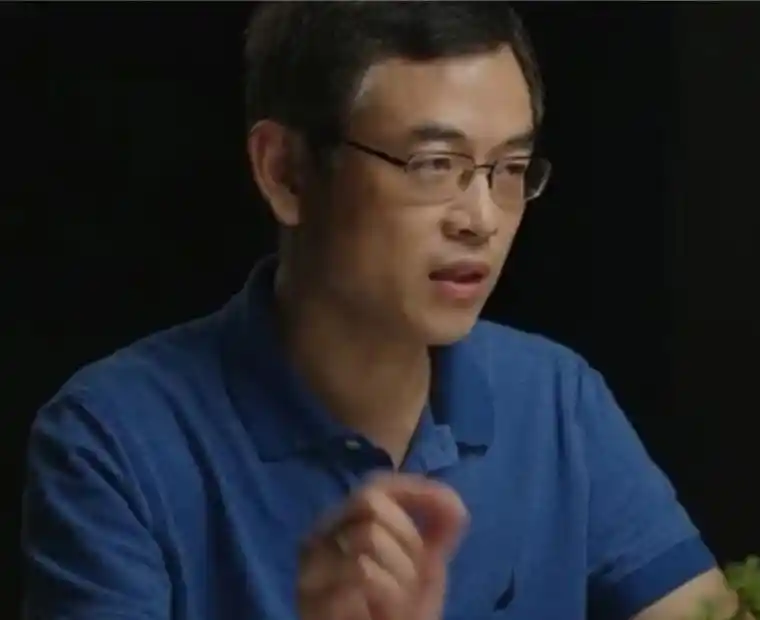
Therefore: If Alibaba weren't listed, it would most likely also bet on foundational models. Reference its early posture of investing in DAMO Academy, T-Head, Luohan Academy—that was Alibaba before Zhang Yong, when Jack Ma truly believed "tech companies must nurture their own scientists."

If ByteDance were listed, it would most likely also have to stick close to monetization. Reference the reaction curve where every time ByteDance faces IPO rumors, Doubao suddenly ramps up commercialization—market expectations would immediately back-program strategic choices.

What truly determines the path of Chinese AI strategy isn't the CEO's vision, but whether the company is publicly listed.

This means that for the next 5 years, BAT and other publicly listed companies starting at 4 trillion RMB market cap cannot possibly "do AI" like ByteDance does; they can only "sell AI." Conversely, non-listed companies like DeepSeek and Moonshot have the luxury to "do AI."

And conversely—if one day ByteDance truly initiates an IPO, the long-term research budget of its Seed team will be the first to face pressure. This point is more worth watching than any judgment about "Doubao benchmarking GPT."

Within one week, Wu Yongming stood on stage at the Alibaba Cloud summit shouting "5 years far exceeding 380 billion," while Zhu Wenjia and Wu Yonghui stood at the Seed all-hands meeting shouting "explore the upper limit of intelligence." One is explaining the checkout counter to shareholders of a 4 trillion RMB market cap company, the other is explaining the laboratory to their own engineers backed by non-public equity.

Alibaba loaded AI, piece by piece, into the storefront; ByteDance wrote AI, line by line, into papers.

When, one day in 2027, ByteDance truly files its S-1, we will see—for how many pages of the prospectus can the words "training" hold out.

This article is from the WeChat public account "AI Sings the Opposite Tune," author: Joshua

Perguntas relacionadas

QWhat are the two distinct AI strategies adopted by Alibaba and ByteDance as described in the article?

AAlibaba is focused on integrating AI into its existing commercial ecosystem (like e-commerce and payment platforms) for immediate business applications, acting as the 'infrastructure provider' and 'checkout counter' for the AI era. ByteDance, through its Seed department, is focusing on long-term, fundamental AI research and development, aiming to push the boundaries of AI capabilities, akin to a 'Nobel Prize laboratory'.

QWhat was a key organizational change within Alibaba that facilitated its AI integration strategy?

AA key change was the restructuring under CEO Wu Yongming. Different business units (like Ant Group, Taobao, and Alibaba Cloud), which previously might have competed, are now collaborating on AI initiatives. An example is the joint release of the Agentic Commerce Trust Protocol (ACT) by six different business units, which was rare historically.

QWhat evidence does the article provide for ByteDance's commitment to foundational AI research?

AEvidence includes: 1) The Seedance 2.0 video generation model topping the Artificial Analysis Video Arena benchmark. 2) The 'Top Seed' talent plan to recruit top PhDs. 3) A research paper titled 'How Far Are Video Generation Models from World Models?' that took 8 months to complete, addressing a long-term academic question without immediate commercial goals. 4) Publicly stating a goal of 'exploring the upper limits of intelligence' and considering open-sourcing its models.

QAccording to the article, what is the primary financial factor influencing the different AI strategic paths of Alibaba and ByteDance?

AThe primary factor is whether the company is publicly listed. Alibaba, as a publicly traded company with a large market cap, faces quarterly pressure from the capital market for returns on investment (ROI), forcing it to focus on commercializing AI for revenue. ByteDance, being privately held, has the freedom to invest heavily in long-term, non-commercialized R&D without the same short-term financial accountability to public shareholders.

QWhat is the author's prediction regarding ByteDance's AI strategy if the company were to go public (IPO)?

AThe author predicts that if ByteDance files for an IPO, the long-term research budget for its Seed department would come under significant pressure. The strategic focus would likely shift towards more immediate commercialization and demonstrable revenue to meet the expectations of public market investors, potentially compromising its current 'exploratory' approach.

Leituras Relacionadas

Bitcoin's Weak Rebound Fails to Mask Adjustment Trend, HYPE's Top Signal Warns of Short-Term Risks | Invited Analysis

**Title:** Bitcoin's Weak Rebound Fails to Mask Downtrend; HYPE Top Signal Alerts of Short-Term Risks | Exclusive Analysis **Abstract:** This weekly market analysis examines the current technical structures of Bitcoin and HYPE, outlining key trading strategies. Bitcoin's daily chart shows it has broken below the median line of its primary ascending channel, indicating structural weakness. It is currently experiencing a weak rebound within a short-term descending channel, targeting resistance at $75,000-$76,000. Failure to break above this zone could lead to a resumption of the downtrend, testing support at $69,500-$70,500. Trading strategies include positioning for a rebound rejection (Plan A) or a breakdown below key support (Plan B) with controlled short positions. For HYPE, the 4-hour chart reveals a potential seven-wave advance from the May 14 low, now showing signs of exhaustion. A bearish divergence (momentum weakening) has been observed, coupled with a top signal from the proprietary "Spread Trading Model" at potential endpoint 47. The key this week is to monitor if a confirmed top forms here, especially upon a breach of the $62.5-$64.57 support area. If broken, a larger corrective move towards $54-$56.30 is anticipated. The short-term strategy for HYPE focuses on cautious long entries only upon confirmed stabilization within the support zone. The report also details a successful short BTC trade from the previous week, yielding a ~5.07% profit, executed based on model signals and price action. Strict risk management rules, including dynamic stop-loss adjustments, are emphasized.

marsbitHá 5m

Bitcoin's Weak Rebound Fails to Mask Adjustment Trend, HYPE's Top Signal Warns of Short-Term Risks | Invited Analysis

marsbitHá 5m

Bitcoin's Weak Rebound Fails to Conceal Adjustment Trend; HYPE's Top Signals Warn of Short-Term Risks | Guest Analysis

Bitcoin's Weak Bounce Fails to Mask Correction Trend; HYPE Top Signals Warn of Short-Term Risks | Invited Analysis Core Weekly View: Bitcoin's daily chart structure has weakened. The key question is whether its short-term rebound can effectively break above the upper boundary of the descending channel. Has HYPE's seven-wave advance reached its conclusion? This analysis systematically examines the current market structure across multiple timeframes and outlines operational strategies for the week. **Bitcoin (BTC) Analysis:** The daily chart shows BTC trading within a long-term rising channel (yellow) since February but has recently broken below its midline, indicating structural weakness. It is currently confined within a short-term descending channel (blue) originating from the May 6 high. The ongoing bounce appears to be a weak technical correction targeting the blue channel's upper rail (approx. $75,000-$76,000). The 4-hour chart reveals a complex 10-segment corrective structure from the May high, containing two downward pivot zones (Central D and E). The current rebound (segment 36-37) is expected to face resistance in the $75,000-$76,000 area. A failure to break above could lead to a resumption of the downtrend, testing support at $69,500-$70,500 and potentially $65,000. **BTC Weekly Strategy:** The price is currently below the "Bull-Bear Channel," placing it in a technically weak zone. The core focus is on the test of the $75,000-$76,000 resistance and $69,500-$70,500 support. * *Medium-term*: Consider initiating short positions (up to 30% allocation) if the price rejects the $75,000-$76,000 area. Increase exposure to 60% if the long-term rising channel's lower support fails. * *Short-term (30% allocation)*: Two scenarios are outlined: * *Plan A (Sell on Rally)*: Short on rejection at $75,000-$76,000, with a stop-loss above $77,000. * *Plan B (Breakdown Sell)*: Short on a confirmed breakdown below $69,500-$70,500, with a stop-loss above $72,000. **HYPE Analysis:** The 4-hour chart shows HYPE has completed a seven-wave advance from its May 14 low, including a central consolidation zone. A bearish divergence was noted at the prior high (point 45), leading to a 13% correction. The current rally leg (46-47) shows weakening momentum compared to the initial leg (42-43), suggesting a potential momentum divergence. Furthermore, the proprietary "Spread Trading Model" has triggered a strong top warning signal at point 47. A confirmed top here, combined with the momentum divergence, could signal the end of the current uptrend. **HYPE Weekly Strategy:** The core is observing whether a confirmed top at point 47 coincides with the momentum divergence. * Monitor the key support zone of $62.5-$64.75. A hold and bounce from this area, supported by model buy signals, could allow for a light long position (<30% allocation). * A decisive break below this support would indicate a shift to a larger-degree correction, targeting the $54-$56.3 area. **Trade Review:** A previous short trade on BTC was executed at $77,449 based on model top signals (bearish candlestick pattern, spread model warning, momentum divergence) and closed at $73,519 for a 5.07% profit. **Risk Management Reminder:** Always set an initial stop-loss immediately upon entry. Move the stop-loss to breakeven once a 1% profit is achieved, and trail it upwards to lock in profits as the trade progresses. *Disclaimer: Market conditions change rapidly. All views, models, and strategies are for educational purposes and personal trading logs only, not investment advice. Trading carries significant risk.*

Odaily星球日报Há 11m

Bitcoin's Weak Rebound Fails to Conceal Adjustment Trend; HYPE's Top Signals Warn of Short-Term Risks | Guest Analysis

Odaily星球日报Há 11m

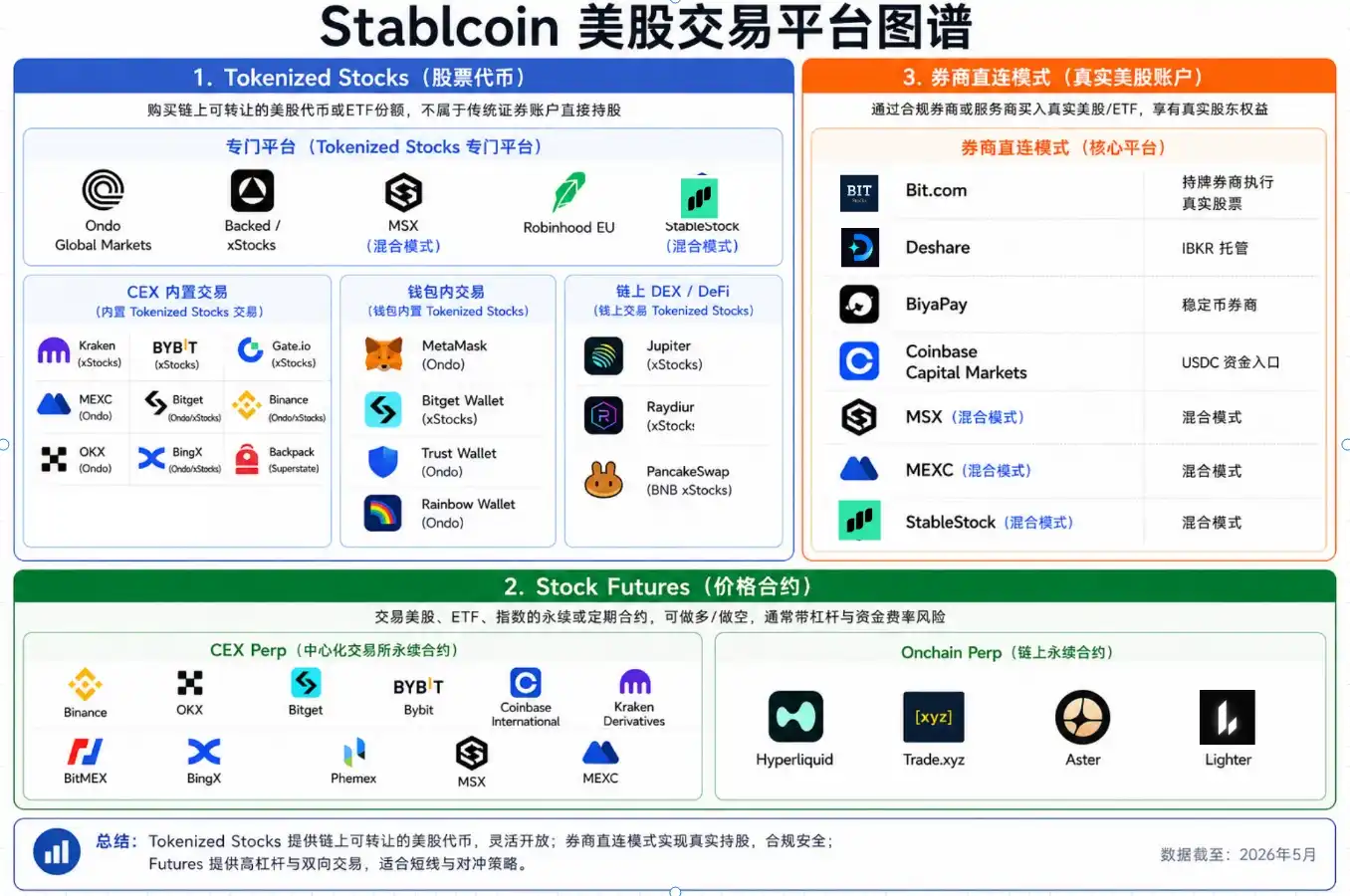
How to Define "Real U.S. Stocks": Differences Between On-Chain Tokens, Price Contracts, and Direct Broker Connections

**Title:** Defining "Real US Stocks": Differences Among On-Chain Tokens, Price Contracts, and Broker-Direct Access **Summary:** In 2026, using stablecoins to purchase US stocks is mainstream, but products marketed as "buying US stocks with USDT" offer fundamentally different assets. This article analyzes three primary models. **1. Tokenized Stocks:** These are on-chain tokens representing economic exposure to underlying stocks, held by an issuer or custodian. They offer benefits like 24/7 trading and DeFi composability (e.g., use as loan collateral). However, users lack direct legal shareholder status; dividends may not be paid in cash, and voting rights are typically non-binding advisory expressions. Examples include platforms like Ondo Finance. **2. Stock Futures / Equity Perpetuals:** These are derivative contracts tracking a stock's price, allowing leveraged long/short positions 24/7, similar to crypto perpetuals. They offer high efficiency and flexibility but involve funding fees, which can be a significant long-term cost, especially during strong trends. Crucially, they confer no ownership rights (dividends, voting) to the holder. **3. Broker-Direct Model:** This model provides access to real securities via licensed broker-dealers. Stocks/ETFs are bought and held within the US clearing and custodial system (e.g., DTCC), making it the only path to genuine stock ownership. Users receive cash dividends and formal proxy voting rights (where applicable). It supports thousands of stocks and ETFs, far exceeding the coverage of the other two models. Key advantages include no funding fees, a clean cost structure for long-term holds, and the potential to transfer holdings to other brokers. Some platforms facilitate stablecoin (USDT/USDC) deposits, reducing reliance on traditional banking. A critical distinction exists *within* the broker-direct model: the underlying brokerage architecture (e.g., Fully Disclosed IB, Omnibus IB, Self-Clearing) determines how client assets are held, protected, and how safeguards like SIPC insurance are conveyed. Users should verify the specific clearing structure and regulatory compliance of any platform. In conclusion, "buying US stocks with USDT" can mean holding an on-chain economic proxy (Tokenized Stocks), trading a price derivative (Stock Futures), or owning the actual security (Broker-Direct). For users seeking full ownership rights and long-term investment, the broker-direct model is the definitive choice, though its implementation details require careful scrutiny.

marsbitHá 1h

How to Define "Real U.S. Stocks": Differences Between On-Chain Tokens, Price Contracts, and Direct Broker Connections

marsbitHá 1h

NVIDIA Launches DSX Platform, Expanding into AI Factory Infrastructure

NVIDIA has unveiled the DSX platform at its GTC Taipei event, marking a strategic expansion from GPU sales into comprehensive AI factory infrastructure solutions. The platform addresses challenges like power supply, cooling, and resource orchestration as AI models scale, shifting the industry focus from single-chip performance to overall infrastructure efficiency. DSX integrates NVIDIA's chips, systems, software, and partner technologies to cover the entire AI factory lifecycle—from design and simulation to deployment and operations. It aims to accelerate deployment, improve reliability and operational efficiency, and reduce the cost per generated token in AI inference. The software suite includes DSX MaxLPS, which uses 45°C liquid cooling and rack-level optimization to allow up to 40% more GPUs per megawatt, and DSX OS, an open-source platform for AI factory operations. The platform also encompasses reference designs, digital twin simulation (DSX Sim), dynamic workload adjustment based on grid conditions (DSX Flex), and data exchange between systems. Early adopters include cloud providers like CoreWeave and Lambda. Major hardware partners, including Dell, HPE, Lenovo, and Supermicro, are developing DSX-ready systems. Pilot projects for DSX Flex are underway with energy providers. Strategically, DSX represents NVIDIA's ongoing transition from an AI chip supplier to a full-stack AI infrastructure platform provider, aiming to set industry standards and solidify its market leadership.

marsbitHá 1h

NVIDIA Launches DSX Platform, Expanding into AI Factory Infrastructure

marsbitHá 1h

After Burning Tens of Billions of Dollars in Tokens, Silicon Valley Giants Start Limiting Employee Token Usage

After burning tens of billions of dollars on AI tokens, major Silicon Valley firms are now restricting employee usage. Companies like Microsoft, Uber, and Salesforce, which heavily promoted AI for "efficiency," are facing a cost crisis. The practice of "tokenmaxxing"—pushing employees to maximize AI tool usage—led to wasteful spending on trivial tasks like checking the weather or writing birthday messages, with studies showing significant hidden costs for bug fixes and code rewrites. The core issue is a misalignment between individual productivity gains and actual business value. While employees use AI to automate tasks they dislike, such as writing reports, this often doesn't translate to increased company revenue or improved core business outcomes. For instance, AI-generated code speeds up development but also sees an 800% increase in "code churn" (code being discarded or rewritten). As a result, only 14% of CFOs report seeing a clear, measurable return on AI investments. Firms are now shifting strategies. Microsoft has revoked most internal licenses for Claude Code, while others are implementing monitoring and cost controls. New tools from companies like Harness and CloudZero aim to track AI spending and tie costs to business results. Some AI vendors, like HubSpot, are moving from token-based pricing to charging based on outcomes, such as "resolved conversations" or "leads generated." This represents a necessary correction in the AI adoption cycle. The challenge now is for companies to move beyond using AI merely to speed up old tasks and instead rethink their workflows and business models fundamentally. The future of enterprise AI depends on proving its value, not just its usage.

marsbitHá 1h

After Burning Tens of Billions of Dollars in Tokens, Silicon Valley Giants Start Limiting Employee Token Usage

marsbitHá 1h

Trading

Spot
Futuros

Artigos em Destaque

O que é GROK AI

Grok AI: Revolucionar a Tecnologia Conversacional na Era Web3 Introdução No panorama em rápida evolução da inteligência artificial, a Grok AI destaca-se como um projeto notável que liga os domínios da tecnologia avançada e da interação com o utilizador. Desenvolvida pela xAI, uma empresa liderada pelo renomado empreendedor Elon Musk, a Grok AI procura redefinir a forma como interagimos com a inteligência artificial. À medida que o movimento Web3 continua a florescer, a Grok AI visa aproveitar o poder da IA conversacional para responder a consultas complexas, proporcionando aos utilizadores uma experiência que é não apenas informativa, mas também divertida. O que é a Grok AI? A Grok AI é um sofisticado chatbot de IA conversacional projetado para interagir com os utilizadores de forma dinâmica. Ao contrário de muitos sistemas de IA tradicionais, a Grok AI abraça uma gama mais ampla de perguntas, incluindo aquelas tipicamente consideradas inadequadas ou fora das respostas padrão. Os principais objetivos do projeto incluem: Raciocínio Fiável: A Grok AI enfatiza o raciocínio de senso comum para fornecer respostas lógicas com base na compreensão contextual. Supervisão Escalável: A integração de assistência de ferramentas garante que as interações dos utilizadores sejam monitorizadas e otimizadas para qualidade. Verificação Formal: A segurança é primordial; a Grok AI incorpora métodos de verificação formal para aumentar a fiabilidade das suas saídas. Compreensão de Longo Contexto: O modelo de IA destaca-se na retenção e recordação de um extenso histórico de conversas, facilitando discussões significativas e contextualizadas. Robustez Adversarial: Ao focar na melhoria das suas defesas contra entradas manipuladas ou maliciosas, a Grok AI visa manter a integridade das interações dos utilizadores. Em essência, a Grok AI não é apenas um dispositivo de recuperação de informações; é um parceiro conversacional imersivo que incentiva um diálogo dinâmico. Criador da Grok AI A mente por trás da Grok AI não é outra senão Elon Musk, um indivíduo sinónimo de inovação em vários campos, incluindo automóvel, viagens espaciais e tecnologia. Sob a égide da xAI, uma empresa focada em avançar a tecnologia de IA de maneiras benéficas, a visão de Musk visa reformular a compreensão das interações com a IA. A liderança e a ética fundacional são profundamente influenciadas pelo compromisso de Musk em ultrapassar os limites tecnológicos. Investidores da Grok AI Embora os detalhes específicos sobre os investidores que apoiam a Grok AI permaneçam limitados, é reconhecido publicamente que a xAI, a incubadora do projeto, é fundada e apoiada principalmente pelo próprio Elon Musk. As anteriores empreitadas e participações de Musk fornecem um forte apoio, reforçando ainda mais a credibilidade e o potencial de crescimento da Grok AI. No entanto, até agora, informações sobre fundações ou organizações de investimento adicionais que apoiam a Grok AI não estão prontamente acessíveis, marcando uma área para exploração futura potencial. Como Funciona a Grok AI? A mecânica operacional da Grok AI é tão inovadora quanto a sua estrutura conceptual. O projeto integra várias tecnologias de ponta que facilitam as suas funcionalidades únicas: Infraestrutura Robusta: A Grok AI é construída utilizando Kubernetes para orquestração de contêineres, Rust para desempenho e segurança, e JAX para computação numérica de alto desempenho. Este trio assegura que o chatbot opere de forma eficiente, escale eficazmente e sirva os utilizadores prontamente. Acesso a Conhecimento em Tempo Real: Uma das características distintivas da Grok AI é a sua capacidade de aceder a dados em tempo real através da plataforma X—anteriormente conhecida como Twitter. Esta capacidade concede à IA acesso às informações mais recentes, permitindo-lhe fornecer respostas e recomendações oportunas que outros modelos de IA poderiam perder. Dois Modos de Interação: A Grok AI oferece aos utilizadores a escolha entre “Modo Divertido” e “Modo Regular”. O Modo Divertido permite um estilo de interação mais lúdico e humorístico, enquanto o Modo Regular foca em fornecer respostas precisas e exatas. Esta versatilidade assegura uma experiência adaptada que atende a várias preferências dos utilizadores. Em essência, a Grok AI combina desempenho com envolvimento, criando uma experiência que é tanto enriquecedora quanto divertida. Cronologia da Grok AI A jornada da Grok AI é marcada por marcos fundamentais que refletem as suas fases de desenvolvimento e implementação: Desenvolvimento Inicial: A fase fundamental da Grok AI ocorreu ao longo de aproximadamente dois meses, durante os quais o treinamento inicial e o ajuste do modelo foram realizados. Lançamento Beta do Grok-2: Numa evolução significativa, o beta do Grok-2 foi anunciado. Este lançamento introduziu duas versões do chatbot—Grok-2 e Grok-2 mini—cada uma equipada com capacidades para conversar, programar e raciocinar. Acesso Público: Após o seu desenvolvimento beta, a Grok AI tornou-se disponível para os utilizadores da plataforma X. Aqueles com contas verificadas por um número de telefone e ativas há pelo menos sete dias podem aceder a uma versão limitada, tornando a tecnologia disponível para um público mais amplo. Esta cronologia encapsula o crescimento sistemático da Grok AI desde a sua concepção até ao envolvimento público, enfatizando o seu compromisso com a melhoria contínua e a interação com o utilizador. Principais Características da Grok AI A Grok AI abrange várias características principais que contribuem para a sua identidade inovadora: Integração de Conhecimento em Tempo Real: O acesso a informações atuais e relevantes diferencia a Grok AI de muitos modelos estáticos, permitindo uma experiência de utilizador envolvente e precisa. Estilos de Interação Versáteis: Ao oferecer modos de interação distintos, a Grok AI atende a várias preferências dos utilizadores, convidando à criatividade e personalização na conversa com a IA. Base Tecnológica Avançada: A utilização de Kubernetes, Rust e JAX fornece ao projeto uma estrutura sólida para garantir fiabilidade e desempenho ótimo. Consideração de Discurso Ético: A inclusão de uma função de geração de imagens demonstra o espírito inovador do projeto. No entanto, também levanta considerações éticas em torno dos direitos autorais e da representação respeitosa de figuras reconhecíveis—uma discussão em curso dentro da comunidade de IA. Conclusão Como uma entidade pioneira no domínio da IA conversacional, a Grok AI encapsula o potencial para experiências transformadoras do utilizador na era digital. Desenvolvida pela xAI e impulsionada pela abordagem visionária de Elon Musk, a Grok AI integra conhecimento em tempo real com capacidades avançadas de interação. Esforça-se por ultrapassar os limites do que a inteligência artificial pode alcançar, mantendo um foco nas considerações éticas e na segurança do utilizador. A Grok AI não apenas incorpora o avanço tecnológico, mas também representa um novo paradigma de conversas no panorama Web3, prometendo envolver os utilizadores com conhecimento hábil e interação lúdica. À medida que o projeto continua a evoluir, ele permanece como um testemunho do que a interseção da tecnologia, criatividade e interação humana pode alcançar.

449 Visualizações TotaisPublicado em {updateTime}Atualizado em 2024.12.26

O que é GROK AI

O que é ERC AI

Euruka Tech: Uma Visão Geral do $erc ai e as suas Ambições no Web3 Introdução No panorama em rápida evolução da tecnologia blockchain e das aplicações descentralizadas, novos projetos surgem frequentemente, cada um com objetivos e metodologias únicas. Um desses projetos é a Euruka Tech, que opera no vasto domínio das criptomoedas e do Web3. O foco principal da Euruka Tech, particularmente do seu token $erc ai, é apresentar soluções inovadoras concebidas para aproveitar as capacidades crescentes da tecnologia descentralizada. Este artigo tem como objetivo fornecer uma visão abrangente da Euruka Tech, uma exploração das suas metas, funcionalidade, a identidade do seu criador, potenciais investidores e a sua importância no contexto mais amplo do Web3. O que é a Euruka Tech, $erc ai? A Euruka Tech é caracterizada como um projeto que aproveita as ferramentas e funcionalidades oferecidas pelo ambiente Web3, focando na integração da inteligência artificial nas suas operações. Embora os detalhes específicos sobre a estrutura do projeto sejam um tanto elusivos, ele é concebido para melhorar o envolvimento dos utilizadores e automatizar processos no espaço cripto. O projeto visa criar um ecossistema descentralizado que não só facilita transações, mas também incorpora funcionalidades preditivas através da inteligência artificial, daí a designação do seu token, $erc ai. O objetivo é fornecer uma plataforma intuitiva que facilite interações mais inteligentes e um processamento eficiente de transações dentro da crescente esfera do Web3. Quem é o Criador da Euruka Tech, $erc ai? Neste momento, a informação sobre o criador ou a equipa fundadora da Euruka Tech permanece não especificada e algo opaca. Esta ausência de dados levanta preocupações, uma vez que o conhecimento sobre o histórico da equipa é frequentemente essencial para estabelecer credibilidade no setor blockchain. Portanto, categorizamos esta informação como desconhecida até que detalhes concretos sejam disponibilizados no domínio público. Quem são os Investidores da Euruka Tech, $erc ai? De forma semelhante, a identificação de investidores ou organizações de apoio para o projeto Euruka Tech não é prontamente fornecida através da pesquisa disponível. Um aspeto que é crucial para potenciais partes interessadas ou utilizadores que consideram envolver-se com a Euruka Tech é a garantia que vem de parcerias financeiras estabelecidas ou apoio de empresas de investimento respeitáveis. Sem divulgações sobre afiliações de investimento, é difícil tirar conclusões abrangentes sobre a segurança financeira ou a longevidade do projeto. Em linha com a informação encontrada, esta seção também se encontra no estado de desconhecido. Como funciona a Euruka Tech, $erc ai? Apesar da falta de especificações técnicas detalhadas para a Euruka Tech, é essencial considerar as suas ambições inovadoras. O projeto procura aproveitar o poder computacional da inteligência artificial para automatizar e melhorar a experiência do utilizador no ambiente das criptomoedas. Ao integrar IA com tecnologia blockchain, a Euruka Tech visa fornecer funcionalidades como negociações automatizadas, avaliações de risco e interfaces de utilizador personalizadas. A essência inovadora da Euruka Tech reside no seu objetivo de criar uma conexão fluida entre os utilizadores e as vastas possibilidades apresentadas pelas redes descentralizadas. Através da utilização de algoritmos de aprendizagem automática e IA, visa minimizar os desafios enfrentados por utilizadores de primeira viagem e agilizar as experiências transacionais dentro do quadro do Web3. Esta simbiose entre IA e blockchain sublinha a importância do token $erc ai, que se apresenta como uma ponte entre interfaces de utilizador tradicionais e as capacidades avançadas das tecnologias descentralizadas. Cronologia da Euruka Tech, $erc ai Infelizmente, devido à informação limitada disponível sobre a Euruka Tech, não conseguimos apresentar uma cronologia detalhada dos principais desenvolvimentos ou marcos na jornada do projeto. Esta cronologia, tipicamente inestimável para traçar a evolução de um projeto e compreender a sua trajetória de crescimento, não está atualmente disponível. À medida que informações sobre eventos notáveis, parcerias ou adições funcionais se tornem evidentes, atualizações certamente aumentarão a visibilidade da Euruka Tech na esfera cripto. Esclarecimento sobre Outros Projetos “Eureka” É importante abordar que múltiplos projetos e empresas partilham uma nomenclatura semelhante com “Eureka.” A pesquisa identificou iniciativas como um agente de IA da NVIDIA Research, que se concentra em ensinar robôs a realizar tarefas complexas utilizando métodos generativos, bem como a Eureka Labs e a Eureka AI, que melhoram a experiência do utilizador na educação e na análise de serviços ao cliente, respetivamente. No entanto, estes projetos são distintos da Euruka Tech e não devem ser confundidos com os seus objetivos ou funcionalidades. Conclusão A Euruka Tech, juntamente com o seu token $erc ai, representa um jogador promissor, mas atualmente obscuro, dentro do panorama do Web3. Embora os detalhes sobre o seu criador e investidores permaneçam não divulgados, a ambição central de combinar inteligência artificial com tecnologia blockchain destaca-se como um ponto focal de interesse. As abordagens únicas do projeto em promover o envolvimento do utilizador através da automação avançada podem diferenciá-lo à medida que o ecossistema Web3 avança. À medida que o mercado cripto continua a evoluir, as partes interessadas devem manter um olhar atento sobre os avanços em torno da Euruka Tech, uma vez que o desenvolvimento de inovações documentadas, parcerias ou um roteiro definido pode apresentar oportunidades significativas no futuro próximo. Neste momento, aguardamos por insights mais substanciais que possam desvendar o potencial da Euruka Tech e a sua posição no competitivo panorama cripto.

491 Visualizações TotaisPublicado em {updateTime}Atualizado em 2025.01.02

O que é ERC AI

O que é DUOLINGO AI

DUOLINGO AI: Integrar a Aprendizagem de Línguas com Inovação Web3 e IA Numa era em que a tecnologia transforma a educação, a integração da inteligência artificial (IA) e das redes blockchain anuncia uma nova fronteira para a aprendizagem de línguas. Apresentamos DUOLINGO AI e a sua criptomoeda associada, $DUOLINGO AI. Este projeto aspira a unir o poder educativo das principais plataformas de aprendizagem de línguas com os benefícios da tecnologia descentralizada Web3. Este artigo explora os principais aspectos do DUOLINGO AI, analisando os seus objetivos, estrutura tecnológica, desenvolvimento histórico e potencial futuro, mantendo a clareza entre o recurso educativo original e esta iniciativa independente de criptomoeda. Visão Geral do DUOLINGO AI No seu cerne, DUOLINGO AI procura estabelecer um ambiente descentralizado onde os alunos podem ganhar recompensas criptográficas por alcançar marcos educativos em proficiência linguística. Ao aplicar contratos inteligentes, o projeto visa automatizar processos de verificação de habilidades e alocação de tokens, aderindo aos princípios do Web3 que enfatizam a transparência e a propriedade do utilizador. O modelo diverge das abordagens tradicionais de aquisição de línguas ao apoiar-se fortemente numa estrutura de governança orientada pela comunidade, permitindo que os detentores de tokens sugiram melhorias ao conteúdo dos cursos e à distribuição de recompensas. Alguns dos objetivos notáveis do DUOLINGO AI incluem: Aprendizagem Gamificada: O projeto integra conquistas em blockchain e tokens não fungíveis (NFTs) para representar níveis de proficiência linguística, promovendo a motivação através de recompensas digitais envolventes. Criação de Conteúdo Descentralizada: Abre caminhos para educadores e entusiastas de línguas contribuírem com os seus cursos, facilitando um modelo de partilha de receitas que beneficia todos os colaboradores. Personalização Através de IA: Ao empregar modelos avançados de aprendizagem de máquina, o DUOLINGO AI personaliza as lições para se adaptar ao progresso de aprendizagem individual, semelhante às características adaptativas encontradas em plataformas estabelecidas. Criadores do Projeto e Governança A partir de abril de 2025, a equipa por trás do $DUOLINGO AI permanece pseudónima, uma prática frequente no panorama descentralizado das criptomoedas. Esta anonimidade visa promover o crescimento coletivo e o envolvimento das partes interessadas, em vez de se concentrar em desenvolvedores individuais. O contrato inteligente implementado na blockchain Solana indica o endereço da carteira do desenvolvedor, o que significa o compromisso com a transparência em relação às transações, apesar da identidade dos criadores ser desconhecida. De acordo com o seu roteiro, o DUOLINGO AI pretende evoluir para uma Organização Autónoma Descentralizada (DAO). Esta estrutura de governança permite que os detentores de tokens votem em questões críticas, como implementações de funcionalidades e alocação de tesouraria. Este modelo alinha-se com a ética de empoderamento comunitário encontrada em várias aplicações descentralizadas, enfatizando a importância da tomada de decisão coletiva. Investidores e Parcerias Estratégicas Atualmente, não existem investidores institucionais ou capitalistas de risco publicamente identificáveis ligados ao $DUOLINGO AI. Em vez disso, a liquidez do projeto origina-se principalmente de trocas descentralizadas (DEXs), marcando um contraste acentuado com as estratégias de financiamento das empresas tradicionais de tecnologia educacional. Este modelo de base indica uma abordagem orientada pela comunidade, refletindo o compromisso do projeto com a descentralização. No seu whitepaper, o DUOLINGO AI menciona a formação de colaborações com “plataformas de educação blockchain” não especificadas, com o objetivo de enriquecer a sua oferta de cursos. Embora parcerias específicas ainda não tenham sido divulgadas, estes esforços colaborativos sugerem uma estratégia para misturar inovação em blockchain com iniciativas educativas, expandindo o acesso e o envolvimento dos utilizadores em diversas vias de aprendizagem. Arquitetura Tecnológica Integração de IA O DUOLINGO AI incorpora dois componentes principais impulsionados por IA para melhorar as suas ofertas educativas: Motor de Aprendizagem Adaptativa: Este motor sofisticado aprende a partir das interações dos utilizadores, semelhante a modelos proprietários de grandes plataformas educativas. Ele ajusta dinamicamente a dificuldade das lições para abordar desafios específicos dos alunos, reforçando áreas fracas através de exercícios direcionados. Agentes Conversacionais: Ao empregar chatbots alimentados por GPT-4, o DUOLINGO AI oferece uma plataforma para os utilizadores se envolverem em conversas simuladas, promovendo uma experiência de aprendizagem de línguas mais interativa e prática. Infraestrutura Blockchain Construído na blockchain Solana, o $DUOLINGO AI utiliza uma estrutura tecnológica abrangente que inclui: Contratos Inteligentes de Verificação de Habilidades: Esta funcionalidade atribui automaticamente tokens aos utilizadores que passam com sucesso em testes de proficiência, reforçando a estrutura de incentivos para resultados de aprendizagem genuínos. Emblemas NFT: Estes tokens digitais significam vários marcos que os alunos alcançam, como completar uma seção do seu curso ou dominar habilidades específicas, permitindo-lhes negociar ou exibir as suas conquistas digitalmente. Governança DAO: Membros da comunidade com tokens podem participar na governança votando em propostas-chave, facilitando uma cultura participativa que incentiva a inovação nas ofertas de cursos e funcionalidades da plataforma. Cronologia Histórica 2022–2023: Conceituação O trabalho preliminar para o DUOLINGO AI começa com a criação de um whitepaper, destacando a sinergia entre os avanços em IA na aprendizagem de línguas e o potencial descentralizado da tecnologia blockchain. 2024: Lançamento Beta Um lançamento beta limitado introduz ofertas em línguas populares, recompensando os primeiros utilizadores com incentivos em tokens como parte da estratégia de envolvimento comunitário do projeto. 2025: Transição para DAO Em abril, ocorre um lançamento completo da mainnet com a circulação de tokens, promovendo discussões comunitárias sobre possíveis expansões para línguas asiáticas e outros desenvolvimentos de cursos. Desafios e Direções Futuras Obstáculos Técnicos Apesar dos seus objetivos ambiciosos, o DUOLINGO AI enfrenta desafios significativos. A escalabilidade continua a ser uma preocupação constante, particularmente no equilíbrio dos custos associados ao processamento de IA e à manutenção de uma rede descentralizada responsiva. Além disso, garantir a criação e moderação de conteúdo de qualidade num ambiente descentralizado apresenta complexidades na manutenção dos padrões educativos. Oportunidades Estratégicas Olhando para o futuro, o DUOLINGO AI tem o potencial de aproveitar parcerias de micro-certificação com instituições académicas, proporcionando validações verificadas em blockchain das habilidades linguísticas. Além disso, a expansão cross-chain poderia permitir que o projeto acedesse a bases de utilizadores mais amplas e a ecossistemas de blockchain adicionais, melhorando a sua interoperabilidade e alcance. Conclusão DUOLINGO AI representa uma fusão inovadora de inteligência artificial e tecnologia blockchain, apresentando uma alternativa focada na comunidade aos sistemas tradicionais de aprendizagem de línguas. Embora o seu desenvolvimento pseudónimo e o modelo económico emergente tragam certos riscos, o compromisso do projeto com a aprendizagem gamificada, educação personalizada e governança descentralizada ilumina um caminho a seguir para a tecnologia educativa no domínio do Web3. À medida que a IA continua a avançar e o ecossistema blockchain evolui, iniciativas como o DUOLINGO AI poderão redefinir a forma como os utilizadores interagem com a educação linguística, empoderando comunidades e recompensando o envolvimento através de mecanismos de aprendizagem inovadores.

419 Visualizações TotaisPublicado em {updateTime}Atualizado em 2025.04.11

O que é DUOLINGO AI

Discussões

Bem-vindo à Comunidade HTX. Aqui, pode manter-se informado sobre os mais recentes desenvolvimentos da plataforma e obter acesso a análises profissionais de mercado. As opiniões dos utilizadores sobre o preço de AI (AI) são apresentadas abaixo.

活动图片