Apple Finally Admits, Siri Is Getting Old

marsbitPublicado em 2026-06-09Última atualização em 2026-06-09

Resumo

In a significant shift, Apple has rebranded Siri to "Siri AI" at WWDC 2026, acknowledging the assistant's limitations after years of stagnation. The company announced a deep partnership with Google, leveraging Gemini's model capabilities to train its new Apple Foundation Models. This collaboration extends Apple's Private Cloud Compute to Google Cloud and Nvidia GPUs for the first time. The article traces Siri's history from its groundbreaking 2011 debut to its subsequent confinement within Apple's closed ecosystem, prioritizing control and privacy over expansive functionality. While Apple integrated AI into its hardware and systems over the years (e.g., Neural Engine, Core ML), it missed the paradigm shift brought by generative AI models like ChatGPT. Facing pressure, Apple restructured its AI leadership and opted to license Google's Gemini technology—reportedly paying around $1 billion annually—to power the revamped Siri. The strategy involves "distilling" knowledge from the large Gemini model into smaller, on-device models. Apple also plans to use Google Cloud's Nvidia GPUs for complex cloud inference tasks. The core vision for "Apple Intelligence" is a system-level assistant that reduces cognitive load: summarizing notifications and emails, drafting context-aware replies, and retrieving relevant information across apps. Siri gains a dedicated app with memory and cross-device sync. However, this AI push comes with hardware requirements, potentially excluding older iPhone...

By Sleepy

Beijing time, in the early hours of June 9, 2026, Apple's WWDC 2026 commenced as scheduled.

At the event, it rebranded Siri as Siri AI, announced a deep collaboration with Google, using Gemini's model capabilities to train its new generation of foundation models. It extended Private Cloud Compute for the first time to Google Cloud and Nvidia's GPUs.
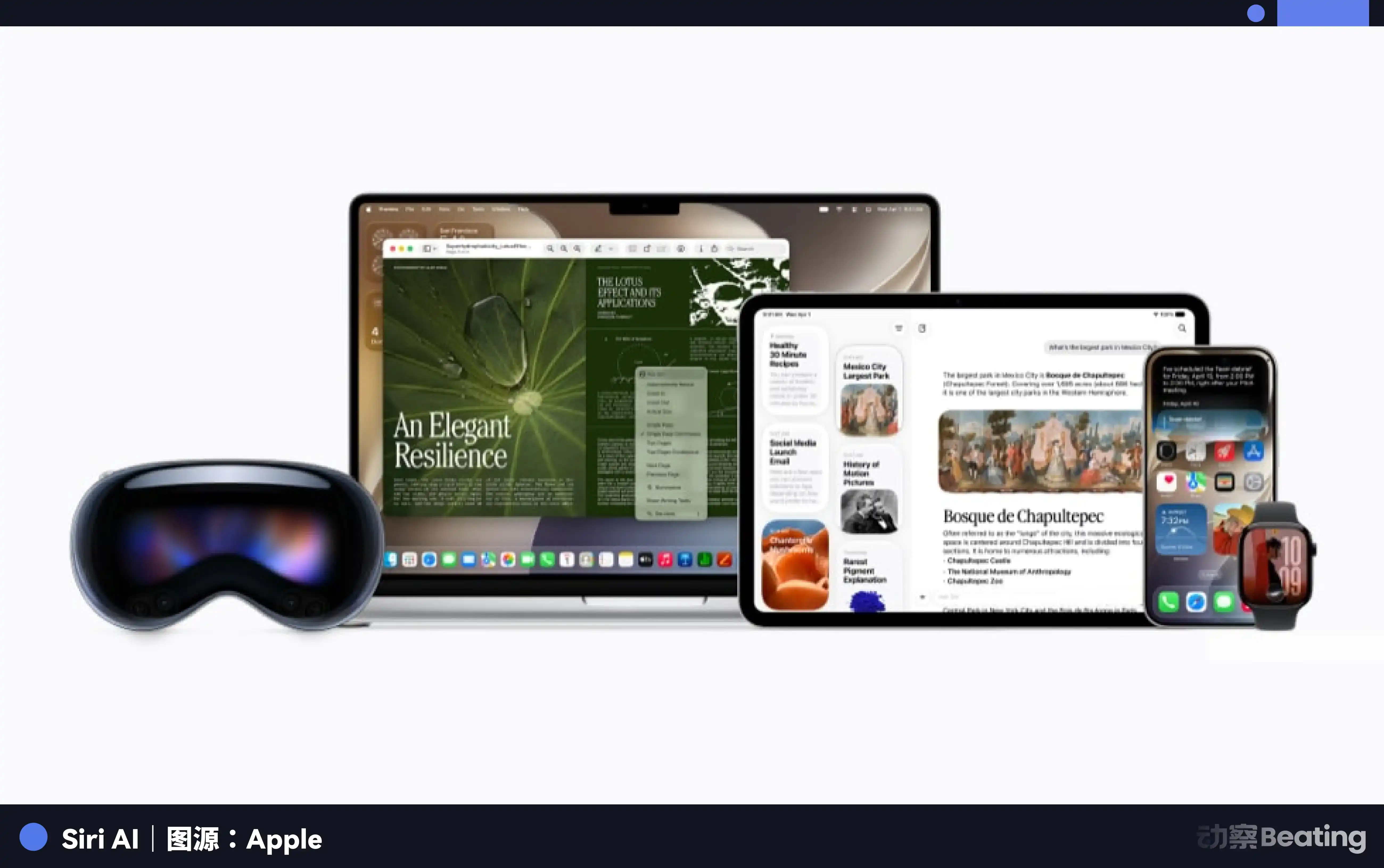
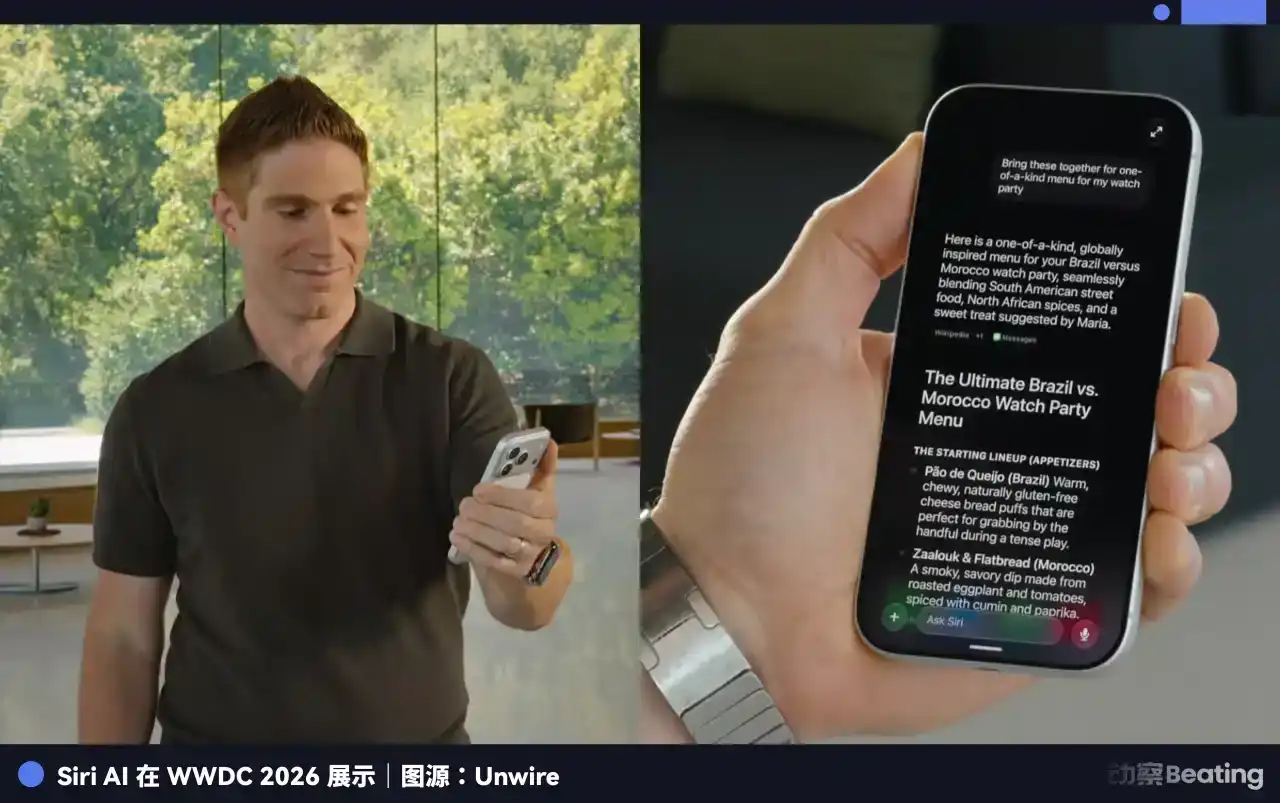
It released five Apple Foundation Models, with the smallest on-device model having 3 billion parameters and the largest cloud model optimized specifically for Nvidia GPUs. Almost every core app was rewritten. Siri even got its own standalone app, with the ability to save conversations, sync across devices, and possess memory.

This was Apple's most information-dense keynote in recent years.

Taming a Future

Apple's AI story can be traced back to the fall of 2011, at the iPhone 4S launch event, where Siri first took the stage.
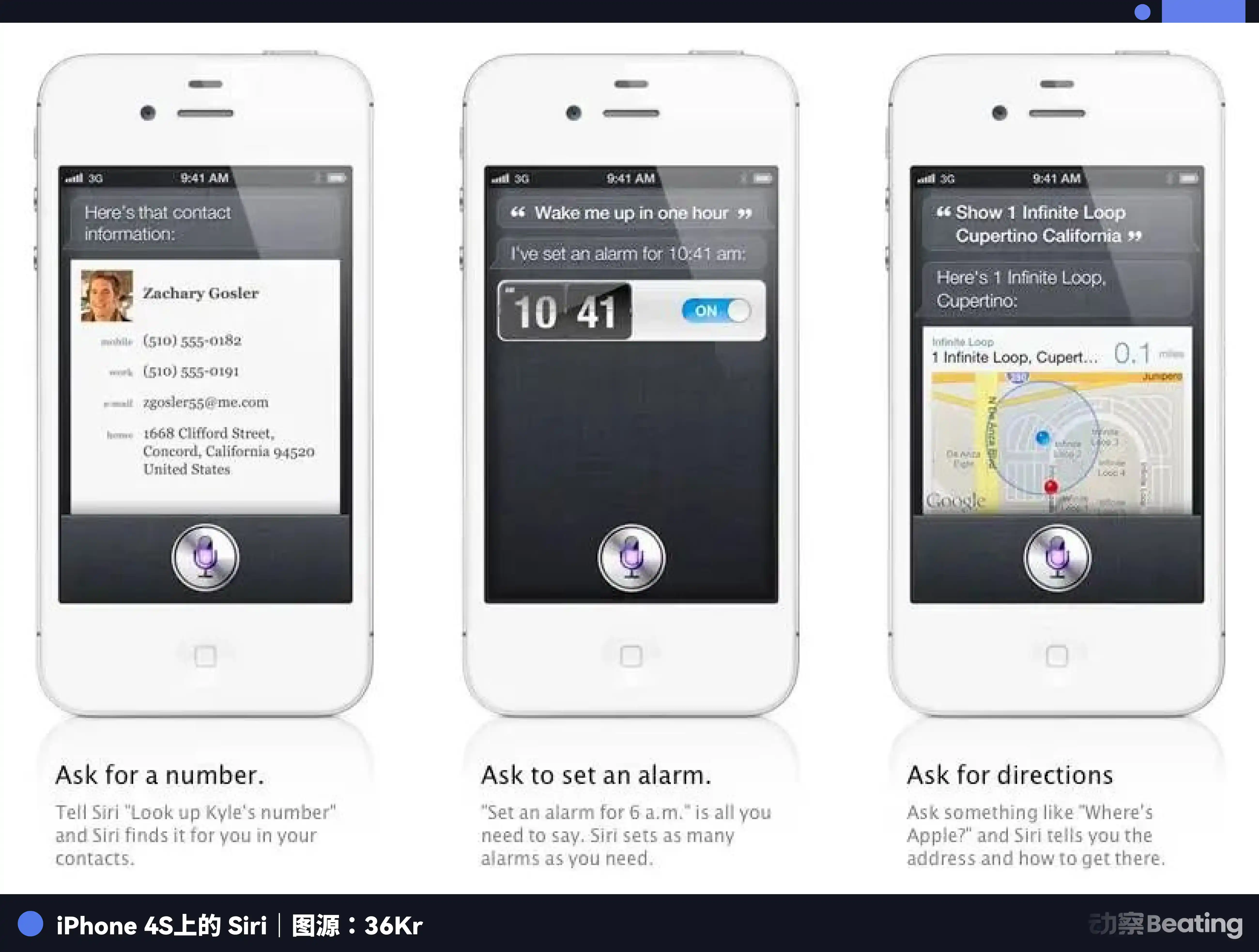
At that time, Steve Jobs was gravely ill, and Apple stood at the crossroads of an era. Siri was like a little creature that had escaped from a sci-fi movie. You could ask it about the weather, restaurants, or set an alarm. It would answer you in a slightly mechanical tone, making you feel for the first time that a phone was more than just a piece of cold glass.

Siri evolved from the CALO project by SRI International, originally a military-grade AI assistant funded by DARPA. In 2010, Apple acquired it. According to TechCrunch, the deal likely exceeded $200 million. A year later, Siri debuted with the iPhone 4S. Apple claimed it could understand natural language and act as a personal assistant to handle tasks.

At that moment, Apple secured the world's best entry point for personal intelligence. Then, it delayed for over a decade.

Looking back today, what Siri initially changed was the posture of how people talked to machines. In 2011, the iPhone was turning mobile phones from communication tools into personal computing devices. The App Store redefined software distribution, and the mobile internet migrated from the PC desktop into the palm of your hand. Siri appeared at the crest of a rising wave. But after entering Apple, it quickly transformed from an ambitious personal assistant into a obedient voice remote control.

At its core, Apple believes in being closed and in control. But a true personal assistant must integrate with more services, understand more context, and tolerate more uncertainty. Uncertainty means errors, privacy risks, and the disorder that Apple is least equipped to handle.

Thus, Siri was only allowed to perform deterministic tasks, like a future that had been tamed. It had a name, a voice, a personality wrapper, but lacked the initiative and memory required for a genuine persona. Users were initially amazed by it, later made jokes about it, and eventually stopped using it much.

Apple was the first to put a "personal assistant" into a phone and also the first to lock it away.

The Agent that the entire industry is now working on, looking back, Siri in 2011 was almost its prototype. One could say Apple was the earliest company to create the prototype of an Agent, yet ended up being one of the last to fully realize it.

The AI That Doesn't Look Like AI

During the years Siri didn't grow up, did Apple's AI stagnate?

Quite the opposite. Apple did a lot of AI; it just didn't look like AI.

If measured by the volume of keynote announcements, Apple seemed to only start talking seriously about AI in 2024. But if you trace the technical path backward, Apple had been in motion for a decade.

In 2015, it acquired two companies in succession—one to bolster natural language dialogue, another to explore running deep learning directly on phones. That same year at WWDC, it discussed the Proactive Assistant, attempting to make the system offer suggestions before the user even asked. This idea was ahead of its time but, under the technological constraints of that period, it was more like a slogan.

The following year, it launched SiriKit, cautiously opening Siri up to developers with limited functionality. It also publicly discussed Differential Privacy, stating its intention to learn from large-scale data while protecting individual privacy. In 2017, the iPhone X brought the Neural Engine. Face ID and the camera began relying on on-device machine learning. Apple simultaneously introduced Core ML, allowing developers to run models on Apple devices, and acquired Workflow, which later became Shortcuts.

This was a very Apple-like set of answers. It wanted AI, but not by betting everything on the cloud and massive personal data like Google. It wanted developers, but didn't want Siri to become a messy stew. So Apple chose the hardest and slowest path: focus on the device, privacy, and system integration.

Around 2020, Apple bought several more companies focused on low-power edge AI and speech understanding. That same year, the M1 chip was released, bringing a 16-core Neural Engine to the Mac, pushing on-device AI compute from phones in pockets all the way to computers. The next year, Live Text and Visual Look Up landed. Text in photos could be copied directly, the camera could identify plants and flowers, and more voice requests could be processed on the device without needing the cloud.

Apple indeed didn't release a standalone AI app in these years, but it did make the phone smarter.

Choosing this path had its reasons. AI on a phone isn't just a Q&A machine. It needs to see photos, hear voice, understand contacts, launch apps, sense battery, location, and time. It's best if it can do some things offline, and preferably not bundle up a user's life and upload it to the cloud with every request. Apple's hardware control gave it the qualification to walk this path.

But between localized intelligence and holistic intelligence lies a deep chasm. Apple excels at breaking technology down into reliable components, but generative AI demands it reassemble those components into a whole.

These components quietly lay buried within the system, waiting for a catalyst.

The catalyst didn't arrive first. ChatGPT did.

When ChatGPT emerged at the end of 2022, Apple wasn't unprepared. Tim Cook repeatedly emphasized in various forums that AI and machine learning had been core technologies in Apple products for many years. Bloomberg also reported in 2023 on Apple's internal Ajax large model framework and internal Chatbot project.

The problem wasn't whether Apple had cards in its hand; the problem was that the rules of the game had changed.

ChatGPT shifted user attention from "functions" to "capabilities." Users began to expect AI on their phones by default, and then compared whose was stronger. When ChatGPT could already organize messy thoughts into a coherent email, Siri was still saying, "I found this on the web."

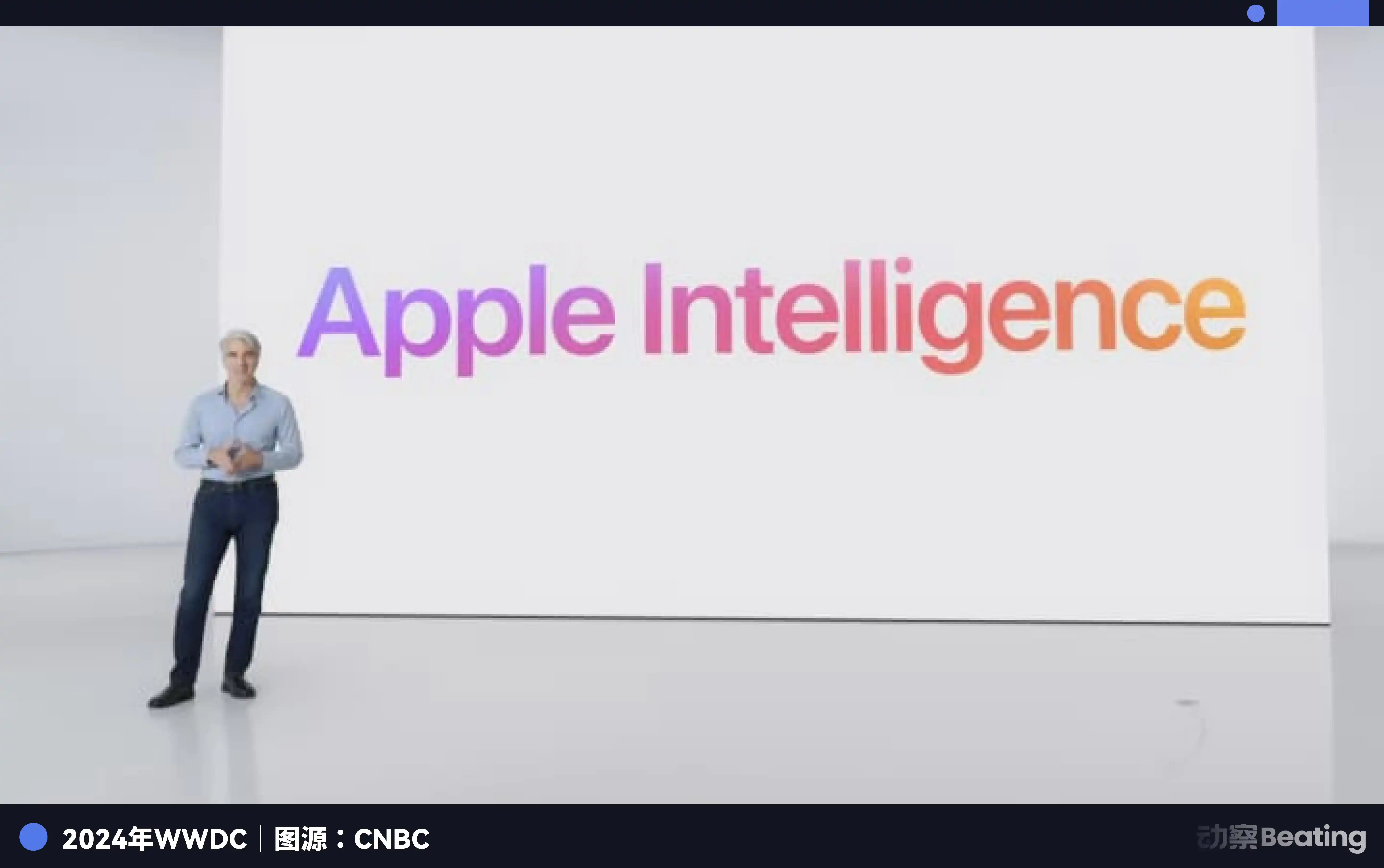
At WWDC 2024, Apple put Apple Intelligence on the table. Writing tools, notification summaries, photo search, personalized Siri understanding, ChatGPT integration. Apple finally admitted that relying solely on in-house models, at least in 2024, couldn't meet user expectations. But the vision it painted ultimately failed to land on the announced schedule.
Hiring Google as a Tutor

Behind the delay of Apple Intelligence wasn't just technology lagging, but the entire Siri team structure failing to keep pace with this round of AI.

Multiple media outlets confirmed that Apple's former AI head, John Giannandrea, stepped down. Craig Federighi took over AI direction, and Vision Pro head Mike Rockwell was transferred to lead the Siri team. A large number of Siri engineers were sent to learn AI programming tools. This wasn't a graceful rotation. Internally, Apple had realized that with the original people and the original pace, it couldn't catch up.

In January 2026, Apple and Google issued a joint statement. Apple would leverage Gemini technology to tailor Apple Intelligence features for the iPhone and other products. According to reports, Apple plans to pay Google approximately $1 billion annually to use a custom Gemini model at the 1.2 trillion parameter level to support the Siri overhaul. Apple had previously tested models from OpenAI and Anthropic but ultimately chose Google.

This is completely different from the ChatGPT integration in 2024. Back then, ChatGPT was more like a lifeline users could authorize when Siri couldn't answer—its brand was OpenAI's, and the interface was pop-up style. This time, Gemini goes directly into the underlying layers, becoming part of Apple's new generation of foundation models.

The key action is distillation. Google gave Apple full access to Gemini. Apple uses the large model within Google's data centers to generate high-quality answers and reasoning processes, then uses those results to train smaller, cheaper models that can run on the iPhone.

A technical paper published by Apple the day before WWDC framed this partnership as the third-generation Apple Foundation Models. Collaborating with Google, it custom-developed five models. On-device, there's the 3-billion-parameter AFM 3 Core, and a 20-billion-parameter sparse model, AFM 3 Core Advanced, which only activates parts per request. For the cloud, there are AFM 3 Cloud, the image model ADM 3 Cloud, and the most powerful AFM 3 Cloud Pro.

More pragmatic changes lie in compute power. No matter how smart on-device models are, they can't handle all tasks. Apple's Private Cloud Compute infrastructure alone could not fully bear Gemini-level inference. Some requests would run on Nvidia GPUs within Google Cloud. Apple subsequently confirmed PCC's first extension beyond Apple's own data centers, with the tech stack covering Nvidia Confidential Computing, Intel TDX, and Google Titan chips. Apple emphasized it still controls PCC software, with devices only trusting programs encrypted and approved by Apple. Related binary files would also be open for inspection by security researchers.

Apple didn't truly relinquish control, but it gave up the dignity of full self-reliance.

Borrowed Bones

To understand Apple's position in the AI era, one must first see its most core asset.

It's not chips, not models, but devices. Devices hold photos, emails, calendars, maps, payments, carrying the fragments of billions of ordinary lives. Whichever AI can mobilize these fragments is no longer just a chatbot; it can become the true personal intelligence hub.

Apple started paving the way for this hub long ago. The Workflow it acquired in 2017 later became Shortcuts, deeply integrated with Siri and system automation. The App Intents introduced in 2022 let third-party apps expose their capabilities to system entry points. In the Apple Intelligence era, these interfaces become the hands and feet for AI to call real-world actions.

With these interfaces, OpenAI can enter, Gemini can enter, and in the future, local partners can be found for the Chinese market. But their entry isn't directly taking over the iPhone; they are fitted into Apple's permission framework and privacy rules.
What Apple fears most isn't whose model is stronger. It fears users starting to bypass the system and directly hand over their lives to another entry point. If one day users opened not apps but an AI assistant that could orchestrate everything for them, Apple would be relegated to a well-crafted shell.

So from now on, the "Apple" in Apple Intelligence represents product control more than complete technological sovereignty. The skin is its own, the clothes are tailored by itself, but the bones are borrowed. Google provides the skeleton, Nvidia provides the joints, and Apple's job is to dress this body in its own clothes and send it out into the world.

What Google gains from this deal is a massive endorsement—even Apple acknowledges Gemini's underlying capabilities as more reliable. What Nvidia gains is another proof that even with the strongest consumer-grade chips and ambitions for self-developed servers, when it comes to cutting-edge inference and complex agent tasks, GPU clouds are still unavoidable.

But the more bones are borrowed, the less the body is truly one's own. Behind every borrowed bone lie supplier business calculations, regulations, and technology cadences. If one day someone decides to pull those bones back, can Apple stand on its own? It's a question Apple doesn't need to answer for now, but it will have to eventually.

A New Tenant Moving into the System

Ordinary people don't care about model parameters. They care if their phone can bother them less.

On the WWDC26 stage, Apple said: "There are times when you expect more from Siri."

For Apple, this almost counts as an apology.

Then it tried to show you a different morning.

You wake up, and the screen is cluttered with twenty notifications. In the past, you'd have to swipe them away one by one. Now the system has already sorted them by priority for you—your boss's messages are at the top, ads and promotions are condensed into a line of gray text. You open your email. A long work email has been summarized into three sentences. You decide to reply, and Siri drafts a response for you based on your usual tone when speaking with this person. You remember you need to call a merchant to return an item in the afternoon. Before you even dial, the system has already pulled the order number from your email from a couple of days ago and placed it on the call interface.

This is the story Apple wants to tell—a layer of intelligence laid beneath the system, saving you from the daily cognitive chores. Read less nonsense, search for files less, get interrupted by notifications less.

To tell this story well, Apple almost completely redesigned Siri's entry point. On the iPhone, it's placed in the Dynamic Island, accessible with a pull-down. On iPad and Mac, it's merged with Spotlight. It has its own standalone app, capable of saving and continuing past conversations, syncing across devices via iCloud. Apple wants Siri to become an AI assistant living within the system, with memory and context, but tries hard not to make it look like ChatGPT.

Vision is also a crucial direction. The camera adds a Siri mode—point it at food for nutritional info, point it at something unrecognizable for identification and search. System-wide dictation is no longer just speech-to-text; it automatically adds punctuation, adjusts formatting, turning spoken words into text ready to send.

The path is also being paved on the developer side. Apple opened the Core AI framework, allowing third parties to load their own models on devices. Upgraded App Intents make it easier for Siri to understand third-party apps. The Foundation Models Framework no longer just calls Apple's on-device models; it also supports integrating external providers like Claude and Gemini. Apple is paving a path for the entire ecosystem: for Siri to perform tasks across apps in the future, developers must hand over content and actions for the system to understand.

If these plans materialize, Apple AI will no longer be just "Siri that can chat."

But Apple is more cautious this time than in the past. Siri AI will only open to users in beta later this year, starting with English. And the same Apple Intelligence, when it reaches China, will likely be a different product.

For Chinese users, watching Apple AI is mostly just for entertainment. The keynote is lively, the features look good, but "not available in your region" for China.

The Chinese market has a whole set of rules for generative AI: filing, content safety, and data localization. Apple needs to find local model partners and pass regulatory approvals. Apple Intelligence in China isn't just a matter of launching months later; it may fundamentally be a different thing from the ground up.

What U.S. users see is a combination of in-house models and Gemini. What Chinese users may see is a version kneaded together by Apple's system permissions, local cloud services, domestic models, and regulatory requirements. They are both called Apple Intelligence, but their actual capabilities and reachable boundaries could be entirely different.

iCloud services in Mainland China are operated by GCBD. The cloud drive saves files, AI needs to understand files; the cloud drive stores photos, AI needs to understand photos; the cloud drive syncs notes, AI needs to extract your plans, habits, and relationships from notes. This data has new uses in the AI era and naturally faces varying degrees of scrutiny.

A more immediate threat comes from competition. Domestic smartphone manufacturers are moving fast with on-device large models, Chinese-language assistants, and imaging AI. For Chinese users, spending ten to twenty thousand yuan on a new iPhone only to find its core AI features unavailable might just prompt them to switch brands.

The daily scenarios in the Chinese market are particularly tricky for Apple. WeChat, Alipay, Meituan, Douyin, ride-hailing apps, government services, hospital registrations—these are what many people actually use their phones for every day. An AI assistant that cannot access these scenarios, cannot understand group chats, receipts, verification codes, and expressions only locals instantly grasp, can hardly be called "intelligent."

Understanding a Person

Apple Intelligence also has another issue: it doesn't cover all iPhones.

iOS 27 can cover down to the iPhone 11 and the second-gen iPhone SE, but Apple Intelligence requires at least the iPhone 15 Pro and newer models, M-series iPads, and Macs. The strongest on-device models require even more: iPhone 17 Pro, iPhone Air, iPads with at least 12GB of unified memory on M4, or M3 Macs.

In recent years, upgrade cycles have been stretching longer. Screens are good enough, cameras are sufficient, and many no longer change phones yearly. AI might become the reason Apple uses to stimulate upgrades again. On-device AI indeed requires stronger chips and more memory, making hardware thresholds inevitable. A capability packaged as "understanding you better" ultimately becomes a price barrier.

For over a decade, Apple has constantly asked, "What comes after the iPhone?" It tried watches, headphones, TVs, and that rumored car project that lasted ten years before being canceled. In 2024, part of the car team's staff were transferred to the generative AI team.

AI arrived just in time. It gives Apple a next-generation story without needing to create a new hardware category from scratch—just transform the devices already in the hands of over a billion users. What comes after the iPhone might still be the iPhone, but it must become something else.

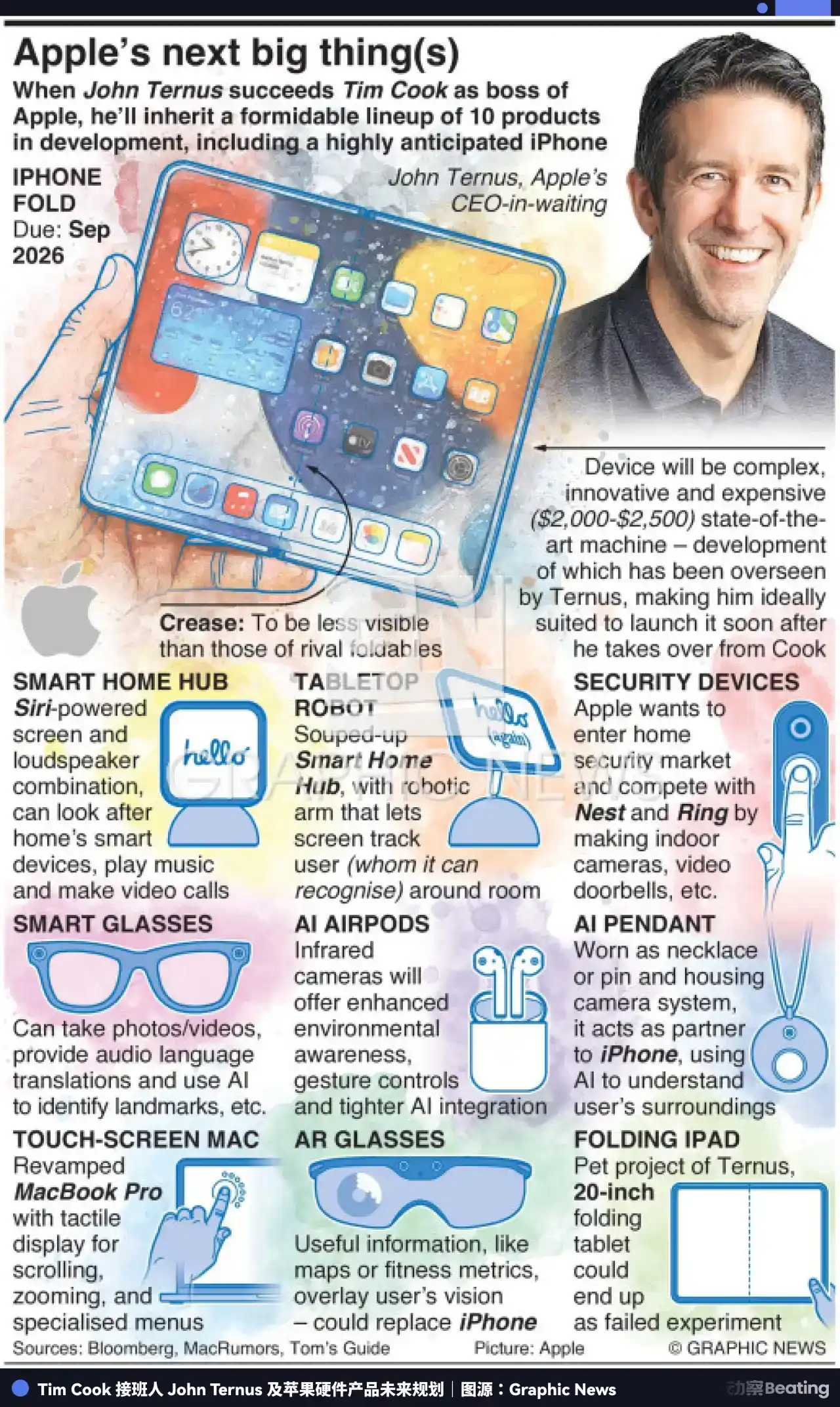
The future hardware plans overseen by Ternus, Tim Cook's successor, hint at Apple's next steps. He is advancing a set of unreleased AI devices—glasses with cameras and wearables that use computer vision to understand the surrounding environment. If these products come to fruition, Apple Intelligence will extend from phones outward, with phones, headphones, glasses, and home hubs potentially becoming new senses.
But no matter how the senses extend, the core question remains the same.

The relationship between people and their phones isn't mostly sitting down for long conversations, but mutual interruptions in extremely trivial scenarios. You're rushing for the subway, the kid is crying, the boss is pressing, and the screen is piled with 20 notifications. The most concrete meaning of Apple Intelligence for ordinary people isn't an omnipotent assistant, but a phone starting to shoulder part of your cognitive load. Read less nonsense, search for files less, get interrupted by notifications less.

Apple has always positioned itself as being on the user's side. It says privacy is a fundamental human right, that devices belong to users, that technology should serve people. In the AI era, this rhetoric will face its real test. Because once a system starts understanding you, it's not just protecting your data; it's also shaping your actions. It gives you summaries, suggestions, filters information for you, decides for you what's important and what can be ignored.

The difficulty of personal intelligence has never been just intelligence; it's also "personal." A person's life isn't a database. It contains emotions, misunderstandings, awkward moments, and corners one doesn't want any system to see. For AI to enter these places, efficiency alone cannot be the pass.

Kazuo Ishiguro wrote about an AI companion named Klara in "Klara and the Sun." She spent her entire existence trying to understand a girl. She learned to observe changes in light, to read expressions and silence, to know when to be quiet.

But the most moving part of the book is when Klara finally understands there is a part of the girl she can never touch. It's not that she isn't smart enough, but she learns one thing: understanding a person and possessing a person's data are two completely different matters.

It took Apple fifteen years to reach the point of admitting Siri wasn't good enough. On this WWDC night, it borrowed models from Google, compute from Nvidia, and another year of patience from users. It proved it's willing to bow its head, but bowing is just the beginning.

What it needs to learn next is what Klara already knew. It's not about becoming smarter, but knowing where to stop after stepping into someone's life.

-END-
Perguntas relacionadas

QAccording to the article, what is the core reason Apple is integrating Google's Gemini technology into Siri AI in 2026?

AThe article states that Apple's core reason is that despite over a decade of internal development, its own AI technology, particularly for complex reasoning and agent-like capabilities, could not meet user expectations. It acknowledges a technology gap and chooses to 'borrow bones'—leveraging Gemini's advanced foundational model power while maintaining its own product control and privacy framework.

QHow does the article contrast Apple's historical approach to AI (pre-2024) with the approach it announced in 2026?

AHistorically, Apple's approach was characterized by closed, controlled, and device-centric AI focused on privacy and specific, reliable features (like Face ID, Live Text). It avoided large-scale cloud-based models and broad data access, which inadvertently limited Siri's growth. In 2026, its approach pivots to strategic openness, deeply integrating a powerful external model (Gemini) into its foundation and expanding its private cloud compute to third-party infrastructure to achieve the advanced intelligence it now prioritizes.

QWhat are the two main strategic benefits the article suggests Google and Nvidia gain from their partnerships with Apple on AI?

AFor Google, the primary benefit is a massive endorsement, as Apple's adoption validates Gemini's underlying model capabilities as superior and reliable. For Nvidia, the benefit is proving the indispensable role of its GPU cloud infrastructure for cutting-edge AI inference and complex tasks, even for a company with Apple's formidable in-house chip design.

QWhat unique challenge does the article identify for Apple Intelligence in the Chinese market compared to the US?

AThe article identifies that in China, Apple Intelligence faces unique regulatory hurdles involving AI model filing, content security, and data localization laws. This likely means the Chinese version will be a fundamentally different product, built with a local model partner and tailored to local compliance, potentially offering different capabilities and boundaries than the Gemini-powered version available elsewhere.

QBeyond technical capability, what deeper humanistic challenge does the article imply Apple's 'personal intelligence' must eventually address?

AThe article implies that the ultimate challenge for a 'personal intelligence' is not just technical smartness, but the ethical and experiential understanding of human life. It references the novel 'Klara and the Sun' to suggest that truly understanding a person involves more than processing their data; it requires knowing when to be quiet, respecting unquantifiable human elements like emotion and privacy, and understanding where to stop—a challenge of empathy and restraint.

Leituras Relacionadas

Fundraising is Like a Strange Dance: The 'Absurd Drama' of Silicon Valley Founders' Capital Raises

The article details a series of absurd and revealing anecdotes shared by Silicon Valley founders about their venture capital fundraising experiences, sparked by Greg Isenberg's story of pitching to a sleeping a16z partner. Founders describe surreal pitch meetings: one faced a barefoot, peanut-eating investor who offered triple the requested amount after 30 seconds; another performed a pitch in a VC's parked car; a founder discovered his audience understood no English beyond "yes." These stories highlight the often irrational and performative nature of fundraising. Beyond the absurdity, darker power imbalances are exposed. Stories include investors suggesting founders fire co-founders for their equity, blatant market misjudgments, disrespectful behavior from LPs, and discriminatory remarks. A debate also emerges around "Sequoia's" practice of splitting a round into two valuations. However, the thread isn't solely critical. Positive counter-narratives celebrate supportive VCs who offered crucial advice during crises, respected founders' timelines, and showed simple gestures of respect—like a partner personally fetching coffee before a major pitch. Ultimately, the collective sharing acts as a pressure release, illustrating that fundraising is a complex dance of power, trust, and sometimes sheer theater. It underscores that beyond capital, mutual respect and integrity remain the most enduring foundations of the founder-investor relationship.

marsbitHá 5m

Fundraising is Like a Strange Dance: The 'Absurd Drama' of Silicon Valley Founders' Capital Raises

marsbitHá 5m

Vitalik's Vision for the Next Evolution of On-Chain Finance: How to Reconstruct DeFi with an 'Options Mindset'?

Vitalik Buterin recently proposed a conceptual shift for DeFi: replacing traditional Collateralized Debt Positions (CDPs) and forced liquidations with an options-based mechanism. This aims to address key vulnerabilities in current DeFi lending. The traditional CDP model, foundational to protocols like MakerDAO and Aave, allows users to borrow against collateral but relies on real-time oracles and triggers sudden, mandatory liquidations during price volatility. This can cause cascading sell-offs, oracle manipulation risks, and significant MEV extraction, exacerbating market stress. Vitalik's alternative envisions splitting an asset like 1 ETH into two complementary components: one offering stable/index-like exposure and the other absorbing the opposite risk/reward. Instead of a hard liquidation threshold, a user's exposure to the target asset would gradually and smoothly deviate (following a near-quadratic curve) as the collateral price moves. The system would primarily depend on "slow oracles" for periodic settlement rather than instant price feeds. Key potential benefits include: the elimination of abrupt, forced liquidations; drastically reduced reliance on vulnerable real-time oracles; and inherent resistance to certain MEV exploits centered on liquidation auctions. The article posits that for Ethereum DeFi to maintain its relevance amid competition from faster, cheaper chains, it must compete on sophisticated financial engineering and robustness—not just transaction speed or yields. The core value proposition should shift towards offering users clearer, more manageable risk structures, greater autonomy, and resilience in extreme scenarios, moving DeFi from high-risk experimentation towards becoming reliable financial infrastructure.

marsbitHá 44m

Vitalik's Vision for the Next Evolution of On-Chain Finance: How to Reconstruct DeFi with an 'Options Mindset'?

marsbitHá 44m

AI Agent Completely Transforms Web3 Gaming: From the Rugpull Bakery Bot Controversy to the New 2026 Agent Paradigm

This article explores how the AI Agent paradigm is fundamentally transforming Web3 gaming, moving from a disruptive force to a core, legitimized element. It begins with the controversy in the competitive baking game Rugpull Bakery, where automated scripts caused fairness issues. Instead of banning them, the developers integrated AI Agents into the official gameplay by providing technical documentation (skill.md, agent.json), marking a shift towards "Agentic Gaming." The piece outlines three primary implementation models for AI Agents in Web3 games by 2026: 1. **Autonomous Competitors & Economic Entities:** AI Agents act as independent players with unique strategies. Examples include TEN Protocol's poker agents, AI Arena's trainable NFT fighters, and Satoshi Strike Force's "Digital Athletes" trained on player data. The Somnia blockchain is highlighted as a dedicated "Agentic L1" infrastructure supporting this model at scale. 2. **Modular Infrastructure & Programmable Environments:** This model, exemplified by EVE Frontier, allows AI Agents to program game world logic itself. Using "Smart Assemblies" (e.g., Smart Turrets, Smart Gates), Agents can modify shared economic and physical rules on-chain, creating dynamic, player/AI-built worlds. The ERC-8183 standard further enables these automated entities to hire other AI services for complex tasks. 3. **Hybrid Companions & Dynamic Adaptation:** Here, AI serves as a collaborative partner. In Parallel Colony, highly autonomous AI Avatars work alongside human players who provide high-level guidance. Illuvium plans to use AI to make NPCs dynamic and responsive, creating personalized, emergent narratives for each player. The conclusion posits that Web3 gaming has reached a "post-human" inflection point. Blockchains' transparency and programmability, combined with new standards and infrastructure like Somnia, make integrating and governing AI Agents not just viable but essential. The future lies in a symbiotic digital order where players transition from manual laborers to commanders and partners of algorithmic intelligence.

marsbitHá 1h

AI Agent Completely Transforms Web3 Gaming: From the Rugpull Bakery Bot Controversy to the New 2026 Agent Paradigm

marsbitHá 1h

Trading

Spot
Futuros

Artigos em Destaque

O que é $S$

Compreender o SPERO: Uma Visão Abrangente Introdução ao SPERO À medida que o panorama da inovação continua a evoluir, o surgimento de tecnologias web3 e projetos de criptomoeda desempenha um papel fundamental na formação do futuro digital. Um projeto que tem atraído atenção neste campo dinâmico é o SPERO, denotado como SPERO,$$s$. Este artigo tem como objetivo reunir e apresentar informações detalhadas sobre o SPERO, para ajudar entusiastas e investidores a compreender as suas bases, objetivos e inovações nos domínios web3 e cripto. O que é o SPERO,$$s$? O SPERO,$$s$ é um projeto único dentro do espaço cripto que procura aproveitar os princípios da descentralização e da tecnologia blockchain para criar um ecossistema que promove o envolvimento, a utilidade e a inclusão financeira. O projeto é concebido para facilitar interações peer-to-peer de novas maneiras, proporcionando aos utilizadores soluções e serviços financeiros inovadores. No seu núcleo, o SPERO,$$s$ visa capacitar indivíduos ao fornecer ferramentas e plataformas que melhoram a experiência do utilizador no espaço das criptomoedas. Isso inclui a possibilidade de métodos de transação mais flexíveis, a promoção de iniciativas impulsionadas pela comunidade e a criação de caminhos para oportunidades financeiras através de aplicações descentralizadas (dApps). A visão subjacente do SPERO,$$s$ gira em torno da inclusão, visando fechar lacunas dentro das finanças tradicionais enquanto aproveita os benefícios da tecnologia blockchain. Quem é o Criador do SPERO,$$s$? A identidade do criador do SPERO,$$s$ permanece algo obscura, uma vez que existem recursos publicamente disponíveis limitados que fornecem informações detalhadas sobre o(s) seu(s) fundador(es). Esta falta de transparência pode resultar do compromisso do projeto com a descentralização—uma ética que muitos projetos web3 partilham, priorizando contribuições coletivas em vez de reconhecimento individual. Ao centrar as discussões em torno da comunidade e dos seus objetivos coletivos, o SPERO,$$s$ incorpora a essência do empoderamento sem destacar indivíduos específicos. Assim, compreender a ética e a missão do SPERO é mais importante do que identificar um criador singular. Quem são os Investidores do SPERO,$$s$? O SPERO,$$s$ é apoiado por uma diversidade de investidores que vão desde capitalistas de risco a investidores-anjo dedicados a promover a inovação no setor cripto. O foco desses investidores geralmente alinha-se com a missão do SPERO—priorizando projetos que prometem avanço tecnológico social, inclusão financeira e governança descentralizada. Essas fundações de investidores estão tipicamente interessadas em projetos que não apenas oferecem produtos inovadores, mas que também contribuem positivamente para a comunidade blockchain e os seus ecossistemas. O apoio desses investidores reforça o SPERO,$$s$ como um concorrente notável no domínio em rápida evolução dos projetos cripto. Como Funciona o SPERO,$$s$? O SPERO,$$s$ emprega uma estrutura multifacetada que o distingue de projetos de criptomoeda convencionais. Aqui estão algumas das características-chave que sublinham a sua singularidade e inovação: Governança Descentralizada: O SPERO,$$s$ integra modelos de governança descentralizada, capacitando os utilizadores a participar ativamente nos processos de tomada de decisão sobre o futuro do projeto. Esta abordagem promove um sentido de propriedade e responsabilidade entre os membros da comunidade. Utilidade do Token: O SPERO,$$s$ utiliza o seu próprio token de criptomoeda, concebido para servir várias funções dentro do ecossistema. Esses tokens permitem transações, recompensas e a facilitação de serviços oferecidos na plataforma, melhorando o envolvimento e a utilidade gerais. Arquitetura em Camadas: A arquitetura técnica do SPERO,$$s$ suporta modularidade e escalabilidade, permitindo a integração contínua de funcionalidades e aplicações adicionais à medida que o projeto evolui. Esta adaptabilidade é fundamental para manter a relevância no panorama cripto em constante mudança. Envolvimento da Comunidade: O projeto enfatiza iniciativas impulsionadas pela comunidade, empregando mecanismos que incentivam a colaboração e o feedback. Ao nutrir uma comunidade forte, o SPERO,$$s$ pode melhor atender às necessidades dos utilizadores e adaptar-se às tendências do mercado. Foco na Inclusão: Ao oferecer taxas de transação baixas e interfaces amigáveis, o SPERO,$$s$ visa atrair uma base de utilizadores diversificada, incluindo indivíduos que anteriormente podem não ter participado no espaço cripto. Este compromisso com a inclusão alinha-se com a sua missão abrangente de empoderamento através da acessibilidade. Cronologia do SPERO,$$s$ Compreender a história de um projeto fornece insights cruciais sobre a sua trajetória de desenvolvimento e marcos. Abaixo está uma cronologia sugerida que mapeia eventos significativos na evolução do SPERO,$$s$: Fase de Conceituação e Ideação: As ideias iniciais que formam a base do SPERO,$$s$ foram concebidas, alinhando-se de perto com os princípios de descentralização e foco na comunidade dentro da indústria blockchain. Lançamento do Whitepaper do Projeto: Após a fase conceitual, um whitepaper abrangente detalhando a visão, os objetivos e a infraestrutura tecnológica do SPERO,$$s$ foi lançado para atrair o interesse e o feedback da comunidade. Construção da Comunidade e Primeiros Envolvimentos: Esforços ativos de divulgação foram feitos para construir uma comunidade de primeiros adotantes e investidores potenciais, facilitando discussões em torno dos objetivos do projeto e angariando apoio. Evento de Geração de Tokens: O SPERO,$$s$ realizou um evento de geração de tokens (TGE) para distribuir os seus tokens nativos a apoiantes iniciais e estabelecer liquidez inicial dentro do ecossistema. Lançamento da dApp Inicial: A primeira aplicação descentralizada (dApp) associada ao SPERO,$$s$ foi lançada, permitindo que os utilizadores interagissem com as funcionalidades principais da plataforma. Desenvolvimento Contínuo e Parcerias: Atualizações e melhorias contínuas nas ofertas do projeto, incluindo parcerias estratégicas com outros players no espaço blockchain, moldaram o SPERO,$$s$ em um jogador competitivo e em evolução no mercado cripto. Conclusão O SPERO,$$s$ é um testemunho do potencial do web3 e das criptomoedas para revolucionar os sistemas financeiros e capacitar indivíduos. Com um compromisso com a governança descentralizada, o envolvimento da comunidade e funcionalidades inovadoras, abre caminho para um panorama financeiro mais inclusivo. Como em qualquer investimento no espaço cripto em rápida evolução, potenciais investidores e utilizadores são incentivados a pesquisar minuciosamente e a envolver-se de forma ponderada com os desenvolvimentos em curso dentro do SPERO,$$s$. O projeto demonstra o espírito inovador da indústria cripto, convidando a uma exploração mais aprofundada das suas inúmeras possibilidades. Embora a jornada do SPERO,$$s$ ainda esteja a desenrolar-se, os seus princípios fundamentais podem, de facto, influenciar o futuro de como interagimos com a tecnologia, as finanças e uns com os outros em ecossistemas digitais interconectados.

69 Visualizações TotaisPublicado em {updateTime}Atualizado em 2024.12.17

O que é $S$

O que é AGENT S

Agent S: O Futuro da Interação Autónoma no Web3 Introdução No panorama em constante evolução do Web3 e das criptomoedas, as inovações estão constantemente a redefinir a forma como os indivíduos interagem com plataformas digitais. Um projeto pioneiro, o Agent S, promete revolucionar a interação humano-computador através do seu framework aberto e agente. Ao abrir caminho para interações autónomas, o Agent S visa simplificar tarefas complexas, oferecendo aplicações transformadoras em inteligência artificial (IA). Esta exploração detalhada irá aprofundar-se nas complexidades do projeto, nas suas características únicas e nas implicações para o domínio das criptomoedas. O que é o Agent S? O Agent S é um framework aberto e agente, especificamente concebido para abordar três desafios fundamentais na automação de tarefas computacionais: Aquisição de Conhecimento Específico de Domínio: O framework aprende inteligentemente a partir de várias fontes de conhecimento externas e experiências internas. Esta abordagem dupla capacita-o a construir um rico repositório de conhecimento específico de domínio, melhorando o seu desempenho na execução de tarefas. Planeamento ao Longo de Longos Horizontes de Tarefas: O Agent S emprega planeamento hierárquico aumentado por experiência, uma abordagem estratégica que facilita a decomposição e execução eficientes de tarefas intrincadas. Esta característica melhora significativamente a sua capacidade de gerir múltiplas subtarefas de forma eficiente e eficaz. Gestão de Interfaces Dinâmicas e Não Uniformes: O projeto introduz a Interface Agente-Computador (ACI), uma solução inovadora que melhora a interação entre agentes e utilizadores. Utilizando Modelos de Linguagem Multimodais de Grande Escala (MLLMs), o Agent S pode navegar e manipular diversas interfaces gráficas de utilizador de forma fluida. Através destas características pioneiras, o Agent S fornece um framework robusto que aborda as complexidades envolvidas na automação da interação humana com máquinas, preparando o terreno para uma infinidade de aplicações em IA e além. Quem é o Criador do Agent S? Embora o conceito de Agent S seja fundamentalmente inovador, informações específicas sobre o seu criador permanecem elusivas. O criador é atualmente desconhecido, o que destaca ou o estágio nascente do projeto ou a escolha estratégica de manter os membros fundadores em anonimato. Independentemente da anonimidade, o foco permanece nas capacidades e no potencial do framework. Quem são os Investidores do Agent S? Como o Agent S é relativamente novo no ecossistema criptográfico, informações detalhadas sobre os seus investidores e financiadores não estão explicitamente documentadas. A falta de informações disponíveis publicamente sobre as fundações de investimento ou organizações que apoiam o projeto levanta questões sobre a sua estrutura de financiamento e roteiro de desenvolvimento. Compreender o apoio é crucial para avaliar a sustentabilidade do projeto e o seu impacto potencial no mercado. Como Funciona o Agent S? No núcleo do Agent S reside uma tecnologia de ponta que lhe permite funcionar eficazmente em diversos ambientes. O seu modelo operacional é construído em torno de várias características-chave: Interação Humano-Computador Semelhante: O framework oferece planeamento avançado em IA, esforçando-se para tornar as interações com computadores mais intuitivas. Ao imitar o comportamento humano na execução de tarefas, promete elevar as experiências dos utilizadores. Memória Narrativa: Utilizada para aproveitar experiências de alto nível, o Agent S utiliza memória narrativa para acompanhar os históricos de tarefas, melhorando assim os seus processos de tomada de decisão. Memória Episódica: Esta característica fornece aos utilizadores orientações passo a passo, permitindo que o framework ofereça suporte contextual à medida que as tarefas se desenrolam. Suporte para OpenACI: Com a capacidade de funcionar localmente, o Agent S permite que os utilizadores mantenham o controlo sobre as suas interações e fluxos de trabalho, alinhando-se com a ética descentralizada do Web3. Fácil Integração com APIs Externas: A sua versatilidade e compatibilidade com várias plataformas de IA garantem que o Agent S possa integrar-se perfeitamente em ecossistemas tecnológicos existentes, tornando-o uma escolha apelativa para desenvolvedores e organizações. Estas funcionalidades contribuem coletivamente para a posição única do Agent S no espaço cripto, à medida que automatiza tarefas complexas e em múltiplos passos com mínima intervenção humana. À medida que o projeto evolui, as suas potenciais aplicações no Web3 podem redefinir a forma como as interações digitais se desenrolam. Cronologia do Agent S O desenvolvimento e os marcos do Agent S podem ser encapsulados numa cronologia que destaca os seus eventos significativos: 27 de Setembro de 2024: O conceito de Agent S foi lançado num artigo de pesquisa abrangente intitulado “Um Framework Agente Aberto que Usa Computadores como um Humano”, mostrando a base para o projeto. 10 de Outubro de 2024: O artigo de pesquisa foi disponibilizado publicamente no arXiv, oferecendo uma exploração aprofundada do framework e da sua avaliação de desempenho com base no benchmark OSWorld. 12 de Outubro de 2024: Uma apresentação em vídeo foi lançada, proporcionando uma visão visual das capacidades e características do Agent S, envolvendo ainda mais potenciais utilizadores e investidores. Estes marcos na cronologia não apenas ilustram o progresso do Agent S, mas também indicam o seu compromisso com a transparência e o envolvimento da comunidade. Pontos-Chave Sobre o Agent S À medida que o framework Agent S continua a evoluir, várias características-chave destacam-se, sublinhando a sua natureza inovadora e potencial: Framework Inovador: Concebido para proporcionar um uso intuitivo de computadores semelhante à interação humana, o Agent S traz uma abordagem nova à automação de tarefas. Interação Autónoma: A capacidade de interagir autonomamente com computadores através de GUI significa um avanço em direção a soluções computacionais mais inteligentes e eficientes. Automação de Tarefas Complexas: Com a sua metodologia robusta, pode automatizar tarefas complexas e em múltiplos passos, tornando os processos mais rápidos e menos propensos a erros. Melhoria Contínua: Os mecanismos de aprendizagem permitem que o Agent S melhore a partir de experiências passadas, aprimorando continuamente o seu desempenho e eficácia. Versatilidade: A sua adaptabilidade em diferentes ambientes operacionais, como OSWorld e WindowsAgentArena, garante que pode servir uma ampla gama de aplicações. À medida que o Agent S se posiciona no panorama do Web3 e das criptomoedas, o seu potencial para melhorar as capacidades de interação e automatizar processos significa um avanço significativo nas tecnologias de IA. Através do seu framework inovador, o Agent S exemplifica o futuro das interações digitais, prometendo uma experiência mais fluida e eficiente para os utilizadores em diversas indústrias. Conclusão O Agent S representa um ousado avanço na união da IA e do Web3, com a capacidade de redefinir a forma como interagimos com a tecnologia. Embora ainda esteja nas suas fases iniciais, as possibilidades para a sua aplicação são vastas e cativantes. Através do seu framework abrangente que aborda desafios críticos, o Agent S visa trazer interações autónomas para o primeiro plano da experiência digital. À medida que avançamos mais profundamente nos domínios das criptomoedas e da descentralização, projetos como o Agent S desempenharão, sem dúvida, um papel crucial na formação do futuro da tecnologia e da colaboração humano-computador.

673 Visualizações TotaisPublicado em {updateTime}Atualizado em 2025.01.14

O que é AGENT S

Como comprar S

Bem-vindo à HTX.com!Tornámos a compra de Sonic (S) simples e conveniente.Segue o nosso guia passo a passo para iniciar a tua jornada no mundo das criptos.Passo 1: cria a tua conta HTXUtiliza o teu e-mail ou número de telefone para te inscreveres numa conta gratuita na HTX.Desfruta de um processo de inscrição sem complicações e desbloqueia todas as funcionalidades.Obter a minha contaPasso 2: vai para Comprar Cripto e escolhe o teu método de pagamentoCartão de crédito/débito: usa o teu visa ou mastercard para comprar Sonic (S) instantaneamente.Saldo: usa os fundos da tua conta HTX para transacionar sem problemas.Terceiros: adicionamos métodos de pagamento populares, como Google Pay e Apple Pay, para aumentar a conveniência.P2P: transaciona diretamente com outros utilizadores na HTX.Mercado de balcão (OTC): oferecemos serviços personalizados e taxas de câmbio competitivas para os traders.Passo 3: armazena teu Sonic (S)Depois de comprar o teu Sonic (S), armazena-o na tua conta HTX.Alternativamente, podes enviá-lo para outro lugar através de transferência blockchain ou usá-lo para transacionar outras criptomoedas.Passo 4: transaciona Sonic (S)Transaciona facilmente Sonic (S) no mercado à vista da HTX.Acede simplesmente à tua conta, seleciona o teu par de trading, executa as tuas transações e monitoriza em tempo real.Oferecemos uma experiência de fácil utilização tanto para principiantes como para traders experientes.

1.2k Visualizações TotaisPublicado em {updateTime}Atualizado em 2026.06.02

Como comprar S

Discussões

Bem-vindo à Comunidade HTX. Aqui, pode manter-se informado sobre os mais recentes desenvolvimentos da plataforma e obter acesso a análises profissionais de mercado. As opiniões dos utilizadores sobre o preço de S (S) são apresentadas abaixo.

活动图片