Blockchain Capital Partner: The Structure of On-Chain Two-Tier Capital Is Still in the Early Stages of Value Discovery

链捕手Publicado em 2026-05-22Última atualização em 2026-05-22

Resumo

Spencer Bogart, a general partner at Blockchain Capital, argues that the on-chain economy possesses unique features like programmability, composability, and global distribution, fostering an open and fast-paced innovation ecosystem. However, these very features create challenges for large, fiduciarily-responsible institutional capital, which requires robust risk assessment frameworks often difficult in a permissionless and adversarial environment. The proposed solution is the emergence of a two-tiered capital structure. The first, permissionless layer remains the crucible for innovation, where protocols are built, tested, and hardened with real capital. The second, "institutional" layer consists of chains (L1s, L2s, etc.) that, while based on similar code, incorporate risk-management features like the ability to pause or freeze transactions in extreme scenarios, making them suitable for large-scale institutional deployment. The synergy between these layers is key. Protocols proven resilient in the open, permissionless environment can then scale to the institutional layer, accessing deeper capital pools. This creates a lifecycle: build and launch permissionlessly, test and prove robustness publicly, then expand to an institutional-grade chain for scaled adoption. This architecture allows the open, experimental side to continue driving innovation with crypto-native capital, while the institutional layer provides the liquidity, stability, and trust required for mainstream ado...

Author: Spencer Bogart, General Partner at Blockchain Capital

Compiled by: Hu Tao, ChainCatcher

The on-chain economy possesses a series of truly unique characteristics, including programmability, composability, and global distribution. This means anyone can build, anyone can publish, and anything can freely connect to everything built by others. Protocols are tested in a production environment using real capital in a globally scaled adversarial setting. Ultimately, this fosters an ecosystem of innovation that is faster and more open than anything the financial world has ever seen before.

However, when it comes to truly large pools of capital, these same characteristics present a problem. Institutional investors with fiduciary duties and investment committees need to be able to assess the risks of their investment environment. The permissionless nature of on-chain infrastructure, coupled with the potential for newer, less-tested protocols to yield unexpected outcomes, makes this risk assessment more difficult than in more controlled environments.

For the on-chain economy to reach its full potential, it requires both open innovation and deep capital. I believe we are beginning to see a pathway that achieves both.

What is emerging is a two-tier architecture.

The first tier is our existing permissionless environment, where composability and open innovation drive the ecosystem. This tier is not going away, nor should it.

The second tier consists of a collection of chains—be they L2s, L1s, or otherwise—often built on the same codebase and security infrastructure, but with a different approach to handling the tails of the risk distribution. These chains have security models that include the ability to pause or freeze transactions in the event of extreme incidents. For institutional capital, this capability is a risk management feature that makes the entire exposure controllable.

We are seeing this today in secondary organizations: some L2s have already established security councils with some form of freeze authority. We recently witnessed this mechanism in practice when the Arbitrum security council intervened and recovered funds in the Kelp DAO incident.

These two tiers serve different purposes, and that is the key. The permissionless tier is the crucible where protocols are forged under real pressure, with real capital, in an adversarial environment. The protocols that emerge are stronger for it. The institutional tier allows for the large-scale deployment of capital with formal mandates and compliance requirements.

The cross-pollination between them is particularly important.

A protocol that has been battle-tested over years in a specific environment, likely having survived real security events, demonstrated reliable operation across various market conditions, and established mature governance, now has a credible path to expand its reach into the institutional tier. It can deploy onto the institutional tier and access a deeper pool of capital than what might be available in a purely crypto-native environment.

The lifecycle becomes: build and launch permissionlessly. Get tested in the open. Prove your mettle. Then expand to the institutional tier and access capital at a completely different scale.

This is indeed a great architecture. The open, experimental side of the ecosystem continues its work, launching new protocols and using crypto-native capital to take initial risks and push boundaries. The institutional tier provides the ample liquidity and stability that raise the ceiling for successful protocols. In this world, the reward for earning institutional trust is significantly higher. The incentive to innovate increases accordingly, as the payoff for success is greater than ever before.

However, the real challenge lies in overcoming the cold start: the blockchains most favored by institutional capital may not be the ones where the best applications currently reside. The protocols with the highest transaction volumes and battle-tested histories create deep network effects on the blockchains that do not offer these safety guarantees. How this resolves—whether the best protocols choose to deploy instances on institution-facing blockchains, whether new protocols are built from the ground up for the institutional architecture, or whether institutional capital eventually embraces existing blockchains—will be one of the dynamics worth watching.

But the overall architecture feels right. The on-chain economy is building a true capital structure, with different pools of capital flowing into a shared ecosystem. The permissionless base layer constantly creates new things. The institutional layer provides depth. And the connections between them make the whole system work.


Perguntas relacionadas

QAccording to the article, what are the unique characteristics of the on-chain economy?

AThe on-chain economy possesses a series of truly unique characteristics, including programmability, composability, and global distribution.

QWhat is the main problem for institutional investors in the on-chain environment, as described in the article?

AThe main problem is that the permissionless nature of on-chain infrastructure and the potential for newer, less-tested protocols to produce unexpected outcomes make risk assessment more difficult for institutional investors with fiduciary duties, compared to more controlled environments.

QWhat two-layer architecture is forming in the on-chain economy according to the Blockchain Capital partner?

AThe architecture consists of 1) the existing permissionless layer where composability and open innovation drive the ecosystem, and 2) a layer of chains (L2s, L1s, etc.) that are based on similar codebases but have different risk postures, including the ability to pause or freeze transactions in extreme events, which acts as a risk management feature for institutional capital.

QHow does the article describe the lifecycle of a protocol within this two-layer structure?

AThe lifecycle is: build and launch permissionlessly, get tested in the open, prove its merit, and then expand to the institutional layer to access capital at a completely different scale.

QWhat is identified as a key challenge or "cold start" problem in this evolving architecture?

AThe challenge is that the blockchains most favored by institutional capital may not be the ones where the best applications currently reside. Well-established protocols with high transaction volumes create strong network effects on chains that don't offer the same safety guarantees. How this tension resolves is a key dynamic to watch.

Leituras Relacionadas

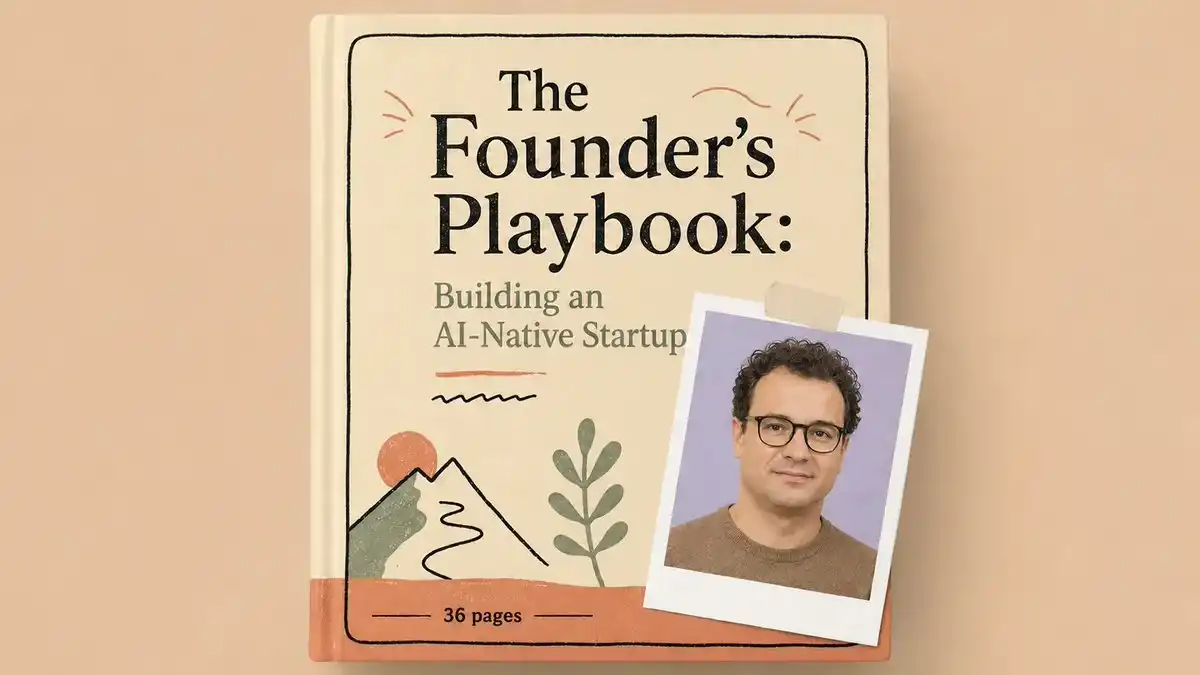
Anthropic Major Release: "The Founder's Playbook" - All 4 Stages of Entrepreneurship, Completely Reimagined with AI

**Anthropic Releases "The Founder's Playbook," Reimagining the Four Stages of Startups with AI** The logic of entrepreneurship is being fundamentally reshaped by AI. Anthropic's new handbook, "The Founder's Playbook: Building an AI-Native Startup," defines the AI-native startup as a new species: not a traditional company with AI tools, but a venture driven by AI from day one. The founder's role is transforming from a hands-on builder to a conductor or architect, orchestrating AI agents for execution while focusing on high-level judgment and strategy. Anthropic outlines a product matrix of Claude tools for different tasks: Claude Chat for interactive research, Claude Code for generating production-ready code, and Claude Cowork for automating knowledge-intensive workflows. The handbook structures the startup lifecycle into four stages, detailing core goals, pitfalls, and AI applications for each: 1. **Idea Stage**: Focuses on validating a real problem. The core challenge is avoiding confirmation bias. AI practices include using Claude as a "structured devil's advocate" to challenge assumptions and for automated market/competitor research. 2. **MVP Stage**: Aims to gather early signals of Product-Market Fit (PMF). Key risks are technical debt and scope creep due to rapid AI-assisted development. Recommended AI uses include maintaining project memory documents (e.g., CLAUDE.md), using Claude Code for structured coding, and automating user feedback analysis. 3. **Launch Stage**: Centers on establishing scalable growth, operations, and compliance. Challenges include accelerating technical debt and founders becoming bottlenecks. AI should be used to build an "operating system" for launch—automating routine tasks (scheduling, reporting, content) and code audits—freeing founders for critical decisions. 4. **Scale Stage**: Focuses on achieving sustainable business operations. The main challenge is delegating operational control. AI should be leveraged for differentiated marketing, operational optimization, and building competitive moats through data network effects. The handbook concludes that in the AI era, "Can we build it?" is no longer the primary constraint. The advantage shifts back to foundational strengths: **insight, judgment, and a deep understanding of a specific problem and audience.**

marsbitHá 6h

Anthropic Major Release: "The Founder's Playbook" - All 4 Stages of Entrepreneurship, Completely Reimagined with AI

marsbitHá 6h

Trading

Spot
Futuros

Artigos em Destaque

Como comprar T

Bem-vindo à HTX.com!Tornámos a compra de Threshold Network Token (T) simples e conveniente.Segue o nosso guia passo a passo para iniciar a tua jornada no mundo das criptos.Passo 1: cria a tua conta HTXUtiliza o teu e-mail ou número de telefone para te inscreveres numa conta gratuita na HTX.Desfruta de um processo de inscrição sem complicações e desbloqueia todas as funcionalidades.Obter a minha contaPasso 2: vai para Comprar Cripto e escolhe o teu método de pagamentoCartão de crédito/débito: usa o teu visa ou mastercard para comprar Threshold Network Token (T) instantaneamente.Saldo: usa os fundos da tua conta HTX para transacionar sem problemas.Terceiros: adicionamos métodos de pagamento populares, como Google Pay e Apple Pay, para aumentar a conveniência.P2P: transaciona diretamente com outros utilizadores na HTX.Mercado de balcão (OTC): oferecemos serviços personalizados e taxas de câmbio competitivas para os traders.Passo 3: armazena teu Threshold Network Token (T)Depois de comprar o teu Threshold Network Token (T), armazena-o na tua conta HTX.Alternativamente, podes enviá-lo para outro lugar através de transferência blockchain ou usá-lo para transacionar outras criptomoedas.Passo 4: transaciona Threshold Network Token (T)Transaciona facilmente Threshold Network Token (T) no mercado à vista da HTX.Acede simplesmente à tua conta, seleciona o teu par de trading, executa as tuas transações e monitoriza em tempo real.Oferecemos uma experiência de fácil utilização tanto para principiantes como para traders experientes.

411 Visualizações TotaisPublicado em {updateTime}Atualizado em 2025.03.21

Como comprar T

Discussões

Bem-vindo à Comunidade HTX. Aqui, pode manter-se informado sobre os mais recentes desenvolvimentos da plataforma e obter acesso a análises profissionais de mercado. As opiniões dos utilizadores sobre o preço de T (T) são apresentadas abaixo.

活动图片