Interview with the Founder of an AI-Focused Investment Fund: Forget the False Narrative of 100x Returns, What Crypto x AI Assets Are Worth Watching?

marsbitPublicado em 2026-05-26Última atualização em 2026-05-26

Resumo

Interview with Austin Barack, founder of AI-focused fund Relayer Capital. He emphasizes prioritizing real value over hype, especially in the Crypto x AI sector. Key assets discussed include: * **Venice:** A private AI platform where user data isn't shared with model providers. Its unique two-token model (VVV and DM) provides sustainable, capped user incentives for computation. Rapid user growth (3M) and token usage (15x in months) suggest significant upside. * **Grass:** Sells high-quality, specialized web-scraped datasets to AI labs for model training. With ~$50M+ ARR and triple-digit growth, its ~$400M valuation is seen as undervalued. * **NEAR:** Praised for its superior cross-chain swap infrastructure via intents, positioning it as crucial infrastructure for AI agents and decentralized applications. * **Akash:** A decentralized GPU compute marketplace gaining traction, with visible usage on platforms like OpenRouter. * **Investment Framework:** Shift from generic "buyback-and-burn" narratives to analyzing the "net token value flow"—whether token holders genuinely capture value from the underlying business. Markets are consolidating around a smaller set of quality projects with strong fundamentals like Venice, Grass, and NEAR, making targeted investments more effective.

Organized & Compiled: Deep Tide TechFlow
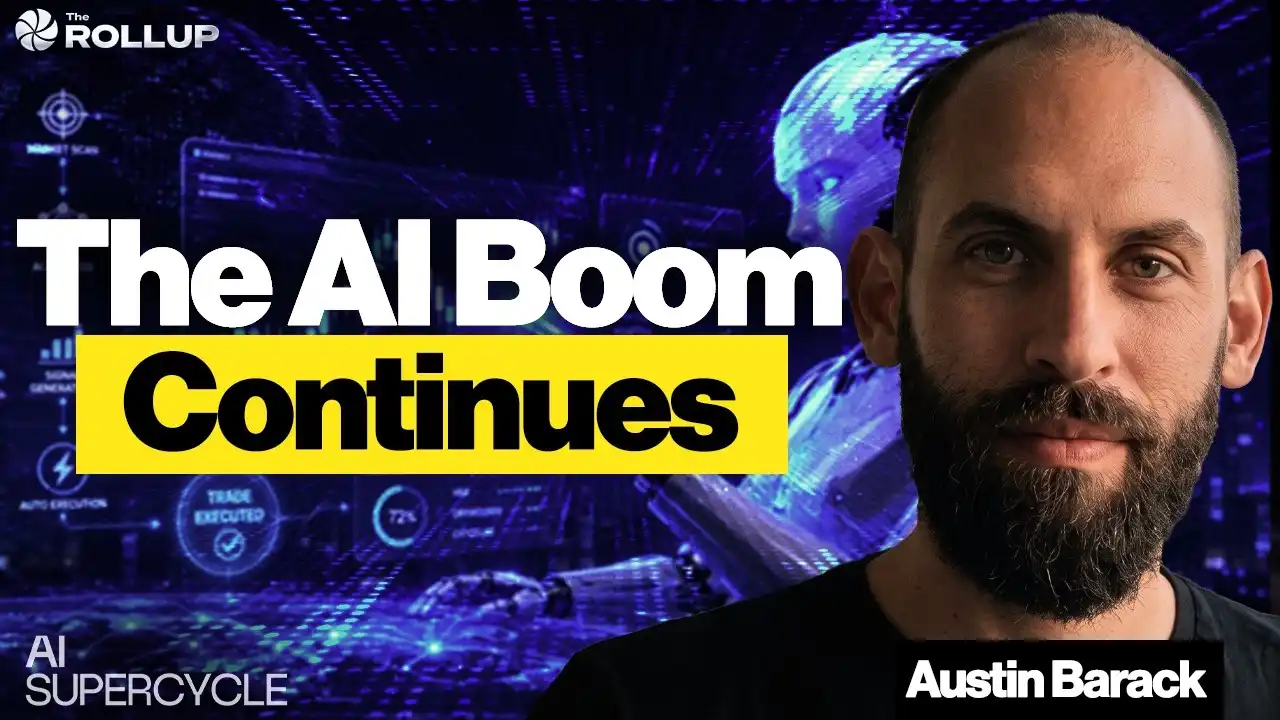
Guest: Austin Barack, Founder of Relayer Capital (a digital asset investment fund focused on the AI sector)

Host: Andy

Podcast Source: The Rollup

Original Title: Austin Barack: My AI Bull Thesis (...And What I'm Holding)

Broadcast Date: May 23, 2026

Key Summary

This episode of AI Supercycle invited Austin Barack, founder of Relayer Capital, to discuss Venice, Grass, NEAR, Akash, and the broader Crypto x AI asset framework. Austin's core viewpoint is that AI is scaling user data to levels unimaginable for past internet products, making privacy AI, data supply, inference computing power, decentralized training, and Agent infrastructure key sectors. He believes there is a clear misalignment between the revenue growth, user growth, and valuation of Venice and Grass, and that NEAR's positioning in cross-chain Intents and Agent infrastructure is also undervalued. Regarding the broader crypto market, Austin emphasizes that investors should start from the perspective of "net Token value flow" rather than mechanically looking at buyback and burn mechanisms, truly assessing whether Token holders are capturing the value created by the business.

Excerpts of Notable Points

The True Value of Venice and Privacy AI

  • "In AI, privacy is more important than in any other scenario. Because you're sharing health data, financial data, you'll connect all your files, and you'll share your entire life in ways never done before."
  • "This isn't 10 times more data than social media; it's 100 times more data."
  • "What's really cool about Venice is that it's not just about using AI in a private environment; it does this without sacrificing the user experience at all, even improving it."
  • "Tokens can become a very important part, significantly enhancing the experience, but for most users, they don't need to understand Tokens to find the product useful."

VVV, DM, and Venice's Economic Model

  • "The role of DM is: for every 1 DM Token you own, you get $1 worth of free inference compute credit per day on the Venice platform. You can think of it as a kind of perpetual right, equivalent to getting $365 of compute credit per year."
  • "Its credit expires if unused; it doesn't accumulate over time. If you only used 50 cents one day, it doesn't become $1.50 the next day; it resets to $1."
  • "If all DM is locked and used for inference compute, then Venice's maximum cost is $38,000 per day, an annualized cost of about $10 million, and this cost will not exceed that figure."
  • "I think DM should be valued more like a corporate bond, rather than using a high discount rate to suppress its value."

Grass and AI Data Demand

  • "Grass collects datasets and then sells these datasets to cutting-edge AI labs that need data to train new models."
  • "This isn't random web crawling; it has to be very specialized, very specific datasets, and of high quality."
  • "The scale of investment into models is huge, and Grass benefits from this trend. The more invested in models, the greater the demand for data."
  • "According to recently disclosed data, the project's ARR is about $50 million. Currently, its valuation is about $400 million. For a project growing this fast, valuing it at just 5x revenue seems completely unreasonable to me."

NEAR, Akash, and the AI Stack

  • "NEAR Intents is very practical and arguably one of the best cross-chain Swap experiences available now. Also, it plays a very important role in the Agent space."
  • "I think NEAR is doing very well on the Intents side. They're also doing many other things, like private intents and other elements around AI usage; it's one of the few L1s that has truly found its unique positioning."
  • "Akash. They started with a decentralized CPU marketplace early on and later pivoted to the GPU market."
  • "The main areas I'm focused on include: decentralized training, inference and compute marketplaces, Agent infrastructure, data, and consumer-facing model usage applications."

Token Value Capture and Market Divergence

  • "Hyperliquid is first and foremost a very successful business model, so people like its Token, and buybacks are just one way it transfers value to Token holders. If it wasn't a well-functioning business to begin with, then even with a buyback mechanism, the Token price wouldn't naturally rise."
  • "The core issue isn't what the mechanism is called, but whether Token holders can maximally capture the value generated by what you're building."
  • "Every project and each mechanism needs specific analysis. But the core question is: Are Token holders able to benefit from the value the system is generating?"
  • "Investors can choose from a smaller pool of quality projects. Now, capital flows are concentrating into projects like Venice, HYPE, Grass, AERO, NEAR, and Zcash."
  • "For investors seeking 5 to 10x, or even 3x returns, it's easier to succeed now than before. While you might still achieve a 100x return eventually, I think there's a set of projects doing very interesting things right now, and these are the assets I would watch and invest in."

Venice Privacy Overview

Host Andy: I used Venice for the first time not long ago. I typed into Venice: "Is this really private?" It replied: "Yes, the inference process is private," then explained a bunch. I replied: "That's so cool." It immediately responded: "Yes, it is pretty cool, isn't it? Using Venice, you can..."

So the first time using Venice, there's an interesting moment: you suddenly realize that all the chat content you've ever entered into typical AI providers, while not necessarily public, the data flows to large providers. The most private diaries, trade secrets, plans, etc., are all handed over to them.

From a high-level perspective, regarding market structure, investment logic, founding team, how do you view private AI and Venice?

Austin:

Venice is interesting because it has gone through many different stages of iteration. I first came across the project last January. I was closely following Virtuals and aixbt at the time, and a large portion of Venice's early airdrop went to holders of tokens in those ecosystems, so that's where I first saw it.

It was already an interesting product at that time. It's crazy that even though only about 16 months have passed, AI was far from being as ubiquitous as it is today, and it hadn't become an indispensable part of everyone's daily life yet. During this period, whether it's Claude, ChatGPT, or other services, AI started out as a replacement for Google search. People would say: "I don't use Google to search for certain questions anymore; I go directly to an AI platform to ask an LLM." But now it's entered into creation, task solving, even the stage where you have an entire team and a bunch of Agents helping you work.

AI Data Usage is 100x Greater Than Before

Austin:

I think people are gradually realizing that privacy in AI is more important than in any other scenario. Because you're sharing health data, financial data, you connect all your files, you share your entire life in ways never done before.

In the past, when people talked about privacy, it was more in the context of social media, like whether my account is public or private, whether Facebook knows too much about me. But AI isn't just 10 times more data; it's 100 times more data.

The really cool thing about Venice is that it doesn't just let you use AI in a private environment; it does so without sacrificing the user experience at all, even improving it. Because you're not tied to one specific model. For example, if you use ChatGPT, you're just following OpenAI's model upgrades; if you use Anthropic, you follow Anthropic's different model evolutions; or you use Gemini, open-source models, each with its own boundaries.

In Venice, you can choose the most suitable model for each task, and you can also choose which models you want to use. So it has a high degree of customization. They first created a very, very good consumer product, and most users don't know what Tokens are.

Tokens then add an interesting element on top of that. I'm very bullish on what they're doing. The key here is, I think crypto consumer products will evolve into a form where Tokens can become a very important part, significantly enhancing the experience, but for most users, they don't need to understand Tokens to find the product useful.

Host Andy: This indeed seems like a breakthrough form for consumer products: there's Crypto underneath, but users don't need to understand it first. But it also brings an interesting Token structure. Some compare it to Luna: staking VVV yields DM Tokens, then the inference credit forms some sort of debt structure.

3 Million Users

Host Andy: So how should one understand the VVV Token and DM Token within Venice's current flywheel? Also, could you talk about Venice's revenue side? Because they are indeed doing some buybacks, but the scale isn't particularly large. How do these two Tokens actually work? Why isn't it like Luna?

Austin:

They just announced having 3 million users, and growth is very fast. They added about 1 million users in the last 3 months, whereas the previous 1 million users took about 7 months. So growth has been accelerating.

The VVV and DM Token Flywheel

Austin:

They have two Tokens. The first is VVV. Protocol revenue is used to burn VVV. Users can also stake VVV to get free membership. But the most interesting part is that users can stake and lock VVV to mint a Token called DM. You can also buy DM on the open market, but the core mechanism is staking VVV and minting DM.

The role of DM is: for every 1 DM Token you own, you get $1 worth of free inference compute credit per day on the Venice platform. You can think of it as a kind of perpetual right, equivalent to getting $365 of compute credit per year.

But its credit expires if unused; it doesn't accumulate over time. If you only used 50 cents one day, it doesn't become $1.50 the next day; it resets to $1. I think this creates a very interesting mechanism, similar to a tool for customer acquisition at near cost. This is different from Luna. Luna went to an extreme state, issuing an insane number of Tokens, leading to stablecoin scale in the tens or hundreds of billions. Venice is very clear on this: they keep the potential cost within a defined range.

Currently, the amount of DM that can be minted per Venice Token gradually decreases as the amount of DM in circulation increases, which effectively sets a hard cap of about 38,000 DM. Under current conditions, if all DM is locked and used for inference compute, then Venice's maximum cost is $38,000 per day, an annualized cost of about $10 million, and this cost will not exceed that figure.

Currently, about 10,000 DM are used for inference compute per day, corresponding to an annualized cost of about $3.5 million. This cost is offset by their business revenue. They offer Pro and Premium subscription services, ranging from $18 to $68 per month, or even higher. At the same time, when users use the platform, they also purchase Tokens or additional credits to use models.

Notably, their daily Token usage has grown from the initial few billion to recently about 70 billion, a roughly 15x increase over the past few months. So the difference here from Luna, I think, is that there is a maximum potential cost for the company, and DM users, while using DM, also use subscription services. If they need more than $1 credit per Token per day, they also buy other credits. This cost is easily covered by business revenue, and business revenue already far exceeds it.

DM Should Be Priced Like a Corporate Bond

Austin:

On the other hand, the coolest thing about DM is that it guarantees you future access to compute resources. The market currently values it with about a 20% discount rate, with a price around $1,800.

I think this type of asset should be priced more like a corporate bond, for example using an 8% to 12% discount rate. Using a 10% discount rate, its price would be roughly $3,650. For example, when I first started paying attention to it, the price was in the $200 range.

Host Andy: I was also thinking, how can an asset that generates $365 worth of rights per year be worth only $200? Unless the market believes Venice simply cannot sustain this mechanism.

Austin:

Exactly. So at that price point, it was almost a no-brainer investment opportunity for me. Even now, I still think there's room for upside.

However, looking beyond DM at Venice's overall economic situation, the numbers are very impressive. And its growth model is completely different from most projects we see in the crypto industry. It's more like the growth rate only possible in the AI field, which is why it's so attractive.

Is Venice at $20 Still Undervalued?

Host Andy: So you're convinced that Venice's VVV asset price is now around $20. Do you think a valuation range of $1.5 to $2 billion is still significantly undervalued for VVV?

Austin:

Yes. When I first bought in January, it was around $2.5. At that time, their daily token volume was only a few billion. Now it's about 15 times that.

Back then, their daily token transaction volume was only a few billion, and now it's grown 15 times that. Their user base grew from 1.5 million to the current 3 million. By my estimates, their revenue is at least 3 times what it was then.

Currently, Venice's valuation is roughly 20 to 30 times its annual revenue, and this is a company still growing at 20% per month. From this perspective, I think its valuation remains very low. You could even compare it to OpenRouter. OpenRouter's valuation is similar to Venice's, but its revenue scale might be slightly lower, and its growth speed might not be as fast as Venice's.

The key difference is that Venice has direct customer resources. It's not a pure backend infrastructure service provider, but a platform that users actively use every day. Personally, currently, the only way I use AI is through Venice.

So, I think its potential is still huge. Of course, this is just my personal opinion and not any investment advice.

How Grass Makes Money

Host Andy: I'm not very familiar with Grass yet. You've mentioned this project multiple times before, and it seems poised for rapid growth now. Of course, its price might have pulled back today. I heard its annualized revenue has exceeded $50 million, and growth is accelerating, reaching triple-digit growth rates. Could you briefly explain Grass's core profit model? How does it make money? And why is it so attractive?

Austin:

Grass collects datasets and then sells these datasets to cutting-edge AI labs that need data to train new models. These labs are generating new models at a very fast pace, but to generate these new models, they need more data. And this isn't random internet crawling; it has to be very specialized, very specific datasets, and of high quality.

This is the role Grass plays, because the scale of investment into building these models is huge, and Grass becomes a beneficiary of this trend. The more invested in models, the greater the demand for data.

Grass's Triple-Digit Growth

Austin:

The Grass team has been building for many years. I remember in some quarter last year, they did about $3 million in revenue. By the end of the year, they were doing $12 million or close to $13 million per quarter. By my estimates, they are growing even faster now. In the next month to a month and a half, they will hold a Token holder call, and we'll get more information.

But this is a project showing triple-digit growth. According to recently disclosed data, the project's ARR is about $50 million. However, I expect it might now be close to $80 million. Currently, its valuation is about $400 million. So, for a project growing this fast, valuing it at just 5x revenue seems completely unreasonable to me; it's a prime candidate for a revaluation.

Host Andy: Is there any working relationship between Grass and Venice?

Austin:

Currently, no. Venice typically doesn't build its own models. So no relationship for now. Who knows in the future. But I see them as two different sides of the same equation. One question is: How do you use AI, and how do you use it privately? Another question is: How are models built in the first place? Grass and Venice are addressing these two sides respectively.

Is Grass's $400M Valuation Too Cheap?

Host Andy: So Grass is trading at about 5x revenue. Some things in the crypto industry trade at 20, 30, 40, 50x revenue. Do you think the ~$400 million range is kind of a no-brainer?

Austin:

Yes. I think it's important to note that the crypto industry also has other things trading at relatively low multiples, but they don't have growth. People come to crypto because they want to invest in growth.

So I think many low-multiple cases might not hold up because there's no capital flow there. But a case like Grass is one of the best examples of extremely fast growth. I think that alone makes it worth paying attention to, let alone the fact that it seems quite cheap to me.

NEAR Cross-Chain Swap

Host Andy: So do you have an investment thesis for NEAR? Are you following NEAR?

Austin:

I've been following NEAR. Even without the AI component, NEAR is an interesting project. Because it's the underlying infrastructure for a lot of cross-chain Swaps. Last October, November, when people were moving in and out of Zcash, NEAR gained a lot of attention in that regard.

NEAR Intents is very practical and arguably one of the best cross-chain Swap experiences available now. Also, it plays a very important role in the Agent space. In my view, NEAR is one of the most suitable infrastructures for carrying cross-chain Swaps, able to avoid many dependencies issues other projects have.

They are growing fast in this area. Now if you're an L1, I think you need to satisfy one of several directions: either you are a vertically integrated app experience, or you're 10x better at something, or you're very, very strong in a certain class of applications.

I think NEAR is doing very well on the Intents side. They're also doing many other things, like private intents and other elements around AI usage; it's one of the few L1s that has truly found its unique positioning.

This reminds me of NBA player categories. Now there are many new L1s and L2s on the market; they're like promising rookies. Over time, some will become superstars, and some will fade away. But there's another category of players, "role players," who perform exceptionally well in their specific roles. For example, OKC's Lu Dort or Alex Caruso.

That's how NEAR feels to me. It's not LeBron James, but it's very important because it's very strong at what it does.

Akash GPU Market Update

Host Andy: Another project that has been constantly undervalued, and Robbie always emphasizes to me, is Akash. Too bad he's not here today. Akash got into distributed inference, distributed models, decentralized training very early, right?

This sounds like the first wave of Crypto AI narrative. After that, we went through those fake Agent projects with Meme Tokens. Now, we seem to have entered the next wave of decentralized inference and model training, but this time the products are much stronger. Have you looked at what Akash is doing? Do you have an investment view on this project?

Austin:

I have indeed looked at Akash. They started with a decentralized CPU marketplace early on and later pivoted to the GPU market. Now, you can actually see how much data is flowing through OpenRouter. A significant portion of that data goes through Akash, i.e., Akash ML, which is very cool. And this data is public; anyone can see it.

However, I must admit, Akash isn't one of the projects I follow most closely. But for a team that's been around for a long time, constantly iterating, it's cool to see them finally finding real product-market fit, and that fit seems to be accelerating.

AI Stack Breakdown

Host Andy: There's a project called Gitlab, with a small market cap on Base, but the number of tokens produced daily performs strongly. Now there's a batch of highly speculative AI Tokens on Base, and there are many small sub-sectors within this puzzle that need to be understood.

I want to ask from a broader perspective: Within this AI stack, are there certain parts most suitable for achieving massive growth after integrating with blockchain? We've already seen Venice providing private inference and uncensorable ChatGPT; NEAR as infrastructure for an Agent marketplace; Akash has Akash ML; Grass focuses on datasets.

In your view, within the AI stack, what are the key sectors or components most likely to be replaced by blockchain technology, or most suitable for on-chain use?

Austin:

I think first is the privacy context, including private use of large language models (LLMs) and uncensorable use. Then comes the data collection needed to train models, which is what Grass is doing.

Next is inference compute and compute marketplaces; you mentioned Akash. We also see other inference marketplaces emerging. There's another project building around DM, also offering other services allowing users to sell idle compute, called AnC. That's an interesting project I've been watching. While it doesn't have a Token live yet, I think they're already doing some very cool things, especially regarding integration with Venice and DM.

I think another important direction is decentralized model training. The question is how to build open-source models while retaining model ownership and monetization ability through private weights. Several teams are currently exploring this space. For example, I think Pluralis is one of the most interesting projects. Nous Research is also doing some very interesting work around Hermes. Additionally, there's Prime Intellect and a few other teams working in this area.

So the main areas I'm focused on include: decentralized training, inference and compute marketplaces, Agent infrastructure, data, and consumer-facing model usage applications.

Net Token Value Flow Framework

Host Andy: Recently you've been emphasizing another point: we need new ways to understand Token models and economics. You've been a strong supporter of projects like Aerodrome and Hyperliquid.

I want to ask a broader question to conclude, outside the AI context: How do you view net Token value flow? That is, using a credit (income) and debit (expense) approach, using a plus-minus table to analyze a crypto asset's value. What kind of shift in thinking do you think is happening across the industry when analyzing Token economics? What is your current framework? Do you agree that investors should understand the net Token value flow of an asset as if looking at a plus-minus table?

Austin:

I think there are several different ways to look at this, and it's not a one-size-fits-all thing.

We can start with high-level mechanisms like buyback and burn. Hyperliquid made this mechanism very popular, and people say, "Look how well Hyperliquid is doing; it has buyback and burn." But for every Hyperliquid, there are nine other Tokens also trying to adopt the same buyback and burn mechanism, and their price performance ends up being very poor.

What's the lesson here? The lesson is that Hyperliquid is first and foremost a very successful business model, so people like its Token, and buybacks are just one way it transfers value to Token holders. If it wasn't a well-functioning business to begin with, then even with a buyback mechanism, the Token price wouldn't naturally rise.

This is the first point I think people often confuse.

The second point is, are you actually creating value for Token holders. Whether you adopt buyback and burn, buyback and distribute, reinvest funds into the business, or put funds in a bank account to enhance balance sheet flexibility, the core question is: Can Token holders maximally capture the value generated by what you're building.

For example, Hyperliquid does it, Aerodrome does it. As for Grass, many people wish it would do more buybacks, but clearly, all its contracts are with the foundation, all revenue goes into the foundation's bank account, and these assets are controlled by Token holders.

So, I think there are many different ways to understand this matter.

Buyback and Burn Only Works in Some Cases

Austin:

Then there's the issue of Token liquidity. Take Hyperliquid as an example. Theoretically, it has a maximum unlock amount per month, but in reality, maybe only two to three hundred thousand Tokens get unlocked. However, buying volume from ETFs, DAT, and the assistance fund is much higher. Therefore, naturally, there are more buyers than sellers.

Look at Aerodrome. If you lock AERO as veAERO, then after they expand to the Ethereum mainnet in July, veAERO will be renamed sAERO. Holders not only earn the platform's full revenue but can also direct Token emissions to the liquidity pools most in need of liquidity while also generating the most revenue.

Some might say that if the value of Token emissions in a certain cycle exceeds the value of revenue, then that cycle is net negative. But I think this view is completely wrong.

The correct way to analyze it is: How much revenue did the system generate in this cycle? How much did the Token circulating supply increase, but actually wasn't sold? For example, Aerodrome recently renamed one of its mechanisms the Momentum Fund, whose essence is similar to the foundation continuously doing buybacks. Additionally, many people who earn AERO choose to lock and stake it as veAERO to earn more revenue. Moreover, some people are just confident in the Token's future and never planned to sell in the first place.

From this perspective, every cycle, that is, every week, the amount of Tokens actually flowing to the open market is far less than the revenue scale the platform generates in the same cycle.

Coupled with some recent new launches, like Atlas, Aura, and other projects, Aerodrome's revenue has increased significantly now. Here, when I mention revenue, I mean the earnings Token holders get from the platform, which have clearly exceeded the value actually emitted out.

So, every project and each mechanism needs specific analysis. But the core question is: Are Token holders able to benefit from the value the system is generating? That's the key point of analysis. Building on this, you can continue deeper analysis from this perspective.

Two New Groups in Digital Asset Markets

Host Andy: I think the entire industry is moving towards a similar mental model, even though this model is very detailed. Now two types of things seem to be emerging: one is those companies with revenue, with fundamentals; the other is more narrative-driven, niche, but technically very useful projects, like Zcash, Venice, NEAR—assets related to AI privacy. Additionally, there are purely on-chain business projects, while the middle ground doesn't seem to have much happening currently.

Austin:

I agree with you. An interesting point about this market is that the set of Tokens truly worth watching has become smaller. Because now people have a clearer understanding of which projects truly have market appeal, which are real and not just hype. Now maybe only 10 to 20 Tokens have very strong fundamentals.

Therefore, we see these Tokens clearly outperforming the market. Because for the first time in a long while, this is the situation: investors can choose from a smaller pool of quality projects. Now, capital flows are concentrating into projects like Venice, HYPE, Grass, AERO, NEAR, and Zcash.

Zcash is another project focused on privacy. Some people now worry that Bitcoin might become increasingly influenced by Michael Saylor (that's another topic), while Zcash represents Bitcoin's original spirit, and its structure is also very similar to Bitcoin.

Although Zcash doesn't have revenue in the current context, it's still an interesting asset. Because the higher its price, the greater its actual utility. The higher the price, the more likely it is to become consolidated, forming stronger consensus and community value around it.

So, I think we're at a very interesting stage now: it's easier to choose the right Tokens. It just requires more focused research to discern which projects are real and which are just false hype.

For investors seeking 5 to 10x, or even 3x returns, it's easier to succeed at this point in time than before. While you might still achieve a 100x return eventually, I think there's a set of projects doing very interesting things right now, and these are the assets I would watch and invest in.


Perguntas relacionadas

QAccording to Austin Barack, what is the unique value proposition of Venice in the privacy AI space?

AAccording to Austin Barack, Venice's unique value lies in providing a private AI environment that handles 100 times more sensitive user data than traditional internet products, without sacrificing user experience. It allows users to choose the most suitable model for each task, offering high customizability. Most users find the product useful without needing to understand the underlying crypto tokens.

QHow does the DM token function within the Venice ecosystem, and how does Austin suggest it should be valued?

AEach DM token entitles the holder to $1 worth of free daily inference computing on the Venice platform, like a perpetual right. The daily allowance does not accumulate. Austin suggests that DM should be valued more like a corporate bond, using an 8-12% discount rate (implying a price around $3,650), rather than the higher discount rate the market was applying.

QWhat is Grass's core business model and why does Austin believe its valuation is currently attractive?

AGrass collects high-quality, specialized datasets and sells them to cutting-edge AI labs that need data to train new models. Austin believes its valuation is attractive because, with an estimated ARR of around $50-80 million and rapid triple-digit growth, it trades at only about 4-5x revenue, which he considers unreasonably low for such a fast-growing project in the crypto space.

QWhat key areas within the AI stack does Austin Barack identify as being well-suited for blockchain integration and growth?

AAustin identifies several key areas: 1) Privacy and uncensorable use of LLMs (e.g., Venice), 2) Data collection for training (e.g., Grass), 3) Inference computing and compute markets (e.g., Akash), 4) Decentralized model training (e.g., Pluralis, Nous Research), and 5) Agent infrastructure and consumer-facing applications for model usage.

QWhat is Austin's core framework for analyzing token value capture, beyond just looking at mechanisms like buyback-and-burn?

AAustin's core framework focuses on whether token holders are able to maximally capture the value created by the project. The key question is: 'Are token holders benefiting from the value the system is generating?' This involves analyzing net token value flows, understanding real sell pressure versus income generated, and assessing whether the underlying business is successful, rather than just the presence of a specific tokenomic mechanism.

Leituras Relacionadas

Kelp DAO's $400 Million Bad Debt Was Covered, But at a $12 Billion Cost to Aave

On May 26th, Kelp DAO successfully transferred its final batch of rsETH, completing the 37-day process of fully backing rsETH 1:1 after a security incident. However, the resolution came at a significant cost to Aave. The protocol's TVL plummeted by over $12 billion in the following month. Furthermore, a separate legal battle over 30,766 frozen ETH continues in court, posing ongoing reputational risk. The recovery was enabled by an unprecedented, one-time coalition dubbed "DeFi United," involving major contributions from Aave's founder, treasury, Consensys, Mantle, and others. Despite this, the event triggered a major outflow of funds, with whales like Justin Sun moving capital to competitors like Spark. Aave's path to regaining its position relies heavily on the successful execution of its multi-pronged strategy. Its new V4 protocol, designed for open, heterogeneous asset markets, faces delays due to internal governance disputes. Meanwhile, the V3 version remains the core revenue generator, and the permissioned Horizon fork is targeting institutional RWA (Real-World Assets) growth—a segment less impacted by the rsETH incident but dependent on traditional finance adoption timelines. The key takeaway is that while the immediate bad debt was covered, Aave paid a steep price in lost trust and capital. Recovering market share depends on accelerating V4's rollout and advancing its institutional RWA offerings, both of which face external and internal hurdles. The "DeFi United" safety net is unlikely to be replicable for future crises.

marsbitHá 35m

Kelp DAO's $400 Million Bad Debt Was Covered, But at a $12 Billion Cost to Aave

marsbitHá 35m

TechFlow Intelligence Report: Xiaomi Announces 200 Billion HKD Stock Buyback Plan, Spot Gold Falls Nearly 1%

TechFlow Report: Xiaomi announced a HK$200 billion stock buyback plan, while spot gold fell nearly 1%. A wider range of tech headlines includes Google unveiling its powerful video editing model Gemini Omni and the original "Attention is All You Need" authors advocating for a move beyond Transformer architecture. In other AI news, IBM reported its first successful use of a quantum computer to train an AI model, and Qwen3.5 released uncensored local model versions. The crypto/Web3 sector saw discussions on opaque stablecoin products and DEX fee changes. Major tech companies are under scrutiny: Uber's COO publicly questioned the ROI of AI investments, Motorola was accused of hijacking Amazon app links for affiliate codes, and Google faced criticism for using web data to fuel its AI. U.S. markets are focused on high S&P 500 valuations (31.8x P/E) and an intense concentration of capital in semiconductor stocks, with warnings about the sustainability of the AI data center boom. Geopolitical tensions, featuring simultaneous U.S. airstrikes on Iran and peace talks, caused significant oil price volatility. Other notable developments include Ferrari's first pure EV priced at 4.35 million yuan and Boston Dynamics' Atlas robot learning soccer from videos. The underlying theme suggests the AI narrative is shifting from boundless potential to requiring tangible results, while traditional geopolitical risks remain a powerful force in markets.

marsbitHá 38m

TechFlow Intelligence Report: Xiaomi Announces 200 Billion HKD Stock Buyback Plan, Spot Gold Falls Nearly 1%

marsbitHá 38m

Coin & Stock Barometer: Bitcoin Miner MARA Holdings Spends Over $860,000 on Bulletproof Vehicle Services for Executives; Bitmine Included in Preliminary List for FTSE Russell 1000 Index (May 19)

Crypto Market Wrap & Key Corporate Updates (May 19) The crypto market saw a decline followed by a minor rebound, while U.S. crypto-related stocks fell broadly. In corporate news: **MARA Holdings**, a Bitcoin miner, disclosed spending over $869,000 on vehicle ballistic armor services for its CEO and CFO under its security program. The board cited higher risks associated with the company's public disclosure of holding substantial Bitcoin assets. According to BitcoinTreasuries.NET, Elon Musk's **SpaceX and Tesla** collectively hold 30,221 BTC ($2.3B), which would rank them as the fifth-largest public company holder if combined. **DDC Enterprise Limited** increased its Bitcoin holdings by 200 BTC, bringing its total to 2,583 BTC. The firm stated it plans to continue accumulating BTC based on liquidity, not short-term price movements. Bitcoin treasury company **Nakamoto** announced a 1-for-40 reverse stock split to regain compliance with Nasdaq's minimum bid price requirement. The company reported a Q1 2026 net loss of $238.8M, partly due to a $102.5M unrealized loss on its Bitcoin holdings. **Tether** acquired SoftBank's stake in **Twenty One Capital (XXI)**, increasing its control. Tether's CEO expressed strengthened confidence in XXI's long-term Bitcoin strategy. Fundstrat's **Tom Lee** stated that **Bitmine (BMNR)** has been included in the preliminary list for the FTSE Russell 1000 Index. Concurrently, two new wallets suspected to be linked to Bitmine withdrew 60,000 ETH ($126M) from Bitgo and Kraken. Solana treasury company **Solmate Infrastructure** announced a registered direct offering of shares to raise approximately $11.4 million. **AI Financial**, a WLFI treasury company, reported a Q1 2026 net loss of $271.5M and raised substantial doubt about its ability to continue as a going concern, partly due to unrealized losses on its WLFI token holdings. **SUI Group** disclosed it holds over 108.7 million SUI tokens (~$115M), with its market cap to net asset value ratio at 0.91x. *Disclaimer: This summary is for informational purposes only and does not constitute investment advice.*

marsbitHá 54m

Coin & Stock Barometer: Bitcoin Miner MARA Holdings Spends Over $860,000 on Bulletproof Vehicle Services for Executives; Bitmine Included in Preliminary List for FTSE Russell 1000 Index (May 19)

marsbitHá 54m

China's AI Fronts: From Yan'an to Midway

This article analyzes the competitive landscape of China's AI industry through a dual-front war analogy: the "Eastern Front" of business model competition and the "Western Front" of global strategic positioning. **The Eastern Front: The Scramble for Supply Lines and Monetization** The "Eastern Front" examines the contrasting strategies of three Chinese tech giants—Tencent, Alibaba, and ByteDance—in the face of AI's high marginal costs. Tencent integrates AI as a catalyst within its existing ecosystems (advertising, gaming, cloud) for monetization, prioritizing high-value scenarios over user growth. Alibaba bets on a full-stack, self-developed approach from chips to applications, aiming to control costs and ecosystem, though this requires immense patience and resources. ByteDance, with Doubao as its flagship, pursues a traditional traffic-driven, "super app" strategy but faces severe monetization challenges as its massive user base incurs unsustainable operational costs. The central challenge for all is building a reliable "supply line" (sustainable funding/profit) and achieving efficient monetization, moving beyond being mere "token factories." **The Western Front: "Preserving Land" vs. "Preserving People"** The "Western Front" frames a global strategic divergence. The U.S. model ("preserving land") focuses on closed-source, high-premium models (e.g., Anthropic) targeting lucrative enterprise markets. China's strategy ("preserving people") leverages open-source models (e.g., Alibaba's Qwen, DeepSeek) and extremely low pricing to attract global developers and capture long-tail markets, akin to a "surround the cities from the countryside" approach. The goal is to make Chinese models the default infrastructure, locking in future ecosystem value. However, the critical test is whether this open-source ecosystem can achieve a commercial闭环, converting developer adoption into tangible revenue (e.g., via cloud services), and bridging the monetization gap with Western models that charge for value, not just tokens. **Conclusion: The Long March from Factory to Brand** The article concludes that China's AI industry possesses technology, users, and scenarios but must integrate them to create and capture value. Its ultimate success depends on navigating both fronts: companies must establish sustainable monetization on the Eastern Front, while the industry's Western strategy must evolve from simply "preserving people" (developer adoption) to truly "preserving both people and land" — transforming open-source ecosystem dominance into commercial success and premium brand value. This journey from being a "token factory" to a "value highland" will require strategic patience and the ability to outlast competitors in a prolonged contest.

marsbitHá 1h

China's AI Fronts: From Yan'an to Midway

marsbitHá 1h

Trading

Spot
Futuros

Artigos em Destaque

O que é GROK AI

Grok AI: Revolucionar a Tecnologia Conversacional na Era Web3 Introdução No panorama em rápida evolução da inteligência artificial, a Grok AI destaca-se como um projeto notável que liga os domínios da tecnologia avançada e da interação com o utilizador. Desenvolvida pela xAI, uma empresa liderada pelo renomado empreendedor Elon Musk, a Grok AI procura redefinir a forma como interagimos com a inteligência artificial. À medida que o movimento Web3 continua a florescer, a Grok AI visa aproveitar o poder da IA conversacional para responder a consultas complexas, proporcionando aos utilizadores uma experiência que é não apenas informativa, mas também divertida. O que é a Grok AI? A Grok AI é um sofisticado chatbot de IA conversacional projetado para interagir com os utilizadores de forma dinâmica. Ao contrário de muitos sistemas de IA tradicionais, a Grok AI abraça uma gama mais ampla de perguntas, incluindo aquelas tipicamente consideradas inadequadas ou fora das respostas padrão. Os principais objetivos do projeto incluem: Raciocínio Fiável: A Grok AI enfatiza o raciocínio de senso comum para fornecer respostas lógicas com base na compreensão contextual. Supervisão Escalável: A integração de assistência de ferramentas garante que as interações dos utilizadores sejam monitorizadas e otimizadas para qualidade. Verificação Formal: A segurança é primordial; a Grok AI incorpora métodos de verificação formal para aumentar a fiabilidade das suas saídas. Compreensão de Longo Contexto: O modelo de IA destaca-se na retenção e recordação de um extenso histórico de conversas, facilitando discussões significativas e contextualizadas. Robustez Adversarial: Ao focar na melhoria das suas defesas contra entradas manipuladas ou maliciosas, a Grok AI visa manter a integridade das interações dos utilizadores. Em essência, a Grok AI não é apenas um dispositivo de recuperação de informações; é um parceiro conversacional imersivo que incentiva um diálogo dinâmico. Criador da Grok AI A mente por trás da Grok AI não é outra senão Elon Musk, um indivíduo sinónimo de inovação em vários campos, incluindo automóvel, viagens espaciais e tecnologia. Sob a égide da xAI, uma empresa focada em avançar a tecnologia de IA de maneiras benéficas, a visão de Musk visa reformular a compreensão das interações com a IA. A liderança e a ética fundacional são profundamente influenciadas pelo compromisso de Musk em ultrapassar os limites tecnológicos. Investidores da Grok AI Embora os detalhes específicos sobre os investidores que apoiam a Grok AI permaneçam limitados, é reconhecido publicamente que a xAI, a incubadora do projeto, é fundada e apoiada principalmente pelo próprio Elon Musk. As anteriores empreitadas e participações de Musk fornecem um forte apoio, reforçando ainda mais a credibilidade e o potencial de crescimento da Grok AI. No entanto, até agora, informações sobre fundações ou organizações de investimento adicionais que apoiam a Grok AI não estão prontamente acessíveis, marcando uma área para exploração futura potencial. Como Funciona a Grok AI? A mecânica operacional da Grok AI é tão inovadora quanto a sua estrutura conceptual. O projeto integra várias tecnologias de ponta que facilitam as suas funcionalidades únicas: Infraestrutura Robusta: A Grok AI é construída utilizando Kubernetes para orquestração de contêineres, Rust para desempenho e segurança, e JAX para computação numérica de alto desempenho. Este trio assegura que o chatbot opere de forma eficiente, escale eficazmente e sirva os utilizadores prontamente. Acesso a Conhecimento em Tempo Real: Uma das características distintivas da Grok AI é a sua capacidade de aceder a dados em tempo real através da plataforma X—anteriormente conhecida como Twitter. Esta capacidade concede à IA acesso às informações mais recentes, permitindo-lhe fornecer respostas e recomendações oportunas que outros modelos de IA poderiam perder. Dois Modos de Interação: A Grok AI oferece aos utilizadores a escolha entre “Modo Divertido” e “Modo Regular”. O Modo Divertido permite um estilo de interação mais lúdico e humorístico, enquanto o Modo Regular foca em fornecer respostas precisas e exatas. Esta versatilidade assegura uma experiência adaptada que atende a várias preferências dos utilizadores. Em essência, a Grok AI combina desempenho com envolvimento, criando uma experiência que é tanto enriquecedora quanto divertida. Cronologia da Grok AI A jornada da Grok AI é marcada por marcos fundamentais que refletem as suas fases de desenvolvimento e implementação: Desenvolvimento Inicial: A fase fundamental da Grok AI ocorreu ao longo de aproximadamente dois meses, durante os quais o treinamento inicial e o ajuste do modelo foram realizados. Lançamento Beta do Grok-2: Numa evolução significativa, o beta do Grok-2 foi anunciado. Este lançamento introduziu duas versões do chatbot—Grok-2 e Grok-2 mini—cada uma equipada com capacidades para conversar, programar e raciocinar. Acesso Público: Após o seu desenvolvimento beta, a Grok AI tornou-se disponível para os utilizadores da plataforma X. Aqueles com contas verificadas por um número de telefone e ativas há pelo menos sete dias podem aceder a uma versão limitada, tornando a tecnologia disponível para um público mais amplo. Esta cronologia encapsula o crescimento sistemático da Grok AI desde a sua concepção até ao envolvimento público, enfatizando o seu compromisso com a melhoria contínua e a interação com o utilizador. Principais Características da Grok AI A Grok AI abrange várias características principais que contribuem para a sua identidade inovadora: Integração de Conhecimento em Tempo Real: O acesso a informações atuais e relevantes diferencia a Grok AI de muitos modelos estáticos, permitindo uma experiência de utilizador envolvente e precisa. Estilos de Interação Versáteis: Ao oferecer modos de interação distintos, a Grok AI atende a várias preferências dos utilizadores, convidando à criatividade e personalização na conversa com a IA. Base Tecnológica Avançada: A utilização de Kubernetes, Rust e JAX fornece ao projeto uma estrutura sólida para garantir fiabilidade e desempenho ótimo. Consideração de Discurso Ético: A inclusão de uma função de geração de imagens demonstra o espírito inovador do projeto. No entanto, também levanta considerações éticas em torno dos direitos autorais e da representação respeitosa de figuras reconhecíveis—uma discussão em curso dentro da comunidade de IA. Conclusão Como uma entidade pioneira no domínio da IA conversacional, a Grok AI encapsula o potencial para experiências transformadoras do utilizador na era digital. Desenvolvida pela xAI e impulsionada pela abordagem visionária de Elon Musk, a Grok AI integra conhecimento em tempo real com capacidades avançadas de interação. Esforça-se por ultrapassar os limites do que a inteligência artificial pode alcançar, mantendo um foco nas considerações éticas e na segurança do utilizador. A Grok AI não apenas incorpora o avanço tecnológico, mas também representa um novo paradigma de conversas no panorama Web3, prometendo envolver os utilizadores com conhecimento hábil e interação lúdica. À medida que o projeto continua a evoluir, ele permanece como um testemunho do que a interseção da tecnologia, criatividade e interação humana pode alcançar.

443 Visualizações TotaisPublicado em {updateTime}Atualizado em 2024.12.26

O que é GROK AI

O que é ERC AI

Euruka Tech: Uma Visão Geral do $erc ai e as suas Ambições no Web3 Introdução No panorama em rápida evolução da tecnologia blockchain e das aplicações descentralizadas, novos projetos surgem frequentemente, cada um com objetivos e metodologias únicas. Um desses projetos é a Euruka Tech, que opera no vasto domínio das criptomoedas e do Web3. O foco principal da Euruka Tech, particularmente do seu token $erc ai, é apresentar soluções inovadoras concebidas para aproveitar as capacidades crescentes da tecnologia descentralizada. Este artigo tem como objetivo fornecer uma visão abrangente da Euruka Tech, uma exploração das suas metas, funcionalidade, a identidade do seu criador, potenciais investidores e a sua importância no contexto mais amplo do Web3. O que é a Euruka Tech, $erc ai? A Euruka Tech é caracterizada como um projeto que aproveita as ferramentas e funcionalidades oferecidas pelo ambiente Web3, focando na integração da inteligência artificial nas suas operações. Embora os detalhes específicos sobre a estrutura do projeto sejam um tanto elusivos, ele é concebido para melhorar o envolvimento dos utilizadores e automatizar processos no espaço cripto. O projeto visa criar um ecossistema descentralizado que não só facilita transações, mas também incorpora funcionalidades preditivas através da inteligência artificial, daí a designação do seu token, $erc ai. O objetivo é fornecer uma plataforma intuitiva que facilite interações mais inteligentes e um processamento eficiente de transações dentro da crescente esfera do Web3. Quem é o Criador da Euruka Tech, $erc ai? Neste momento, a informação sobre o criador ou a equipa fundadora da Euruka Tech permanece não especificada e algo opaca. Esta ausência de dados levanta preocupações, uma vez que o conhecimento sobre o histórico da equipa é frequentemente essencial para estabelecer credibilidade no setor blockchain. Portanto, categorizamos esta informação como desconhecida até que detalhes concretos sejam disponibilizados no domínio público. Quem são os Investidores da Euruka Tech, $erc ai? De forma semelhante, a identificação de investidores ou organizações de apoio para o projeto Euruka Tech não é prontamente fornecida através da pesquisa disponível. Um aspeto que é crucial para potenciais partes interessadas ou utilizadores que consideram envolver-se com a Euruka Tech é a garantia que vem de parcerias financeiras estabelecidas ou apoio de empresas de investimento respeitáveis. Sem divulgações sobre afiliações de investimento, é difícil tirar conclusões abrangentes sobre a segurança financeira ou a longevidade do projeto. Em linha com a informação encontrada, esta seção também se encontra no estado de desconhecido. Como funciona a Euruka Tech, $erc ai? Apesar da falta de especificações técnicas detalhadas para a Euruka Tech, é essencial considerar as suas ambições inovadoras. O projeto procura aproveitar o poder computacional da inteligência artificial para automatizar e melhorar a experiência do utilizador no ambiente das criptomoedas. Ao integrar IA com tecnologia blockchain, a Euruka Tech visa fornecer funcionalidades como negociações automatizadas, avaliações de risco e interfaces de utilizador personalizadas. A essência inovadora da Euruka Tech reside no seu objetivo de criar uma conexão fluida entre os utilizadores e as vastas possibilidades apresentadas pelas redes descentralizadas. Através da utilização de algoritmos de aprendizagem automática e IA, visa minimizar os desafios enfrentados por utilizadores de primeira viagem e agilizar as experiências transacionais dentro do quadro do Web3. Esta simbiose entre IA e blockchain sublinha a importância do token $erc ai, que se apresenta como uma ponte entre interfaces de utilizador tradicionais e as capacidades avançadas das tecnologias descentralizadas. Cronologia da Euruka Tech, $erc ai Infelizmente, devido à informação limitada disponível sobre a Euruka Tech, não conseguimos apresentar uma cronologia detalhada dos principais desenvolvimentos ou marcos na jornada do projeto. Esta cronologia, tipicamente inestimável para traçar a evolução de um projeto e compreender a sua trajetória de crescimento, não está atualmente disponível. À medida que informações sobre eventos notáveis, parcerias ou adições funcionais se tornem evidentes, atualizações certamente aumentarão a visibilidade da Euruka Tech na esfera cripto. Esclarecimento sobre Outros Projetos “Eureka” É importante abordar que múltiplos projetos e empresas partilham uma nomenclatura semelhante com “Eureka.” A pesquisa identificou iniciativas como um agente de IA da NVIDIA Research, que se concentra em ensinar robôs a realizar tarefas complexas utilizando métodos generativos, bem como a Eureka Labs e a Eureka AI, que melhoram a experiência do utilizador na educação e na análise de serviços ao cliente, respetivamente. No entanto, estes projetos são distintos da Euruka Tech e não devem ser confundidos com os seus objetivos ou funcionalidades. Conclusão A Euruka Tech, juntamente com o seu token $erc ai, representa um jogador promissor, mas atualmente obscuro, dentro do panorama do Web3. Embora os detalhes sobre o seu criador e investidores permaneçam não divulgados, a ambição central de combinar inteligência artificial com tecnologia blockchain destaca-se como um ponto focal de interesse. As abordagens únicas do projeto em promover o envolvimento do utilizador através da automação avançada podem diferenciá-lo à medida que o ecossistema Web3 avança. À medida que o mercado cripto continua a evoluir, as partes interessadas devem manter um olhar atento sobre os avanços em torno da Euruka Tech, uma vez que o desenvolvimento de inovações documentadas, parcerias ou um roteiro definido pode apresentar oportunidades significativas no futuro próximo. Neste momento, aguardamos por insights mais substanciais que possam desvendar o potencial da Euruka Tech e a sua posição no competitivo panorama cripto.

481 Visualizações TotaisPublicado em {updateTime}Atualizado em 2025.01.02

O que é ERC AI

O que é DUOLINGO AI

DUOLINGO AI: Integrar a Aprendizagem de Línguas com Inovação Web3 e IA Numa era em que a tecnologia transforma a educação, a integração da inteligência artificial (IA) e das redes blockchain anuncia uma nova fronteira para a aprendizagem de línguas. Apresentamos DUOLINGO AI e a sua criptomoeda associada, $DUOLINGO AI. Este projeto aspira a unir o poder educativo das principais plataformas de aprendizagem de línguas com os benefícios da tecnologia descentralizada Web3. Este artigo explora os principais aspectos do DUOLINGO AI, analisando os seus objetivos, estrutura tecnológica, desenvolvimento histórico e potencial futuro, mantendo a clareza entre o recurso educativo original e esta iniciativa independente de criptomoeda. Visão Geral do DUOLINGO AI No seu cerne, DUOLINGO AI procura estabelecer um ambiente descentralizado onde os alunos podem ganhar recompensas criptográficas por alcançar marcos educativos em proficiência linguística. Ao aplicar contratos inteligentes, o projeto visa automatizar processos de verificação de habilidades e alocação de tokens, aderindo aos princípios do Web3 que enfatizam a transparência e a propriedade do utilizador. O modelo diverge das abordagens tradicionais de aquisição de línguas ao apoiar-se fortemente numa estrutura de governança orientada pela comunidade, permitindo que os detentores de tokens sugiram melhorias ao conteúdo dos cursos e à distribuição de recompensas. Alguns dos objetivos notáveis do DUOLINGO AI incluem: Aprendizagem Gamificada: O projeto integra conquistas em blockchain e tokens não fungíveis (NFTs) para representar níveis de proficiência linguística, promovendo a motivação através de recompensas digitais envolventes. Criação de Conteúdo Descentralizada: Abre caminhos para educadores e entusiastas de línguas contribuírem com os seus cursos, facilitando um modelo de partilha de receitas que beneficia todos os colaboradores. Personalização Através de IA: Ao empregar modelos avançados de aprendizagem de máquina, o DUOLINGO AI personaliza as lições para se adaptar ao progresso de aprendizagem individual, semelhante às características adaptativas encontradas em plataformas estabelecidas. Criadores do Projeto e Governança A partir de abril de 2025, a equipa por trás do $DUOLINGO AI permanece pseudónima, uma prática frequente no panorama descentralizado das criptomoedas. Esta anonimidade visa promover o crescimento coletivo e o envolvimento das partes interessadas, em vez de se concentrar em desenvolvedores individuais. O contrato inteligente implementado na blockchain Solana indica o endereço da carteira do desenvolvedor, o que significa o compromisso com a transparência em relação às transações, apesar da identidade dos criadores ser desconhecida. De acordo com o seu roteiro, o DUOLINGO AI pretende evoluir para uma Organização Autónoma Descentralizada (DAO). Esta estrutura de governança permite que os detentores de tokens votem em questões críticas, como implementações de funcionalidades e alocação de tesouraria. Este modelo alinha-se com a ética de empoderamento comunitário encontrada em várias aplicações descentralizadas, enfatizando a importância da tomada de decisão coletiva. Investidores e Parcerias Estratégicas Atualmente, não existem investidores institucionais ou capitalistas de risco publicamente identificáveis ligados ao $DUOLINGO AI. Em vez disso, a liquidez do projeto origina-se principalmente de trocas descentralizadas (DEXs), marcando um contraste acentuado com as estratégias de financiamento das empresas tradicionais de tecnologia educacional. Este modelo de base indica uma abordagem orientada pela comunidade, refletindo o compromisso do projeto com a descentralização. No seu whitepaper, o DUOLINGO AI menciona a formação de colaborações com “plataformas de educação blockchain” não especificadas, com o objetivo de enriquecer a sua oferta de cursos. Embora parcerias específicas ainda não tenham sido divulgadas, estes esforços colaborativos sugerem uma estratégia para misturar inovação em blockchain com iniciativas educativas, expandindo o acesso e o envolvimento dos utilizadores em diversas vias de aprendizagem. Arquitetura Tecnológica Integração de IA O DUOLINGO AI incorpora dois componentes principais impulsionados por IA para melhorar as suas ofertas educativas: Motor de Aprendizagem Adaptativa: Este motor sofisticado aprende a partir das interações dos utilizadores, semelhante a modelos proprietários de grandes plataformas educativas. Ele ajusta dinamicamente a dificuldade das lições para abordar desafios específicos dos alunos, reforçando áreas fracas através de exercícios direcionados. Agentes Conversacionais: Ao empregar chatbots alimentados por GPT-4, o DUOLINGO AI oferece uma plataforma para os utilizadores se envolverem em conversas simuladas, promovendo uma experiência de aprendizagem de línguas mais interativa e prática. Infraestrutura Blockchain Construído na blockchain Solana, o $DUOLINGO AI utiliza uma estrutura tecnológica abrangente que inclui: Contratos Inteligentes de Verificação de Habilidades: Esta funcionalidade atribui automaticamente tokens aos utilizadores que passam com sucesso em testes de proficiência, reforçando a estrutura de incentivos para resultados de aprendizagem genuínos. Emblemas NFT: Estes tokens digitais significam vários marcos que os alunos alcançam, como completar uma seção do seu curso ou dominar habilidades específicas, permitindo-lhes negociar ou exibir as suas conquistas digitalmente. Governança DAO: Membros da comunidade com tokens podem participar na governança votando em propostas-chave, facilitando uma cultura participativa que incentiva a inovação nas ofertas de cursos e funcionalidades da plataforma. Cronologia Histórica 2022–2023: Conceituação O trabalho preliminar para o DUOLINGO AI começa com a criação de um whitepaper, destacando a sinergia entre os avanços em IA na aprendizagem de línguas e o potencial descentralizado da tecnologia blockchain. 2024: Lançamento Beta Um lançamento beta limitado introduz ofertas em línguas populares, recompensando os primeiros utilizadores com incentivos em tokens como parte da estratégia de envolvimento comunitário do projeto. 2025: Transição para DAO Em abril, ocorre um lançamento completo da mainnet com a circulação de tokens, promovendo discussões comunitárias sobre possíveis expansões para línguas asiáticas e outros desenvolvimentos de cursos. Desafios e Direções Futuras Obstáculos Técnicos Apesar dos seus objetivos ambiciosos, o DUOLINGO AI enfrenta desafios significativos. A escalabilidade continua a ser uma preocupação constante, particularmente no equilíbrio dos custos associados ao processamento de IA e à manutenção de uma rede descentralizada responsiva. Além disso, garantir a criação e moderação de conteúdo de qualidade num ambiente descentralizado apresenta complexidades na manutenção dos padrões educativos. Oportunidades Estratégicas Olhando para o futuro, o DUOLINGO AI tem o potencial de aproveitar parcerias de micro-certificação com instituições académicas, proporcionando validações verificadas em blockchain das habilidades linguísticas. Além disso, a expansão cross-chain poderia permitir que o projeto acedesse a bases de utilizadores mais amplas e a ecossistemas de blockchain adicionais, melhorando a sua interoperabilidade e alcance. Conclusão DUOLINGO AI representa uma fusão inovadora de inteligência artificial e tecnologia blockchain, apresentando uma alternativa focada na comunidade aos sistemas tradicionais de aprendizagem de línguas. Embora o seu desenvolvimento pseudónimo e o modelo económico emergente tragam certos riscos, o compromisso do projeto com a aprendizagem gamificada, educação personalizada e governança descentralizada ilumina um caminho a seguir para a tecnologia educativa no domínio do Web3. À medida que a IA continua a avançar e o ecossistema blockchain evolui, iniciativas como o DUOLINGO AI poderão redefinir a forma como os utilizadores interagem com a educação linguística, empoderando comunidades e recompensando o envolvimento através de mecanismos de aprendizagem inovadores.

414 Visualizações TotaisPublicado em {updateTime}Atualizado em 2025.04.11

O que é DUOLINGO AI

Discussões

Bem-vindo à Comunidade HTX. Aqui, pode manter-se informado sobre os mais recentes desenvolvimentos da plataforma e obter acesso a análises profissionais de mercado. As opiniões dos utilizadores sobre o preço de AI (AI) são apresentadas abaixo.

活动图片