The U.S. Government Blocked the Anthropic Model. It Wasn't About 'Jailbreaking' at All.

marsbitPublicado em 2026-06-16Última atualização em 2026-06-16

Resumo

Last Friday, the U.S. Commerce Department issued an enforcement letter that forced Anthropic to take its two most advanced AI models, Fable 5 and Mythos 5, offline. The stated reason was unspecified national security concerns, initially linked to potential "jailbreaks" of the models' safeguards. However, new details suggest the action stemmed more from a deteriorating relationship between the Trump administration and Anthropic, rather than a genuine technical threat. According to reports, the government cited a little-known export control regulation, compelling Anthropic to block access for all non-U.S. persons, including its own international employees. The company complied, shutting down the models without a court order or specific technical details from the government. Cybersecurity expert Katie Moussouris revealed she was privately shown a research paper detailing a potential safeguard bypass in Fable 5. She argued the described method was minor and did not warrant an export ban, stating that attempts to "fix" it would only weaken the model's defensive capabilities. Moussouris and other experts have since called for the order to be revoked, warning it dangerously removes advanced cybersecurity tools from U.S. defenders. Analysts like Justin Hendrix suggest the move appears retaliatory and sets a dangerous precedent, signaling that the U.S. government can unilaterally shut down a tech company's products. The incident has raised concerns about the reliability of American...

Author:Zack Whittaker

Translation: Shenchao TechFlow

Shenchao Insight: Last Friday, a letter from the U.S. Department of Commerce forced Anthropic to take down its two most powerful models, Fable 5 and Mythos 5. The government cited national security, leading outsiders to believe it was about bypassing model safeguards. However, mounting details point to another explanation: this looks more like retaliation following a breakdown in relations between the Trump administration and Anthropic. That a tech company could have its products shut down by a government order without court approval sends a signal to the entire U.S. tech industry.

The enforcement letter sent by the U.S. government to Anthropic, forcing the company to take its latest AI models offline on the eve of the weekend, should serve as a wake-up call for any U.S. tech company, not just AI labs.

First, let's review the timeline of events over the past few days. On Friday afternoon, the U.S. Department of Commerce sent a letter to Anthropic, invoking a little-known export control regulation to prohibit non-U.S. persons (including Anthropic's own employees) from accessing Fable 5 and Mythos 5, citing unspecified national security concerns. Anthropic stated it believed the letter was related to a bypass of the models' safeguards but was uncertain because the letter provided no specific details. The letter has not been made public to this day.

Anthropic's response was to shut down both top-tier models for all customers to ensure compliance. The result is that the U.S. government successfully forced a tech company to take its models offline with a swift, unilateral action that didn't even appear to require court approval.

This intervention by the Trump administration demonstrates that the AI industry is not immune to government action. For the broader tech industry, it's also a warning: comply, or we can shut you and your products down.

Axios, citing sources, described the tense situation between these two major players over the weekend, stating that what truly triggered this export order was a "personality clash" between Anthropic and the Trump administration, rather than any technical issue with the AI products themselves.

New details that emerged over the weekend further undermined the government's already shaky justification.

Veteran cybersecurity researcher and Luta Security founder Katie Moussouris wrote in a blog post that Anthropic recently showed her a private paper authored by several security researchers, describing a so-called safeguard bypass in Fable 5. (The Wall Street Journal reported the paper's authors are security researchers from Amazon.) Moussouris said Anthropic approached her to get her opinion on the paper.

Moussouris outlined in her blog how the researchers triggered this bypass but stated the bypass itself "should not have triggered export controls." The distinction is subtle: prompting the AI to "check code for security issues" versus prompting it to "fix this code"—slightly different phrasing leading to essentially the same outcome.

"The behavior described in the paper cannot truly be fixed; any attempt would only weaken the model's defensive capabilities," Moussouris said. She criticized the export control order as hasty, heavy-handed, and misguided.

Subsequently, Moussouris and dozens of top security researchers and experts called on the Trump administration to revoke the export control order, stating that removing advanced cybersecurity capabilities from U.S. cyber defenders is "dangerous."

Successive administrations have made sweeping decisions based on knowledge gaps. For example, when the U.S. government revised export laws in the 2010s aiming to control cybersecurity tools usable for both defense and offense, the wording was so broad it inadvertently risked criminalizing legitimate security and vulnerability research.

But the Trump administration's order looks like retaliation.

Justin Hendrix, editor of Tech Policy Press, said the Trump administration's move "could well raise alarms among foreign governments about the reliability of U.S. AI for critical applications." The message sent is that U.S. AI companies cannot operate free from U.S. government interference.

The Trump administration has not confirmed why it invoked this export control order. Did officials misread the report and panic? Did Amazon CEO Andy Jassy, out of caution or personal grievance, say something to senior government officials that triggered this reaction? Was it a translation error, or was this itself a tactic to pressure Anthropic—given the already tense relations? It's also possible the White House didn't anticipate the ripple effects of the letter's demands, and officials are now scrambling to clean up a mess of their own making.

In Hendrix's words, "The atmosphere is now one of suspicion, with senior officials seemingly picking favorites based on personal and political factors." The consequence is that the government has set a dangerous precedent regarding "how much control it intends to assert over the release of U.S.-made software."

This time, the government targeted Anthropic. Tomorrow, it could be any other company.

Perguntas relacionadas

QWhat was the official reason given by the U.S. government for forcing Anthropic to take down its Fable 5 and Mythos 5 models?

AThe official reason cited in the U.S. Commerce Department's enforcement letter was unspecified national security concerns, referenced under a little-known export control regulation.

QAccording to the article, what is the more likely real reason behind the U.S. government's action against Anthropic?

AAccording to the article, the more likely reason is a deteriorating relationship and a 'personality clash' between the Trump administration and Anthropic, suggesting the action was an act of retaliation rather than a genuine technical or security concern.

QWhat was the core argument made by cybersecurity expert Katie Moussouris against the export control order?

AKatie Moussouris argued that the 'jailbreak' or prompt vulnerability described in the research paper shown to her by Anthropic was minor and did not justify an export control order. She stated that any attempt to 'fix' it would only weaken the model's defensive capabilities.

QWhat broader warning does the article issue to the U.S. tech industry based on this event?

AThe article warns that this event sets a dangerous precedent, showing the government can unilaterally and swiftly shut down a tech company's products without court approval. It signals that no tech company, not just in AI, is immune from such government intervention.

QWhat potential international consequence of this government action is highlighted in the article?

AThe article suggests this action could make foreign governments question the reliability of U.S. AI for critical applications, as it demonstrates that American AI companies cannot operate free from U.S. government interference.

Leituras Relacionadas

Ethereum Reaches the Milestone of One Million Developers, Sharplink CEO Delves Deep into Ethereum's Future Possibilities

Ethereum Surpasses One Million Developers Milestone: A Look at Its Unshakeable Dominance and Future Joseph Chalom, CEO of Sharplink, reflects on his recent Asia trip where he engaged deeply with Ethereum developers and ecosystem leaders. The most striking takeaway was not just the industry's vibrancy, but the rigorous, long-term vision of local builders. This context brings to life a pivotal statistic: Ethereum has now surpassed one million cumulative developers (1,012,824), with approximately 232,000 remaining active in the past year—a talent pool unmatched by any other crypto ecosystem. The critical question isn't which blockchain is fastest, but where top developers choose to build long-term. Ethereum's answer is unequivocal. Its decade-long lead stems from a unique convergence of technology, institutional culture, economic systems, and composability, cementing its role as the foundational operating system for programmable finance. This massive developer base is tackling the industry's hardest problems, continuously strengthening Ethereum's moat. Key initiatives include: * **The Glamsterdam Upgrade (planned 2026):** Introducing ePBS and Block-level Access Lists for parallel execution and higher throughput while preserving core values like credible neutrality and fair MEV distribution. * **Synchronous Composability:** Projects are working to enable atomic transactions across dozens of Rollups, making them function as one unified chain and eliminating ecosystem fragmentation. * **Post-Quantum Security:** Ethereum is far ahead in preparing for quantum computing threats, with a dedicated foundation working group and testnets targeting a full migration by ~2029—a crucial factor for institutional adoption. Beyond developers, Ethereum's core network effects are its unparalleled composability and unified standards (like EVM and Solidity), which create a powerful flywheel: more developers → better tools → greater liquidity → more institutional participation. Its other decisive advantages include credible neutrality (over 900k validators), a secure modular architecture with interconnected Rollups, and a deeply entrenched culture shaped by top-tier researchers. Ultimately, there's a vast difference between generating short-term activity and becoming the trusted, long-term coordination layer for global native finance. Major institutions prioritize security, trust, and liquidity—areas where Ethereum holds dominant mindshare. The industry's trajectory shows resources consolidating around unified standards, deep liquidity, and developer consensus. After meeting the builders in Seoul and Hong Kong, Chalom is more convinced than ever: Ethereum's unshakeable future is being built right now.

Foresight NewsHá 12m

Ethereum Reaches the Milestone of One Million Developers, Sharplink CEO Delves Deep into Ethereum's Future Possibilities

Foresight NewsHá 12m

Saylor's Latest Long Read: Bitcoin is Not Money, It's Digital Capital, and Money is Built Upon It

Michael Saylor presents his "Digital Asset Stack" theory, positioning Bitcoin as the foundational layer of digital capital. He argues Bitcoin itself should remain unchanged—no staking, inflation, or protocol alterations. Instead, a five-layer financial architecture should be built atop it: Digital Capital (BTC), Digital Credit (e.g., yield instruments like STRC), Digital Currency (stable, yield-bearing instruments pegged to fiat), Digital Yield (leveraged/structured products), and Digital Equity (e.g., MSTR stock, absorbing residual volatility). Saylor asserts this stack transforms Bitcoin's high-volatility, high-energy capital into tailored products: stable currencies for payments/savings, yield instruments for income seekers, and equity for growth investors. This approach meets diverse needs—corporate treasuries, banks, retirees, emerging market users—without compromising Bitcoin's core properties (scarcity, decentralization). The "killer use case" is rebuilding global money, credit, and capital markets on Bitcoin, bridging the fiat world with a superior digital asset foundation. The system leverages traditional finance principles (risk layering, structured products) while using Bitcoin as the ultimate collateral. This expands Bitcoin's utility, drives adoption, and offers a better monetary experience: digital, yield-bearing, stable-value tools for everyday use.

marsbitHá 25m

Saylor's Latest Long Read: Bitcoin is Not Money, It's Digital Capital, and Money is Built Upon It

marsbitHá 25m

Can SK Hynix's Stock Double Again in This Rally?

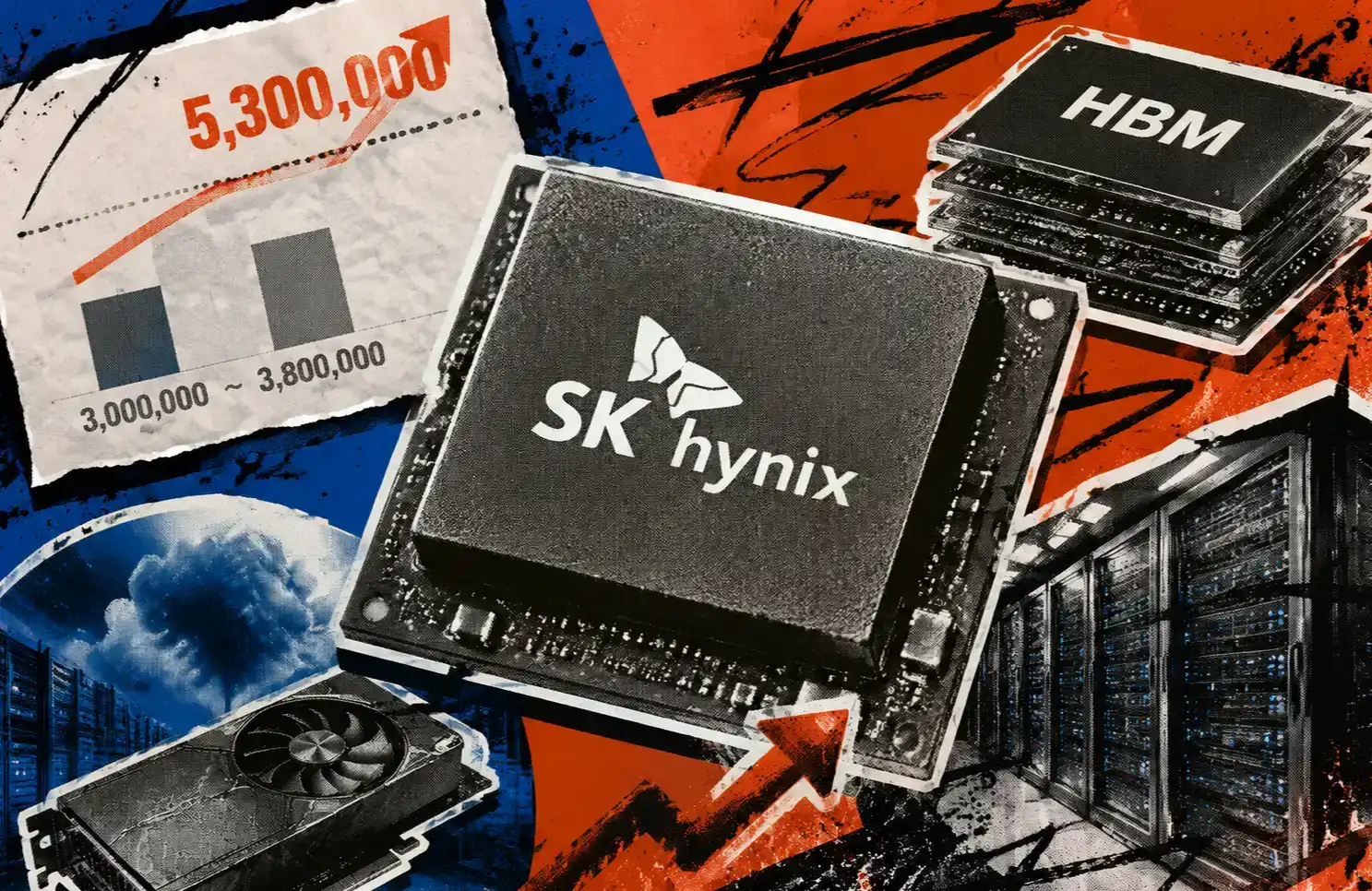
The article discusses the highly optimistic price target of approximately $3,500 for SK Hynix stock, set by Aletheia Capital. This target is significantly above the consensus range of $2,000-$2,520 from major brokerages. The core debate is whether SK Hynix deserves a fundamental re-rating beyond its traditional cyclical discount, based on the long-term impact of AI-driven demand. The $3,500 target hinges on three key assumptions holding simultaneously until at least 2027: 1) Continued shortage and high pricing for HBM (High Bandwidth Memory), a critical component for AI chips; 2) Sustained high prices for standard DRAM, as HBM production consumes capacity and constrains general supply; and 3) Strong AI server demand generating substantial, above-expectation free cash flow. SK Hynix's leading ~58% market share in HBM and its early certification with key clients like Nvidia provide a competitive advantage, allowing it to capture significant supply chain premiums. The HBM shortage is seen not just as a niche growth driver but as a catalyst that amplifies profitability across the entire memory business by tightening overall DRAM supply. However, the article cautions that this target represents an optimistic "tail scenario." Key risks include potential supply increases from competitors (Samsung, Micron) by 2027, a possible slowdown in HBM price growth, and high capital expenditures that could erode the projected free cash flow. The divergence in analyst targets reflects the market's uncertainty over whether the current AI-driven boom will temporarily elevate earnings or permanently raise the memory industry's profit baseline.

marsbitHá 28m

Can SK Hynix's Stock Double Again in This Rally?

marsbitHá 28m

Has the Cryptocurrency Market Hit Bottom? Here's What Institutions Think

"Has the crypto market bottomed out? Major institutions are divided on the outlook, according to a recent analysis by Matt Hougan, Chief Investment Officer of Bitwise. Three prominent research firms published in-depth reports on the topic with differing conclusions. Galaxy Digital argues Bitcoin has not yet found its bottom, pointing to only 4 out of 13 historical bottoming indicators being met. Their analysis suggests a potential bottom range of $30,000 to $54,000. NYDIG adopts a more cautious stance, noting that while metrics are close to historical bear market lows, a classic panic-selling capitulation event is missing. They acknowledge the possibility of a bottom but consider it unlikely, citing structural changes from institutional adoption. In contrast, Standard Chartered Bank asserts the bottom is already in at around $59,000. Their revised bullish view, predicting a year-end target of $100,000, hinges on anticipated reductions in ETF selling pressure linked to events like a potential SpaceX IPO. Despite the surface-level disagreement on the exact price floor, the reports share significant common ground crucial for long-term investors. All three institutions agree that a market bottom will likely form within the current year, that current prices are closer to the bottom than to previous cycle highs, and that Bitcoin is poised for another major bull cycle in the future. The core takeaway is that while the precise bottom level remains debated, the long-term value proposition for Bitcoin remains strong and may even be strengthening. Key supportive trends include rising global debt, persistent inflation, declining trust in traditional institutions, accelerating digitization, and improving market infrastructure. Therefore, for investors with a long-term horizon, the focus should shift from pinpointing the exact bottom to recognizing that the cycle's peak is likely still ahead, making current levels an attractive entry point for substantial potential upside."

Foresight NewsHá 49m

Has the Cryptocurrency Market Hit Bottom? Here's What Institutions Think

Foresight NewsHá 49m

Trading

Spot
Futuros
活动图片