Missed Out on SpaceX's IPO? Take a Look at SpaceX's Complete Supply Chain

marsbitPublicado em 2026-06-16Última atualização em 2026-06-16

Resumo

SpaceX is now public, but its high valuation and losses may deter some investors. However, the real opportunity, as seen with Apple, Tesla, and Nvidia, may lie in its extensive supply chain. SpaceX, funded primarily by its profitable Starlink service, spends hundreds of billions annually on components for its rockets, satellites, and planned orbital AI data centers, creating significant revenue streams for suppliers. Key suppliers are categorized by their indispensability. The first group includes irreplaceable players like **NVIDIA** (GPUs for AI supercomputers), **Eutelsat (SATS)** (spectrum rights), **Filtronic** (millimeter-wave amplifiers), **Materion (MTRN)** (beryllium alloys), and **STMicroelectronics (STM)** (phased array chips). The second category comprises suppliers costly to replace due to long certification cycles or deep integration, such as **Honeywell (HON)** (flight controls), **Carpenter Technology (CRS)** (specialty steel), **Hexcel (HXL)** (carbon fiber), **Broadcom (AVGO)** (data switching), and **Linde** (industrial gases). The third group involves high-volume, cost-critical manufacturers for mass-produced items like Starlink terminals. Major players here include Taiwanese contract manufacturer **Wistron NeWeb (6285)** and several Chinese-listed firms: **Sunway Communication (300136)**, **Parker Advanced Materials (605123)**, **Western Superconducting (002149)**, and **Yingliu Co., Ltd. (603308)**. Other niche providers include **Tianyin Electromecha...

Author: nini

If you missed the Apple supply chain in 2010, the Tesla supply chain in 2020, or even the Nvidia supply chain that made you regret these past two years...

The SpaceX supply chain is just getting started.

Of course, I think simply chasing SpaceX itself might not be cost-effective. Its IPO first-day pop was 19%, priced at $135, surging to $160, with a price-to-sales ratio approaching 100x, and the company is still heavily loss-making. The pressure is high for retail investors rushing in on the first day.

So what I'm talking about are the companies that supply to it.

History has repeatedly validated the same logic: super terminal products frantically feeding back the supply chains behind them. In 2010, when Apple made the iPhone 4, Luxshare Precision's revenue was 10 billion yuan; ten years later, it reached 92.5 billion yuan, and its stock price increased 30-fold. In 2019, when Tesla's Shanghai Gigafactory started production, CATL's market cap was just over 100 billion yuan; five years later, it broke 1 trillion yuan. With Nvidia exploding over the past two years, InnoLight's market cap went from tens of billions to over a hundred billion.

Apple, Tesla, Nvidia—each time, it's the super terminal product on stage, but the ones who truly let a group of people make big money are the supply chain companies behind them.

SpaceX spends hundreds of billions of dollars annually, buying chips, materials, parts, and industrial gases. These purchase orders gradually become real revenue on the books of certain companies. After the IPO prospectus became public, this supply chain has data that can be checked for the first time.

We can first look at where SpaceX's money comes from and where it goes

Its business is mainly these three parts. The first part, Starlink. Last year's revenue was $11.3 billion, accounting for 60% of the group, with over 10 million global subscribers—this is the only consistently profitable part of SpaceX, even subsidizing all the other cash-burning ventures.

The second part, rockets. Falcon and Starship's annual R&D investment is $3 billion, resulting in the world's lowest commercial launch costs, with a plan for 100 launches in 2026 and a demand for 1500 Raptor engines. The third part, AI. Last year, it lost over $6 billion, with the Colossus supercomputer being built on the ground, stacked with 220,000 GPUs, and orbital data centers planned for space.

So, the flow of money is simple: Starlink earns money → Invests in rockets to drive down launch costs → Low-cost launches send AI hardware into space → AI computing power is rented out to earn money again. That's roughly the cycle.

This cycle scatters hundreds of billions of dollars in purchase orders annually. So whose pockets does this money go into?

Based on replaceability, suppliers can be divided into three categories.

Category 1: No one can replace them in the short term

  1. NVIDIA. The Colossus supercomputer's 220,000 GPUs are all from them. But Nvidia's real moat is not the hardware; it's CUDA. Worldwide AI training basically writes code using this software ecosystem. Hardware can be changed, but the migration cost of a decade's worth of code can't be recouped in a year or two. We can understand it as: as long as SpaceX keeps building supercomputers, Nvidia keeps getting paid.
  2. Eutelsat (Ticker: SATS). It holds the radio frequency spectrum for satellite communications. What is spectrum? Think of it as lanes in the sky. Physical laws determine there are only so many lanes; whoever occupies them first gets them. No matter how strong your technology is, you can't create a new frequency band out of thin air. Musk's Direct-to-Cell phone feature must pass through here; without paying the toll, the signals collide with other satellites. Also, SATS holds about 3% of SpaceX's shares. The day before the IPO, its stock rose 11%, and option trading volume was 11 times the usual.
  3. Filtronic (Ticker: FTC), listed in London (note: it's not searchable on US markets). It makes millimeter-wave signal amplifiers for Starlink satellites, allowing signals to travel farther and clearer. In 2024, it signed a £47.3 million contract, with SpaceX contributing 83% of its revenue. SpaceX also holds a warrant for up to 10% of FTC. This thing looks small, but aerospace-grade certification takes years of repeated testing in vacuum, radiation, and extreme temperature swings. Once certified, SpaceX won't easily switch because the re-certification cycle can't keep up with production rhythms. And Filtronic's stock price has nearly tripled in a year.
  4. Materion (Ticker: MTRN). The world's only fully integrated producer of beryllium metal from mine to finished product, controlling about 56% of global supply. Beryllium is one-third lighter than aluminum, six times stronger than steel, with a melting point near 1300°C. It's light, strong, and heat-resistant—few metals on Earth satisfy all three conditions simultaneously. It's used in the F-35 fighter jet, the James Webb Space Telescope's mirrors, and the load-bearing structure of Starship. The US Department of Defense lists beryllium as a strategic material. Materion is the exclusive certified supplier for the F-35, a certification over a decade old. This illustrates its scarcity.
  5. STMicroelectronics (Ticker: STM). Helps SpaceX make phased array antenna chips, having cumulatively delivered over 5 billion chips, covering over ten thousand satellites. STM itself forecasts its Low Earth Orbit (LEO) satellite business could reach $2 billion by 2028 and $2.9 billion by 2030.

Category 2: Technically replaceable, but the cost of switching once is too high

  1. Honeywell (Ticker: HON). The rocket's flight control and inertial navigation systems—knowing where it is, where it's flying, and what attitude to maintain—are all controlled by them. This is built on decades of certification accumulation from Apollo to the Space Shuttle to commercial spaceflight. Changing suppliers would be like transplanting the rocket's brain; all underlying code would have to be rewritten, and new certification would have to start from scratch. With SpaceX launching hundreds of times a year, it can't halt the launch schedule to save procurement costs.
  2. Carpenter Technology (Ticker: CRS). Used to smelt special steel alloys for Raptor engines. Vacuum melting, repeated purification, controlling impurities to the parts-per-million level. Off by a little, and it's disaster in the combustion chamber. This material process isn't something that can be transferred just by blueprints; building a comparable production line could take decades.
  3. Hexcel (Ticker: HXL). Supplies aerospace-grade carbon fiber. For rockets, every extra kilogram of structure weight is one less kilogram of payload. Carbon fiber skeletons are half as light as metal without losing strength. Having collaborated with SpaceX for over a decade, the material formula and weaving processes are specifically tuned for SpaceX's needs. Switching to another company would require re-verifying the entire material system from the ground up.
  4. Broadcom (AVGO), responsible for terabit-level data exchange between satellites and ground. For high-speed data shunting without congestion, you need it. The Linde Group, in 2025, invested $100 million in Texas near the Starbase to build an air separation plant dedicated to supplying liquid oxygen and nitrogen, because the massive amounts of high-purity industrial gases consumed in rocket launches are cheaper the closer the source. This location itself is a moat.

Category 3: Requiring stable mass production and cost reduction to the minimum

You might not have seen a Starlink dish in person, but think about it: they aim to deploy a whopping 30 million units globally. Each unit contains thousands of components, dozens of processes, must be produced on assembly lines like smartphones, and still withstand aerospace-grade vibration and temperature swings.

At this scale, technology isn't the primary factor anymore. The most important thing is who can deliver stably and who can drive costs to the lowest.

The logic of Foxconn manufacturing for Apple applies here exactly. Wistron NeWeb Corporation (Ticker: 6285), the world's largest contract manufacturer for Starlink terminals and routers. Quality control standards were honed over years of collaboration with SpaceX, so it's not something just any factory can take on.

Moving up are several A-share listed companies. Sunway Communication (300136), the global exclusive supplier of high-frequency connectors inside Starlink terminals, with SpaceX-related orders worth about 1.05 billion yuan in 2025. Parker Advanced Materials (605123), the exclusive Chinese supplier of forged parts for the Starship airframe and engines, with orders about 680 million yuan, accounting for 35% of company revenue. Western Superconducting Technologies (002149), exclusive supplier of niobium alloy for Raptor engines, orders about 1.02 billion yuan. Yingliu Co., Ltd. (603308), core castings for Raptor turbopumps, accounting for 42% of its own revenue—SpaceX's orders are already the largest revenue source for this company.

Going smaller. Tianyin Electromechanical (analogous to the star tracker on Starlink satellites, which satellites use to look at stars to determine their attitude), with a market share exceeding 60%. Tongyu Communication, making Starlink ground antenna modules, with projected orders of 300 million yuan in 2026.

On the US stock side, there are a few others. Trimble (TRMB), it manages time. With tens of thousands of satellites flying in space, each satellite's clock must align to the same beat; a microsecond off and communications fail. Astronics (ATRO), manages rocket power distribution. CTS (CTSH), manages thermal management. These aren't black magic technologies, but they are indispensable screws in the entire system.

You might ask, these companies have always been there. Why now?

Three reasons.

  • First, the purchasing volume is just starting to increase. The plan is for 100 launches in 2026. Starship testing is accelerating. AI data centers are scheduled to start deploying to orbit in 2028. The target is 30 million Starlink terminals, and there are only 10 million subscribers now. SpaceX's pace of spending money is far from its peak.
  • Second, transparency is opening up for the first time. SpaceX was previously a private company, and procurement data was a black box. After the IPO prospectus, quarterly and annual reports will continuously disclose data, allowing the order growth rates of supply chain companies to be tracked and verified.
  • Third, referring to the rhyme of history. The Apple supply chain took a decade from the iPhone 4 to its peak. The Tesla supply chain has been going for seven years from Model 3 mass production to now. The position of the SpaceX supply chain today is more like Tesla in 2018—mass production just starting, suppliers just solidifying, order growth just beginning to steepen. With Starship still in testing, Starlink still expanding, and AI data centers not yet built, this is its equivalent of 2018.

Finally

Buying SpaceX on its IPO first day, in my opinion, is paying for Musk's dream, and at a high price for that space dream. Of course, you could say you simply believe in Musk; that's your dream too.

But perhaps we can look from another angle.

Looking along the supply chain, we are betting on something else. Because no matter how SpaceX's stock price moves, its annual hundreds of billions in purchase orders have to be fulfilled by someone. These orders are unrelated to the stock price; they are simply monthly revenue hitting the account.

This article does not constitute investment advice. There are still issues here, such as the beryllium metal cycle, geopolitical discounts for Taiwan-listed companies, low liquidity for small companies, and certifications possibly being reshuffled due to technological iteration. Each company needs to be judged individually.

But if you didn't get an allocation for SpaceX on its IPO day,

Then you can switch strategies. Don't chase the high; let's look at those quietly supplying.

The giant has ignited. This time, the shovels are within your reach~

Perguntas relacionadas

QBased on the article, what is the core business logic behind SpaceX's three main business segments?

AThe article states SpaceX's core business logic is a cycle: Starlink generates profits (its only profitable segment) → profits are invested into rockets to drastically lower launch costs → low-cost launches deliver AI hardware into space → the leased AI computing power generates further revenue.

QAccording to the article, why is Filtronic (FTC) considered a supplier that is difficult for SpaceX to replace in the short term?

AFiltronic is considered difficult to replace because it produces millimeter-wave signal amplifiers for Starlink satellites requiring years of space-grade certification (testing in vacuum, radiation, extreme temperatures). SpaceX would be reluctant to switch due to the long re-certification cycle, which would not align with its fast production pace. Additionally, SpaceX accounts for 83% of Filtronic's revenue.

QWhat historical examples does the article cite to support the logic of 'super terminal companies massively benefiting their supply chains'?

AThe article cites Apple with Luxshare Precision (revenue grew from 1 billion to 92.5 billion RMB in a decade), Tesla with CATL (market cap grew from ~100 billion to over 1 trillion RMB in five years), and Nvidia with Zhongji Innolight (market cap grew from tens of billions to hundreds of billions RMB).

QThe article divides SpaceX's suppliers into three categories. What is the primary characteristic of companies in the third category ('stable mass production, lowest cost')?

AThe primary characteristic of suppliers in the third category is their ability to provide stable, large-scale mass production at the lowest possible cost. For products like the 30 million planned Starlink terminals, technical sophistication is secondary to manufacturing scale, consistent quality control, and extreme cost efficiency, similar to Foxconn's role for Apple.

QWhat are the three reasons given in the article for why the investment opportunity in SpaceX's supply chain is particularly relevant 'now'?

AThe three reasons are: 1) Procurement volume is just starting to increase (e.g., 100 planned launches in 2026, Starlink user growth, future AI data centers). 2) Transparency has opened up for the first time with SpaceX's IPO, allowing tracking of supplier orders via financial reports. 3) Historical parallels suggest SpaceX's supply chain is currently at a stage similar to Tesla's in 2018, with mass production ramping up and supplier relationships solidifying.

Leituras Relacionadas

After Tokenizing Assets, How to Exit?

After tokenization, a key unresolved issue is providing holders with a reliable exit mechanism, as underlying asset settlement (taking days to months) lags far behind on-chain token settlement. Three primary models for instant liquidity have emerged, differing in their capital structure and efficiency: 1. **Balance Sheet Model (e.g., Grove Basin):** A single, well-capitalized entity (like Sky) provides immediate liquidity from its own reserves. This offers simplicity and deep initial liquidity but is constrained by that single balance sheet's capacity and risk appetite, limiting scalability. 2. **Dedicated Vault Model (e.g., Upshift Clear):** Independent liquidity providers (LPs) fund separate vaults for each supported asset. This decentralizes capital sources but isolates liquidity and capital, which becomes inefficient as the number of tokenized assets grows. 3. **Shared Liquidity Layer Model (Symbiotic Liquid Lane):** Independent capital providers fund shared vaults that can support multiple tokenized assets simultaneously. Capital remains productive between redemptions (e.g., earning yield in DeFi markets). Exits are settled via a competitive RFQ market where market makers bid. The article argues that the shared layer model offers superior capital efficiency and scalability. It transforms exit liquidity from an asset-specific patch into shared market infrastructure, allowing liquidity capacity to grow with overall market participation rather than being fragmented per asset. This is particularly valuable for longer-duration assets like private credit, where reliable T+0 exits can significantly enhance their utility in DeFi.

链捕手Há 6m

After Tokenizing Assets, How to Exit?

链捕手Há 6m

Anthropic's Triple Moment: Code Leak, Government Confrontation, and Weaponization

This article analyzes Anthropic's recent conflicts and strategic moves following the U.S. government's emergency halt of its new Fable model, citing national security concerns over potential "jailbreaks." The author argues this incident reveals deeper tensions between AI labs, governments, and the software industry. While critics view Anthropic's safety-focused rhetoric as marketing fear, the author suggests it serves as a commercial moat masking the company's core economic imperative: moving closer to end-users and their valuable data to avoid being commoditized. The piece outlines a coming clash between frontier AI labs like Anthropic and established software companies. Labs need real-world usage data for model improvement via reinforcement learning, creating a cycle where better products attract more users and more data. This threatens software firms who, as Microsoft's Satya Nadella warns, risk having their value captured by a few dominant models. Anthropic's controversial policy changes—initially secretly degrading Fable's performance for LLM development and expanding data retention—are framed as assertions of control, justified by its safety narrative. The company's foundational belief that it alone is sufficiently concerned about superintelligent AI dangers legitimizes its actions, from resisting government demands to shaping usage policies. The author concludes that this alignment of mission, talent, and business strategy is powerful but concerning, as it concentrates immense potential power in the hands of those convinced of their own righteous understanding.

marsbitHá 16m

Anthropic's Triple Moment: Code Leak, Government Confrontation, and Weaponization

marsbitHá 16m

Xpeng and NIO Compete on Computing Power, Li Auto Shifts Architecture

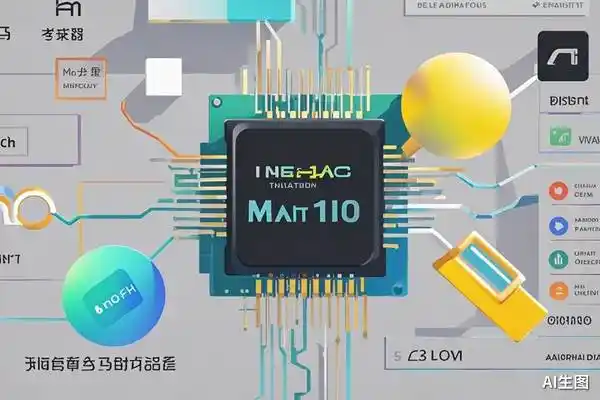
On June 15, 2026, Li Auto unveiled details of its self-developed chip, Mahe M100, for its new L9 Livis model. CTO Xie Yan stated the goal was not just a faster chip, but a fundamentally different one, targeting the chip architecture itself. While competitors like NIO, Xpeng, and Huawei highlight TOPS (computing power) figures for their self-developed chips, Li Auto’s Mahe M100 focuses on redesigning the underlying architecture. It employs a "dynamic data flow architecture" to address memory bandwidth bottlenecks in large model inference, claiming up to 3x the effective computing power of Nvidia's Thor U for its specific workloads and a 40% reduction in latency. The chip's design was peer-reviewed and accepted at ISCA 2026. However, this performance is highly optimized for Li Auto's own VLA2.1 algorithm, meaning it may not generalize as well to other tasks. Li Auto aims to achieve full-stack in-house development with Mahe M100, covering chip, compiler, OS, AI algorithms, and domain controller—a level of vertical integration few competitors match. Beyond the chip, CEO Li Xiang introduced a new strategic narrative: the "embodied intelligent vehicle," defined as an integration of an EV, a professional driver, an AI computer, and a life assistant. This shifts competition from features like large screens to systemic AI capabilities. A key commitment was that Li Auto's Mahe VLA autonomous driving model will match Tesla's FSD V14 by Q4 2026, with specific OTA milestones set for July, September, and December. Financially, Li Auto faces pressure with declining revenue and vehicle gross margins since Q4 2025, while maintaining high R&D investment (approx. ¥12B in 2026, 50% AI-related). Its 2026 sales target is 550,000 vehicles, up from 406,000 in 2025. The new L9 Livis garnered over 10,000 pre-orders in two weeks. The effectiveness of these strategic moves—new products, OTAs, and the novel chip architecture—will begin to show in Q3 2026 financial results, with the year-end FSD V14 benchmark being the ultimate test.

marsbitHá 1h

Xpeng and NIO Compete on Computing Power, Li Auto Shifts Architecture

marsbitHá 1h

The Year of AI Applications: Saying 'Yes' While Ignoring Risks? A Comprehensive Open Source Log of Software Development's Journey

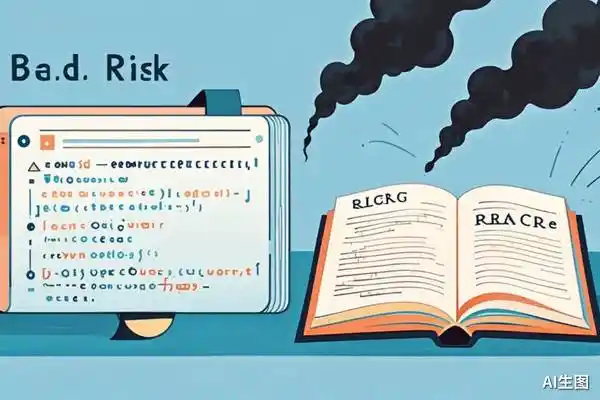
The Year of AI Applications: Blindly Saying "Yes" While Ignoring Risks? A Software Development Log Goes Fully Open Source. AI-generated code harbors risks hidden within seemingly correct programs, potentially leading to data leaks or asset loss. The open-source project "Narwhal AI Code Risks," from Peking University's Narwhal-Lab, compiles real-world cases, early warning signs, and typical risk pathways. Its goal is to help developers identify potential hazards early and avoid repeating past mistakes. In 2026, code is generated faster than ever but deployed with less scrutiny. The danger often lies not in glaring errors, but in code that appears normal—syntactically correct, passing all checks—yet introduces subtle but critical flaws like non-existent dependencies, excessive permissions, or exposed databases. A stark example is the Moonwell cbETH oracle incident. A configuration file error, where a cryptocurrency price was set to ~$1.12 instead of ~$2,200, slipped through 28 checks and a pull request signed by both AI (Claude, Copilot) and human developers. This "semantic deviation" resulted in a loss of $1.78 million. The risk is that AI can produce functionally valid code that is semantically wrong for the business context. As AI moves beyond simple code completion to modifying configurations, installing dependencies, and operating via autonomous agents, it traverses longer, less traceable paths within software engineering, blurring traditional boundaries and oversight points. The Narwhal AI Code Risks project structures information into three layers: `/cases` for documented real-world incidents, `/inferred` for early warning signals, and `/scenarios` for clear, generalized risk patterns not yet tied to specific events. This aims to create a lasting, public record to prevent collective amnesia about past AI-coding pitfalls. Risks are categorized into seven areas: Software Supply Chain (e.g., recommending fake packages), Code-Level Vulnerabilities (e.g., reintroducing path traversal bugs), Cloud & Infrastructure Misconfiguration (e.g., overly permissive settings), Agent Risks (from autonomous tool execution), Vertical Domain Risks (e.g., in finance, healthcare), Intellectual Property & Compliance issues, and Human Factors (like over-reliance on AI output). The project's core value is transforming isolated incidents into reusable knowledge—a foundational resource for developers to spot similar issues, for security researchers to build upon, for toolmakers to create detection rules, and for the community to contribute new findings. As AI integration accelerates, this open-source "logbook" serves as a crucial navigational aid, charting past errors to help future projects steer clear of the same traps.

marsbitHá 1h

The Year of AI Applications: Saying 'Yes' While Ignoring Risks? A Comprehensive Open Source Log of Software Development's Journey

marsbitHá 1h

Trading

Spot
Futuros

Artigos em Destaque

O que é $S$

Compreender o SPERO: Uma Visão Abrangente Introdução ao SPERO À medida que o panorama da inovação continua a evoluir, o surgimento de tecnologias web3 e projetos de criptomoeda desempenha um papel fundamental na formação do futuro digital. Um projeto que tem atraído atenção neste campo dinâmico é o SPERO, denotado como SPERO,$$s$. Este artigo tem como objetivo reunir e apresentar informações detalhadas sobre o SPERO, para ajudar entusiastas e investidores a compreender as suas bases, objetivos e inovações nos domínios web3 e cripto. O que é o SPERO,$$s$? O SPERO,$$s$ é um projeto único dentro do espaço cripto que procura aproveitar os princípios da descentralização e da tecnologia blockchain para criar um ecossistema que promove o envolvimento, a utilidade e a inclusão financeira. O projeto é concebido para facilitar interações peer-to-peer de novas maneiras, proporcionando aos utilizadores soluções e serviços financeiros inovadores. No seu núcleo, o SPERO,$$s$ visa capacitar indivíduos ao fornecer ferramentas e plataformas que melhoram a experiência do utilizador no espaço das criptomoedas. Isso inclui a possibilidade de métodos de transação mais flexíveis, a promoção de iniciativas impulsionadas pela comunidade e a criação de caminhos para oportunidades financeiras através de aplicações descentralizadas (dApps). A visão subjacente do SPERO,$$s$ gira em torno da inclusão, visando fechar lacunas dentro das finanças tradicionais enquanto aproveita os benefícios da tecnologia blockchain. Quem é o Criador do SPERO,$$s$? A identidade do criador do SPERO,$$s$ permanece algo obscura, uma vez que existem recursos publicamente disponíveis limitados que fornecem informações detalhadas sobre o(s) seu(s) fundador(es). Esta falta de transparência pode resultar do compromisso do projeto com a descentralização—uma ética que muitos projetos web3 partilham, priorizando contribuições coletivas em vez de reconhecimento individual. Ao centrar as discussões em torno da comunidade e dos seus objetivos coletivos, o SPERO,$$s$ incorpora a essência do empoderamento sem destacar indivíduos específicos. Assim, compreender a ética e a missão do SPERO é mais importante do que identificar um criador singular. Quem são os Investidores do SPERO,$$s$? O SPERO,$$s$ é apoiado por uma diversidade de investidores que vão desde capitalistas de risco a investidores-anjo dedicados a promover a inovação no setor cripto. O foco desses investidores geralmente alinha-se com a missão do SPERO—priorizando projetos que prometem avanço tecnológico social, inclusão financeira e governança descentralizada. Essas fundações de investidores estão tipicamente interessadas em projetos que não apenas oferecem produtos inovadores, mas que também contribuem positivamente para a comunidade blockchain e os seus ecossistemas. O apoio desses investidores reforça o SPERO,$$s$ como um concorrente notável no domínio em rápida evolução dos projetos cripto. Como Funciona o SPERO,$$s$? O SPERO,$$s$ emprega uma estrutura multifacetada que o distingue de projetos de criptomoeda convencionais. Aqui estão algumas das características-chave que sublinham a sua singularidade e inovação: Governança Descentralizada: O SPERO,$$s$ integra modelos de governança descentralizada, capacitando os utilizadores a participar ativamente nos processos de tomada de decisão sobre o futuro do projeto. Esta abordagem promove um sentido de propriedade e responsabilidade entre os membros da comunidade. Utilidade do Token: O SPERO,$$s$ utiliza o seu próprio token de criptomoeda, concebido para servir várias funções dentro do ecossistema. Esses tokens permitem transações, recompensas e a facilitação de serviços oferecidos na plataforma, melhorando o envolvimento e a utilidade gerais. Arquitetura em Camadas: A arquitetura técnica do SPERO,$$s$ suporta modularidade e escalabilidade, permitindo a integração contínua de funcionalidades e aplicações adicionais à medida que o projeto evolui. Esta adaptabilidade é fundamental para manter a relevância no panorama cripto em constante mudança. Envolvimento da Comunidade: O projeto enfatiza iniciativas impulsionadas pela comunidade, empregando mecanismos que incentivam a colaboração e o feedback. Ao nutrir uma comunidade forte, o SPERO,$$s$ pode melhor atender às necessidades dos utilizadores e adaptar-se às tendências do mercado. Foco na Inclusão: Ao oferecer taxas de transação baixas e interfaces amigáveis, o SPERO,$$s$ visa atrair uma base de utilizadores diversificada, incluindo indivíduos que anteriormente podem não ter participado no espaço cripto. Este compromisso com a inclusão alinha-se com a sua missão abrangente de empoderamento através da acessibilidade. Cronologia do SPERO,$$s$ Compreender a história de um projeto fornece insights cruciais sobre a sua trajetória de desenvolvimento e marcos. Abaixo está uma cronologia sugerida que mapeia eventos significativos na evolução do SPERO,$$s$: Fase de Conceituação e Ideação: As ideias iniciais que formam a base do SPERO,$$s$ foram concebidas, alinhando-se de perto com os princípios de descentralização e foco na comunidade dentro da indústria blockchain. Lançamento do Whitepaper do Projeto: Após a fase conceitual, um whitepaper abrangente detalhando a visão, os objetivos e a infraestrutura tecnológica do SPERO,$$s$ foi lançado para atrair o interesse e o feedback da comunidade. Construção da Comunidade e Primeiros Envolvimentos: Esforços ativos de divulgação foram feitos para construir uma comunidade de primeiros adotantes e investidores potenciais, facilitando discussões em torno dos objetivos do projeto e angariando apoio. Evento de Geração de Tokens: O SPERO,$$s$ realizou um evento de geração de tokens (TGE) para distribuir os seus tokens nativos a apoiantes iniciais e estabelecer liquidez inicial dentro do ecossistema. Lançamento da dApp Inicial: A primeira aplicação descentralizada (dApp) associada ao SPERO,$$s$ foi lançada, permitindo que os utilizadores interagissem com as funcionalidades principais da plataforma. Desenvolvimento Contínuo e Parcerias: Atualizações e melhorias contínuas nas ofertas do projeto, incluindo parcerias estratégicas com outros players no espaço blockchain, moldaram o SPERO,$$s$ em um jogador competitivo e em evolução no mercado cripto. Conclusão O SPERO,$$s$ é um testemunho do potencial do web3 e das criptomoedas para revolucionar os sistemas financeiros e capacitar indivíduos. Com um compromisso com a governança descentralizada, o envolvimento da comunidade e funcionalidades inovadoras, abre caminho para um panorama financeiro mais inclusivo. Como em qualquer investimento no espaço cripto em rápida evolução, potenciais investidores e utilizadores são incentivados a pesquisar minuciosamente e a envolver-se de forma ponderada com os desenvolvimentos em curso dentro do SPERO,$$s$. O projeto demonstra o espírito inovador da indústria cripto, convidando a uma exploração mais aprofundada das suas inúmeras possibilidades. Embora a jornada do SPERO,$$s$ ainda esteja a desenrolar-se, os seus princípios fundamentais podem, de facto, influenciar o futuro de como interagimos com a tecnologia, as finanças e uns com os outros em ecossistemas digitais interconectados.

69 Visualizações TotaisPublicado em {updateTime}Atualizado em 2024.12.17

O que é $S$

O que é AGENT S

Agent S: O Futuro da Interação Autónoma no Web3 Introdução No panorama em constante evolução do Web3 e das criptomoedas, as inovações estão constantemente a redefinir a forma como os indivíduos interagem com plataformas digitais. Um projeto pioneiro, o Agent S, promete revolucionar a interação humano-computador através do seu framework aberto e agente. Ao abrir caminho para interações autónomas, o Agent S visa simplificar tarefas complexas, oferecendo aplicações transformadoras em inteligência artificial (IA). Esta exploração detalhada irá aprofundar-se nas complexidades do projeto, nas suas características únicas e nas implicações para o domínio das criptomoedas. O que é o Agent S? O Agent S é um framework aberto e agente, especificamente concebido para abordar três desafios fundamentais na automação de tarefas computacionais: Aquisição de Conhecimento Específico de Domínio: O framework aprende inteligentemente a partir de várias fontes de conhecimento externas e experiências internas. Esta abordagem dupla capacita-o a construir um rico repositório de conhecimento específico de domínio, melhorando o seu desempenho na execução de tarefas. Planeamento ao Longo de Longos Horizontes de Tarefas: O Agent S emprega planeamento hierárquico aumentado por experiência, uma abordagem estratégica que facilita a decomposição e execução eficientes de tarefas intrincadas. Esta característica melhora significativamente a sua capacidade de gerir múltiplas subtarefas de forma eficiente e eficaz. Gestão de Interfaces Dinâmicas e Não Uniformes: O projeto introduz a Interface Agente-Computador (ACI), uma solução inovadora que melhora a interação entre agentes e utilizadores. Utilizando Modelos de Linguagem Multimodais de Grande Escala (MLLMs), o Agent S pode navegar e manipular diversas interfaces gráficas de utilizador de forma fluida. Através destas características pioneiras, o Agent S fornece um framework robusto que aborda as complexidades envolvidas na automação da interação humana com máquinas, preparando o terreno para uma infinidade de aplicações em IA e além. Quem é o Criador do Agent S? Embora o conceito de Agent S seja fundamentalmente inovador, informações específicas sobre o seu criador permanecem elusivas. O criador é atualmente desconhecido, o que destaca ou o estágio nascente do projeto ou a escolha estratégica de manter os membros fundadores em anonimato. Independentemente da anonimidade, o foco permanece nas capacidades e no potencial do framework. Quem são os Investidores do Agent S? Como o Agent S é relativamente novo no ecossistema criptográfico, informações detalhadas sobre os seus investidores e financiadores não estão explicitamente documentadas. A falta de informações disponíveis publicamente sobre as fundações de investimento ou organizações que apoiam o projeto levanta questões sobre a sua estrutura de financiamento e roteiro de desenvolvimento. Compreender o apoio é crucial para avaliar a sustentabilidade do projeto e o seu impacto potencial no mercado. Como Funciona o Agent S? No núcleo do Agent S reside uma tecnologia de ponta que lhe permite funcionar eficazmente em diversos ambientes. O seu modelo operacional é construído em torno de várias características-chave: Interação Humano-Computador Semelhante: O framework oferece planeamento avançado em IA, esforçando-se para tornar as interações com computadores mais intuitivas. Ao imitar o comportamento humano na execução de tarefas, promete elevar as experiências dos utilizadores. Memória Narrativa: Utilizada para aproveitar experiências de alto nível, o Agent S utiliza memória narrativa para acompanhar os históricos de tarefas, melhorando assim os seus processos de tomada de decisão. Memória Episódica: Esta característica fornece aos utilizadores orientações passo a passo, permitindo que o framework ofereça suporte contextual à medida que as tarefas se desenrolam. Suporte para OpenACI: Com a capacidade de funcionar localmente, o Agent S permite que os utilizadores mantenham o controlo sobre as suas interações e fluxos de trabalho, alinhando-se com a ética descentralizada do Web3. Fácil Integração com APIs Externas: A sua versatilidade e compatibilidade com várias plataformas de IA garantem que o Agent S possa integrar-se perfeitamente em ecossistemas tecnológicos existentes, tornando-o uma escolha apelativa para desenvolvedores e organizações. Estas funcionalidades contribuem coletivamente para a posição única do Agent S no espaço cripto, à medida que automatiza tarefas complexas e em múltiplos passos com mínima intervenção humana. À medida que o projeto evolui, as suas potenciais aplicações no Web3 podem redefinir a forma como as interações digitais se desenrolam. Cronologia do Agent S O desenvolvimento e os marcos do Agent S podem ser encapsulados numa cronologia que destaca os seus eventos significativos: 27 de Setembro de 2024: O conceito de Agent S foi lançado num artigo de pesquisa abrangente intitulado “Um Framework Agente Aberto que Usa Computadores como um Humano”, mostrando a base para o projeto. 10 de Outubro de 2024: O artigo de pesquisa foi disponibilizado publicamente no arXiv, oferecendo uma exploração aprofundada do framework e da sua avaliação de desempenho com base no benchmark OSWorld. 12 de Outubro de 2024: Uma apresentação em vídeo foi lançada, proporcionando uma visão visual das capacidades e características do Agent S, envolvendo ainda mais potenciais utilizadores e investidores. Estes marcos na cronologia não apenas ilustram o progresso do Agent S, mas também indicam o seu compromisso com a transparência e o envolvimento da comunidade. Pontos-Chave Sobre o Agent S À medida que o framework Agent S continua a evoluir, várias características-chave destacam-se, sublinhando a sua natureza inovadora e potencial: Framework Inovador: Concebido para proporcionar um uso intuitivo de computadores semelhante à interação humana, o Agent S traz uma abordagem nova à automação de tarefas. Interação Autónoma: A capacidade de interagir autonomamente com computadores através de GUI significa um avanço em direção a soluções computacionais mais inteligentes e eficientes. Automação de Tarefas Complexas: Com a sua metodologia robusta, pode automatizar tarefas complexas e em múltiplos passos, tornando os processos mais rápidos e menos propensos a erros. Melhoria Contínua: Os mecanismos de aprendizagem permitem que o Agent S melhore a partir de experiências passadas, aprimorando continuamente o seu desempenho e eficácia. Versatilidade: A sua adaptabilidade em diferentes ambientes operacionais, como OSWorld e WindowsAgentArena, garante que pode servir uma ampla gama de aplicações. À medida que o Agent S se posiciona no panorama do Web3 e das criptomoedas, o seu potencial para melhorar as capacidades de interação e automatizar processos significa um avanço significativo nas tecnologias de IA. Através do seu framework inovador, o Agent S exemplifica o futuro das interações digitais, prometendo uma experiência mais fluida e eficiente para os utilizadores em diversas indústrias. Conclusão O Agent S representa um ousado avanço na união da IA e do Web3, com a capacidade de redefinir a forma como interagimos com a tecnologia. Embora ainda esteja nas suas fases iniciais, as possibilidades para a sua aplicação são vastas e cativantes. Através do seu framework abrangente que aborda desafios críticos, o Agent S visa trazer interações autónomas para o primeiro plano da experiência digital. À medida que avançamos mais profundamente nos domínios das criptomoedas e da descentralização, projetos como o Agent S desempenharão, sem dúvida, um papel crucial na formação do futuro da tecnologia e da colaboração humano-computador.

678 Visualizações TotaisPublicado em {updateTime}Atualizado em 2025.01.14

O que é AGENT S

Como comprar S

Bem-vindo à HTX.com!Tornámos a compra de Sonic (S) simples e conveniente.Segue o nosso guia passo a passo para iniciar a tua jornada no mundo das criptos.Passo 1: cria a tua conta HTXUtiliza o teu e-mail ou número de telefone para te inscreveres numa conta gratuita na HTX.Desfruta de um processo de inscrição sem complicações e desbloqueia todas as funcionalidades.Obter a minha contaPasso 2: vai para Comprar Cripto e escolhe o teu método de pagamentoCartão de crédito/débito: usa o teu visa ou mastercard para comprar Sonic (S) instantaneamente.Saldo: usa os fundos da tua conta HTX para transacionar sem problemas.Terceiros: adicionamos métodos de pagamento populares, como Google Pay e Apple Pay, para aumentar a conveniência.P2P: transaciona diretamente com outros utilizadores na HTX.Mercado de balcão (OTC): oferecemos serviços personalizados e taxas de câmbio competitivas para os traders.Passo 3: armazena teu Sonic (S)Depois de comprar o teu Sonic (S), armazena-o na tua conta HTX.Alternativamente, podes enviá-lo para outro lugar através de transferência blockchain ou usá-lo para transacionar outras criptomoedas.Passo 4: transaciona Sonic (S)Transaciona facilmente Sonic (S) no mercado à vista da HTX.Acede simplesmente à tua conta, seleciona o teu par de trading, executa as tuas transações e monitoriza em tempo real.Oferecemos uma experiência de fácil utilização tanto para principiantes como para traders experientes.

1.3k Visualizações TotaisPublicado em {updateTime}Atualizado em 2026.06.02

Como comprar S

Discussões

Bem-vindo à Comunidade HTX. Aqui, pode manter-se informado sobre os mais recentes desenvolvimentos da plataforma e obter acesso a análises profissionais de mercado. As opiniões dos utilizadores sobre o preço de S (S) são apresentadas abaixo.

活动图片