Former White House Crypto Adviser Confident CLARITY Act Will Pass As Deadline Nears

bitcoinistPublicado em 2026-02-17Última atualização em 2026-02-17

Resumo

Former White House crypto adviser Bo Hines expressed confidence that the CLARITY Act, a stalled crypto market structure bill, will pass despite delays. The legislation faces a deadline as the White House pressures the crypto and banking industries to resolve disputes over stablecoin yield restrictions, which raised concerns about deposit flight risks. Hines noted both industries are negotiating under pressure and have proposed compromises, such as giving community banks a larger role. He emphasized the current administration's pro-digital asset stance and urged leveraging this legislative window, which is "rapidly closing" due to the approaching midterm elections. Treasury Secretary Scott Bessent also stressed the urgency, warning that Democratic control in November could hinder the bill's passage.

A former White House crypto adviser has shared his thoughts on the delay of the long-awaited market structure bill and whether the banking and digital assets industry will resolve their differences soon.

Bo Hines Optimistic About Crypto Legislation

On Monday, Bo Hines, CEO of Tether US and former executive director of the US President’s Council of Advisors for Digital Assets, expressed optimism about the passage of the crypto market structure bill, known as the CLARITY Act.

In a recent interview with journalist Eleanor Terret at the Digital Assets at Duke Conference, Hines affirmed that he’s “actually confident that CALRITY will get passed” despite the delay.

It’s worth noting that the highly anticipated legislation has been stalled after hitting a roadblock a month ago due to restrictions on the payment of stablecoin yield, meant to address the banking industry’s concerns of deposit flight risk.

The crypto industry heavily criticized the Senate Banking Committee’s policy, leading to the delay of the mid-January markup session and an extended negotiation process between lawmakers and leaders from both industries.

Now, time seems to be running out, Terret noted, as we approach the alleged White House’s end-of-month deadline for the crypto and banking industries to solve the stablecoin yield dispute.

Due to this, Hines affirmed that both sides “are in the pressure cooker right now,” arguing that the two industries understand they must make concessions to reach an agreement and advance the bill.

As reported by Bitcoinist, the digital assets industry has already proposed some compromises to salvage the crypto legislation, such as giving community banks a larger role in the stablecoin system.

The former White House adviser highlighted the Office of the Comptroller of the Currency’s (OCC) recent moves. Notably, the OCC has started to issue conditional licenses to more digital assets native companies, which he considers will provide a pathway to “find a resolution that (...) protects banks from deposit flight, but also allows these crypto companies to be innovative and offer different solutions to their customers.”

CLARITY Act’s Window ‘Rapidly Closing’

Hines also noted that the crypto industry is aware that they must take advantage of the legislative momentum, “especially under this administration that’s been extremely pro- digital assets.”

As he explained, “this is where you’re going to get the best return on investment in a sense of like what you’ve been doing over the course of (...) the last few years in terms of political activity and engagement.”

Similarly, Patrick Witt, the current executive director of the US President’s Crypto Council, shared a similar perspective on Friday. The advisor affirmed that they are “working hard to address the issues that were raised that led to the postponement of that markup and hopefully get that back on the books soon.”

Nonetheless, he urged lawmakers to keep the momentum going, emphasizing that the window to pass the legislation is still open, but it is “rapidly closing” as the midterm election campaign season approaches, which “takes all the oxygen out of the room.”

The US Secretary of the Treasury Scott Bessent also pressed lawmakers to advance the bill soon, highlighting the importance of getting the legislation on President Donald Trump’s desk before the end of the spring legislative window.

Bessent stressed that the chances of getting a deal done could collapse if Democrats take control in November, recalling the crackdown on the industry during the Biden administration.

“There’s a lot of innovation that goes on adjacent to crypto, the blockchain, and DeFi. So, I think it’s important to get this clarity bill done as soon as possible and on the president’s desk this spring,” he declared on Friday.
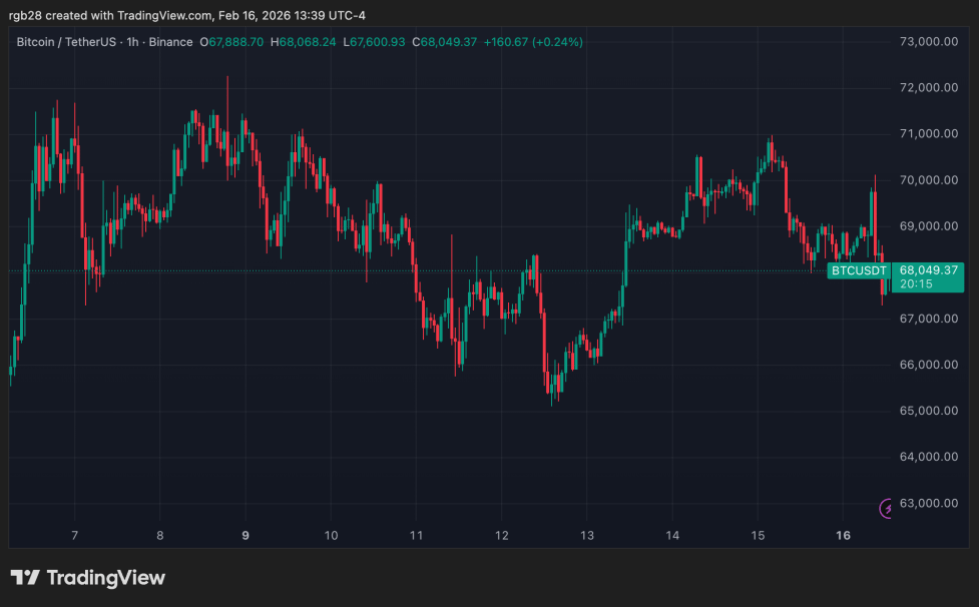
Bitcoin (BTC) trades at $68,049 in the one-week chart. Source: BTCUSDT on TradingView


Perguntas relacionadas

QWho is Bo Hines and what is his role in the crypto industry?

ABo Hines is the CEO of Tether US and the former executive director of the US President’s Council of Advisors for Digital Assets.

QWhat is the name of the crypto market structure bill discussed in the article?

AThe crypto market structure bill is called the CLARITY Act.

QWhat was the main reason for the delay of the CLARITY Act's markup session?

AThe delay was caused by restrictions on the payment of stablecoin yield, which were meant to address the banking industry's concerns about deposit flight risk.

QAccording to the article, what is the alleged deadline given to the crypto and banking industries?

AThe alleged White House deadline is the end of the month for the industries to solve the stablecoin yield dispute.

QWhy does the article suggest the window to pass the legislation is 'rapidly closing'?

AThe window is rapidly closing because the midterm election campaign season is approaching, which consumes all the political focus and oxygen in the room.

Leituras Relacionadas

In a Losing Bear Market, Who Is Quietly Making a Fortune?

Amid a prolonged bear market where most crypto participants are losing money, a few projects continue to generate significant revenue. A closer look at Defillama’s revenue rankings reveals that profitable projects share simple and clear revenue models, primarily falling into two categories: spread income and transaction fees. Spread-based revenue models involve acting as capital intermediaries—absorbing funds at lower costs and deploying them at higher yields. Examples include stablecoin issuers like Tether and Circle, which earn from interest on reserve assets like U.S. Treasuries; lending protocols such as Aave, which profit from the spread between borrowing and deposit rates; and liquid staking services like Lido, which retain a portion of staking rewards as fees. Transaction fee models generate revenue by taxing activities like trading, token creation, or other on-chain actions. Platforms such as Hyperliquid and EdgeX (perpetual trading), Polymarket (event prediction), pump.fun and GMGN (meme trading), Aerodrome and Jupiter (spot trading), as well as Phantom (via swap fees) and NFT marketplaces like Courtyard and Fragment, all rely heavily on transaction fees. Notable exceptions include Grayscale (traditional asset management fees), Chainlink (oracle data service fees), and Titan Builder (which profited unusually from a large MEV capture incident). The key insight is that sustainable profitability in a bear market comes from straightforward revenue models combined with sophisticated product execution, liquidity management, and user engagement—not complex or high-risk strategies.

Odaily星球日报Há 59m

In a Losing Bear Market, Who Is Quietly Making a Fortune?

Odaily星球日报Há 59m

Trading

Spot
Futuros

Artigos em Destaque

Como comprar HOUSE

Bem-vindo à HTX.com!Tornámos a compra de Housecoin (HOUSE) simples e conveniente.Segue o nosso guia passo a passo para iniciar a tua jornada no mundo das criptos.Passo 1: cria a tua conta HTXUtiliza o teu e-mail ou número de telefone para te inscreveres numa conta gratuita na HTX.Desfruta de um processo de inscrição sem complicações e desbloqueia todas as funcionalidades.Obter a minha contaPasso 2: vai para Comprar Cripto e escolhe o teu método de pagamentoCartão de crédito/débito: usa o teu visa ou mastercard para comprar Housecoin (HOUSE) instantaneamente.Saldo: usa os fundos da tua conta HTX para transacionar sem problemas.Terceiros: adicionamos métodos de pagamento populares, como Google Pay e Apple Pay, para aumentar a conveniência.P2P: transaciona diretamente com outros utilizadores na HTX.Mercado de balcão (OTC): oferecemos serviços personalizados e taxas de câmbio competitivas para os traders.Passo 3: armazena teu Housecoin (HOUSE)Depois de comprar o teu Housecoin (HOUSE), armazena-o na tua conta HTX.Alternativamente, podes enviá-lo para outro lugar através de transferência blockchain ou usá-lo para transacionar outras criptomoedas.Passo 4: transaciona Housecoin (HOUSE)Transaciona facilmente Housecoin (HOUSE) no mercado à vista da HTX.Acede simplesmente à tua conta, seleciona o teu par de trading, executa as tuas transações e monitoriza em tempo real.Oferecemos uma experiência de fácil utilização tanto para principiantes como para traders experientes.

261 Visualizações TotaisPublicado em {updateTime}Atualizado em 2025.04.27

Como comprar HOUSE

Discussões

Bem-vindo à Comunidade HTX. Aqui, pode manter-se informado sobre os mais recentes desenvolvimentos da plataforma e obter acesso a análises profissionais de mercado. As opiniões dos utilizadores sobre o preço de HOUSE (HOUSE) são apresentadas abaixo.

活动图片