Bloomberg: Assisting Turkey in Freezing $1 Billion in Assets, Tether Is Reshaping Compliance Boundaries

marsbitPublicado em 2026-02-15Última atualização em 2026-02-15

Resumo

On January 30, Turkish authorities froze over $500 million in assets linked to Veysel Sahin, who is accused of operating an illegal gambling platform and money laundering. The operation was executed by an unnamed cryptocurrency company, later revealed to be Tether Holdings SA, the issuer of the $185 billion stablecoin USDT. Tether has been cooperating with global law enforcement agencies to combat crypto-related crimes, including money laundering and sanctions evasion. Tether CEO Paolo Ardoino stated that the company follows legal procedures when assisting authorities, including the U.S. Department of Justice and FBI. The freeze is part of a broader Turkish operation that has seized over $1 billion in assets. A second individual under investigation for similar charges had an additional $500 million in crypto assets frozen, though it is unclear if Tether tokens were involved. According to Elliptic, Tether and its competitor Circle have blacklisted approximately 5,700 wallets holding around $2.5 billion in assets, with three-quarters of them containing USDT. Tether claims to have assisted law enforcement in 62 countries, freezing $3.4 billion in USDT tied to illicit activities. This marks a significant shift from Tether’s earlier conflicts with U.S. regulators, including a 2021 settlement over misrepresenting reserves. The company has recently re-entered the U.S. market with a compliant stablecoin, USAT, and has gained recognition for its cooperation with authorities. Despit...

On January 30, Turkish authorities announced the freezing of assets worth over $500 million in the name of Veysel Sahin, who is accused of operating an illegal gambling platform and suspected of money laundering. The Istanbul Chief Prosecutor revealed that an unnamed cryptocurrency company carried out the freezing operation at the request of the Turkish government.

This company is Tether Holdings SA, the issuer of the stablecoin USDT with a market capitalization of $185 billion. Recently, the company has actively assisted governments worldwide in combating various cryptocurrency-related criminal activities, including money laundering, drug trafficking, and sanctions evasion.

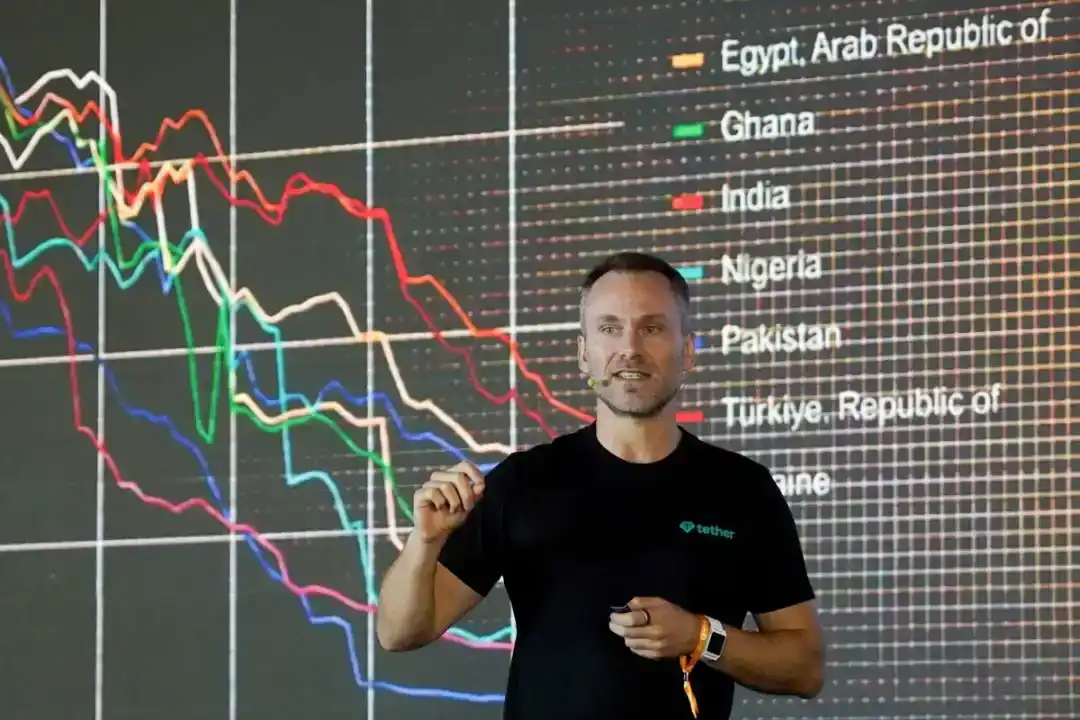
Tether CEO Paolo Ardoino stated in a recent interview with Bloomberg News: "Law enforcement agencies approach us, provide relevant information, we verify the information, and then take action in accordance with the laws of the country. We follow this process when cooperating with agencies such as the U.S. Department of Justice and the FBI."
Tether declined to comment further on the case. Bloomberg was unable to reach Sahin. A Turkish official also refused to disclose the name of the company mentioned in the prosecutor's statement.

The frozen assets of 460 million euros (approximately $544 million) are part of a large-scale law enforcement operation in Turkey, with the total value of frozen assets in the case now exceeding $1 billion. According to Turkish television NTV, a few days after the announcement of Sahin's asset freeze, another individual was investigated for suspected money laundering and illegal gambling, and crypto assets worth $500 million in their name were also frozen. However, it is currently unclear whether this asset freeze involved tokens issued by Tether.

A Turkish official, who spoke anonymously on sensitive legal matters to Bloomberg, revealed that authorities discovered the "financial traces" of these suspected illegal proceeds by tracking fund flows and analyzing crypto assets. The official also stated that similar asset freezes would be implemented in the future against individuals involved in illegal gambling and payment systems.

For Tether, this freezing operation is just one of its increasingly frequent asset freezes, highlighting the growing efforts of this cryptocurrency giant to cooperate with global law enforcement agencies.

A report released by analytics firm Elliptic in January showed that by the end of 2025, Tether and its competitor Circle Internet Group Inc. had blacklisted approximately 5,700 wallets, involving assets of about $2.5 billion, a figure that was negligible two years ago. At the time of freezing, three-quarters of these wallets held USDT.

Arda Akartuna, Head of Crypto Threat Intelligence for Asia-Pacific at Elliptic, said: "As the legitimate application of cryptocurrencies and the integration into global payments accelerate, illegal usage has also increased, prompting stablecoin issuers to intervene more actively."

Tether often publicizes its efforts to combat criminal activities, including in communications aimed at attracting potential investors. The company is seeking funding at a valuation of up to $500 billion. According to its website, Tether has assisted law enforcement agencies in 62 countries in handling over 1,800 cases, freezing $3.4 billion worth of USDT related to suspected illegal activities.

Nathan McCauley, Co-founder and CEO of Tether's partner Anchorage Digital Bank, stated in an interview: "They (Tether) are extremely proactive in their cooperation. Among stablecoin issuers, the company has the 'recognized best reputation' with law enforcement agencies."

Anchorage is the issuer of Tether's compliant dollar stablecoin USAT, which was launched in late January, marking Tether's return to the U.S. market.

This represents a significant shift from the tense relationship between Tether and U.S. regulators a few years ago. After clashing with regulators in 2018, Tether largely exited the U.S. market and paid a $41 million settlement in 2021 to resolve allegations of misrepresenting its reserves.

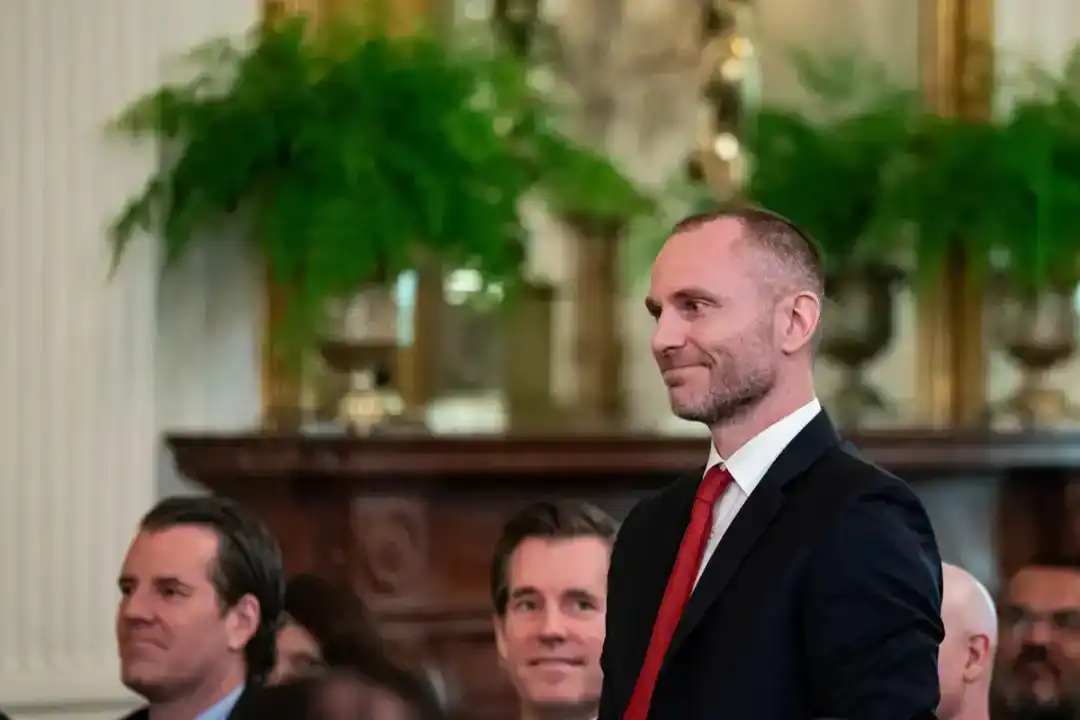
However, the second Trump administration has shown a welcoming attitude towards the cryptocurrency industry. Last year, Ardoino attended, along with several other executives, the ceremony where President Trump signed the stablecoin regulatory bill.
Even so, Tether's USDT continues to face scrutiny from authorities due to its widespread use by criminals.

On January 9, the U.S. Attorney's Office for the Eastern District of Virginia announced charges against a Venezuelan citizen for laundering $1 billion using USDT. A recent report from Elliptic showed that the Central Bank of Iran purchased over $500 million worth of USDT to alleviate its currency crisis and evade U.S. sanctions.

Fugitive Sahin is accused of leading an organization that laundered money for illegal online gambling platforms. According to local media, Sahin was sentenced to 10 years in prison in 2017, released in 2023, and sentenced to another 21 years in prison one month later. His current whereabouts are unknown, but the state-run Anadolu Agency reported on January 30 that "the relevant authorities are advancing the legal process for his extradition back to Turkey."


Perguntas relacionadas

QWhat was the unmentioned cryptocurrency company that assisted Turkish authorities in freezing assets, and what is its significance in the market?

AThe unmentioned cryptocurrency company was Tether Holdings SA, the issuer of the USDT stablecoin with a market capitalization of $185 billion. It is a major player in the cryptocurrency market, providing a widely used stablecoin.

QAccording to the article, what specific actions has Tether taken to assist global law enforcement agencies?

ATether has been actively assisting global law enforcement by freezing assets linked to crimes such as money laundering, drug trafficking, and sanctions evasion. They verify information provided by authorities and take action in accordance with the laws of the relevant countries.

QHow does the article describe the shift in Tether's relationship with U.S. regulators over the years?

AThe article describes a significant shift. After a 2018 conflict with regulators and a 2021 settlement over misrepresenting reserves, Tether largely exited the U.S. market. However, the current U.S. administration is more welcoming, and Tether CEO recently attended a ceremony for a stablecoin regulatory bill, marking a return to the market.

QWhat statistics does the article cite from Elliptic regarding the scale of frozen assets by stablecoin issuers?

AAn Elliptic report stated that by the end of 2025, Tether and its competitor Circle had blacklisted approximately 5,700 wallets, involving around $2.5 billion in assets. Three-quarters of these wallets held USDT at the time of freezing.

QBeyond the Turkish case, what other examples of alleged criminal use of USDT are mentioned in the article?

AThe article mentions a U.S. case where a Venezuelan citizen was charged with laundering $1 billion using USDT. It also cites an Elliptic report that Iran's central bank purchased over $500 million in USDT to mitigate a currency crisis and circumvent U.S. sanctions.

Leituras Relacionadas

Domestic AI Booms: Zhipu's Market Cap Surpasses 430 Billion HKD, Mysterious Model Tops Text-to-Video Ranking

China's AI sector is experiencing a significant surge, with Zhipu AI's market capitalization exceeding HK$430 billion and a new model, HappyHorse-1.0, topping the text-to-video generation rankings. On April 9, Hong Kong and A-share AI stocks rallied strongly. Zhipu's shares rose 8.74%, and Xunce Technology surged over 24%. The A-share market saw similar gains, with the China Merchants AI ETF rising over 10%. The rally was fueled by two major catalysts. First, the anonymous model HappyHorse-1.0 topped the Artificial Analysis Video Arena leaderboard, surpassing ByteDance's Seedance 2.0. It generates synchronized video and audio from text in about 38 seconds. Second, Zhipu released its flagship model, GLM-5.1, which can autonomously perform complex software engineering tasks for 8 hours without human intervention. Notably, it was trained entirely on Huawei's Ascend 910B processors, a milestone for China's AI self-sufficiency. Industry experts note the rapid iteration of AI models, with new breakthroughs frequently appearing. While some market hype, the technical capabilities of these models are noteworthy. Zhipu also increased its API prices by 10%, signaling a shift from a growth-at-all-costs model to a focus on sustainable profitability and value creation. The industry is moving from a "technology race" to a "value co-creation" phase, entering an early stage of "order fulfillment and profit release." Paid services for top-tier models are in high demand, indicating the market is moving past the free user acquisition phase.

marsbitHá 6m

Domestic AI Booms: Zhipu's Market Cap Surpasses 430 Billion HKD, Mysterious Model Tops Text-to-Video Ranking

marsbitHá 6m

WLFI's $75 Million Lending Game: Dolomite Depositors Deeply Trapped

Author: ChandlerZ, Foresight News. On April 9, CoinDesk reported that World Liberty Financial (WLFI), a crypto project co-founded by the Trump family, conducted multiple collateralized loans through the DeFi lending protocol Dolomite, raising market concerns about insider relationships, circular financing, and liquidity risks. WLFI used approximately 5 billion WLFI tokens as collateral on Dolomite to borrow around $75 million in stablecoins, with over $40 million transferred to Coinbase Prime, likely for fiat conversion or OTC trading. Between February and April, WLFI executed a series of transactions, including depositing its own stablecoin (USD1) and WLFI tokens into Dolomite to borrow funds, and directly sending USD1 to Coinbase. Dolomite’s co-founder, Corey Caplan, is also an advisor to WLFI, and WLFI’s lending platform is built on Dolomite, indicating potential conflicts of interest. WLFI now accounts for about 55% of Dolomite’s total supplied liquidity. The USD1 pool has a 93% utilization rate, leaving limited liquidity for other depositors. If WLFI’s token price drops significantly, forced liquidations could cause severe losses for ordinary users. This incident follows previous controversies, including a $500 million investment deal linked to an Abu Dhabi royal, sanctions-related associations, and a prior USD1 depegging event. WLFI responded that there is no liquidation risk and emphasized its business growth, but questions about governance and risk management remain unanswered.

marsbitHá 12m

WLFI's $75 Million Lending Game: Dolomite Depositors Deeply Trapped

marsbitHá 12m

Trading

Spot
Futuros
活动图片