Author | Yida Huang
Editor | Zhang Fan
Recently, the long-term U.S. Treasury yields have risen significantly, driving the yield curve to exhibit a typical steepening characteristic. Reflected in the data, from June 29th to August 17th, the yields on 10-year and 30-year U.S. Treasuries surged by 34 and 45 basis points (bps) respectively, while the 2-year U.S. Treasury yield increased by only 9 bps during the same period, causing the term spread to widen rapidly.
More notably, following this rapid surge, the 30-year U.S. Treasury yield has already risen above 5%, surpassing the peak of the post-pandemic rate hike cycle and reaching its highest level since 2004. The 10-year U.S. Treasury yield is not only approaching its previous high but is also close to the level seen during the 2007 subprime mortgage crisis.
As the anchor for the global risk-free rate, the rapid rise in U.S. Treasury yields has triggered a repricing of major asset classes including equities, foreign exchange, and commodities. The recent sharp fluctuations in the AI industry chain also reflect the influence of this transmission logic. Meanwhile, the pricing of the 10-year U.S. Treasury yield itself mirrors the global macroeconomic situation, and its current level has also reawakened painful memories for investors of the 2007 subprime mortgage crisis.
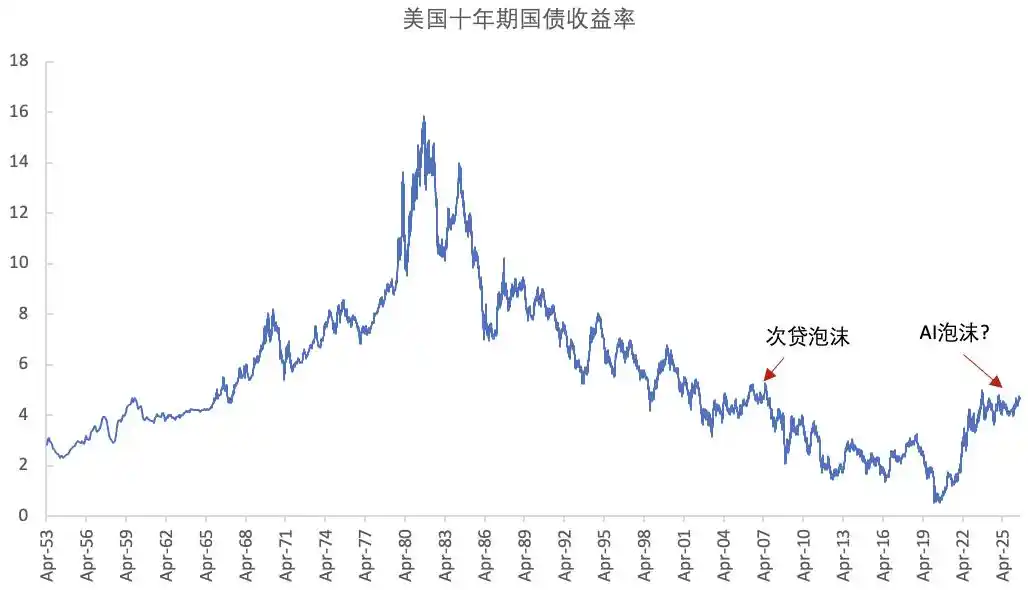
Chart: 10-Year U.S. Treasury Yield Trend; Source: wind, 36Kr
So, what are the core factors driving the rise in U.S. Treasury yields? How does the rising U.S. Treasury yield affect the AI chain market?
01 Multiple Factors Drive the Rise in Long-Term U.S. Treasury Yields
For investors unfamiliar with bonds, it's essential to first understand a basic principle: bond yields have an inverse relationship with asset prices. Therefore, a significant rise in U.S. Treasury yields indicates a substantial decline in U.S. Treasury prices. From a fundamental perspective, this round of rising U.S. Treasury yields is primarily driven by supply-demand dynamics in the capital markets. Simultaneously, factors such as resurgent inflation and expectations of tighter monetary policy have also played significant roles.
Firstly, the U.S. government's fiscal expansion and the resulting surge in Treasury issuance are the fundamental reasons for the rise in long-term U.S. Treasury yields. Over the past 20 years, the total U.S. debt has continued to swell, reaching $37.6 trillion by the end of 2025, 6.6 times the $5.7 trillion in 2000. Although the annual increase in U.S. debt supply retreated to around the median level of the past two decades after the 2020 pandemic issuance peak, the actual scale expansion remains very rapid due to the high base.
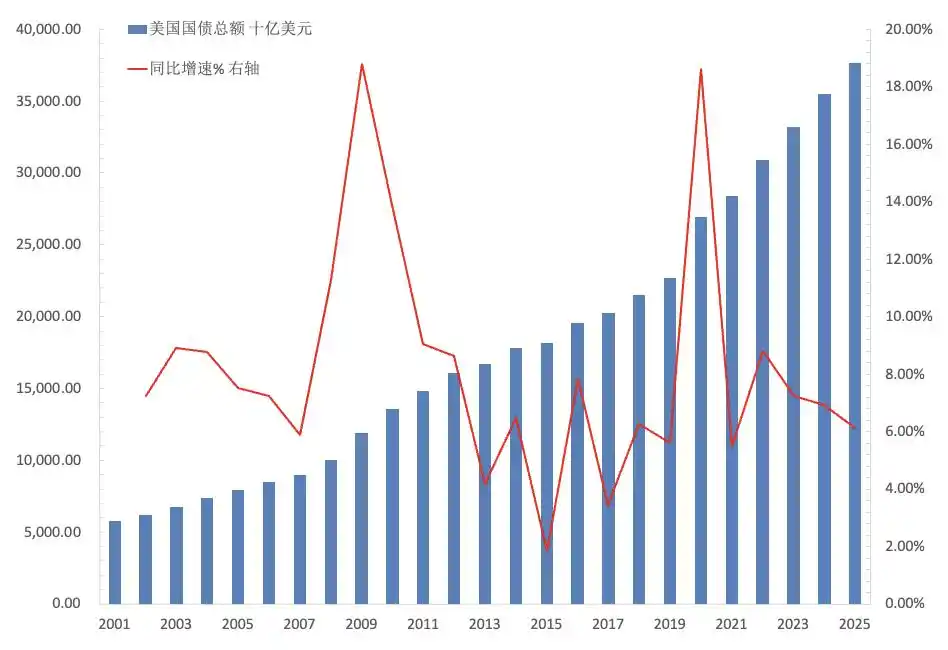
Chart: Total U.S. Debt Scale and Year-over-Year Growth Rate; Source: wind, 36Kr
At the same time, factors such as tax cuts and a high proportion of rigid expenditures in the U.S. fiscal budget have led to persistent expectations of robust Treasury supply, which to some extent has also pushed up U.S. Treasury yields. From an asset pricing logic perspective, the continuous growth in U.S. Treasury supply has a significant dilutive effect on market liquidity. Rising expectations for future supply further exacerbate pressure from supply-demand imbalances in the Treasury market.
Looking at the demand side, the main buyers of U.S. Treasuries have traditionally been foreign official institutions and the Federal Reserve. However, significant changes in the buyer structure in recent years have amplified U.S. Treasury price volatility. For foreign official institutions, against the backdrop of weakening U.S. sovereign credit, part of the asset allocation demand has shifted from U.S. Treasuries to assets like gold and non-U.S. sovereign bonds. Meanwhile, the Federal Reserve significantly reduced its holdings of U.S. Treasuries after continuous balance sheet reduction (quantitative tightening) during the previous rate hike cycle. If the Fed under Chair Wash continues to reduce its balance sheet, further selling of Treasuries is expected.
As the holdings of these two traditional major buyers have declined significantly, the demand to absorb new U.S. debt has had to shift substantially towards financial institutions in the capital market, such as banks, pension funds, hedge funds, and insurance companies. Given that different types of institutions have varying preferences and tolerances for factors like investment returns, risk control metrics, exchange costs, and speculative opportunities, the trend towards diversified investment strategies as commercial entities become key buyers of U.S. debt has predictably led to increased volatility in U.S. Treasury yields.
Notably, the bond issuance wave triggered by the expansion of capital expenditures in the AI chain constitutes a significant marginal force driving up U.S. Treasury yields. Public data shows that five tech giants—Amazon, Alphabet, Meta, Microsoft, and Oracle—issued over $120 billion in credit bonds in 2025. By October 2025, the scale of AI-related bonds had reached as high as $1.2 trillion.
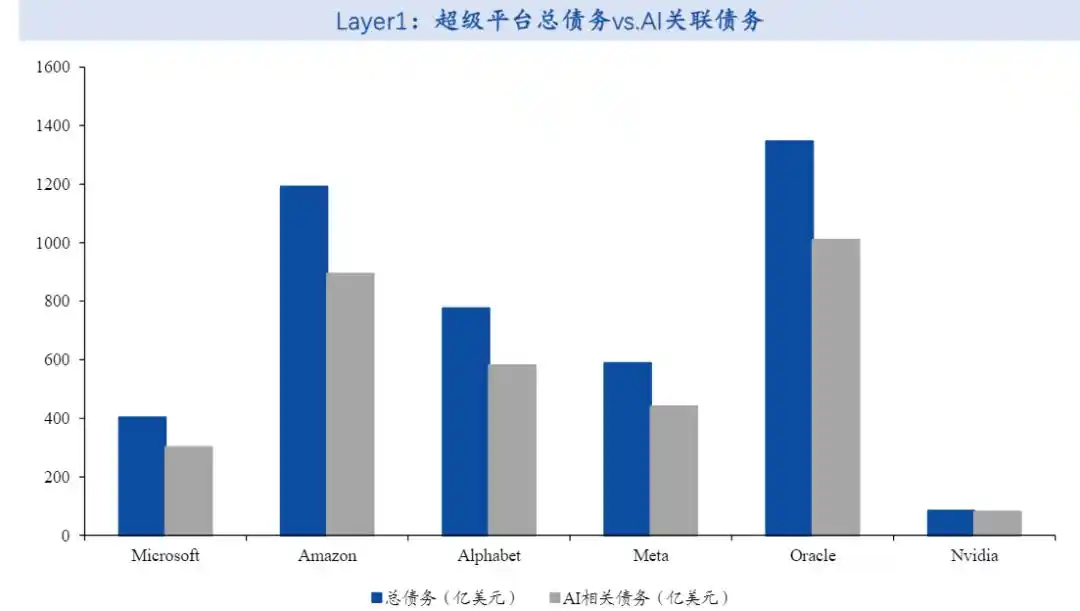
Chart: AI-Related Debt Scale of Major Companies; Source: Huafu Securities, 36Kr
In the current U.S. Treasury holder structure, financial institutions occupy an important position. Compared to traditional buyers like foreign official institutions and the Fed, institutional investors have a greater preference for investment returns and speculation in their allocation demands. Therefore, influenced by the AI bond issuance wave, a large influx of high-quality, high-yield credit bonds into the bond market has created a certain degree of competition with U.S. Treasuries. This has resulted in a crowding-out effect on Treasuries within a limited scope, marginally pushing U.S. Treasury yields higher.
At the macro and policy levels, the elevated long-term U.S. Treasury yields essentially reflect resurgent inflation and expectations of monetary policy tightening. Current U.S. inflation remains some distance from the policy target. Moreover, the resilience shown by repeated inflation flare-ups this year has increased the inflation risk premium embedded in long-term yields. The Federal Reserve's dual mandate focusing on inflation and employment, coupled with Chair Wash's relatively hawkish policy inclination, suggests the market is re-pricing the future inflation path and monetary tightening risks.
02 What Impacts Will Rising U.S. Treasury Yields Have on the AI Chain?
Regarding the shape of the yield curve, the recent surge in long-term U.S. Treasury yields has pushed the curve towards steepening. For short-term rates, based on Chair Wash's current hawkish policy orientation, short-term rates still face considerable upward pressure in the future. Once rate hike expectations materialize, short-term rates will rise rapidly, driving the yield curve towards flattening—shifting from a so-called "bear steepening" to "bear flattening."
During a rate hike cycle, when both long and short-term U.S. Treasury yields are high and the yield curve flattens, it leads to a systematic rise in the anchor for the global risk-free rate. The resulting high-interest-rate environment and relatively tight monetary policy will put pressure on global stock markets collectively. Tech stocks, represented by the AI chain, are particularly sensitive to changes in the financing environment due to their continuous R&D investments and capital expenditures, and thus will be more significantly affected.
Looking back at history, in the period leading up to the 2006–2007 subprime mortgage crisis, the U.S. Treasury yield curve was very flat for a considerable time. Although high interest rates and a flat yield curve exerted some valuation pressure on the stock market, the real market adjustment occurred after the crisis erupted. This shows that high interest rates are not the trigger for a bear market in stocks; their core impact lies in continuously applying valuation pressure: not only weakening the appeal of high-valuation assets but also more easily pricking crowded trades and exacerbating asset price volatility.
Examining the current AI chain bull market, the hotspots are mainly concentrated in the hardware sector. The strong performance of related companies and the overall positive expectations form the fundamental basis for this structural bull market. However, based on the above discussion, the valuation pressure on related targets caused by rising U.S. Treasury yields is unavoidable. Particularly for the memory sector, after accumulating considerable gains earlier and experiencing extreme trading crowding at one point, rising valuation pressure due to interest rate factors is one of the important triggers for the recent phase of market adjustment and profit-taking.
From the underlying logic of asset pricing, the challenges currently facing the AI chain bear a striking resemblance to the situation on the eve of the 2007 subprime mortgage crisis: the subprime crisis began when rental yields could no longer support the U.S. housing price bubble (carrying cost). Today, AI giants are investing massive capital expenditures, similarly relying on downstream commercial realization to close the loop on investment returns.
Currently, Anthropic's ARR (Annual Recurring Revenue) growth trajectory has noticeably slowed, meaning the contradiction between cash flow failing to cover high-leverage debt and high valuations has begun to surface. High interest rates will further exacerbate these two contradictions. In the future, the market may reassess the intensity of capital expenditures based on the ARR slowdown; meanwhile, stock investors, haunted by the psychological shadow of the subprime crisis, have already reflected their revaluation of AI chain-related companies in current asset pricing.
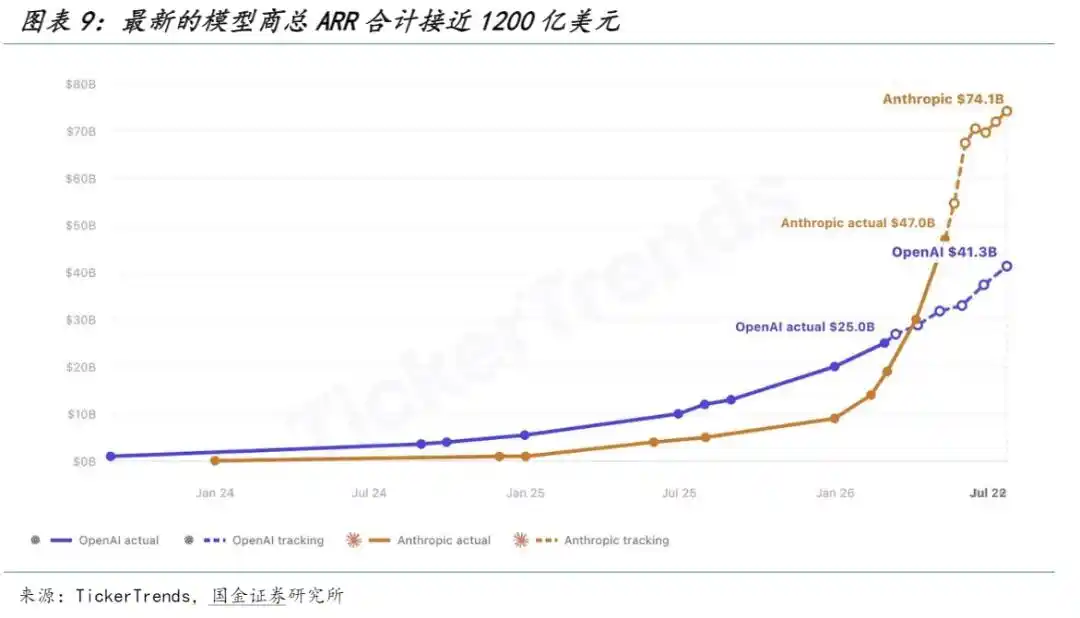
Chart: ARR of OpenAI and Anthropic; Source: Guojin Securities, 36Kr
Furthermore, rising U.S. Treasury yields will also further alter the financial behavior of major AI companies. To support massive capital expenditures, it is a prudent move for these giants to concentrate bond issuance and lock in interest rates before yields climb further. As a result, a massive volume of credit bonds flooding the bond market in a short period crowds out existing market liquidity, exacerbating the persistently high long-term yields. The consequence is ultimately an increase in the long-term financing threshold at the macro level, from which the AI chain will also struggle to escape.
*Disclaimer:
The content of this article represents only the author's views.
The market carries risks; investment requires caution. Under no circumstances shall the information or opinions expressed herein constitute investment advice to anyone. Before making investment decisions, investors should consult with professionals and make prudent decisions if necessary. We do not intend to provide underwriting services or any services requiring specific qualifications or licenses to any parties involved in transactions.