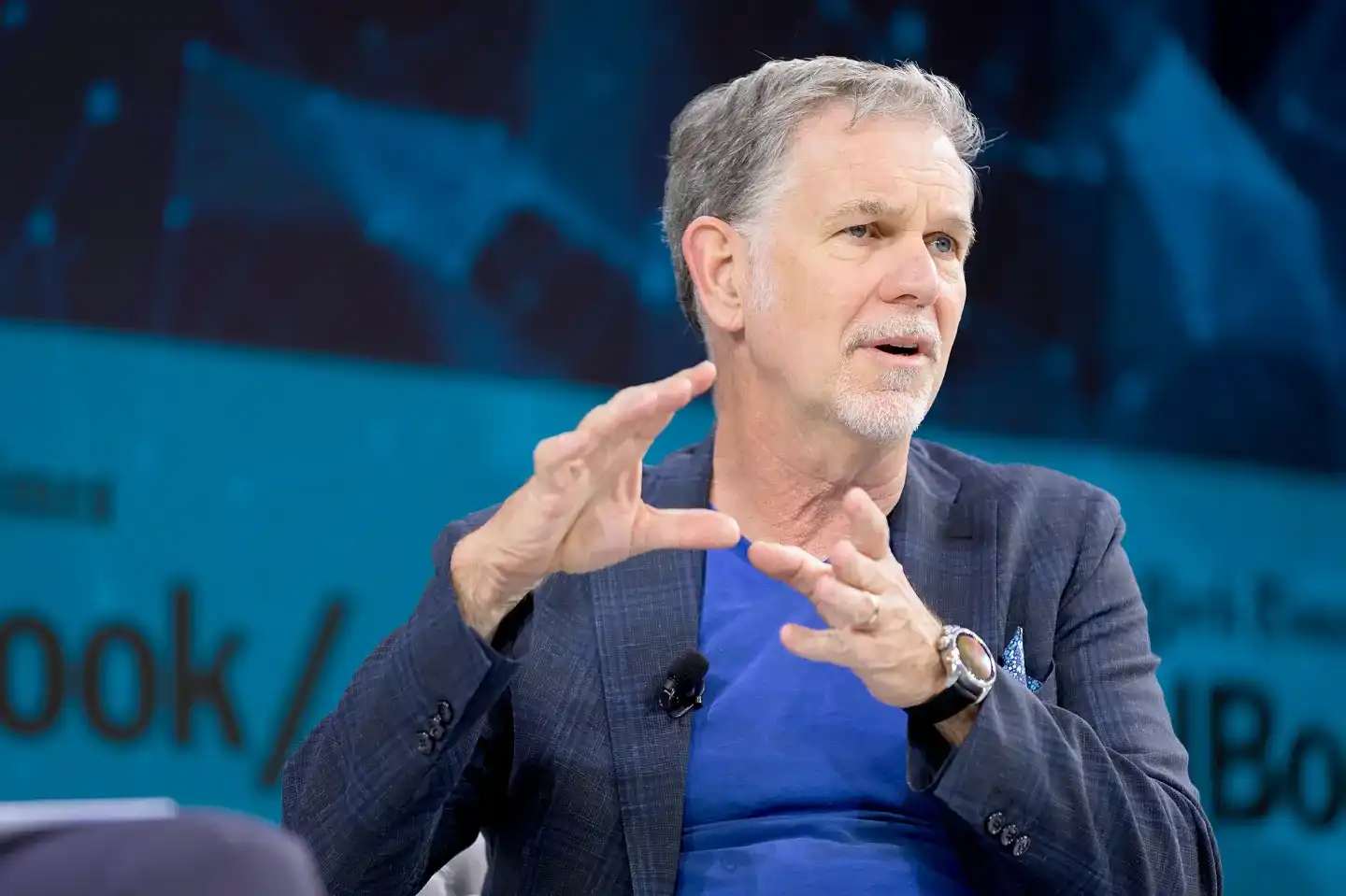
Crypto Gains Ally As Former CFTC Chair Becomes Full-Time Adviser

bitcoinistPublicado em 2026-04-15Última atualização em 2026-04-15

Resumo

Former CFTC Chairman Chris Giancarlo, known as "Crypto Dad," has retired from legal practice to work full-time as an adviser in the cryptocurrency and fintech sectors. He will focus on advising founders, CEOs, and boards, along with policy research and nonprofit work. Giancarlo, who served as CFTC commissioner and later chairman, played a key role in approving the first Bitcoin futures markets in the U.S. He has been a vocal advocate for clear crypto regulations rather than restrictive policies. His move follows a trend of senior regulators transitioning into the industry, similar to Caroline Pham’s shift to MoonPay last year. Giancarlo believes current regulators have sufficient authority to bring structure to crypto, though he acknowledges that regulatory uncertainty continues to hinder broader banking involvement.

Caroline Pham did it in December. Now Chris Giancarlo is following suit. The man once nicknamed “Crypto Dad” has walked away from law entirely to work full-time with cryptocurrency and financial technology companies, the latest in a string of senior regulators crossing into the industry they once helped oversee.

Giancarlo announced his departure from Willkie Farr & Gallagher on Sunday, posting on X that he was done with legal practice for good.

Going forward, he said, his time would be spent advising founders, chief executives, and company boards in the fintech and digital assets space, alongside policy research and writing, and work with nonprofit programs.

From Government Office To Industry Adviser

His credentials in this area run deep. Giancarlo was sworn in as a Commodity Futures Trading Commission commissioner in 2014 under the Obama administration. US President Donald Trump later tapped him as chairman, a role he held from August 2017 through July 2018.

During that stretch, the first Bitcoin futures markets in the US were given the green light on his watch — a milestone that helped open the door to mainstream financial participation in crypto.

The “Crypto Dad” nickname was earned honestly. Giancarlo was openly supportive of the sector at a time when most regulators kept their distance, and he pushed for clear rules rather than outright restriction.

His advisory work is not new, either. He has been guiding the crypto-focused bank Sygnum on regulatory affairs and strategic partnerships, according to reports. The full-time shift, though, marks a clean break from his legal career.

BTCUSD now trading at $74,432. Chart: TradingView

Banks And The Push For Clearer Rules

Just weeks before the announcement, Giancarlo appeared on Scott Melker’s podcast and weighed in on the state of crypto regulation in the US.

He played down concerns about major legislative packages stalling in Congress, arguing that the CFTC and the Securities and Exchange Commission retain enough authority to bring meaningful structure to the industry on their own.

At the same time, he acknowledged that regulatory ambiguity continues to hold banks back from deeper involvement in digital assets. Getting financial institutions comfortable with the space, he said, requires modern rules that match where finance is actually heading.

Pham’s move to MoonPay as chief legal officer drew attention when it happened last year. Giancarlo’s exit from law adds fresh weight to a trend that shows no sign of slowing — experienced regulators planting their flags in an industry they spent years watching from the other side.

Featured image from Jsbarefoot, chart from TradingView

Perguntas relacionadas

QWho is the former CFTC chairman that recently left his legal career to become a full-time adviser in the crypto and fintech industry?

AChris Giancarlo, the former CFTC chairman nicknamed 'Crypto Dad', has left his legal career to work full-time as an adviser in the crypto and fintech industry.

QWhat significant milestone in the US crypto market occurred under Chris Giancarlo's watch as CFTC chairman?

AUnder Chris Giancarlo's leadership, the first Bitcoin futures markets in the US were approved, which was a major milestone for mainstream financial participation in crypto.

QWhy was Chris Giancarlo given the nickname 'Crypto Dad'?

AHe was given the nickname 'Crypto Dad' because he was openly supportive of the crypto sector at a time when most regulators kept their distance, and he advocated for clear rules instead of outright restrictions.

QWhich crypto-focused bank has Chris Giancarlo been advising on regulatory affairs and strategic partnerships?

AChris Giancarlo has been advising the crypto-focused bank Sygnum on regulatory affairs and strategic partnerships.

QAccording to Giancarlo, what is needed to get financial institutions more comfortable with involvement in digital assets?

AGiancarlo stated that getting financial institutions comfortable with digital assets requires modern rules that align with the actual direction of finance, addressing current regulatory ambiguity.

Leituras Relacionadas

Arthur Hayes' New Article: It's 'No-Trade Zone' Time

Arthur Hayes argues that the current market is in a "no-trade zone," a period of high uncertainty created by two converging forces: the deflationary shock from AI and the inflationary shock from geopolitics. AI agents are rapidly displacing knowledge workers, eroding their incomes and creditworthiness, which will eventually trigger a deflationary financial crisis in consumer credit-dependent Western economies. Simultaneously, the war in the Middle East, particularly the potential disruption to shipping through the Strait of Hormuz, threatens global energy supplies and could force nations to abandon the dollar system. Hayes outlines three main scenarios: 1) A return to normalcy, where the deflationary AI shock remains the primary concern; 2) The "Tehran Toll Booth," where Iran controls the Strait and demands payment in gold or yuan, accelerating the end of dollar hegemony; and 3) "Empire Strikes Back," where the US destroys Iran's capabilities but risks a catastrophic regional war that sends commodity prices soaring. In all but the most extreme scenarios, Hayes posits that the key driver for Bitcoin's price will be the *quantity* of money, not its price (interest rates). He expects that governments, forced to fund wars and stockpile resources, will have to print money, expanding the money supply. This would be bullish for fixed-supply assets like Bitcoin, even if it occurs alongside rising rates. However, he cautions that until this liquidity is explicitly unleashed (e.g., when bond market volatility spikes), the risk/reward for new long positions is poor. His current strategy is to wait for a clear signal of monetary expansion before deploying capital, preferring to hold gold and select crypto assets in the meantime.

marsbitHá 1h

Arthur Hayes' New Article: It's 'No-Trade Zone' Time

marsbitHá 1h

a16z Founder: In the Agent Era, What Truly Matters Has Changed

Marc Andreessen, co-founder of a16z, argues that the current AI boom is not an overnight success but the culmination of 80 years of research, now delivering practical results. He emphasizes that this era is defined by the convergence of four key capabilities: large language models (LLMs), reasoning, coding, and agents capable of recursive self-improvement. Andreessen describes the agent architecture—combining an LLM with a shell, file system, markdown, and cron/loop—as a fundamental shift beyond chatbots. This structure leverages existing software components, allowing agents to maintain state, introspect, and extend their own functionality. He predicts a move away from traditional GUI and browser-based interactions toward an "agent-first" world where software is primarily operated by bots, not humans, with people simply stating their goals. He draws parallels to the 2000 internet bubble but notes key differences: current AI infrastructure investments are led by cash-rich giants and quickly monetized. He highlights that scaling constraints involve not just GPUs but the entire chip ecosystem. Open source and edge inference are crucial for democratizing knowledge and enabling low-latency, cost-effective applications on local hardware. Finally, Andreessen identifies significant non-technical challenges: potential short-term cybersecurity crises, the need for "proof of human" identity solutions, financial infrastructure for agents, and institutional resistance from sectors like education and healthcare. He cautions that societal adoption will be slower than technological change.

marsbitHá 2h

a16z Founder: In the Agent Era, What Truly Matters Has Changed

marsbitHá 2h

Trading

Spot
Futuros
活动图片