Written by: Eric, Foresight News
Original Title: The Creator Who Took $1 Million from X Once Launched a Memecoin
At 00:00 Beijing time on February 4, 2025, X announced the results of its $1 million creator competition launched two weeks ago. The event was open only to U.S. participants, who were required to write an original article of at least 1,000 words. The article with the highest number of reads on the "Home Timeline" of X's paid users would win the exclusive million-dollar prize.
Given the precedent of "How to Completely Change Your Life in One Day" with 170 million views, many speculated that the winning article would likely be a similar "inspirational piece." However, the result was both unexpected and yet made sense.
Writing Articles Is More Profitable Than Trading Cryptocurrency
The creator who became a millionaire with a single article goes by the X username Beaver. His article, "Deloitte, a $74 Billion Cancer Metastasized Across America," garnered 45 million views.
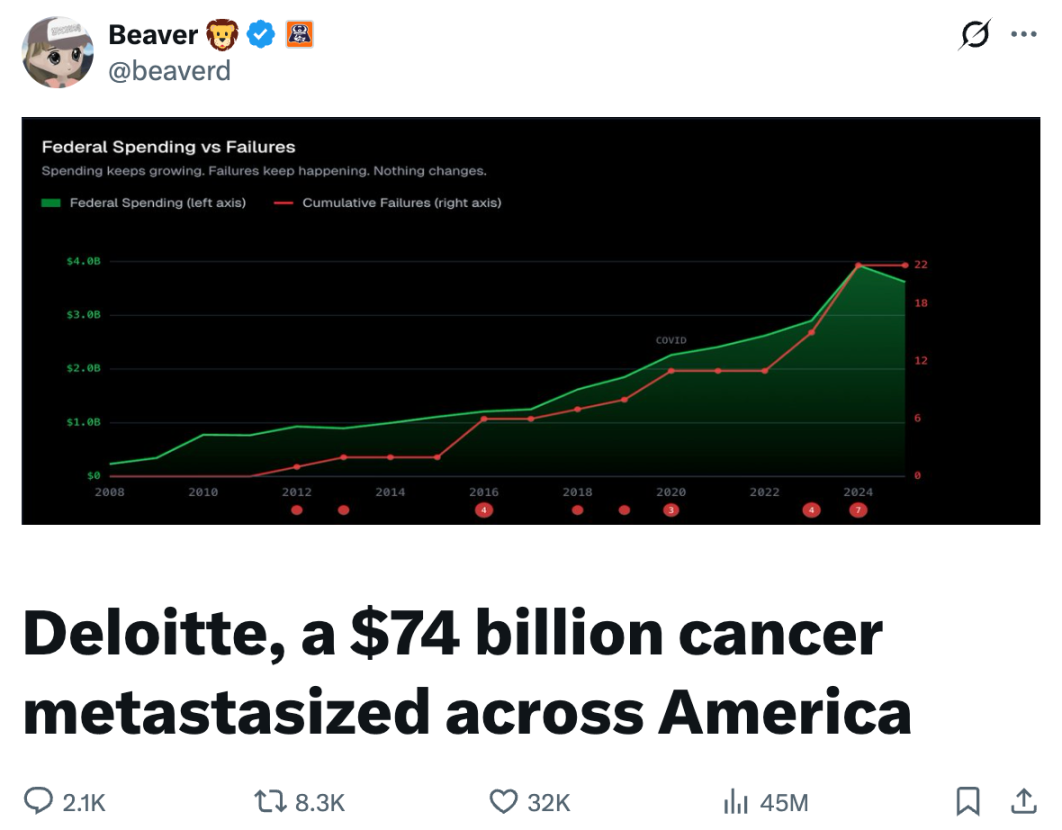
The winning article is an in-depth investigative report exposing a U.S. government scandal. The author, through analyzing public documents such as federal contracts, state contracts, recorded defaults, lawsuits, and audits, uncovered a history of "collusion between officials and businesses" involving tens of billions of dollars: Over the past 20 years, Deloitte has secured a total of $40 billion in contracts from federal and state governments. However, the various systems it developed, including unemployment benefit application systems, either suffered from vulnerabilities that led to billions in fraudulent claims or were abandoned after budgets were multiplied without results.
In summary, the government spent $40 billion on systems that ultimately caused $34 billion in losses. Even more alarming, there is frequent employee movement between Deloitte and the U.S. government, allowing Deloitte to infiltrate every aspect of the government, "like cancer cells spreading through the bloodstream," continuously siphoning taxpayers' money with no clear source or way to eradicate it.
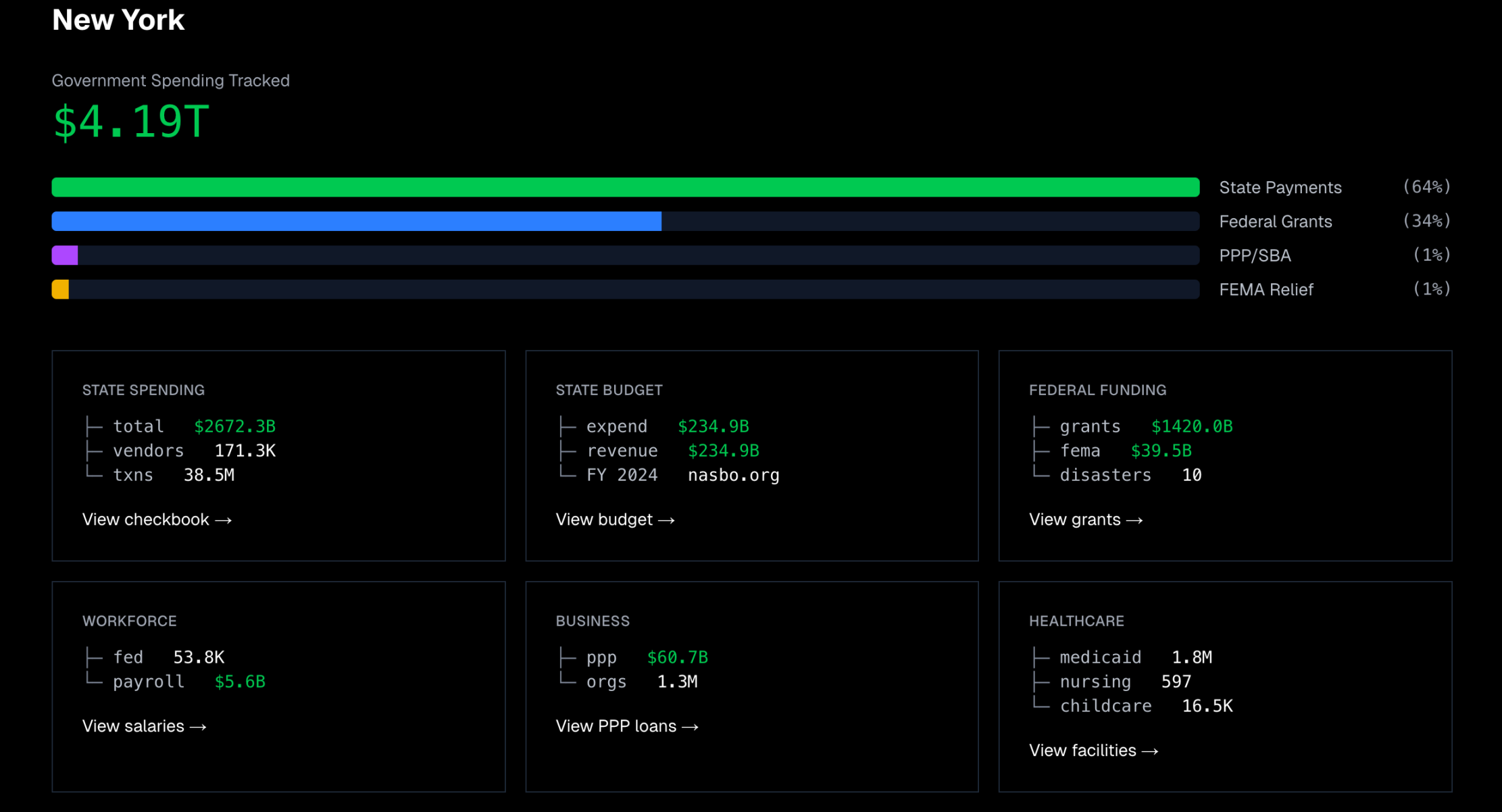
Looking through Beaver's account, you'll find that its main theme is "concern for the country and its people," with topics almost always related to government, politics, and public welfare. Additionally, Beaver launched a website called SomaliScan, which compiles public data on government budgets, expenditures, federal grants, labor statistics, and includes information on political donations and other politically related data. The corrupt relationship between Deloitte and the government was uncovered by analyzing this data.
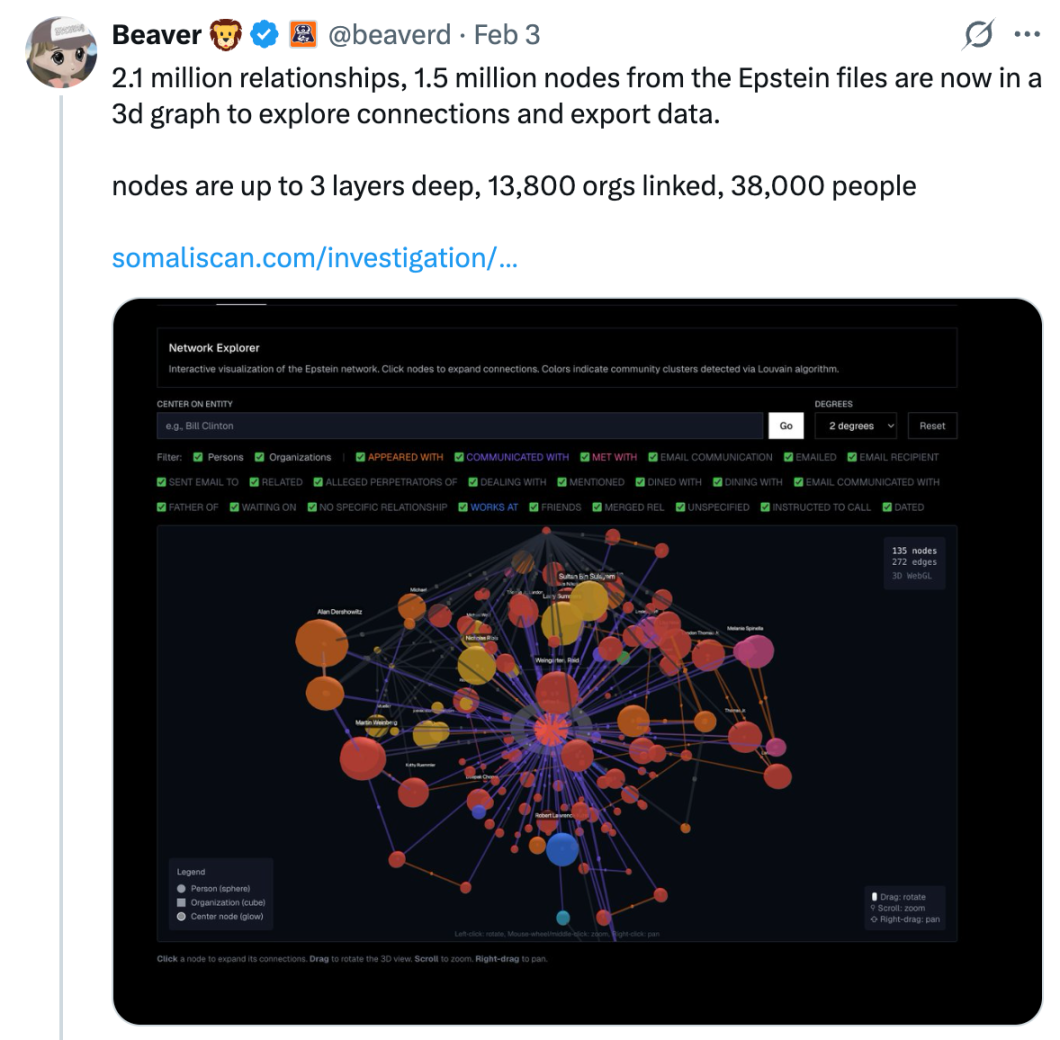
On February 3, Beaver also organized the massive "Epstein Files" released to the public into complex relationship diagrams on the website.
Interestingly, this political commentator launched a meme token called SS (9NrkmoqwF1rBjsfKZvn7ngCy6zqvb8A6A5RfTvR2pump) for the website on January 2 of this year. The token performed poorly initially but surged to a阶段性 high on January 28 after Beaver's article gained tens of millions of views, and spiked again when the winner was announced today. Compared to SS's dismal performance and the $1 million prize, this might be a rare case where "writing articles is more profitable than trading cryptocurrency."
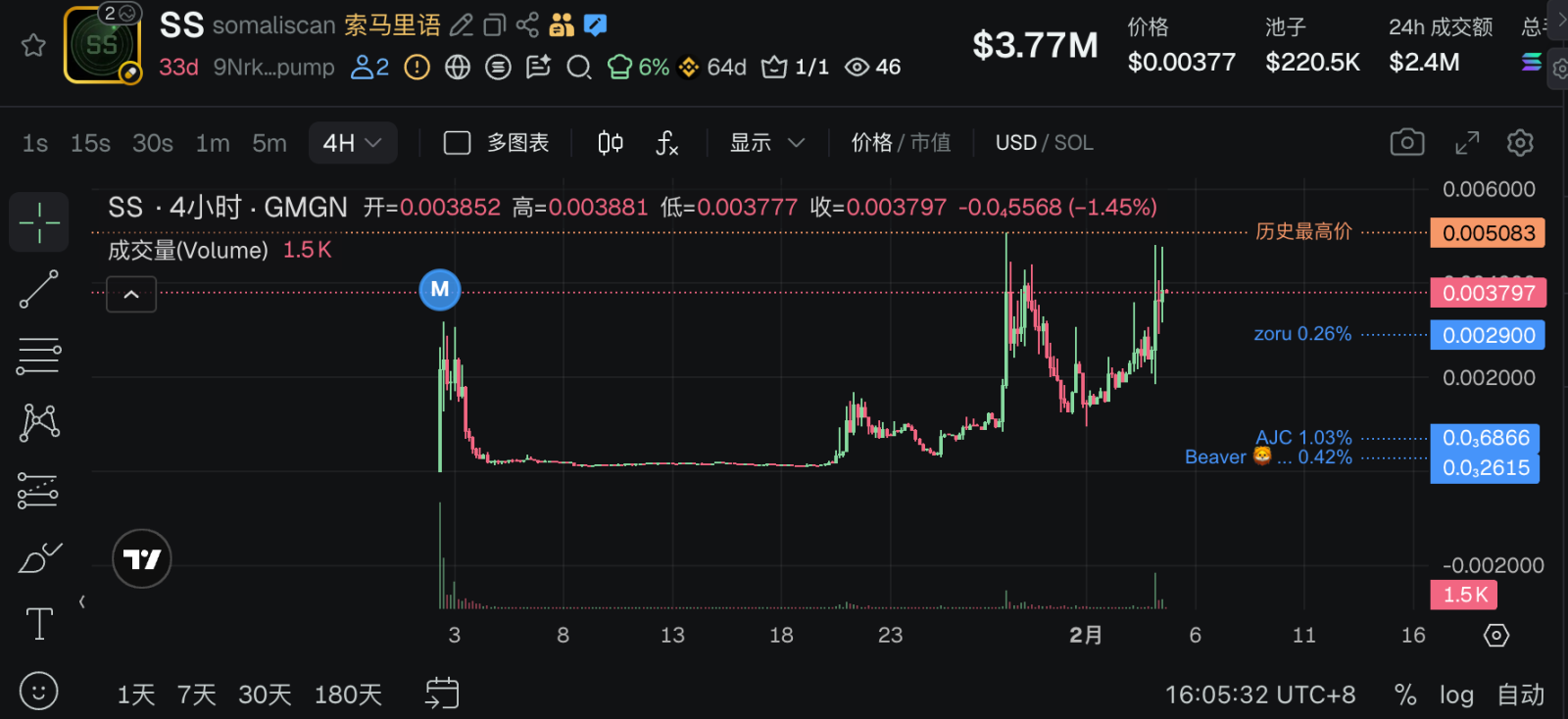
On January 25, Beaver stated that the competition prize money would be entirely used to purchase SS, with 10% of the total SS supply reserved for hackathons, 20% locked, and Beaver keeping only 4.5% for themselves.
It's certain that Beaver is not a "crypto insider." The market cap of less than $4 million also indicates that this meme token has little热度. Those who spend real money to buy SS are likely supporters of Beaver and SomaliScan. It's worth noting that the SomaliScan website also has a donation channel supporting Bitcoin, Ethereum, SOL, and XMR donations. If you enjoy stirring up trouble, you can support this "champion of democracy" who dares to expose U.S. government scandals.
Common Topics Among Netizens: Politics, Money, and Emotions
The Chinese internet has three enduringly popular topics: political trends, economic situations/how to make money, and personal emotions.
The top three articles in X's U.S.-only competition恰好 correspond to these points:
-
First Place: "Deloitte, a $74 Billion Cancer Metastasized Across America," exposing U.S. government corruption;
-
Second Place: "A Detailed Explanation of President Trump's Tariff Strategy: A Step-by-Step Guide on How to Operate," analyzing the patterns of Trump's tariff policies to derive an investment strategy应对变化;
-
Third Place (Official Favorite): "The Complete Guide: How to Achieve Extreme Focus," another piece of self-improvement鸡汤 from Daniel Koe.
High-readership Chinese articles on X also revolve around these topics.
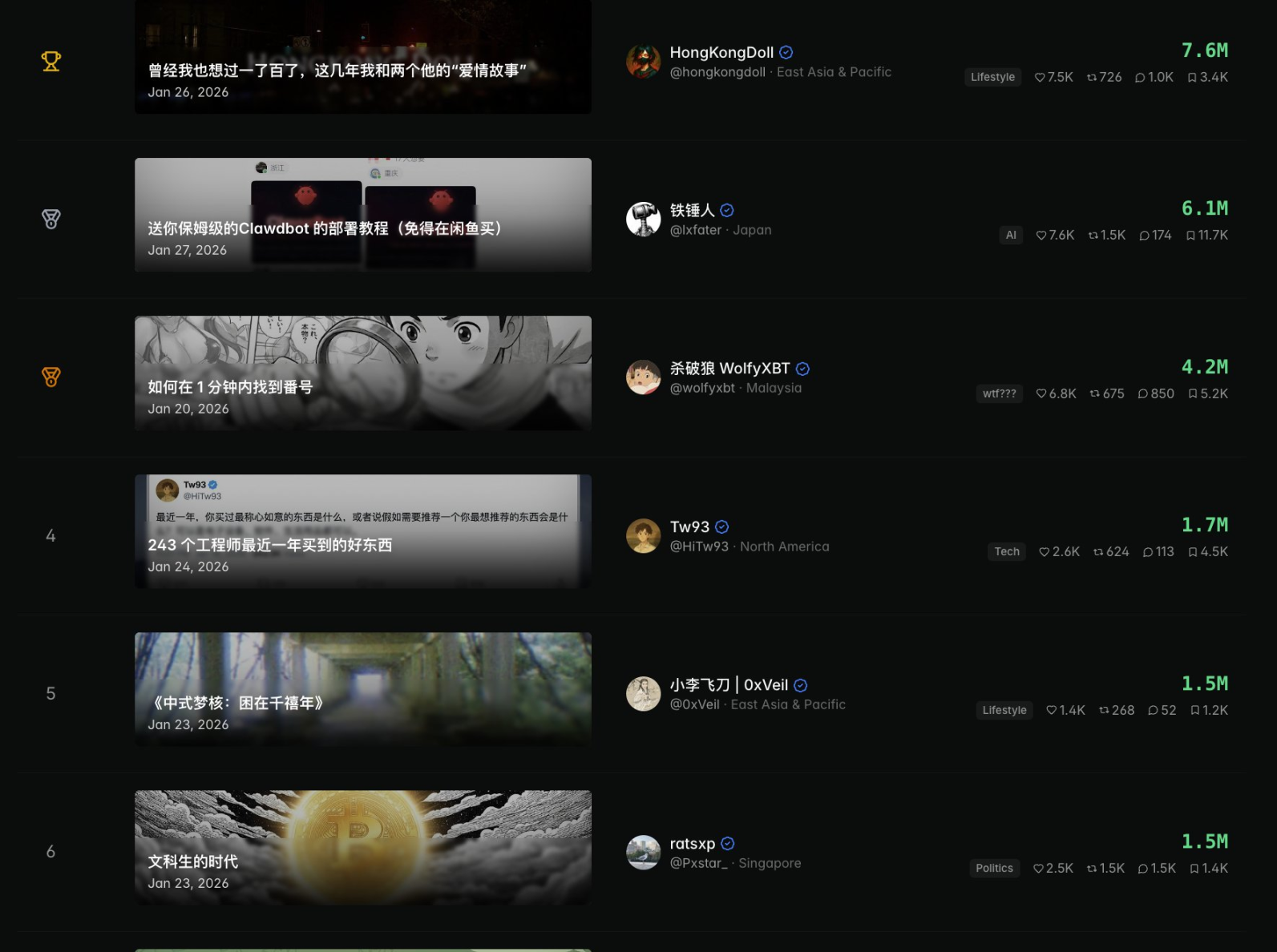
If you read these articles carefully, you'll find that they aren't particularly flowery in language but mostly present facts and reasoning, satisfying readers' emotional or practical needs. For creators, the conclusion is very simple: At least on the X platform, to gain more exposure, you either tell a new story unknown to others, whether about yourself or social issues, or provide a detailed "operational guide"—be it on how to make money, how to adjust your mindset, or even, as shown in the image above, how to find video codes.
Twitter:https://twitter.com/BitpushNewsCN
BitPush TG Discussion Group:https://t.me/BitPushCommunity
BitPush TG Subscription: https://t.me/bitpush