Stock of Mushroom Supplier Skyrockets 300% Amid JINQIAN Memecoin Frenzy

cryptonews.ruPublished on 2026-09-03Last updated on 2026-09-03

Abstract

On September 2nd, shares of Chinese agricultural supplier Farmmi (FAMI) on Nasdaq briefly surged over 300%, coinciding with hype around the JINQIAN meme coin and a FAMI token on Robinhood Chain. JINQIAN, referencing a "money mushroom" variety Farmmi sells, saw its market cap hit $70 million shortly after launch. The frenzy was partly triggered by a viral post from trader "Rune," which he later claimed was AI-generated and contained false information. The on-chain FAMI token, while mirroring Farmmi's ticker and share count, was not an official, stock-backed Robinhood token. Farmmi is currently under a Nasdaq warning for trading below $1 and reported a significant revenue drop and increased net loss for FY2025. Most of the stock's intraday gains were lost by the close.

On September 2, shares of Chinese agricultural supplier Farmmi on Nasdaq momentarily surged more than 300% — from the previous close of $0.1187 to $0.50. The spike coincided with a frenzy around the JINQIAN memecoin and the FAMI token on Robinhood Chain, as noted by X users.

This is wild

Farmmi, Inc. (FAMI: NASDAQ) is mooning from onchain trading through the "JINQIAN" / Money Mushroom meme pair

Farmmi (FAMI) recently received a Nasdaq warning after trading below $1 for 30 consecutive sessions

Degens then found “Jinqian” in the company’s own... https://t.co/MleQ99doBL pic.twitter.com/GKbEzatmka

— 0xSammy (@0xSammy) September 2, 2026

By the close of trading, most of the gains had evaporated: the final price was $0.1501 (+26.45%). However, the daily trading volume for the stock soared to 867.2 million, compared to 5.76 million on the previous trading day.

Among Farmmi's products are dried mushrooms. The JINQIAN token's name is related to the company's product range: in its annual report, it mentioned a shiitake variety called Jinqian—the 'money mushroom'.

JINQIAN was launched on Robinhood Chain. Within about an hour, the memecoin's market capitalization reached $70 million. According to Lookonchain, one trader invested 8 $ETH worth approximately $19,000 into it and later sold the position for 82.54 $ETH — roughly $198,000. The profit amounted to about $179,000.

JINQIAN hit a $70M market cap just 1 hour after launch.

This guy made a 10x return on $JINQIAN in just one trade!

He spent 8 $ETH($19K) to buy 6.28M $JINQIAN, then sold it for 82.54 $ETH ($198K), making a 74.54 $ETH($178.6K) profit.https://t.co/n8z9GrxTt5 pic.twitter.com/6mGR6t9Cbh

— Lookonchain (@lookonchain) September 2, 2026

A user under the nickname StarPlatinum pointed out that in less than three hours, trading volume in the JINQIAN/FAMI pair approached $88 million.

The Story Began with a Claude-generated Post

The frenzy was preceded by a post from a crypto trader using the pseudonym Rune. In it, he claimed to have spent about $1.8 million to acquire 37.4% of an unnamed Nasdaq-listed company with a market capitalization of approximately $4.8 million and a share price around $0.12.

i’ve been quiet for a few days.

i acquired a controlling stake in a NASDAQ-listed company. $4.8M market cap, trading at $0.12/share with a crazy 92.3% short interest. $6.2M in debt against $380K ARR, everyone thinks its dead

it cost me $1,800,000 for 37.4% of the total shares....

— Rune (@RuneCrypto_) August 31, 2026

Rune then described a plan to tokenize the acquired shares on Robinhood Chain and launch a related memecoin. The idea was that demand for the on-chain asset would stimulate purchases of the underlying shares and potentially lead to a short squeeze.

Members of the crypto community matched the parameters provided to Farmmi.

However, after the frenzy began, Rune stated that he had not bought a stake in the company. According to him, the post was created by Claude at his request, and the amounts and other parameters mentioned turned out to be 'fictional or exaggerated'.

The trader also denied any involvement in the subsequent issuance of FAMI and JINQIAN.

FAMI Is Not a Tokenized Stock

The FAMI token that appeared on Robinhood Chain mirrored Farmmi's ticker but was not an official Stock Token from Robinhood.

The platform's documentation lists the contract addresses for all issued tokenized assets. An identical ticker and name alone do not signify belonging to the official program.

The on-chain FAMI supply amounted to 37.43 million tokens, corresponding to the number of Farmmi shares outstanding. Of these, 14.22 million (about 38%) were allocated to the address of the user who deployed the contract upon its creation. This share is close to the 37.4% mentioned in Rune's post.

However, FAMI lacked a mint-and-redeem mechanism linking the token to real Farmmi shares. Therefore, buying the coin did not grant the right to acquire the company's shares on Nasdaq—unlike an officially backed Stock Token.

X user StarPlatinum additionally pointed out the lack of liquidity lock for the trading pair and warned the community of the associated risks.

Robinhood Chain storms into top DEXs: what's behind the hype

Farmmi Received a Nasdaq Warning

Before the trading surge, Farmmi shares had long been priced below $1. On August 11, Nasdaq issued a notice regarding non-compliance with the minimum price requirement—after the stock traded below this threshold for 30 consecutive sessions.

The company was given until February 8, 2027, to rectify the situation. To do so, the closing price must remain at or above $1 for at least ten consecutive trading days.

Additional pressure on the company comes from deteriorating financials. For the 2025 fiscal year, revenue more than halved—from $64.1 million to $28 million—while the net loss, conversely, sharply increased: from $4.6 million to $53.4 million.

In addition to trading mushrooms and other agricultural products, Farmmi is also expanding its warehousing and logistics services in the United States.

Recall that at the end of August, Robinhood Chain surpassed Ethereum in daily revenue due to a surge in memecoin trading.

end-content
Related Questions

QWhat happened to Farmmi's stock on September 2nd and what was the primary reason cited for the surge?

AOn September 2nd, shares of Chinese agricultural supplier Farmmi (FAMI) on Nasdaq spiked by over 300% intraday, from $0.1187 to $0.50, before closing at $0.1501 (+26.45%). The primary reason cited for the initial surge was a frenzy surrounding the JINQIAN meme coin and the FAMI token on Robinhood Chain, which traders linked to the company.

QWhat is the connection between the JINQIAN meme coin and Farmmi, the company?

AThe connection is that Farmmi's product catalog includes dried mushrooms, and in its annual report, the company mentioned a variety of shiitake mushroom called 'Jinqian,' which translates to 'money mushroom.' The meme coin creators used this name for the token, creating a thematic link to the company's business.

QWhat was the post by 'Rune' about, and what did he later clarify regarding its content?

AThe post by crypto trader 'Rune' claimed he had spent $1.8 million to acquire a 37.4% controlling stake in a Nasdaq-listed company (matching Farmmi's profile) and planned to tokenize the shares. He later clarified that the post was generated by the AI model Claude based on his prompt and that the amounts and details were 'made up or exaggerated.' He also denied any involvement in the subsequent launch of the FAMI and JINQIAN tokens.

QHow does the on-chain FAMI token differ from an official Robinhood Stock Token representing Farmmi shares?

AThe on-chain FAMI token, while having the same ticker and a total supply matching Farmmi's outstanding shares, is not an official Robinhood Stock Token. It lacks the mint-and-burn mechanism that ties an official Stock Token to real-world shares. Buying the on-chain FAMI token does not grant ownership rights to actual Farmmi stock on Nasdaq.

QWhat financial and regulatory challenges was Farmmi facing prior to this event?

APrior to the event, Farmmi was facing significant challenges: 1) It received a Nasdaq warning on August 11th for trading below $1 for 30 consecutive sessions, with a compliance deadline of February 8, 2027. 2) Its financials deteriorated sharply, with revenue for FY 2025 dropping by more than half (from $64.1M to $28M) and net loss ballooning from $4.6M to $53.4M.

Related Reads

Jensen Huang Resigns, CFO Appointed as NVIDIA Interim CEO — Who Is Kress?

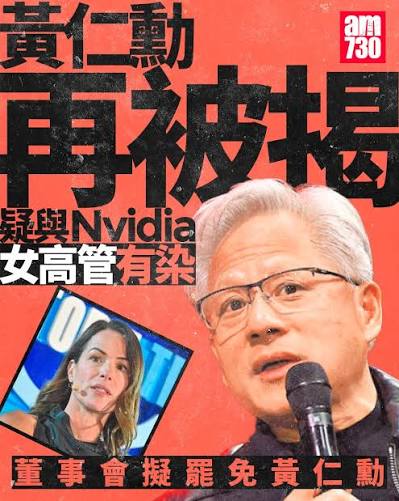
NVIDIA announced on the evening of November 12 that co-founder Jensen Huang has resigned as president, CEO, and board member, effective immediately. The 63-year-old founder, who led the company for 33 years, stepped down after a scandal involving extramarital affairs. The board accepted his resignation on November 11, and Huang also exited the board entirely, giving up all director seats. Huang co-founded NVIDIA in 1993 and built it into a core supplier for the AI boom, with the company's market value once reaching about $4 trillion. He holds roughly 3.6% of NVIDIA shares, making him the fourth-largest shareholder. NVIDIA has appointed CFO Colette Kress as interim CEO until the board selects a permanent successor. Kress will continue as executive vice president and CFO while serving as interim CEO. At the board level, Harvey C. Jones, former Synopsys CEO and a director since 1993, became the company's first board chairman. Previously, NVIDIA had no independent board chair, with Huang holding both CEO and board seats. The board will search for a permanent CEO both internally and externally. Jones said the board has full confidence in Kress and the management team and expects operations, customer commitments, and the product roadmap to be unaffected. Colette Kress, born in 1967 in the U.S. and about 59, is NVIDIA's long-serving EVP and CFO. Her appointment makes her the first female leader in NVIDIA's history. She holds a bachelor's degree in finance from the University of Arizona and an MBA from SMU's Cox School of Business. She began her career at Texas Instruments, working about eight years in various finance roles, then joined Microsoft in 1997 for 13 years, becoming CFO of the Server and Tools Division in 2006. In 2010 she moved to Cisco as senior VP and CFO of its business technology and operations finance organization. In September 2013, recruited personally by Huang, she joined NVIDIA as EVP and CFO, when annual revenue was only about $4.13 billion. During her 13 years, NVIDIA transformed from a gaming graphics maker into a global AI and accelerated computing leader, with revenue soaring from $4.13 billion in fiscal 2014 to $215.9 billion in fiscal 2026, about 52 times growth. In July 2025, thanks to her NVIDIA shares, she became a billionaire with net assets of about $1–1.2 billion. She received the Silicon Valley Business Journal's CFO of the Year award in 2016 and has repeatedly appeared on Forbes and Fortune most powerful women lists. NVIDIA shares fell sharply after the resignation news. After The Wall Street Journal reported the board was preparing to force Huang out, the stock dropped over 9% in after-hours trading; at the U.S. open it continued falling, briefly breaking below $150 to a new low since June 15, before narrowing losses to about $160. Dan Ives of Yorkville Ives said the investigation is a blemish for Huang, could trigger congressional probes, and that he risked being ousted, pressuring the stock. Huang's departure stems from two reports of extramarital affairs. On Sunday, November 8, Huang emailed employees admitting infidelity to his wife and apologizing to employees, the board, and shareholders. The board announced an investigation by a committee of independent directors with outside counsel, saying there was no reason to believe company secrets leaked. On Wednesday, November 11, The New York Times reported Huang had a romantic relationship with Kimberly Powell, NVIDIA's vice president of healthcare, both married, with Powell reporting to Huang; the report said intimate behavior was filmed at a San Jose hotel in March. The Wall Street Journal then reported the board was preparing to force Huang out. CBS cited sources saying the Trump administration was aware. CNBC confirmed the board met that night to discuss whether to remove Huang, with the meeting running into the evening. The next day, NVIDIA announced Huang's resignation.

Odaily星球日报4h ago

Jensen Huang Resigns, CFO Appointed as NVIDIA Interim CEO — Who Is Kress?

Odaily星球日报4h ago

Farewell, Jensen Huang

Nvidia founder and CEO Jensen Huang has resigned from his roles as president, CEO, and board director, effective immediately, following revelations of an extramarital affair with an executive who directly reported to him. The scandal, which began surfacing in late October, escalated rapidly after Huang issued an internal apology letter on November 8 admitting infidelity. Nvidia's stock has plunged, wiping out roughly $450 billion in market value, with analysts warning of potential further losses exceeding $1 trillion if leadership instability persists. Huang's wife may pursue divorce proceedings under California's community property law, potentially resulting in a settlement of $62.6–81.1 billion—possibly the most expensive divorce in history. CFO Colette Kress has been appointed interim CEO while the board searches for a permanent successor, and Harvey C. Jones has been named the company's first board chairman. Huang co-founded Nvidia in 1993 and built it into the world's most valuable chip company, pioneering the CUDA architecture that enabled the AI revolution. His unusually flat management structure—with roughly 60 executives reporting directly to him and no public succession plan—has left the company vulnerable at a critical moment. Given that major tech giants like Google, Microsoft, OpenAI, and Anthropic depend heavily on Nvidia's chips for their AI ambitions, Huang's departure raises urgent questions about whether the AI industry is prepared for an Nvidia without its longtime leader.

marsbit4h ago

Farewell, Jensen Huang

marsbit4h ago

Trading

Spot
活动图片