Bitcoin slips from $80K as gold cools with falling US bond yields

cointelegraphPublicado em 2026-08-25Última atualização em 2026-08-25

Resumo

Bitcoin declined below $80,000 as U.S. trading began, retreating from a recent 14-week high of $81,265. Gold also fell nearly 2%, dropping alongside Bitcoin as U.S. equity markets posted modest gains, continuing a recent divergence. The moves coincided with a drop in U.S. 30-year Treasury bond yields toward three-week lows. Analysts note the $80,000 level remains a key resistance area for Bitcoin. Market attention now turns to upcoming U.S. Personal Consumption Expenditures (PCE) inflation data and Nvidia's earnings report, both due Wednesday, as potential catalysts for volatility. Commentary suggests the Federal Reserve is unlikely to cut interest rates soon, with direct bond market intervention seen as a more probable tool to manage yields in the current environment.

Bitcoin (BTC) fell below $80,000 into Tuesday’s Wall Street open as crypto and gold gave way to gains in US equities.


Key points:


  • Bitcoin upside momentum fizzles as $80,000 proves difficult to flip to support.
  • Gold joins BTC price downside after multimonth highs of $4,697 per ounce as US 30-year bond yields target three-week lows.
  • Attention switches from bonds to US inflation data and Nvidia earnings tomorrow.


Bitcoin price struggles to cement $80,000 reclaim


Data from TradingView showed BTC/USD falling as low as $78,111 on Bitstamp after reaching new 14-week highs of $81,265.
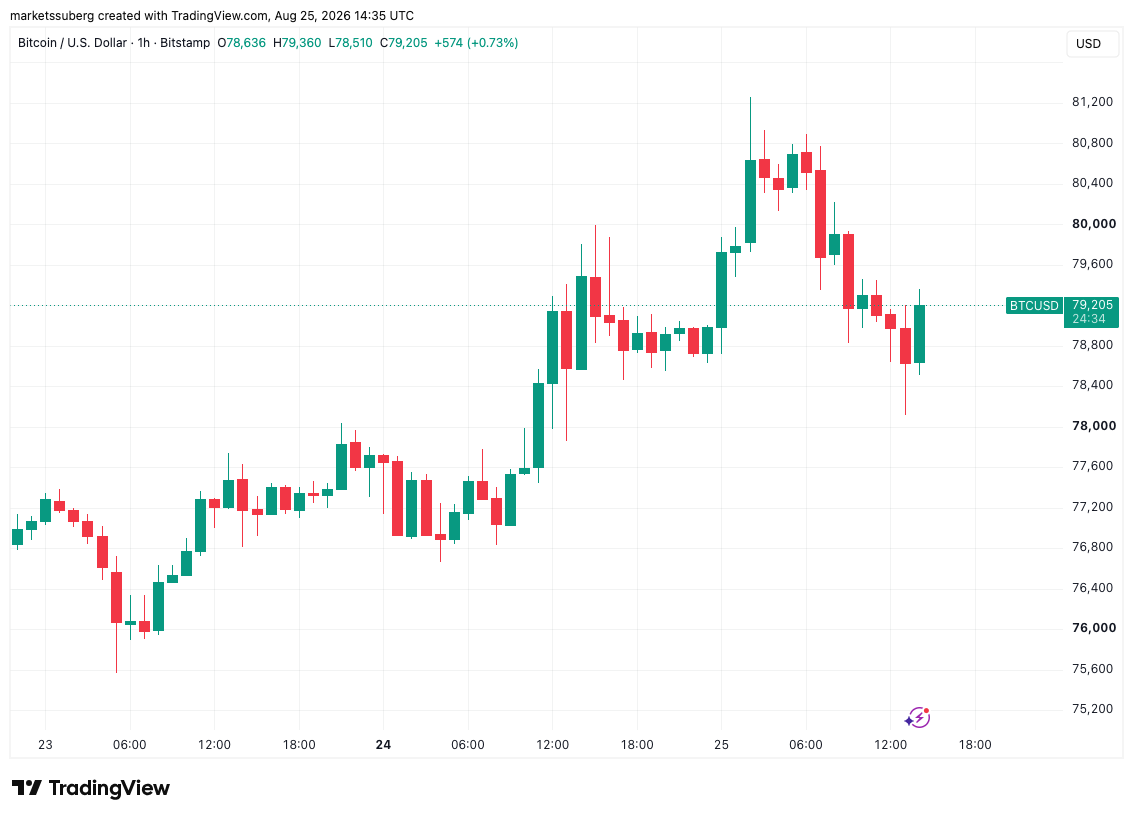

BTC/USD one-hour chart. Source: Cointelegraph/TradingView


The $80,000 zone, which traders previously earmarked as an area of strong sell pressure, proved difficult to reclaim as US trading hours appeared to increase downside across both Bitcoin and gold. XAU/USD saw local lows of $4,605 per ounce, down nearly 2% on the day.
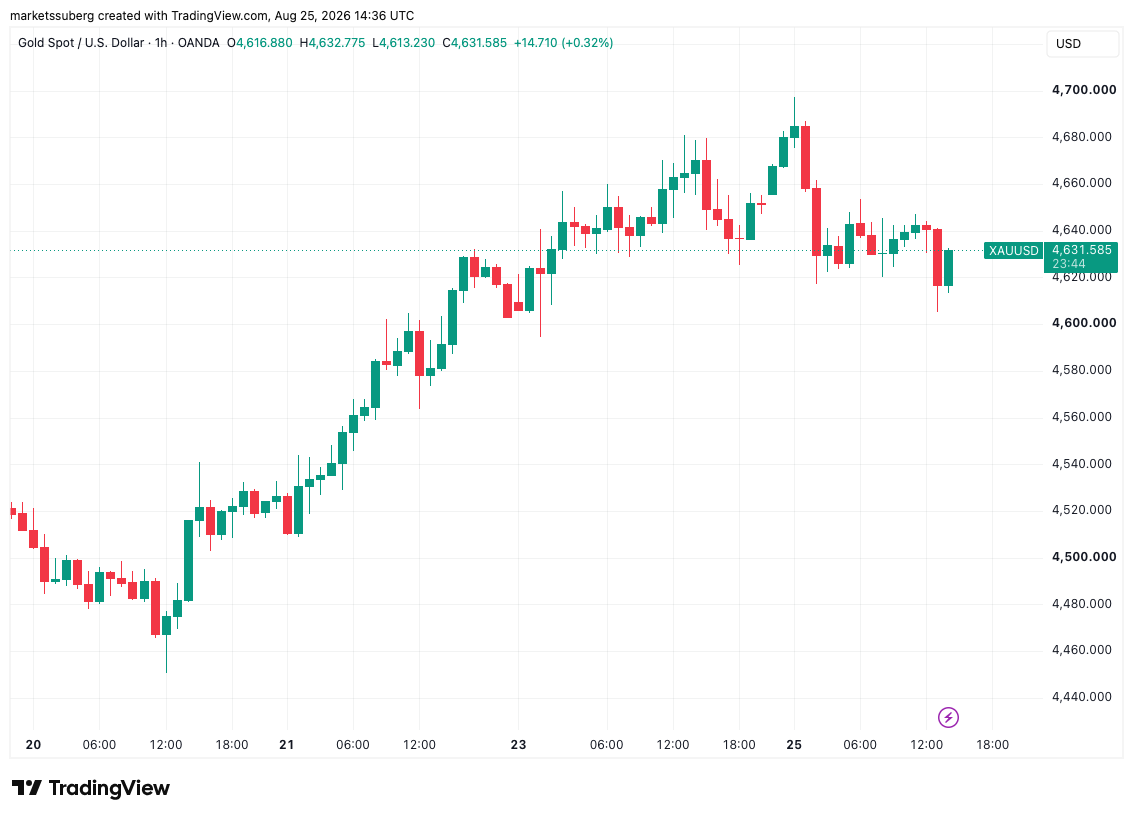

XAU/USD one-hour chart. Source: Cointelegraph/TradingView


US stocks moved inversely to gold and crypto last week, coming under pressure as both rallied. This divergence has continued this week, with the S&P 500 and Nasdaq Composite Index posting modest daily gains of 0.2% and 0.5%, respectively.
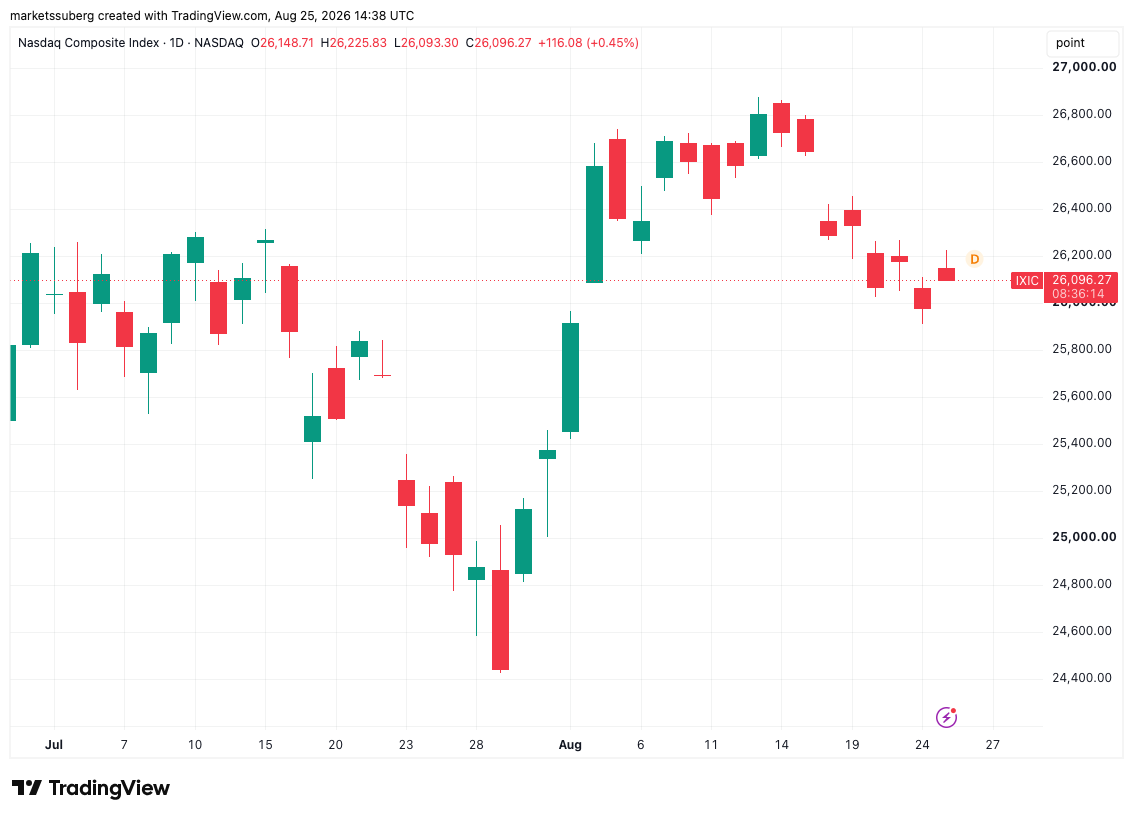
Nasdaq Composite Index one-day chart. Source: Cointelegraph/TradingView


The comparative strength appeared to mostly brush off a brewing trade-tariff spat between the US and Canada in which negotiations recently broke down. In his latest posts on Truth Social, US president Donald Trump accused Canada of “ripping off” the US.


“Over the last 10 years, the United States lost, on average, 60 Billion Dollars a year with Canada. No more!” he pledged.


US government bond yields continued to cool on the day, with 30-year yields dropping below 5.2% and eyeing their lowest levels since Aug. 7. Last week’s crypto surge came as yields hit heights not seen since January 2007 and the US Treasury announced bigger debt buyback operations to tame the upside.
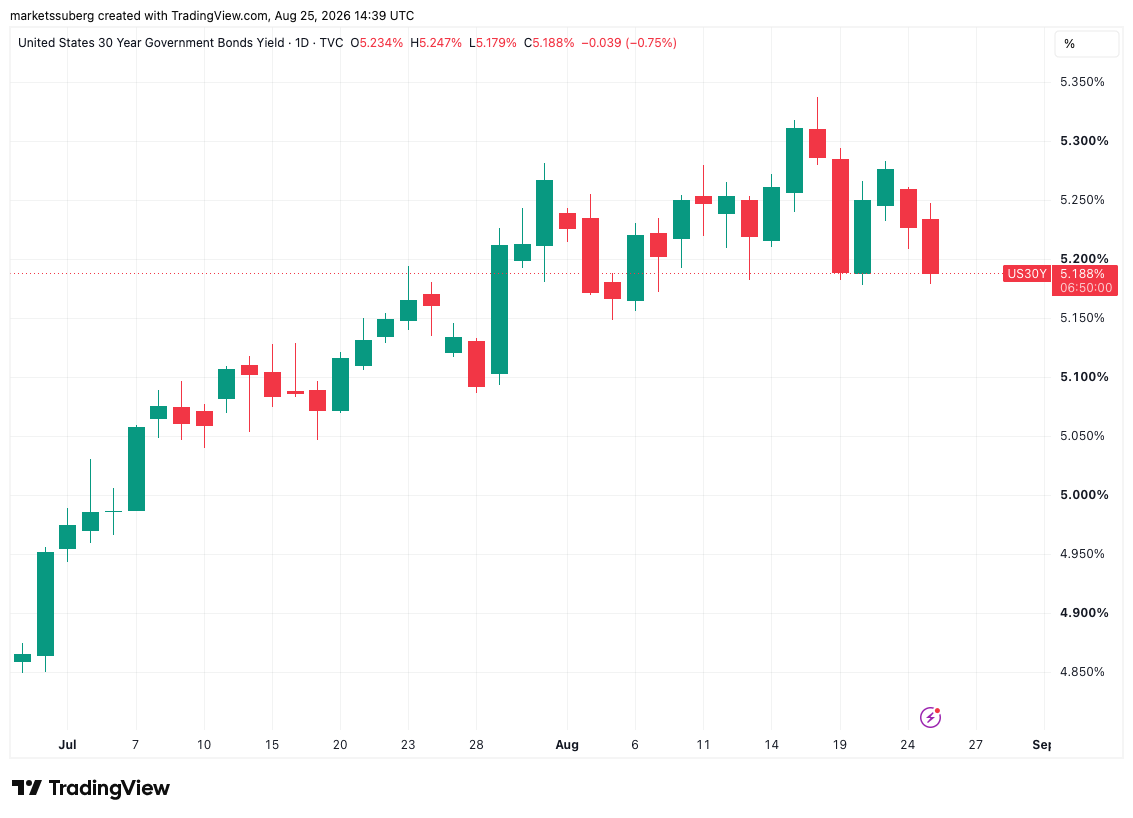

US 30-year bond yield one-day chart. Source: Cointelegraph/TradingView


Commenting on the prospect of further bond-market interventions in the future, trading resource The Kobeissi Letter suggested that interest-rate cuts — a key potential liquidity driver for crypto markets — were not an option in the current inflation environment.


“The reality is that the Fed cannot cut rates in this environment and the Trump Administration knows this. So, direct bond market intervention is the only solution to drive interest rates and yields lower over the short-run,” it wrote in a post on X.


“Our view? Don’t fight the Treasury.”


As Cointelegraph reported, market consensus calls for an ongoing rate-hike freeze at the Fed’s September meeting, with the odds of this outcome currently at 61.9%, per data from CME Group’s FedWatch Tool.
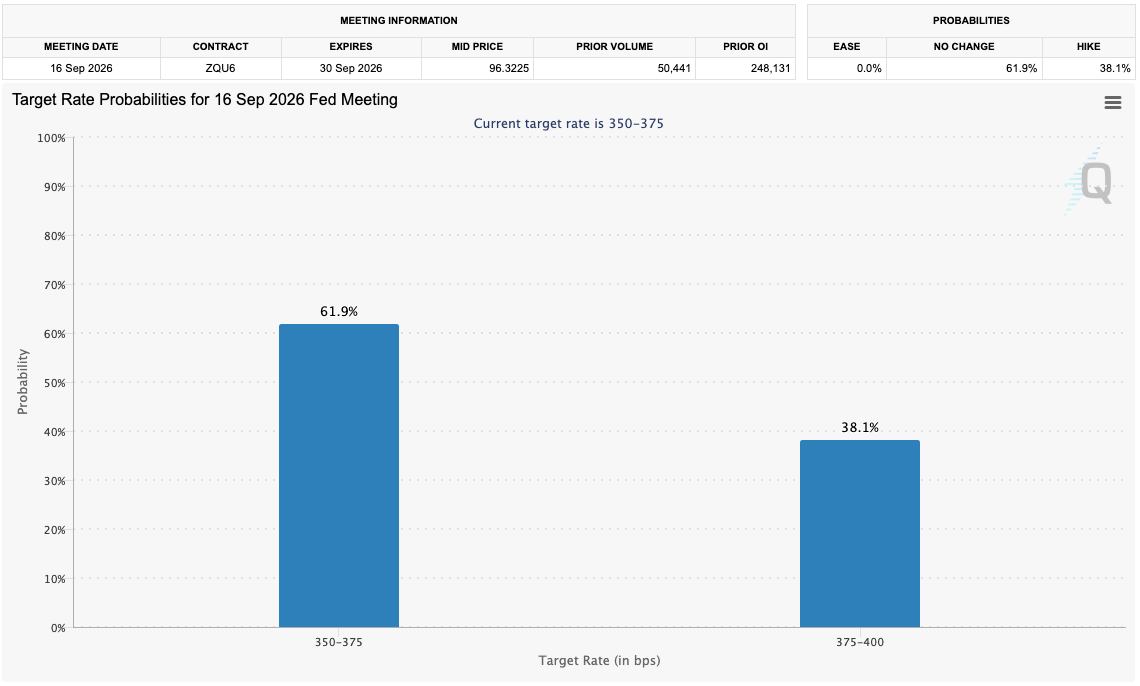

Fed target-rate probabilities for September FOMC meeting (screenshot). Source: CME Group


PCE, Nvidia earnings on the radar

Discussing the immediate macro outlook, trading firm QCP Capital shifted the focus away from the Treasury toward fresh US inflation data and the Fed’s Jackson Hole economic symposium, taking place from Aug. 27-29.

Related: First bear-market trend line reclaim since 2025: Five things to know in Bitcoin this week

Wednesday will see the July print of the Personal Consumption Expenditures (PCE) index, known as the Fed’s preferred inflation gauge, which saw its first month-on-month decrease since 2020 past June. Tech giant Nvidia, meanwhile, will also report earnings on Wednesday, adding another potential risk-asset volatility catalyst.



Perguntas relacionadas

QWhat are the key price levels for Bitcoin and gold mentioned in the article as of Tuesday's Wall Street open?

ABitcoin fell below $80,000, reaching lows around $78,111 after a high of $81,265. Gold (XAU/USD) saw local lows of $4,605 per ounce, down nearly 2% from its multi-month highs of $4,697.

QAccording to the article, what happened to US government bond yields and why is it significant?

AUS 30-year bond yields dropped below 5.2%, targeting their lowest levels since August 7th. This is significant because last week's crypto surge coincided with high yields, and the cooling yields now accompany pullbacks in Bitcoin and gold, shifting market focus.

QWhat two major upcoming events does QCP Capital highlight as shifting market focus away from the Treasury?

AQCP Capital highlights the release of the July Personal Consumption Expenditures (PCE) index inflation data and the Federal Reserve's Jackson Hole economic symposium (August 27-29) as the immediate macro focus.

QWhat does The Kobeissi Letter suggest is the only solution to lower interest rates and yields in the short run, according to the article?

AThe Kobeissi Letter suggests that direct bond market intervention by the Treasury is the only solution to drive interest rates and yields lower in the short run, as the Fed cannot cut rates in the current inflation environment.

QWhat is the current market consensus regarding the Federal Reserve's action at its September meeting, based on CME Group's FedWatch Tool?

AThe market consensus, based on CME Group's FedWatch Tool, calls for an ongoing rate-hike freeze at the Fed's September meeting, with the odds of this outcome currently at 61.9%.

Leituras Relacionadas

Morpho Leads on Ethereum, Solana Steers DeFi TVL as Market Concentrates on Five Top Curators

A report from vaults.fyi on August 24 indicates that managed DeFi vaults hold $11.29 billion, with over two-thirds controlled by just five curator firms. Despite differing total figures from DefiLlama due to methodology, both agree on high market concentration. The vaults.fyi study, covering 856 vaults, 131 curators, and 18 protocols as of August 20, shows 69.3% of the market is managed by the top five curators. Managed assets now represent 12.51% of total DeFi TVL, up from 5.24% a year ago. Morpho leads the sector, managing nearly half (46.2%) of all curated capital across Ethereum and Solana, thanks to its Morpho Blue and MetaMorpho systems that separate lending from risk management. Its dominance attracts traditional finance players like Bitwise Asset Management, which predicts on-chain vault assets ("ETF 2.0") will double by 2026. Rankings have shifted significantly in the past year. New entrants Concrete and Sentora now rank in the top five, while Usual fell from 4th to 34th place, partly due to stress events weeding out weaker managers. A separate DefiLlama report from July, using Sentora data, confirms the trend, with the top three curators controlling 75.9% of its measured $7.18 billion TVL. Major traditional firms are entering the space: Apollo with Securitize, Midas with Fasanara, and JPMorgan Chase launching tokenized money market fund vaults. Trading firm Wintermute also launched its Armitage curation platform. This growth occurs despite a sharp increase in DeFi exploits, with TRM Labs reporting 207 incidents in H1 2026, more than double the 83 in the same period of 2025.

cryptonews.ruHá 2m

Morpho Leads on Ethereum, Solana Steers DeFi TVL as Market Concentrates on Five Top Curators

cryptonews.ruHá 2m

Trading

Spot
活动图片