Financial Changes under the New SEC Rules: Opportunities and Regulatory Red Lines Behind "Tokenized Stocks"

链捕手Publicado em 2026-05-22Última atualização em 2026-05-22

Resumo

The article discusses the emergence of "Tokenized Stocks" following the U.S. SEC's proposed "innovation exemption" framework, which could allow some assets to be traded on blockchain. It clarifies key misconceptions for investors, particularly those in China. Firstly, it emphasizes that most "tokenized stocks" currently offered by third-party crypto platforms are synthetic assets, not actual equity. Purchasers do not gain shareholder rights like dividends or voting; instead, they hold a derivative contract dependent on the issuing platform's credit and its ability to track the underlying stock's price. The article examines the risks of 24/7 trading, a major selling point. It notes the absence of circuit breakers, which could lead to sudden, unrecoverable losses during off-hours market shocks. It also warns of liquidity traps and high volatility due to the market's currently small size. It reveals that the primary drivers are institutional players like BlackRock and JPMorgan, who are focused on using blockchain for efficiency gains in areas like treasury settlements (T+0), not retail speculation. For Chinese readers, it strongly cautions that platforms offering "easy" access to U.S. stocks via tokens with RMB likely violate strict domestic regulations on cross-border securities and virtual currencies, offering no legal protection. The conclusion offers practical advice: use legal channels like QDII for long-term investment, be wary of high-return promises, monitor evolving...

Source | Digital Financial Report Author | Yi He

Recently, a new term has emerged in the global financial circle—"Tokenized Stocks".

The reason is that the U.S. SEC (Securities and Exchange Commission) is advancing an "innovation exemption" framework, allowing some assets to be traded on the blockchain. Suddenly, social media feeds are filled with claims like "ordinary people can buy Tesla stock 24/7" and "earn USD while lying down".

As rational observers, we must look beyond the noise to see the essence: Is this truly progress in financial technology, or is it a new round of a risky game? Especially for domestic investors, the boundaries here must be clarified.

Essence: You Are Not Buying Stock, But a "Certificate"

When many friends hear "buy Apple's token," their first reaction is that they have become Apple shareholders. This is a huge cognitive misconception.

Current "tokenized stocks" mainly fall into two categories:

  • Official Version (Issuer-Sponsored): Apple itself issues tokens, and you possess shareholder rights (dividends, voting).

  • Third-Party Version (Currently Mainstream): These are "synthetic assets" issued by crypto platforms.

Here’s the key point: Many of the items SEC is "exempting" this time are third-party tokens.

This means you are not buying Apple stock, but rather a "betting agreement" issued by a platform. You may not receive dividends or voting rights. Your returns depend entirely on the platform's creditworthiness and its ability to peg the underlying asset.

Banker's Note: Buying stock is buying a company's future; buying a "token" may be buying a platform's ability to fulfill its contract. The risk levels are worlds apart.

The Truth: Is 24/7 Trading "Sweetness" or "Poison"?

" 7 days a week, 24 hours a day trading" sounds very tempting, making you feel you can seize opportunities anytime. But in the eyes of financial veterans, this is often a double-edged sword.

1. The Lost Safety Net—Circuit Breakers

Why do traditional stock markets have circuit breakers? To prevent panic stampedes. If Tesla had bad news on a weekend, the traditional market would halt trading to let everyone calm down, but the on-chain market has no pause button. Your assets could evaporate by 30% while you sleep, with no way to recover.

2. The Liquidity Trap

The current scale of this market is still very small (only a tiny fraction of the traditional stock market). Without large funds to absorb trades, this "round-the-clock trading" is often accompanied by extremely high slippage and violent volatility.

⚠️ Risk Warning: The IMF (International Monetary Fund) has long warned that unregulated round-the-clock trading could amplify financial contagion risks. This is not a "fleece the sheep" playground, but an arena for institutional warfare.

Game Within a Game: Who Is Pushing It? Who Pays the Bill?

The protagonists of this wave are not retail investors, but Wall Street giants.

Institutions like BlackRock and JPMorgan Chase are making moves, but they are focusing on "compliant tokenized Treasury bonds." Their goal is to use blockchain technology to improve settlement efficiency (from T+2 to T+0), not to let you speculate.

The "tokenized stocks" that retail investors see are more often derivatives launched by cryptocurrency platforms to attract traffic.

Special Reminder (for domestic readers):

  • Domestic regulations have strict legal stipulations regarding virtual currencies and cross-border securities.

  • Any platform claiming "no U.S. stock account needed, buy U.S. stock tokens directly with RMB" is highly likely to be involved in illegal cross-border stock trading or illegal fundraising.

  • Participating in such "on-chain trading" not recognized by domestic regulators means that if disputes arise, the law may struggle to protect your rights.

A "Risk-Avoidance" Guide for Ordinary People

If you are interested in this field, please be sure to keep the following suggestions in mind:

1. Distinguish Between "Investment" and "Speculation"

If you are investing for the long-term value of Apple or Tesla, please go through legitimate domestic QDII channels or open an account with a regular U.S. stock broker. Don't touch those "synthetic tokens" whose underlying assets are unclear just for so-called "convenience."

2. Beware of "High-Return" Rhetoric

Anyone promising to let you "earn money lying down on weekends" through tokenized stocks is most likely trying to make money from your fees or harvest your principal. Remember: the higher the return, the more exponentially the risk rises.

3. Pay Attention to Regulatory Signals

Currently, the U.S. CLARITY Act is still being debated, and the regulatory wind can change at any time. For financial products that are highly sensitive to policy, "if you don't understand it, don't touch it" is the best risk control.

Conclusion

Financial innovation is always a double-edged sword. The SEC's current attempt is more of a "regulatory experiment" by the U.S. to compete for dominance in fintech.

But for us in Shanghai (or other domestic cities), compliance will always be the first threshold for investment. Before jumping into these seemingly sparkling "new waters," please confirm whether you are wearing a life jacket and whether these waters allow you to swim.

In the world of investment, surviving long is more important than earning fast.

Original article link

Perguntas relacionadas

QWhat are the two main types of 'Tokenized Stocks' mentioned in the article, and what is the key difference?

AThe two main types are: 1) Official version (Issuer-sponsored): Tokens issued by the company itself (e.g., Apple), granting holders shareholder rights like dividends and voting. 2) Third-party version (currently mainstream): These are 'synthetic assets' issued by crypto platforms. The key difference is that with third-party tokens, buyers do not own the underlying stock or its rights (dividends, voting); instead, they hold a derivative contract whose value depends on the platform's creditworthiness and its ability to track the asset's price.

QWhat are the major risks associated with the '24/7 trading' feature promoted for tokenized stocks?

AThe '24/7 trading' feature carries significant risks: 1) Lack of protective mechanisms like market-wide circuit breakers (trading halts), which means assets could lose substantial value overnight without any chance for intervention. 2) Liquidity traps and high slippage due to the current small market size, leading to extreme price volatility. The IMF has warned that such unregulated, continuous trading can amplify financial contagion risks.

QAccording to the article, who is primarily driving the current tokenization trend, and for what purpose?

AThe current trend is primarily driven by Wall Street giants like BlackRock and J.P. Morgan. However, they are focusing on tokenizing compliant assets like U.S. Treasuries. Their main goal is to leverage blockchain technology to improve settlement efficiency (e.g., moving from T+2 to T+0), not to facilitate speculative retail trading of tokenized stocks.

QWhat specific warnings does the article give to readers in mainland China regarding tokenized stocks?

AThe article gives several strict warnings for readers in mainland China: 1) Chinese regulations strictly govern virtual currencies and cross-border securities. 2) Platforms claiming to allow the purchase of 'U.S. stock tokens' with RMB without a U.S. brokerage account are highly likely to be involved in illegal cross-border stock trading or fundraising. 3) Participating in such unregulated 'on-chain trading' is risky; in case of disputes, it will be very difficult to obtain legal protection.

QWhat core advice does the article offer to ordinary individuals interested in this field?

AThe article offers three key pieces of advice: 1) Distinguish between 'investment' and 'speculation'. For long-term investment in companies like Apple or Tesla, use legal domestic channels (e.g., QDII funds) or legitimate U.S. brokerage accounts, avoiding opaque 'synthetic tokens'. 2) Be wary of 'high-return' narratives. Promises of easy weekend profits often aim to collect fees or capital. Higher potential returns come with exponentially higher risks. 3) Monitor regulatory signals. Given the evolving regulatory landscape (e.g., the U.S. CLARITY Act), the best risk control for highly policy-sensitive products is: 'If you don't understand it, don't touch it.'

Leituras Relacionadas

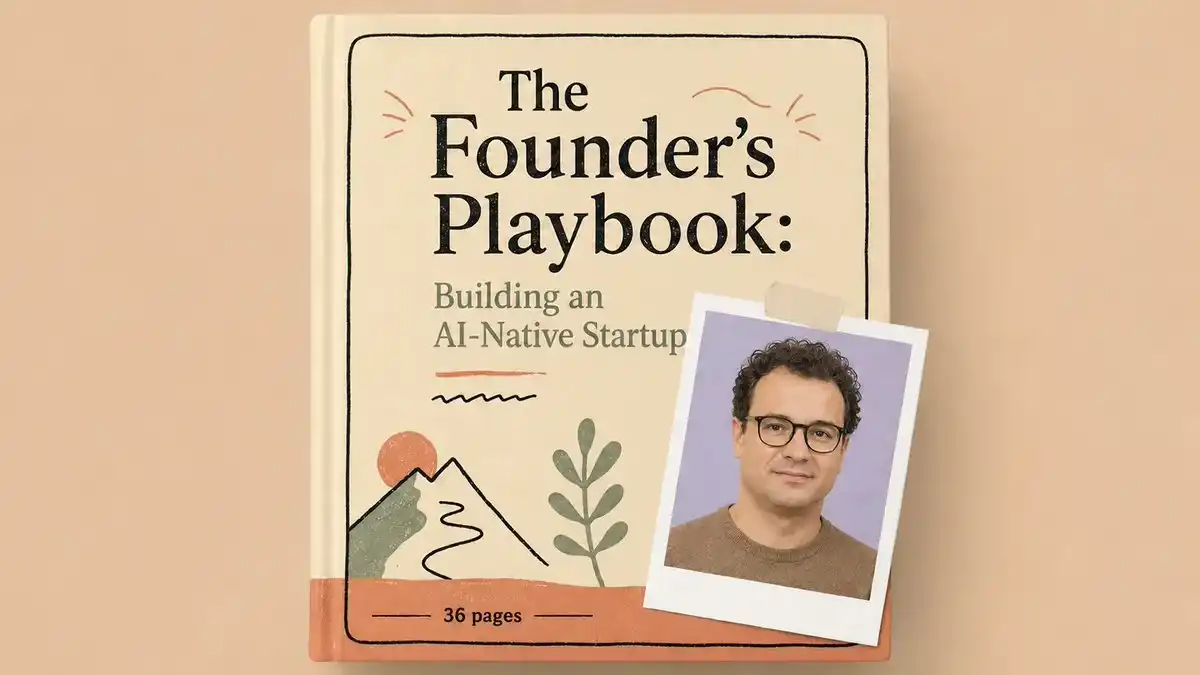
Anthropic Major Release: "The Founder's Playbook" - All 4 Stages of Entrepreneurship, Completely Reimagined with AI

**Anthropic Releases "The Founder's Playbook," Reimagining the Four Stages of Startups with AI** The logic of entrepreneurship is being fundamentally reshaped by AI. Anthropic's new handbook, "The Founder's Playbook: Building an AI-Native Startup," defines the AI-native startup as a new species: not a traditional company with AI tools, but a venture driven by AI from day one. The founder's role is transforming from a hands-on builder to a conductor or architect, orchestrating AI agents for execution while focusing on high-level judgment and strategy. Anthropic outlines a product matrix of Claude tools for different tasks: Claude Chat for interactive research, Claude Code for generating production-ready code, and Claude Cowork for automating knowledge-intensive workflows. The handbook structures the startup lifecycle into four stages, detailing core goals, pitfalls, and AI applications for each: 1. **Idea Stage**: Focuses on validating a real problem. The core challenge is avoiding confirmation bias. AI practices include using Claude as a "structured devil's advocate" to challenge assumptions and for automated market/competitor research. 2. **MVP Stage**: Aims to gather early signals of Product-Market Fit (PMF). Key risks are technical debt and scope creep due to rapid AI-assisted development. Recommended AI uses include maintaining project memory documents (e.g., CLAUDE.md), using Claude Code for structured coding, and automating user feedback analysis. 3. **Launch Stage**: Centers on establishing scalable growth, operations, and compliance. Challenges include accelerating technical debt and founders becoming bottlenecks. AI should be used to build an "operating system" for launch—automating routine tasks (scheduling, reporting, content) and code audits—freeing founders for critical decisions. 4. **Scale Stage**: Focuses on achieving sustainable business operations. The main challenge is delegating operational control. AI should be leveraged for differentiated marketing, operational optimization, and building competitive moats through data network effects. The handbook concludes that in the AI era, "Can we build it?" is no longer the primary constraint. The advantage shifts back to foundational strengths: **insight, judgment, and a deep understanding of a specific problem and audience.**

marsbitHá 4h

Anthropic Major Release: "The Founder's Playbook" - All 4 Stages of Entrepreneurship, Completely Reimagined with AI

marsbitHá 4h

Eight Departments Launch Severe Crackdown on Cross-Border Securities Firms, How to Interpret This?

China's top financial regulators, including the CSRC and seven other ministries, have launched a sweeping crackdown on unlicensed cross-border securities operations. The core action involves a joint enforcement plan and the issuance of administrative penalties against major offshore internet brokers like Futu and Tiger Brokers for conducting unauthorized securities business in mainland China without a domestic license. The primary legal basis is China's requirement for securities businesses to operate with proper, locally issued licenses. The crackdown aims to eliminate a major regulatory gray area, plugging channels that allowed massive, unmonitored capital outflows which posed risks to financial stability, currency controls, and foreign exchange reserves. It also seeks to protect mainland investors who previously lacked legal recourse when dealing with offshore platforms and to secure sensitive financial data. The immediate impact is severe for the targeted brokers, including a complete ban on new mainland business, forced liquidation of existing mainland client positions over two years, and the confiscation of illegal profits estimated in the billions. Their U.S.-listed shares plummeted in response. Market analysts warn that the forced sell-off of an estimated 250-280 billion RMB in assets, concentrated in U.S. tech stocks, Chinese ADRs, and Hong Kong equities, could create sustained selling pressure on these markets over the next two years, potentially lowering valuations. For mainland investors, legal cross-border investment channels will become extremely constrained. The high asset threshold for the Stock Connect program and the severe shortage of QDII fund quotas—leading to chronic high premiums on popular U.S.-focused ETFs—mean retail access to overseas markets like the U.S. will be sharply limited. Conversely, some of the returning capital may flow into domestic A-share sectors like AI, semiconductors, and advanced manufacturing. However, this could further inflate valuations in these already elevated sectors. In conclusion, regulators frame this move not as closing off cross-border investment, but as a necessary step to enforce compliance, manage systemic risk, and steer investors toward regulated, protected channels like QDII and Stock Connect for the long-term health of the financial system.

链捕手Há 4h

Eight Departments Launch Severe Crackdown on Cross-Border Securities Firms, How to Interpret This?

链捕手Há 4h

Trading

Spot
Futuros
活动图片