China Turns To Interest Rates To Kick-Start Digital Yuan Adoption

bitcoinistPublicado em 2025-12-30Última atualização em 2025-12-30

Resumo

China will allow commercial banks to pay interest on digital yuan (e-CNY) wallet balances starting January 1, 2026, shifting the digital currency from a cash-like instrument to a deposit-like asset. The People’s Bank of China (PBOC) introduced the new framework, which brings e-CNY under deposit insurance protection and requires non-bank payment providers to hold full reserves. By November 2025, e-CNY recorded 3.48 billion transactions totaling ¥16.7 trillion ($2.37 trillion). The move may influence where consumers and businesses store funds, as interest-bearing e-CNY becomes more attractive. Banks may face higher operational costs but could benefit from reduced nonbank platform deposits. The policy also strengthens cross-border testing and regulatory oversight.

According to reports, China will let commercial banks pay interest on balances held in digital yuan wallets starting January first, 2026.

The People’s Bank of China has laid out a new framework that moves the e-CNY from a cash-like tool to something closer to a bank deposit. Lu Lei of the PBOC is named in official notices about the change.

Banks To Pay Interest On e-CNY

Based on reports, holders of merchant or personal digital wallets will earn interest calculated by the banks that run those wallets.

The move requires banks to treat digital yuan holdings more like deposits, and it brings those balances under China’s deposit insurance protections. Reports say non-bank payment firms that operate wallets must keep 100% reserves for the e-CNY they manage.

Adoption Numbers And Rules

According to official figures cited in media coverage, by November 2025 there were about 3.48 billion e-CNY transactions with a combined value near ¥16.7 trillion — roughly $2.37 trillion.

The new policy links interest payments to existing deposit rate arrangements, which means interest rates on e-CNY will be set in line with how banks price other deposit accounts.

Observers have pointed out that the change could shift where consumers keep money, since insured, interest-bearing e-CNY becomes more attractive for storing funds.
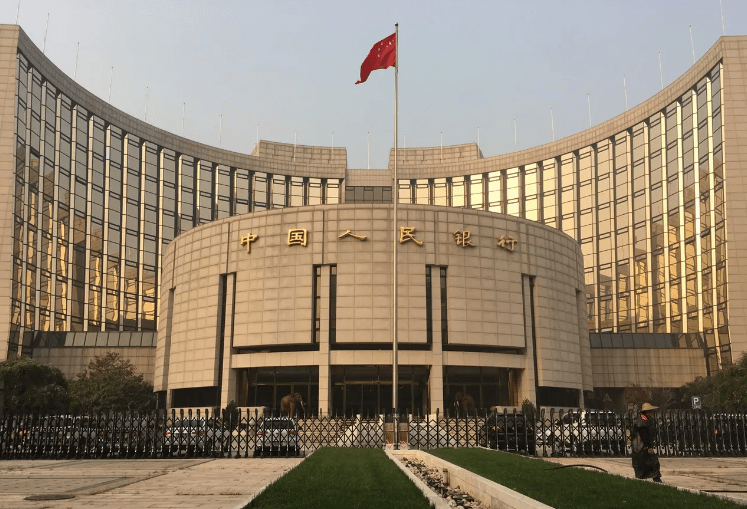
The People's Bank of China. Image: Fintech Futures

Reports have disclosed that digital yuan wallets will be subject to rules similar to those for regular bank accounts. Deposit insurance will apply, and reserve and reporting requirements will be tightened for third-party payment providers.

The PBOC framework also sets clearer rules for cross-border testing that was already under way with partners such as Singapore, Thailand, Hong Kong, the UAE and Saudi Arabia.

Banking And Policy Impact

Banks will need to adapt systems for interest calculation and for clearing e-CNY transactions at scale, which could increase operational costs in the short term. That said, some costs may be offset if more money flows into e-CNY wallets and fewer funds stay in nonbank payment platforms.

Total crypto market cap currently at $2.95 trillion. Chart: TradingView

Monetary authorities will watch how these flows interact with the broader money supply and lending operations, because shifts in where deposits sit can affect credit channels.

For everyday users, the most direct change is that holding e-CNY could earn interest and enjoy the same insurance protection as deposits. For businesses, payment settlement may become cheaper or faster depending on how banks price services.

Reports suggest regulators aim to keep the system safe by demanding full reserves from third-party operators and clearer oversight by banks.

Based on reports and official statements, the change takes effect on January 1, 2026, and it marks a major step in China’s long running e-CNY program. Regulators, banks and users will all be watching how interest rules are applied and whether the shift leads to wider use of the digital currency.

Featured image from Unsplash, chart from TradingView

Perguntas relacionadas

QWhen will commercial banks start paying interest on digital yuan wallet balances in China?

AJanuary 1, 2026.

QWhat is the People's Bank of China (PBOC) transforming the e-CNY into with this new framework?

AIt is moving the e-CNY from a cash-like tool to something closer to a bank deposit.

QHow will the interest on e-CNY wallets be calculated and set?

AInterest will be calculated by the banks that run the wallets and will be set in line with how banks price other deposit accounts.

QWhat protection will digital yuan wallet balances receive under the new policy?

AThey will be brought under China’s deposit insurance protections.

QWhat are the operational implications for banks due to this new policy?

ABanks will need to adapt systems for interest calculation and clearing e-CNY transactions at scale, which could increase operational costs in the short term.

Leituras Relacionadas

From Holding to Controlling: When Bitcoin Starts 'Buying Listed Companies'

From Holding to Controlling: When Bitcoin Starts "Buying Listed Companies" In a landmark event, Bitcoin has entered the capital structure of a publicly traded company as a form of capital contribution for the first time. On February 4, Nasdaq-listed insurance brokerage Tianruixiang Holdings announced that an undisclosed investor would contribute 15,000 Bitcoin in exchange for equity in the company. Valued at approximately $1.125 billion (based on Bitcoin's price of $75,000 at the time), this transaction marks a historic shift. This is not about buying a Bitcoin ETF, holding BTC, or issuing debt to purchase Bitcoin. It represents a direct exchange of Bitcoin for equity in a listed company. Over the past two years, a profound change has been underway: Bitcoin is systematically entering the balance sheets of public companies. Companies like MicroStrategy (now Strategy) have fundamentally altered traditional corporate logic. They no longer operate solely based on their core business but function as financial vehicles, continuously issuing stock and convertible bonds to raise capital for purchasing Bitcoin. This has given rise to a new type of entity: the **Bitcoin Treasury Company**. Other examples include Japan's Metaplanet, and U.S.-based firms like Twenty One Capital and Bitcoin Standard Treasury. A significant阵营 (camp) of publicly traded companies now holds substantial Bitcoin, including: * Strategy (formerly MicroStrategy): over 710,000 BTC * Major miners like MARA, Riot, and Hut 8 * Exchanges like Coinbase and Bullish * Bitcoin treasury companies * Tech and payment firms like Tesla and Block Their commonality is that they have integrated Bitcoin as a fundamental part of their capital structure. The Tianruixiang deal represents an evolution of this trend. Upon completion, the company would hold more Bitcoin than Coinbase, making it a top-tier Bitcoin treasury. Crucially, this isn't a case of "using fiat to buy Bitcoin," but rather resembles using Bitcoin to effectively "acquire a Nasdaq-listed shell company." This structure transforms the transaction from a simple investment into a form of **reverse merger by crypto assets into traditional capital markets**. Bitcoin is no longer merely held; it is being used to **restructure ownership itself**. A clear path is emerging: from MicroStrategy's massive holdings to miners, exchanges, and treasury companies, and now to direct equity-for-Bitcoin swaps, **Bitcoin is reconstructing the "public company network."** When this system becomes large enough, Bitcoin will evolve beyond a "crypto asset" into a financial infrastructure embedded within the global capital system. *Content is for informational purposes only and not investment advice. Markets are risky; investments should be made cautiously.*

marsbitHá 5m

From Holding to Controlling: When Bitcoin Starts 'Buying Listed Companies'

marsbitHá 5m

Don't Just Focus on Yi Lihua, These Whales' Moves During the Crash Are More Worth Watching

Amid a sharp crypto market downturn, Bitcoin fell over 15% in 24 hours, dropping below $60,000, while altcoins suffered even steeper losses. Market fear spiked, with the Crypto Fear & Greed Index hitting 9, indicating extreme fear. The article highlights key whale activities during the sell-off. Notable sellers included Aave founder Stani Kulechov, who sold 4,504 ETH, and Ethereum co-founder Vitalik Buterin, who sold 6,899.5 ETH from a planned donation. Prominent ETH bull Yi Lihua (Trend Research) sold approximately 250,000 ETH, citing risk management. Data also showed whales dumped 81,068 BTC in just eight days. On the buying side, despite the panic, some large players accumulated. "Machi Big Brother" aggressively opened leveraged long positions on ETH and other assets, though some were liquidated. MicroStrategy, a major corporate BTC holder, purchased an additional 855 BTC, reaffirming its long-term strategy and stating it would only face real threat if BTC stayed at $8,000 for years. Similarly, Bitmine, led by Tom Lee, continued buying ETH, adding over 60,000 ETH recently despite significant unrealized losses. On-chain whales were also active, with one entity withdrawing 55,483 ETH from an exchange, indicating strong accumulation during the dip. The contrast between panic selling and strategic buying underscores the divided sentiment among large holders during the market turmoil.

Odaily星球日报Há 25m

Don't Just Focus on Yi Lihua, These Whales' Moves During the Crash Are More Worth Watching

Odaily星球日报Há 25m

Trading

Spot
Futuros
活动图片