Can Solana’s $1B RWA ATH shift institutional crypto adoption?

ambcryptoPublicado em 2026-01-16Última atualização em 2026-01-16

Resumo

Solana's Real-World Asset (RWA) ecosystem has reached a significant milestone by surpassing $1 billion in Total Value Locked (TVL), marking an all-time high and a major inflection point for the network. This growth, which accelerated rapidly from mid-2024 through late 2025, reflects strong institutional capital deployment rather than organic retail activity. The surge in RWA adoption has boosted stablecoin usage and settlement activity, reinforcing Solana’s role as a low-cost, high-speed institutional rail. With its ability to process 900–5,000 TPS and offer sub-$0.001 fees, Solana holds a competitive edge over slower and more expensive networks like Ethereum. The expansion of stablecoin payment volumes—growing over 137% year-over-year—further confirms the network's vital role in supporting scalable on-chain economic activity, including crypto card spending and B2B transactions. This growth positions Solana for sustained institutional adoption beyond the current market cycle.

Solana’s [SOL] Real‐World Assets (RWA) ecosystem has surpassed the $1 billion TVL mark for an all-time high and has been a decisive inflection point for the network.

The move is significant due to the way in which it occurred. For much of early 2024, the value of RWA hovered under $100 million and rose gradually through March and June. Growth was steady but muted.

That changed in September 2024, when TVL surged toward $200 million, indicating the first wave of meaningful capital deployment.

Momentum paused for a while in late 2024. Then acceleration returned.

RWA TVL increased to about $350 million as of March 2025, with larger, step-like increases. Those vertical jumps indicate institutional issuance rather than organic retail flow.

The most aggressive phase was then. Between June and September 2025, TVL went from being around $450 million to over $700 million.

Capital stacked up fast, with little drawdowns. Finally, in December of 2025, Solana crossed $800 million and immediately passed $1 billion in rapid succession.

This growth has increased stablecoin usage and settlement activity, reinforcing Solana’s role as a low‐cost institutional rail.

The milestone reflects steady, phased capital commitment. With ongoing institutional RWA issuance and demand for on‐chain yield, Solana’s ecosystem is positioned to benefit not just in the current cycle but over the medium and long term as well.

Why RWAs matter now and Solana’s competitive edge

RWAs are emerging as the main gateway for institutions entering blockchain.

Treasuries, funds, and private credit are now settling digitally, with tokenized U.S. Treasuries, such as BlackRock’s BUIDL and Ondo’s OUSG, leading the way.

With interest rates still elevated, demand for yield continues to rise. At the same time, institutions are seeking efficiency and faster settlement, leaving trillions in traditional finance liquidity poised to migrate.

Infrastructure is critical at this stage. Networks must scale to absorb large inflows and deliver real‐time trading and settlement.

Solana meets these requirements, offering 900–5,000 real TPS, sub‐$0.001 fees, and finality in about 12.8 seconds.

By contrast, Ethereum processes only 15–30 TPS, with fees often above $0.03 and finality that can take minutes, limiting its ability to support finance and payments at scale.

The data confirms this shift: Solana’s RWA TVL reached about $1.1 billion on the 16th of January 2026, a 25% increase in 30 days, placing it third globally.

Spending goes on-chain

Stablecoin payment volumes shattered year-over-year (YoY) by more than 137%. This confirmed that crypto cards are no longer niche.

Monthly card spending grew from about $100 million in the first quarter of 2023 to over $1.5 billion by the end of 2025, bringing the annualized volume close to $18 billion.

Meanwhile, the growth of B2B flows was the fastest, and P2P was resilient. This shift represents the actual economic usage.

Solana was a support character. Its low fees and its speedy settlement made card-linked stablecoin spending viable at scale, though growth was still ecosystem-wide overall.


Final Thoughts

  • Solana’s $1 billion RWA TVL signals sustained institutional adoption and a durable role as a low-cost settlement layer beyond this cycle.
  • Exploding stablecoin and card volumes confirm real usage, with Solana’s speed and low fees supporting on-chain spending at scale.

Perguntas relacionadas

QWhat milestone did Solana's Real-World Assets (RWA) ecosystem achieve, and why is it considered a decisive inflection point?

ASolana's RWA ecosystem surpassed the $1 billion TVL mark for an all-time high, which is considered a decisive inflection point due to its significance in demonstrating institutional capital deployment and reinforcing Solana's role as a low-cost institutional rail.

QHow did the growth pattern of Solana's RWA TVL indicate institutional involvement rather than organic retail flow?

AThe growth pattern showed larger, step-like increases and vertical jumps in TVL, such as the surge from around $450 million to over $700 million between June and September 2025, which are characteristic of institutional issuance rather than gradual organic retail flow.

QWhat are the key infrastructure advantages that Solana offers for institutional RWA adoption compared to Ethereum?

ASolana offers 900–5,000 real TPS, sub-$0.001 fees, and finality in about 12.8 seconds, whereas Ethereum processes only 15–30 TPS, with fees often above $0.03 and finality that can take minutes, limiting its scalability for finance and payments.

QHow has stablecoin payment volume growth reflected the adoption of crypto cards and on-chain spending?

AStablecoin payment volumes grew by over 137% year-over-year, with monthly card spending increasing from about $100 million in Q1 2023 to over $1.5 billion by the end of 2025, indicating that crypto cards are no longer niche and represent actual economic usage.

QWhat role does Solana play in supporting the growth of on-chain stablecoin spending and B2B flows?

ASolana's low fees and speedy settlement make card-linked stablecoin spending viable at scale, supporting the rapid growth of B2B flows and resilient P2P transactions, which confirms real usage and economic activity on-chain.

Leituras Relacionadas

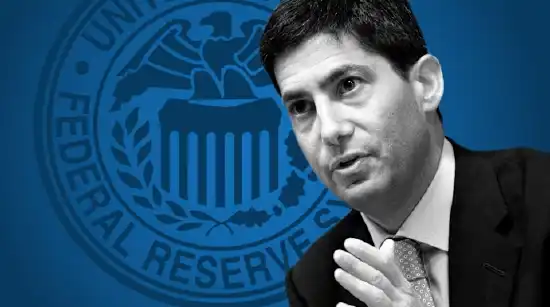
Three Key Changes: Analyzing the Impact of New Fed Chair Kevin Warsh on the Crypto Market

Kevin Warsh's nomination as the new Federal Reserve Chair marks a potential shift in U.S. monetary policy, with significant implications for the crypto market. Warsh, a former Fed governor and critic of quantitative easing, advocates for a "limited central banking" approach, prioritizing price stability and financial system integrity over aggressive stimulus. His proposed policy mix—simultaneous interest rate cuts and balance sheet reduction—aims to ease government debt pressure while avoiding inflation resurgence. Warsh’s relationship with former President Trump, facilitated by family ties and shared critiques of the Powell-era Fed, adds a layer of political complexity. However, Warsh has historically emphasized Fed independence, creating tension between political expectations and his policy framework. For crypto markets, Warsh’s policies could bring short-term gains from rate cuts but long-term headwinds from sustained quantitative tightening (QT). This may reduce market liquidity, suppress asset valuations, and dampen volatility. Additionally, Warsh’s regulatory stance may accelerate crypto compliance, favoring established assets like Bitcoin and Ethereum while squeezing out riskier altcoins. The era of "policy-driven" crypto rallies may fade, giving way to fundamentals-based investing. Institutional adoption may grow, while retail speculation declines. Investors should focus on long-term value drivers—such as adoption cycles and technological upgrades—rather than short-term Fed policy shifts.

marsbitHá 49m

Three Key Changes: Analyzing the Impact of New Fed Chair Kevin Warsh on the Crypto Market

marsbitHá 49m

Trading

Spot
Futuros

Artigos em Destaque

Como comprar ATH

Bem-vindo à HTX.com!Tornámos a compra de Aethir (ATH) simples e conveniente.Segue o nosso guia passo a passo para iniciar a tua jornada no mundo das criptos.Passo 1: cria a tua conta HTXUtiliza o teu e-mail ou número de telefone para te inscreveres numa conta gratuita na HTX.Desfruta de um processo de inscrição sem complicações e desbloqueia todas as funcionalidades.Obter a minha contaPasso 2: vai para Comprar Cripto e escolhe o teu método de pagamentoCartão de crédito/débito: usa o teu visa ou mastercard para comprar Aethir (ATH) instantaneamente.Saldo: usa os fundos da tua conta HTX para transacionar sem problemas.Terceiros: adicionamos métodos de pagamento populares, como Google Pay e Apple Pay, para aumentar a conveniência.P2P: transaciona diretamente com outros utilizadores na HTX.Mercado de balcão (OTC): oferecemos serviços personalizados e taxas de câmbio competitivas para os traders.Passo 3: armazena teu Aethir (ATH)Depois de comprar o teu Aethir (ATH), armazena-o na tua conta HTX.Alternativamente, podes enviá-lo para outro lugar através de transferência blockchain ou usá-lo para transacionar outras criptomoedas.Passo 4: transaciona Aethir (ATH)Transaciona facilmente Aethir (ATH) no mercado à vista da HTX.Acede simplesmente à tua conta, seleciona o teu par de trading, executa as tuas transações e monitoriza em tempo real.Oferecemos uma experiência de fácil utilização tanto para principiantes como para traders experientes.

260 Visualizações TotaisPublicado em {updateTime}Atualizado em 2025.03.21

Discussões

Bem-vindo à Comunidade HTX. Aqui, pode manter-se informado sobre os mais recentes desenvolvimentos da plataforma e obter acesso a análises profissionais de mercado. As opiniões dos utilizadores sobre o preço de ATH (ATH) são apresentadas abaixo.

活动图片