IOTA Integrates Pyth Pro

cryptonews.ruPublicado em 2026-07-29Última atualização em 2026-07-29

Resumo

The L1 network IOTA has integrated with Pyth Pro, the price oracle infrastructure developed by the decentralized Pyth network that supplies financial data for blockchain applications. This upgrade grants developers access to over 3,000 institutional-grade price feeds with lower latency and higher update speeds. Previously, IOTA utilized Pythnet, Pyth's initial infrastructure where price data was transmitted via the Wormhole bridge. Pyth is now gradually phasing out Pythnet and migrating all supported blockchains to Pyth Pro. This planned update affects the entire Pyth ecosystem, not just IOTA. Developers within the IOTA ecosystem can now switch to the new infrastructure by subscribing to the Pyth Pro plan and updating their application integrations. The migration must be completed by August 18. After this date, the old Pyth Core price feeds will cease to function, and projects that have not migrated will lose access to market data.

L1-network $IOTA has integrated with Pyth Pro — a price oracle infrastructure developed by the decentralized Pyth network, which specializes in supplying financial data for blockchain applications. Following this upgrade, developers gain access to over 3,000 institutional-grade price feeds, as well as data with lower latency and higher update speeds.

Previously, $IOTA utilized Pythnet — Pyth's first infrastructure, through which price data was transmitted via the Wormhole bridge. Pyth is now gradually phasing out Pythnet and migrating all supported blockchains to Pyth Pro. This planned upgrade affects the entire Pyth ecosystem, not just $IOTA.

Developers working within the $IOTA ecosystem can already switch to the new infrastructure by subscribing to the Pyth Pro plan and updating their application integrations. The migration should be completed by August 18. After this date, the Pyth Core price feeds will cease to function, and projects that have not migrated to Pyth Pro will lose access to market data.

Image: Magnific

end-content

Criptomoedas em alta

Perguntas relacionadas

QWhat major infrastructure has the IOTA network integrated with, according to the article?

AThe IOTA network has integrated with Pyth Pro, a price oracle infrastructure developed by the decentralized Pyth network.

QWhat benefits do developers gain from IOTA's integration with Pyth Pro?

ADevelopers gain access to over 3,000 institutional-grade price feeds, as well as data with lower latency and higher refresh speeds.

QWhat was the previous infrastructure IOTA used for Pyth price data, and how did it transfer the data?

AIOTA previously used Pythnet, Pyth's first infrastructure, which transferred price data via the Wormhole bridge.

QBy what date must projects in the IOTA ecosystem migrate to Pyth Pro, and what happens if they don't?

AProjects in the IOTA ecosystem must complete the migration to Pyth Pro by August 18. After this date, Pyth Core price feeds will stop working, and projects that haven't migrated will lose access to market data.

QIs the transition to Pyth Pro a change specific only to the IOTA ecosystem?

ANo, the transition is a scheduled update affecting the entire Pyth ecosystem, not just IOTA.

Leituras Relacionadas

A Brief History of the Lithography Machine: How a Beam of Light Walked Sixty-Nine Years

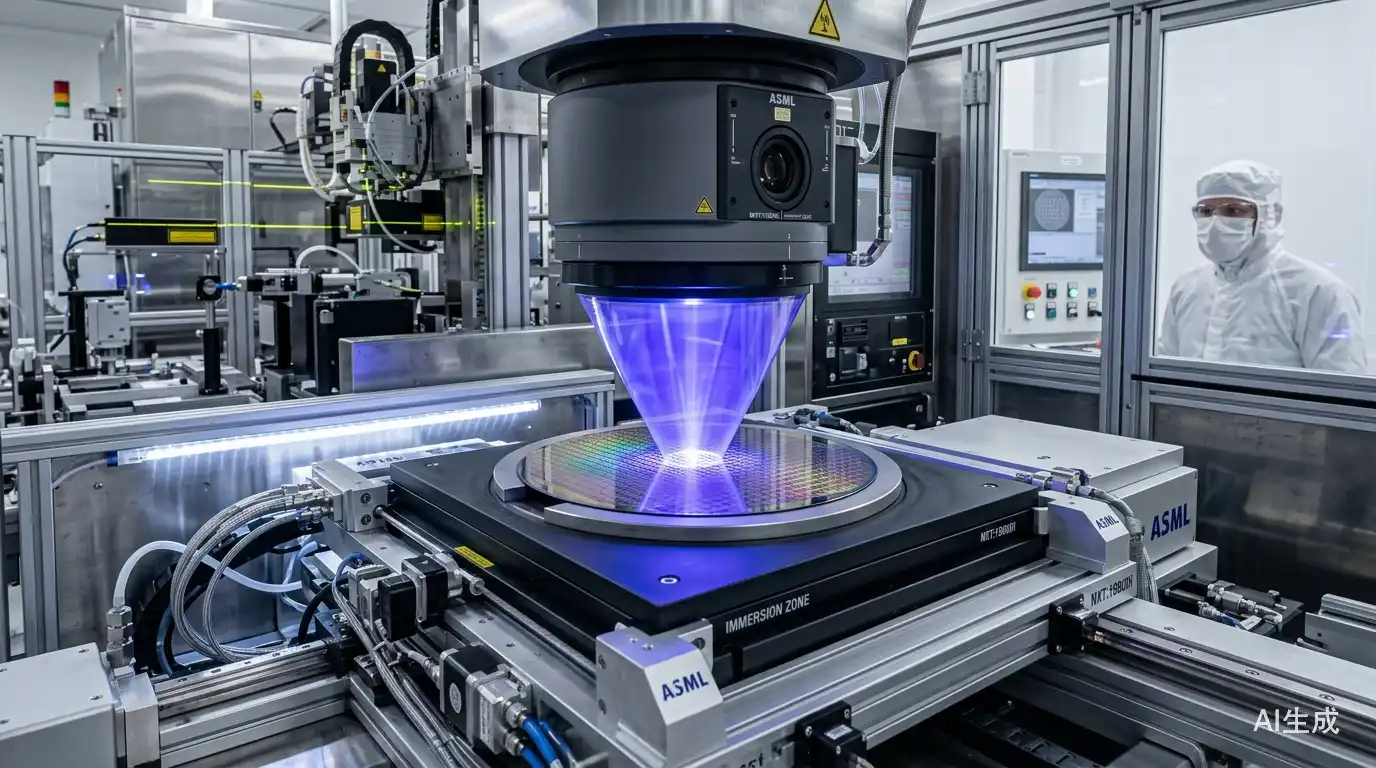
A Brief History of Lithography: 69 Years of Light In July 2026, reports of a Chinese state-backed company producing five immersion DUV lithography machines sent shockwaves through Wall Street, wiping roughly $44 billion from ASML's market cap in a single day. This event signaled a crack in the long-held assumption of Western monopoly over advanced chipmaking equipment. The journey began in 1957 when Jay Lathrop coined the term "photolithography." Early contact aligners (1960s) gave way to PerkinElmer's revolutionary projection aligners in 1973, boosting yields dramatically. GCA's step-and-repeat system (1978) established the modern stepper blueprint. However, within a decade, Japanese firms like Nikon and Canon, supported by a strong domestic market, captured nearly 90% of the global market from American pioneers, who ultimately exited the business. ASML, founded in a leaky shed in 1984, rose to dominance through key strategic moves: the TWINSCAN dual-stage platform (2001) and the acquisition of SVG, gaining access to Intel. A pivotal moment came in the early 2000s with the industry at a 193nm wavelength impasse. While most invested in the costly 157nm path, TSMC's Burn Lin proposed immersion lithography—using water between the lens and wafer. ASML bet on this simpler idea and, with Zeiss, delivered the first commercial immersion tool in 2004, effectively ending the 157nm roadmap and leaving competitors behind. The subsequent push for Extreme Ultraviolet (EUV) lithography was an even greater marathon. Deemed the least promising option in 1997, EUV's development, led by ASML, required vacuum chambers, reflective optics, and a complex tin-droplet laser plasma source. Critical to its eventual success (first high-volume manufacturing in 2018) was the 2012 "Customer Co-Investment Program," where Intel, TSMC, and Samsung provided upfront funding and equity, sharing the immense risk and cost. Today, ASML holds a near-total monopoly in EUV and immersion DUV. The core lesson of this 69-year history is not merely one of technological invention but of sustained partnership. Successive leaders—PerkinElmer, GCA, Nikon—were not ultimately defeated by superior technology but by losing the vital connection to customers willing to tolerate years of iteration, fund long-term R&D, and integrate early, imperfect tools into their production lines. The "light" that completed the journey was always carried by those patient, invested partners.

marsbitHá 1h

A Brief History of the Lithography Machine: How a Beam of Light Walked Sixty-Nine Years

marsbitHá 1h

Trading

Spot

Artigos em Destaque

Como comprar IOTA

Bem-vindo à HTX.com!Tornámos a compra de IOTA (IOTA) simples e conveniente.Segue o nosso guia passo a passo para iniciar a tua jornada no mundo das criptos.Passo 1: cria a tua conta HTXUtiliza o teu e-mail ou número de telefone para te inscreveres numa conta gratuita na HTX.Desfruta de um processo de inscrição sem complicações e desbloqueia todas as funcionalidades.Obter a minha contaPasso 2: vai para Comprar Cripto e escolhe o teu método de pagamentoCartão de crédito/débito: usa o teu visa ou mastercard para comprar IOTA (IOTA) instantaneamente.Saldo: usa os fundos da tua conta HTX para transacionar sem problemas.Terceiros: adicionamos métodos de pagamento populares, como Google Pay e Apple Pay, para aumentar a conveniência.P2P: transaciona diretamente com outros utilizadores na HTX.Mercado de balcão (OTC): oferecemos serviços personalizados e taxas de câmbio competitivas para os traders.Passo 3: armazena teu IOTA (IOTA)Depois de comprar o teu IOTA (IOTA), armazena-o na tua conta HTX.Alternativamente, podes enviá-lo para outro lugar através de transferência blockchain ou usá-lo para transacionar outras criptomoedas.Passo 4: transaciona IOTA (IOTA)Transaciona facilmente IOTA (IOTA) no mercado à vista da HTX.Acede simplesmente à tua conta, seleciona o teu par de trading, executa as tuas transações e monitoriza em tempo real.Oferecemos uma experiência de fácil utilização tanto para principiantes como para traders experientes.

119 Visualizações TotaisPublicado em {updateTime}Atualizado em 2026.06.02

Como comprar IOTA

Discussões

Bem-vindo à Comunidade HTX. Aqui, pode manter-se informado sobre os mais recentes desenvolvimentos da plataforma e obter acesso a análises profissionais de mercado. As opiniões dos utilizadores sobre o preço de IOTA (IOTA) são apresentadas abaixo.

活动图片