Brevis Token Launch Imminent: Community Incentives Account for 32.2%, Airdrop Registration to Go Live Soon

Odaily星球日报Publicado em 2025-12-25Última atualização em 2025-12-25

Resumo

Brevis is set to launch its token BREV with a total supply of 1 billion. The token distribution includes 37% for ecosystem development, 32.2% for community incentives (including airdrops), 20% for the team, and 10.8% for investors. Ecosystem and community tokens will unlock linearly over 24 months post-TGE, with 14.5% and 10.5% circulating at TGE, respectively. Team and investor tokens are locked for the first year. Brevis, a zk-based off-chain computation engine backed by Vitalik Buterin and a $7.5 million seed round, aims to enhance smart contract efficiency. It has been added to Coinbase's listing roadmap. The project is currently in Phase 1 of its community program, allowing users to earn points through invites and daily check-ins. An airdrop registration portal is即将上线.

Original | Odaily Planet Daily (@OdailyChina)

Author | Asher (@Asher_ 0210)
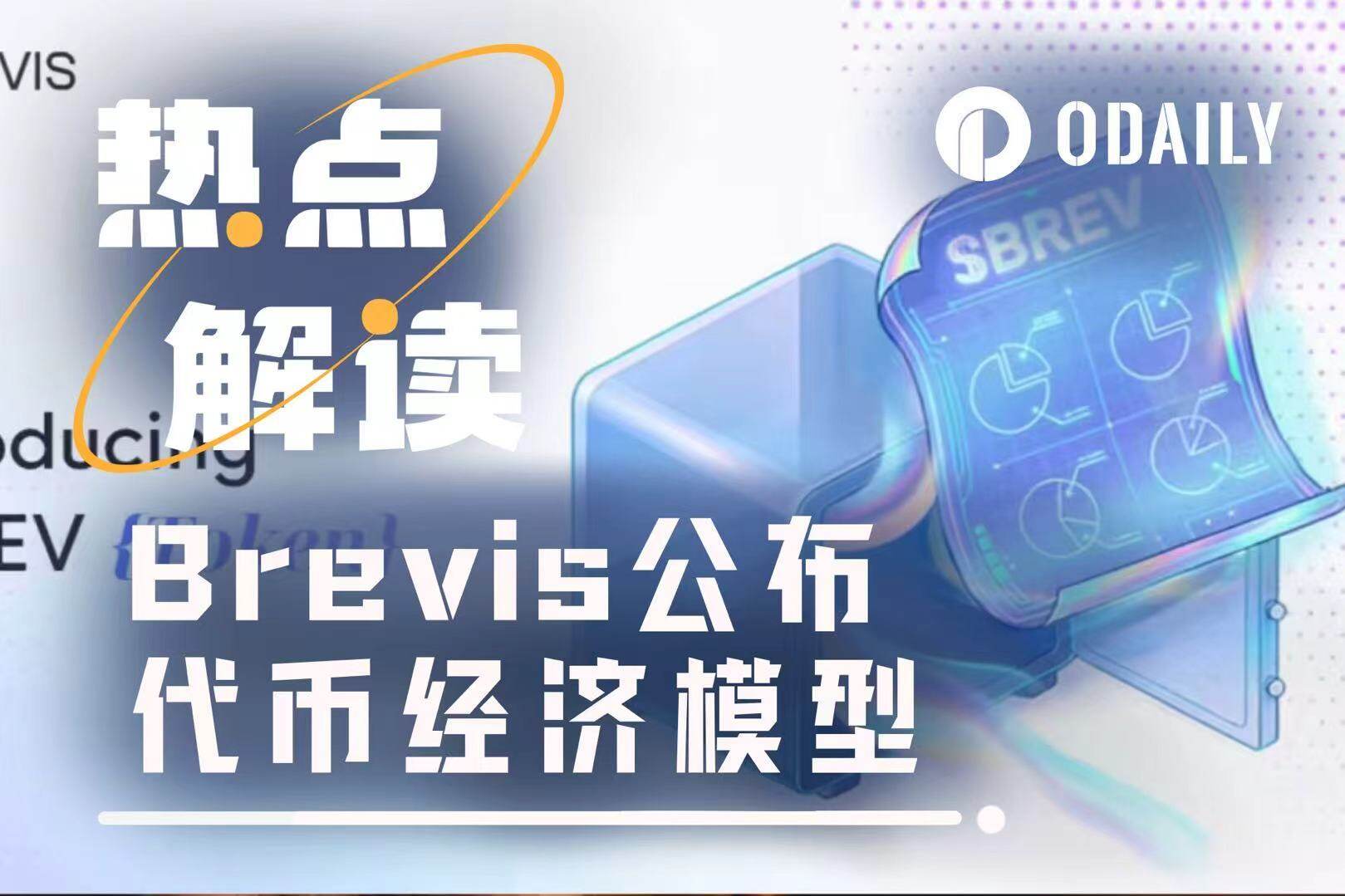
Yesterday, Brevis, which has garnered favor from Vitalik, posted on platform X to announce its token economic model. The total supply of the BREV token is 1 billion, with the specific allocation as follows:

  • Ecosystem Development: 37% of the total token supply, i.e., 370 million tokens, allocated for ecosystem development, R&D, strategic partnerships, initial market building, and long-term protocol expansion;
  • Community Incentives: 32.2% of the total token supply, i.e., 322 million tokens, allocated for rewards to validators, stakers, and community contributors, including initial airdrops to eligible contributors and community members across different categories;
  • Team: 20% of the total token supply, i.e., 200 million tokens, allocated to Brevis's current and future core developers and contributors;
  • Investors: 10.8% of the total token supply, i.e., 108 million tokens, allocated to Brevis's seed round investors.

Among these, the allocations for Ecosystem Development and Community Incentives will be unlocked linearly over 24 months post-TGE, with 14.50% and 10.50% of the tokens circulating at TGE, respectively. The allocations for the Team and Investors will be fully locked for the first year post-TGE, with no initial unlock, followed by a linear unlock over 24 months.

Furthermore, the Brevis team indicated that the airdrop registration portal will be launched soon. Combined with the announcement by Coinbase Markets on platform X on December 20th, which stated that Brevis (BREV) has been added to the listing roadmap, it suggests that Brevis is approaching its TGE.
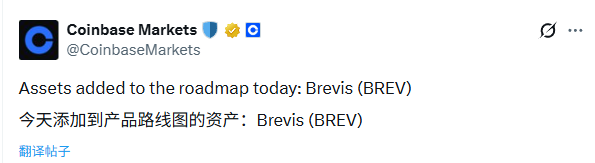
Coinbase adds Brevis (BREV) to its listing roadmap

Brevis: The "Smart Engine" Championing the Concept of an "Infinite Compute Layer"

Brevis is an off-chain compute engine built on zero-knowledge proofs, positioning itself as the "infinite compute layer for Web3 and everything." Simply put, Brevis enables smart contracts to become "smarter," shifting from passive execution to active computation, thereby saving computational costs and improving efficiency. This facilitates user interaction with protocols, asset deposition, and enhances protocol adoption rates. Brevis has garnered significant community discussion largely due to receiving Vitalik's "endorsement."
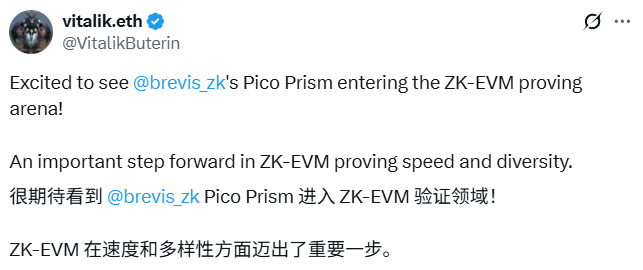
Brevis receives Vitalik's "endorsement"

Brevis completed a $7.5 million seed funding round last November, led by Polychain and Yzi Labs (For more related content, please read: Unveiling Brevis: Favored by Vitalik, $7.5M Funding, How Does This Off-Chain Compute Engine Unlock a New Ethereum Paradigm?).

Phase 1 Tasks Are Still Ongoing

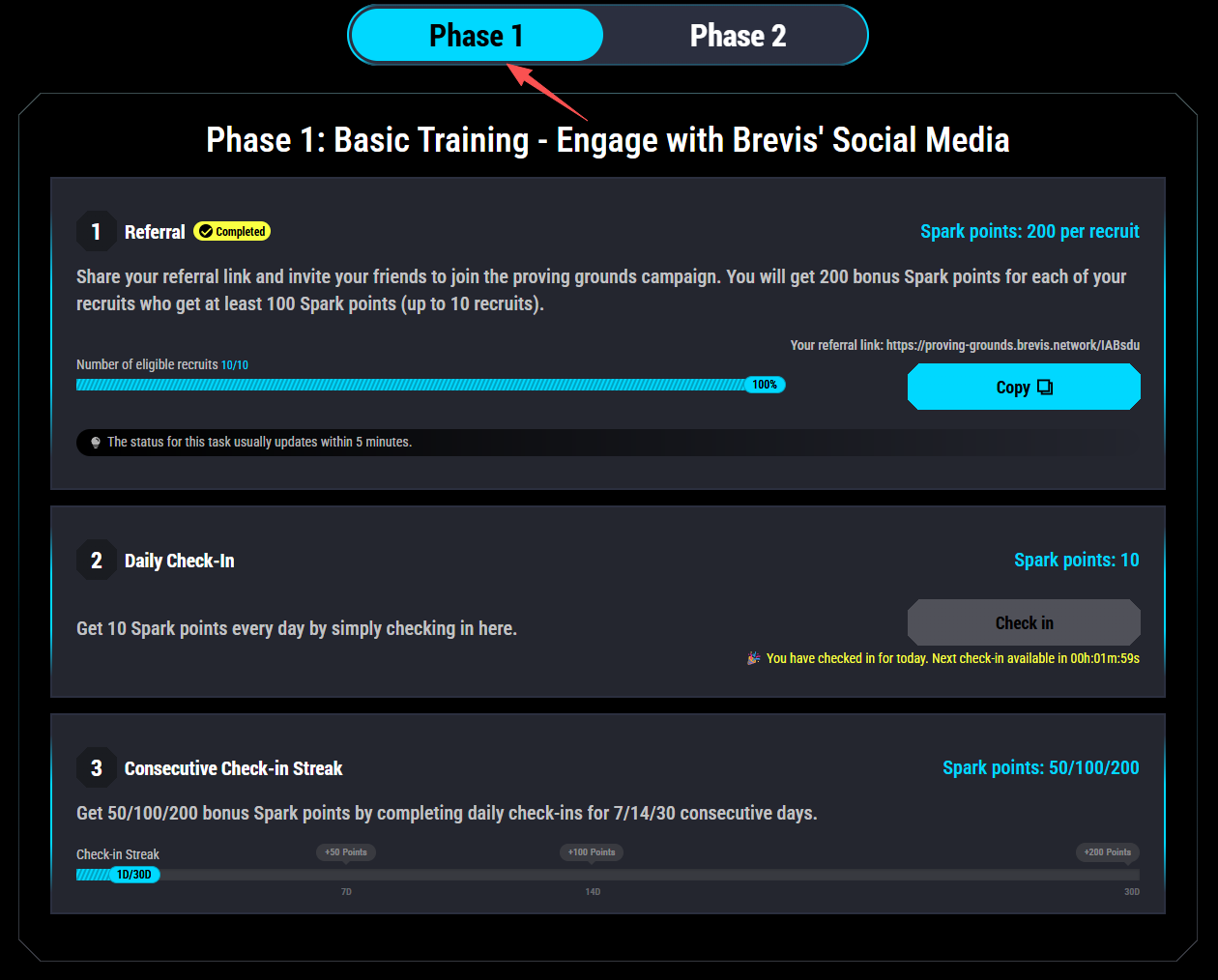
Currently, all 11 tasks of Brevis's Phase 2 have ended, but the Phase 1 tasks are still ongoing, and the snapshot time has not been announced yet. It's worth "farming for free" to seize the last opportunity to earn points.

STEP 1. Go to the interaction website (Link: https://proving-grounds.brevis.network/) and connect your wallet.
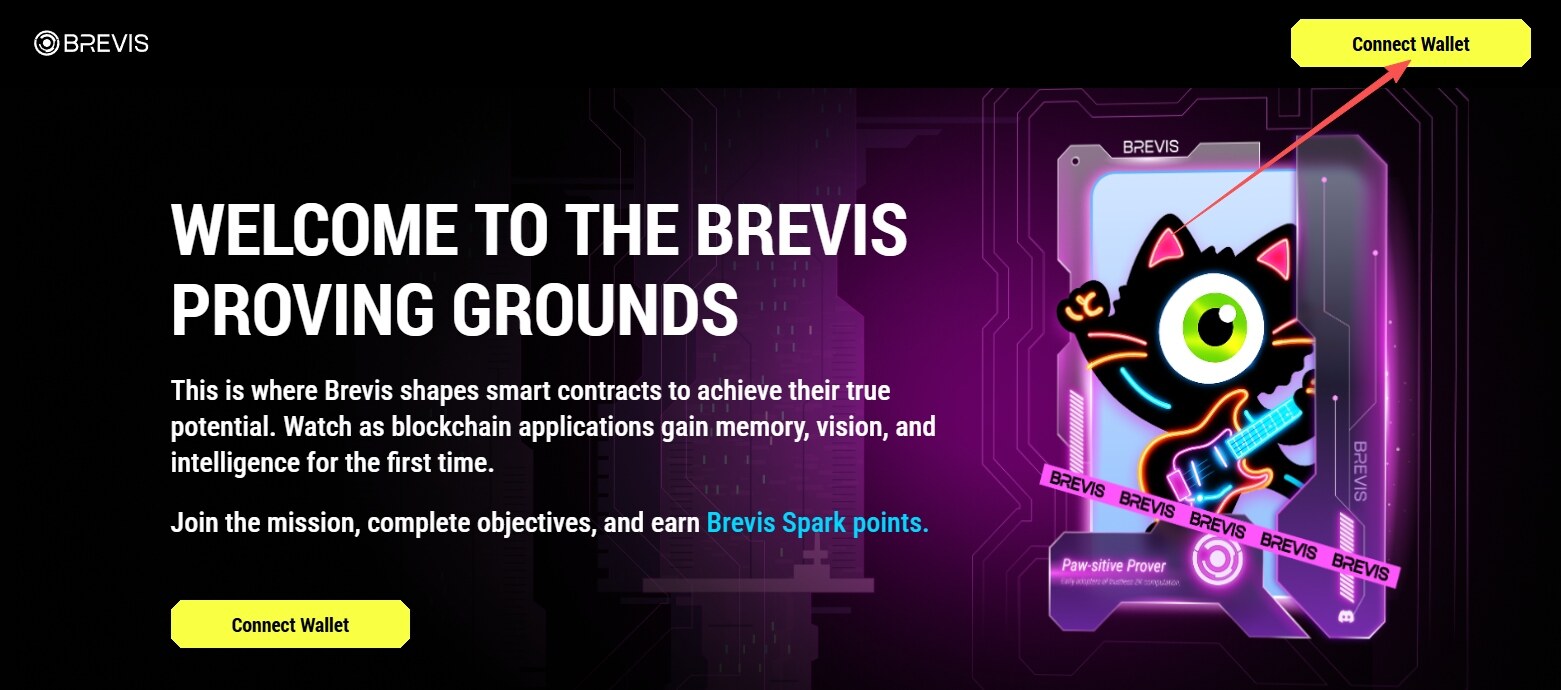
STEP 2. First, bind your personal account, then follow the official X account and join the official Discord. Entering an invitation code will grant you 50 points (Invitation code can be: IABsdu).

STEP 3. Click on "Phase 1". Tasks that still allow you to earn points include referral tasks and daily check-in tasks.
Perguntas relacionadas

QWhat is the total supply of BREV tokens and what percentage is allocated to community incentives?

AThe total supply of BREV tokens is 1 billion. Community incentives account for 32.2% of the total supply, which is 322 million tokens.

QHow are the tokens allocated for ecosystem development and community incentives unlocked after TGE?

ATokens for ecosystem development and community incentives are linearly unlocked over 24 months after TGE. At TGE, 14.50% of the ecosystem development tokens and 10.50% of the community incentive tokens are immediately unlocked.

QWhat is Brevis and why has it gained significant attention in the community?

ABrevis is an off-chain computation engine built on zero-knowledge proofs, positioning itself as the 'infinite computation layer for Web3 and everything.' It has gained significant community attention because it received endorsement from Vitalik Buterin.

QWhat recent exchange listing development was announced for Brevis (BREV)?

ACoinbase Markets announced that Brevis (BREV) has been added to its listing roadmap, indicating an upcoming Token Generation Event (TGE).

QAre there any ongoing tasks for users to earn points from Brevis, and what is one way to get bonus points?

AYes, Phase 1 tasks are still ongoing. Users can earn points through invitation and daily check-in tasks. One way to get a bonus of 50 points is by using an invitation code (e.g., IABsdu) when signing up.

Leituras Relacionadas

Yang Ge Gary: Agent Economy and AI Sub-Microeconomics

"Agent Economy and AI Submicroeconomics" by Gary Yang discusses the evolution of AI Agent economies, written from Singapore in June 2026. The author observes a significant "civilizational generational gap" in AI development, particularly highlighted by events in Silicon Valley. The article identifies a current bottleneck in the transition from Human-to-Agent (H2A) economies to true Agent-to-Agent (A2A) ecosystems. While AI Payment protocols are rapidly emerging, many implementations remain non-AI-native, focusing on traditional human decision-making models rather than leveraging autonomous Agent decision-making. A core thesis is the inevitable formation of an **Agent Economy**, defined as a system where autonomous AI Agents create, exchange, and capitalize value independently. This requires new infrastructure: **AI Protocols**, which are the foundational rules and standards for Agent interaction. The piece explores the relationship and current gap between AI Protocols and Crypto Protocols, suggesting political and regulatory factors from traditional finance are temporarily constraining development. However, a future fusion into a mature Digital Protocol system is deemed inevitable based on first principles. The author introduces **AI Agent Submicroeconomics**, contrasting it with human economics. Key differences include higher transaction frequency, lower value per transaction, efficiency-driven (not emotion-driven) decisions, task-oriented (not consumption-oriented) behavior, and near-zero organizational and communication costs. A biological analogy is drawn, comparing an Agent to a cell, its LLM to a nucleus, and its protocol stack to a cell membrane. The rise of **AIFi** (AI Finance) is presented as a natural consequence, where value originates from AI-native activities and is subsequently tokenized and financialized. This contrasts with DeFi/TradFi, where finance is the source of value. The concept of a **Financial Chip (FinChip)**—an autonomous AI Agent integrated with a crypto smart contract—is highlighted as key infrastructure for this new economy. The conclusion emphasizes that **AI-Native** thinking represents a paradigm shift distinct from "Internet+" upgrades. It requires reasoning from first principles, focusing on energy-value shortest paths and maximum efficiency, which presents a steep learning curve and significant challenge for all participants in this rapidly evolving field.

marsbitHá 23m

Yang Ge Gary: Agent Economy and AI Sub-Microeconomics

marsbitHá 23m

ViaBTC CEO Haipo Yang: Looking Back at the Decade, Re-understanding the Value of Crypto

In "A Decade in Retrospect: Re-evaluating the Value of Crypto," ViaBTC & CoinEx CEO Haipo Yang reflects on the cryptocurrency industry's evolution since founding ViaBTC in 2016. Initially a niche interest, Crypto has fundamentally transformed key financial infrastructures like market making, trading, settlement, and issuance through open protocols, as seen with Uniswap and GMX, and enabled efficient cross-border transfers via stablecoins. While acknowledging speculation's role in fueling innovation and liquidity, Yang warns it often overshadows real demand. He distinguishes between blockchain (a trust-minimizing technology), Web3 (an application model requiring genuine utility), and Crypto assets. The latter's value derives from block space as a commodity (e.g., gas fees) and "sovereign liquidity premium" (e.g., Bitcoin's censorship resistance), with most tokens lacking such dual support. Looking ahead, Yang argues the next decade's focus should shift from "open participation" to "sustainable participation," emphasizing reliable infrastructure. He predicts consolidation towards networks with strong security and liquidity (like Bitcoin and Ethereum), and sees DeFi becoming a specialized tool rather than a mass replacement for traditional finance. Crypto will integrate into traditional finance (e.g., via Bitcoin ETFs) but may sacrifice some decentralization for mainstream adoption. Real future demand may come from AI agents and machine economies needing permissionless settlement. Ultimately, Yang believes Crypto's enduring value lies not in hype or replacing everything, but in verifiably reducing trust costs, increasing efficiency, and providing stable, transparent services across market cycles.

marsbitHá 23m

ViaBTC CEO Haipo Yang: Looking Back at the Decade, Re-understanding the Value of Crypto

marsbitHá 23m

Trading

Spot
Futuros

Artigos em Destaque

Como comprar SOON

Bem-vindo à HTX.com!Tornámos a compra de SOON (SOON) simples e conveniente.Segue o nosso guia passo a passo para iniciar a tua jornada no mundo das criptos.Passo 1: cria a tua conta HTXUtiliza o teu e-mail ou número de telefone para te inscreveres numa conta gratuita na HTX.Desfruta de um processo de inscrição sem complicações e desbloqueia todas as funcionalidades.Obter a minha contaPasso 2: vai para Comprar Cripto e escolhe o teu método de pagamentoCartão de crédito/débito: usa o teu visa ou mastercard para comprar SOON (SOON) instantaneamente.Saldo: usa os fundos da tua conta HTX para transacionar sem problemas.Terceiros: adicionamos métodos de pagamento populares, como Google Pay e Apple Pay, para aumentar a conveniência.P2P: transaciona diretamente com outros utilizadores na HTX.Mercado de balcão (OTC): oferecemos serviços personalizados e taxas de câmbio competitivas para os traders.Passo 3: armazena teu SOON (SOON)Depois de comprar o teu SOON (SOON), armazena-o na tua conta HTX.Alternativamente, podes enviá-lo para outro lugar através de transferência blockchain ou usá-lo para transacionar outras criptomoedas.Passo 4: transaciona SOON (SOON)Transaciona facilmente SOON (SOON) no mercado à vista da HTX.Acede simplesmente à tua conta, seleciona o teu par de trading, executa as tuas transações e monitoriza em tempo real.Oferecemos uma experiência de fácil utilização tanto para principiantes como para traders experientes.

174 Visualizações TotaisPublicado em {updateTime}Atualizado em 2026.06.02

Como comprar SOON

Discussões

Bem-vindo à Comunidade HTX. Aqui, pode manter-se informado sobre os mais recentes desenvolvimentos da plataforma e obter acesso a análises profissionais de mercado. As opiniões dos utilizadores sobre o preço de SOON (SOON) são apresentadas abaixo.

活动图片