Bitcoin Adjustment Signal Confirmed, HYPE Bull-Bear Divergence Intensifies | Invited Analysis

Odaily星球日报Publicado em 2026-07-27Última atualização em 2026-07-27

Resumo

Bitcoin Adjustment Signal Confirmed, HYPE Faces Key Resistance Battle | Analysis This week's analysis indicates Bitcoin's daily cycle Wave A rebound likely peaked on July 21st, with the market entering a Wave B correction phase. For HYPE, price action is contested at the critical $60–$63.5 resistance zone, with its path yet to be determined. **Bitcoin (BTC) Analysis & Strategy:** * **Structure:** Analysis suggests the corrective move from the May 6th high has formed a four-segment structure. The rebound from the July 1st low (~$57,820) is likely Wave A, completed around $66,955. The market is now likely in Wave B correction, with a potential Wave C rebound to follow, provided the $57,820 low holds. * **4-Hour View:** A seven-segment rebound from the July 1st low shows momentum divergence, indicating the rally may have ended, with a correction now underway. Price is currently testing a pullback after breaking below $65,700. * **Weekly Outlook & Levels:** * **Key Pressure:** Watch price action around the $65,700–$67,300 retest and the $60,950–$61,500 support zone. * **Resistance:** $65,700–$67,300; $69,500–$71,000. * **Support:** ~$63,700; $60,950–$61,500; ~$57,820. * **Strategy:** Mid-term positioning has increased short exposure to ~40% based on model signals. Short-term tactics (30% capital) involve two scenarios: **A)** Testing shorts in the $65,700–$67,300 resistance area upon bearish signals; **B)** Testing longs near the $57,820 support upon b...

This week, the daily level a-wave rebound of Bitcoin may have peaked on July 21, with the market transitioning into a b-wave adjustment phase; HYPE is currently at the contention point of the key resistance zone between $60 and $63.5, and its path remains unclear. Below is a review of the multi-cycle structures of BTC and HYPE for this week, along with trading strategies and market verification of last week's short-term trades, for reference.

Summary of This Week's Core Trading Views:

• Analysis of BTC's multi-cycle price structure (Detailed in Part One)

• BTC market forecast and medium/short-term trading strategies for this week (Detailed in Part Two)

• Analysis of HYPE's hourly level price structure (Detailed in Part Three)

• HYPE market forecast and short-term trading strategies for this week (Detailed in Part Four)

Verification of Last Week's Trading Strategies and Core Views:

• BTC Market Forecast Verification: Last week's article explicitly stated that Bitcoin had a high probability of ending this round's first segment (a-wave) of daily level rebound near $67,300. Our prediction was accurately validated by the market.

• BTC Short-term Trading Results: Successfully executed one short-term short position (1x leverage) on Bitcoin last week, achieving a profit of approximately 1.70%. (Detailed in Part Five)

• HYPE Market Forecast Verification: Last week's article explicitly stated that any price rebound at the beginning of the week could be considered a retracement confirmation after breaking below the key support zone ($62~$63.5). So far, the market movement has been highly consistent with our judgment.

I. Analysis of Bitcoin's Multi-Cycle Price Structure

1. Analysis of Bitcoin's Daily Level Price Structure: (Based on price action after May 6th)
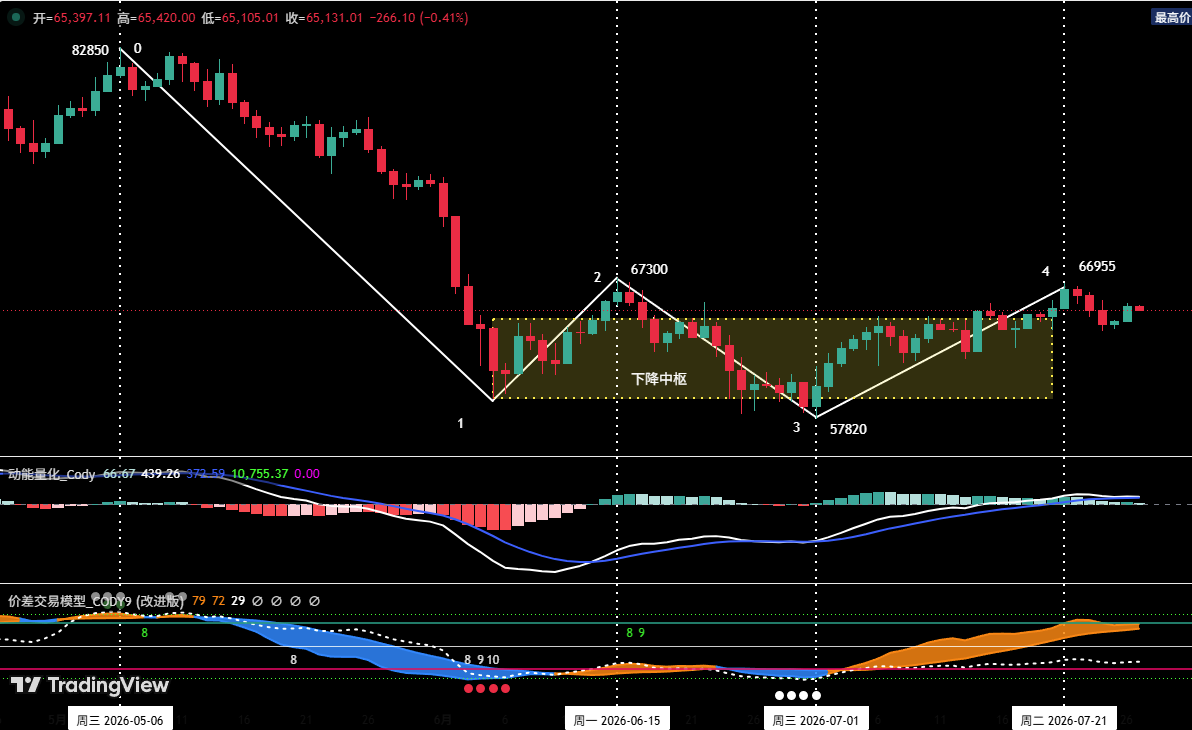
Chart 1: Bitcoin Daily Candlestick Chart

1. As shown in (Chart 1): The corrective movement initiated from the May 6th high of $82,850 has presented a four-segment corrective structure on the daily chart: (0-1), (1-2), (2-3), (3-4).

2. From the daily structure analysis: The first segment (i.e., a-wave) rebound initiated from the July 1st low of $57,820 may have ended on July 21st, reaching a rebound height of $66,955.

3. If the a-wave rebound has ended, the market is currently in the b-wave adjustment phase. After the b-wave adjustment concludes (the precondition is that the adjustment low must not break below $57,820), there may be a potential subsequent c-wave rebound, which is expected to challenge the resistance area near $67,300 again.

2. In-depth Analysis of Bitcoin's Hourly Level Price Structure: (Using the 4-hour chart as the analysis timeframe)
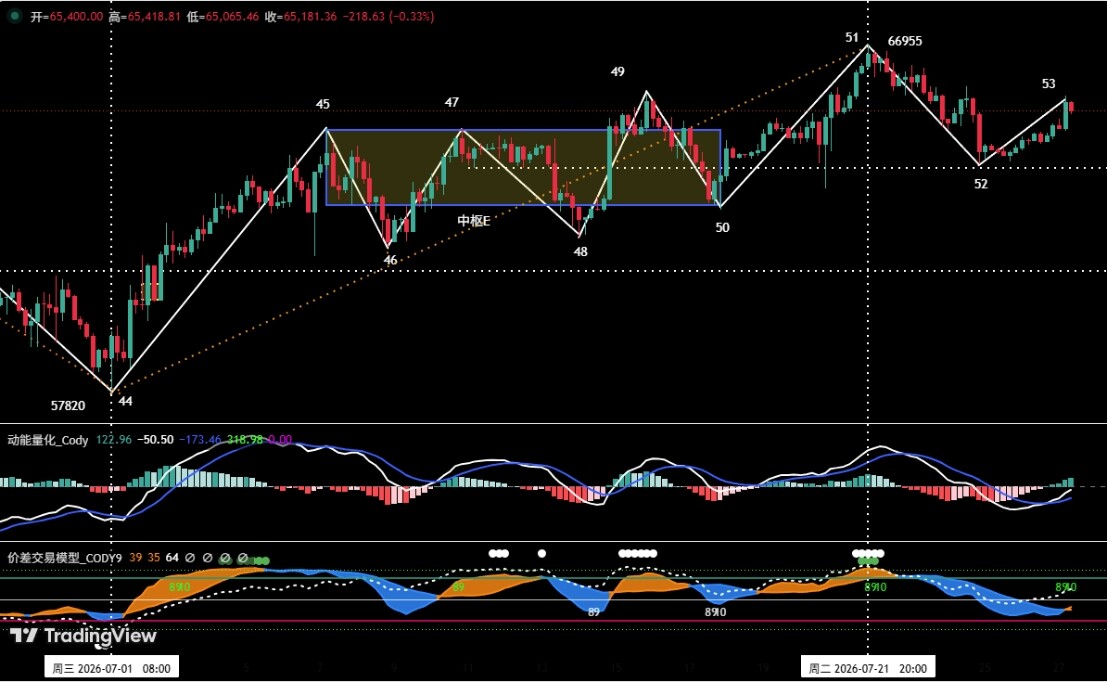
Chart 2: Bitcoin 4-Hour Candlestick Chart

1. Within the 4-hour timeframe framework, the rebound initiated from the July 1st low (Point 44, approx. $57,820) to July 21st (Point 51, approx. $66,955) can be clearly divided into seven segments structurally: (44-45) to (50-51). Among them, the five overlapping segments (45-46), (46-47), (47-48), (48-49), (49-50) constitute the "five-segment" consolidation E.

2. Based on price structure analysis: Comparing the entry segment (44-45) and the exit segment (50-51) of consolidation E, it can be clearly judged that the rebound momentum of the exit segment is significantly weaker than that of the entry segment, forming a state of momentum divergence between them. Therefore, the rebound starting from "Point 44" may have ended at "Point 51", with a high probability of subsequent adjustment.

3. The adjustment starting from "Point 51" has already run two segments: (51-52) and (52-53). The current price action can be viewed as a retracement confirmation phase after the price broke below $65,700.

II. Bitcoin Market Forecast and Trading Strategies for This Week

1. BTC Market Forecast for This Week:

Core View for This Week:

1. Pay attention to the test results of the price retracing to near $65,700.

2. Pay attention to the support strength when the price tests the $60,950~$61,500 area.

2. Key Resistance Levels:

• First Resistance Zone: $65,700~$67,300 area (previous important resistance area)

• Second Resistance Zone: $69,500~$71,000 area (previous important resistance area)

3. Key Support Levels:

• First Support Level: Near $63,700 (previous important support level)

• Second Support Level: $60,950~$61,500 area (previous important support level)

• Third Support Level: Near $57,820 (previous important support level)

4. Trading Strategies for This Week (Excluding sudden news impact)

1. Medium-Term Strategy:
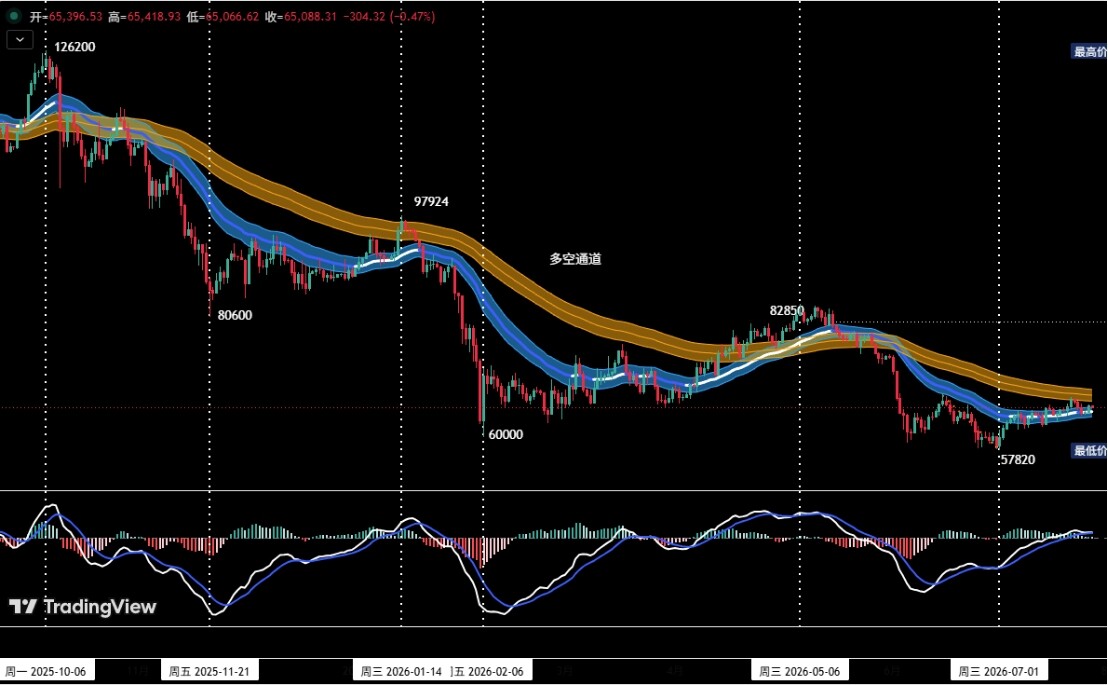
Chart 3: Bitcoin Daily Candlestick Chart (Position Monitoring Model)

Position Monitoring Model: As shown in (Chart 3), the current price has effectively broken below the "Bull-Bear Channel", confirming the market structure has shifted to a bear-dominated pattern. According to the predetermined trading plan: when the price rebounded near $67,000 showing signs of stagnation and our self-built quantitative model simultaneously issued a top signal, we strictly executed the strategy, increasing our medium-term short position to around 40%.

2. Short-Term Strategy: Utilize 30% of the position, set stop-loss points, and seek opportunities to "scalp" based on support and resistance levels. (Using 30-minute/60-minute charts as the operational timeframe).

3. In short-term trading, to dynamically respond to complex market evolution, we have pre-drafted two specific operational plans: A and B.

Plan A: Testing Shorts at Strong Resistance Zone.

• Entry: If the price rebounds and encounters resistance in the $65,700~$67,300 zone, combined with a top signal from the quantitative model, establish a short position of around 30%.

• Risk Control: Set initial stop-loss.

• Exit: When adjusting near important support levels and combined with quantitative model signals, gradually close positions to take profits.

Plan B: Light Long Positions at Strong Support Zone.

• Entry: If the price corrects to above the previous low of $57,820 and shows signs of stabilization and bottoming, combined with a bottom signal from the quantitative model, establish a long position of around 30%.

• Risk Control: Set initial stop-loss.

• Exit: When rebounding near important resistance levels and combined with model signals, gradually close positions to take profits.

III. Analysis of HYPE's Hourly Level Price Structure
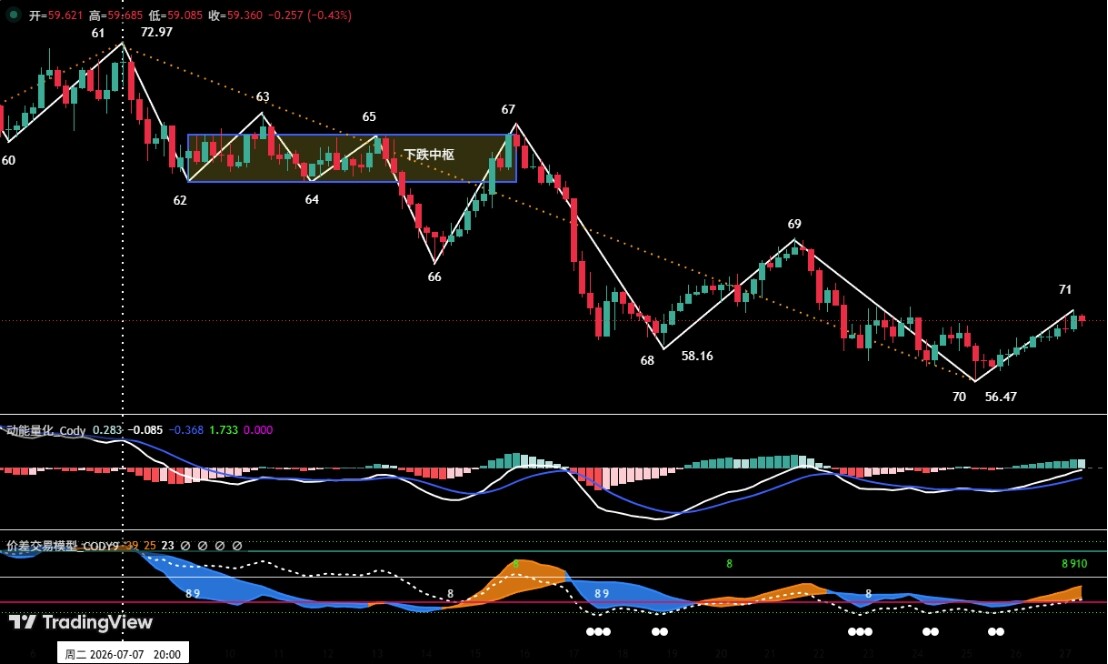
Chart 4: HYPE 4-Hour Candlestick Chart

1. As shown in (Chart 4), HYPE's adjustment from the July 7th high of $72.97 to the present (i.e., from Point 61 to Point 71) can be subdivided into a ten-segment corrective structure on the 4-hour chart. The five overlapping segments 62-63, 63-64, 64-65, 65-66, 66-67 constitute a "five-segment" descending consolidation.

2. The market is currently running the (70-71) rebound segment. Subsequently, two possible scenarios may emerge:

Path One: $56.47 marks the end of the correction, initiating a recovery phase. The corrective movement initiated from July 7th ($72.97) ended on July 24th ($56.47). The current rebound is a technical recovery phase for that decline.

Path Two: Build a "descending consolidation" before continuing the downtrend. The market is currently building a new "descending consolidation", after which it will continue the original downtrend, breaking below the previous low of $56.47 to seek lower support.

3. In summary, in the short term, close attention should be paid to the test results of the price against the $60~$63.5 resistance zone and the defensive strength of the support near $56.47. The outcome of the battle at these two price levels will serve as key evidence for determining which path the market will take.

IV. HYPE Market Forecast and Short-Term Trading Strategies for This Week

1. HYPE Market Forecast for This Week:

1. Key Resistance Levels:

• First Resistance Level: $60~$63.5 area

• Second Resistance Level: $68~$69.5 area

• Third Resistance Level: Near $72.97

2. Key Support Levels:

• First Support Level: Near $56.47;

• Second Support Level: $52~$55 area;

Core View for This Week: Pay close attention to the test results of the price against the $60~$63.5 resistance zone and the support strength near $56.47.

2. HYPE Short-Term Trading Strategy for This Week: This week's short-term operation: If the price rebounds to the $60~$63.5 area and shows clear adjustment signals, investors may consider entering short positions lightly, strictly adhering to stop-loss discipline, with position size controlled within 20%.

V. Bitcoin Short-Term Trade Profit Review

We strictly followed the operational plan and executed one short-term (short) trade last week based on trading signals issued by our self-built "Spread Trading Model" and "Momentum Quantitative Model", achieving a total trading profit of approximately 1.70%.

1. Short-Term Trade Record: (See Table 1) Summary of Bitcoin Short-Term Trade Details:
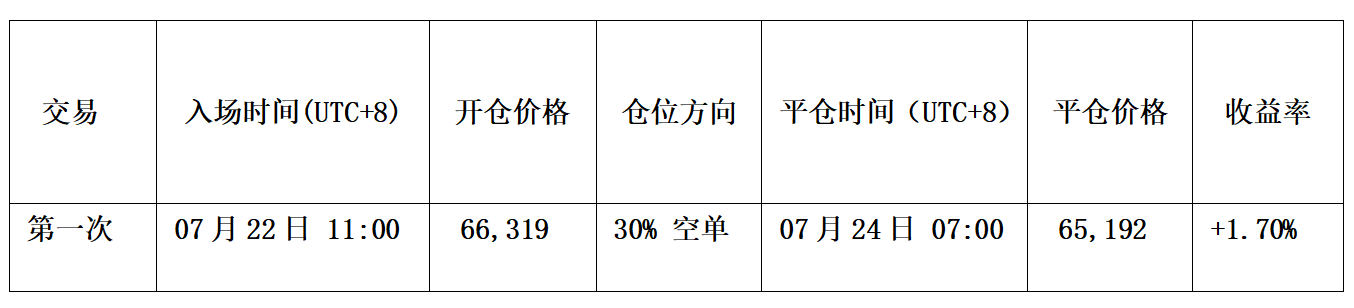
Table 1

2. Short-Term Trade Review: (See Chart Five)

• Entry Strategy:

a. When the price rebounded near $67,000, signs of stagnation appeared, and the candlestick formed a "top reversal" pattern;

b. The "Spread Trading Model" triggered a strong top warning signal (white dot + green dot), followed by the signal band (blue) in the chart breaking below the skyline (green), issuing a sell signal; Simultaneously overlapped with the adjustment signal from the "Momentum Quantitative Model". Therefore, we established a 30% short position at $66,319.

• Exit Strategy:

a. When the price fell near $64,500 and showed signs of stabilization, with the candlestick forming a "bottom reversal" pattern;

b. The "Spread Trading Model" continuously triggered bottom warning signals (red dots), followed by the signal band (orange-yellow) in the chart breaking above the horizon (purple-red), forming a bottom resonance signal with the "Momentum Quantitative Model"; Therefore, we closed all positions near $65,192.

• Summary: This trade successfully profited approximately 1.70%.

3. Short-Term Trade Schematic Diagram
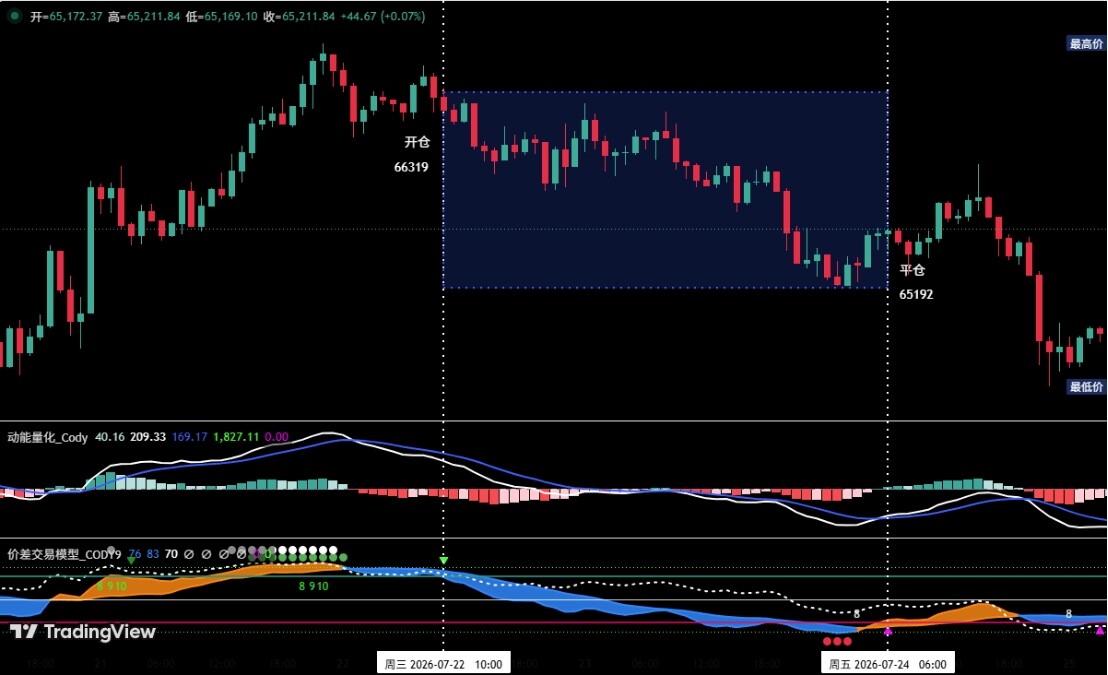
Chart 5: BTC 60-Minute Candlestick Chart (Momentum Quantitative Model + Spread Trading Model)

VI. Special Notes:

  1. When opening a position: Immediately set the initial stop-loss.
  2. When profit reaches 1%: Move the stop-loss to the entry price (break-even point) to ensure capital safety.
  3. When profit reaches 2%: Move the stop-loss to the position of 1% profit.
  4. Continuous tracking: Thereafter, for every additional 1% profit, move the stop-loss up by 1% accordingly, dynamically protecting and locking in profits.

Financial markets change rapidly, and all market analysis and trading strategies require dynamic adjustment. All views, analytical models, and operational strategies mentioned in this article are derived from personal technical analysis, intended solely for personal trading log purposes, and do not constitute any investment advice or operational basis. Markets involve risks, investment requires caution. Please do not make decisions based on this.


Criptomoedas em alta

Perguntas relacionadas

QAccording to the article, what are the two main scenarios (paths) for HYPE's future price movement?

AThe article outlines two potential paths for HYPE. Path One: The low of $56.47 marks the end of the corrective phase, and a rebound or recovery phase is beginning. Path Two: A new 'downward central pivot' (下跌中枢) is being formed, after which the price will continue the original downtrend, breaking below the previous low of $56.47 to seek new support.

QWhat was the specific profit percentage from the previous week's Bitcoin short trade detailed in the article?

AThe article states that the short trade on Bitcoin from the previous week achieved a profit of approximately 1.70%.

QBased on the Bitcoin analysis, what is the key condition for a potential 'c-wave' rebound to occur?

AFor a potential 'c-wave' rebound to occur after the current 'b-wave' adjustment, the key condition is that the low point of the 'b-wave' adjustment must not fall below the previous significant low of $57,820.

QWhat are the core resistance and support levels mentioned for Bitcoin in the current week's outlook?

AThe core resistance levels for Bitcoin are the first zone at $65,700-$67,300 and the second zone at $69,500-$71,000. The core support levels are the first at around $63,700, the second at the $60,950-$61,500 zone, and the third at the key level of $57,820.

QAccording to the article, what technical signal suggested the end of Bitcoin's a-wave rally around July 21st?

AThe analysis of the 4-hour chart structure indicated a 'kinetic divergence' or momentum divergence. The upward momentum of the segment leaving the 'Central Pivot E' (segment 50-51) was significantly weaker than the momentum of the segment entering it (segment 44-45). This divergence suggested the rally starting from point 44 likely ended at point 51.

Leituras Relacionadas

The Return of the Greenspan 'Conundrum'? Could Walsh Push Long-Term Rates Down by Raising Rates?

A resurgence of the "Greenspan Conundrum" is being discussed as a potential policy option for new Fed Chair Wash. Market logic suggests that by raising short-term interest rates, Wash could strengthen the Fed's anti-inflation credibility, thereby compressing the inflation premium embedded in long-term yields and ultimately lowering borrowing costs like mortgage rates—a key goal of the Trump administration. This theory is bolstered by historical precedent. In the mid-2000s, as then-Chair Alan Greenspan raised the federal funds rate, long-term bond yields and 30-year mortgage rates fell—a phenomenon later termed the "Greenspan Conundrum." Analysts note this reflects forward-looking market pricing, where credible rate hikes can lower inflation expectations and long-term rates. Since taking office in May, Wash has consistently signaled a hawkish stance. Following his recent Senate testimony where he emphasized his independence, the 10-year Treasury yield fell sharply, mirroring the conundrum dynamic. Historical analysis shows new Fed chairs often begin with hawkish moves to establish credibility. While an immediate rate hike this week is not the base case, several FOMC members have hinted at the potential need for further tightening. Even without an immediate move, the prevailing market view is that Wash is systematically building his inflation-fighting credibility, which in itself may be the most powerful precondition for pushing long-term rates lower.

marsbitHá 7m

The Return of the Greenspan 'Conundrum'? Could Walsh Push Long-Term Rates Down by Raising Rates?

marsbitHá 7m

From Hot Storage to Cold Memory: Decentralized Storage in the AI Era's Storage Boom

"From Hot Storage to Cold Memory: Decentralized Storage in the Era of AI Storage Boom" This article explores the divergent market trajectories of AI-driven centralized storage and Web3's decentralized storage. It argues that while AI storage is experiencing a massive revaluation focused on "hot data efficiency" — maximizing computational throughput via technologies like HBM, enterprise SSDs, and sophisticated data pipelines — decentralized storage projects like Filecoin and Arweave are currently sidelined. Their core value proposition lies in "cold data trust," prioritizing data integrity, censorship resistance, and long-term archival over raw speed. The piece details the AI storage architecture, emphasizing its role as a "performance engine" critical for feeding GPUs, contrasted with decentralized storage's focus on serving as a permanent, verifiable ledger for humanity's collective memory. It analyzes the challenges decentralized storage faces, including product-market fit, enterprise readiness, and token economic misalignment, but concludes that its fundamental value in preserving provenance, public datasets, and civilizational archives positions it for potential long-term revaluation as issues of data sovereignty, AI auditability, and historical preservation become more acute. The current market rewards efficiency, but the pendulum may eventually swing back towards trust.

marsbitHá 7m

From Hot Storage to Cold Memory: Decentralized Storage in the AI Era's Storage Boom

marsbitHá 7m

Trading

Spot

Artigos em Destaque

O que é BITCOIN

Compreender o HarryPotterObamaSonic10Inu (ERC-20) e a Sua Posição no Espaço Cripto Nos últimos anos, o mercado de criptomoedas assistiu a um aumento na popularidade das moedas meme, cativando não apenas os traders, mas também aqueles que procuram envolvimento comunitário e valor de entretenimento. Entre estes tokens únicos está o HarryPotterObamaSonic10Inu (ERC-20), um projeto intrigante que mistura referências culturais no tecido das criptomoedas. Este artigo explora os principais aspetos do HarryPotterObamaSonic10Inu, examinando os seus mecanismos, a sua ética orientada pela comunidade e o seu envolvimento com o vasto panorama cripto. O que é o HarryPotterObamaSonic10Inu (ERC-20)? Como o nome sugere, o HarryPotterObamaSonic10Inu é uma moeda meme construída na blockchain Ethereum, classificada sob o padrão ERC-20. Ao contrário das criptomoedas tradicionais, que podem enfatizar a utilidade prática ou o potencial de investimento, este token prospera no valor de entretenimento e na força da sua comunidade. O projeto visa promover um ambiente onde utilizadores envolvidos possam reunir-se, partilhar ideias e participar em atividades inspiradas por diversos fenómenos culturais. Uma característica notável do HarryPotterObamaSonic10Inu é a zero taxa sobre transações. Este elemento atraente visa encorajar a negociação e o envolvimento da comunidade, isento de encargos adicionais que podem desencorajar os traders de pequena escala. A oferta total da moeda está fixada em mil milhões de tokens, uma cifra que marca a sua intenção de manter uma circulação substancial dentro da comunidade. Criador do HarryPotterObamaSonic10Inu (ERC-20) As origens do HarryPotterObamaSonic10Inu estão um pouco envoltas em mistério; os detalhes sobre o criador permanecem desconhecidos. O desenvolvimento deste token carece de uma equipa identificável ou de um plano explícito, o que não é raro no setor das moedas meme. Em vez disso, o projeto surgiu de forma orgânica, com o seu progresso a depender fortemente do entusiasmo e da participação da sua comunidade. Investidores do HarryPotterObamaSonic10Inu (ERC-20) No que diz respeito a investimentos externos e apoios, o HarryPotterObamaSonic10Inu também permanece ambíguo. O token não lista quaisquer fundações de investimento conhecidas ou apoio organizacional significativo. Em vez disso, o “sangue vital” do projeto é a sua comunidade de base, que informa o seu crescimento e sustentabilidade através da ação coletiva e do envolvimento no espaço cripto. Como Funciona o HarryPotterObamaSonic10Inu (ERC-20)? Como uma moeda meme, o HarryPotterObamaSonic10Inu opera principalmente fora dos quadros tradicionais que muitas vezes governam o valor dos ativos. Existem vários aspetos distintivos que definem como o projeto funciona: Transações Sem Taxas: Sem taxas sobre transações, os utilizadores podem comprar e vender o token livremente, sem a preocupação de custos ocultos. Envolvimento da Comunidade: O projeto prospera na interação da comunidade, aproveitando plataformas de redes sociais para criar entusiasmo e facilitar a participação. Discussões, partilha de conteúdo e envolvimento são elementos cruciais que ajudam a expandir o seu alcance e a fomentar a lealdade entre os apoiantes. Sem Utilidade Prática: Deve ser notado que o HarryPotterObamaSonic10Inu não oferece utilidade concreta dentro do ecossistema financeiro. Em vez disso, é classificado como um token principalmente para entretenimento e atividades comunitárias. Referência Cultural: O token incorpora de forma inteligente elementos da cultura popular para atrair interesse, conectando-se tanto com entusiastas de memes como com seguidores de criptomoedas. HarryPotterObamaSonic10Inu exemplifica como as moedas meme operam de forma diferente de projetos de criptomoedas mais tradicionais, entrando no mercado como construções sociais inovadoras em vez de ativos utilitários. Linha do Tempo do HarryPotterObamaSonic10Inu (ERC-20) A história do HarryPotterObamaSonic10Inu é marcada por vários marcos notáveis: Criação: O token surgiu de um meme viral, capturando a imaginação de muitos entusiastas de criptomoedas. Datas específicas de criação não estão disponíveis, sublinhando a sua ascensão orgânica. Listagem em Exchanges: O HarryPotterObamaSonic10Inu conseguiu entrar em várias exchanges, permitindo um acesso e negociação mais fáceis pela comunidade. Iniciativas de Envolvimento da Comunidade: Atividades contínuas direcionadas a melhorar a interação comunitária, incluindo concursos, campanhas em redes sociais e geração de conteúdo por fãs e defensores. Planos de Expansão Futura: O roteiro do projeto inclui o lançamento de uma coleção de NFTs, mercadorias e um site de eCommerce relacionado aos seus temas culturais, envolvendo ainda mais a comunidade e tentando adicionar mais dimensões ao seu ecossistema. Pontos-Chave sobre o HarryPotterObamaSonic10Inu (ERC-20) Natureza Orientada pela Comunidade: O projeto prioriza a contribuição coletiva e a criatividade, assegurando que o envolvimento dos utilizadores está na vanguarda do seu desenvolvimento. Classificação como Moeda Meme: Representa o epítome da criptomoeda baseada em entretenimento, destacando-se dos veículos de investimento tradicionais. Sem Afiliação Direta com o Bitcoin: Apesar da semelhança no nome do ticker, o HarryPotterObamaSonic10Inu é distinto e não tem qualquer relação com o Bitcoin ou outras criptomoedas estabelecidas. Foco na Colaboração: O HarryPotterObamaSonic10Inu é projetado para criar um espaço de colaboração e partilha de histórias entre os seus detentores, proporcionando uma via para a criatividade e o fortalecimento da comunidade. Perspectivas Futuras: A ambição de expandir além da sua premissa inicial para NFTs e mercadorias delineia um caminho para o projeto potencialmente entrar em avenidas mais mainstream dentro da cultura digital. À medida que as moedas meme continuam a capturar a imaginação da comunidade cripto, HarryPotterObamaSonic10Inu (ERC-20) destaca-se devido aos seus laços culturais e abordagem centrada na comunidade. Embora possa não se encaixar no molde típico de um token orientado para utilidade, a sua essência reside na alegria e camaradagem fomentadas entre os seus apoiantes, destacando a natureza em evolução das criptomoedas em uma era cada vez mais digital. À medida que o projeto continua a desenvolver-se, será importante observar como as dinâmicas comunitárias influenciam a sua trajetória no panorama em constante mudança da tecnologia blockchain.

1.8k Visualizações TotaisPublicado em {updateTime}Atualizado em 2024.12.03

O que é BITCOIN

Como comprar BTC

Bem-vindo à HTX.com!Tornámos a compra de Bitcoin (BTC) simples e conveniente.Segue o nosso guia passo a passo para iniciar a tua jornada no mundo das criptos.Passo 1: cria a tua conta HTXUtiliza o teu e-mail ou número de telefone para te inscreveres numa conta gratuita na HTX.Desfruta de um processo de inscrição sem complicações e desbloqueia todas as funcionalidades.Obter a minha contaPasso 2: vai para Comprar Cripto e escolhe o teu método de pagamentoCartão de crédito/débito: usa o teu visa ou mastercard para comprar Bitcoin (BTC) instantaneamente.Saldo: usa os fundos da tua conta HTX para transacionar sem problemas.Terceiros: adicionamos métodos de pagamento populares, como Google Pay e Apple Pay, para aumentar a conveniência.P2P: transaciona diretamente com outros utilizadores na HTX.Mercado de balcão (OTC): oferecemos serviços personalizados e taxas de câmbio competitivas para os traders.Passo 3: armazena teu Bitcoin (BTC)Depois de comprar o teu Bitcoin (BTC), armazena-o na tua conta HTX.Alternativamente, podes enviá-lo para outro lugar através de transferência blockchain ou usá-lo para transacionar outras criptomoedas.Passo 4: transaciona Bitcoin (BTC)Transaciona facilmente Bitcoin (BTC) no mercado à vista da HTX.Acede simplesmente à tua conta, seleciona o teu par de trading, executa as tuas transações e monitoriza em tempo real.Oferecemos uma experiência de fácil utilização tanto para principiantes como para traders experientes.

4.4k Visualizações TotaisPublicado em {updateTime}Atualizado em 2026.06.02

Como comprar BTC

O que é $BITCOIN

OURO DIGITAL ($BITCOIN): Uma Análise Abrangente Introdução ao OURO DIGITAL ($BITCOIN) OURO DIGITAL ($BITCOIN) é um projeto baseado em blockchain que opera na rede Solana, com o objetivo de combinar as características dos metais preciosos tradicionais com a inovação das tecnologias descentralizadas. Embora partilhe um nome com o Bitcoin, frequentemente referido como “ouro digital” devido à sua percepção como uma reserva de valor, o OURO DIGITAL é um token separado projetado para criar um ecossistema único dentro da paisagem Web3. O seu objetivo é posicionar-se como um ativo digital alternativo viável, embora os detalhes sobre as suas aplicações e funcionalidades ainda estejam em desenvolvimento. O que é o OURO DIGITAL ($BITCOIN)? OURO DIGITAL ($BITCOIN) é um token de criptomoeda explicitamente projetado para uso na blockchain Solana. Em contraste com o Bitcoin, que fornece um papel amplamente reconhecido como armazenamento de valor, este token parece focar em aplicações e características mais amplas. Aspectos notáveis incluem: Infraestrutura Blockchain: O token é construído na blockchain Solana, conhecida pela sua capacidade de lidar com transações de alta velocidade e baixo custo. Dinâmicas de Oferta: O OURO DIGITAL tem um fornecimento máximo limitado a 100 quatrilhões de tokens (100P $BITCOIN), embora os detalhes sobre o seu fornecimento circulante ainda não tenham sido divulgados. Utilidade: Embora as funcionalidades precisas não estejam explicitamente delineadas, existem indicações de que o token poderia ser utilizado para várias aplicações, potencialmente envolvendo aplicações descentralizadas (dApps) ou estratégias de tokenização de ativos. Quem é o Criador do OURO DIGITAL ($BITCOIN)? Neste momento, a identidade dos criadores e da equipa de desenvolvimento por trás do OURO DIGITAL ($BITCOIN) permanece desconhecida. Esta situação é típica entre muitos projetos inovadores no espaço da blockchain, particularmente aqueles alinhados com finanças descentralizadas e fenómenos de moedas meme. Embora tal anonimato possa fomentar uma cultura orientada pela comunidade, intensifica as preocupações sobre governança e responsabilidade. Quem são os Investidores do OURO DIGITAL ($BITCOIN)? As informações disponíveis indicam que o OURO DIGITAL ($BITCOIN) não tem apoiantes institucionais conhecidos ou investimentos proeminentes de capital de risco. O projeto parece operar num modelo peer-to-peer focado no apoio e adoção da comunidade, em vez de rotas de financiamento tradicionais. A sua atividade e liquidez estão principalmente situadas em exchanges descentralizadas (DEXs), como a PumpSwap, em vez de plataformas de negociação centralizadas estabelecidas, destacando ainda mais a sua abordagem de base. Como Funciona o OURO DIGITAL ($BITCOIN) A mecânica operacional do OURO DIGITAL ($BITCOIN) pode ser elaborada com base no seu design de blockchain e nas características da rede: Mecanismo de Consenso: Ao aproveitar o exclusivo proof-of-history (PoH) da Solana combinado com um modelo de proof-of-stake (PoS), o projeto assegura uma validação eficiente das transações, contribuindo para o alto desempenho da rede. Tokenomics: Embora mecanismos deflacionários específicos não tenham sido extensivamente detalhados, o vasto fornecimento máximo de tokens implica que pode atender a microtransações ou casos de uso de nicho que ainda estão por definir. Interoperabilidade: Existe o potencial para integração com o ecossistema mais amplo da Solana, incluindo várias plataformas de finanças descentralizadas (DeFi). No entanto, os detalhes sobre integrações específicas permanecem não especificados. Cronologia de Eventos Chave Aqui está uma cronologia que destaca marcos significativos relacionados ao OURO DIGITAL ($BITCOIN): 2023: O lançamento inicial do token ocorre na blockchain Solana, marcado pelo seu endereço de contrato. 2024: O OURO DIGITAL ganha visibilidade ao tornar-se disponível para negociação em exchanges descentralizadas como a PumpSwap, permitindo que os utilizadores o negociem contra SOL. 2025: O projeto testemunha atividade de negociação esporádica e potencial interesse em envolvimentos liderados pela comunidade, embora não tenham sido documentadas parcerias ou avanços técnicos notáveis até ao momento. Análise Crítica Forças Escalabilidade: A infraestrutura subjacente da Solana suporta altos volumes de transações, o que pode aumentar a utilidade do $BITCOIN em vários cenários de transação. Acessibilidade: O potencial preço de negociação baixo por token pode atrair investidores de retalho, facilitando uma participação mais ampla devido a oportunidades de propriedade fracionada. Riscos Falta de Transparência: A ausência de apoiantes, desenvolvedores ou um processo de auditoria publicamente conhecidos pode gerar ceticismo em relação à sustentabilidade e confiabilidade do projeto. Volatilidade do Mercado: A atividade de negociação depende fortemente do comportamento especulativo, o que pode resultar em volatilidade significativa dos preços e incerteza para os investidores. Conclusão O OURO DIGITAL ($BITCOIN) surge como um projeto intrigante, mas ambíguo, dentro do ecossistema em rápida evolução da Solana. Embora tente aproveitar a narrativa do “ouro digital”, a sua divergência do papel estabelecido do Bitcoin como reserva de valor sublinha a necessidade de uma diferenciação mais clara da sua utilidade pretendida e estrutura de governança. A aceitação e adoção futuras dependerão provavelmente da abordagem da atual opacidade e da definição mais explícita das suas estratégias operacionais e económicas. Nota: Este relatório abrange informações sintetizadas disponíveis até outubro de 2023, e desenvolvimentos podem ter ocorrido além do período de pesquisa.

160 Visualizações TotaisPublicado em {updateTime}Atualizado em 2025.05.13

O que é $BITCOIN

Discussões

Bem-vindo à Comunidade HTX. Aqui, pode manter-se informado sobre os mais recentes desenvolvimentos da plataforma e obter acesso a análises profissionais de mercado. As opiniões dos utilizadores sobre o preço de BTC (BTC) são apresentadas abaixo.

活动图片