Base Under Pressure

Foresight NewsPublicado em 2026-07-21Última atualização em 2026-07-21

Resumo

**Title: The Pressure Mounts for Base** Base, the Ethereum Layer 2 scaling solution backed by Coinbase, is facing significant pressure and public scrutiny from its leadership following the launch of Robinhood Chain. Base co-founder Jesse Pollak recently acknowledged strategic missteps, admitting that the chain's past focus on social and creator tokens (e.g., through Farcaster, Zora) failed to deliver sustainable adoption. He has refocused on core infrastructure, handing leadership of the Base App back to Coinbase's Cobie. While Base remains a top L2 contender alongside OP Mainnet and Arbitrum, and boasts the highest TVL (nearly $12B), its weaknesses are being highlighted by the new competitor. Key criticisms include its slow progress on decentralization. Base has faced issues with its single sequencer causing block production halts, and L2BEAT is reportedly considering downgrading its decentralization rating from Stage 1 to Stage 0. This contrasts sharply with the rapid initial success of Robinhood Chain, whose DEX quickly entered the top five by volume. The leadership styles of the parent companies are also being compared: Robinhood's CEO actively engages with new projects, while a recent incident where Coinbase's Brian Armstrong briefly changed his profile picture—sparking and then crashing a related meme token—drew community ire and mockery. Pollak stated Base is working with Coinbase on tokenized stocks backed 1:1 by real equity, differentiating it from Robinhood's d...


Written by: Eric, Foresight News


At noon Beijing time on July 21st, Base co-founder Jesse Pollak posted on X, stating that Robinhood Chain's launch of tokenized stocks in the EVM environment is the right direction. Base has fallen behind in this area but is working with Coinbase on related products. Base plans to launch tokenized stocks backed 1:1 by actual stocks, rather than Robinhood's derivatives model.
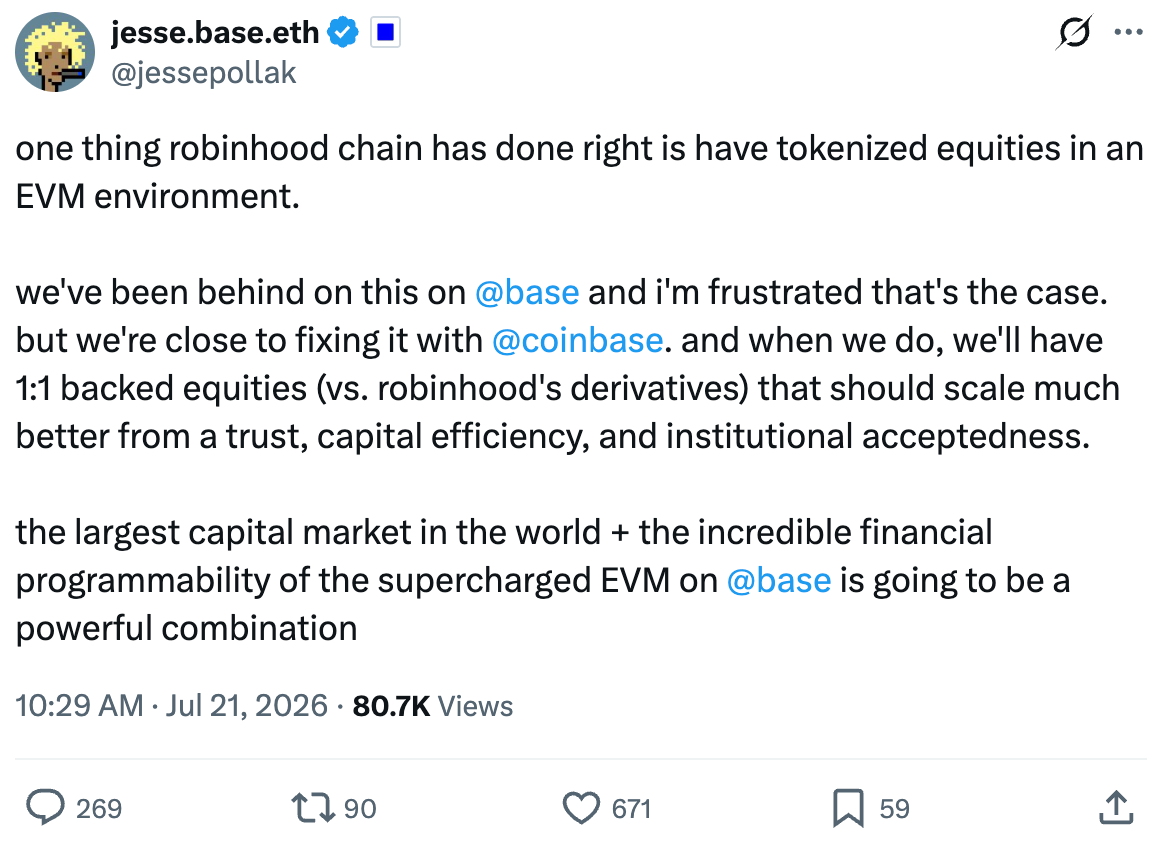


This is Jesse's second public "admission of mistake" recently. On the eve of the Robinhood Chain mainnet launch, Jesse Pollak publicly acknowledged that betting on social and creator tokens for over a year was a strategic misstep. Those experiments around Farcaster, Zora, and content tokens failed to achieve sustainable adoption. The prices of related tokens have significantly declined, and the enthusiasm of early builders has cooled. Pollak subsequently handed over leadership of the Base App back to Coinbase, with Cobie taking over, while he focuses on the chain's core infrastructure.


In the field of public chains launched by exchanges, aside from BNB Chain, Base has reached a level where few can match it. BNB Chain has years of accumulated advantages, a moat that Base cannot breach in the short term. However, when facing other L2s like OP Mainnet and Arbitrum, which also have years of established advantages, Base holds its own, even showing clear dominance in areas including meme tokens.


Perhaps precisely because of Coinbase's influence, Base, despite its strong momentum, lacks staying power. The problems buried during its rapid sprint have been magnified infinitely following the launch of Robinhood Chain.


After taking over the Base App, Cobie admitted that Coinbase is drifting away from crypto-native users, and Base's stagnation in decentralization is typical evidence. Base's centralization issues have long been widely criticized. The two block production interruption events in August 2025 and late June 2026 clearly point to problems with a single sequencer. An even bigger issue is that L2BEAT is preparing to downgrade Base's decentralization rating from Stage 1 back to Stage 0.
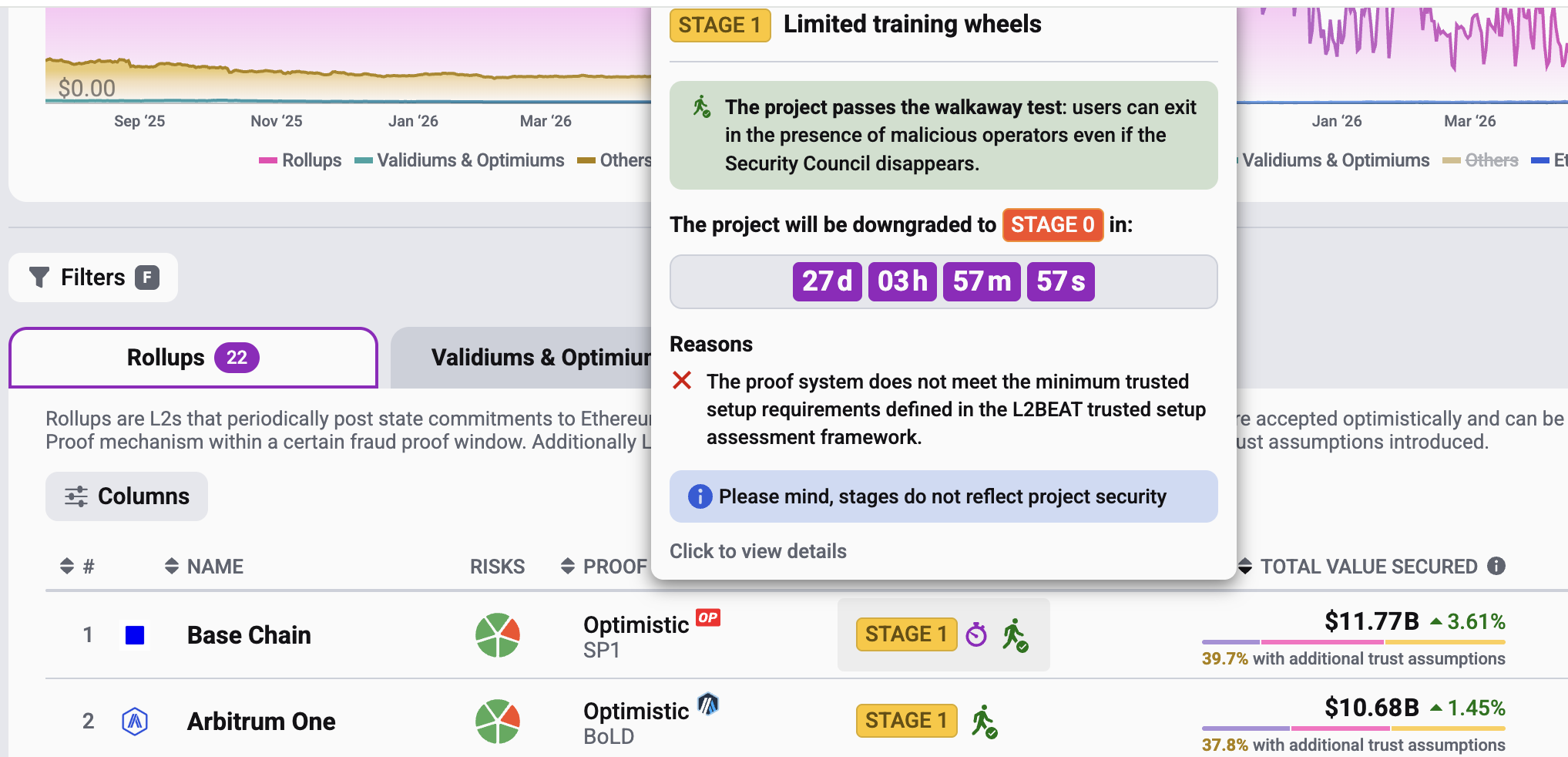


L2BEAT's standards do not equate to security. Base has already proven that user assets remain safe even if the Security Council fails. But the main reason this issue has been brought up again recently is: as a crypto-native exchange, how can you compete with Robinhood Chain if you haven't established any advantages in decentralization over such a long period?


Within just over ten days of its mainnet launch, Robinhood Chain's DEX trading volume surged into the top five, with daily transaction counts once surpassing Base's. Before this, Base could afford to "slack off" relying on its own traffic and data. But with a formidable enemy suddenly at the gates, every "minor issue" becomes unacceptable.


Since Robinhood Chain's launch, Robinhood CEO Vlad Tenev has continuously followed the dynamics of new projects. In contrast, Coinbase founder Brian Armstrong recently changed his profile picture, which sparked a meme token called BRAIN, causing its market cap to soar to $37 million. However, he quickly changed back to his old picture, leading BRAIN's market cap to plummet to $2 million. The contrast between their actions is striking.


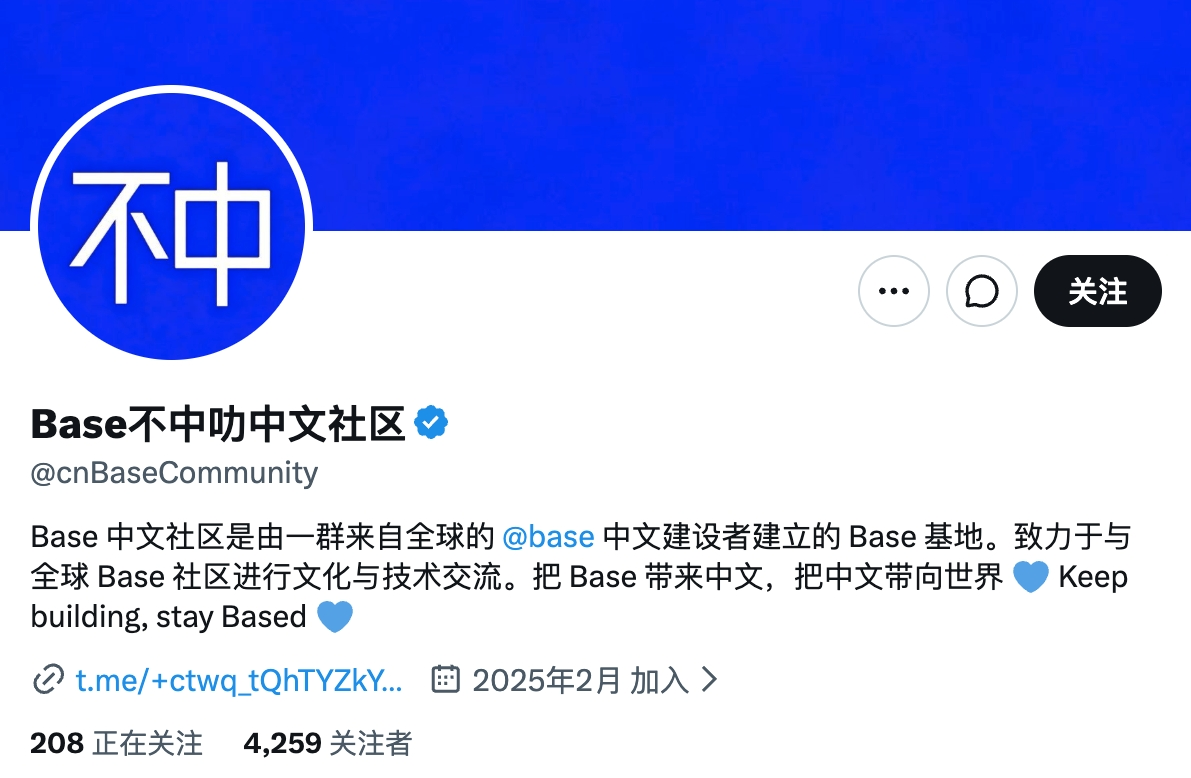
Although Brian Armstrong quickly responded on X to community feedback, stating that his personal account is not an investment signal and he will not endorse specific tokens, the community clearly wasn't buying it. The unofficial Base Chinese community X account changed its name to "Base 太狗了中文社区" (Base is too dog-like Chinese Community) after the incident, and today changed it to "Base 不中叻中文社区" (Base ain't working Chinese Community), dripping with sarcasm.


Of course, we cannot say Base is performing poorly. Base still boasts the highest TVL among L2s, approaching $12 billion, and holds the standard-setting authority in the machine payment field. Armstrong has repeatedly emphasized that Base's goal is to be long-term financial infrastructure, not to chase short-term hype. However, the emergence of Robinhood Chain has indeed accelerated competition and is forcing Base to respond more quickly to user demands for reliability and support.


For Base, the most urgent task now is perhaps not to address these gaps, but to leverage this pressure to genuinely resolve the long-standing technical and trust issues. Wall Street has countless financial firms that can replicate Robinhood Chain's path. Base does not hold a sufficiently large advantage in the RWA tokenization field. If it doesn't seize this opportunity to change, the situation will only become more passive.


Perguntas relacionadas

QWhat did Base co-founder Jesse Pollak admit to as a strategic mistake in the past year?

AJesse Pollak admitted that focusing on social and creator tokens, including projects around Farcaster, Zora, and content tokens, was a strategic mistake as they failed to bring sustainable adoption, leading to significant token price declines and a cooling of early builder enthusiasm.

QWhat is a major criticism regarding Base's decentralization according to the article?

AA major criticism is Base's lack of progress on decentralization. Its issues with a single sequencer, evidenced by two block production outages, and the impending downgrade of its decentralization rating from Stage 1 to Stage 0 by L2BEAT, are highlighted as significant problems.

QHow did Robinhood Chain's launch impact the competitive landscape for Base?

ARobinhood Chain's launch intensified competition. Its DEX rapidly entered the top five by trading volume, with daily transactions briefly surpassing Base's. This success exposed Base's existing issues, making them seem less acceptable and putting pressure on Base to address its shortcomings in reliability and user support more urgently.

QWhat controversy involving Coinbase's founder Brian Armstrong is mentioned, and how did the community react?

ABrian Armstrong changed his profile picture, which was seen as endorsing the meme token BRAIN, causing its market cap to surge to $37 million. After he quickly reverted the change, BRAIN's value crashed to $2 million. The community did not accept his explanation that his personal account was not an investment signal. The unofficial Base Chinese community X account changed its name first to 'Base 太狗了中文社区' (Base is too shady Chinese community) and then to 'Base 不中叻中文社区' (Base is not working Chinese community) in mockery.

QDespite the challenges, what strengths does Base still possess according to the article?

ABase still holds the highest TVL (Total Value Locked) among L2s at nearly $12 billion and maintains a dominant position in setting standards for the onchain payments space. The article also notes that Base's stated goal is to be a long-term financial infrastructure, not to chase short-term speculation.

Leituras Relacionadas

Global Stock Market's Storm Center: South Korea's Stock Market De-leveraging Is Largely Complete

Storm's Eye: South Korean Market De-leveraging Nears Completion The recent sharp correction in South Korean equities, with the KOSPI index dropping 32% from its June high, has been a key trigger for global tech stock volatility. The core driver was not a fundamental shift but a forced de-leveraging process within the market's unique structure, which is now largely complete. Two main leverage channels amplified the sell-off: 1. **Leveraged ETFs:** Their size, proportionally four times larger than in the U.S., peaked near $50 billion. Their mandatory daily rebalancing mechanism created a vicious cycle of "price drop → forced selling → further drop." Approximately 75% of this excess has been unwound, shrinking to $26 billion, with regulatory curbs now blocking new inflows. 2. **Hedge Fund Leverage:** Using swaps to magnify exposure, hedge funds saw their net long positioning fall by over 50% from peak levels. The most intense phase of this institutional de-leveraging is over. In contrast, **retail margin debt** poses minimal systemic risk. At 0.5% of market cap, it is far lower than in the U.S. or China, lacks automatic triggers, and is concentrated in smaller stocks. The conclusion: the high-leverage structures most prone to "chain-reaction selling" have been substantially cleared. The market is transitioning from a liquidity-driven crash to one priced more on fundamentals. The article argues that the AI trend—centered on Korean memory chips—remains intact. This episode represents a painful but necessary clearing of crowded trades, not the end of the AI revolution. For investors, the key question is conviction in the long-term AI direction; if the trend is real, current volatility is a cost of entry, not a terminal risk.

链捕手Há 1h

Global Stock Market's Storm Center: South Korea's Stock Market De-leveraging Is Largely Complete

链捕手Há 1h

Trading

Spot
活动图片




