Zcash Flaw Sparks Monero Audit Interest as Privacy Coin Debate Heats Up

TheNewsCryptoPublicado em 2026-06-06Última atualização em 2026-06-06

Resumo

A significant security flaw in Zcash's Orchard privacy pool was disclosed by non-profit developer Shielded Labs, causing ZEC's price to drop 38% in 24 hours before a modest recovery. The vulnerability, discovered on May 29th by security researcher Taylor Hornby using Anthropic's Opus 4.8 AI model, could have allowed an attacker to create an unlimited supply of counterfeit ZEC tokens undetected. This event has intensified the privacy coin debate. In response, Hornby announced plans to audit Monero (XMR), a leading privacy-focused cryptocurrency that, unlike Zcash, defaults to hiding all transaction data. Hornby expressed confidence in finding vulnerabilities in such privacy coins. The disclosure has cast fresh security scrutiny on the sector.

After non-profit developer Shielded Labs revealed a serious weakness in the blockchain’s Orchard privacy pool, which could have jeopardized the integrity of the token supply, Zcash (ZEC) fell 38% in 24 hours, speeding up the drop. Recent trading for ZEC has been around $361, with a low of $290, and the price has made some modest recovery of around 8% in the last 24 hours as per data from CMC.
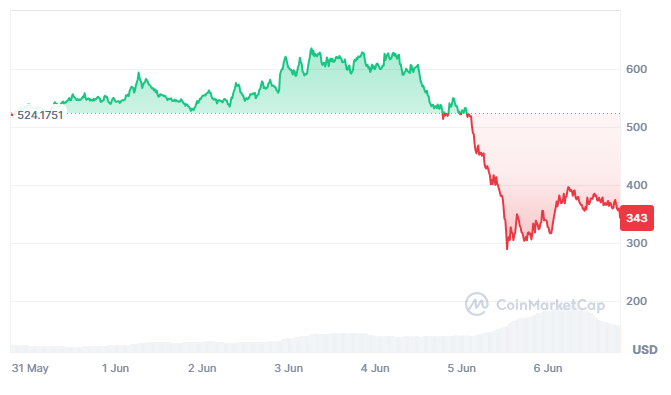
Fresh Security Scrutiny

On Thursday night, Shielded Labs released a comprehensive disclosure about X, exposing a security hole that, if used, might have enabled an attacker to secretly produce an infinite supply of fake ZEC tokens. Imagine someone sneaking into the Federal Reserve’s dollar printing machine and making off with a bunch of additional cash; the only difference is that not even the Fed would know it happened.

The flaw was found on May 29th by Taylor Hornby, a security expert hired by Shielded Labs in April 2026 to find protocol weaknesses before bad guys could. The Orchard circuit is the cryptographic scheme supporting Zcash’s most sophisticated privacy pool; Hornby performed a focused evaluation of it using Anthropic’s newly published Opus 4.8 AI model.

One of the tokens that security researcher Taylor Hornby plans to audit next is privacy coin Monero. Hornby utilized Anthropic’s Opus 4.8 AI model to discover a serious flaw in Zcash. Hornby said, “Absolutely!” when asked on X whether he could find vulnerabilities in private coins like Monero. Adding that, Monero will be put up to my list of things to audit.

Unlike Zcash, which gives users the option to be either visible or shielded, Monero (XMR) defaults to hiding transaction data and is one of the biggest privacy-focused cryptocurrencies.

Highlighted Crypto News Today:

Worldcoin Falls Terribly as Arthur Hayes Dumps WLD

TagsAltcoinMoneroZcash

Perguntas relacionadas

QWhat was the key event that triggered the drop in Zcash's price and sparked interest in auditing Monero?

AThe key event was the disclosure by Shielded Labs of a serious security flaw in Zcash's Orchard privacy pool, which could have allowed an attacker to secretly create an unlimited supply of fake ZEC tokens.

QWho discovered the critical vulnerability in Zcash's Orchard circuit, and what tool did they use?

AThe vulnerability was discovered by security expert Taylor Hornby, who was hired by Shielded Labs. He found the flaw using Anthropic's newly published Opus 4.8 AI model.

QHow did the disclosure of the Zcash flaw specifically impact its price (ZEC) in the short term?

AFollowing the disclosure, Zcash (ZEC) fell 38% within 24 hours, reaching a low of around $290. It later saw a modest recovery of about 8% in the subsequent 24 hours.

QWhat is the fundamental difference between Monero's (XMR) and Zcash's (ZEC) approach to privacy, as mentioned in the article?

AThe fundamental difference is that Monero defaults to hiding all transaction data by design, whereas Zcash gives users an option to choose between transparent (visible) or shielded (private) transactions.

QWhat is the next project that security researcher Taylor Hornby plans to audit, and what was his confident response regarding finding vulnerabilities in it?

ATaylor Hornby plans to audit the privacy coin Monero next. When asked on X if he could find vulnerabilities in privacy coins like Monero, he responded, 'Absolutely!'

Leituras Relacionadas

TechFlow Intelligence Bureau: Chip Stocks Lose Trillions in a Single Day, Bitcoin Falls Below $60,000, US-Iran Conflict Escalates

**Daily Tech & Markets Roundup: AI Advances, Market Turmoil, and Geopolitical Tensions** **AI / LLMs**: Anthropic's internal report on AI self-improvement sparked serious discussions about Recursive Self-Improvement (RSI). Meanwhile, debate continues on AI coding tools after Claude was accused of introducing bugs into the rsync codebase. In positive news, DeepSeek V4 Flash impressed in local deployment tests, and GitHub Copilot now supports custom endpoints for local models. A surprising research turn suggests removing chain-of-thought prompting can sometimes improve LLM performance. **Crypto / Web3**: Bitcoin plunged below $60,000, with its RSI hitting levels last seen during the COVID-19 crash, driven by strong U.S. jobs data reviving interest rate hike fears. Discussions highlight Ethereum DeFi's continued lack of a smooth consumer payment layer. **Chips / Hardware**: Chip stocks suffered a massive sell-off, with the Philadelphia Semiconductor Index posting its worst single-day drop in six years, erasing over a trillion dollars in value. Marvell, Micron, AMD, and Intel were among the biggest losers. **Tech Companies**: A leaked Microsoft document revealing goals to make Copilot "addictive" drew criticism. LinkedIn founder Reid Hoffman left Microsoft's board to focus full-time on his AI agent startup, Manus. Google was revealed to be paying SpaceX $920 million monthly for AI training compute. **Markets & Macro**: A blowout U.S. jobs report (172k vs. 80k expected) crushed hopes for near-term rate cuts, sending Treasury yields soaring and triggering a broad market sell-off. CEOs from Kraft, McDonald's, and Whirlpool simultaneously warned U.S. consumers are exhausting their savings. **Geopolitics**: U.S.-Iran tensions escalated with missile/drone interceptions and U.S. strikes on Iranian radar sites, keeping the critical Strait of Hormuz largely closed since late February and posing ongoing oil supply risks. **The Bottom Line**: The strong jobs data acted as a single trigger for correlated sell-offs across equities, crypto, and chips. Underlying the volatility is a stark contradiction between robust employment data and warnings of consumer weakness, alongside geopolitical risks that could reignite inflation, leaving markets to price in a fraught macro outlook with no clear "soft landing" path.

marsbitHá 6h

TechFlow Intelligence Bureau: Chip Stocks Lose Trillions in a Single Day, Bitcoin Falls Below $60,000, US-Iran Conflict Escalates

marsbitHá 6h

Trading

Spot
Futuros
活动图片