"Every generation has its eggs to claim, and perhaps for our generation, it's Binance Alpha," said He Yi, Co-CEO of Binance, in late December 2025.
However, over time, according to data statistics from the Alpha123 platform, the number of Binance Alpha users has dropped from nearly 500,000 in November 2025 to about 200,000 today, a decline of over 60%.
At the same time, overall returns have significantly decreased. The "farming" sector, which once generated monthly earnings of over $2,000 per account in mid-2025, is no longer as prosperous.
According to Alpha123 platform statistics, the current daily active users of Binance Alpha are approximately 203,000. As of January 28, a total of 18 airdrops were distributed this month, with claimable shares ranging from 13,000 to 72,000. The average number of claimable shares is about 33,000, accounting for roughly 16.2% of the average daily active users.
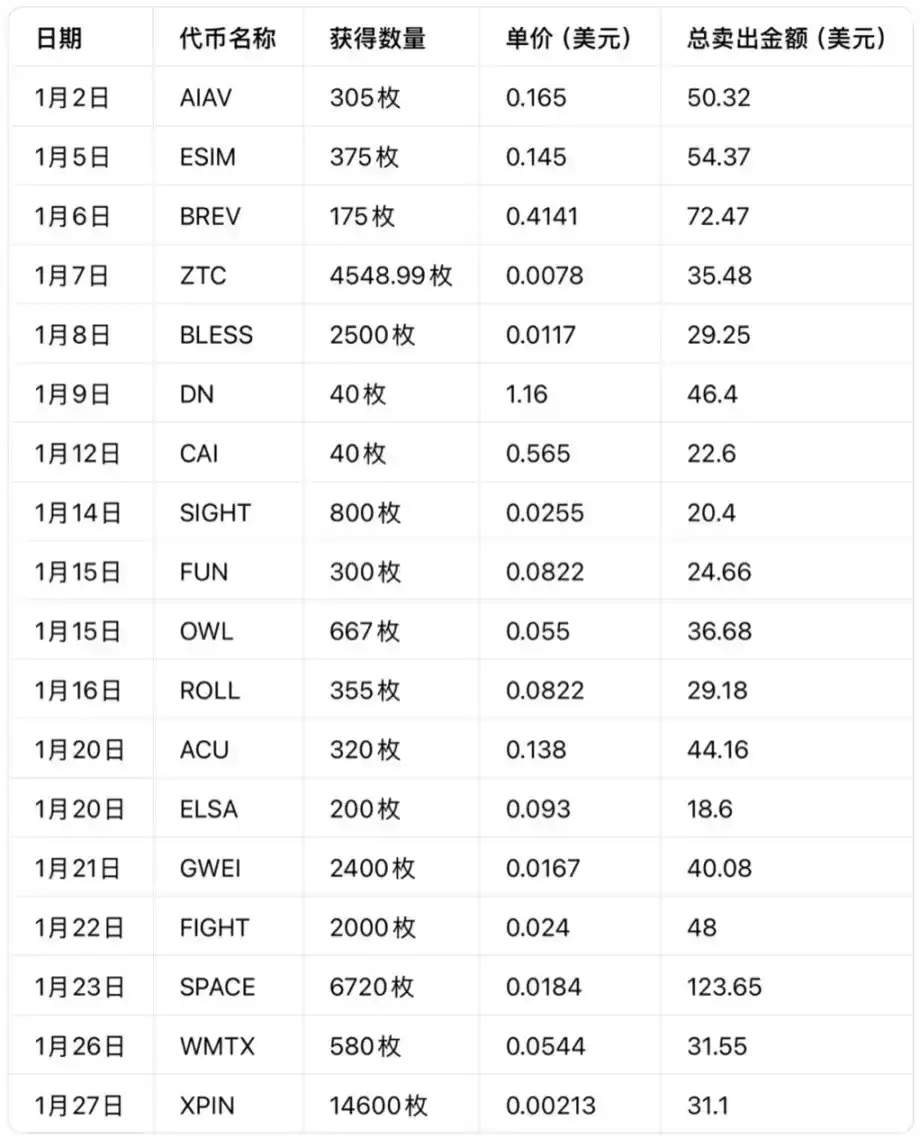
As of January 28, only one of the 18 Alpha rounds this month had a single-round return exceeding $100, which was SPACE at $123.65 (calculated based on the latest opening price 10 minutes after trading began). Meanwhile, 14 rounds had returns below $50, with the lowest round, ELSA, yielding only $18.60.
This month, the minimum Alpha points threshold was 230, while the highest reached 257 points. On January 26, the claim threshold for the Alpha token WMTX was as high as 241 points, but the single-round return was only $31.55. If a user earns 16 points per day, since Alpha points reset every 15 days, theoretically, 240 points can be accumulated in 15 days. Once the threshold exceeds 240 points, it becomes impossible to meet the requirement within a single cycle. For example, the 241 points required for WMTX mean that relying solely on stable daily point accumulation cannot meet the threshold within one cycle.
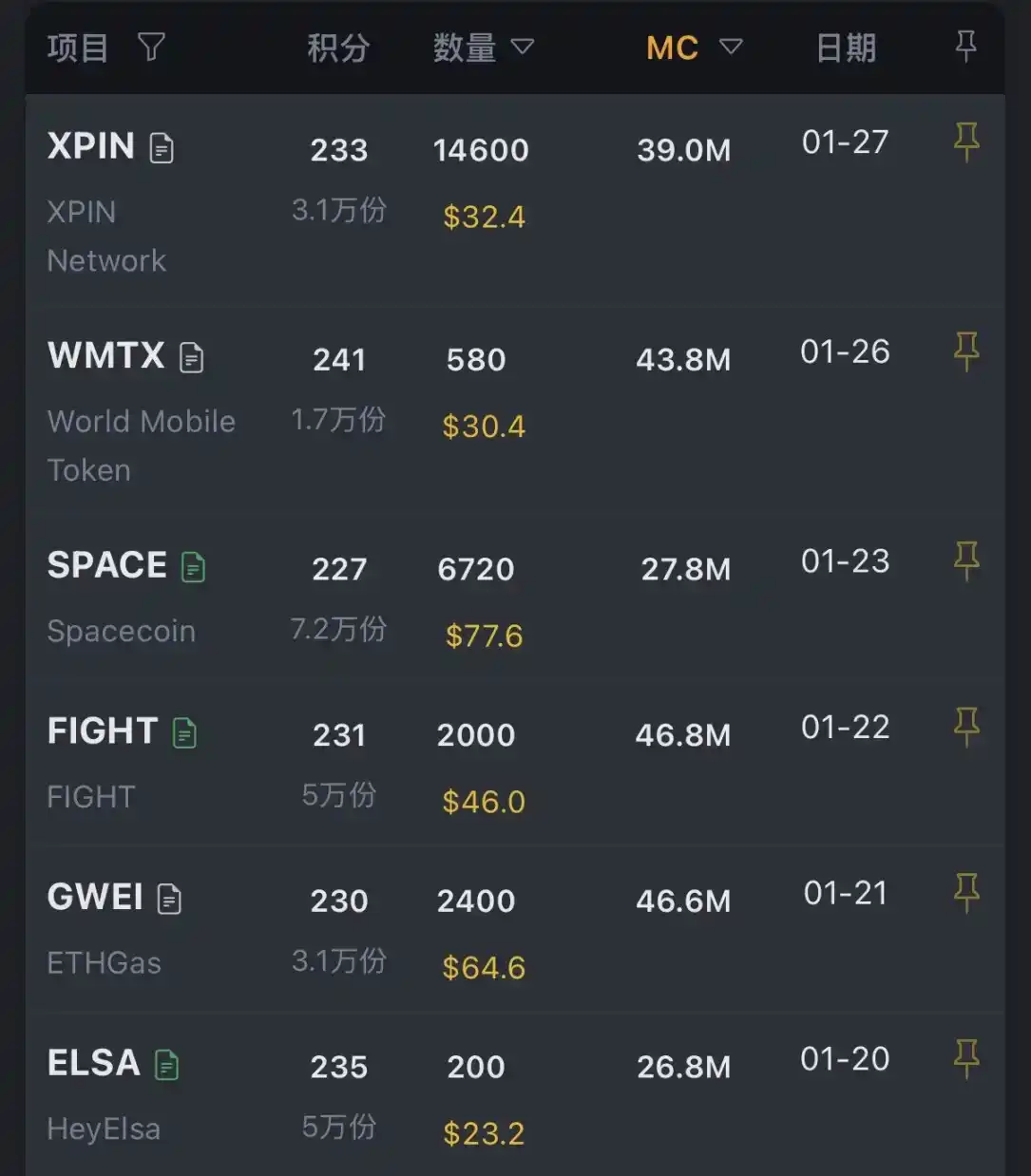
Compared to the period in mid-2025 when single-account monthly income approached $2,000, the theoretical cumulative return for the first 18 rounds this January is approximately $715.70. This figure is based on the premise that "the points threshold is met for every round, and the maximum number of rounds is successfully claimed." However, if a user earns 16 points per day, the maximum number of rounds that can actually be claimed is 5, with returns of about $261.43.
Taking SPACE, which had a return of over $100 in a previous round, as an example, the claim threshold was 227 points, and each claim required 15 points. If a user automatically earns 1 point per day through account balance, the remaining points must be obtained through trading. According to the current relationship between points and trading volume, earning 15 points requires completing approximately $32,700 in trading volume. For mainstream participants with a single trade size of about $330, this equates to completing 100 trades per day.
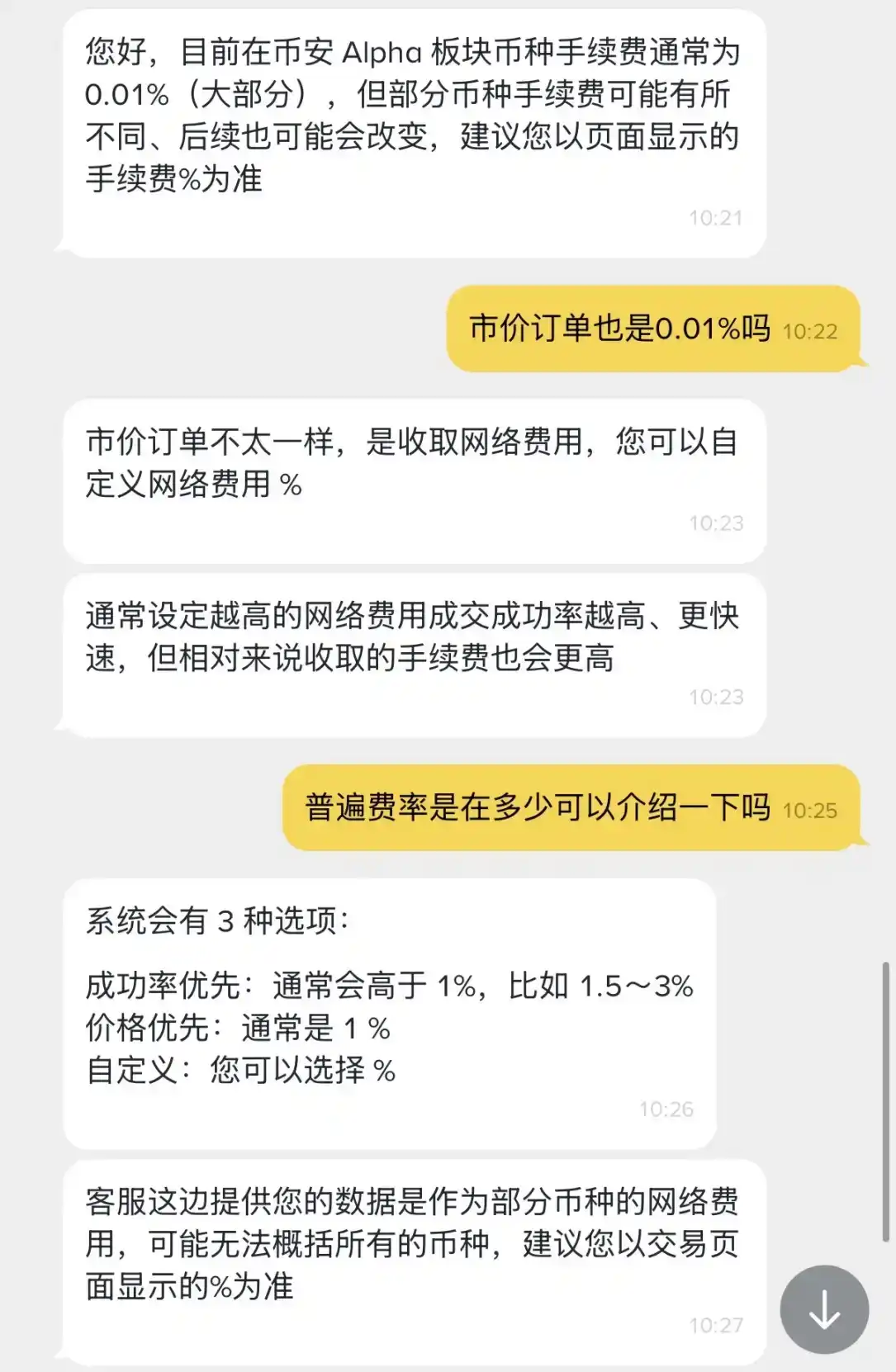
According to the author's investigation, the current limit order fee for the Binance Alpha sector is 0.01%, while the market order fee is typically 1%. If market orders are used to achieve $32,700 in trading volume, at least $327 in fees must be paid daily, excluding price slippage. If trading Alpha sector tokens in the Binance wallet, each transaction incurs a 0.01% service fee and a 0.01% trading fee, with a network fee of about $0.10 per transaction. For a daily trading volume of $32,700, approximately $17 in fees must be paid. If points are accumulated continuously for 15 days to reach 240 points, the minimum cost is $255. Additionally, claiming one Alpha round requires consuming 15 points, which equates to a cost of $17.
To reduce the pressure of the number of trades, the platform occasionally launches multiplier point events, which lower the "number of trades threshold" to some extent but simultaneously amplify price risks. Under a 4x points mechanism, theoretically, only about 25 trades of $330 each are needed daily to earn 15 points. However, such tokens typically experience more剧烈 volatility and have limited liquidity depth, meaning price slippage and short-term fluctuations can quickly erode potential returns.
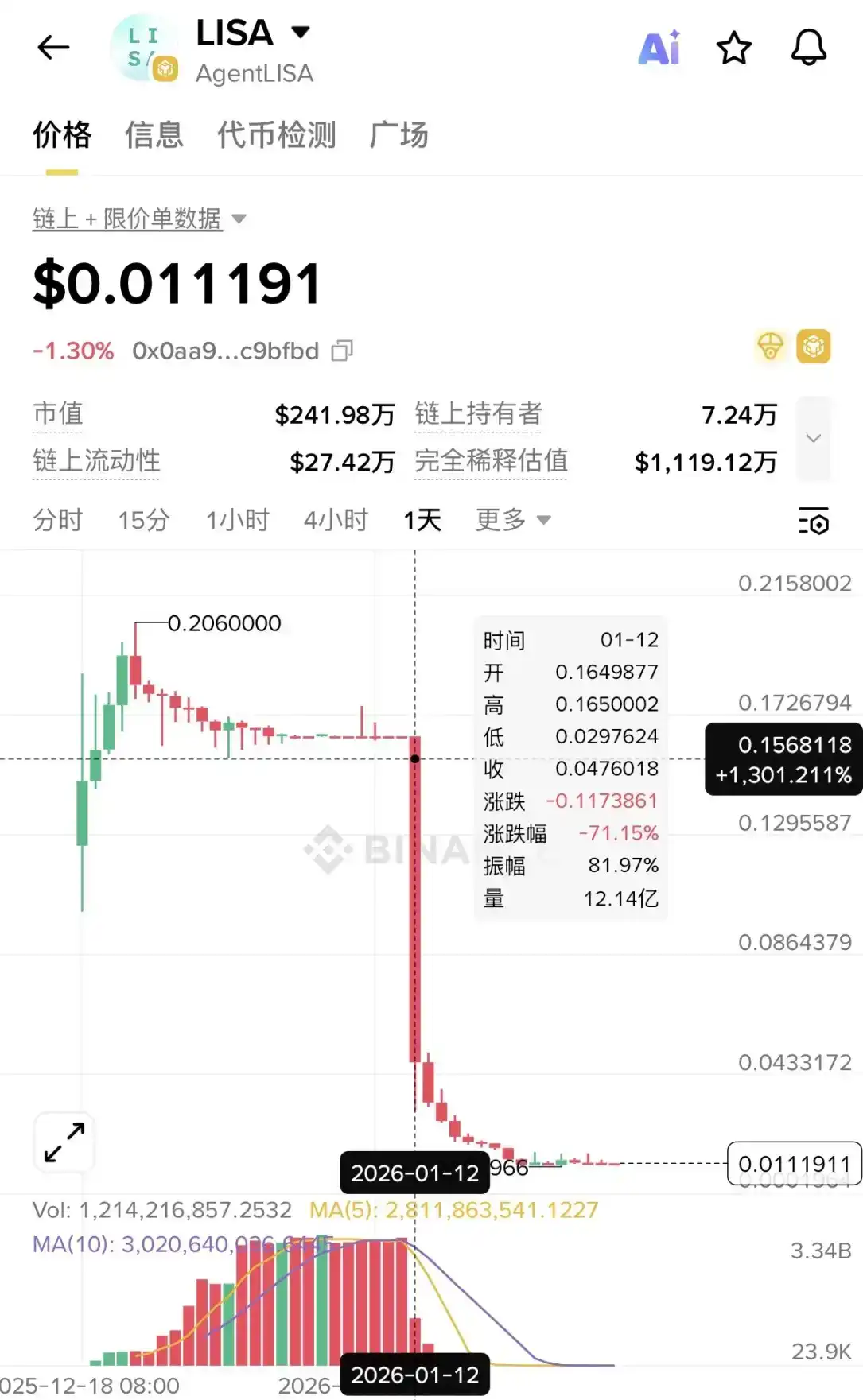
The case of LISA on January 12 became a typical example. The token attracted a large amount of刷量资金 due to its 4x Alpha points incentive, but it experienced concentrated selling within a short period, with a maximum drop of over 80% within 24 hours. The sharp price decline caused some users to incur trading losses far exceeding the airdrop value while earning points.
For users who continue to participate in Alpha, the most direct question is often not "can I still make money" but "is it worth continuing to farm."
Some early participants achieved returns far above the average on certain projects. For example, the 59.82 RIVER tokens obtained on September 19, 2025, if held until now, would be worth about $3,200 at current prices. The 644 MYX tokens obtained on May 6, 2025, are worth about $3,870 at current prices, and if sold at the historical high, the returns would exceed $11,000.
However, such "rare diamond-level big catches" are not consistently replicable. In the current environment of shrinking single-round returns, rising thresholds, and increased volatility, most rounds are closer to small,分散, and uncertain returns. Users are more likely to focus on the overall input-output ratio rather than个别极端收益案例.
The Alpha model本质上 involves exchanging real trading behavior for early token distribution opportunities from projects. Its sustainability relies on the continuous emergence of projects with market performance. When the market enters a stage of存量博弈, the number of high-quality projects is limited, while the number of participants continues to grow, naturally diluting the expected returns for individual users.
At the same time, the core purpose of Alpha in its early stages was to attract traffic for new projects, activate on-chain interactions, and increase user engagement with the Binance wallet ecosystem. During the early high-incentive phase, this goal was clearly achieved, and Alpha一度 became a significant source of user activity and trading volume.
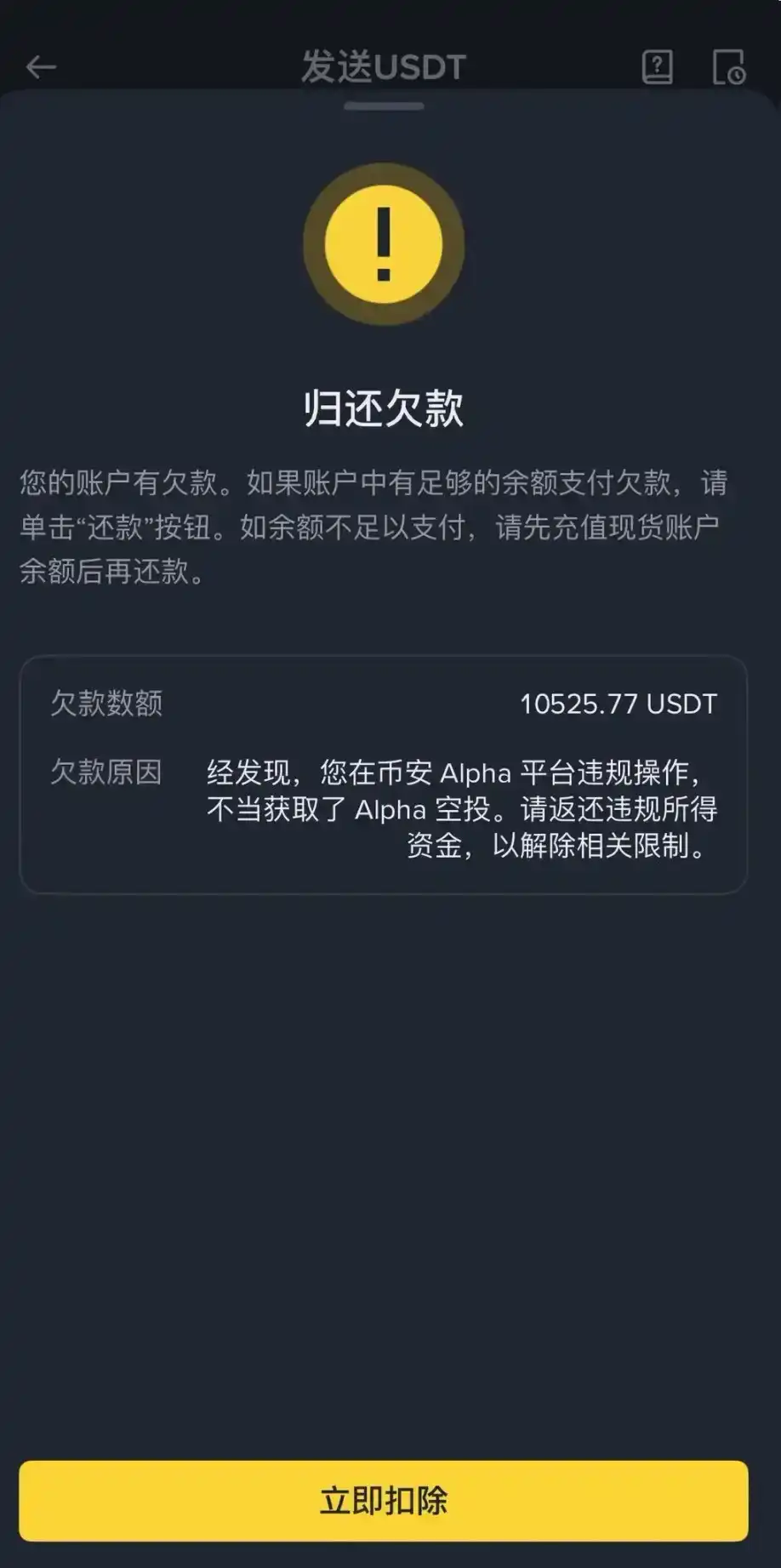
However, as刷量行为, batch operations by studios, and high-frequency gaming intensified, the incentives gradually became套利化. In November 2025, Binance imposed restrictions on some accounts identified as batch-operated by studios and required the return of related earnings. This move showed the platform's effort to压缩异常行为空间, but the community generally believes that automated tools have advantages in efficiency and cost control, putting manual普通用户 at a growing disadvantage in the points competition. Some participants反馈 that in the current environment of high points thresholds and market volatility, continued participation not only yields unstable returns but may also result in net losses due to price fluctuations of the刷量代币, leading them to reduce frequency or even withdraw.
For ordinary users, Alpha is no longer a channel where stable returns can be obtained simply through frequency. Instead, it has become more of a strategic choice requiring careful calculation of costs and risks.