Non-fungible tokens (NFTs) have fallen to their lowest monthly sales volume this year, with digital collectibles declining by over 66% in market capitalization from their January highs.
CryptoSlam data shows that NFT sales declined to $320 million in November, roughly half of the $629 million recorded in October. The drop pulled the monthly volumes back to levels not seen since September 2024, when digital collectible sales hit $312 million.
The data also shows that between Dec. 1 and 7, NFTs generated $62 million in sales, marking the weakest weekly total of 2025. The slow start to December suggests that the downturn may persist through the month as NFT momentum slows.
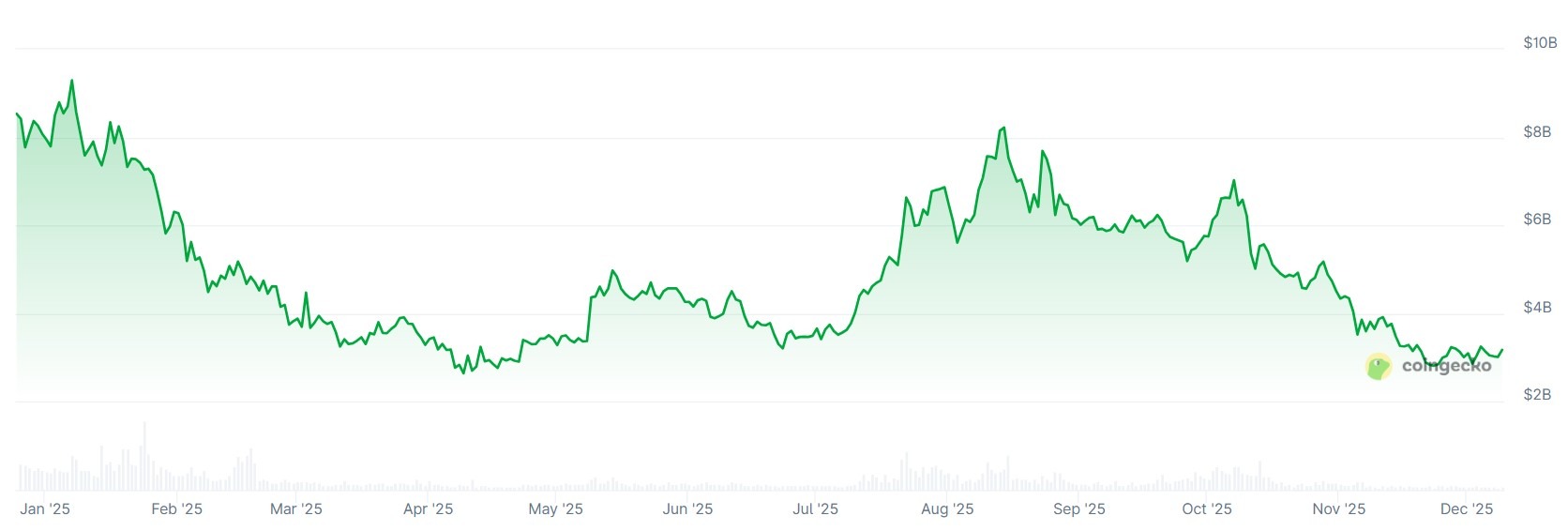
The downward trend comes amid a broader decline in NFT valuations. According to CoinGecko, the sector’s overall market cap is at $3.1 billion, down 66% from its high of $9.2 billion in January.
Blue chips slide, but Infinex Patrons and Autoglyphs buck trend
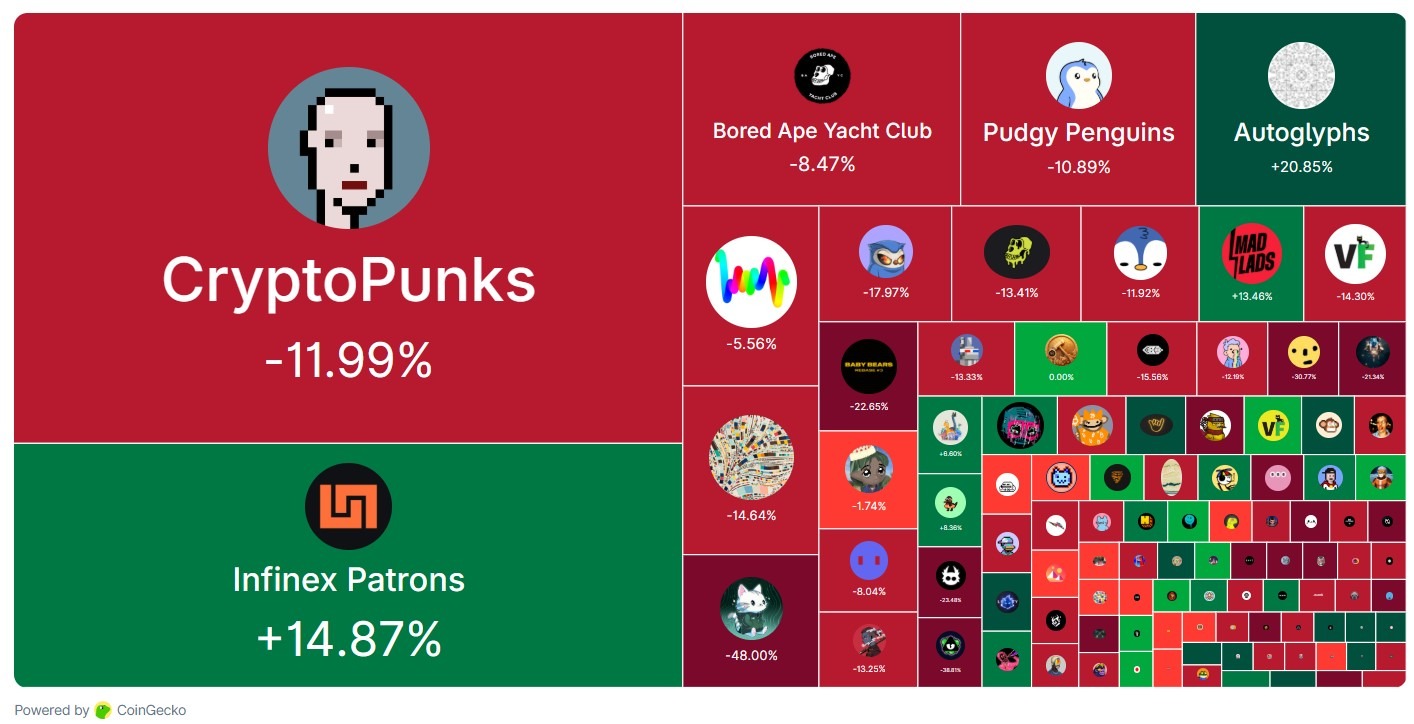
CoinGecko data showed that most of the top NFT collections mirrored the broader market decline, with CryptoPunks, the largest by market cap, falling 12% in the last 30 days.
Bored Ape Yacht Club slipped 8.5%, while Pudgy Penguins dropped 10.6% in the same time frame, continuing a pullback across the most dominant NFT assets.
The downturn did not spare art-driven blue-chip collections. Chromie Squiggle slid 5.6%, Fidenza fell 14.6%, Moonbirds dropped 17.9% and the Mutant Ape Yacht Club was down 13.4% in the last month.
The biggest decline came from Hypurr, which shed 48%, making it the largest decline among the top 10 NFT collections.
Meanwhile, two major collections posted gains in the last 30 days, bucking the downward trend. Infinex Patrons, currently the second-largest NFT collection by market cap, posted gains of 14.9%, while Autoglyphs outperformed the entire top 10 leaderboard with a 20.9% surge in the last 30 days.
Related: Meta shares climb on report of possible 30% metaverse budget cut
NFT winter deepens as 2025 concludes
The latest decline comes amid a turbulent quarter for the NFTs market. As Cointelegraph previously reported, NFTs recorded a sharp drop in valuation from October to November.
Digital collections dropped from $6.6 billion to $3.5 billion even as sales slightly climbed. This represented a 46% drop in just 30 days.
The weakness was followed by a rebound. On Nov. 11, NFT market cap briefly recovered from $3.5 billion to $3.9 billion, reflecting renewed appetite alongside a memecoin rally.
However, the recovery was short-lived. CoinGecko data showed that the NFT market cap is at $3.1 billion, down 53% from October.
Magazine: Digital art will ‘age like fine wine’: Inside Flamingo DAO’s 9-figure NFT collection