Bitcoin's Decline Marks the Transformation of Crypto

foresightnews_apiPublicado em 2026-06-05Última atualização em 2026-06-05

Resumo

Title: The Decline of Bitcoin Marks the Transformation of Crypto While Bitcoin's price recently fell below $70,000, down approximately 45% from its peak, the broader crypto industry is not following it into decline. Instead, crypto is maturing and evolving beyond its dependence on Bitcoin's price movements. Two of Bitcoin's core functions are being usurped. First, AI has captured its role as the primary speculative asset. AI, with its tangible revenue, explosive demand, and massive capital inflows ($700-830 billion in 2024), is siphoning off the speculative "hot money" that once drove Bitcoin. It also contributes to a sustained high-interest-rate environment, further tightening liquidity for assets like Bitcoin. Second, dollar-pegged stablecoins like USDC and USDT have replaced Bitcoin as the crypto market's foundational currency and primary on/off-ramp. Most trading pairs and on-chain transactions are now settled in stablecoins, severing the historical link where all capital inflows had to pass through Bitcoin first. This decoupling allows projects to thrive based on their own fundamentals rather than Bitcoin's price. Examples include Hyperliquid, an on-chain derivatives exchange with annual revenues of $8-13 billion, and prediction market platform Polymarket, valued at $200 billion with $3.65 billion in annual fees. These projects are evaluated on traditional metrics like revenue and user growth. New opportunities are emerging, particularly around privacy. Privacy coin...


Author: nikshep

Compiled by: Luffy, Foresight News


AI has taken away Bitcoin's speculative risk attributes, and dollar-backed stablecoins have replaced Bitcoin as the universal circulating currency in the crypto market; the anchor that once silently held together the fragmented crypto world is no longer Bitcoin. This is the most favorable structural change for the crypto industry in years, yet few understand the logic behind it.


This week, Bitcoin fell below $70,000, plummeting about 45% from its peak last October, causing widespread lament in the market. Spot ETFs experienced historic large-scale and sustained outflows, marking the longest redemption cycle since their launch; the price action of Bitcoin, hailed as "digital gold," remains sluggish, while physical gold surges ahead.


But the market's regret is misplaced.


Just as Bitcoin continues its decline, an on-chain exchange largely unheard of by most surpassed Coinbase in trading volume last year; a prediction market platform's valuation soared to $20 billion, with annualized fee revenue reaching $365 million; a privacy coin, once viewed skeptically by the market, rose 70% in a single week, charting an independent course while Bitcoin moved sideways; and a long-underestimated underlying network enables private transfers across all chains, where users don't even need to buy its native token to transfer assets.


The crypto industry has not sunk with Bitcoin. Crypto no longer needs Bitcoin.


This statement may seem bearish at first glance, but the reality is quite the opposite. Crypto is maturing, moving beyond the wild stage where all coins were tied to Bitcoin's price movements and speculation-driven rallies, evolving into a dollar-denominated real economic ecosystem. Projects now succeed or fail based on their own fundamentals. A new underlying infrastructure for interconnectivity is replacing Bitcoin, linking together the entire crypto world.


This year, Bitcoin has lost two of its core functions. Two new types of entities have stepped in as replacements, and the vacant niches in the old ecosystem are nurturing entirely new opportunities.


AI Has Taken Bitcoin's Risk-Speculation Capital


Bitcoin itself generates no cash flow, has no profits, dividends, or interest. Its price fluctuations are almost entirely determined by the volume of speculative capital, making it a typical capital reservoir: prices surge during periods of loose liquidity and plunge when capital tightens. In 2026, the AI sector emerged powerfully, continuously diverting speculative hot money that once flowed into Bitcoin.


Global investment in AI infrastructure this year is projected to be in the range of $700 billion to $830 billion, roughly equivalent to half the size of the US investment-grade bond market, with the potential to reach $7 trillion by 2030; the AI industry contributes about 5% of US GDP, and its contribution to US economic growth now exceeds that of household consumption. Nvidia alone accounts for 8% of the S&P 500 index weight. AI is no longer just another sector; it has formed a super-strong gravitational field for capital, reshaping the pricing logic of capital across the entire market.


AI is continuously draining capital from Bitcoin across three dimensions:


1) AI has captured the core narrative. Bitcoin's past core selling point was "betting on an asymmetric future opportunity," but AI has tangible revenue, continuously exploding market demand, and policy support from governments. Investors can gain exposure through index funds. Institutions now categorize Bitcoin alongside speculative, non-profit-generating meme stocks as part of the same risk asset pool. Within the same risk pool, one side offers profit realization while the other relies purely on expectation. Capital naturally continues to exit Bitcoin, which is the root cause of the consecutive ETF redemptions.


2) AI needs capital. AI expansion heavily relies on debt financing. Cloud giants' bond issuance has already surpassed last year's total, and private credit targeting the AI industry has exceeded $200 billion. Massive debt issuance by high-quality targets absorbs top-tier capital, leaving less and less to trickle down to high-risk assets like Bitcoin.


3) AI forces a high-interest-rate environment. The AI industry drives up production costs for electricity, water, storage chips, etc., with price increases generally in the 5% to double-digit range, anchoring US inflation around 3.8%. The Fed is forced to maintain a high benchmark rate of 3.50%–3.75%, with the market expecting almost no rate cuts this year. AI not only competes with Bitcoin for capital but also locks in a tight liquidity environment from a macroeconomic perspective.


Additionally, the computing power side is also being disrupted. Bitcoin mining and AI computing power are essentially about converting electricity into computing power, competing for the same power resources. However, Nvidia servers offer far higher economic efficiency per unit of electricity than mining rigs. Last quarter, the comprehensive cost for top publicly traded mining firms to mine one Bitcoin was about $80,000, but the market price was only $70,000, resulting in a loss of $19,000 per coin. Numerous mining firms are transitioning to AI computing: the industry has signed over $70 billion in AI supercomputing cooperation orders, with top miners expecting AI business revenue to account for up to 70% by year-end. Core Scientific spent $10.2 billion to convert a 300-megawatt Bitcoin mining facility into an AI data center; Riot sold its own Bitcoin and leased land to AMD. These entities, once guardians of Bitcoin's network security, are collectively exiting.


Compared to the quantum computing risk many fear, AI brings permanent structural change. Even if future quantum computers could crack Bitcoin's encryption algorithms, the industry could patch the protocol through post-quantum cryptographic standards and soft forks. However, AI's capture of narrative, capital, and power resources is irreversible; no protocol upgrade can reverse it. Bitcoin's first core value is now completely obsolete.


Dollar Stablecoins Replace Bitcoin as the Base Money of the Crypto Market


This is the most easily overlooked critical change. Throughout crypto's development history, Bitcoin long served as the industry's reserve asset and on/off-ramp intermediary: fiat was first converted to Bitcoin, then exchanged for various altcoins. All coins were priced in BTC, and incoming off-chain capital had to buy Bitcoin first. This was the root cause of the synchronized price movements across the entire market in the past.


Stablecoins have severed this link. USDC trading volume surpassed USDT for the first time since 2019, and global stablecoin annual transaction volume has exceeded $30 trillion. The current user on-ramp path is now: fiat → USDC → various assets. Bitcoin has been completely removed from the circulation chain. Polymarket relaunched this year with its own native dollar stablecoin (pegged 1:1 to USDC reserves), and Hyperliquid settles entirely in US dollars across its platform. As summarized within the industry: stablecoins have become the underlying universal reserve currency for applications, with various platforms merely placing their own label on top.


Therefore, when market risk aversion increases, dominance charts show Bitcoin's share declining while stablecoins' share rises. Capital is not leaving the crypto market; it is merely switching within the industry to dollar-denominated assets. Investors looking to gain exposure to the crypto sector no longer need to hold Bitcoin; dollar stablecoins have taken over this function. On-chain transactions all operate in dollars, and on-chain capital flows can no longer bring buying pressure to Bitcoin. Bitcoin's second core function has officially concluded.


After Breaking Free from Bitcoin, the Crypto Economy Thrives


Setting Bitcoin aside, today's realized products are no longer speculative chips tied to coin prices but commercially viable projects with genuine cash flow.


The existence of Hyperliquid alone debunks the notion that "cryptocurrency is dying." This on-chain spot and perpetuals exchange matches the order book depth and transaction speed of top-tier CEXs, with users self-custodying their assets; its total trading volume last year was $2.6 trillion, higher than Coinbase's $1.4 trillion, with annualized revenue of $8–13 billion. The platform uses 97% of its fees for secondary market buybacks and burns of its native HYPE token. The annual buyback volume is approximately $13 billion, accounting for 7% of the token's total market cap, with a burn rate 4–5 times that of Ethereum's and 14 times that of Solana's. The project received no venture capital funding, achieving a value flywheel through community airdrops and fee buybacks. Trading volume fluctuations depend entirely on trader demand and have no correlation with Bitcoin's price action. The platform's scale grew against the trend during Bitcoin's bear market.


Another key player is the prediction market leader Polymarket, valued at $20 billion, with annual trading volume of $250–300 billion, annualized fees of $365 million, and daily active users increasing 2.5 times in five months; it issued its own platform dollar stablecoin, and its token is soon to be listed. Polymarket's product revolves around betting on elections, sports events, and global happenings, with demand independent of Bitcoin price movements.


Projects like these now adopt traditional corporate valuation logic: revenue, user base, valuation multiples—a clear sign of the industry's maturation.


The New Sector Bonus: Privacy Becomes a Scarce Resource


If Bitcoin's transparent and monitored ledger was the default option of the past, then privacy is the new upgrade option. This is a sovereign, untraceable currency that can only be obtained on-chain. But the way to acquire this currency is entirely different, and this distinction is key.


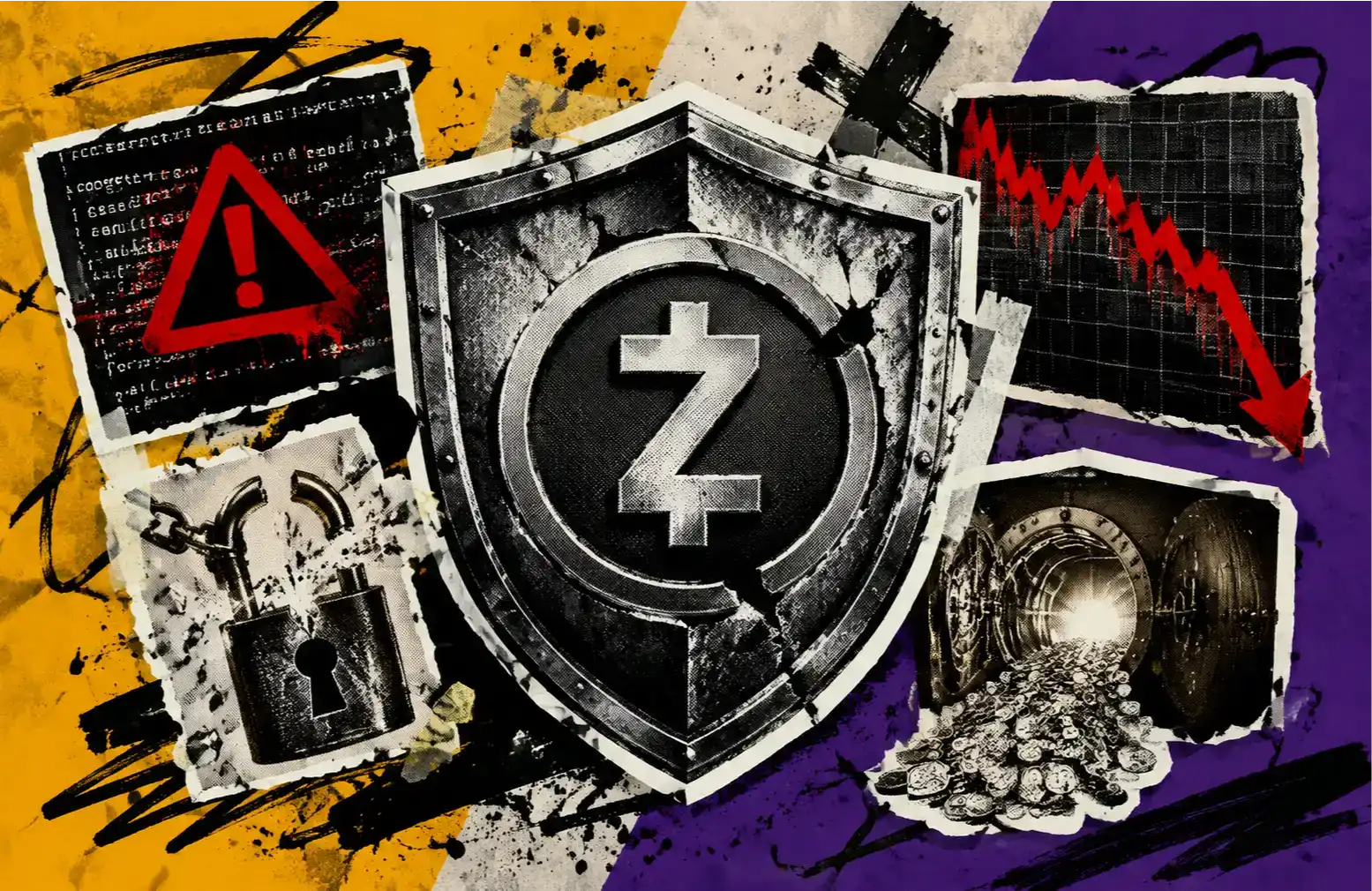
Self-custodied privacy. Zcash (ZEC) surged 70% in a single week, with its total market cap approaching $10 billion, up over 45x from its 2024 low, charting an independent course while Bitcoin moved sideways. Its fundamental support is solid: the proportion of private transaction volume increased from 11% last year to 30%, and most private assets are not transferred back to public chains, leading to a continuously shrinking circulating supply coupled with rising demand. Regulatory pressures that once suppressed privacy compliance have ironically boosted the realization of privacy coin value: Robinhood listed ZEC spot trading, and Grayscale filed for the industry's first privacy coin spot ETF. Privacy has evolved from a single-use case into a long-term investment thesis. However, using ZEC requires purchasing the token separately and switching to its public chain.


Omnichain universal privacy. NEAR eliminates the need to buy a specific privacy token or migrate assets across chains. Leveraging on-chain signature technology, a single NEAR account can directly control native assets on Bitcoin, Ethereum, and Solana, without wrapped tokens or cross-chain bridge risks, relying on a decentralized multi-party secure computation network for key custody. Combined with a confidential intent protocol, users can privately transfer assets on any public chain, with transaction counterparties and routing information hidden throughout the process, executed via private sharding. User assets remain on their original chains, turning privacy into a universally applicable underlying service.


Compared to a single privacy coin, this model is more disruptive. Users don't need to hold ZEC or leave the native ecosystems of Ethereum or Bitcoin. Privacy transforms from an exclusive asset attribute into a default feature for all transactions.


The Underlying Coordination Layer for the Multi-Chain Era, Replacing Bitcoin's Hub Role


Looking at the broader crypto landscape: the industry is no longer converging but rather operating with multiple chains in parallel, with ecosystems continuously expanding. Dollar stablecoins have become the underlying universal currency, and AI agents autonomously holding credentials, calling interfaces, and transferring funds have become new participants.


The vast multi-chain + agent ecosystem urgently needs interconnected infrastructure, a role Bitcoin played over the past decade. That vacancy is now being filled by a new coordination and privacy layer: cross-chain signing, dollar settlement, private transactions, and agent automation.


NEAR is targeting this sector. It supports AI agents settling privately in USDC, leverages hardware security zones for confidential computation, and aims to build its signature network into the key management hub for the agent economy, providing chain-agnostic cross-chain and privacy services for users and bots.


Another product in this space is Venice. It focuses on AI applications with private interactions, attracting a large number of native Web2 users; staking its platform token VVV allows users to share AI inference revenue. The project has bought back and burned over 40% of its token circulating supply, with demand driven by AI usage volume, decoupling its token's performance from Bitcoin.


The new focal point of the industry has already taken shape: it is no longer a single cryptocurrency but the underlying infrastructure, with various substantive projects creating real value by building upon it.


Summary


Putting it all together: The US dollar is the circulating cash for the entire industry. Project tokens like HYPE, POLY, ZEC, NEAR, VVV correspond to corporate equity. The privacy-cross-chain layer is the infrastructure linking the entire industry. Bitcoin is just one segment within this ecosystem. With AI capturing the macro speculative pool, physical gold absorbing safe-haven demand, and stablecoins monopolizing the reserve currency function, Bitcoin's former glory has faded under this triple pressure.


The era of the entire industry obsessively watching Bitcoin's price action, with all altcoins following its lead, is over. Now, evaluating projects aligns with traditional corporate standards: Does it have real revenue? Active users? Can the token capture the project's growth?


Stop using Bitcoin's price fluctuations to gauge the health of the crypto industry. Focus instead on project revenue, user growth, and the underlying infrastructure that connects all chains: the omnichain infrastructure enabling private transfers, dollar settlement, and cross-chain interoperability for both humans and machines.


AI has taken the macro speculative capital. The US dollar has taken the reserve currency status. A new underlying protocol has taken on the responsibility of interconnecting the entire industry. Bitcoin falling below $70,000 is not the end of crypto; it is the historic inflection point where crypto finally breaks free from Bitcoin's constraints.


Perguntas relacionadas

QAccording to the article, what are the two core functions that Bitcoin has lost in the crypto ecosystem, and what have replaced them?

ABitcoin has lost its function as the primary asset for risk speculation and as the primary reserve/on-ramp currency. AI has taken over the role of absorbing speculative capital, while US Dollar stablecoins (like USDC) have replaced Bitcoin as the fundamental base currency for transactions and capital movement within the crypto market.

QHow does AI affect Bitcoin from both a capital flow and a macroeconomic perspective, as explained in the text?

AAI affects Bitcoin by diverting speculative capital away from it due to AI's stronger narrative and tangible revenue prospects. Macro-economically, AI industry expansion contributes to higher production costs and inflation, which forces central banks like the Fed to maintain high interest rates. This tight liquidity environment further reduces the capital available for high-risk assets like Bitcoin.

QWhat is the significance of the rise of dollar stablecoins for the structure of the crypto market?

AThe rise of dollar stablecoins is significant because they have severed the traditional on-ramp path that required buying Bitcoin first. Now, fiat currency is directly converted into stablecoins like USDC, which then serve as the base trading pair for other assets. This makes the market's internal economy dollar-denominated and decouples overall crypto market activity and capital flows from direct reliance on Bitcoin's price movements.

QWhat are the two main types of privacy solutions mentioned in the article, and how do they differ?

AThe two main types are self-custodied privacy coins (like Zcash) and universal cross-chain privacy layers (like NEAR's implementation). Self-custodied privacy coins require users to buy and hold a specific token (e.g., ZEC) and often use a separate blockchain. Universal privacy layers allow users to conduct private transactions with assets native to any major blockchain (like Bitcoin or Ethereum) without needing to buy a separate privacy token or bridge assets, making privacy a feature rather than an asset class.

QWhat does the author suggest is the new 'center of gravity' for the crypto industry, and what role does it play?

AThe author suggests the new center of gravity is no longer a single asset like Bitcoin, but rather underlying interoperability infrastructure. This new foundational layer, exemplified by projects like NEAR, acts as a coordination layer for the multi-chain and AI agent ecosystem. It provides services like cross-chain signing, dollar settlement, private transactions, and automated execution, effectively replacing Bitcoin's historical role of connecting the fragmented crypto world.

Leituras Relacionadas

Anthropic Cries Wolf: Is the AGI Threat Real, or Just an IPO Story?

Anthropic has published an article titled "When AI builds itself," discussing the emerging concept of "recursive self-improvement," where AI begins to actively participate in designing, training, testing, and optimizing its own subsequent versions. The company presents internal data showing that by May 2026, over 80% of code merged into its codebase was written by Claude, its AI model. Claude's capabilities have expanded to handling complex, open-ended engineering tasks, achieving a 76% success rate in such areas, and even contributing to research processes, such as optimizing code performance and conducting AI safety experiments. Anthropic outlines an evolution from human-driven development to AI-assisted workflows, culminating in the current stage where AI agents can autonomously write, run, and delegate code. The company cautions that the path toward a "closed loop," where AI continuously improves itself, is becoming visible. It calls for coordinated global mechanisms to potentially slow or pause frontier AI development to allow safety research and societal structures to catch up. However, the timing of this warning coincides with Anthropic's preparations for an IPO, framing the narrative not just as a safety concern but also as a demonstration of Claude's advanced capabilities and its integral role in accelerating Anthropic's own R&D—creating a potential "flywheel" effect for competitive advantage. This contrasts with OpenAI's recent, more policy-oriented discussion of the same risks, highlighting the competitive dynamics in the AI industry as companies position themselves in both the technological and regulatory landscape.

marsbitHá 10m

Anthropic Cries Wolf: Is the AGI Threat Real, or Just an IPO Story?

marsbitHá 10m

BIT Research: ETF Purchases Have Slowed, Strategy (MicroStrategy) Has Slowed, What Else Can Drive Bitcoin's Rise?

Market Refocus on Inflation and Rate Expectations Weighs on Bitcoin Currently, the market is in a phase of macro-repricing dominated by inflation and interest rate expectations. Bitcoin, which previously benefited from easy liquidity and low inflation, is seeing its core bullish drivers weaken. These drivers were market expectations for interest rate cuts and strong inflows from Bitcoin ETFs and institutions like MicroStrategy (referred to as "Strategy" in the text). The logic has shifted. Recent high inflation data (e.g., CPI hitting 3.8% in a May 2026 report) has caused the market to sharply reduce its rate cut expectations for 2025 and even price in potential hikes. This is a key constraint for Bitcoin, as it lacks cash flows and is highly sensitive to rate expectations. Concurrently, institutional capital flows have slowed significantly. Following the hot CPI data, Bitcoin ETFs saw accelerated outflows, with around $4.3 billion leaving over a period. MicroStrategy's ability to keep adding substantial Bitcoin to its balance sheet is also diminishing. Together, ETF and MicroStrategy holdings total roughly $110 billion, but their momentum as growth engines is cooling. In summary, Bitcoin's current pressure stems not from its own fundamentals but from a changing macro environment. As long as inflation stays elevated, Bitcoin is likely to remain in a consolidating phase. However, historically, inflation eventually peaks. Once it recedes and rate cut expectations rebuild, institutional capital could return, potentially fueling a new and more robust recovery phase for Bitcoin.

marsbitHá 18m

BIT Research: ETF Purchases Have Slowed, Strategy (MicroStrategy) Has Slowed, What Else Can Drive Bitcoin's Rise?

marsbitHá 18m

Earning 1000 Trillion in Half a Year, 'Pocketing' 20 Million per Capita: This Round of Wealth Creation in the Korean Stock Market is Unprecedented in Scale

The South Korean stock market is experiencing an unprecedented wealth surge in 2026, with household equity and fund asset values soaring by over 1,000 trillion KRW (~$730bn) year-to-date. This translates to an average per capita wealth increase of roughly 20 million KRW, fueled by a historic 109% rally in the KOSPI index. The boom is driven by three converging forces: an AI-driven semiconductor supercycle boosting giants like Samsung and SK Hynix; the government's "Value-Up" market reforms addressing long-standing corporate governance issues; and aggressive real estate regulations that have locked capital within financial markets, preventing profits from flowing back into property. This has triggered a wealth effect, boosting high-end consumption significantly. However, the gains are highly concentrated. The two semiconductor behemoths account for over half the index's value, but retail investors own relatively low stakes in them, systematically missing the biggest rallies. Wealth and consumption benefits are skewed towards luxury goods and imported cars, bypassing mainstream retail. Further risks stem from excessive leverage, with high trading volume in leveraged ETFs, and a market sentiment heavily reliant on the AI sector's fortunes and speculative rumors. While this cycle marks a potential shift from real estate to equities as a primary wealth generator for Koreans, its sustainability, amid structural imbalances and leverage, remains a critical test.

marsbitHá 23m

Earning 1000 Trillion in Half a Year, 'Pocketing' 20 Million per Capita: This Round of Wealth Creation in the Korean Stock Market is Unprecedented in Scale

marsbitHá 23m

Trading

Spot
Futuros

Artigos em Destaque

O que é BITCOIN

Compreender o HarryPotterObamaSonic10Inu (ERC-20) e a Sua Posição no Espaço Cripto Nos últimos anos, o mercado de criptomoedas assistiu a um aumento na popularidade das moedas meme, cativando não apenas os traders, mas também aqueles que procuram envolvimento comunitário e valor de entretenimento. Entre estes tokens únicos está o HarryPotterObamaSonic10Inu (ERC-20), um projeto intrigante que mistura referências culturais no tecido das criptomoedas. Este artigo explora os principais aspetos do HarryPotterObamaSonic10Inu, examinando os seus mecanismos, a sua ética orientada pela comunidade e o seu envolvimento com o vasto panorama cripto. O que é o HarryPotterObamaSonic10Inu (ERC-20)? Como o nome sugere, o HarryPotterObamaSonic10Inu é uma moeda meme construída na blockchain Ethereum, classificada sob o padrão ERC-20. Ao contrário das criptomoedas tradicionais, que podem enfatizar a utilidade prática ou o potencial de investimento, este token prospera no valor de entretenimento e na força da sua comunidade. O projeto visa promover um ambiente onde utilizadores envolvidos possam reunir-se, partilhar ideias e participar em atividades inspiradas por diversos fenómenos culturais. Uma característica notável do HarryPotterObamaSonic10Inu é a zero taxa sobre transações. Este elemento atraente visa encorajar a negociação e o envolvimento da comunidade, isento de encargos adicionais que podem desencorajar os traders de pequena escala. A oferta total da moeda está fixada em mil milhões de tokens, uma cifra que marca a sua intenção de manter uma circulação substancial dentro da comunidade. Criador do HarryPotterObamaSonic10Inu (ERC-20) As origens do HarryPotterObamaSonic10Inu estão um pouco envoltas em mistério; os detalhes sobre o criador permanecem desconhecidos. O desenvolvimento deste token carece de uma equipa identificável ou de um plano explícito, o que não é raro no setor das moedas meme. Em vez disso, o projeto surgiu de forma orgânica, com o seu progresso a depender fortemente do entusiasmo e da participação da sua comunidade. Investidores do HarryPotterObamaSonic10Inu (ERC-20) No que diz respeito a investimentos externos e apoios, o HarryPotterObamaSonic10Inu também permanece ambíguo. O token não lista quaisquer fundações de investimento conhecidas ou apoio organizacional significativo. Em vez disso, o “sangue vital” do projeto é a sua comunidade de base, que informa o seu crescimento e sustentabilidade através da ação coletiva e do envolvimento no espaço cripto. Como Funciona o HarryPotterObamaSonic10Inu (ERC-20)? Como uma moeda meme, o HarryPotterObamaSonic10Inu opera principalmente fora dos quadros tradicionais que muitas vezes governam o valor dos ativos. Existem vários aspetos distintivos que definem como o projeto funciona: Transações Sem Taxas: Sem taxas sobre transações, os utilizadores podem comprar e vender o token livremente, sem a preocupação de custos ocultos. Envolvimento da Comunidade: O projeto prospera na interação da comunidade, aproveitando plataformas de redes sociais para criar entusiasmo e facilitar a participação. Discussões, partilha de conteúdo e envolvimento são elementos cruciais que ajudam a expandir o seu alcance e a fomentar a lealdade entre os apoiantes. Sem Utilidade Prática: Deve ser notado que o HarryPotterObamaSonic10Inu não oferece utilidade concreta dentro do ecossistema financeiro. Em vez disso, é classificado como um token principalmente para entretenimento e atividades comunitárias. Referência Cultural: O token incorpora de forma inteligente elementos da cultura popular para atrair interesse, conectando-se tanto com entusiastas de memes como com seguidores de criptomoedas. HarryPotterObamaSonic10Inu exemplifica como as moedas meme operam de forma diferente de projetos de criptomoedas mais tradicionais, entrando no mercado como construções sociais inovadoras em vez de ativos utilitários. Linha do Tempo do HarryPotterObamaSonic10Inu (ERC-20) A história do HarryPotterObamaSonic10Inu é marcada por vários marcos notáveis: Criação: O token surgiu de um meme viral, capturando a imaginação de muitos entusiastas de criptomoedas. Datas específicas de criação não estão disponíveis, sublinhando a sua ascensão orgânica. Listagem em Exchanges: O HarryPotterObamaSonic10Inu conseguiu entrar em várias exchanges, permitindo um acesso e negociação mais fáceis pela comunidade. Iniciativas de Envolvimento da Comunidade: Atividades contínuas direcionadas a melhorar a interação comunitária, incluindo concursos, campanhas em redes sociais e geração de conteúdo por fãs e defensores. Planos de Expansão Futura: O roteiro do projeto inclui o lançamento de uma coleção de NFTs, mercadorias e um site de eCommerce relacionado aos seus temas culturais, envolvendo ainda mais a comunidade e tentando adicionar mais dimensões ao seu ecossistema. Pontos-Chave sobre o HarryPotterObamaSonic10Inu (ERC-20) Natureza Orientada pela Comunidade: O projeto prioriza a contribuição coletiva e a criatividade, assegurando que o envolvimento dos utilizadores está na vanguarda do seu desenvolvimento. Classificação como Moeda Meme: Representa o epítome da criptomoeda baseada em entretenimento, destacando-se dos veículos de investimento tradicionais. Sem Afiliação Direta com o Bitcoin: Apesar da semelhança no nome do ticker, o HarryPotterObamaSonic10Inu é distinto e não tem qualquer relação com o Bitcoin ou outras criptomoedas estabelecidas. Foco na Colaboração: O HarryPotterObamaSonic10Inu é projetado para criar um espaço de colaboração e partilha de histórias entre os seus detentores, proporcionando uma via para a criatividade e o fortalecimento da comunidade. Perspectivas Futuras: A ambição de expandir além da sua premissa inicial para NFTs e mercadorias delineia um caminho para o projeto potencialmente entrar em avenidas mais mainstream dentro da cultura digital. À medida que as moedas meme continuam a capturar a imaginação da comunidade cripto, HarryPotterObamaSonic10Inu (ERC-20) destaca-se devido aos seus laços culturais e abordagem centrada na comunidade. Embora possa não se encaixar no molde típico de um token orientado para utilidade, a sua essência reside na alegria e camaradagem fomentadas entre os seus apoiantes, destacando a natureza em evolução das criptomoedas em uma era cada vez mais digital. À medida que o projeto continua a desenvolver-se, será importante observar como as dinâmicas comunitárias influenciam a sua trajetória no panorama em constante mudança da tecnologia blockchain.

1.6k Visualizações TotaisPublicado em {updateTime}Atualizado em 2024.12.03

O que é BITCOIN

Como comprar BTC

Bem-vindo à HTX.com!Tornámos a compra de Bitcoin (BTC) simples e conveniente.Segue o nosso guia passo a passo para iniciar a tua jornada no mundo das criptos.Passo 1: cria a tua conta HTXUtiliza o teu e-mail ou número de telefone para te inscreveres numa conta gratuita na HTX.Desfruta de um processo de inscrição sem complicações e desbloqueia todas as funcionalidades.Obter a minha contaPasso 2: vai para Comprar Cripto e escolhe o teu método de pagamentoCartão de crédito/débito: usa o teu visa ou mastercard para comprar Bitcoin (BTC) instantaneamente.Saldo: usa os fundos da tua conta HTX para transacionar sem problemas.Terceiros: adicionamos métodos de pagamento populares, como Google Pay e Apple Pay, para aumentar a conveniência.P2P: transaciona diretamente com outros utilizadores na HTX.Mercado de balcão (OTC): oferecemos serviços personalizados e taxas de câmbio competitivas para os traders.Passo 3: armazena teu Bitcoin (BTC)Depois de comprar o teu Bitcoin (BTC), armazena-o na tua conta HTX.Alternativamente, podes enviá-lo para outro lugar através de transferência blockchain ou usá-lo para transacionar outras criptomoedas.Passo 4: transaciona Bitcoin (BTC)Transaciona facilmente Bitcoin (BTC) no mercado à vista da HTX.Acede simplesmente à tua conta, seleciona o teu par de trading, executa as tuas transações e monitoriza em tempo real.Oferecemos uma experiência de fácil utilização tanto para principiantes como para traders experientes.

4.1k Visualizações TotaisPublicado em {updateTime}Atualizado em 2026.06.02

Como comprar BTC

O que é $BITCOIN

OURO DIGITAL ($BITCOIN): Uma Análise Abrangente Introdução ao OURO DIGITAL ($BITCOIN) OURO DIGITAL ($BITCOIN) é um projeto baseado em blockchain que opera na rede Solana, com o objetivo de combinar as características dos metais preciosos tradicionais com a inovação das tecnologias descentralizadas. Embora partilhe um nome com o Bitcoin, frequentemente referido como “ouro digital” devido à sua percepção como uma reserva de valor, o OURO DIGITAL é um token separado projetado para criar um ecossistema único dentro da paisagem Web3. O seu objetivo é posicionar-se como um ativo digital alternativo viável, embora os detalhes sobre as suas aplicações e funcionalidades ainda estejam em desenvolvimento. O que é o OURO DIGITAL ($BITCOIN)? OURO DIGITAL ($BITCOIN) é um token de criptomoeda explicitamente projetado para uso na blockchain Solana. Em contraste com o Bitcoin, que fornece um papel amplamente reconhecido como armazenamento de valor, este token parece focar em aplicações e características mais amplas. Aspectos notáveis incluem: Infraestrutura Blockchain: O token é construído na blockchain Solana, conhecida pela sua capacidade de lidar com transações de alta velocidade e baixo custo. Dinâmicas de Oferta: O OURO DIGITAL tem um fornecimento máximo limitado a 100 quatrilhões de tokens (100P $BITCOIN), embora os detalhes sobre o seu fornecimento circulante ainda não tenham sido divulgados. Utilidade: Embora as funcionalidades precisas não estejam explicitamente delineadas, existem indicações de que o token poderia ser utilizado para várias aplicações, potencialmente envolvendo aplicações descentralizadas (dApps) ou estratégias de tokenização de ativos. Quem é o Criador do OURO DIGITAL ($BITCOIN)? Neste momento, a identidade dos criadores e da equipa de desenvolvimento por trás do OURO DIGITAL ($BITCOIN) permanece desconhecida. Esta situação é típica entre muitos projetos inovadores no espaço da blockchain, particularmente aqueles alinhados com finanças descentralizadas e fenómenos de moedas meme. Embora tal anonimato possa fomentar uma cultura orientada pela comunidade, intensifica as preocupações sobre governança e responsabilidade. Quem são os Investidores do OURO DIGITAL ($BITCOIN)? As informações disponíveis indicam que o OURO DIGITAL ($BITCOIN) não tem apoiantes institucionais conhecidos ou investimentos proeminentes de capital de risco. O projeto parece operar num modelo peer-to-peer focado no apoio e adoção da comunidade, em vez de rotas de financiamento tradicionais. A sua atividade e liquidez estão principalmente situadas em exchanges descentralizadas (DEXs), como a PumpSwap, em vez de plataformas de negociação centralizadas estabelecidas, destacando ainda mais a sua abordagem de base. Como Funciona o OURO DIGITAL ($BITCOIN) A mecânica operacional do OURO DIGITAL ($BITCOIN) pode ser elaborada com base no seu design de blockchain e nas características da rede: Mecanismo de Consenso: Ao aproveitar o exclusivo proof-of-history (PoH) da Solana combinado com um modelo de proof-of-stake (PoS), o projeto assegura uma validação eficiente das transações, contribuindo para o alto desempenho da rede. Tokenomics: Embora mecanismos deflacionários específicos não tenham sido extensivamente detalhados, o vasto fornecimento máximo de tokens implica que pode atender a microtransações ou casos de uso de nicho que ainda estão por definir. Interoperabilidade: Existe o potencial para integração com o ecossistema mais amplo da Solana, incluindo várias plataformas de finanças descentralizadas (DeFi). No entanto, os detalhes sobre integrações específicas permanecem não especificados. Cronologia de Eventos Chave Aqui está uma cronologia que destaca marcos significativos relacionados ao OURO DIGITAL ($BITCOIN): 2023: O lançamento inicial do token ocorre na blockchain Solana, marcado pelo seu endereço de contrato. 2024: O OURO DIGITAL ganha visibilidade ao tornar-se disponível para negociação em exchanges descentralizadas como a PumpSwap, permitindo que os utilizadores o negociem contra SOL. 2025: O projeto testemunha atividade de negociação esporádica e potencial interesse em envolvimentos liderados pela comunidade, embora não tenham sido documentadas parcerias ou avanços técnicos notáveis até ao momento. Análise Crítica Forças Escalabilidade: A infraestrutura subjacente da Solana suporta altos volumes de transações, o que pode aumentar a utilidade do $BITCOIN em vários cenários de transação. Acessibilidade: O potencial preço de negociação baixo por token pode atrair investidores de retalho, facilitando uma participação mais ampla devido a oportunidades de propriedade fracionada. Riscos Falta de Transparência: A ausência de apoiantes, desenvolvedores ou um processo de auditoria publicamente conhecidos pode gerar ceticismo em relação à sustentabilidade e confiabilidade do projeto. Volatilidade do Mercado: A atividade de negociação depende fortemente do comportamento especulativo, o que pode resultar em volatilidade significativa dos preços e incerteza para os investidores. Conclusão O OURO DIGITAL ($BITCOIN) surge como um projeto intrigante, mas ambíguo, dentro do ecossistema em rápida evolução da Solana. Embora tente aproveitar a narrativa do “ouro digital”, a sua divergência do papel estabelecido do Bitcoin como reserva de valor sublinha a necessidade de uma diferenciação mais clara da sua utilidade pretendida e estrutura de governança. A aceitação e adoção futuras dependerão provavelmente da abordagem da atual opacidade e da definição mais explícita das suas estratégias operacionais e económicas. Nota: Este relatório abrange informações sintetizadas disponíveis até outubro de 2023, e desenvolvimentos podem ter ocorrido além do período de pesquisa.

92 Visualizações TotaisPublicado em {updateTime}Atualizado em 2025.05.13

O que é $BITCOIN

Discussões

Bem-vindo à Comunidade HTX. Aqui, pode manter-se informado sobre os mais recentes desenvolvimentos da plataforma e obter acesso a análises profissionais de mercado. As opiniões dos utilizadores sobre o preço de BTC (BTC) são apresentadas abaixo.

活动图片