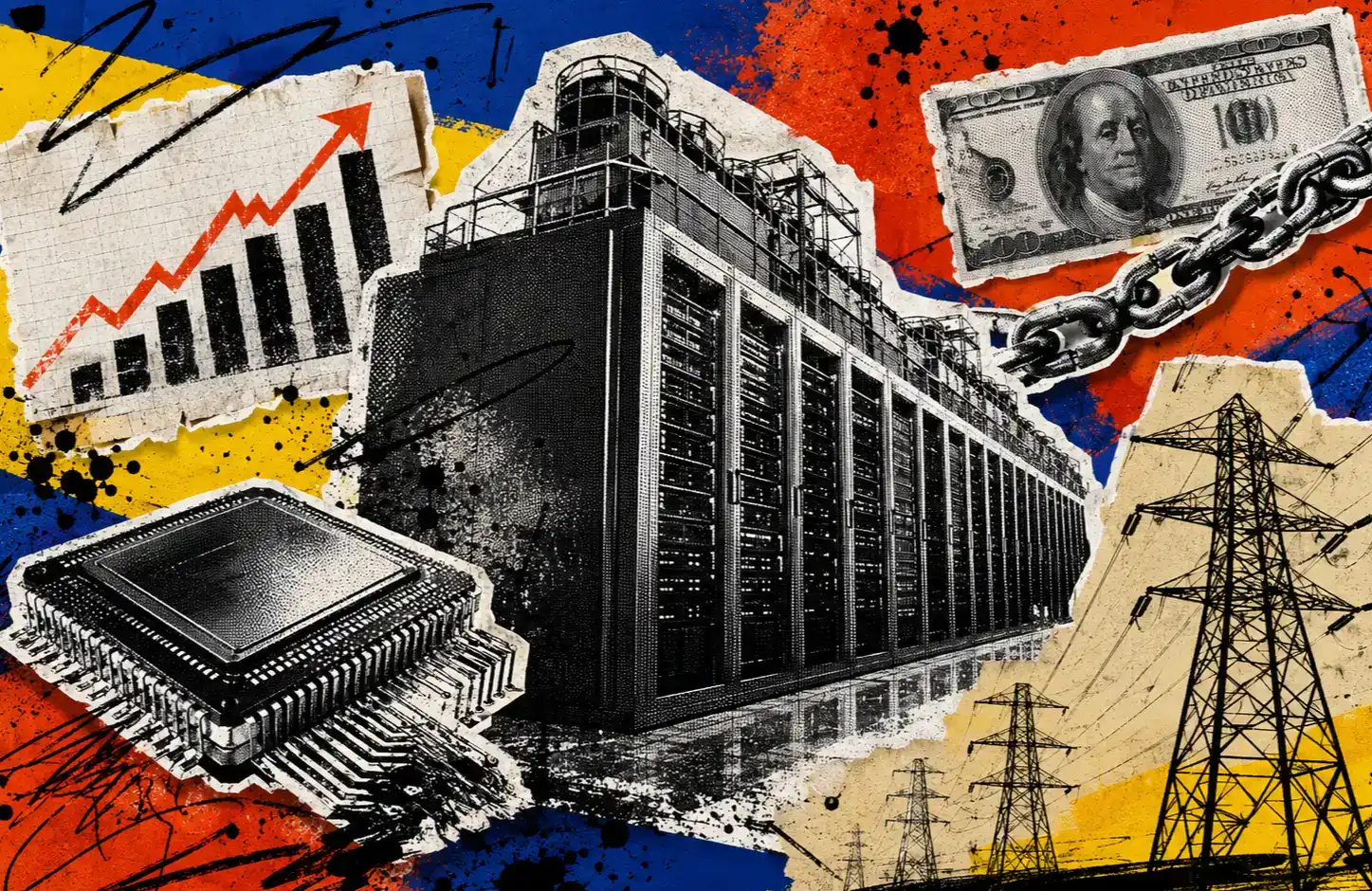
The Trillion-Dollar Valuation Test: Are the Three Super IPOs a Tech Stock Frenzy or a Crypto Market Nightmare?

链捕手Publicado em 2026-06-12Última atualização em 2026-06-12

Resumo

Trillion-Dollar Valuation Test: Are the Three Mega IPOs a Tech Stock Frenzy or a Crypto Market Nightmare? The capital market in 2026 is witnessing a highly anticipated wave of tech IPOs, centered on SpaceX, OpenAI, and Anthropic. Collectively valued at over $3.5 trillion, their potential listing represents one of the largest such waves in recent years. This raises concerns about market liquidity, valuation bubbles, and potential capital outflows from other assets like crypto. SpaceX's valuation narrative has shifted from rocket launches to becoming a global infrastructure play via its Starlink satellite network, which now drives most revenue. Despite ongoing losses, investors focus on its long-term growth potential. OpenAI and Anthropic represent the core productivity engines of generative AI. Their public listings would offer the first direct investment opportunity in large foundation model companies, potentially triggering a repricing within the AI sector. Market fears of a massive "capital drain" from these IPOs are likely overstated. Historical precedents like Alibaba and Saudi Aramco show that mega-listings primarily cause capital reallocation, not destruction, within the vast equities market. Systemic risk is rarely triggered by IPOs alone. For stock markets, short-term volatility and sector repricing are expected, especially for AI concept stocks. Long-term, these listings could reinforce the tech sector's importance. For crypto, direct competition for speculative ...

Original: Wu's Blockchain

TL;DR:

Three tech giants concentrated listing may ignite one of the largest tech IPO waves in recent years: The combined targeted IPO valuation of SpaceX and the latest funding valuations of OpenAI and Anthropic already exceed $3.5 trillion. This not only tests the capital market's pricing ability for innovative technologies but also triggers widespread discussion about its liquidity impact.

SpaceX's valuation logic is shifting from aerospace business to global infrastructure: Market focus has gradually shifted from rocket launches to the global communication network built by Starlink, emphasizing its long-term growth potential and infrastructure attributes.

OpenAI and Anthropic may provide the first large foundational model investment targets for the capital market: Representing the core productivity of generative AI, their listings may prompt a re-pricing of the AI sector and create competition for some AI targets driven by narrative.

The "capital siphoning effect" of super IPOs may be overestimated by the market: Historical experience shows that large IPOs are more about capital reallocation than liquidity disappearance, and they rarely become the direct trigger for systemic risk.

Crypto market faces short-term capital competition but is still primarily driven by its own cycles: Some AI-related tokens may face capital diversion pressure, but the long-term trend of the crypto market still depends more on macro liquidity, regulatory environment, and the Bitcoin cycle.

The real concern is whether high valuations can be justified: If future revenue growth, commercialization progress, or profitability improvement fall below market expectations, the related companies and the tech growth sector may face valuation re-pricing pressure.

The capital market in 2026 is welcoming one of the most closely watched waves of tech IPOs in recent years.

Discussions on Wall Street, Silicon Valley, and in the crypto market are heating up around the listing processes of the three super unicorns: SpaceX, OpenAI, and Anthropic. Based on SpaceX's target IPO valuation and the latest funding valuations of OpenAI and Anthropic, the combined valuation of the three companies exceeds $3.5 trillion. If the listing plans proceed as expected by the market, this could become one of the largest waves of tech company listings in recent years. Specifically, SpaceX's target valuation is around $1.75 trillion, OpenAI's valuation is approximately $852 billion, and Anthropic's valuation is about $965 billion. Notably, Anthropic's current funding valuation is higher than OpenAI's, but this primarily reflects different funding rounds and market pricing expectations, not that its business scale has surpassed OpenAI. Regardless of the final offering price adjustments, this will be one of the largest and most impactful waves of tech company listings in recent years.

Such a massive size naturally raises concerns about liquidity. Some investors believe the listings of the three companies could siphon off significant capital, putting pressure on other growth stocks and even impacting the crypto market. Others worry that the ongoing fervor around AI and space concepts is creating a new asset bubble; if post-listing performance falls short of expectations, it could trigger valuation re-pricing across the entire tech sector and even risk asset markets.

Meanwhile, some view the concern over the "capital siphoning effect" as significantly exaggerated. The total market capitalization of U.S. stocks is already in the tens of trillions, and super IPOs represent more of a capital reallocation than capital disappearance. Historically, whether it was Alibaba or Saudi Aramco, similar discussions arose, but neither ultimately became the trigger for a market crash. So, what's different this time? What do the listings of these three companies truly signify? Do they really have the power to crash the stock and crypto markets?

SpaceX: The Market Is No Longer Buying Rockets, But Global Infrastructure

If one had to choose the most legendary company among the three, SpaceX would undoubtedly be the strongest candidate. From its founding in 2002 to today, Elon Musk has spent over two decades transforming a startup into a core force in the global commercial aerospace industry. For a long time, the outside world's perception of SpaceX was primarily focused on rocket launches and space exploration, but the capital market's valuation logic for it has fundamentally changed.

According to publicly disclosed prospectus documents, the company's 2025 revenue was approximately $18.67 billion. Revenue related to Starlink accounted for about $11.39 billion, representing about 61% of total revenue, making it the company's primary income source. Compared to the rocket launch business, Starlink clearly has greater growth potential. By deploying a low-earth orbit satellite network, Starlink is building a global data communication infrastructure; its business model is closer to an internet platform than a traditional aerospace enterprise. For investors, SpaceX's core value is no longer rockets, but a network platform capable of reaching users globally.

This is also one key reason why some investors are willing to support its approximately $1.75 trillion target IPO valuation. From a valuation logic perspective, to some investors, SpaceX's current valuation logic is closer to an "aerospace Amazon" or "space AWS." The market's focus has gradually shifted from the rocket launch business toward the global communication infrastructure network represented by Starlink. Theoretically, as network deployment matures, the marginal cost for adding new users could decline, while user growth may bring long-term and stable cash flow. Additionally, government contracts, commercial launches, and future commercialization of Starship provide the company with additional growth avenues.

Of course, such a high valuation is not without controversy. According to public information, the company still recorded a net loss of approximately $4.9 billion in 2025. For traditional investors, a company not yet achieving stable profitability receiving a trillion-dollar valuation may seem hard to comprehend. But Wall Street clearly pays more attention to long-term growth capabilities. Both Starlink's expansion and Starship's R&D are typical early-stage, capital-intensive projects. The market is willing to tolerate current profit pressure, provided it believes these investments can translate into larger future market share.

More importantly, SpaceX's listing is not just a corporate financing event; it's also seen as a significant milestone for the commercial aerospace industry. For a long time, the aerospace sector has been considered capital-intensive, with long cycles and limited exit channels. If SpaceX successfully completes its listing, it will significantly enhance the financing capability and valuation level of the entire industry chain, benefiting everyone from satellite manufacturers to ground communication equipment and aerospace material suppliers.

However, precisely because of SpaceX's enormous size, its listing has become a primary source of concern regarding liquidity pressure. According to currently circulating issuance plan estimates, SpaceX could become one of the largest IPOs in history. For large institutional investors, this means they must adjust their holdings in advance to make room for new share subscriptions. Some tech growth stocks, high-valuation AI concept stocks, and even some risk assets could become sources of funds. Therefore, SpaceX has been dubbed a "super capital magnet" in this IPO wave by many analysts.

OpenAI and Anthropic: Two Tickets to the AI Era

If SpaceX represents future infrastructure, then OpenAI and Anthropic represent future productivity.

Over the past three years, generative AI has rapidly evolved from a lab technology into one of the most important investment themes in the global capital market. Starting with the release of ChatGPT, artificial intelligence has nearly reshaped the development logic of the entire tech industry. Whether it's Microsoft, Google, or Amazon, all are engaged in a new round of competition centered on AI. And at the heart of this wave are precisely OpenAI and Anthropic.

OpenAI is widely regarded as one of the primary beneficiaries of this generative AI wave. With ChatGPT, the company transitioned from a research institution to a commercial platform in an extremely short time. API services, enterprise-level solutions, and ecosystem partnerships are driving its rapid revenue growth. Although the company is still in a high-investment phase, investors generally believe OpenAI has the potential to become the next-generation software platform. After completing a new funding round in March 2026, the company's valuation reached approximately $852 billion and it has confidentially filed IPO documents. The market widely speculates that if the IPO proceeds smoothly, its valuation could potentially move closer to the trillion-dollar range, but no official valuation guidance has been disclosed yet.

Compared to OpenAI, Anthropic's development path has been relatively low-key, but its growth rate has similarly attracted market attention. Founded much later than OpenAI, but with the Claude series models and continuous focus on AI safety and reliability, the company quickly gained recognition from enterprise clients. According to the latest funding round disclosure, Anthropic's valuation reached about $965 billion, higher than OpenAI's current funding valuation of around $852 billion. Meanwhile, the company has also confidentially filed IPO documents. For many institutional investors, Anthropic represents a different AI development path — one that places greater emphasis on enterprise scenarios, risk control, and long-term governance structure.

From a capital market perspective, the listings of OpenAI and Anthropic hold significance far beyond the two companies themselves. Over the past few years, the AI concept has nearly dominated the global tech stock valuation system, but investable pure-play AI leaders have been very limited. Nvidia is more of a computing power provider, while Microsoft and Google are comprehensive tech platforms. OpenAI and Anthropic are among the few companies that can directly represent the value of the large model industry.

This means that once the two companies go public, global capital will have the first opportunity to directly invest in large foundational model companies. For many institutions, this attraction might even surpass that of some traditional tech giants. It is precisely for this reason that many investors have begun to worry: when capital concentrates towards AI leaders, will other tech assets and even the crypto market experience significant diversion?

Why Is the Market Worried the Three IPOs Will "Drain" Market Liquidity?

In fact, whenever super IPOs emerge in the market, similar concerns resurface.

The underlying logic isn't complex. An IPO is essentially the delivery of new stock supply from the primary to the secondary market, and the funds used by institutional investors to participate in subscriptions aren't created out of thin air. For large pension funds, mutual funds, sovereign wealth funds, and hedge funds, participating in a new share offering often means needing to free up capital from existing investment portfolios. Therefore, when multiple super-large IPOs appear simultaneously in the market, the phenomenon of capital flowing from other assets towards new shares is almost inevitable.

From this perspective, SpaceX, OpenAI, and Anthropic indeed possess the conditions to create a "siphoning effect." Based on current market expectations, the combined valuation scale of the three companies exceeds $3.5 trillion. Even if the actual circulating share proportion is far lower than this figure, it's still enough to become one of the most significant capital allocation directions in the global capital market. For many institutions that are long-term bullish on AI and tech innovation, participating in these IPOs isn't just an investment opportunity but a strategic allocation.

The market's primary concern isn't the IPO itself, but rather where the capital might flow from. If institutional investors choose to reduce holdings in existing tech stocks to participate in subscriptions, then some growth sectors may face pressure in the short term. If the source of funds extends further to high-risk assets, then some crypto assets could also be affected. Therefore, whenever a large IPO approaches, discussions about "liquidity drain" emerge in the market.

However, the problem is that theoretical capital diversion does not equate to a market crash.

The total market capitalization of U.S.-listed stocks is close to $80 trillion, with daily trading volumes also at considerable levels. Even if all three companies eventually complete their listings, the proportion of shares actually entering market circulation remains limited. Historical experience shows that what truly determines market direction is never new stock supply, but the overall liquidity environment. When the market is in an easing cycle, even super-large IPOs can often be quickly absorbed; when the market is in a tightening cycle, even without IPOs, the market may still correct due to economic slowdown or rising rates.

In other words, a super IPO is more like an amplifier, not a root cause. If the market itself is fragile, then a large IPO might exacerbate volatility; but if market liquidity is abundant and risk appetite is high, IPOs are often just part of capital rotation.

What Does History Tell Us?

Looking back at the capital market over the past twenty years, large IPOs attracting attention is not uncommon, but cases truly leading to systemic risk are extremely rare.

In 2014, when Alibaba listed on the NYSE, its fundraising scale set a global record at the time. The market similarly worried that massive fundraising would impact U.S. stocks. However, facts proved that Alibaba's listing primarily attracted global capital's attention to China's internet sector and did not change the overall trend of the U.S. stock market. In the following years, U.S. stocks continued their bull market pattern.

In 2019, Saudi Aramco completed nearly $30 billion in fundraising, again setting a new global IPO record. Considering the slowing global economic growth and rising geopolitical risks at the time, many analysts believed such massive financing needs could affect market liquidity. But the ultimate result again proved that the market's capacity to absorb super IPOs far exceeded expectations.

Even Arm's listing, which has garnered much attention in recent years, did not have a decisive impact on the overall trend of tech stocks. Short-term volatility indeed existed but was more reflected as capital reallocation within the industry rather than the disappearance of liquidity across the entire market.

The fundamental reason for this phenomenon is that the capital market is not a fixed-capacity pool. The listing of high-quality assets often attracts new capital into the market, not just siphoning capital from old assets. Especially for global institutional investors, when truly scarce targets emerge, it's often accompanied by new allocation demands, not just internal reshuffling.

Therefore, based on historical experience, market volatility brought by SpaceX, OpenAI, and Anthropic would not be surprising, but equating it directly with a market crash lacks sufficient basis.

Impact on the Stock Market: Short-term Volatility Unavoidable, Long-term More Like a Valuation Recalibration

If there's one market most directly affected by the three IPOs, the answer is undoubtedly tech stocks.

Over the past few years, AI has become one of the strongest investment themes in the global capital market. From Nvidia to cloud computing, data centers to software services, many companies have received valuation premiums due to their AI relevance. However, companies truly representing the value creation of large models have not entered the public market. The emergence of OpenAI and Anthropic means investors will have the first opportunity to directly invest in core AI assets.

This change will likely lead to a repricing within the AI sector.

Companies reliant on narrative-driven concepts may face shrinking valuation premiums because investors finally have purer AI targets. Meanwhile, companies that truly benefit from AI infrastructure expansion, such as computing power suppliers, data center operators, and enterprise software platforms, may continue to receive capital support.

The impact brought by SpaceX is different. For satellite communication, commercial aerospace, and related infrastructure enterprises, SpaceX's listing will become a new industry valuation anchor. The market will have its first publicly traded commercial aerospace leader as a reference, potentially prompting a repricing across the entire industry chain.

From a long-term perspective, the listing of the three companies is more likely to reinforce the importance of the tech sector rather than weaken it. Over time, once they meet relevant criteria and are included in major indices, numerous ETFs and index funds will passively allocate to these companies. At that point, the scale of global capital inflows might even surpass the IPO stage itself.

Therefore, for the stock market, what truly deserves attention isn't the performance on IPO day, but whether these companies can fulfill the growth expectations granted by the market in the coming years.

Impact on the Crypto Market: Competition Exists, But Not Necessarily a Negative

Compared to the stock market, the crypto market is more sensitive to changes in capital flow, hence discussions are more intense.

Over the past few years, AI and Crypto have been two of the main focuses for venture capital. Some venture capital funds and growth capital have deployed in both AI and Crypto sectors, with significant overlap in funding sources. When OpenAI and Anthropic formally enter the public market, it's highly likely that a portion of institutional capital will shift towards AI assets.

For some AI-themed tokens, this competition might be particularly noticeable.

Before AI companies went public, many investors chose AI-related tokens to express optimism about the AI industry. But when OpenAI or Anthropic become publicly traded assets, investors will naturally ponder: if they can directly hold the most core companies in the AI industry, is there still a need to bear the higher volatility and risk of some concept tokens?

From this perspective, some narrative-driven AI tokens, VC concept projects, and crypto assets lacking real revenue support might indeed face capital diversion pressure.

However, extrapolating this pressure to a "crypto market crash" similarly lacks basis.

Bitcoin and the entire crypto market have gradually formed relatively independent operating logic. ETF fund flows, regulatory environment, global monetary policy, and Bitcoin's own cycles typically have a more decisive impact than a single IPO event. Historically, U.S. stocks and the crypto market have experienced both synchronized rises and clear divergences; it's difficult to explain their movements with a single event.

More importantly, AI and blockchain are not entirely competitive. As AI application scale continues to expand, decentralized computing networks, on-chain data markets, AI Agent infrastructure, and other directions might instead gain new development opportunities. In the long run, the prosperity of the AI industry might not weaken Crypto, but could create new convergence scenarios.

The Real Thing to Fear Isn't the IPO, But Valuation Expectations

If there is real risk in the three IPOs, it doesn't come from the listing itself, but from market expectations about future growth.

Whether it's SpaceX, OpenAI, or Anthropic, their current valuations are already based on extremely optimistic future assumptions. Investors are willing to grant trillion-dollar valuations because they believe these companies can become the world's most important infrastructure platforms in the future. If revenue growth slows, commercialization progresses slower than expected, or profitability improves at a pace below market expectations, then valuation re-pricing will be inevitable.

This risk will first impact not the entire market, but the AI sector and high-growth tech stocks. The higher the market's expectations for the future, the larger the adjustment tends to be once reality falls short of expectations.

From this perspective, what the market truly needs to focus on is not the IPO itself, but the ability to deliver performance post-IPO.

Conclusion

The listings of SpaceX, OpenAI, and Anthropic are more like a centralized pricing by the global capital market for next-generation tech infrastructure and AI platforms, rather than a precursor to a market crash. In the short term, capital diversion, sector rotation, and valuation re-pricing are almost inevitable; some AI concept stocks and crypto assets may also face competitive pressure. But historical experience shows that super IPOs rarely become the direct trigger for systemic risk and are even less capable of independently determining the long-term direction of stock or crypto markets.

What truly determines market trends are still the macro liquidity environment, corporate profitability, and investor risk appetite. For investors, rather than worrying whether the three IPOs will crash the market, it's better to focus on whether the growth logic behind these trillion-dollar valuations can ultimately be realized. After all, the capital market is never afraid of grand dreams; what truly hurts the market is unfulfilled expectations.

Perguntas relacionadas

QWhat is the combined estimated valuation of SpaceX, OpenAI, and Anthropic as mentioned in the article, and what broader trend does their potential IPO wave represent?

AThe combined estimated valuation of SpaceX, OpenAI, and Anthropic is over $3.5 trillion. Their potential IPOs represent one of the largest waves of tech listings in recent years, acting as a major test for the capital market's ability to price innovative technologies.

QAccording to the article, how has the valuation logic for SpaceX shifted from its early days?

ASpaceX's valuation logic has shifted from being focused on rocket launches and space exploration to being centered on its global communications infrastructure, specifically the Starlink satellite network. Investors now view it more as a 'space-based Amazon' or 'space-based AWS' with long-term growth potential.

QWhy might the IPOs of OpenAI and Anthropic be particularly significant for the AI investment landscape?

AThe IPOs of OpenAI and Anthropic are significant because they would provide the first opportunities for public market investors to directly invest in large-scale foundational AI model companies. This could lead to a repricing within the AI sector and create competition for other AI-related investment vehicles.

QDoes the article suggest that the 'funding siphoning effect' of these mega-IPOs is a major systemic risk? Why or why not?

ANo, the article suggests the 'funding siphoning effect' is often overestimated. Historical examples like Alibaba and Saudi Aramco show that while mega-IPOs cause capital reallocation and short-term volatility, they rarely directly trigger systemic market crashes. Market trends are more dependent on overall macro liquidity, corporate earnings, and risk appetite.

QWhat is identified as the primary long-term risk associated with the high valuations of these three companies?

AThe primary long-term risk is not the IPO process itself, but whether the companies can live up to the high growth expectations embedded in their valuations. If their revenue growth, commercialization progress, or profitability improvements fall short of market expectations, they and related high-growth tech/AI stocks could face significant valuation repricing pressure.

Leituras Relacionadas

Crypto Market Makers Are Collectively Seeking Change as Money Becomes Harder to Earn

**Summary: Crypto Market Makers Adapt as Margins Shrink** Leading crypto market maker GSR exemplifies a broader industry shift, moving beyond traditional market-making to become a full-service "Web3 investment bank." Its recent strategic acquisitions—including an SEC-registered broker-dealer, rebranded as GSR Securities—and purchases of token advisory firms aim to create an integrated platform covering token design, fundraising, listing, liquidity provision, and asset management. This includes launching an ETF and investing in tokenization platforms like Libeara, backed by a strategic investment from Standard Chartered's SC Ventures. This transformation is not unique to GSR. Other major players like Keyrock, B2C2, Wintermute, and DWF Labs are also expanding geographically, pursuing regulatory licenses (especially under frameworks like MiCA in the EU), and diversifying into over-the-counter (OTC) trading, asset management, and real-world asset tokenization. The driving force behind this collective pivot is a rapidly changing market. Profits from traditional altcoin market-making are declining due to fewer viable projects, reduced client budgets, increased competition, and smarter, more demanding clients. Simultaneously, regulatory pressures are mounting, making compliance a baseline cost. Extreme market events further expose teams lacking robust risk controls. Consequently, the crypto market-making business model is evolving from one reliant on information asymmetry and volatility to a more institutionalized, regulated, and service-diverse industry. Survival now depends on building systemic capabilities beyond mere liquidity provision.

marsbitHá 23m

Crypto Market Makers Are Collectively Seeking Change as Money Becomes Harder to Earn

marsbitHá 23m

Market Adjusts Following Google's $84.7 Billion Fundraising, AI Valuations Now Focus on Payback Speed

After Alphabet's announcement of an $84.75 billion equity financing round, market focus for AI investment is shifting from pure growth narratives to capital efficiency and payback periods. The core argument is that AI is being re-priced from a software-like growth story into a heavy-asset infrastructure cycle, requiring massive capital expenditure (CapEx) on chips, data centers, and power grids. While Alphabet's financing itself is not a distress signal—part of it is for administrative purposes like tax obligations on stock compensation—it highlights the enormous capital demands of AI infrastructure. This demand extends beyond tech giants to pure-play AI model companies (like OpenAI, Anthropic), data center REITs, and utilities. Major tech firms are projected to spend heavily on AI data centers in 2026, signaling a broad-based capital cycle the market must absorb. Consequently, valuation logic is changing. Investors are moving away from questions about who has the strongest AI narrative and are now prioritizing clear visibility into orders, stable cash flows, and the cost of capital. This has led to recent pressure on high-multiple AI software and semiconductor stocks, while "picks-and-shovels" hardware, data center, and power assets with firmer near-term demand may see relative support. The key going forward will be monitoring whether rising CapEx guidance across companies is matched by a timely monetization of AI investments into revenue and cash flow. The market's tolerance for high spending depends on demonstrable returns. While the long-term AI thesis remains intact, the valuation framework has fundamentally shifted to emphasize capital discipline and payback speed.

marsbitHá 30m

Market Adjusts Following Google's $84.7 Billion Fundraising, AI Valuations Now Focus on Payback Speed

marsbitHá 30m

Trading

Spot
Futuros

Artigos em Destaque

O que é $S$

Compreender o SPERO: Uma Visão Abrangente Introdução ao SPERO À medida que o panorama da inovação continua a evoluir, o surgimento de tecnologias web3 e projetos de criptomoeda desempenha um papel fundamental na formação do futuro digital. Um projeto que tem atraído atenção neste campo dinâmico é o SPERO, denotado como SPERO,$$s$. Este artigo tem como objetivo reunir e apresentar informações detalhadas sobre o SPERO, para ajudar entusiastas e investidores a compreender as suas bases, objetivos e inovações nos domínios web3 e cripto. O que é o SPERO,$$s$? O SPERO,$$s$ é um projeto único dentro do espaço cripto que procura aproveitar os princípios da descentralização e da tecnologia blockchain para criar um ecossistema que promove o envolvimento, a utilidade e a inclusão financeira. O projeto é concebido para facilitar interações peer-to-peer de novas maneiras, proporcionando aos utilizadores soluções e serviços financeiros inovadores. No seu núcleo, o SPERO,$$s$ visa capacitar indivíduos ao fornecer ferramentas e plataformas que melhoram a experiência do utilizador no espaço das criptomoedas. Isso inclui a possibilidade de métodos de transação mais flexíveis, a promoção de iniciativas impulsionadas pela comunidade e a criação de caminhos para oportunidades financeiras através de aplicações descentralizadas (dApps). A visão subjacente do SPERO,$$s$ gira em torno da inclusão, visando fechar lacunas dentro das finanças tradicionais enquanto aproveita os benefícios da tecnologia blockchain. Quem é o Criador do SPERO,$$s$? A identidade do criador do SPERO,$$s$ permanece algo obscura, uma vez que existem recursos publicamente disponíveis limitados que fornecem informações detalhadas sobre o(s) seu(s) fundador(es). Esta falta de transparência pode resultar do compromisso do projeto com a descentralização—uma ética que muitos projetos web3 partilham, priorizando contribuições coletivas em vez de reconhecimento individual. Ao centrar as discussões em torno da comunidade e dos seus objetivos coletivos, o SPERO,$$s$ incorpora a essência do empoderamento sem destacar indivíduos específicos. Assim, compreender a ética e a missão do SPERO é mais importante do que identificar um criador singular. Quem são os Investidores do SPERO,$$s$? O SPERO,$$s$ é apoiado por uma diversidade de investidores que vão desde capitalistas de risco a investidores-anjo dedicados a promover a inovação no setor cripto. O foco desses investidores geralmente alinha-se com a missão do SPERO—priorizando projetos que prometem avanço tecnológico social, inclusão financeira e governança descentralizada. Essas fundações de investidores estão tipicamente interessadas em projetos que não apenas oferecem produtos inovadores, mas que também contribuem positivamente para a comunidade blockchain e os seus ecossistemas. O apoio desses investidores reforça o SPERO,$$s$ como um concorrente notável no domínio em rápida evolução dos projetos cripto. Como Funciona o SPERO,$$s$? O SPERO,$$s$ emprega uma estrutura multifacetada que o distingue de projetos de criptomoeda convencionais. Aqui estão algumas das características-chave que sublinham a sua singularidade e inovação: Governança Descentralizada: O SPERO,$$s$ integra modelos de governança descentralizada, capacitando os utilizadores a participar ativamente nos processos de tomada de decisão sobre o futuro do projeto. Esta abordagem promove um sentido de propriedade e responsabilidade entre os membros da comunidade. Utilidade do Token: O SPERO,$$s$ utiliza o seu próprio token de criptomoeda, concebido para servir várias funções dentro do ecossistema. Esses tokens permitem transações, recompensas e a facilitação de serviços oferecidos na plataforma, melhorando o envolvimento e a utilidade gerais. Arquitetura em Camadas: A arquitetura técnica do SPERO,$$s$ suporta modularidade e escalabilidade, permitindo a integração contínua de funcionalidades e aplicações adicionais à medida que o projeto evolui. Esta adaptabilidade é fundamental para manter a relevância no panorama cripto em constante mudança. Envolvimento da Comunidade: O projeto enfatiza iniciativas impulsionadas pela comunidade, empregando mecanismos que incentivam a colaboração e o feedback. Ao nutrir uma comunidade forte, o SPERO,$$s$ pode melhor atender às necessidades dos utilizadores e adaptar-se às tendências do mercado. Foco na Inclusão: Ao oferecer taxas de transação baixas e interfaces amigáveis, o SPERO,$$s$ visa atrair uma base de utilizadores diversificada, incluindo indivíduos que anteriormente podem não ter participado no espaço cripto. Este compromisso com a inclusão alinha-se com a sua missão abrangente de empoderamento através da acessibilidade. Cronologia do SPERO,$$s$ Compreender a história de um projeto fornece insights cruciais sobre a sua trajetória de desenvolvimento e marcos. Abaixo está uma cronologia sugerida que mapeia eventos significativos na evolução do SPERO,$$s$: Fase de Conceituação e Ideação: As ideias iniciais que formam a base do SPERO,$$s$ foram concebidas, alinhando-se de perto com os princípios de descentralização e foco na comunidade dentro da indústria blockchain. Lançamento do Whitepaper do Projeto: Após a fase conceitual, um whitepaper abrangente detalhando a visão, os objetivos e a infraestrutura tecnológica do SPERO,$$s$ foi lançado para atrair o interesse e o feedback da comunidade. Construção da Comunidade e Primeiros Envolvimentos: Esforços ativos de divulgação foram feitos para construir uma comunidade de primeiros adotantes e investidores potenciais, facilitando discussões em torno dos objetivos do projeto e angariando apoio. Evento de Geração de Tokens: O SPERO,$$s$ realizou um evento de geração de tokens (TGE) para distribuir os seus tokens nativos a apoiantes iniciais e estabelecer liquidez inicial dentro do ecossistema. Lançamento da dApp Inicial: A primeira aplicação descentralizada (dApp) associada ao SPERO,$$s$ foi lançada, permitindo que os utilizadores interagissem com as funcionalidades principais da plataforma. Desenvolvimento Contínuo e Parcerias: Atualizações e melhorias contínuas nas ofertas do projeto, incluindo parcerias estratégicas com outros players no espaço blockchain, moldaram o SPERO,$$s$ em um jogador competitivo e em evolução no mercado cripto. Conclusão O SPERO,$$s$ é um testemunho do potencial do web3 e das criptomoedas para revolucionar os sistemas financeiros e capacitar indivíduos. Com um compromisso com a governança descentralizada, o envolvimento da comunidade e funcionalidades inovadoras, abre caminho para um panorama financeiro mais inclusivo. Como em qualquer investimento no espaço cripto em rápida evolução, potenciais investidores e utilizadores são incentivados a pesquisar minuciosamente e a envolver-se de forma ponderada com os desenvolvimentos em curso dentro do SPERO,$$s$. O projeto demonstra o espírito inovador da indústria cripto, convidando a uma exploração mais aprofundada das suas inúmeras possibilidades. Embora a jornada do SPERO,$$s$ ainda esteja a desenrolar-se, os seus princípios fundamentais podem, de facto, influenciar o futuro de como interagimos com a tecnologia, as finanças e uns com os outros em ecossistemas digitais interconectados.

69 Visualizações TotaisPublicado em {updateTime}Atualizado em 2024.12.17

O que é $S$

O que é AGENT S

Agent S: O Futuro da Interação Autónoma no Web3 Introdução No panorama em constante evolução do Web3 e das criptomoedas, as inovações estão constantemente a redefinir a forma como os indivíduos interagem com plataformas digitais. Um projeto pioneiro, o Agent S, promete revolucionar a interação humano-computador através do seu framework aberto e agente. Ao abrir caminho para interações autónomas, o Agent S visa simplificar tarefas complexas, oferecendo aplicações transformadoras em inteligência artificial (IA). Esta exploração detalhada irá aprofundar-se nas complexidades do projeto, nas suas características únicas e nas implicações para o domínio das criptomoedas. O que é o Agent S? O Agent S é um framework aberto e agente, especificamente concebido para abordar três desafios fundamentais na automação de tarefas computacionais: Aquisição de Conhecimento Específico de Domínio: O framework aprende inteligentemente a partir de várias fontes de conhecimento externas e experiências internas. Esta abordagem dupla capacita-o a construir um rico repositório de conhecimento específico de domínio, melhorando o seu desempenho na execução de tarefas. Planeamento ao Longo de Longos Horizontes de Tarefas: O Agent S emprega planeamento hierárquico aumentado por experiência, uma abordagem estratégica que facilita a decomposição e execução eficientes de tarefas intrincadas. Esta característica melhora significativamente a sua capacidade de gerir múltiplas subtarefas de forma eficiente e eficaz. Gestão de Interfaces Dinâmicas e Não Uniformes: O projeto introduz a Interface Agente-Computador (ACI), uma solução inovadora que melhora a interação entre agentes e utilizadores. Utilizando Modelos de Linguagem Multimodais de Grande Escala (MLLMs), o Agent S pode navegar e manipular diversas interfaces gráficas de utilizador de forma fluida. Através destas características pioneiras, o Agent S fornece um framework robusto que aborda as complexidades envolvidas na automação da interação humana com máquinas, preparando o terreno para uma infinidade de aplicações em IA e além. Quem é o Criador do Agent S? Embora o conceito de Agent S seja fundamentalmente inovador, informações específicas sobre o seu criador permanecem elusivas. O criador é atualmente desconhecido, o que destaca ou o estágio nascente do projeto ou a escolha estratégica de manter os membros fundadores em anonimato. Independentemente da anonimidade, o foco permanece nas capacidades e no potencial do framework. Quem são os Investidores do Agent S? Como o Agent S é relativamente novo no ecossistema criptográfico, informações detalhadas sobre os seus investidores e financiadores não estão explicitamente documentadas. A falta de informações disponíveis publicamente sobre as fundações de investimento ou organizações que apoiam o projeto levanta questões sobre a sua estrutura de financiamento e roteiro de desenvolvimento. Compreender o apoio é crucial para avaliar a sustentabilidade do projeto e o seu impacto potencial no mercado. Como Funciona o Agent S? No núcleo do Agent S reside uma tecnologia de ponta que lhe permite funcionar eficazmente em diversos ambientes. O seu modelo operacional é construído em torno de várias características-chave: Interação Humano-Computador Semelhante: O framework oferece planeamento avançado em IA, esforçando-se para tornar as interações com computadores mais intuitivas. Ao imitar o comportamento humano na execução de tarefas, promete elevar as experiências dos utilizadores. Memória Narrativa: Utilizada para aproveitar experiências de alto nível, o Agent S utiliza memória narrativa para acompanhar os históricos de tarefas, melhorando assim os seus processos de tomada de decisão. Memória Episódica: Esta característica fornece aos utilizadores orientações passo a passo, permitindo que o framework ofereça suporte contextual à medida que as tarefas se desenrolam. Suporte para OpenACI: Com a capacidade de funcionar localmente, o Agent S permite que os utilizadores mantenham o controlo sobre as suas interações e fluxos de trabalho, alinhando-se com a ética descentralizada do Web3. Fácil Integração com APIs Externas: A sua versatilidade e compatibilidade com várias plataformas de IA garantem que o Agent S possa integrar-se perfeitamente em ecossistemas tecnológicos existentes, tornando-o uma escolha apelativa para desenvolvedores e organizações. Estas funcionalidades contribuem coletivamente para a posição única do Agent S no espaço cripto, à medida que automatiza tarefas complexas e em múltiplos passos com mínima intervenção humana. À medida que o projeto evolui, as suas potenciais aplicações no Web3 podem redefinir a forma como as interações digitais se desenrolam. Cronologia do Agent S O desenvolvimento e os marcos do Agent S podem ser encapsulados numa cronologia que destaca os seus eventos significativos: 27 de Setembro de 2024: O conceito de Agent S foi lançado num artigo de pesquisa abrangente intitulado “Um Framework Agente Aberto que Usa Computadores como um Humano”, mostrando a base para o projeto. 10 de Outubro de 2024: O artigo de pesquisa foi disponibilizado publicamente no arXiv, oferecendo uma exploração aprofundada do framework e da sua avaliação de desempenho com base no benchmark OSWorld. 12 de Outubro de 2024: Uma apresentação em vídeo foi lançada, proporcionando uma visão visual das capacidades e características do Agent S, envolvendo ainda mais potenciais utilizadores e investidores. Estes marcos na cronologia não apenas ilustram o progresso do Agent S, mas também indicam o seu compromisso com a transparência e o envolvimento da comunidade. Pontos-Chave Sobre o Agent S À medida que o framework Agent S continua a evoluir, várias características-chave destacam-se, sublinhando a sua natureza inovadora e potencial: Framework Inovador: Concebido para proporcionar um uso intuitivo de computadores semelhante à interação humana, o Agent S traz uma abordagem nova à automação de tarefas. Interação Autónoma: A capacidade de interagir autonomamente com computadores através de GUI significa um avanço em direção a soluções computacionais mais inteligentes e eficientes. Automação de Tarefas Complexas: Com a sua metodologia robusta, pode automatizar tarefas complexas e em múltiplos passos, tornando os processos mais rápidos e menos propensos a erros. Melhoria Contínua: Os mecanismos de aprendizagem permitem que o Agent S melhore a partir de experiências passadas, aprimorando continuamente o seu desempenho e eficácia. Versatilidade: A sua adaptabilidade em diferentes ambientes operacionais, como OSWorld e WindowsAgentArena, garante que pode servir uma ampla gama de aplicações. À medida que o Agent S se posiciona no panorama do Web3 e das criptomoedas, o seu potencial para melhorar as capacidades de interação e automatizar processos significa um avanço significativo nas tecnologias de IA. Através do seu framework inovador, o Agent S exemplifica o futuro das interações digitais, prometendo uma experiência mais fluida e eficiente para os utilizadores em diversas indústrias. Conclusão O Agent S representa um ousado avanço na união da IA e do Web3, com a capacidade de redefinir a forma como interagimos com a tecnologia. Embora ainda esteja nas suas fases iniciais, as possibilidades para a sua aplicação são vastas e cativantes. Através do seu framework abrangente que aborda desafios críticos, o Agent S visa trazer interações autónomas para o primeiro plano da experiência digital. À medida que avançamos mais profundamente nos domínios das criptomoedas e da descentralização, projetos como o Agent S desempenharão, sem dúvida, um papel crucial na formação do futuro da tecnologia e da colaboração humano-computador.

675 Visualizações TotaisPublicado em {updateTime}Atualizado em 2025.01.14

O que é AGENT S

Como comprar S

Bem-vindo à HTX.com!Tornámos a compra de Sonic (S) simples e conveniente.Segue o nosso guia passo a passo para iniciar a tua jornada no mundo das criptos.Passo 1: cria a tua conta HTXUtiliza o teu e-mail ou número de telefone para te inscreveres numa conta gratuita na HTX.Desfruta de um processo de inscrição sem complicações e desbloqueia todas as funcionalidades.Obter a minha contaPasso 2: vai para Comprar Cripto e escolhe o teu método de pagamentoCartão de crédito/débito: usa o teu visa ou mastercard para comprar Sonic (S) instantaneamente.Saldo: usa os fundos da tua conta HTX para transacionar sem problemas.Terceiros: adicionamos métodos de pagamento populares, como Google Pay e Apple Pay, para aumentar a conveniência.P2P: transaciona diretamente com outros utilizadores na HTX.Mercado de balcão (OTC): oferecemos serviços personalizados e taxas de câmbio competitivas para os traders.Passo 3: armazena teu Sonic (S)Depois de comprar o teu Sonic (S), armazena-o na tua conta HTX.Alternativamente, podes enviá-lo para outro lugar através de transferência blockchain ou usá-lo para transacionar outras criptomoedas.Passo 4: transaciona Sonic (S)Transaciona facilmente Sonic (S) no mercado à vista da HTX.Acede simplesmente à tua conta, seleciona o teu par de trading, executa as tuas transações e monitoriza em tempo real.Oferecemos uma experiência de fácil utilização tanto para principiantes como para traders experientes.

1.2k Visualizações TotaisPublicado em {updateTime}Atualizado em 2026.06.02

Como comprar S

Discussões

Bem-vindo à Comunidade HTX. Aqui, pode manter-se informado sobre os mais recentes desenvolvimentos da plataforma e obter acesso a análises profissionais de mercado. As opiniões dos utilizadores sobre o preço de S (S) são apresentadas abaixo.

活动图片