Oil Again Becomes the Main Subject on the Chain|TradeXYZ Weekend Watch

marsbitPublicado em 2026-06-22Última atualização em 2026-06-22

Resumo

Tensions surrounding the Iran-US ceasefire memorandum and the Strait of Hormuz drove volatile market movements over the weekend of June 19-22. Despite an initial announcement of a deal, friction escalated when Israel continued airstrikes in Lebanon, prompting Iran to threaten closing the strait. This pushed crude oil prices to a peak near $79. Subsequent aggressive rhetoric from Trump, including threats to potentially take control of the strait, added to volatility. However, by June 22, negotiations in Switzerland showed progress, with Iran indicating it would not block the strait for 60 days, causing oil prices to retreat nearly 6% from their highs. US stock indices traded flat to slightly lower, with minor declines in major tech and growth stocks. In commodities, gold and silver gained, supported by falling yields and a weaker dollar amid receding inflation fears rather than traditional safe-haven demand. Natural gas prices rose (+2.51%) following an explosion at a key Qatari LNG facility, though this was partially offset by signals that Qatari LNG shipments were preparing to resume. Overall, geopolitical developments in the Middle East remained the primary driver for oil and related asset prices.

Last weekend, Trump announced 'an agreement with Iran is complete' and the Strait of Hormuz would open. But peace is never delivered by a single post from Trump. This weekend, the implementation of the ceasefire Memorandum of Understanding (MOU) encountered its first significant friction—and oil prices, precious metals, and stock indices all moved back and forth in a complete cycle, pulled by this main narrative.

On June 19-20, Israel conducted sustained airstrikes against Lebanon. Iran once postponed talks with the US as a result, with the Revolutionary Guards declaring a 'high state of alert' and threatening to withdraw from negotiations if Israeli strikes continued.

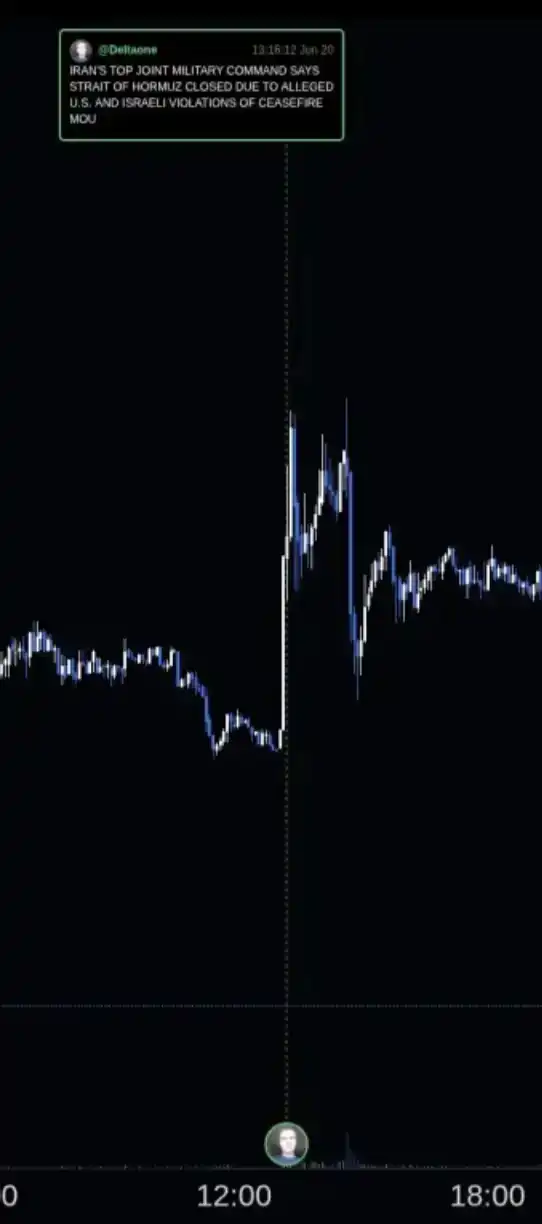
On June 20, Trump, while stating that 'about 700 ships are transiting the Strait, and Iran must reach an agreement within 60 days,' described the ceasefire MOU in an interview as 'basically Iran's unconditional surrender,' and threatened 'further action' if no deal is reached within 60 days. Tehran was thoroughly angered. Later that day, Iran's Supreme Military Joint Headquarters once declared the Strait of Hormuz closed due to US-Israeli 'violations of the ceasefire MOU.' Although US Central Command refuted this, claiming 'Iran does not control the Strait,' 55 commercial vessels still passed through that day.

On June 21, technical-level quadrilateral (US, Iran, Qatar, Pakistan) consultations commenced in Bürgenstock, Switzerland, led personally by Vice President Vance, with Iranian Foreign Minister Araghchi sitting at the same table. During the initial 80-minute closed-door session, the Iranian delegation briefly left in protest over Trump's remarks but soon returned.

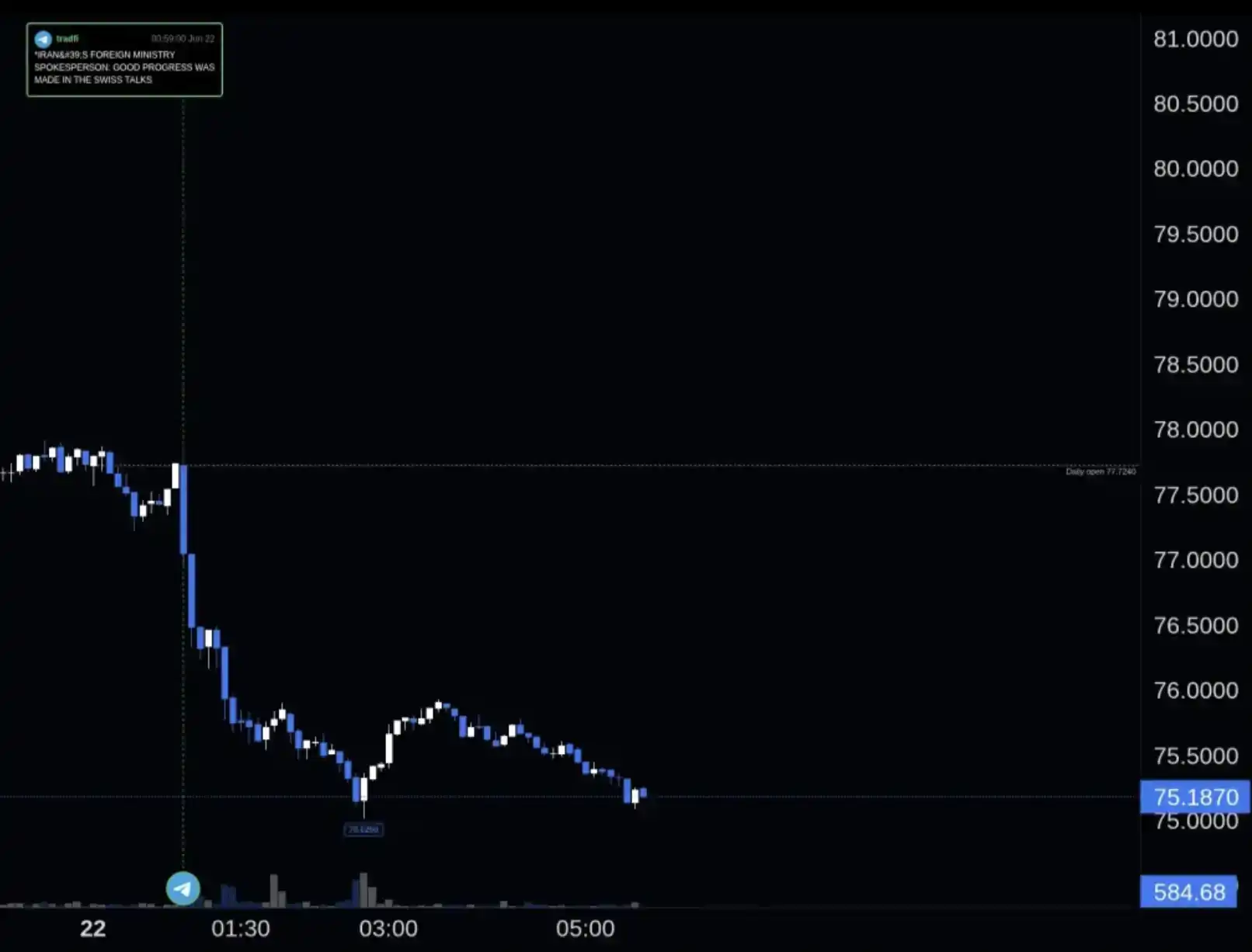
By June 22 (this morning), the atmosphere had noticeably warmed. Qatar and Pakistan issued a joint statement announcing three phased outcomes: the establishment of a high-level political oversight committee, the locking-in of a 60-day roadmap for a final agreement, and the activation of a mechanism for resolving the Lebanon conflict. The mediators described the negotiation atmosphere as 'extremely positive and constructive.' Pakistan also revealed that Iran would not obstruct ship passage through the Strait in the next 60 days, and passage would be free of charge. An Iranian Foreign Ministry spokesperson stated that 'the Swiss talks have made good progress.'

Crude Oil

Crude oil continued to oscillate with the news over the weekend but maintained an overall downtrend.

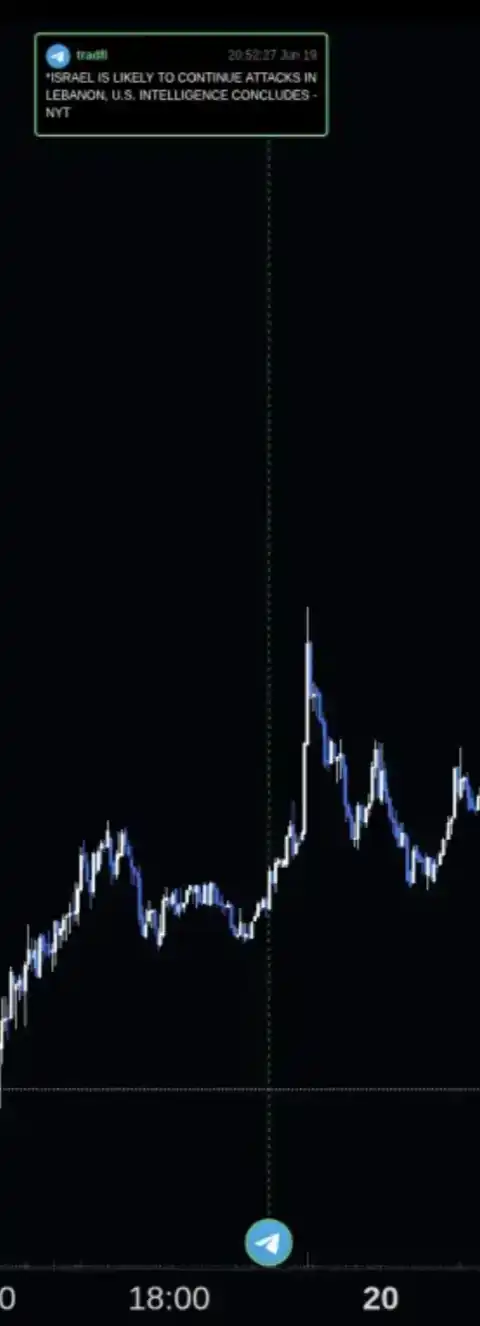
On June 19, citing US intelligence, The New York Times reported that 'Israel is likely to continue striking Lebanon,' pushing oil prices from $76.5 to around $78.
On the evening of June 20, when Iran's Supreme Military Headquarters declared the 'closure of the Strait,' oil prices surged instantly to a high of $79.
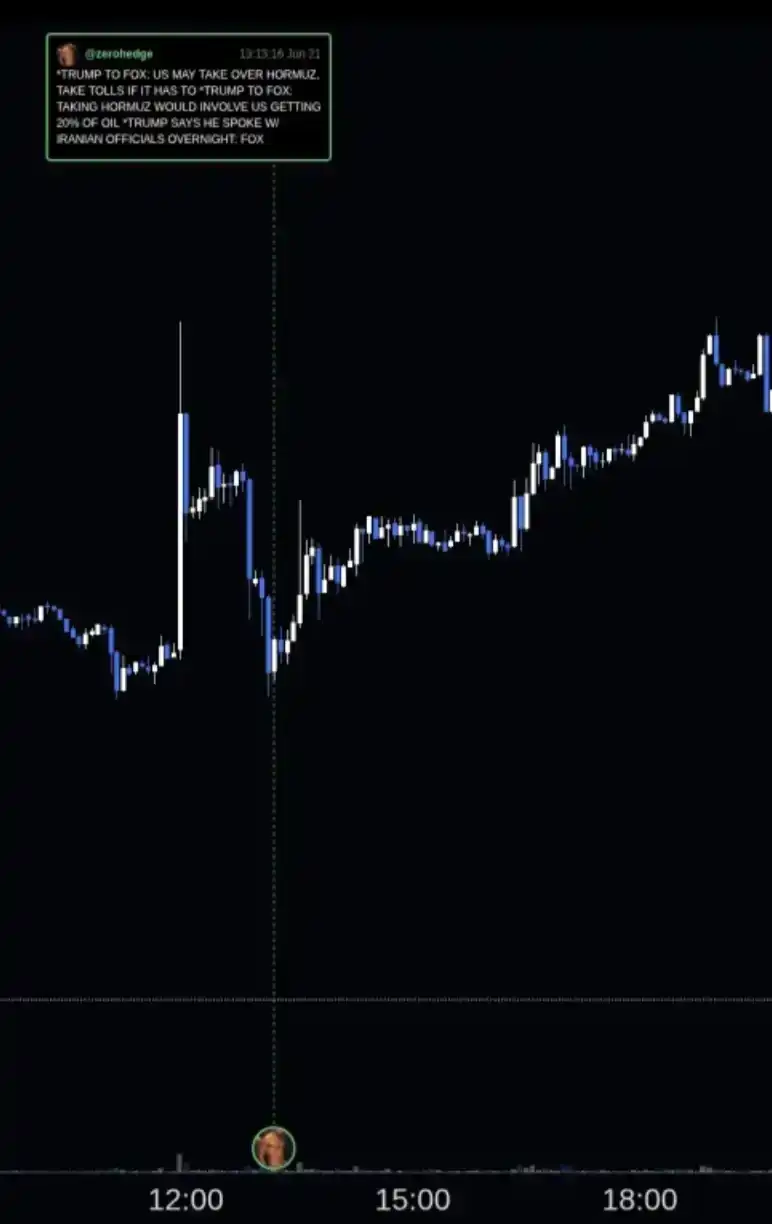
Subsequently, Trump made more aggressive remarks to Fox: 'The US may take over the Strait of Hormuz and charge tolls if necessary,' 'taking over the Strait means the US gets 20% of the oil,' and claimed to have had overnight calls with Iranian officials. Crude oil then rose slowly.
In the early hours of June 22, the Iranian Foreign Ministry's characterization that 'the Swiss talks have made good progress' led crude oil futures to retreat nearly 6% from the weekend's highs.
US Stocks

Compared to crude oil's sharp volatility, US stocks performed much more flatly this week.

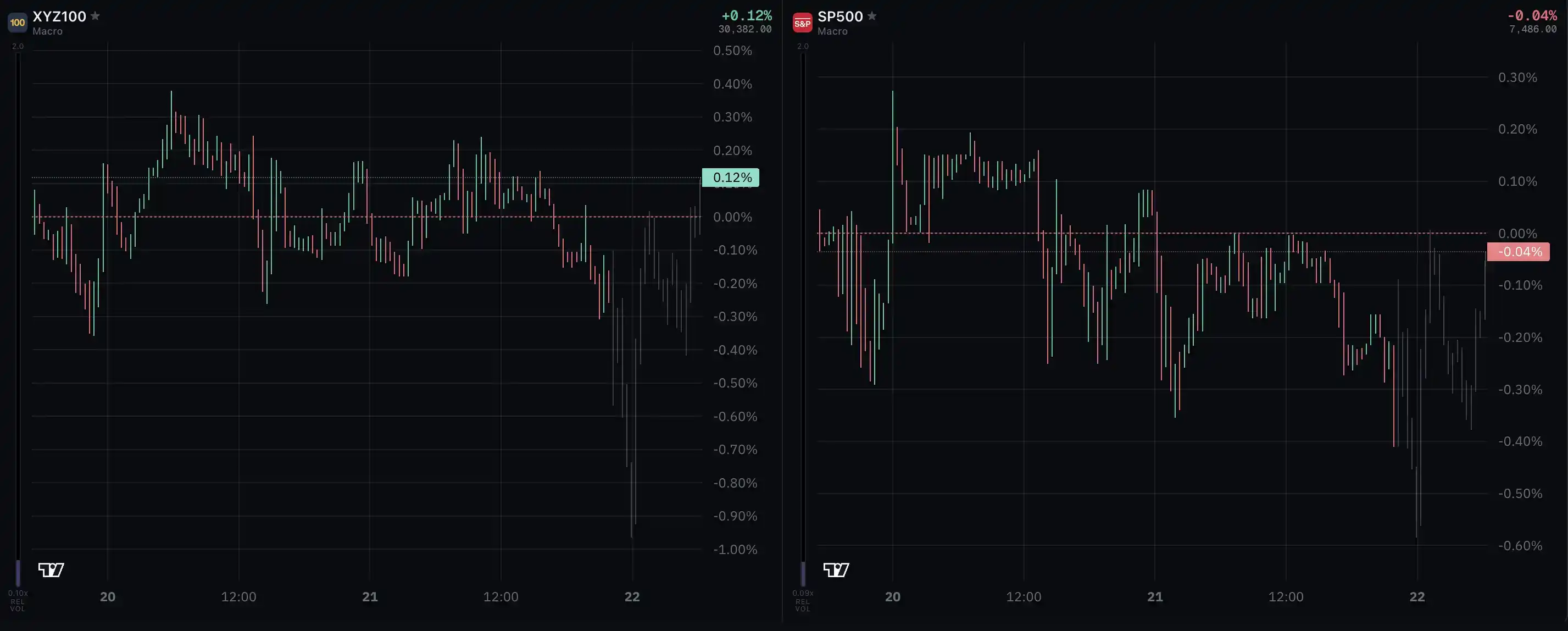
On the index front, XYZ100 and SP500 basically oscillated around the zero line throughout the weekend, weakening intraday at one point (SP500 briefly probed near −0.6%) before recovering alongside the opening gains in index futures.
At the individual stock level, most followed the broader market slightly lower: tech sector SKHX −0.79%, MU −0.63%, NVDA −0.8%, SMSN −3.0%;
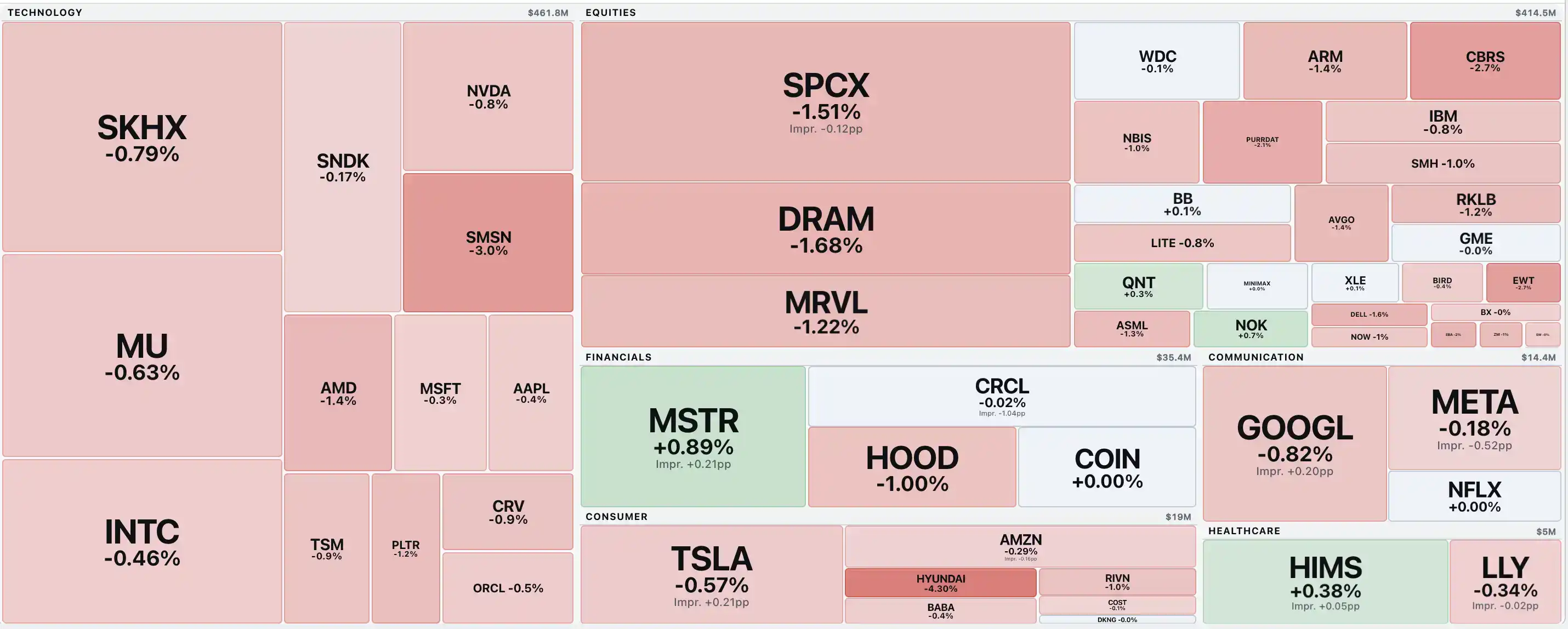
High-beta growth stocks SPCX −1.51%, DRAM −1.68%, MRVL −1.22% also pulled back in sync; relatively strong stocks included MSTR +0.89% and HIMS +0.38%.

Commodity Futures

Gold and silver saw a gap-up at the futures market open. This continued the 're-pricing of easing' logic that emerged last weekend. Falling oil prices reinforced expectations of peak inflation, lower yields, and a weaker dollar, which instead supported precious metals, rather than traditional safe-haven buying.
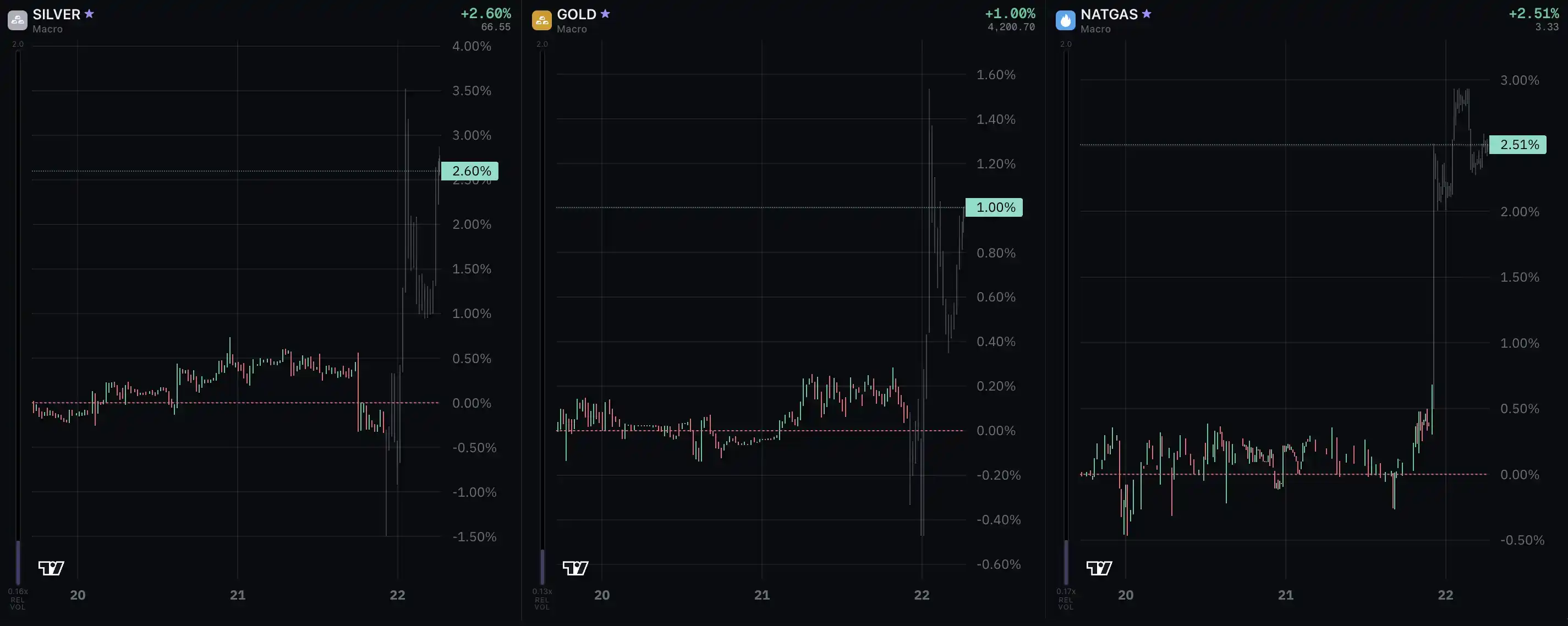
An unexpected move was the counter-trend rise in natural gas (+2.51%).

The increase may stem from an accident. Earlier today, a fire and explosion occurred at a natural gas plant at Qatar's core LNG processing base, Ras Laffan, injuring 54 people with 18 missing. The Barzan gas plant at this base supplies gas for Qatar's domestic industry and power generation. It is still unclear if LNG production is affected. Qatar was the world's second-largest LNG exporter before the war and had temporarily suspended production due to facility attacks and Strait closures in the early stages of the conflict.
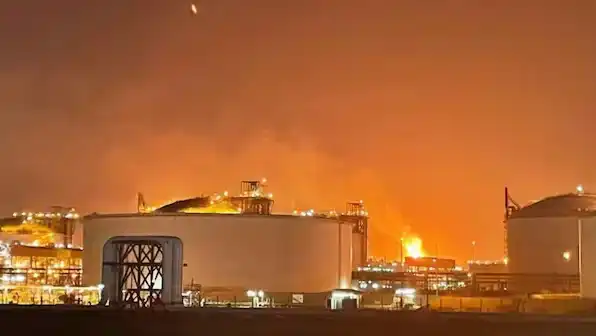
In subtle contrast to this explosion was another 'production resumption' signal: Qatar has begun recalling empty LNG carriers to re-enter the Persian Gulf, with market predictions that gas supply from Qatar is about to resume.


Perguntas relacionadas

QAccording to the article, what were the key events from June 19 to June 22 that caused volatility in the price of crude oil?

AOn June 19, crude oil rose from $76.5 to near $78 after a New York Times report suggested Israel would likely continue strikes in Lebanon. On the evening of June 20, it surged to a high near $79 after Iran's top military command announced the closure of the Strait of Hormuz. It saw further slow gains following Trump's aggressive comments about potentially taking control of the Strait. Finally, on the morning of June 22, prices fell nearly 6% from the weekend's high after Iran's Foreign Ministry characterized the Swiss talks as having 'made good progress.'

QHow did the US stock market, specifically indices and tech stocks, perform over the weekend described in the article?

AThe US stock market performance was relatively flat. Major indices like the XYZ100 and SP500 oscillated near the zero line, with the SP500 briefly dipping to around -0.6% before recovering. In the tech sector, stocks like SKHX fell -0.79%, MU -0.63%, NVDA -0.8%, and SMSN -3.0%. High-beta growth stocks such as SPCX, DRAM, and MRVL also saw declines of over 1%.

QWhat was the unexpected commodity that rose in price over the weekend, and what event likely caused this increase?

ANatural gas was the unexpected commodity that rose in price, gaining +2.51%. The increase was likely triggered by an explosion and fire at the Barzan gas plant in Qatar's key Ras Laffan LNG processing complex. The incident resulted in 54 injuries and 18 missing persons, raising concerns about potential supply disruptions.

QWhat was the outcome of the four-party technical-level consultations held in Switzerland, as mentioned in the article?

AAccording to statements from Qatar and Pakistan, the consultations in Switzerland yielded three main results: 1) The establishment of a high-level political oversight committee, 2) A finalized 60-day roadmap for a final agreement, and 3) The launch of a mechanism to resolve the conflict in Lebanon. Mediators described the atmosphere as 'extremely positive and constructive.' Pakistan also indicated that Iran would not block ships from passing through the Strait of Hormuz for the next 60 days and that passage would be free.

QAccording to the article, what was the primary market logic supporting the prices of gold and silver over the weekend, rather than traditional safe-haven buying?

AThe primary logic supporting gold and silver prices was a 'loose re-pricing' driven by macroeconomic factors. Falling oil prices reinforced expectations of peak inflation, leading to lower bond yields and a weaker US dollar. This environment was supportive for precious metals, rather than direct safe-haven demand due to geopolitical tensions.

Leituras Relacionadas

Report Interpretation: J.P. Morgan Details Micron's Pre-Earnings Sentiment, Current Hardware Sector Dynamics

Morgan Stanley analyst Joshua Meyers' report (June 21, 2026) highlights key trends in the hardware and semiconductor sector ahead of Micron's earnings. The core takeaways are: 1. **Micron & Memory:** Memory remains a high-conviction long theme, driven by strong AI demand and rising ASPs. However, investor focus is shifting to the sustainability of Micron's >80% gross margins and the specifics of potential new long-term supply agreements (SCAs). 2. **Hardware Supply Chain:** AI-related demand for servers, networking, and storage remains robust, but company performance is diverging. Celestica (CLS) shows improved margin confidence, Western Digital and Seagate benefit from pricing, Fabrinet (FN) sees predictable AI optics growth, and Teradyne (TER) anticipates a new Google customer. 3. **AI Capex & WFE Forecasts:** JPMorgan increased its Wafer Fab Equipment (WFE) market growth forecasts to 28% in 2026 and 29% in 2027. AI infrastructure financing is evolving, with higher project-level debt reducing constraints on capex expansion. The report signals that while the AI-driven hardware cycle is strong, the market is entering a phase focused on execution verification (e.g., Micron's SCA details, Fabrinet's ramp with Amazon) and valuation sustainability. Key near-term signals include Micron's guidance, Arista Networks' outlook, and the pace of demand normalization post potential tariff-related pull-ins.

marsbitHá 29m

Report Interpretation: J.P. Morgan Details Micron's Pre-Earnings Sentiment, Current Hardware Sector Dynamics

marsbitHá 29m

Research Report Analysis: The Fed's New Chair's Debut – New Leader, But Same Script?

Report Analysis: Federal Reserve's New Chair Debut – A New Captain, But the Same Script? Morgan Stanley's chief global economist Seth B. Carpenter analyzes the first FOMC meeting under new Fed Chair Kevin Warsh in a June 21 report. Warsh deliberately avoided providing forward guidance on interest rates, aligning with his philosophy. However, market expectations for a rate hike this year were reinforced. Key signals lie elsewhere: inflation may fall more than expected, and quantitative tightening (QT) could be more aggressive than anticipated. The FOMC's "dot plot" suggests only one rate hike in 2026. Carpenter argues that if inflation undershoots forecasts, the logic for even a single hike weakens, especially as projections indicate potential rate cuts in 2027. On QT, Warsh's stance is clear. Carpenter notes that measures like halving the Treasury's account balance could shrink the Fed's balance sheet by around $500 billion with minimal market impact. Combined with adjustments to reserve interest and liquidity rules, the ultimate QT scale may exceed expectations, though its market effect might be less disruptive unless the Fed actively sells Mortgage-Backed Securities (MBS). While Warsh initiated a review of the Fed's policy framework, the 2% inflation target remains intact for now. The report concludes that the market may be overestimating the significance of reduced forward guidance and the near-term rate hike risk, while potentially underestimating the scope and manageable nature of the coming balance sheet reduction. The key debates will hinge on upcoming core PCE data, the specifics of the QT path, and the framework review's findings.

marsbitHá 40m

Research Report Analysis: The Fed's New Chair's Debut – New Leader, But Same Script?

marsbitHá 40m

Critical Game Week: BTC Retracement Confirmation vs. HYPE Support Battle | Guest Analysis

This weekly analysis outlines a critical juncture for BTC and HYPE markets, focusing on key price level confirmations. **BTC Analysis:** BTC is at a pivotal point after a five-wave rally from the June 5th low of $59,100. The price has broken below a short-term rising channel's lower boundary, with the current move seen as a pullback to test this breakdown. Failure to reclaim this level could lead to a retest of the $59,000-$60,000 support zone. The core scenario hinges on this channel retest outcome. * **Key Levels:** Resistance at $64,500-$65,000 (channel boundary) and $69,500-$70,500. Support at $59,000-$60,000 and $55,000. * **Strategy:** A core bearish stance is maintained (20% short from last week), with short-term plans for tactical trades. Three detailed contingency plans (A/B/C) are provided for short positions on resistance tests or breakdowns, emphasizing strict stop-loss discipline. **HYPE Analysis:** HYPE shows strong momentum but is currently in a corrective phase after hitting a new high of $76.94. The price is retesting the crucial $64-$66 support area. * **Key Levels:** Resistance near $77 and $80-$82. Support at $64-$66 and $52-$54. * **Strategy:** The short-term approach is "buy on dips, avoid chasing rallies." A long position is considered only if clear stabilization signals appear at the $64-$66 or deeper $52-$54 support zones, with tight risk controls. **General Risk Management:** A standardized trailing stop-loss protocol is emphasized: set initial stop, breakeven at +1% profit, then trail stops upward to lock in gains. *Disclaimer: All analysis is presented as a personal trading framework, not investment advice. Market conditions are complex and require dynamic adjustment.*

marsbitHá 53m

Critical Game Week: BTC Retracement Confirmation vs. HYPE Support Battle | Guest Analysis

marsbitHá 53m

Research Report Interpretation: Citi Attends AWS Summit, Bullish on Cloud Business Acceleration but Data Governance Remains Key Variable

Citi analyst Tyler Radke's team attended the AWS New York Summit (June 17-18), engaging with over 10 clients and partners. In a June 19 report, they highlighted the summit's focus on scaling agent AI for enterprise deployment. Citi maintains a "Buy" rating on Amazon, forecasting AWS revenue growth to accelerate to 37% in FY27 from 30% in FY26, noting this estimate may be conservative. Key takeaways: 1. **AWS Strategy Shift:** AWS is moving from proof-of-concepts to scalable deployment. New offerings like AWS Context (building enterprise knowledge graphs), Amazon Quick (cross-application AI assistant), and security tool Continuum address core enterprise pain points for AI adoption. 2. **Data Infrastructure Beneficiaries:** Data infrastructure companies like Snowflake, Elastic, Oracle, and ClickHouse are seen as direct beneficiaries of scaling AI workloads, as evidenced by strong growth and use cases presented. 3. **Critical Role of Data Governance:** As AI agents scale from hundreds to thousands, effective data governance becomes the key variable for deploying AI in core business processes. AWS Context represents AWS's strategic extension from providing compute/models to offering a data governance infrastructure layer. The report emphasizes that without solving data governance, AI will remain confined to pilot projects. The investment thesis focuses on AWS revenue acceleration and data infrastructure vendors' growth, while monitoring signals like AWS's quarterly revenue growth, Bedrock AgentCore task volume, and pricing impacts on companies like Elastic.

marsbitHá 1h

Research Report Interpretation: Citi Attends AWS Summit, Bullish on Cloud Business Acceleration but Data Governance Remains Key Variable

marsbitHá 1h

Crucial Week of Contention: BTC Tests Support and HYPE's Key Level Battle | Special Analysis

**Market Enters Critical Week: Bitcoin Pullback Test and HYPE Support Battle** The market enters a crucial phase of contention this week. The marginal shifts in Federal Reserve policy expectations continue to dictate the pricing rhythm for risk assets. Meanwhile, in the crypto market, following a period of sideways consolidation, the divergence between bulls and bears is becoming concentrated at key price levels. **Bitcoin (BTC) Analysis & Strategy** * **Technical View:** The 4-hour chart suggests BTC is in a five-wave structure since the June 5th low near $59,100. Price action shows a short-term rising channel. The recent drop below this channel's lower boundary is now being followed by a pullback attempt (wave 40-41). The outcome of this retest is critical. * **This Week's Outlook:** The core focus is whether BTC can reclaim and hold above the channel's lower boundary. * **Bullish Scenario:** A successful hold could lead to a continued rebound, potentially challenging the $69,500 - $70,500 resistance zone. * **Bearish Scenario:** Failure to hold may trigger a renewed test of the $59,000 - $60,000 core support area, with $55,000 as a deeper support level. * **Operational Strategy:** The author maintains a 20% mid-term short position initiated last week near $64,500, based on a model signaling a shift to a bearish structure. Short-term tactics involve using 30% capital for potential "spread" trades, with three contingency plans (A, B, C) outlined for reacting to resistance tests, breakouts, or support breakdowns. **HYPE Analysis & Strategy** * **Technical View:** On the 4-hour chart, HYPE shows strong momentum, having recently broken to a new high since January. The current pullback presents a clear three-wave correction structure, bringing the price back to the critical $64 - $66 support zone. * **This Week's Outlook:** The focus is on the battle for the $64 - $66 support area. * **Bullish Scenario:** Holding this support could signal a continuation of the uptrend from the June 10th low, leading to new highs. * **Bearish Scenario:** A breakdown could extend the correction, potentially testing the deeper $52 - $54 support band. * **Operational Strategy:** The recommended short-term approach is "buy on dips, avoid chasing rallies." A light long position (under 30% capital) could be considered if HYPE shows stabilization signals at the $64-$66 or $52-$54 support zones, confirmed by model signals. Strict stop-loss discipline is emphasized. **General Risk Management:** A strict trailing stop-loss protocol is advised: set an initial stop; move to breakeven at +1% profit; lock in profits progressively thereafter. *Disclaimer: All analysis is presented as the author's personal technical perspective and trading log, not as investment advice. Markets are complex and dynamic; risk control is paramount.*

Odaily星球日报Há 1h

Crucial Week of Contention: BTC Tests Support and HYPE's Key Level Battle | Special Analysis

Odaily星球日报Há 1h

Trading

Spot
Futuros
活动图片