US Stocks Plummet: Philadelphia Semiconductor Index Plunges Nearly 5% as Semiconductor Stocks Become the Epicenter

Publicado em 2026-08-19Última atualização em 2026-08-19

Resumo

The semiconductor sector faced significant selling pressure, dragging down the Nasdaq Index by over 1%, while the S&P 500 Index fell for the third consecutive day. U.S. stocks closed lower across the board on Tuesday (18th).

The semiconductor sector faced significant selling pressure, dragging the Nasdaq Composite down by over 1%, while the S&P 500 index fell for a third consecutive session. US stocks closed lower across the board on Tuesday (18th).

US stocks closed lower across the board on Tuesday (18th) as stalled US-Iran negotiations and persistently high international oil prices fueled market concerns that inflationary pressures might not recede quickly, driving up global government bond yields. The yield on the US 30-year Treasury note hit a 19-year high. Simultaneously, the semiconductor sector encountered notable selling pressure, dragging the Nasdaq Composite down by over 1% and causing the S&P 500 index to decline for a third straight day.
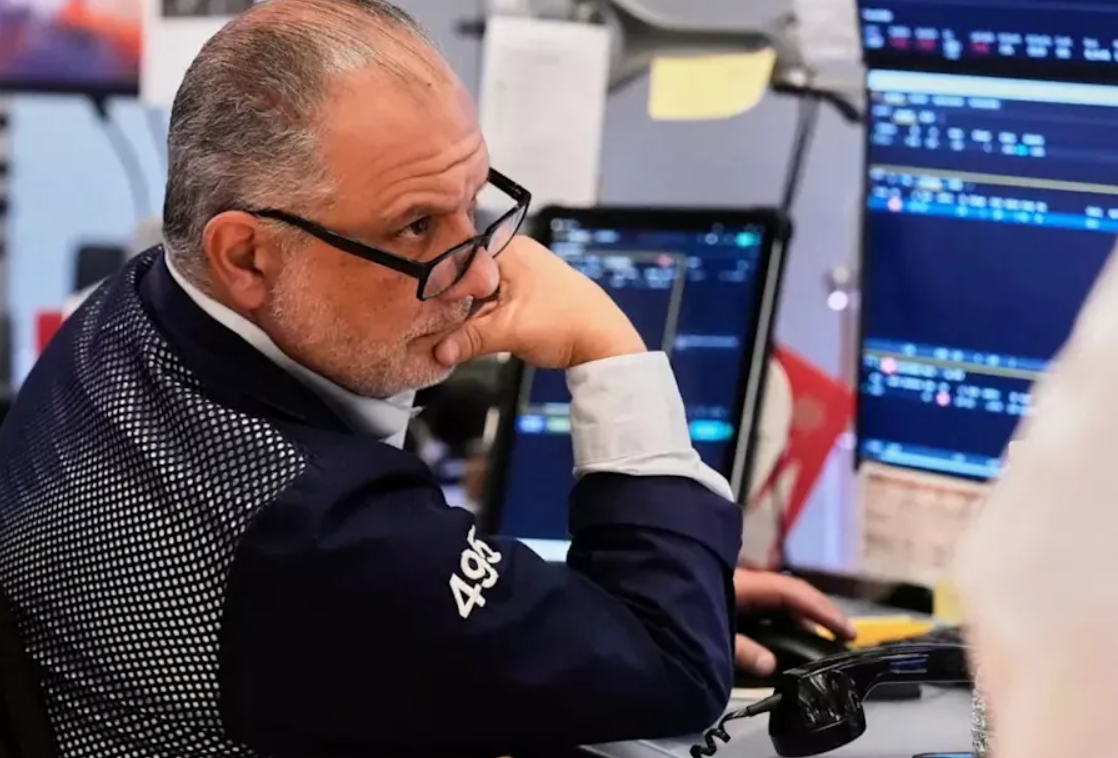
The Dow Jones Industrial Average fell 116.38 points or 0.22%, closing at 53,343.40 points; the S&P 500 index dropped 0.69% to 7,691.76 points, marking its third consecutive day of losses; the Nasdaq Composite Index plunged 1.33% to 26,289.71 points; and the Philadelphia Semiconductor Index plummeted 628.54 points or 4.98%, ending at 11,992.47 points.

Semiconductor Stocks Sold Off: SanDisk, Seagate Plunge Over 9%

According to a CNBC report, technology stocks were one of the main sources of pressure on Tuesday's market, with semiconductor and data storage-related stocks suffering particularly steep declines.

TSMC's ADR tumbled 4.07%. Western Digital slumped about 7%, SanDisk fell 9%, chipmaker Marvell Technology also dropped nearly 8%, and Seagate Technology's decline exceeded 9%. The wave of selling in tech stocks weighed heavily on the Nasdaq's performance.

Aside from the tech sector's retreat, the rapidly rising yields in the bond market have prompted investors to reassess the valuation of risk assets.

The yield on the US 30-year Treasury note climbed to its highest level in 19 years on Tuesday, and this bond market sell-off is not confined to the US. Japan's 10-year government bond yield rose to a 30-year high, Germany's 30-year bond yield hit its highest since 2011, and France's 30-year bond yield also reached a level not seen since 2008, indicating simultaneous pressure on long-term bonds globally.

Stalled US-Iran Talks, High Oil Prices Renew Market Fears of Inflation Resurgence

A major reason for the continued rise in bond yields recently is investor concern that persistently high energy prices could rekindle inflation.

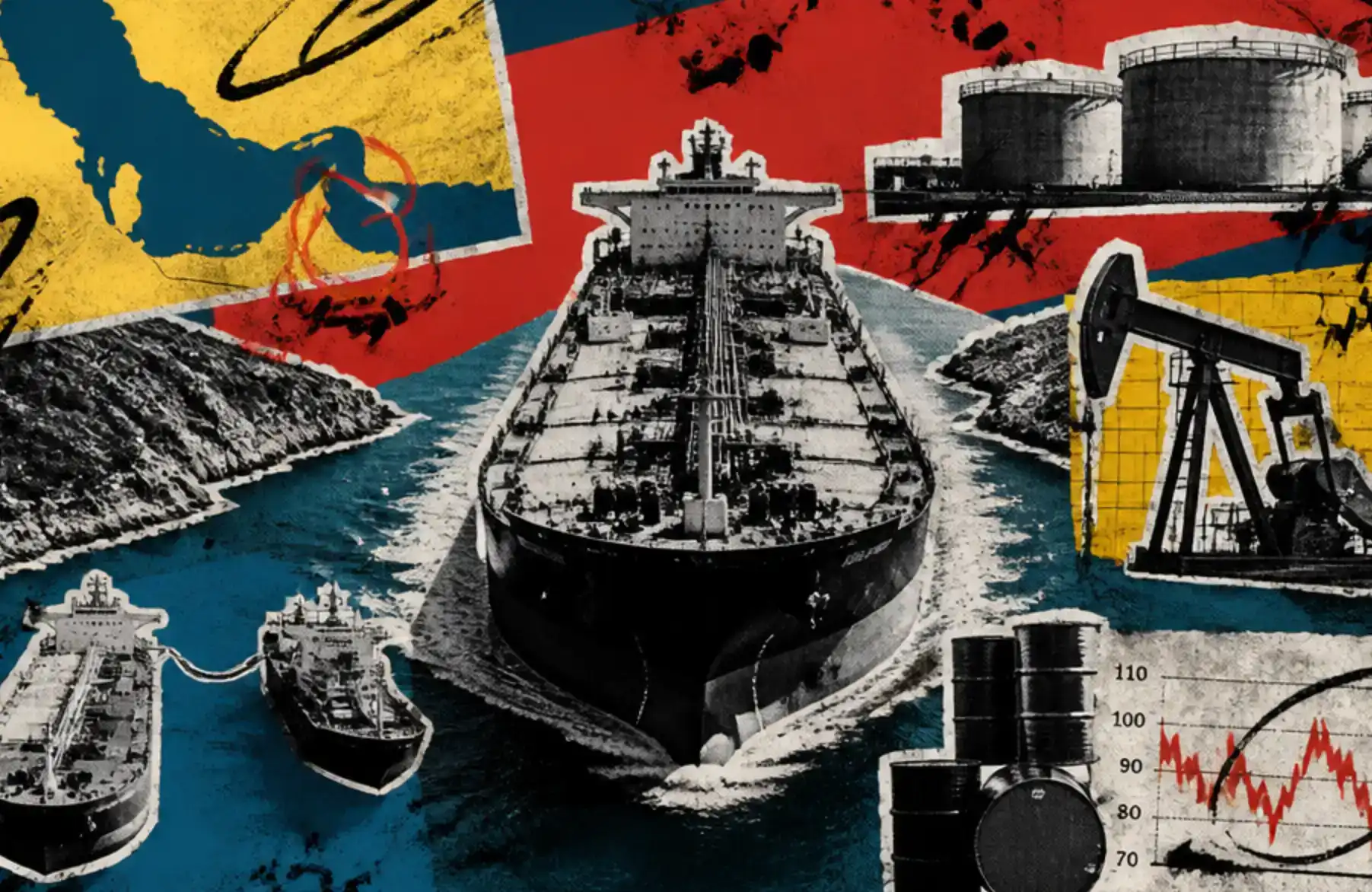
As negotiations between the US and Iran to end the war have seen no breakthrough, uncertainty in the Middle East continues to support oil prices. US crude oil futures rose about 0.5% on Tuesday, following gains on Monday, reaching $84.94 per barrel.

Markets had hoped that the US and Iran might reach an agreement to end the conflict through talks, but those hopes dimmed further on Tuesday. US President Donald Trump stated on his social media platform Truth Social that the US is not currently engaged in any "negotiations or dialogue" with Iran and has no such meetings planned, while emphasizing that the US naval blockade remains "fully and effectively enforced."

Trump even warned on Monday that the US might attack Oman if it interfered with US efforts in the Iran negotiations, deepening market worries about a potential escalation of tensions in the Middle East.

Corporate Earnings, AI Theme Provide Support, but Analysts Warn of Potential Correction

Despite rising bond yields and geopolitical risks, the US stock market has been buoyed this year by strong corporate earnings and the investment boom in artificial intelligence (AI). However, as yields continue to climb, concerns are emerging that investors may be overly ignoring the pressures stemming from the high-interest-rate environment.

Bill Fitzpatrick, Portfolio Manager at Logan Capital Management, noted that the market is currently choosing to overlook challenges related to bond yields, instead focusing on the positives of robust corporate profits and AI developments. "But at some point, we could very easily face a sell-off."

He further pointed out that the factors driving bond yields higher "aren't going to suddenly disappear tomorrow," suggesting that concerns over high oil prices, inflation, and interest rates could continue to weigh on the US stock market's future trajectory.
Leituras Relacionadas

Frenzy Surrounding Unitree's Humanoid Robots Exceeds Hyperliquid Traders' Expectations

The Chinese robotics company Unitree Robotics made a highly anticipated debut on the Shanghai Stock Exchange on August 19, 2026. Its shares soared 629% above their IPO price, valuing the company at approximately $66 billion at the start of trading. This represents one of the most significant investor frenzies around physical AI—systems combining AI with robots. Prior to the listing, crypto traders on the Hyperliquid platform had already been speculating on the company's value through a perpetual futures contract, pegging its valuation at around $38 billion. The actual debut massively exceeded these crypto market predictions by about 75%. The contract's trading volume reached $64 million. Unitree, specializing in humanoid and quadruped robots, is now mainland China's first publicly listed humanoid robot company. It shipped over 5,500 humanoid units in 2025, leading global sales. The company's 2025 revenue surged to 1.7 billion yuan from 393 million yuan a year earlier, with a net profit of 278 million yuan and gross margins exceeding 60%. The IPO, which raised about 6.1 billion yuan ($905 million), reflects intense investor interest in the physical AI sector. JPMorgan estimates the humanoid robot market could grow from $2 billion in 2025 to $300 billion by 2035, with China holding about 75% of the global market share due to lower production costs. However, analysts warn of potential overvaluation, noting the stock's price far exceeds traditional financial metrics and is driven by retail speculation. The company faces the challenge of translating pilot projects and demonstrations into widespread commercial adoption. Strategic investors in the IPO included AI firm DeepSeek, Tencent, and units of major state-owned companies.

cryptonews.ruHá 4m

Frenzy Surrounding Unitree's Humanoid Robots Exceeds Hyperliquid Traders' Expectations

cryptonews.ruHá 4m

Why Didn't Oil Prices Stabilize Above $100 as Traffic Through the Strait of Hormuz Plunged Again?

Despite a significant drop in daily oil tanker traffic through the critical Strait of Hormuz in August, Brent crude oil prices have failed to stabilize above $100 per barrel, instead hovering around $90. This contrasts with traditional market logic, where a threat to a chokepoint handling roughly 20 million barrels per day (27% of global seaborne oil) should trigger a sustained supply risk premium. The article explains that the market is pricing in increased transit costs rather than an imminent, complete supply cutoff. Investors currently believe multiple buffers can absorb the shock: strategic and commercial inventories, the potential for coordinated stock releases, available OPEC+ spare capacity, and alternative export routes from the Gulf. Furthermore, workarounds like ship-to-ship transfers outside the Strait and route adjustments by buyers and shippers add resilience, though at a higher cost for insurance, financing, and longer voyages. The underlying U.S.-Iran tensions frame this reassessment as a problem of cost allocation across the supply chain. The price action suggests traders are awaiting clearer signals—such as a military escalation, sustained Iranian attacks, or stricter enforcement of secondary sanctions on buyers—before pricing in a worst-case, long-term disruption scenario. In the longer term, the episode is accelerating investments to reduce dependency on the Strait, such as expanded storage and pipeline infrastructure, which will embed higher costs into the energy system. While Brent may remain range-bound for now, the real-time impact of the Hormuz risk is likely appearing first in freight rates, insurance premiums, and regional product spreads like diesel crack margins. The stability of current prices depends on how much longer these existing buffers can effectively absorb the mounting transit costs and logistical friction.

marsbitHá 54m

Why Didn't Oil Prices Stabilize Above $100 as Traffic Through the Strait of Hormuz Plunged Again?

marsbitHá 54m

BONK Crypto Treasury Company Has Only $2.14 Million Cash Left, 70% of Revenue Comes from Founder's Own Platform

BONK Inc. (BNKK), the NASDAQ-listed company associated with the Solana meme coin BONK, reported stark financials for the first half of the year. While revenue skyrocketed 6,218% year-over-year to $5.5 million, the company posted a net loss of $7.88 million and its cash reserves plummeted to just $214,000. Its auditors issued a "going concern" warning, citing cumulative losses of $191.4 million, negative operating cash flow, and critically low liquidity. A critical detail is that $3.92 million, or 71%, of its revenue came from an "affiliate revenue share" with LetsBonk.fun, a meme coin launchpad. This platform is linked to founder Mitchell Rudy, whose entity, Lucky Dog Holdings, beneficially owns approximately 40.2% of common stock and all C Series preferred shares. These preferred shares grant the holder the right to elect half of the company's board. The company's financial structure is further intertwined with Rudy; it sold $50 million worth of stock to his entities, accepting payment in BONK tokens. Fluctuations in the value of these and other held digital assets led to an $8.17 million unrealized loss, the primary driver of the net loss. With operating cash outflows of $4.17 million for the half-year, the remaining cash covers roughly nine days of operations at the current burn rate, highlighting severe financial strain despite top-line growth.

marsbitHá 1h

BONK Crypto Treasury Company Has Only $2.14 Million Cash Left, 70% of Revenue Comes from Founder's Own Platform

marsbitHá 1h

Trading

Spot
活动图片