Ashenbrenner Fund Bought Shares of Memory Manufacturing Companies Before Losing 67% of Its Funds

cryptonews.ruPublicado em 2026-08-15Última atualização em 2026-08-15

Resumo

Hedge fund Situational Awareness AI, managed by Leopold Aschenbrenner, lost 67% of its value in July, shortly after having nearly half of its U.S. stock portfolio invested in memory producers SanDisk and Micron, according to SEC filings. A 13F-HR filing from August 14th showed these two positions made up roughly 50% of the fund’s reported equity assets as of June 30th. An earlier March 31st 13F filing indicated a large public portfolio and put options linked to chipmakers. The fund's concentration in memory chips aligned with the AI boom's demand shift from training to inference, which is driving growth in corporate SSD and NAND markets, with prices expected to rise significantly. However, this correct thematic bet did not prevent massive losses. In a letter to investors, Aschenbrenner acknowledged the fund took steps to reduce leverage after facing liquidity issues, confirming the July loss and sale of most public assets. Despite this, Aschenbrenner remains committed to AI, with his firm investing $400 million in semiconductor equipment startup Source Foundry. The incident highlights the risks of concentrated, leveraged positions even within a high-growth sector projected to attract trillions in infrastructure investment.

According to recent documents filed with the U.S. Securities and Exchange Commission (SEC), hedge fund Leopold Ashenbrenner's Situational Awareness AI, before its liquidation in July which wiped out 67% of the fund's value in just one month, had almost fifty percent of its U.S. stock portfolio invested in SanDisk and Micron.

For the entire AI sector, this data indicates where investments have shifted. Shares of companies whose stocks have plummeted, particularly those involved in situational awareness, are also among those benefiting from the AI-focused data center boom, serving as a cautionary tale about how limited this business is becoming.

Where the Money Was Before the Crash

Situational Awareness LP filed a 13F-HR report with the SEC on August 14, detailing assets as of June 30, prior to the July liquidation. SanDisk and Micron accounted for approximately 50% of the reported equity assets, making the fund highly vulnerable to one aspect of the AI supply chain.

This was not the fund's only significant investment. Another quarterly 13F report for the quarter ended March 31, which was published by Cryptopolitan on July 30, listed a U.S. stock portfolio worth $5.52 billion and put options worth $8.7 billion related to chip manufacturing companies. The largest long position was Bloom Energy, with an investment of $879 million, followed by SanDisk and CoreWeave.

The March 31 Situational Awareness report shows $13.68 billion in 13F securities, but this figure should not be confused with the fund's total assets or its overall economic risk exposure.

Why Memory Chips Became the Core of AI Trading

The demand stimulus from SanDisk and Micron was accompanied by an actual shift in demand. Counterpoint Research analysts noted that as AI tasks transition from training to inference, enterprise SSD drives accounted for 48% of total NAND flash shipments in Q2 2026.

Prices are expected to follow this trend. According to TrendForce, NAND Flash sales revenue is projected to grow 10-15% quarter-on-quarter in Q3 2026, while DRAM prices will rise 13-18% due to high demand for AI data processing and purchases for major data centers. Micron also reported a record Q3 fiscal year profit of $41.46 billion, significantly exceeding the $9.30 billion profit from the same period last year.

The Lesson Learned from the July Training

Understanding the right trends did not protect the fund from losses. Situational Awareness informed its investors that the fund recorded an unaudited loss of 67% in July, while year-to-date returns had been close to 80%. Ashenbrenner noted that after exhausting liquidity, the fund sold part of its public portfolio to reduce leverage. Reuters confirmed the 67% loss for July and the sale of most public assets.

Ashenbrenner directly acknowledged the risk in his letter to investors:

"We welcome volatility. But it should by no means jeopardize the fund."

He also wrote that the fund took steps to "continue the fight."

On July 28, an anonymous Trac user estimated Ashenbrenner's portfolio losses at $600 million due to declines in Bloom Energy and SanDisk stock. However, Cryptopolitan could not verify this information; furthermore, 13F reports do not specify cash, short positions, or personal investments.

Ashenbrenner remains strongly committed to AI. His investment firm has put $400 million into Source Foundry, a semiconductor equipment startup valued at nearly $5 billion that specializes in lithography—a bottleneck in chip manufacturing dominated by ASML.

What Does the $7 Trillion Build-Out Depend On?

This comes amid forecasts pointing to colossal AI investments. Goldman Sachs believes that between 2026 and 2031, nearly $7.6 trillion will be spent on computing power, data centers, and energy.

The Semiconductor Industry Association and Deloitte assert that semiconductors account for over 95% of the cost of an AI server rack, and data center infrastructure investments could potentially reach $4 trillion by 2028.

It is precisely because of this scale that the fund's failure matters beyond just one manager. Confidence in AI growth does not guarantee that all links in its supply chain will develop in sync, or that leveraged, concentrated positions will survive a liquidity crunch. The documents show an investor who correctly assessed the requirements but still got caught out by the way he financed his bet.

Perguntas relacionadas

QWhich two companies made up nearly 50% of the Situational Awareness AI fund's U.S. equity portfolio before its liquidation?

ASanDisk and Micron.

QWhat was the approximate percentage loss reported by the Situational Awareness AI fund in July?

AAn unaudited loss of 67%.

QAccording to the article, what is a key reason for the increased demand for memory chips from companies like SanDisk and Micron?

AThe shift from AI training to inference tasks, driving demand for enterprise SSDs and other memory components for AI data processing.

QWhat did Leopold Aschenbrenner's investment firm invest $400 million in, as mentioned in the article?

ASource Foundry, a semiconductor equipment startup specializing in lithography, valued at nearly $5 billion.

QWhat major risk did the article highlight as a cause for the fund's failure, despite correctly identifying AI growth trends?

AThe use of concentrated, leveraged positions that could not withstand a liquidity crunch.

Leituras Relacionadas

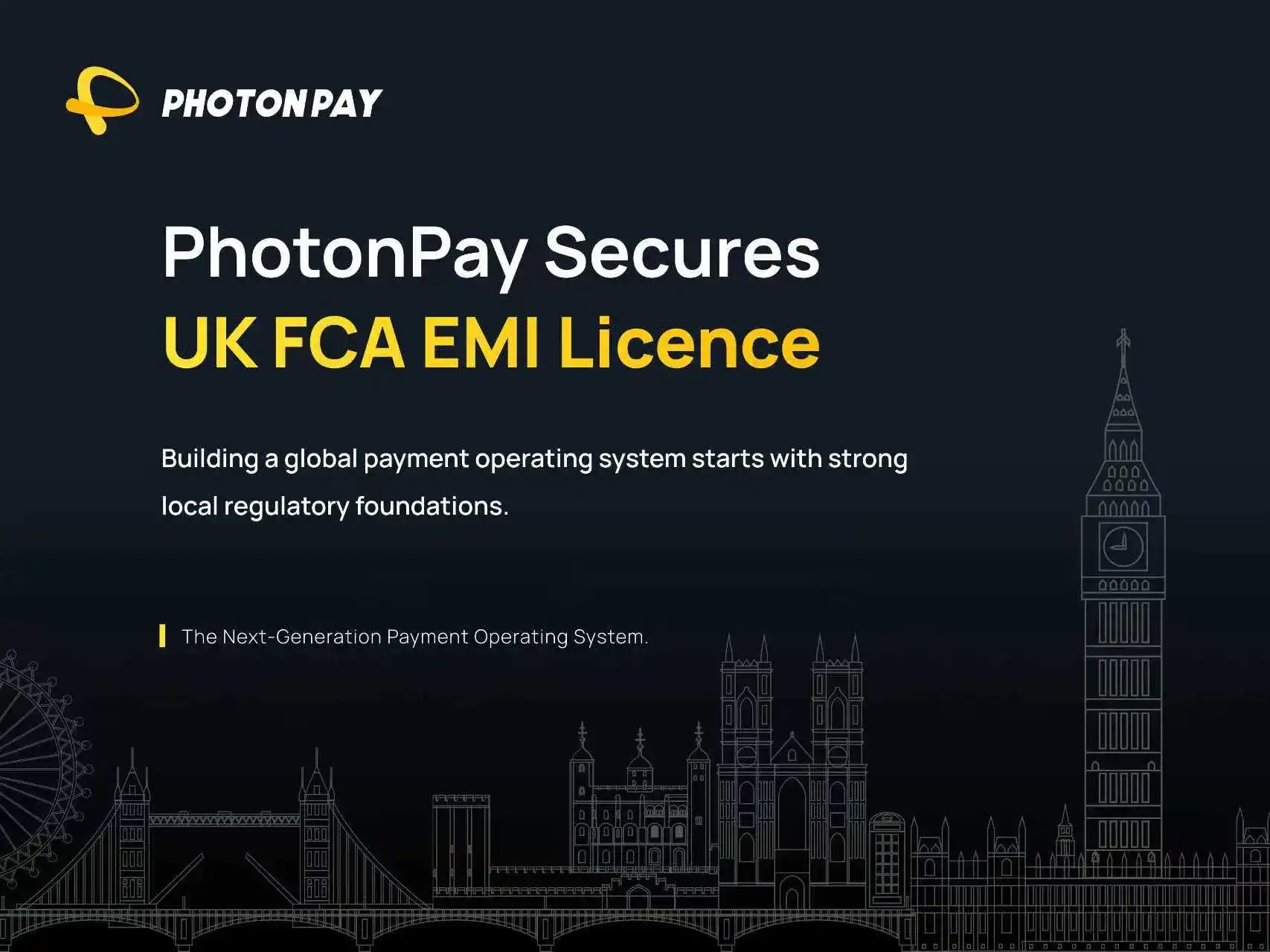
PhotonPay Obtains UK EMI License, Advancing Global Payment Operating System Layout

PhotonPay has obtained an Electronic Money Institution (EMI) license from the UK Financial Conduct Authority (FCA), marking a significant milestone in its global compliance strategy. With this license, PhotonPay can issue electronic money and provide payment services within the UK regulatory framework, strengthening its local financial capabilities and supporting global businesses with broader fund-flow solutions. The UK is a key financial hub connecting Europe and global markets, and as enterprises expand internationally, their financial needs are shifting from single cross-border transactions to integrated management of accounts, payments, foreign exchange, cards, and treasury. The EMI license reinforces PhotonPay's UK localization, enabling connections with local banks, payment networks, and financial partners. PhotonPay's Global Chief Compliance Officer JP noted that this license is a key step in building a global payment operating system backed by solid local regulatory foundations. PhotonPay is developing a next-generation payment operating system that unifies fragmented financial infrastructure across markets, allowing businesses to manage global accounts, collections, payments, FX, cards, and embedded finance more efficiently. Built on real business fund flows, PhotonPay continues to expand regulatory qualifications, banking partnerships, payment networks, and technology. To date, PhotonPay has secured nearly 30 payment licenses and regulatory qualifications worldwide, covering global accounts, payments, FX, cards, and embedded finance. The UK EMI license further strengthens its global compliance network as it continues building a next-generation global payment operating system.

marsbitHá 5m

PhotonPay Obtains UK EMI License, Advancing Global Payment Operating System Layout

marsbitHá 5m

US Treasury Survey Fails to Signal Debt Issuance Cuts, Treasury Yields Rise, 10-Year Back Above 5.12%

The U.S. Treasury's latest primary dealer survey did not signal an imminent reduction in long-term bond auction sizes, disappointing investors who bet the government would act to push down long-term rates. Treasury yields rose broadly, with the 10-year benchmark yield重回 above 5.12%, up 6.5 basis points intraday, while 20-year and 30-year yields also climbed. The survey was part of preparations for the quarterly refunding announcement on November 4. Markets had hoped for clues that Treasury Secretary Bessent might adjust long-term issuance, particularly the possibility of cutting or halting 20-year bond sales. Instead, Treasury only asked broadly what auction size adjustments should be considered, without clearly hinting at reduced long-term supply. Dealers were also asked about the long-term buyback program, improving buyback efficiency, timing of T-bill and floating-rate note issuance around FOMC meetings, and economic and financing outlooks. Analysts including RBC's Blake Gwinn and TD Securities' Molly Brooks said the questions were too broad and sent no substantive signal, with long-term auction changes unlikely before February 2027. Citi, however, maintained its forecast that Treasury would cut 20-year and 30-year auction sizes by $3 billion each in November. Rising oil prices also added upward pressure on yields. The market reaction was concentrated in long-dated Treasuries, which are especially sensitive to supply expectations. The November 4 refunding announcement is the next key focal point.

marsbitHá 34m

US Treasury Survey Fails to Signal Debt Issuance Cuts, Treasury Yields Rise, 10-Year Back Above 5.12%

marsbitHá 34m

Chainalysis Report: The $3 Trillion North American Crypto Landscape, AI and Stablecoins Reshaping Global Finance

Chainalysis’s 2026 North America report shows the region remains the world’s dominant crypto market, with $3.02 trillion in on-chain economic value over the year ending July 1, 2026. The U.S. accounts for $2.78 trillion, down 2.2% in a cyclical adjustment, while Canada grew 2.3% to over $247.7 billion. Three shifts stand out: AI agent commerce, dollar stablecoin exports, and tokenized real-world assets. The U.S. leads AI agent payments, with Base’s x402 protocol surpassing 138 million transactions and 88.1% of model-inference share. Micro-payments between machines are becoming viable, with most x402 transactions between $0.01 and $0.10. Wallet behavior shows rising stickiness: 89.3% of new wallets received a second funding within 30 days in Q2 2026, and the median time from funding to first payment fell from 73 days to 18 minutes. China-linked wallets dominate security and code analysis at 90%, while the U.S. leads inference and agent frameworks. Capital flows show the U.S. importing bitcoin and exporting digital dollars: large institutional bitcoin inflows totaled 53,200 BTC, while USDC circulation reached $73.3 billion and quarterly on-chain settlement hit $14.8 trillion. Tokenized U.S. Treasuries dominate RWA at $15.42 billion, 42.8% of the total, with overseas retail buyers prominent. Canada emerges as the G7’s top P2P market, driven by immigrants; stablecoin remittances to India, China, and the Philippines reached $2.36 billion, up 141%. Overall, the U.S. builds infrastructure while the world adopts it.

marsbitHá 1h

Chainalysis Report: The $3 Trillion North American Crypto Landscape, AI and Stablecoins Reshaping Global Finance

marsbitHá 1h

Trading

Spot
活动图片