
Connecting China, US, and Asia-Pacific Capital: Asia Pacific Innovation Center (APIC) Officially Launches in Kuala Lumpur, Building a New Global Business Empowerment Ecosystem

深潮Publicado em 2025-12-10Última atualização em 2025-12-10

Resumo

Asia Pacific Innovation Center (APIC) has officially launched in Kuala Lumpur, Malaysia, as a strategic hub connecting China, the U.S., Asia-Pacific, and the Middle East. APIC aims to reshape the regional business landscape by integrating Web3 innovation incubation, global education, and cross-border capital investment. Chaired by Eugene Xiao, the center is built on three core drivers: business enablement (offering end-to-end support for startups and digital transformation), education (partnering with institutions like MIT, UCLA Anderson, and UKM to deliver cutting-edge tech programs), and alliance ecosystems (supported by organizations including DID Alliance and 42X Fund). During the launch, APIC signed six Memoranda of Understanding with key entities such as the Singapore Digital Chamber of Commerce and Malaysia Fujian Chamber of Commerce to advance digital trade, enterprise innovation, youth development, and social responsibility. Positioned as an open and collaborative platform, APIC seeks to foster global connectivity in business, talent, and technology, driving sustainable growth across the Asia-Pacific region.

A new landmark designed to reshape the Asia-Pacific business landscape—the Asia Pacific Innovation Center (APIC)—was officially launched today in Kuala Lumpur, Malaysia. As a key commercial hub connecting China, the United States, the Asia-Pacific region, and the Middle East, the opening of APIC marks the official establishment of a new ecosystem integrating Web3 innovation incubation, global education empowerment, and cross-border capital integration.

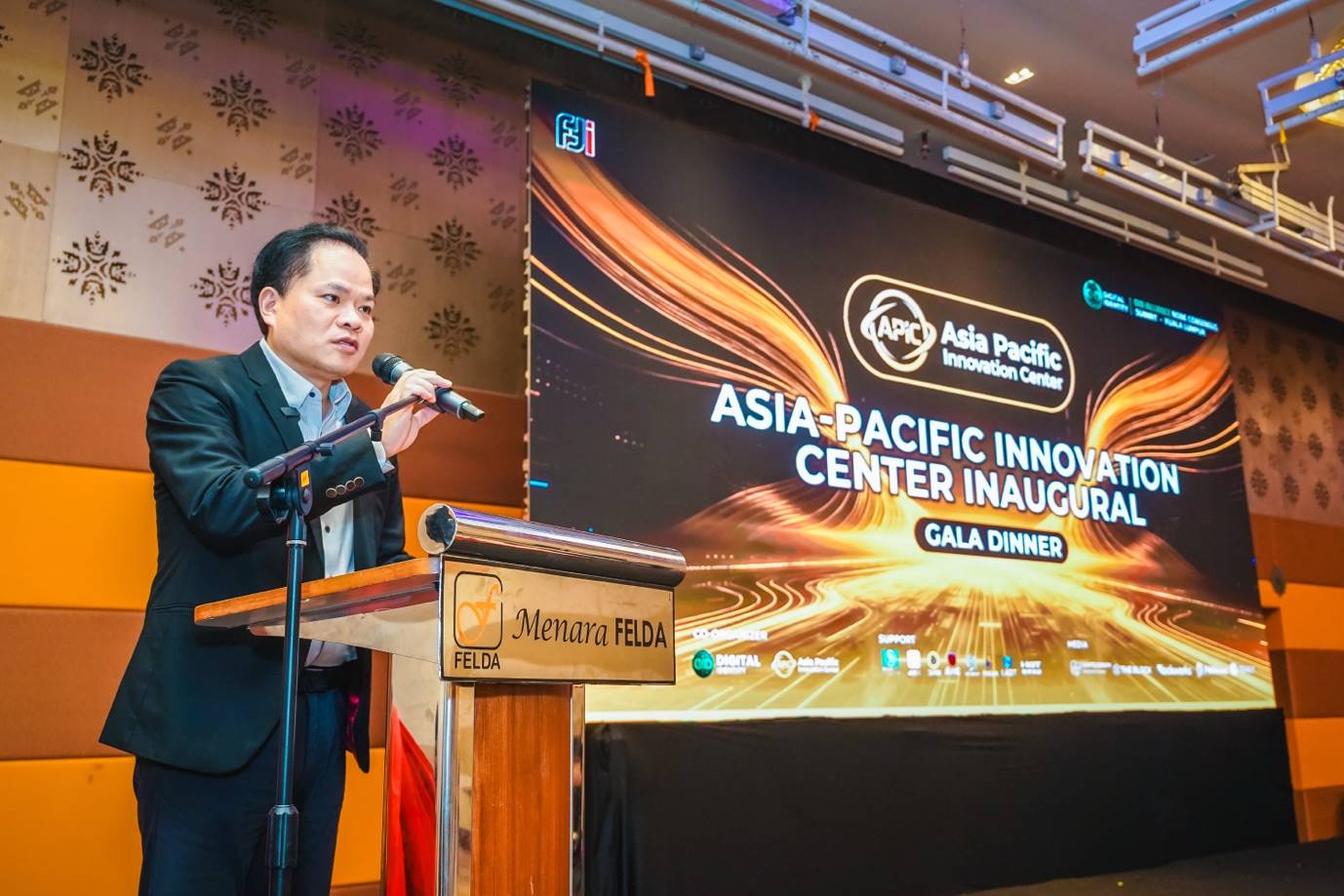
At the opening ceremony held that evening, DID Alliance Chairman and APIC Chairman Eugene Xiao delivered a speech, outlining the center's vision to global partners. Based in the strategic location of Kuala Lumpur, APIC is committed to breaking down geographical barriers by integrating top global financial, technological, and educational resources to provide enterprises with end-to-end support from startup incubation to international expansion.
Three Core Drivers Defining the Future of Business

APIC is not just a physical space but a dynamic resource integration platform. Eugene emphasized in his speech that the center's core competitiveness is condensed into three driving forces:

1. Business-Driven: Building a global end-to-end service system. APIC will serve as a convergence point for Web3 innovation projects and traditional businesses, providing not only one-stop incubation support from technology and compliance to market entry but also assisting traditional enterprises in digital transformation and helping them expand overseas.

2. Education Empowerment: Cultivating future global leaders. The center announced strategic partnerships with top global institutions such as the Massachusetts Institute of Technology (MIT), UCLA Anderson School of Management, and the National University of Malaysia (UKM) to introduce blockchain and cutting-edge technology courses. By issuing authoritative certificates, APIC aims to supply the industry with professionals possessing a global perspective.

3. Alliance Ecosystem: Building a cross-regional strategic network. With the strong support of institutions such as DID Alliance, HotLink, 42X Fund, DPIN, Tang Ren Dao, and HKIT, APIC has established a diverse ecosystem covering finance, technology, and industry, providing members with unparalleled capital support and forward-looking insights.

Six Strategic Signings to Build a Diverse and Win-Win Ecosystem

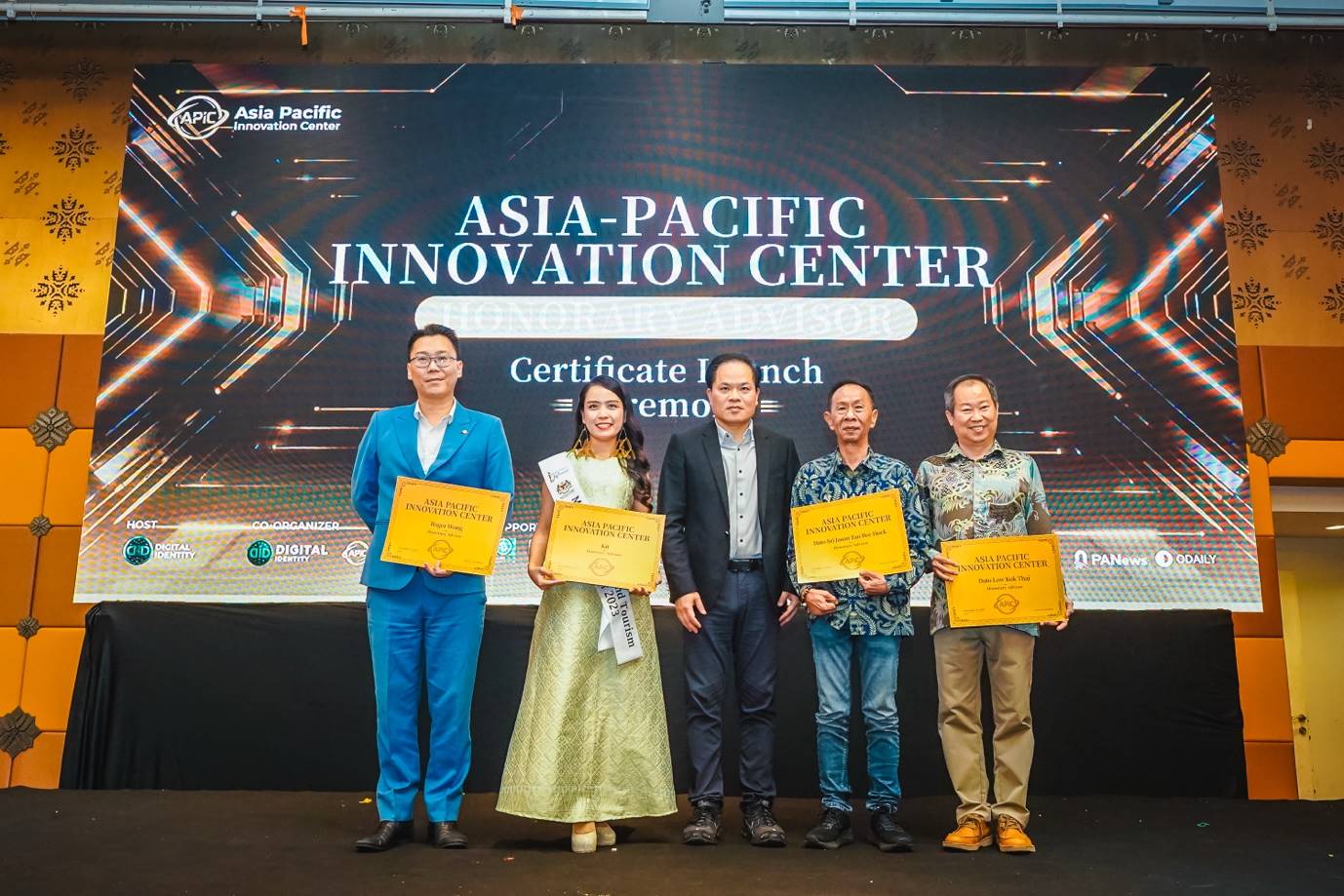
At the inauguration ceremony, the Asia Pacific Innovation Center demonstrated its strong resource cohesion by signing Memoranda of Understanding (MOUs) with six heavyweight institutions, comprehensively deploying in four key areas: digital economy, business innovation, education, and social responsibility:

· Promoting the Digital Economy and Trade Connectivity: APIC signed strategic cooperation agreements with the Singapore Digital Chamber of Commerce (SDCC) and the Malaysia Fujian Chamber of Commerce (MFCCI). The parties will focus on cross-border digital trade, regional tech ecosystem development, and the integration of global resources for Fujian entrepreneurs, jointly exploring new opportunities in the Asia-Pacific digital economy.

· Empowering Enterprise Innovation and Global Expansion: APIC partnered with Regal Global Sdn Bhd. The two parties will engage in in-depth collaboration in business development, high-value project incubation, and corporate cross-border strategic initiatives to help enterprises achieve leapfrog growth.

· Deepening International Education and Youth Development: Focusing on the power of the future, APIC signed cooperation agreements with Globalfront International Sdn Bhd and the World Quanzhou Youth Friendship Association Malaysia Branch. The parties will commit to promoting international academic exchanges, cultivating young leaders, and fostering cross-cultural business cooperation to reserve innovative talent for the Asia-Pacific region.

· Practicing Social Responsibility: APIC established a partnership with the Malaysian community volunteer organization (AKRAM), aiming to empower communities through technology and education, and to drive social welfare and sustainable development.
Looking Ahead: Building an Open Business Ecosystem

Eugene stated in his closing remarks: "The establishment of the Asia Pacific Innovation Center is our new interpretation of the concept of 'connection.' We position ourselves as a strategic hub connecting global capital and markets, but this is not just about connecting commercial interests; it is about the deep integration of talent, wisdom, and opportunities. Looking to the future, APIC will become an important engine driving regional cooperation and innovation. We look forward to joining hands with all partners to build an open, diverse, and win-win business ecosystem, injecting new growth energy into the Asia-Pacific region."

About the Asia Pacific Innovation Center (APIC)

The Asia Pacific Innovation Center (APIC) is an independent business, finance, and trade empowerment platform headquartered in Kuala Lumpur, Malaysia. As a strategic hub connecting capital and markets in China, the United States, the Asia-Pacific region, and the Middle East, APIC is dedicated to facilitating efficient linkages within the global business ecosystem. By integrating Web3 innovation projects, traditional business wisdom, and world-class educational resources, the center provides enterprises, investors, and institutions with technical support, compliance consulting, market expansion, and capital对接 services, helping partners achieve sustainable growth in the complex global market.

Perguntas relacionadas

QWhat is the Asia Pacific Innovation Center (APIC) and where is it located?

AThe Asia Pacific Innovation Center (APIC) is a strategic commercial hub located in Kuala Lumpur, Malaysia. It is designed to connect capital and markets across China, the US, the Asia-Pacific, and the Middle East, integrating Web3 innovation incubation, global education, and cross-border capital.

QWhat are the three core drivers of APIC's competitiveness as outlined by Chairman Eugene Xiao?

AThe three core drivers are: 1. Business-Driven: Creating a global, full-chain service system for Web3 projects and traditional businesses. 2. Education Empowerment: Partnering with top universities like MIT and UCLA to offer courses and certifications in blockchain and frontier tech. 3. Alliance Ecosystem: Building a cross-regional strategic network with support from institutions like DID Alliance, HotLink, and 42X Fund.

QWhich four key areas did APIC's six strategic Memorandum of Understanding (MOU) signings focus on?

AThe six MOUs focused on four key areas: 1. Promoting the Digital Economy and Trade, 2. Empowering Enterprise Innovation and Global Expansion, 3. Deepening International Education and Youth Development, and 4. Practicing Social Responsibility.

QName two specific academic institutions that APIC has formed strategic educational partnerships with.

AAPIC has formed strategic educational partnerships with the Massachusetts Institute of Technology (MIT) and the UCLA Anderson School of Management.

QWhat is the overarching vision for APIC's role in the region according to its leadership?

AThe overarching vision for APIC is to serve as a strategic hub that deeply integrates talent, wisdom, and opportunity, not just commercial interests. It aims to be an important engine for regional cooperation and innovation, building an open, diverse, and win-win business ecosystem to inject new growth energy into the Asia-Pacific region.

Leituras Relacionadas

Didi in Latin America: Already a Digital Banking Giant

Didi, known in China primarily as a ride-hailing giant, has transformed into a digital banking powerhouse in Latin America, serving over 25 million users. While its financial ambitions were stifled in China by the dominance of Alipay and WeChat Pay—which left little room for competitors—Didi found fertile ground in Latin America’s underbanked markets. Facing a cash-dominated economy and low banking penetration, Didi built its own financial infrastructure from scratch. It partnered with OXXO, a ubiquitous convenience store chain in Mexico, to allow cash top-ups via its DiDi Pay system—effectively creating an alternative banking network. This move not only improved transaction efficiency but also addressed critical safety issues, as drivers carrying cash were often targets of robbery. Leveraging its vast data on driver and passenger behavior, Didi developed a unique "behavioral credit" system, enabling it to offer loans to individuals with no formal banking history. Products like DiDi Préstamos and high-yield savings accounts (DiDi Cuenta) helped capture and retain user funds, turning Didi into a central financial hub. Beyond finance, Didi now facilitates broader economic activities: it supports e-commerce partnerships (like AliExpress’ "buy now, pay later" service) and accelerates the adoption of Chinese electric vehicles by providing auto loans to drivers. This evolution from ride-hailing to integrated fintech and industrial enabler highlights Didi’s adaptability and the success of its "infrastructure-first" strategy in emerging markets. The company’s journey in Latin America underscores a broader lesson for Chinese tech firms expanding abroad: success requires not just exporting technology, but rebuilding the foundational systems that make it relevant—especially in regions where basic services are lacking. Didi’s growth in the region reflects a return to the gritty, ground-up innovation that once defined China’s internet boom.

marsbitHá 19m

Didi in Latin America: Already a Digital Banking Giant

marsbitHá 19m

In Surgut, 'Money Launderers' Laundered Nearly ₽100 Million Through Cryptocurrency

In Surgut, Russia, enforcement authorities have dismantled an organized criminal group that laundered nearly 100 million rubles using cryptocurrency. The group specialized in the illegal circulation of payment means, according to an official statement from the Ministry of Internal Affairs. The criminals purchased bank cards from individuals to gain access to their accounts, which were then used to collect illicitly obtained funds. The group subsequently cashed out the money, converted it into cryptocurrency, and transferred it to their "curators," charging a commission of 3-15% for their services. According to data from a cryptocurrency exchange, the transaction volume involving the suspects exceeded 94 million rubles. The purchased bank cards were also used for remote thefts across Russia. Three members of the group have been detained, with another placed under travel restrictions. A criminal case has been initiated under the relevant article of the Russian Criminal Code. The Bank of Russia plans to enhance monitoring of the crypto market and strengthen measures against fraud, including the launch of the "Antidrop" system by mid-2027. This system will provide banks with information on "drops" – individuals whose bank details are used for shadow transactions. As part of this effort, banks will be required to link Russian citizens' accounts to their tax identification numbers (INN).

RBK-cryptoHá 23m

In Surgut, 'Money Launderers' Laundered Nearly ₽100 Million Through Cryptocurrency

RBK-cryptoHá 23m

Trading

Spot
Futuros
活动图片