Insiders Betting on Musk Are Reaping 'Historic Returns'

链捕手Publicado em 2026-05-26Última atualização em 2026-05-26

Resumo

The largest IPO in history is imminent as SpaceX, led by Elon Musk, is set to price its offering on June 12. At a targeted valuation near $2 trillion, this event will mint new billionaires from Musk's inner circle of long-time allies, rewarding their loyalty with unprecedented returns. Key beneficiaries include Antonio Gracias, Musk's close friend and confidant, who holds a 7.3% stake potentially worth over $140 billion, making him the second-largest individual shareholder. Gwynne Shotwell, President and COO since 2002, holds shares valued at roughly $2 billion. Bret Johnsen, the CFO, holds stock worth approximately $1.4 billion. Luke Nosek, a PayPal co-founder and early investor, stands to gain about $5.3 billion. The IPO filing also reveals complex and controversial financial arrangements. SpaceX has guaranteed nearly $20 billion in payments from xAI's subsidiary to Gracias's Valor Equity Partners for AI hardware leases—deals auditors flagged as "failed sale-leaseback" transactions, forcing SpaceX to record them as debt. Despite rapid revenue growth, SpaceX is not profitable, posting a $49 billion loss in 2025 and a $4.3 billion loss in Q1 2026. Capital expenditures are soaring, with over 60% directed toward AI. Public investors will inherit these losses, significant debts, and a governance structure heavily controlled by insiders, including a provision granting Musk up to a billion additional shares if one million people live on Mars.

Original text by Li Hailun

The largest Initial Public Offering (IPO) in global history is entering its final countdown phase. Elon Musk's (Elon Musk) SpaceX is expected to price its IPO on June 12 and begin trading the next day.

Investors are targeting a valuation of around $2 trillion. At this level, Musk himself would directly ascend to become the world's first trillionaire. But the real drama of this deal is that the wealth won't just flow to Musk alone. With the disclosure of the prospectus, the value of holdings of a group of long-standing loyal lieutenants and early allies who have remained largely hidden behind Musk is coming to light for the first time.

Their "loyalty" and patience are being rewarded with the most generous returns in history.

01 Musk's "Shadow Partner"
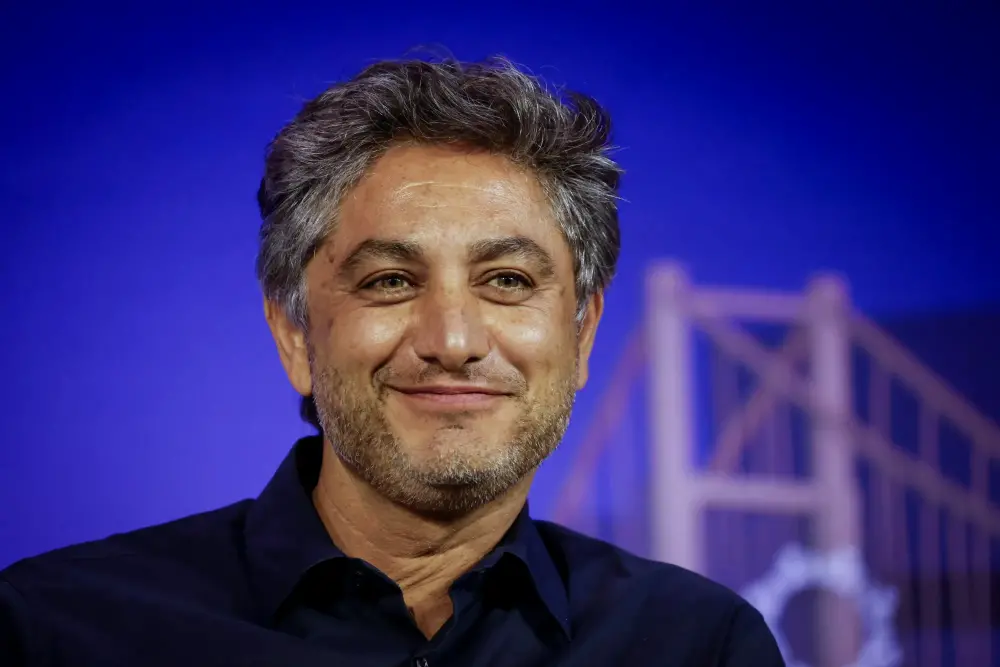
Among all those set to reap immense wealth from the SpaceX IPO, Antonio Gracias's (Antonio Gracias) role is the most unique. He is not a company employee, yet he is more deeply embedded in Musk's business empire than the vast majority of executives.

The 55-year-old Gracias is the founder of Chicago investment firm Valor Equity Partners. The two met in the early 2000s through the Silicon Valley network formed after the PayPal sale. At that time, Musk had just sold the company to eBay, while Gracias was running his own investment firm Valor Equity Partners.

During Tesla's near-bankruptcy period from late 2008 to early 2009, Gracias personally lent Musk $1 million. Since then, he has become one of Musk's closest personal friends. He was the best man at Kimbal Musk's (Kimbal Musk, Musk's brother) wedding, and the two families even vacation and celebrate holidays together.

This two-decade-long friendship is now translating into a staggering fortune. Gracias holds over 500 million SpaceX Class A shares through Valor-related investment entities, accounting for about 7.3% of the company's Class A shares, making him the second-largest individual shareholder after Musk.

Based on a conservative valuation of $1.5 trillion, these shares are worth about $91.6 billion. If calculated at $2 trillion, it would exceed $140 billion. Regardless of where the final pricing lands, he will rank among the world's 50 wealthiest individuals.

Gracias appears on the boards of nearly all Musk's companies. He served as Tesla's lead independent director for eight years and held board seats at SolarCity, Neuralink, and The Boring Company. He even agreed in early 2025 to provide financing for Musk's failed plan to acquire OpenAI in a $97 billion hostile takeover.

Gracias's financial relationship with SpaceX extends beyond equity. The prospectus discloses an extraordinary arrangement. In October 2025, a subsidiary named CTC under xAI signed an AI infrastructure hardware equipment lease agreement with Valor. In January and April 2026, a second and third lease were signed respectively. The three agreements require CTC to pay nearly $20 billion to Valor over the lease terms, with SpaceX itself providing full guarantees for these payments.

This means if xAI's subsidiary is unable to pay, SpaceX has a legal obligation to pay on its behalf. This type of guarantee itself signals that xAI likely cannot secure financing of this magnitude on its own credit, requiring parental intervention. Indeed, filings show xAI is heavily indebted, including secured senior notes with an interest rate as high as 12.5%. This is typically pricing for financially distressed borrowers, indicating the company struggles to obtain typical financing.

The structure of these transactions has raised auditors' concerns. SpaceX's auditor, PwC, refused to treat these agreements as ordinary leases, instead characterizing them as "failed sale-leasebacks."

In a typical sale-leaseback, one party sells an asset to another and leases it back for use, with the buyer needing to actually obtain control of the asset. But PwC believes the contract terms mean CTC retains actual control over the GPUs, implying Valor's role is closer to that of a lender using GPUs as collateral. The auditors forced SpaceX to retain this $9 billion debt on its balance sheet, listed as related-party debt payable to an entity where a company director serves.

02 SpaceX President & COO
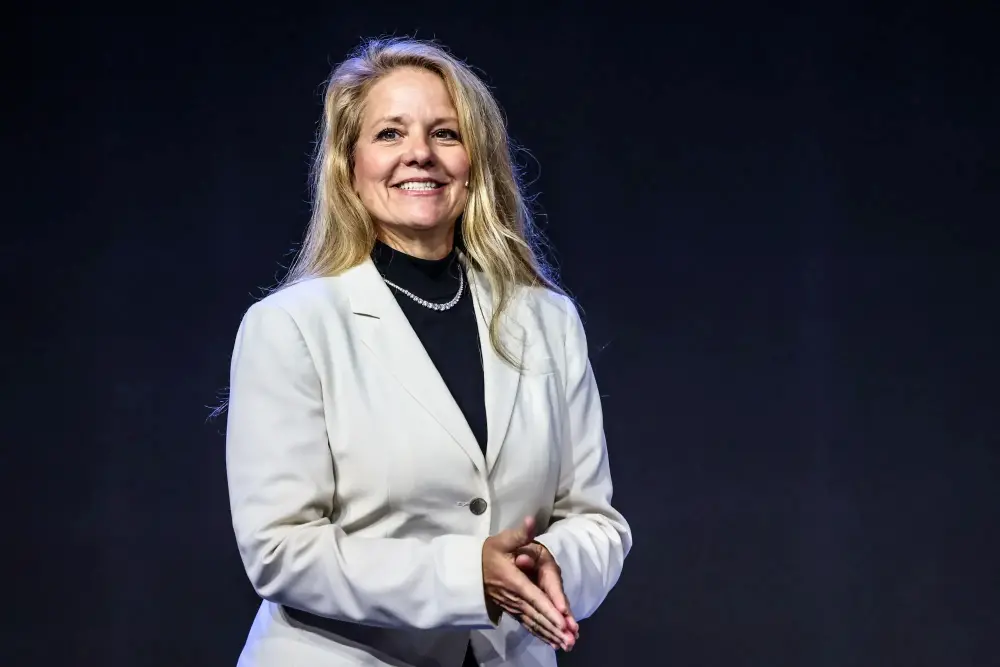
Among all the newly minted billionaires-to-be, Gwynne Shotwell's (Gwynne Shotwell) story is the most representative. The 62-year-old joined the company in 2002 as employee number 11.

Shotwell's initial task was to secure sales orders for the then-obscure Falcon 1 rocket. More than two decades later, she is the company's President and Chief Operating Officer. While Musk's attention is divided among his other companies, she frequently attends various industry events, becoming SpaceX's de facto public face.

According to the prospectus, Shotwell directly or through a trust holds 12.4 million SpaceX shares and holds 4.7 million stock options. If the company prices at a $2 trillion valuation, just her shareholdings will be worth about $2 billion. Shotwell's total compensation in 2025 was $85.8 million, primarily from large restricted stock awards.

Born in Illinois, Shotwell studied mechanical engineering and applied mathematics at Northwestern University. She began her career at an aerospace firm, working on thermal analysis and small spacecraft design.

After meeting Musk in 2002, she quickly joined SpaceX and was promoted to President in 2008. For this engineer who bet her entire career on a company once ridiculed as a "crazy dream," this fortune represents a kind of belated acknowledgment.

03 SpaceX CFO
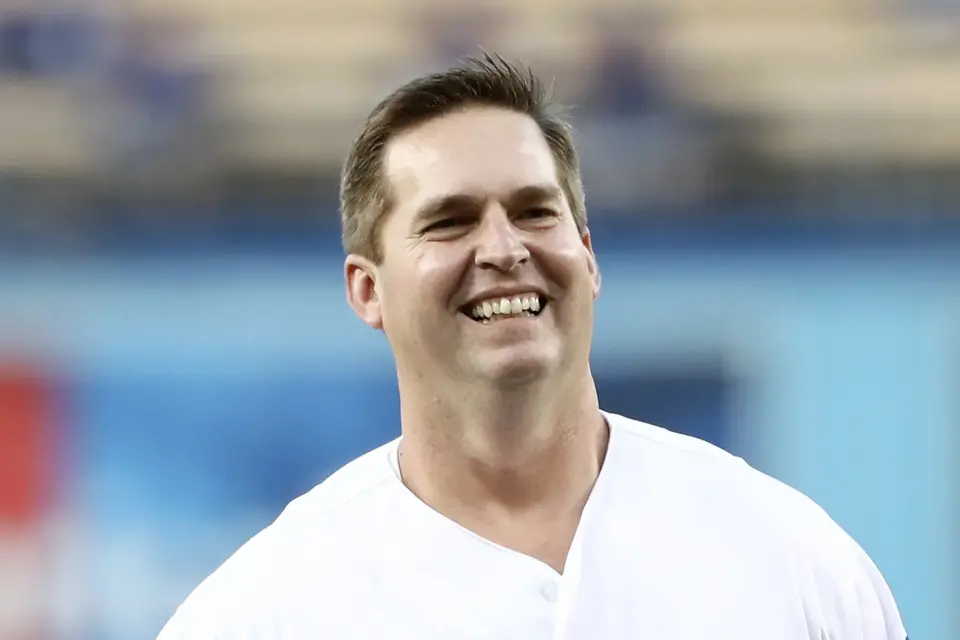
Compared to Shotwell's frequent public appearances, Johnsen is more like SpaceX's internal financial steward, responsible for sustaining the capital lifeline of this cash-burning company.

He joined SpaceX in 2011, after nearly a decade-long financial career at Broadcom and semiconductor company Mindspeed. During the long years when SpaceX kept its operations and financial performance largely secret, Johnsen was the primary contact for answering all tough questions and coordinating stock transactions.

In December 2025, it was Johnsen who sent employees a memo outlining the rationale for the company's public listing. In it, he wrote: "The thinking is that, if we execute extremely well and the markets cooperate, a public offering can raise a huge amount of capital."

Johnsen holds about 9.6 million SpaceX shares. At a $2 trillion valuation, these shares are worth about $1.4 billion. His total compensation in 2025 was $9.8 million.

04 "PayPal Mafia"
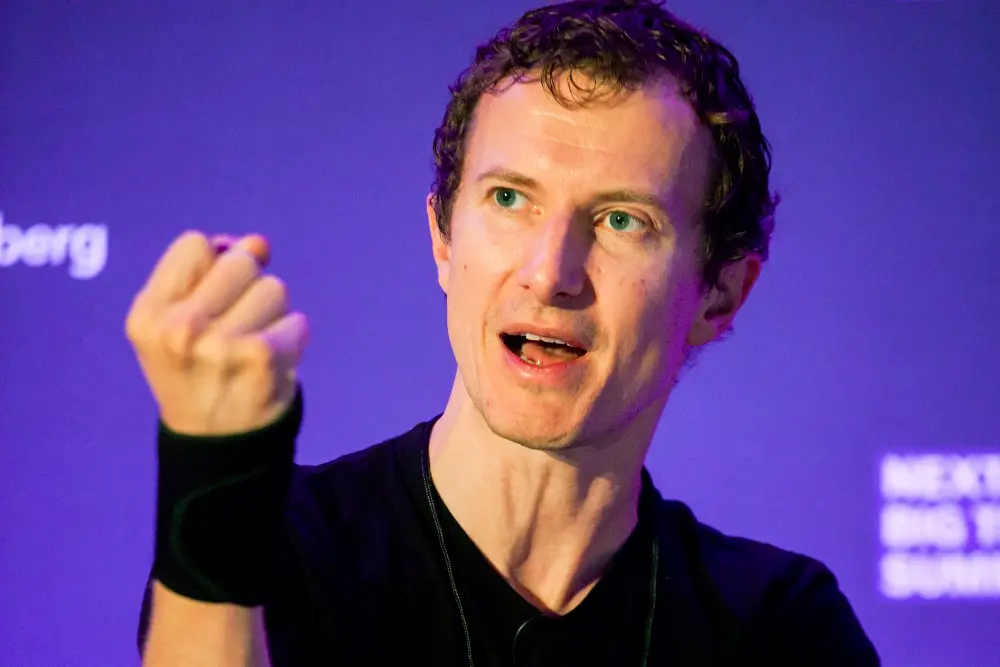
Luke Nosek's (Luke Nosek) connection to Musk dates back to the PayPal era. He was a co-founder and Vice President of Marketing & Strategy at PayPal, and a core member of the so-called "PayPal Mafia."

In 2002, when eBay announced and completed its acquisition of PayPal, Nosek co-founded Founders Fund with Peter Thiel (Peter Thiel) and others, and in 2008, he led Founders Fund's first investment in SpaceX. He subsequently gained a board seat, which he has held ever since.

Later, Nosek left Founders Fund, founded his own venture capital firm Gigafund, and poured over $1 billion into SpaceX, while also supporting Neuralink and The Boring Company.

Nosek directly holds nearly 25 million SpaceX Class A shares and holds another approximately 8 million through Nosek Capital. At a $2 trillion valuation, his total holdings would be worth about $5.3 billion. Similar to Musk, Nosek has pledged nearly 2.4 million SpaceX shares as loan collateral.

05 Institutional Players & University Endowments

Beyond the wealth stories of individual shareholders, the roster of SpaceX also prominently features some institutional players.

Donald Harrison (Donald Harrison), as a Google executive, joined the SpaceX board representing the early institutional investor. Founders Fund co-founder Steve Jurvetson (Steve Jurvetson) is a long-time ally of Musk, serving as a director since 2009.

Venture capitalist Ira Ehrenpreis (Ira Ehrenpreis) joined the board in February 2026 and is expected to chair the Compensation and Nomination Committee. DFJ Growth co-founder Randy Glein (Randy Glein) became a director in 2026 after a long tenure as a board observer and will chair the Audit Committee. Ehrenpreis holds about 1.37 million SpaceX shares, worth about $250 million at a conservative valuation; Glein holds about 278,000 shares, worth about $50 million.

A more dramatic story involves higher education institutions. Scott Wilson (Scott Wilson), Chief Investment Officer of the University of Washington, invested about $50 million of the school's money into SpaceX roughly a decade ago. That bet has now soared to represent over 10% of its $17 billion endowment assets, obtained primarily through co-investments and later-stage rounds via external private equity and venture capital managers.

Anders Hall (Anders Hall), investment chief at Vanderbilt University, said the school's position in SpaceX is estimated at $171 million, with some investments made over a decade ago through relationships with general partners. The school's endowment totaled $10.9 billion as of June 2025.

However, the massive IPO payout is a double-edged sword for endowments. They receive significant cash inflows, but the wealthiest few private schools will face a higher tax on net investment income. Congress has increased the rate from 1.4% to 4% or 8%, depending on the school's size.

06 AI Burning Through Cash

What this SpaceX IPO reveals is not just the opportunity for a few to amass great wealth, but also the company's own awkward financial reality.

The rocket and artificial intelligence company is not yet profitable, and it is spending money far faster than it earns it. For the full year 2025, the company lost $4.9 billion. And in just the first three months of 2026, it lost $4.3 billion on $4.7 billion in revenue.

Annual revenue grows at about 33%, but capital expenditures double each year. In 2025, SpaceX spent $20.7 billion, with about 60% invested in artificial intelligence. In the first three months of 2026, the company had already spent $10.1 billion, with $7.7 billion flowing to AI.

Once public, all these debt and spending pressures will be transferred to public shareholders. They will also inherit the billions of dollars in debt obligations generated by a series of transactions SpaceX entered into during its private period, including the leases with Valor.

One clause in the prospectus is particularly jaw-dropping: once 1 million people are living on Mars, Musk will receive up to one billion additional shares, and these shares are already added to his massive voting pool, which is sufficient to control the company.

For a company losing money year after year, investors will have to make their own judgment between aggressive spending, massive losses, and a governance structure wholly controlled by insiders.

Perguntas relacionadas

QWho is the largest individual shareholder in SpaceX after Elon Musk, and what is the value of their stake at a potential $2 trillion valuation?

AAntonio Gracias is the largest individual shareholder in SpaceX after Elon Musk. His stake is valued at over $140 billion at a potential $2 trillion valuation.

QWhat is the role of Gwynne Shotwell at SpaceX, and what is the approximate value of her holdings at a $2 trillion valuation?

AGwynne Shotwell is the President and Chief Operating Officer of SpaceX. The approximate value of her holdings at a $2 trillion valuation is about $2 billion.

QWhat is the controversial agreement between Valor Equity Partners and a subsidiary of xAI, and how much liability does SpaceX have from it?

AThe controversial agreement is a set of AI infrastructure hardware equipment lease contracts. SpaceX has provided a full guarantee for the payments, amounting to nearly $20 billion, meaning SpaceX is liable to pay if the xAI subsidiary defaults.

QWhat is SpaceX's financial performance for 2025 and the first three months of 2026, particularly regarding losses?

AIn 2025, SpaceX lost $4.9 billion. In the first three months of 2026, on $4.7 billion in revenue, the company lost $4.3 billion.

QWhat extraordinary incentive is outlined in the prospectus for Elon Musk, and what must happen for him to receive it?

AThe prospectus outlines an incentive for Elon Musk to receive up to one billion additional shares. This award is contingent on one million people living on Mars.

Leituras Relacionadas

Kelp DAO's $400 Million Bad Debt Was Covered, But at a $12 Billion Cost to Aave

On May 26th, Kelp DAO successfully transferred its final batch of rsETH, completing the 37-day process of fully backing rsETH 1:1 after a security incident. However, the resolution came at a significant cost to Aave. The protocol's TVL plummeted by over $12 billion in the following month. Furthermore, a separate legal battle over 30,766 frozen ETH continues in court, posing ongoing reputational risk. The recovery was enabled by an unprecedented, one-time coalition dubbed "DeFi United," involving major contributions from Aave's founder, treasury, Consensys, Mantle, and others. Despite this, the event triggered a major outflow of funds, with whales like Justin Sun moving capital to competitors like Spark. Aave's path to regaining its position relies heavily on the successful execution of its multi-pronged strategy. Its new V4 protocol, designed for open, heterogeneous asset markets, faces delays due to internal governance disputes. Meanwhile, the V3 version remains the core revenue generator, and the permissioned Horizon fork is targeting institutional RWA (Real-World Assets) growth—a segment less impacted by the rsETH incident but dependent on traditional finance adoption timelines. The key takeaway is that while the immediate bad debt was covered, Aave paid a steep price in lost trust and capital. Recovering market share depends on accelerating V4's rollout and advancing its institutional RWA offerings, both of which face external and internal hurdles. The "DeFi United" safety net is unlikely to be replicable for future crises.

marsbitHá 12m

Kelp DAO's $400 Million Bad Debt Was Covered, But at a $12 Billion Cost to Aave

marsbitHá 12m

TechFlow Intelligence Report: Xiaomi Announces 200 Billion HKD Stock Buyback Plan, Spot Gold Falls Nearly 1%

TechFlow Report: Xiaomi announced a HK$200 billion stock buyback plan, while spot gold fell nearly 1%. A wider range of tech headlines includes Google unveiling its powerful video editing model Gemini Omni and the original "Attention is All You Need" authors advocating for a move beyond Transformer architecture. In other AI news, IBM reported its first successful use of a quantum computer to train an AI model, and Qwen3.5 released uncensored local model versions. The crypto/Web3 sector saw discussions on opaque stablecoin products and DEX fee changes. Major tech companies are under scrutiny: Uber's COO publicly questioned the ROI of AI investments, Motorola was accused of hijacking Amazon app links for affiliate codes, and Google faced criticism for using web data to fuel its AI. U.S. markets are focused on high S&P 500 valuations (31.8x P/E) and an intense concentration of capital in semiconductor stocks, with warnings about the sustainability of the AI data center boom. Geopolitical tensions, featuring simultaneous U.S. airstrikes on Iran and peace talks, caused significant oil price volatility. Other notable developments include Ferrari's first pure EV priced at 4.35 million yuan and Boston Dynamics' Atlas robot learning soccer from videos. The underlying theme suggests the AI narrative is shifting from boundless potential to requiring tangible results, while traditional geopolitical risks remain a powerful force in markets.

marsbitHá 15m

TechFlow Intelligence Report: Xiaomi Announces 200 Billion HKD Stock Buyback Plan, Spot Gold Falls Nearly 1%

marsbitHá 15m

Coin & Stock Barometer: Bitcoin Miner MARA Holdings Spends Over $860,000 on Bulletproof Vehicle Services for Executives; Bitmine Included in Preliminary List for FTSE Russell 1000 Index (May 19)

Crypto Market Wrap & Key Corporate Updates (May 19) The crypto market saw a decline followed by a minor rebound, while U.S. crypto-related stocks fell broadly. In corporate news: **MARA Holdings**, a Bitcoin miner, disclosed spending over $869,000 on vehicle ballistic armor services for its CEO and CFO under its security program. The board cited higher risks associated with the company's public disclosure of holding substantial Bitcoin assets. According to BitcoinTreasuries.NET, Elon Musk's **SpaceX and Tesla** collectively hold 30,221 BTC ($2.3B), which would rank them as the fifth-largest public company holder if combined. **DDC Enterprise Limited** increased its Bitcoin holdings by 200 BTC, bringing its total to 2,583 BTC. The firm stated it plans to continue accumulating BTC based on liquidity, not short-term price movements. Bitcoin treasury company **Nakamoto** announced a 1-for-40 reverse stock split to regain compliance with Nasdaq's minimum bid price requirement. The company reported a Q1 2026 net loss of $238.8M, partly due to a $102.5M unrealized loss on its Bitcoin holdings. **Tether** acquired SoftBank's stake in **Twenty One Capital (XXI)**, increasing its control. Tether's CEO expressed strengthened confidence in XXI's long-term Bitcoin strategy. Fundstrat's **Tom Lee** stated that **Bitmine (BMNR)** has been included in the preliminary list for the FTSE Russell 1000 Index. Concurrently, two new wallets suspected to be linked to Bitmine withdrew 60,000 ETH ($126M) from Bitgo and Kraken. Solana treasury company **Solmate Infrastructure** announced a registered direct offering of shares to raise approximately $11.4 million. **AI Financial**, a WLFI treasury company, reported a Q1 2026 net loss of $271.5M and raised substantial doubt about its ability to continue as a going concern, partly due to unrealized losses on its WLFI token holdings. **SUI Group** disclosed it holds over 108.7 million SUI tokens (~$115M), with its market cap to net asset value ratio at 0.91x. *Disclaimer: This summary is for informational purposes only and does not constitute investment advice.*

marsbitHá 31m

Coin & Stock Barometer: Bitcoin Miner MARA Holdings Spends Over $860,000 on Bulletproof Vehicle Services for Executives; Bitmine Included in Preliminary List for FTSE Russell 1000 Index (May 19)

marsbitHá 31m

China's AI Fronts: From Yan'an to Midway

This article analyzes the competitive landscape of China's AI industry through a dual-front war analogy: the "Eastern Front" of business model competition and the "Western Front" of global strategic positioning. **The Eastern Front: The Scramble for Supply Lines and Monetization** The "Eastern Front" examines the contrasting strategies of three Chinese tech giants—Tencent, Alibaba, and ByteDance—in the face of AI's high marginal costs. Tencent integrates AI as a catalyst within its existing ecosystems (advertising, gaming, cloud) for monetization, prioritizing high-value scenarios over user growth. Alibaba bets on a full-stack, self-developed approach from chips to applications, aiming to control costs and ecosystem, though this requires immense patience and resources. ByteDance, with Doubao as its flagship, pursues a traditional traffic-driven, "super app" strategy but faces severe monetization challenges as its massive user base incurs unsustainable operational costs. The central challenge for all is building a reliable "supply line" (sustainable funding/profit) and achieving efficient monetization, moving beyond being mere "token factories." **The Western Front: "Preserving Land" vs. "Preserving People"** The "Western Front" frames a global strategic divergence. The U.S. model ("preserving land") focuses on closed-source, high-premium models (e.g., Anthropic) targeting lucrative enterprise markets. China's strategy ("preserving people") leverages open-source models (e.g., Alibaba's Qwen, DeepSeek) and extremely low pricing to attract global developers and capture long-tail markets, akin to a "surround the cities from the countryside" approach. The goal is to make Chinese models the default infrastructure, locking in future ecosystem value. However, the critical test is whether this open-source ecosystem can achieve a commercial闭环, converting developer adoption into tangible revenue (e.g., via cloud services), and bridging the monetization gap with Western models that charge for value, not just tokens. **Conclusion: The Long March from Factory to Brand** The article concludes that China's AI industry possesses technology, users, and scenarios but must integrate them to create and capture value. Its ultimate success depends on navigating both fronts: companies must establish sustainable monetization on the Eastern Front, while the industry's Western strategy must evolve from simply "preserving people" (developer adoption) to truly "preserving both people and land" — transforming open-source ecosystem dominance into commercial success and premium brand value. This journey from being a "token factory" to a "value highland" will require strategic patience and the ability to outlast competitors in a prolonged contest.

marsbitHá 1h

China's AI Fronts: From Yan'an to Midway

marsbitHá 1h

Trading

Spot
Futuros
活动图片