Saylor Pauses Bitcoin Purchases: The World's Largest Bitcoin Holder Is Transforming into a 'Digital Asset Bank'

marsbitPublicado em 2026-08-26Última atualização em 2026-08-26

Resumo

Saylor's Strategy has paused its long-standing practice of buying Bitcoin, marking a significant shift for the world's largest corporate BTC holder. The company is now prioritizing capital structure management over accumulation. Strategy recently raised $2 billion by selling shares but purchased zero Bitcoin, directing funds instead to a new USD cash reserve, repaying preferred stock, and building its dollar liquidity pool. This follows a series of BTC sales in 2026, totaling around 6,916 coins, often at a loss, to meet its substantial annual dollar obligations of approximately $1.76 billion in dividends and interest payments. The core change is the adoption of a new "Digital Credit Capital Framework." Strategy is transforming from a leveraged Bitcoin proxy into a "digital asset bank." Its focus has shifted from simply increasing its BTC holdings to managing a balance sheet where Bitcoin acts as the reserve asset, common stock as equity, and preferred shares as liabilities. The goal is now to optimize the "Bitcoin per share" metric and maintain stability, even if it means selling BTC at a loss during market stress to protect its financial footing. The market appears to be re-evaluating Strategy, pricing it less as a volatile Bitcoin tracker and more as a capital management firm. Despite its recent sales, Bitcoin's price has surged, indicating Strategy's selling pressure is easily absorbed by broader market flows like ETF inflows. If successful, Strategy could emerge as a n...

Author: Xiaobing

Strategy sold 18.26 million shares of common stock last week, raising $2 billion. Not a single Bitcoin was purchased.

The allocation of this money is as follows: $136 million used to repurchase its STRK preferred shares, $300 million injected into the existing USD Reserve pool, and the remaining $1.59 billion placed into a newly established "USD Cash" pool. As of August 23, Strategy had $6.69 billion in cash on its books, with its Bitcoin holdings of 840,447 coins remaining completely unchanged.

This is a company that used to file an 8-K every week announcing Bitcoin purchases, with its founder posting pictures on X every Sunday to flaunt the holdings. Michael Saylor's iconic "green square chart" hasn't been updated for several weeks.

The essence of the question of why Strategy paused its purchases is, what kind of company is it becoming?

From 'Never Selling' to a Digital Credit Capital Framework

On May 26, 2026, Strategy sold its first batch of Bitcoin in history: 32 coins, worth approximately $2.5 million. The quantity was insignificant, but the signal was deafening.

Subsequent five sales escalated step by step.

32 coins at the end of May, 1,363 coins at the end of June, 2,225 coins at the beginning of July, 1,638 coins at the end of July, and 1,690 coins at the beginning of August. Strategy sold a total of approximately 6,916 BTC in 2026, cashing out approximately $432 million.

Except for the first sale, which executed slightly above cost at $77,135, all others were executed in the $60,000-$64,000 range, far below the average holding cost of $75,385. The realized loss on paper exceeds $102 million.

Selling at a loss? It's because the bills are due.

On June 29, Strategy officially released its "Digital Credit Capital Framework." The core content of this document includes three authorizations: a "BTC Liquidation Plan" allowing the sale of up to $1.25 billion worth of Bitcoin; a $1 billion preferred stock repurchase authorization and a $1 billion common stock repurchase authorization; and a mandatory USD reserve policy requiring reserves to cover at least 12 months of preferred stock dividends and interest payments.

By August 1, the BTC liquidation authorization had been expanded to $5 billion.

Understanding the meaning of these numbers: Strategy has issued five series of preferred stock (STRK, STRF, STRD, STRE, STRC), with annual dividend yields ranging from 8% to 12%; combined with over $6.7 billion in convertible bond interest, the company needs to pay approximately $1.76 billion in hard dollar obligations annually. At the beginning of 2026, the dividend coverage ratio could still last over 7 years; by June, CryptoQuant's calculations showed this number had shrunk to about 14 months.

The crux is that in May, Strategy spent $1.38 billion in cash to prepay $1.5 billion face value of its 2029 convertible bonds (an 8% discount). This operation, while eliminating debt and boosting the "Bitcoin per share" metric, directly drained the cash pool. It's like a family paying off their mortgage early, only to find they have no income next month.

Therefore, since the end of June, Strategy's operational logic has undergone a fundamental shift: it's no longer the flywheel of "raise capital → buy Bitcoin → announce increased holdings → stock price rises → raise more capital → buy more Bitcoin," but rather the balance sheet management of "raise capital → build reserves → stabilize preferred stock → repurchase STRC → wait for opportunities."

Transformation

On the surface, stopping Bitcoin purchases is admitting defeat. MSTR is down over 60% year-to-date and nearly 80% from its 2024 all-time high. The market is pricing it like a failed leveraged BTC ETF.

But if you shift the perspective from "Bitcoin proxy stock" to "capital structure engineering," the logic is completely different.

Saylor's rhetoric in the Q2 earnings report has quietly changed. He no longer repeats the old narrative of "Bitcoin rises, MSTR must follow." He has started frequently using the terms "Bitcoin Per Share" and "BTC Yield."

So far in 2026, although Strategy has sold nearly 7,000 BTC, the BTC Yield has remained at 13.3% through concurrent repurchases of STRC and share management. In plain language: the total number of BTC the company holds has decreased, but because it is simultaneously repurchasing its own stock and preferred shares, the amount of BTC corresponding to each share of MSTR is actually increasing.

The logical model of this operation is closer to a bank than a fund.

A bank's core competency lies in managing the interest rate spread, duration, and liquidity between assets and liabilities; the holding amount itself is never the focus.

What Strategy is doing is treating Bitcoin as "reserve assets," MSTR common stock as "equity capital," and STRC and other preferred stock as "deposit-like liabilities," then performing dynamic balancing among the three.

The $6.69 billion in cash is Strategy's version of a "capital adequacy ratio buffer."

In a research report on August 22, Bernstein gave the trigger condition for resuming purchases: STRC returning to near its $100 par value. This preferred stock fell to as low as $70 in June, reflecting market panic over Strategy's solvency. Now STRC has recovered to about $96.5, and the dividend coverage ratio has improved from 14 months to about 2.8 years, meaning the balance sheet pressure has significantly eased.

Look at it from another perspective: Strategy was forced to sell small amounts (about 0.8% of holdings) at BTC prices of $60,000-$64,000 to stabilize its capital structure. Now, with BTC at $80,000, it holds $6.7 billion in cash, 840,000 BTC, and close to zero net leverage. If selling at low prices is "cutting losses," then holding massive firepower without buying at high prices is an exercise in extreme restraint and timing judgment.

Why the Market Doesn't Care

A noteworthy phenomenon is: the world's largest corporate Bitcoin holder has been reducing its holdings by nearly 7,000 BTC over two consecutive months, yet the BTC price not only didn't face downward pressure but soared from $60,000 to $81,000 during the same period.

This indicates at least two things. The pricing power of the BTC market has shifted from a single institution to a broader capital structure. The spot ETF's weekly net inflow of $1.92 billion is enough to completely absorb Strategy's selling pressure.

Simultaneously, the market is "pricing in" Strategy's transformation itself: MSTR rose about 1.2% on the trading day after BTC broke through $80,000, not following BTC with 2-3x leveraged volatility as it did in the past. The compression of the premium (mNAV dropping from over 3x at its historical peak to roughly flat) means the market has already reclassified MSTR from "leveraged BTC" to a company that needs to be valued using a DCF model.

If Strategy can successfully complete its transformation from "Bitcoin maximalist" to "digital credit issuer," it might become an unprecedented species in the crypto industry: a "Bitcoin bank."

Different from exchanges, custodians, and ETF issuers, it uses Bitcoin as reserve assets, multi-layered capital instruments as its liability side, and "Bitcoin per share appreciation" as its operational goal, resembling a new type of capital management company.

The risks on this path are equally enormous: $1.76 billion in annual hard obligations means that for every day the BTC price falls below the cost basis of $75,385, the safety margin of the balance sheet thins. The $5 billion BTC liquidation authorization means the board has prepared for the worst-case scenario.

Saylor no longer posts his chart every Sunday, but his silence might be more worthy of serious attention than his past proclamations.


Criptomoedas em alta

Perguntas relacionadas

QWhat major change in strategy has Michael Saylor's company, MicroStrategy, recently adopted regarding its Bitcoin holdings?

AMicroStrategy has shifted from its long-standing strategy of aggressively accumulating Bitcoin to a more conservative approach focused on financial stability. The company has paused its regular Bitcoin purchases and is now actively managing its balance sheet. This includes selling some Bitcoin (even at a loss) to meet hard dollar obligations, establishing large USD cash reserves (reaching $6.69 billion), repurchasing its own stock and preferred shares, and adhering to a mandatory USD reserve policy. The core strategy has evolved from 'finance -> buy BTC' to managing the interplay between its BTC holdings (asset), equity, and preferred share liabilities.

QAccording to the article, why did MicroStrategy start selling Bitcoin in 2026, and what financial pressure prompted this?

AMicroStrategy started selling Bitcoin in 2026 primarily to fulfill its hard dollar obligations. The company has significant annual cash outflows of approximately $1.76 billion to cover dividends on its preferred shares (STRK, STRF, STRD, STRE, STRC) and interest on its convertible notes. An earlier cash-intensive move in May 2026—spending $1.38 billion to repurchase $1.5 billion face value of its 2029 convertible notes—severely depleted its cash reserves. This left the company with insufficient liquidity to cover upcoming payments, forcing it to sell Bitcoin to generate cash and stabilize its capital structure.

QWhat is the 'Digital Credit Capital Framework' announced by MicroStrategy, and what are its key components?

AThe 'Digital Credit Capital Framework' is a strategic policy announced by MicroStrategy on June 29, 2026. It formally authorizes the company to manage its capital with a focus on financial stability. Its key components include: 1. A 'BTC Monetization Plan' allowing the sale of up to $1.25 billion worth of Bitcoin (later expanded to $5 billion). 2. Authorization for up to $1 billion in preferred stock repurchases and $1 billion in common stock repurchases. 3. A mandatory USD reserve policy requiring the company to hold enough cash to cover at least 12 months of preferred stock dividend and interest payments.

QDespite selling nearly 7,000 BTC, how has MicroStrategy managed to increase its 'Bitcoin per Share' metric?

AMicroStrategy has increased its 'Bitcoin per Share' (BTC Yield) by concurrently buying back its own equity while selling Bitcoin. Although the total number of BTC in its treasury decreased by about 7,000, the company aggressively repurchased its Series C preferred stock (STRC) and managed its share count. This means the reduced BTC holdings are spread across a smaller number of total shares (common + preferred), resulting in a higher BTC amount attributable to each share. As of the article, this BTC Yield was maintained at 13.3%.

QHow does the article suggest the market's perception of MicroStrategy (MSTR) is changing, and what does this imply for its future?

AThe article suggests the market is no longer treating MicroStrategy (MSTR) purely as a leveraged Bitcoin ETF. This is evidenced by MSTR's price not making the 2-3x leveraged moves alongside Bitcoin's price as it did historically, and its premium to net asset value (mNAV) collapsing to near parity. The market is starting to value MSTR based on its own financials and business model (like a DCF model) rather than just as a Bitcoin proxy. This implies a future where MicroStrategy could evolve into a novel 'Bitcoin bank'—a capital management company that uses Bitcoin as a reserve asset, issues layered capital tools as liabilities, and aims to increase 'Bitcoin per Share' as its primary goal.

Leituras Relacionadas

Claude Crashes Three Times a Day, API, App, Cowork All Down, Workers Left in the Dark

On August 24th, Anthropic's AI assistant Claude experienced three major outages, crippling its API, web app (claude.ai), Claude Code, and Cowork features for users. The main failure, lasting nearly three hours, displayed a "529 Overloaded" error, indicating a systemic overload rather than simple throttling. This was the 13th day in August with recorded incidents for Claude. Following the initial repair, the login system failed again twice in the early hours of August 25th. Despite official status pages showing recovery, many users reported persistent issues like white screens on key pages. A monitoring service noted Claude has accumulated 184 incidents since January 2026. The outages disrupted workflows significantly, with one user reporting a nine-hour automated process being lost. Beyond reliability, users and developers express concerns about a perceived decline in Claude's performance ("ran out of compute"), citing slower task completion and reduced reasoning depth in models like Opus 5 compared to earlier versions or competitors. AMD's AI director shared data showing a 75% drop in Claude Code's "thinking" character count from January to March, coinciding with the feature hiding its reasoning process from users entirely. While Anthropic claims 90-day availability rates above 99.3% for its services, this falls short of the 99.9% enterprise standard. More critically, for users running long AI agent tasks, an interruption means losing all prior processing time and context, a cost not reflected in simple uptime metrics. The root cause of the August 24th outage remains undisclosed by Anthropic.

marsbitHá 5m

Claude Crashes Three Times a Day, API, App, Cowork All Down, Workers Left in the Dark

marsbitHá 5m

Insanity: Company A's IPO Fantasy Stretches to $30 Trillion, the Size of the US GDP

Anthropic, the creator of Claude, has reportedly claimed in its upcoming IPO filing a total addressable market (TAM) exceeding $30 trillion. This figure, comparable to the entire U.S. GDP, surpasses the recent $28.5 trillion TAM claimed by SpaceX, setting a new record. The number is derived by estimating the value of all human work potentially replaceable by AI across industries. The article highlights the stark contrast between this immense market projection and Anthropic's current financials. With a projected 2028 revenue of around $200 billion, capturing just 0.67% of its stated TAM would be needed to justify its targeted $2 trillion IPO valuation. This move from a recent private valuation of $96.5 billion represents a rapid doubling ahead of the public listing. Internally, the company exhibits a notable contradiction. As a Public Benefit Corporation, it emphasizes a mission-driven culture over pure profit. Co-founder Dario Amodei, with a $15.5 billion net worth and a pledge to donate 80% of his wealth, has expressed concern about wealth concentration. Yet, during hiring, candidates are reportedly asked how they would feel if the company's stock dropped to zero for safety reasons, testing their commitment beyond financial gain. The piece critiques the inflated TAM trend among tech IPOs and frames Anthropic's situation as a unique tension: leveraging the largest-ever market potential to fuel a historic IPO while simultaneously questioning the very financial motivations it creates.

marsbitHá 5m

Insanity: Company A's IPO Fantasy Stretches to $30 Trillion, the Size of the US GDP

marsbitHá 5m

Didier Zheng Answers: Will MicroStrategy Enter a Death Spiral? How Will the Macro Trend Unfold in the Second Half of the Year?

In the latest WuShuo Uncensored podcast, investor Didier Zheng analyzes recent market trends. He argues that Bitcoin's recent decline is primarily driven by market anticipation of MicroStrategy potentially selling small amounts of Bitcoin regularly to cover cash flow for its growing priority shares and debt, rather than macro factors or ETF outflows alone. This creates a new dynamic of expected continuous selling pressure. Didier views Token as the new form of labor in the AI era, replacing human roles in execution and driving the ongoing rally in U.S. stocks within the AI supply chain (semiconductors, data centers). This shift is seen as a long-term structural change, boosting corporate profitability. He notes that crypto exchanges are naturally expanding into U.S. stocks and real-world assets due to the scarcity of valuable native crypto assets beyond Bitcoin and major protocols. For traders, the transition may not require a drastic change in strategy, as similar speculative and fundamental assets exist in both markets. The analyst believes the native crypto altcoin rally is likely over, severely damaged by the liquidity destruction from the "1011" crash event. Liquidity has migrated to deeper markets like U.S. equities. For the macro outlook, Didier expresses increased caution for H2 2024 due to potential market pressure from mega-IPOs (e.g., SpaceX) and the U.S. midterm elections. A Democratic sweep could bring stricter regulation for Web3 and AI. Long-term, he remains optimistic about the convergence of AI and blockchain, enabling a more automated, machine-driven economy, but expects a shift towards a more mature, institutional phase for the crypto industry.

marsbitHá 26m

Didier Zheng Answers: Will MicroStrategy Enter a Death Spiral? How Will the Macro Trend Unfold in the Second Half of the Year?

marsbitHá 26m

Bitcoin's Historically Rare Pattern: When August Rises, September Always Pulls Back, Followed by an Average 44% Surge in October

Historical Seasonal Pattern for Bitcoin Resurfaces: Strong August (Up 25% YTD) Points to Potential September Dip, Followed by October Rally Bitcoin is on track for its strongest August performance since 2017, with gains of approximately 25% for the month as of late August, trading between $78K-$79K. This has revived discussion of a historical seasonal pattern observed since 2013. Data shows that in the four previous years where Bitcoin posted a positive return in August (2013, 2017, 2020, 2021), the following September consistently closed in negative territory, with an average decline of about -5.9%. Notably, a positive September has never followed a positive August in Bitcoin's history. However, the pattern shows a potential silver lining. Following each instance of a "Green August" followed by a "Red September," the subsequent month of October has historically seen significant rallies. The average gain for October after such a sequence is approximately +44%. While this pattern highlights a recurring seasonal trend, analysts caution that it is based on a limited sample size of only four occurrences. Each period had distinct macroeconomic and market conditions. Therefore, past performance is not a reliable indicator of future results, and whether 2026 will follow this sequence remains to be seen as September trading begins.

marsbitHá 26m

Bitcoin's Historically Rare Pattern: When August Rises, September Always Pulls Back, Followed by an Average 44% Surge in October

marsbitHá 26m

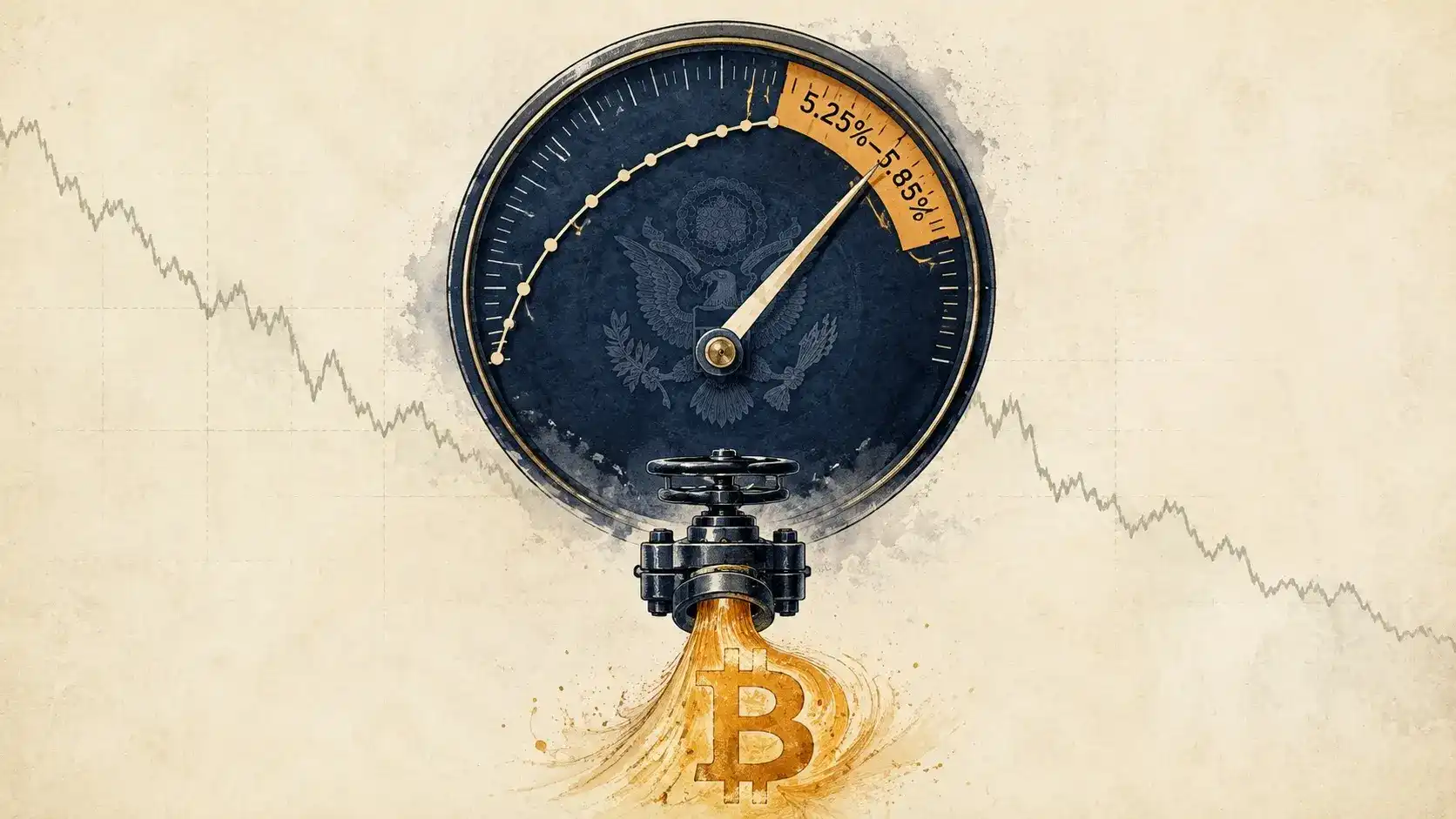
Strive CEO: US Bond Market Approaching a Critical Point, Bitcoin's "Home Run Moment" Taking Shape

The CEO of Strive argues that the U.S. Treasury market is approaching a critical juncture, setting the stage for a major opportunity in Bitcoin. He highlights that unsustainable U.S. fiscal deficits and expanding entitlement programs are creating fundamental pressure for higher long-term bond yields. However, the political system is unwilling to enact necessary fiscal discipline. Consequently, as the 10-year Treasury yield enters a key resistance zone of 5.25%–5.85%, the narrative will shift to a potential bond market crisis. This will force policymakers (the Treasury or Federal Reserve) to intervene aggressively to suppress yields through tools like large-scale bond buybacks or balance sheet expansion. Since the underlying fiscal imbalance remains unresolved, the adjustment pressure will be transferred to the U.S. dollar, making it the "pressure release valve" of the system. A trend decline in the dollar, potentially to multi-decade lows, would create a historically unique macro environment for Bitcoin. Bitcoin stands to benefit as a scarce, non-sovereign monetary asset, especially as AI erodes the scarcity of traditional corporate moats. The author concludes that if bond market stress causes a Bitcoin dip, it would be a major buying opportunity; if not, having exposure is still crucial. The overall expectation is that the market is still underestimating Bitcoin's long-term upside potential in this unfolding macro shift.

marsbitHá 35m

Strive CEO: US Bond Market Approaching a Critical Point, Bitcoin's "Home Run Moment" Taking Shape

marsbitHá 35m

Trading

Spot

Artigos em Destaque

O que é $BANK

Bank AI: Um Passo Revolucionário no Futuro da Banca Introdução Em uma era marcada por avanços rápidos na tecnologia, o Bank AI está na interseção da inteligência artificial (IA) e dos serviços bancários. Este projeto inovador visa redefinir o panorama financeiro, melhorando a eficiência operacional, as medidas de segurança e as experiências dos clientes através do poder da IA. Ao embarcarmos nesta exploração do Bank AI, iremos aprofundar no que o projeto implica, suas dinâmicas operacionais, seu contexto histórico e marcos significativos. O que é o Bank AI? No seu cerne, o Bank AI representa uma iniciativa transformadora com o objetivo de integrar a inteligência artificial em várias operações bancárias. Este projeto aproveita as capacidades da IA para automatizar processos, melhorar os protocolos de gestão de risco e melhorar a interação com os clientes através de serviços personalizados. Os principais objetivos do Bank AI incluem: Automatização das Funções Bancárias: Ao aproveitar as tecnologias de IA, o Bank AI visa automatizar tarefas rotineiras, reduzindo o peso sobre os recursos humanos e aumentando a eficiência. Gestão de Risco Melhorada: O projeto utiliza algoritmos de IA para prever e identificar riscos, fortalecendo assim as medidas de segurança contra fraudes e outras ameaças. Personalização dos Serviços Bancários: O Bank AI foca em oferecer produtos e serviços financeiros ajustados, analisando dados e comportamentos dos clientes. Melhoria da Experiência do Cliente: A implementação de soluções impulsionadas por IA, como chatbots e assistentes virtuais, visa proporcionar aos usuários interações mais humanizadas, revolucionando a forma como os clientes se envolvem com os bancos. Com esses objetivos, o Bank AI posiciona-se como um ator crucial para tornar a banca mais eficiente, segura e centrada no usuário. Quem é o Criador do Bank AI? Os detalhes sobre o criador do Bank AI permanecem desconhecidos. Assim, nenhuma pessoa ou organização específica foi identificada nas informações disponíveis. O anonimato que cerca a origem do projeto levanta questões, mas não diminui a sua ambiciosa visão e objetivos. Quem são os Investidores do Bank AI? Semelhante ao criador do projeto, informações específicas sobre os investidores ou organizações que apoiam o Bank AI não foram divulgadas. Sem essas informações, é difícil delinear o apoio financeiro e institucional que pode estar impulsionando o projeto para frente. No entanto, a importância de ter uma sólida base de investimento é fundamental para sustentar o desenvolvimento em um campo tão inovador. Como Funciona o Bank AI? O Bank AI opera em várias frentes inovadoras, focando em fatores únicos que o diferenciam das estruturas bancárias tradicionais. Abaixo estão as principais características operacionais: Automatização: Ao aplicar algoritmos de aprendizado de máquina, o Bank AI automatiza vários processos manuais dentro dos bancos. Isso resulta na redução dos custos operacionais e permite que os trabalhadores humanos redirecionem os seus esforços para atividades mais estratégicas. Gestão de Risco Avançada: A integração da IA nas práticas de gestão de risco equipa os bancos com ferramentas para prever com precisão potenciais ameaças, como fraudes, garantindo que as informações e ativos dos clientes permaneçam seguros. Recomendações Financeiras Personalizadas: Através do aprendizado contínuo a partir das interações com os clientes, os sistemas de IA desenvolvem uma compreensão sutil das necessidades dos usuários, permitindo oferecer conselhos adaptados sobre decisões financeiras. Interações Melhoradas com os Clientes: Utilizando chatbots e assistentes virtuais alimentados por IA, o Bank AI permite uma experiência de cliente mais envolvente, permitindo que os usuários tenham suas dúvidas resolvidas rapidamente, reduzindo assim os tempos de espera e melhorando os níveis de satisfação. Juntas, estas características operacionais posicionam o Bank AI como um pioneiro no setor bancário, estabelecendo novos padrões para a prestação de serviços e a excelência operacional. Cronologia do Bank AI Compreender a trajetória do Bank AI requer uma análise do seu contexto histórico. Abaixo está uma cronologia que destaca marcos e desenvolvimentos importantes: Início de 2010: A conceituação da integração da IA nos serviços bancários começou a ganhar atenção à medida que instituições bancárias reconheciam os potenciais benefícios. 2018: Ocorreu um aumento significativo na implementação de tecnologias de IA, quando os bancos começaram a usar ferramentas de IA como chatbots para atendimento ao cliente básico e sistemas de gestão de risco para melhorar o tratamento de segurança. 2023: A sofisticação da IA continuou a avançar, com a introdução de IA generativa para tarefas mais complexas, como processamento de documentos e análise de investimentos em tempo real. Este ano marcou um salto significativo nas capacidades proporcionadas aos bancos pela tecnologia de IA. 2024-Estado Atual: Neste ano, o Bank AI está em uma trajetória ascendente, com pesquisas e desenvolvimentos em andamento prontos para aprimorar ainda mais as capacidades nas operações bancárias. A exploração contínua das aplicações de IA sugere desenvolvimentos emocionantes por vir. Pontos Chave Sobre o Bank AI Integração da IA na Banca: O Bank AI foca na adoção da inteligência artificial para simplificar os processos bancários e melhorar as experiências dos usuários. Automatização e Foco em Gestão de Risco: O projeto enfatiza fortemente essas áreas, visando transferir o peso das tarefas rotineiras enquanto melhora as estruturas de segurança através de análises preditivas. Soluções Bancárias Personalizadas: Ao aproveitar os dados dos clientes, o Bank AI possibilita serviços bancários ajustados que atendem às necessidades individuais dos usuários. Compromisso com o Desenvolvimento: O Bank AI permanece comprometido com contínuas pesquisas e esforços de desenvolvimento, garantindo a sua adaptabilidade e relevância contínua à medida que a tecnologia continua a evoluir. Conclusão Em resumo, o Bank AI exemplifica um passo crucial em frente na indústria bancária, aproveitando a inteligência artificial para remodelar paradigmas operacionais, melhorar a segurança e promover a satisfação do cliente. Apesar das lacunas de informação em torno do criador e dos investidores, os objetivos claros e os mecanismos funcionais do Bank AI fornecem uma base sólida para sua evolução contínua. À medida que a tecnologia de IA continua a avançar e se fundir com o setor bancário, o Bank AI está bem posicionado para impactar significativamente o futuro dos serviços financeiros, aprimorando a maneira como entendemos e interagimos com a banca.

247 Visualizações TotaisPublicado em {updateTime}Atualizado em 2024.12.03

O que é $BANK

Como comprar BANK

Bem-vindo à HTX.com!Tornámos a compra de Lorenzo Protocol (BANK) simples e conveniente.Segue o nosso guia passo a passo para iniciar a tua jornada no mundo das criptos.Passo 1: cria a tua conta HTXUtiliza o teu e-mail ou número de telefone para te inscreveres numa conta gratuita na HTX.Desfruta de um processo de inscrição sem complicações e desbloqueia todas as funcionalidades.Obter a minha contaPasso 2: vai para Comprar Cripto e escolhe o teu método de pagamentoCartão de crédito/débito: usa o teu visa ou mastercard para comprar Lorenzo Protocol (BANK) instantaneamente.Saldo: usa os fundos da tua conta HTX para transacionar sem problemas.Terceiros: adicionamos métodos de pagamento populares, como Google Pay e Apple Pay, para aumentar a conveniência.P2P: transaciona diretamente com outros utilizadores na HTX.Mercado de balcão (OTC): oferecemos serviços personalizados e taxas de câmbio competitivas para os traders.Passo 3: armazena teu Lorenzo Protocol (BANK)Depois de comprar o teu Lorenzo Protocol (BANK), armazena-o na tua conta HTX.Alternativamente, podes enviá-lo para outro lugar através de transferência blockchain ou usá-lo para transacionar outras criptomoedas.Passo 4: transaciona Lorenzo Protocol (BANK)Transaciona facilmente Lorenzo Protocol (BANK) no mercado à vista da HTX.Acede simplesmente à tua conta, seleciona o teu par de trading, executa as tuas transações e monitoriza em tempo real.Oferecemos uma experiência de fácil utilização tanto para principiantes como para traders experientes.

684 Visualizações TotaisPublicado em {updateTime}Atualizado em 2026.06.02

Como comprar BANK

Discussões

Bem-vindo à Comunidade HTX. Aqui, pode manter-se informado sobre os mais recentes desenvolvimentos da plataforma e obter acesso a análises profissionais de mercado. As opiniões dos utilizadores sobre o preço de BANK (BANK) são apresentadas abaixo.

活动图片