The First Person to Fly by Mars Will Be a Bitcoin Miner

marsbitPublicado em 2026-05-24Última atualização em 2026-05-24

Resumo

The first person to conduct a flyby of Mars will be a Bitcoin miner. In 2026, Wang Chun, co-founder of the F2Pool mining pool, announced from Bouvet Island that he would command a SpaceX Starship on humanity's first crewed interplanetary mission to Mars. His journey began in childhood, fascinated by blank spaces on maps and later by programming and systematic record-keeping. After discovering Bitcoin in 2011, he co-founded F2Pool, which grew to mine over 1.3 million BTC. His wealth from mining and his later PoS venture, stake.fish, funded his ambitions. After traveling to Earth's poles, he conceived and funded a private SpaceX mission, Fram2, achieving the first crewed polar orbit in 2025. Now, he plans a two-year Starship mission to fly by Mars, representing a shift where private individuals, empowered by new wealth like cryptocurrency, can personally define and fund humanity's next frontiers in space.

By: Bibi News

On May 21, 2026, during the global live broadcast of SpaceX's Starship V3 launch, Wang Chun, co-founder of F2Pool, stood on the most remote island in the South Atlantic, Bouvet Island, and announced that he would soon command the Starship to execute humanity's first crewed interplanetary flight mission: a flyby of Mars.

Many people know F2Pool, a mining pool that has cumulatively mined over 1.3 million bitcoins, accounting for more than 9% of all Bitcoin blocks in human history and, at its peak, holding one-third of the network's total hashrate.

The funds heading to Mars primarily came from his mining pool fee income accumulated over more than a decade since starting F2Pool in 2013, as well as wealth generated from his stake.fish PoS business founded in 2018.

His X profile continues to be updated with records: following the ISO 3166 standard, documenting travels to every country and region in the world, currently having explored 60% of one celestial body (150 out of 249), still updating......
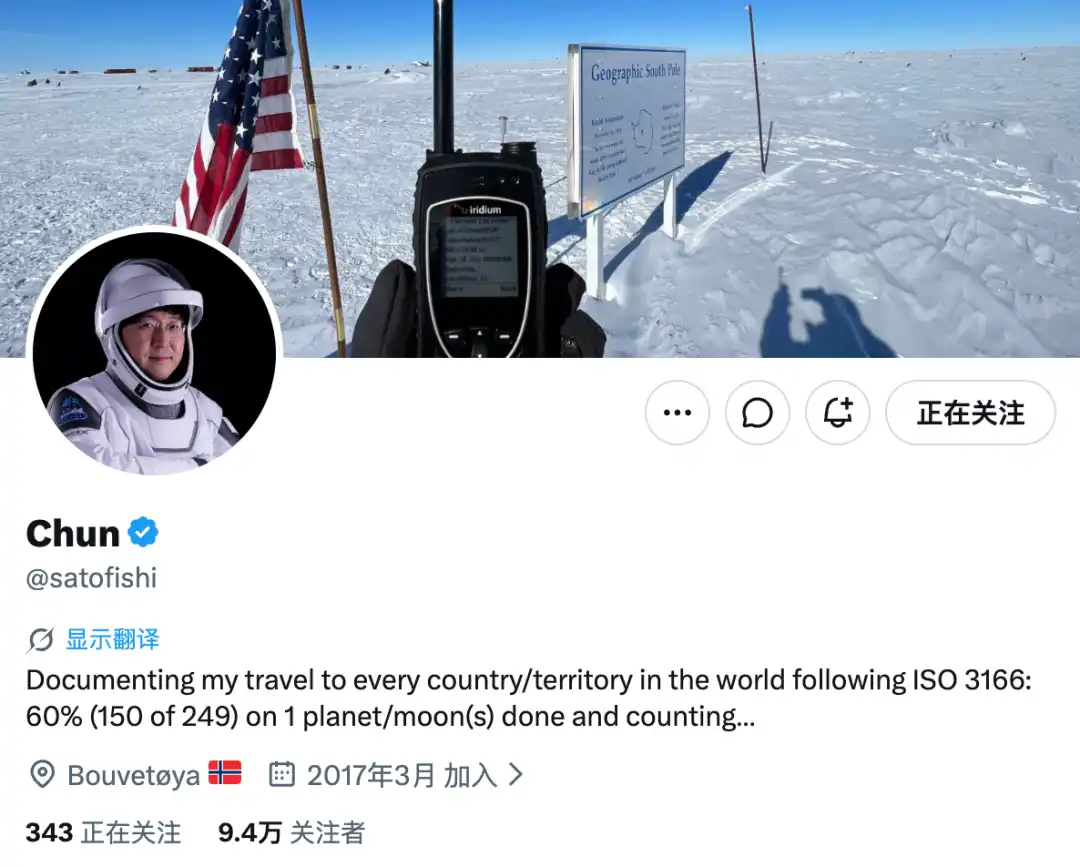
The Vast Blank on the Map

In 1987, Wang Chun's grandfather brought home a found world map. Wang Chun lay down and was captivated by the enormous blank space in the polar regions at the map's bottom. He was five years old then, living mostly with his grandparents, rarely venturing far, yet he was already deeply drawn to those distant and unknown places.

At age 13, upon graduating elementary school, he saved up to buy his first 486SX computer. He wrote himself a planetary gravity simulator and watched the solar system's motion trajectories on the monitor.

On the first day of registering for QQ in middle school, he set his name to 1. The next day he changed it to 2, the day after to 3, incrementing daily like this, persisting for nearly seven years, counting all the way up to 2523, until one day he found it boring and stopped.

No special reason to start, no particular reason to stop, and finally that number remained there forever. The '2' in F2Pool's name later came from this QQ number.

Although this habit stopped, his way of understanding the world did not change. He turned time into something countable, turned progress into a marked scale, stamped every ordinary day with a timestamp, making them a progress bar he could look back on.

He later meticulously recorded every train journey down to the minute and second, numbered every flight, and marked off visited countries one by one on a list. These things seemed laborious to outsiders, but for him, it was just instinct.
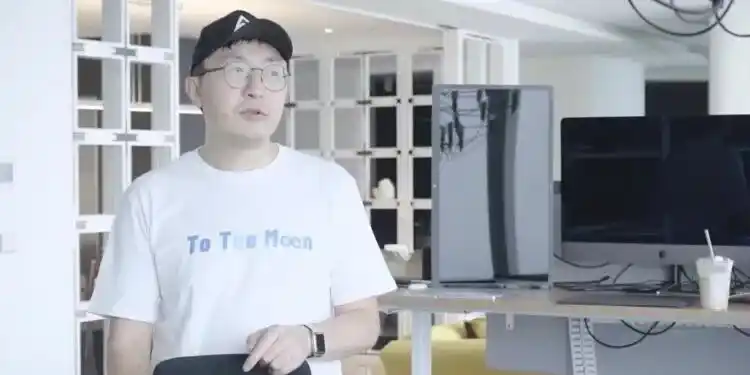
After graduation, he went to a Norwegian software company in Beijing. To save money, he slept on a French colleague's sofa, slept in the office. After work on Friday, he headed straight to the train station, returning Monday morning.

In the year 2007, he traveled 75,900 kilometers by train, equivalent to spending two full months on the road. He recorded every segment of the journey, precise to the minute or even second, posting it on forums. Someone gave him a nickname: Thousand-Trip High-Speed Rail Man.

In 2010, he went abroad for the first time, to Nepal, then India. In India, he boarded the country's longest-running train, the 16317 Himsagar Express, traveling all the way from the southernmost Kanyakumari to Kashmir, spending his entire savings at the time, $1,000.

Launching the F2Pool Bitcoin Mining Pool

In May 2011, he read two articles about Bitcoin on Solidot. That night, he opened the Bitcoin Wiki and read it from start to finish all night long. He described the feeling as if he had discovered a new continent.

On May 28, he bought his first bitcoin at a unit price of $8.70, borrowed $40,000 from his father, went to Zhongguancun to buy two graphics cards, rented four civilian houses, equipped dozens of mining rigs, second-hand motherboards, 512MB RAM, 4GB USB drives installed with Ubuntu, and started mining like that.

In the first two years, he mined 7,700 bitcoins, used 4,000 to pay for electricity, exchanged 660 for an iPhone (which was stolen in the St. Petersburg metro station). He sold the rest in January 2013 at $17 each, repaid his father's money, and made a small profit of over ten thousand dollars.

In April of that year, he and Mao Shixing, online nickname 'Shenyu' (which means 'Magic Fish'), launched F2Pool in Wenzhou, the first Bitcoin mining pool in China, later familiarly known as 'Fish Pool'.

Wang Chun wrote the backend code, Shenyu handled operations. A mining pool is different from a mining farm; a farm mines for itself, while a pool organizes the computing power of global miners, distributes rewards based on contribution, charges a handling fee, more like infrastructure for the Bitcoin network.

After going online, the pool expanded rapidly. This infrastructure business brought continuous cash flow and became an important source of his long-term wealth. Over the past decade-plus, F2Pool has helped global miners cumulatively mine over 1.3 million bitcoins.

In 2015, he used 2,900 bitcoins to buy his first apartment in Pattaya, Thailand. In 2018, he founded stake.fish in Thailand, a PoS staking service. This company later supported over twenty public chains including Ethereum, Solana, Cosmos, managing assets exceeding $3 billion.

The PoW mining pool and PoS validation, two infrastructure businesses based on different technological routes, together formed the foundation of his wealth. It is widely estimated that Wang Chun's wealth has reached hundreds of millions of dollars, but the specific figure has never been disclosed.
Flying into Space, Overlooking the Poles

On-paper wealth grew, but his lifestyle hardly changed: writing code, traveling, counting.

In December 2021, he stood at the South Pole. In July 2023, the North Pole. All geographical poles on Earth had been reached; there were no farther endpoints left, yet the questing heart did not stop.

It was then that he saw SpaceX's Falcon 9 booster landing vertically back on the launch pad. He felt that feeling again, exactly like the first time he heard about computers, the first time he discovered Bitcoin.

On April 23, 2023, lying in a hotel bed in Saudi Arabia, he asked himself: if he could design his own mission, where would he fly? The poles were the final frontier, but since 1961 when humans entered space, almost all crewed spacecraft had operated in mid-to-low inclination orbits. No vessel had ever truly flown over the poles, not because it couldn't be done, but because no one thought to do it, or no one had the resources to do it.

He thought of Darwin's HMS Beagle, the Beagle 2 Mars lander named after it, and then he thought of the Fram, the Norwegian exploration ship that conquered the poles multiple times, meaning 'Forward' in Norwegian.

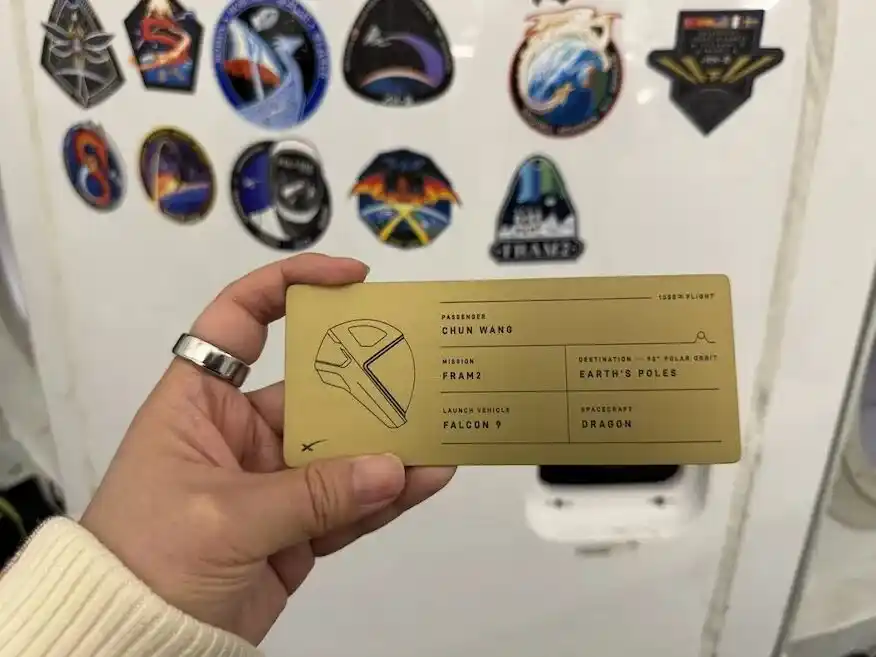
So he planned and designed everything, submitted a private mission proposal to SpaceX, requesting to charter an entire Crew Dragon, enter orbit at a 90-degree polar inclination, and fly over the poles.

The entire mission was fully self-funded, no sponsors. No brokers, no NASA approvals. He treated SpaceX as a charter company, negotiated requirements and costs, became the mission commander himself, fully responsible for overall decisions, coordinating the crew, and interfacing with ground control.

He deliberately chose the crew too: a Norwegian, a German, an Australian, all non-American citizens, because this was a purely private decision.
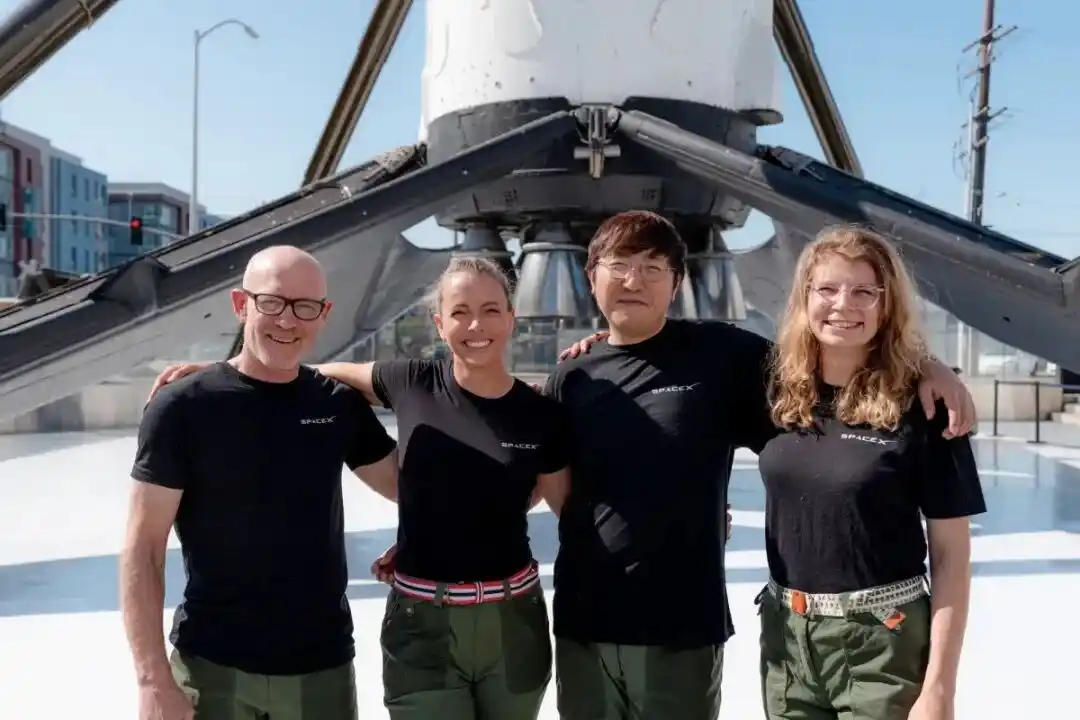
SpaceX sent him 2.8GB of learning materials, including mission procedure manuals, spacecraft system operation documents, guides for 22 scientific experiments, and explanations of polar orbit-specific risks.

Over the next 8 months, he underwent rigorous training: centrifuge high-G training, parabolic microgravity flights, cabin pressure loss simulation, polar survival drills, unassisted autonomous egress training, and more.

On March 31, 2025, the Falcon 9 lifted off from Kennedy Space Center.

Day one, the whole crew experienced space motion sickness. Day two, he wrote: feeling completely fine, like starting over.

The pole came into view, and he sent a message: Hello, Antarctica. Looking down from 430 kilometers high, a pure white expanse, no signs of human activity visible.

Suspended above Earth, he thought of Heisenberg's uncertainty principle, modeling his situation using quantum mechanics.

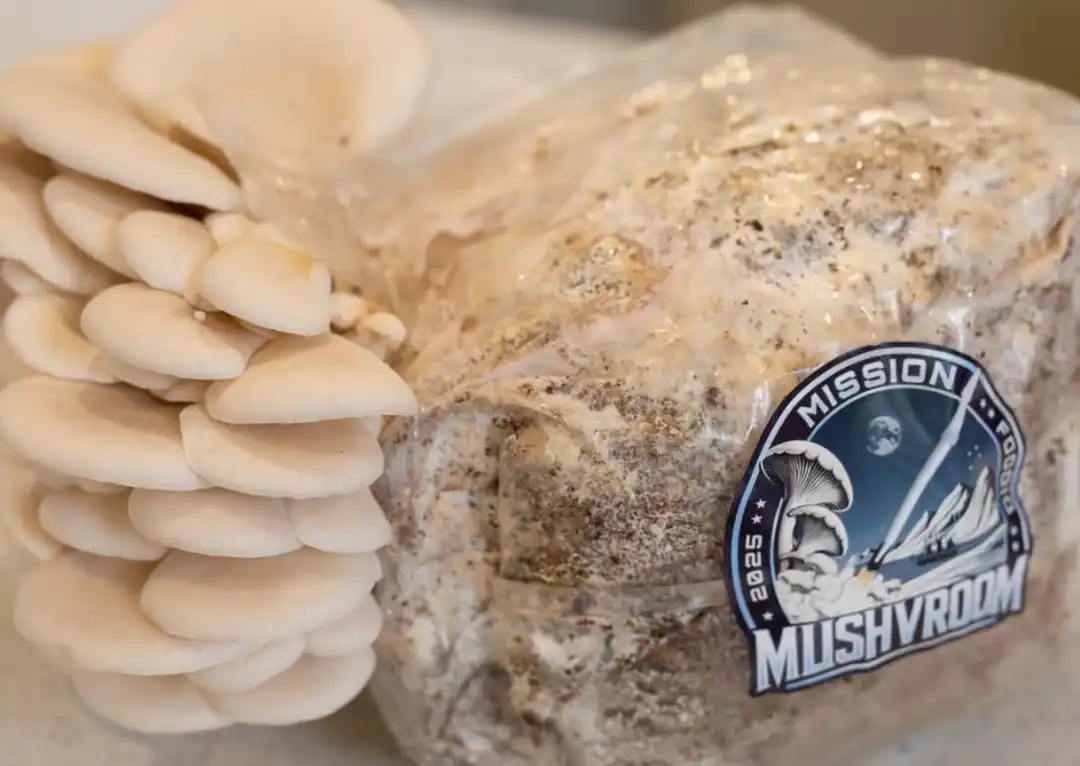
In three and a half days, the Fram2 mission completed 22 scientific experiments, including the first X-ray image taken in space by humans, growing oyster mushrooms in microgravity, monitoring polar radiation data, photographing auroras......

On April 4, 2025, the Crew Dragon splashed down off the coast of California. This was humanity's first crewed polar orbit flight, with an inclination of 90.01 degrees, breaking the 65-degree record set by the Soviet Union's Vostok 6 in 1963.
Mars Flyby

After Fram2's success, Wang Chun was already in line for SpaceX's next, even grander project.

In May 2026, on the eve of SpaceX's live broadcast of the Starship V3's first launch test, the camera cut to Bouvet Island, where Wang Chun formally announced he would command the Starship to execute humanity's first crewed interplanetary flight mission: leaving the Earth-Moon system, flying by Mars, and returning to Earth, expected to take two years.

Before that, he would also complete the first commercial Starship lunar flyby mission with Dennis Tito and his wife, flying by within 200 kilometers of the lunar surface, as a warm-up for the official mission.

Twenty years ago, ordinary people had no chance to participate in deep space missions. Between 2001 and 2009, only seven extremely wealthy private individuals paid to hitch a ride to the International Space Station via Russian spacecraft, each trip costing around $20 million and requiring strict qualification review.

SpaceX changed the underlying structure of this logic. Reusable rockets lowered costs, private individuals could directly charter an entire spacecraft, mission forms shifted from brief visits to the space station to free-flight, allowing custom orbits, experiments, and crew selection.

Wang Chun's Fram2 was the first privately customized crewed polar orbit mission, and this Starship Mars flyby is humanity's first privately funded crewed interplanetary mission, with communication delays up to 20 minutes, no quick return windows, no possibility of rescue, the entire mission handled by SpaceX, unrelated to NASA.
The Continuously Expanding Map

Bitcoin played a special role in this change, creating a path for wealth accumulation not attached to the traditional financial system, and this wealth is flowing in some way towards the boundaries of civilization's expansion.

Wang Chun used mining-accumulated capital to charter the polar orbit, used mining pool operating profits to wait for Starship. It's not mere wealth consumption, but investing the resources Bitcoin gave him into the direction he's been oriented towards since he was five years old.

Over the past few decades, crewed spaceflight has long been dominated by national systems. Who could go up, where to go, what to do, was basically decided by space agencies.

Now, a programmer from Tianjin can define his own mission, choose his own orbit, be his own commander, and decide to fly by the side of Mars.

The counting continues, just on a map with a larger scale.

Perguntas relacionadas

QWhat is the source of the wealth that enabled Wang Chun to fund his private space missions?

AThe primary source of his wealth is the accumulated revenue from fees generated by the F2Pool Bitcoin mining pool he co-founded and the PoS staking service provided by stake.fish, which he later established.

QWhat was the name and significance of Wang Chun's first private space mission?

AHis first private space mission was named 'Fram2'. It was the first-ever privately funded, crewed mission to achieve a 90.01-degree polar orbit, flying directly over the Earth's North and South Poles, breaking the 1963 record of 65 degrees set by the Soviet Vostok 6 mission.

QWhat ambitious future mission did Wang Chun announce in May 2026?

AIn May 2026, he announced his plan to command the Starship spacecraft to execute humanity's first crewed interstellar flyby mission to Mars, leaving the Earth-Moon system, flying past Mars, and returning to Earth, with an estimated mission duration of two years.

QHow did Wang Chun first get involved with Bitcoin?

AHe first learned about Bitcoin in May 2011 from articles on Solidot. Intrigued, he read the entire Bitcoin Wiki in one night, describing the feeling as 'discovering a new continent'. On May 28, he bought his first Bitcoin for $8.7 and soon after borrowed money to begin mining.

QAccording to the article, what role has Bitcoin played in the broader context of space exploration?

AThe article suggests Bitcoin has played a special role by creating a path for wealth accumulation independent of the traditional financial system. This new wealth is now being channeled towards the frontiers of civilization expansion, enabling private individuals like Wang Chun to fund and define their own ambitious space missions.

Leituras Relacionadas

a16z: 7 Charts to Understand How Tokenization Is Changing the Nature of Assets

a16z: 7 Charts on How Tokenization is Transforming the Nature of Assets Tokenized Assets, often referred to as "real-world assets" (RWA), are altering the form, flow, and structure of the financial system. The market recently surpassed $30 billion (excluding stablecoins), driven largely by tokenized U.S. Treasuries. These offer investors digital, yield-bearing assets with efficient settlement. Growth varies significantly by asset class. Asset-backed credit leads in speed, followed by niche financial assets, while venture capital and active strategies took longer to scale. U.S. Treasuries and commodities dominate, holding about two-thirds of the current market share. Within commodities, gold tokenization dominates entirely due to its standardization and historical appeal in crypto. The ecosystem is spread across multiple blockchains. Ethereum holds over half the market, with others like BNB Chain, Solana, and Stellar holding significant shares. However, a key insight is that most tokenized assets currently lack "composability." While the total market is large, only a small fraction (e.g., 5% of tokenized bonds) is used within DeFi protocols. Many tokens are simply digital records of off-chain assets, not natively programmable financial building blocks. In contrast, smaller categories like reinsurance tokens see very high on-chain usage. Looking ahead, forecasts for the tokenized asset market by 2030 range from $2 trillion to over $30 trillion, representing immense potential growth from today's ~$340 billion base. Yet, relative to global markets (e.g., $140T+ in bonds), tokenization's penetration remains minuscule (<0.02%). The current phase focuses on digitizing straightforward assets for efficiency. The next major challenge is bringing more complex financial instruments on-chain and integrating tokenized assets into truly composable, internet-native financial infrastructure.

marsbitHá 19m

a16z: 7 Charts to Understand How Tokenization Is Changing the Nature of Assets

marsbitHá 19m

Under the squeeze between giants Tether and Circle, how can foreign exchange stablecoins break through?

In the face of dominance by Tether (USDT) and Circle (USDC), new entrants in the stablecoin space face significant challenges competing directly, especially in the foreign exchange (FX) market. A more viable and efficient path forward is the adoption of synthetic foreign exchange (Forex) built atop existing USD stablecoin rails. The rise of stablecoin neo-banks represents the next major growth area for mass crypto adoption, with FX becoming a core component. However, replicating the vast liquidity, distribution channels, and network effects of USDT/USDC is extremely difficult for new FX stablecoin issuers. The total market cap of all FX stablecoins is a fraction (roughly 1/700th) of USD stablecoins, leading to issues like poor liquidity, peg instability, limited acceptance, and complex compliance hurdles. Instead of issuing spot FX stablecoins, the article advocates for a model inspired by traditional finance's non-deliverable forwards (NDFs). Users would continue to hold underlying USDT/USDC, while their account balances are displayed and economically settled in their preferred local currency through MtM (Mark-to-Market) NDF structures. This approach leverages the deep liquidity and infrastructure of USD stablecoins while providing synthetic forex exposure. Key advantages include strong peg stability via oracles, retained access to USD stablecoin yields and liquidity, high capital efficiency, and easy scalability to new currencies. Primary use cases for this on-chain NDF forex include: 1. Neo-banks, custodians, and wallets offering multi-currency accounts to attract international users and increase deposits. 2. Forex carry trade strategies, potentially offering more stable and scalable yields compared to crypto-native products like Ethena. 3. Global corporate payments, allowing businesses to receive payments in local currencies while hedging forex risk on-chain, similar to services offered by Stripe in traditional finance. This synthetic forex model presents a pragmatic solution to overcome the network effects of incumbents and unlock the next wave of stablecoin utility for global consumers and businesses.

marsbitHá 4h

Under the squeeze between giants Tether and Circle, how can foreign exchange stablecoins break through?

marsbitHá 4h

Trading

Spot
Futuros

Artigos em Destaque

O que é BITCOIN

Compreender o HarryPotterObamaSonic10Inu (ERC-20) e a Sua Posição no Espaço Cripto Nos últimos anos, o mercado de criptomoedas assistiu a um aumento na popularidade das moedas meme, cativando não apenas os traders, mas também aqueles que procuram envolvimento comunitário e valor de entretenimento. Entre estes tokens únicos está o HarryPotterObamaSonic10Inu (ERC-20), um projeto intrigante que mistura referências culturais no tecido das criptomoedas. Este artigo explora os principais aspetos do HarryPotterObamaSonic10Inu, examinando os seus mecanismos, a sua ética orientada pela comunidade e o seu envolvimento com o vasto panorama cripto. O que é o HarryPotterObamaSonic10Inu (ERC-20)? Como o nome sugere, o HarryPotterObamaSonic10Inu é uma moeda meme construída na blockchain Ethereum, classificada sob o padrão ERC-20. Ao contrário das criptomoedas tradicionais, que podem enfatizar a utilidade prática ou o potencial de investimento, este token prospera no valor de entretenimento e na força da sua comunidade. O projeto visa promover um ambiente onde utilizadores envolvidos possam reunir-se, partilhar ideias e participar em atividades inspiradas por diversos fenómenos culturais. Uma característica notável do HarryPotterObamaSonic10Inu é a zero taxa sobre transações. Este elemento atraente visa encorajar a negociação e o envolvimento da comunidade, isento de encargos adicionais que podem desencorajar os traders de pequena escala. A oferta total da moeda está fixada em mil milhões de tokens, uma cifra que marca a sua intenção de manter uma circulação substancial dentro da comunidade. Criador do HarryPotterObamaSonic10Inu (ERC-20) As origens do HarryPotterObamaSonic10Inu estão um pouco envoltas em mistério; os detalhes sobre o criador permanecem desconhecidos. O desenvolvimento deste token carece de uma equipa identificável ou de um plano explícito, o que não é raro no setor das moedas meme. Em vez disso, o projeto surgiu de forma orgânica, com o seu progresso a depender fortemente do entusiasmo e da participação da sua comunidade. Investidores do HarryPotterObamaSonic10Inu (ERC-20) No que diz respeito a investimentos externos e apoios, o HarryPotterObamaSonic10Inu também permanece ambíguo. O token não lista quaisquer fundações de investimento conhecidas ou apoio organizacional significativo. Em vez disso, o “sangue vital” do projeto é a sua comunidade de base, que informa o seu crescimento e sustentabilidade através da ação coletiva e do envolvimento no espaço cripto. Como Funciona o HarryPotterObamaSonic10Inu (ERC-20)? Como uma moeda meme, o HarryPotterObamaSonic10Inu opera principalmente fora dos quadros tradicionais que muitas vezes governam o valor dos ativos. Existem vários aspetos distintivos que definem como o projeto funciona: Transações Sem Taxas: Sem taxas sobre transações, os utilizadores podem comprar e vender o token livremente, sem a preocupação de custos ocultos. Envolvimento da Comunidade: O projeto prospera na interação da comunidade, aproveitando plataformas de redes sociais para criar entusiasmo e facilitar a participação. Discussões, partilha de conteúdo e envolvimento são elementos cruciais que ajudam a expandir o seu alcance e a fomentar a lealdade entre os apoiantes. Sem Utilidade Prática: Deve ser notado que o HarryPotterObamaSonic10Inu não oferece utilidade concreta dentro do ecossistema financeiro. Em vez disso, é classificado como um token principalmente para entretenimento e atividades comunitárias. Referência Cultural: O token incorpora de forma inteligente elementos da cultura popular para atrair interesse, conectando-se tanto com entusiastas de memes como com seguidores de criptomoedas. HarryPotterObamaSonic10Inu exemplifica como as moedas meme operam de forma diferente de projetos de criptomoedas mais tradicionais, entrando no mercado como construções sociais inovadoras em vez de ativos utilitários. Linha do Tempo do HarryPotterObamaSonic10Inu (ERC-20) A história do HarryPotterObamaSonic10Inu é marcada por vários marcos notáveis: Criação: O token surgiu de um meme viral, capturando a imaginação de muitos entusiastas de criptomoedas. Datas específicas de criação não estão disponíveis, sublinhando a sua ascensão orgânica. Listagem em Exchanges: O HarryPotterObamaSonic10Inu conseguiu entrar em várias exchanges, permitindo um acesso e negociação mais fáceis pela comunidade. Iniciativas de Envolvimento da Comunidade: Atividades contínuas direcionadas a melhorar a interação comunitária, incluindo concursos, campanhas em redes sociais e geração de conteúdo por fãs e defensores. Planos de Expansão Futura: O roteiro do projeto inclui o lançamento de uma coleção de NFTs, mercadorias e um site de eCommerce relacionado aos seus temas culturais, envolvendo ainda mais a comunidade e tentando adicionar mais dimensões ao seu ecossistema. Pontos-Chave sobre o HarryPotterObamaSonic10Inu (ERC-20) Natureza Orientada pela Comunidade: O projeto prioriza a contribuição coletiva e a criatividade, assegurando que o envolvimento dos utilizadores está na vanguarda do seu desenvolvimento. Classificação como Moeda Meme: Representa o epítome da criptomoeda baseada em entretenimento, destacando-se dos veículos de investimento tradicionais. Sem Afiliação Direta com o Bitcoin: Apesar da semelhança no nome do ticker, o HarryPotterObamaSonic10Inu é distinto e não tem qualquer relação com o Bitcoin ou outras criptomoedas estabelecidas. Foco na Colaboração: O HarryPotterObamaSonic10Inu é projetado para criar um espaço de colaboração e partilha de histórias entre os seus detentores, proporcionando uma via para a criatividade e o fortalecimento da comunidade. Perspectivas Futuras: A ambição de expandir além da sua premissa inicial para NFTs e mercadorias delineia um caminho para o projeto potencialmente entrar em avenidas mais mainstream dentro da cultura digital. À medida que as moedas meme continuam a capturar a imaginação da comunidade cripto, HarryPotterObamaSonic10Inu (ERC-20) destaca-se devido aos seus laços culturais e abordagem centrada na comunidade. Embora possa não se encaixar no molde típico de um token orientado para utilidade, a sua essência reside na alegria e camaradagem fomentadas entre os seus apoiantes, destacando a natureza em evolução das criptomoedas em uma era cada vez mais digital. À medida que o projeto continua a desenvolver-se, será importante observar como as dinâmicas comunitárias influenciam a sua trajetória no panorama em constante mudança da tecnologia blockchain.

1.5k Visualizações TotaisPublicado em {updateTime}Atualizado em 2024.12.03

O que é BITCOIN

Como comprar BTC

Bem-vindo à HTX.com!Tornámos a compra de Bitcoin (BTC) simples e conveniente.Segue o nosso guia passo a passo para iniciar a tua jornada no mundo das criptos.Passo 1: cria a tua conta HTXUtiliza o teu e-mail ou número de telefone para te inscreveres numa conta gratuita na HTX.Desfruta de um processo de inscrição sem complicações e desbloqueia todas as funcionalidades.Obter a minha contaPasso 2: vai para Comprar Cripto e escolhe o teu método de pagamentoCartão de crédito/débito: usa o teu visa ou mastercard para comprar Bitcoin (BTC) instantaneamente.Saldo: usa os fundos da tua conta HTX para transacionar sem problemas.Terceiros: adicionamos métodos de pagamento populares, como Google Pay e Apple Pay, para aumentar a conveniência.P2P: transaciona diretamente com outros utilizadores na HTX.Mercado de balcão (OTC): oferecemos serviços personalizados e taxas de câmbio competitivas para os traders.Passo 3: armazena teu Bitcoin (BTC)Depois de comprar o teu Bitcoin (BTC), armazena-o na tua conta HTX.Alternativamente, podes enviá-lo para outro lugar através de transferência blockchain ou usá-lo para transacionar outras criptomoedas.Passo 4: transaciona Bitcoin (BTC)Transaciona facilmente Bitcoin (BTC) no mercado à vista da HTX.Acede simplesmente à tua conta, seleciona o teu par de trading, executa as tuas transações e monitoriza em tempo real.Oferecemos uma experiência de fácil utilização tanto para principiantes como para traders experientes.

4.0k Visualizações TotaisPublicado em {updateTime}Atualizado em 2025.03.21

Como comprar BTC

O que é $BITCOIN

OURO DIGITAL ($BITCOIN): Uma Análise Abrangente Introdução ao OURO DIGITAL ($BITCOIN) OURO DIGITAL ($BITCOIN) é um projeto baseado em blockchain que opera na rede Solana, com o objetivo de combinar as características dos metais preciosos tradicionais com a inovação das tecnologias descentralizadas. Embora partilhe um nome com o Bitcoin, frequentemente referido como “ouro digital” devido à sua percepção como uma reserva de valor, o OURO DIGITAL é um token separado projetado para criar um ecossistema único dentro da paisagem Web3. O seu objetivo é posicionar-se como um ativo digital alternativo viável, embora os detalhes sobre as suas aplicações e funcionalidades ainda estejam em desenvolvimento. O que é o OURO DIGITAL ($BITCOIN)? OURO DIGITAL ($BITCOIN) é um token de criptomoeda explicitamente projetado para uso na blockchain Solana. Em contraste com o Bitcoin, que fornece um papel amplamente reconhecido como armazenamento de valor, este token parece focar em aplicações e características mais amplas. Aspectos notáveis incluem: Infraestrutura Blockchain: O token é construído na blockchain Solana, conhecida pela sua capacidade de lidar com transações de alta velocidade e baixo custo. Dinâmicas de Oferta: O OURO DIGITAL tem um fornecimento máximo limitado a 100 quatrilhões de tokens (100P $BITCOIN), embora os detalhes sobre o seu fornecimento circulante ainda não tenham sido divulgados. Utilidade: Embora as funcionalidades precisas não estejam explicitamente delineadas, existem indicações de que o token poderia ser utilizado para várias aplicações, potencialmente envolvendo aplicações descentralizadas (dApps) ou estratégias de tokenização de ativos. Quem é o Criador do OURO DIGITAL ($BITCOIN)? Neste momento, a identidade dos criadores e da equipa de desenvolvimento por trás do OURO DIGITAL ($BITCOIN) permanece desconhecida. Esta situação é típica entre muitos projetos inovadores no espaço da blockchain, particularmente aqueles alinhados com finanças descentralizadas e fenómenos de moedas meme. Embora tal anonimato possa fomentar uma cultura orientada pela comunidade, intensifica as preocupações sobre governança e responsabilidade. Quem são os Investidores do OURO DIGITAL ($BITCOIN)? As informações disponíveis indicam que o OURO DIGITAL ($BITCOIN) não tem apoiantes institucionais conhecidos ou investimentos proeminentes de capital de risco. O projeto parece operar num modelo peer-to-peer focado no apoio e adoção da comunidade, em vez de rotas de financiamento tradicionais. A sua atividade e liquidez estão principalmente situadas em exchanges descentralizadas (DEXs), como a PumpSwap, em vez de plataformas de negociação centralizadas estabelecidas, destacando ainda mais a sua abordagem de base. Como Funciona o OURO DIGITAL ($BITCOIN) A mecânica operacional do OURO DIGITAL ($BITCOIN) pode ser elaborada com base no seu design de blockchain e nas características da rede: Mecanismo de Consenso: Ao aproveitar o exclusivo proof-of-history (PoH) da Solana combinado com um modelo de proof-of-stake (PoS), o projeto assegura uma validação eficiente das transações, contribuindo para o alto desempenho da rede. Tokenomics: Embora mecanismos deflacionários específicos não tenham sido extensivamente detalhados, o vasto fornecimento máximo de tokens implica que pode atender a microtransações ou casos de uso de nicho que ainda estão por definir. Interoperabilidade: Existe o potencial para integração com o ecossistema mais amplo da Solana, incluindo várias plataformas de finanças descentralizadas (DeFi). No entanto, os detalhes sobre integrações específicas permanecem não especificados. Cronologia de Eventos Chave Aqui está uma cronologia que destaca marcos significativos relacionados ao OURO DIGITAL ($BITCOIN): 2023: O lançamento inicial do token ocorre na blockchain Solana, marcado pelo seu endereço de contrato. 2024: O OURO DIGITAL ganha visibilidade ao tornar-se disponível para negociação em exchanges descentralizadas como a PumpSwap, permitindo que os utilizadores o negociem contra SOL. 2025: O projeto testemunha atividade de negociação esporádica e potencial interesse em envolvimentos liderados pela comunidade, embora não tenham sido documentadas parcerias ou avanços técnicos notáveis até ao momento. Análise Crítica Forças Escalabilidade: A infraestrutura subjacente da Solana suporta altos volumes de transações, o que pode aumentar a utilidade do $BITCOIN em vários cenários de transação. Acessibilidade: O potencial preço de negociação baixo por token pode atrair investidores de retalho, facilitando uma participação mais ampla devido a oportunidades de propriedade fracionada. Riscos Falta de Transparência: A ausência de apoiantes, desenvolvedores ou um processo de auditoria publicamente conhecidos pode gerar ceticismo em relação à sustentabilidade e confiabilidade do projeto. Volatilidade do Mercado: A atividade de negociação depende fortemente do comportamento especulativo, o que pode resultar em volatilidade significativa dos preços e incerteza para os investidores. Conclusão O OURO DIGITAL ($BITCOIN) surge como um projeto intrigante, mas ambíguo, dentro do ecossistema em rápida evolução da Solana. Embora tente aproveitar a narrativa do “ouro digital”, a sua divergência do papel estabelecido do Bitcoin como reserva de valor sublinha a necessidade de uma diferenciação mais clara da sua utilidade pretendida e estrutura de governança. A aceitação e adoção futuras dependerão provavelmente da abordagem da atual opacidade e da definição mais explícita das suas estratégias operacionais e económicas. Nota: Este relatório abrange informações sintetizadas disponíveis até outubro de 2023, e desenvolvimentos podem ter ocorrido além do período de pesquisa.

92 Visualizações TotaisPublicado em {updateTime}Atualizado em 2025.05.13

O que é $BITCOIN

Discussões

Bem-vindo à Comunidade HTX. Aqui, pode manter-se informado sobre os mais recentes desenvolvimentos da plataforma e obter acesso a análises profissionais de mercado. As opiniões dos utilizadores sobre o preço de BTC (BTC) são apresentadas abaixo.

活动图片