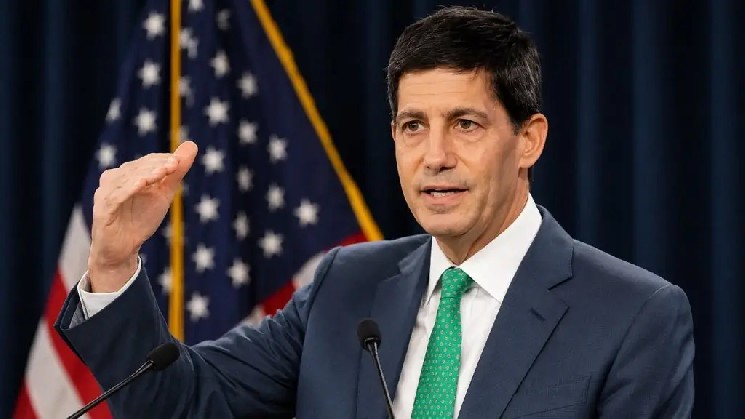
Robinhood Crypto Chief Reveals: 'Barbell' Customer Acquisition Strategy with Meme + Tokenized U.S. Stocks, Each Business Line Already Generates Billions in Revenue

marsbitPublicado em 2026-07-28Última atualização em 2026-07-28

Resumo

Robinhood's Crypto Strategy: Leveraging Memes and Tokenized Stocks as a Dual-Pronged User Acquisition Strategy Robinhood Crypto GM Johann Kerbrat outlines the platform's "barbell" strategy for its new chain, launched three weeks ago. This approach targets two distinct user bases simultaneously: meme coin traders and those seeking exposure to tokenized real-world assets (RWAs), particularly U.S. stocks. The chain, built on Arbitrum technology, prioritizes accessibility and aims to onboard Robinhood's 27 million funded accounts. The vision is to fuse DeFi's benefits (like 24/7 trading and yield) with CeFi's user-friendly experience, eliminating wallet complexities. Key products like "Robinhood Earn" (for stablecoin yields) and tokenized stocks (available in 120+ countries) exemplify this hybrid model. Kerbrat downplays direct competition with Coinbase's Base, emphasizing growing the overall market for tokenized assets instead. Future plans include expanding RWA offerings to international stocks and private markets, positioning Robinhood's app as a comprehensive "super app" for diverse financial needs, from trading and banking to financial education. While all business lines currently generate significant revenue, the chain's immediate focus is on optimizing user adoption over maximizing direct revenue from transaction fees.

Original Title: Johann Kerbrat: Inside Robinhood's Crypto Strategy (Full Explanation)
Original Source: TheRollup
Compiled by: Deep Tide TechFlow

Conflict of Interest Statement

Johann Kerbrat is a Robinhood executive responsible for all crypto business product lines (including Robinhood Chain, tokenized stocks, staking services, perpetual contracts). His salary and equity incentives are directly tied to the $HOOD stock price. All discussions about Robinhood Chain in this episode involve business he directly oversees. The title uses 'Inside Perspective' rather than 'Analysis' to reflect this relationship.

Summary

Robinhood Chain has been live on mainnet for three weeks, with weekly DEX trading volume exceeding $3 billion, transaction count over 105 million, and TVL surpassing $300 million. Johann Kerbrat explains the chain's strategic logic for the first time on a podcast: why choose a 'barbell' layout (parallel development of meme tokens and real-world assets), why use the Arbitrum tech stack instead of building its own L1, and how to gradually migrate Robinhood's 27 million funded accounts onto the chain. He clearly states the focus of competition is 'growing the pie' rather than taking share from Base, and reveals tokenized stocks are now available in 120+ countries, covering 90+ assets, with future expansion planned for international stocks and private markets.

Key Quotes

"Our philosophy is to make the chain permissionless and open to everything. Memes, RWAs, and many other products are welcome. We are deeply integrating with the chain."

"Robinhood has 27 million funded accounts. For these users, DeFi is still too complex, requiring too much technical knowledge. We think about how to bring the good products of DeFi, while making them easy to use and accessible, without needing to create a wallet or manage private keys."

"I think competition is ultimately good for customers. When we launched crypto trading, we slashed fees dramatically. It's still too early on-chain, and discussing market share is premature."

"We've only been live for three weeks. If you're thinking about bringing tens of millions of users onto the chain, adding more utility, bringing things people actually use (not just temporary volatility), then you're thinking about a long-term revenue stream."

"We don't expect to see all of Robinhood's trading activity migrate to the chain next year. That's a bit of a pipe dream. But if we can find things that aren't possible traditionally, like international stocks, 24/7 trading, the chain can become the solution."

I. Three Weeks After Launch: $3B Weekly Volume Is Just the Starting Point

The host opens with numbers: After the Robinhood Chain mainnet launch, weekly DEX trading volume reached $3 billion, with over 50 million transactions, over 1 million addresses, and TVL exceeding $300 million.

Kerbrat responds directly: those numbers have already been surpassed. He said the transaction count that morning had exceeded 105 million. He described the team's mood as 'very excited,' with the core point being these numbers reflect strong market demand for on-chain products.

He particularly emphasized the ecosystem was ready to onboard developers from day one, not built first and then waiting for people to come. This differs from many L2 paths that launch empty and then slowly attract traffic.

II. 'Barbell' Strategy: Why Memes and RWAs in Parallel

The host mentions an interesting observation: Robinhood CEO Vlad Tenev described the on-chain ecosystem on social media as a 'barbell' structure, with meme tokens on one end and real-world assets (RWAs) on the other, saying 'you have two wolves inside you.'

Kerbrat explains the internal thinking. The chain was set to be permissionless from day one, open to all types of applications. Meme tokens bring market makers and DeFi users, while RWAs serve users globally who cannot conveniently buy U.S. stocks and ETFs. They are not contradictory but attract different groups.

He also mentions several integrated products already live: Robinhood Earn (earning stablecoin yields via on-chain protocols within the main App) and tokenized stocks (tradable via Robinhood Wallet in 120+ countries).

The host probes into differences from traditional financial products. Kerbrat lists traditional system problems: wire transfers only possible between 9:30 and 4:00, commission-free brokers only operate during weekday market hours, options and futures contracts expire. The on-chain version is a better solution from a product perspective.

III. How to Migrate 27 Million Accounts On-Chain: The Fusion of DeFi and CeFi

Kerbrat shares a key number: Robinhood has 27 million funded accounts. Most of these users haven't touched DeFi because it's still complex, requiring significant technical knowledge.

His solution is 'the best of both worlds': use DeFi's underlying technology to provide yields, and use Robinhood's frontend to provide simple UX/UI and security. Robinhood Earn is an example; users can earn on-chain yields within the main App without creating a wallet or managing private keys.

He defines this trend as the 'fusion of CeFi and DeFi': centralized platforms leveraging blockchain technology to build better products while maintaining user-friendly experiences.

Regarding the technical implementation of tokenized stocks, Kerbrat reveals a 'just-in-time tokenization' mechanism. Traditional DEX listing requires pre-built liquidity pools, but because Robinhood is already a broker and holds these stocks, it can quickly tokenize them on-chain when users need to trade. Underneath, it uses a combination of prop AMM, standard AMM, RFQ, and classic pools to ensure good prices at any moment.

There are currently 90+ stock tokens on-chain, but he sees this as just the starting point, with future expansion to more asset classes like international stocks, private markets.

IV. Why Choose Arbitrum: The Logic Behind Not Building Its Own L1

The host asks a technical architecture question: why use the Arbitrum tech stack instead of building its own chain.

Kerbrat's answer is pragmatic. Robinhood wants to focus on what it's good at: making good UX/UI, building good financial products, not reinventing something that already exists. Achieving Ethereum-level security and decentralization takes a long time and involves many decisions (transition from PoW to PoS, collaboration of multiple foundations). Leveraging Ethereum's security and the EVM ecosystem's liquidity is the more sensible choice.

Reasons for choosing Arbitrum as the L2 tech stack include: Stylus (allows writing smart contracts in any programming language), extremely fast block times (financial products demand speed), low gas fees (can remain low even during high-volume periods). He also mentions proactively lowering gas fees during the chain's activity surge last week to ensure user experience wasn't affected.

Regarding the Ethereum 'rent' controversy (Robinhood Chain earned over $1M in revenue but only paid 1-2% to Ethereum), Kerbrat believes this is Ethereum's default mechanism setup, not about fairness. His perspective is long-term: if Robinhood can bring tens of millions of users on-chain, bring real use cases, this will ultimately become a long-term revenue stream for the Ethereum ecosystem.

V. Competition with Base: Growing the Pie, Not Grabbing Share

The host mentions the 'artificial competition' on social media between Robinhood Chain and Coinbase's Base. Base recently acknowledged its social experiments failed and is pivoting elsewhere, while Robinhood is also exploring possibilities for on-chain social trading.

Kerbrat's attitude towards competition is clear: competition is good for customers. When Robinhood launched crypto trading, it slashed fees dramatically, ultimately benefiting users. But it's too early to discuss market share now; Robinhood Chain is only three weeks old, Base has been running for a year or two.

He uses a number for comparison: currently, only a tiny fraction of the global population holds tokenized assets. His goal is to grow the pie, enabling more people globally to own assets, not fight for share in the existing small pie. Regarding Base's social experiments, he comments, 'It's normal to try new things; sometimes they fail, sometimes they succeed.'

Robinhood's focus is on financial products: Earn, spot trading, perpetual contracts. These are areas they are good at and can bring value.

VI. Logic for Choosing DeFi Partners

The host lists partners announced at Robinhood Chain's launch: Morpho (lending vaults), Lighter (perpetual contracts), 0x (aggregation & quote API), Chainlink (oracles), LayerZero (cross-chain).

Kerbrat explains three criteria for choosing partners. First, Robinhood is a public company holding multiple licenses globally; partners must understand compliance requirements and cooperate. Second, they must be able to build unique experiences. For example, the partnership with Morpho went far beyond simple API integration, requiring customized stable rates, insurance mechanisms, and dedicated UX, involving extensive deep discussions and joint development. Third, they must differentiate from competitors.

Regarding the timeline for perpetual contracts (perps) entering the U.S. main App, Kerbrat says they are still waiting for regulatory clarity; even if the CLARITY Act passes, perpetual contracts are another big issue. Currently, through the partnership with Lighter in Robinhood Wallet, users can experience perpetual contract trading. He also reveals Bitstamp (a European trading platform acquired by Robinhood) is already expanding perpetual contracts from crypto to commodities and ETF contracts.

VII. From Broker to Super App: The $HOOD Investment Thesis

The final topic returns to the investment perspective. The host asks: What does holding $HOOD stock mean now?

Kerbrat outlines Robinhood's 'super app' vision: stocks, options, futures, prediction markets, crypto, credit cards (just launched a platinum card that day), banking services, AI agent trading (MCP already available). The core is to make one App meet all financial needs at different life stages.

He particularly mentions the lack of financial education: young people don't learn about finance in school but need to start thinking about retirement planning after high school. Robinhood wants to push financial education, with IRA accounts as an example.

From a business model perspective, each business line is now generating nine-figure (hundreds of millions of dollars) revenue, with diversified income sources, no longer just a pure trading platform. Regarding the chain's own revenue, Kerbrat admits adoption rate is currently prioritized over pure revenue. Gas fee setting is a balancing act: too low invites spam and bot abuse, too high hinders adoption. Currently in a stage of 'optimizing for adoption' rather than 'optimizing for revenue.'

Criptomoedas em alta

Perguntas relacionadas

QAccording to Johann Kerbrat, what is Robinhood's 'barbell' customer acquisition strategy for its crypto business?

AThe 'barbell' strategy involves two parallel approaches: attracting users through meme tokens and through Real-World Assets (RWA), specifically tokenized stocks. This dual approach is designed to bring in different user groups: meme coins attract DeFi users and market makers, while tokenized stocks serve global users who cannot easily access U.S. stocks and ETFs.

QWhat is the core user-friendly concept Robinhood employs to bring its 27 million funded accounts onto the blockchain?

AThe core concept is the fusion of CeFi and DeFi. Robinhood leverages DeFi's underlying technology (like earning protocols) but presents it through the simple, familiar UX/UI of the main Robinhood app. This eliminates the need for users to create wallets or manage private keys, as exemplified by the 'Robinhood Earn' feature within the main app.

QWhy did Robinhood choose to build on the Arbitrum tech stack instead of creating its own Layer 1 blockchain?

ARobinhood chose the Arbitrum stack to focus on its strengths—building a great user experience and financial products—rather than reinventing foundational blockchain technology. Utilizing Ethereum's security and the EVM ecosystem's liquidity was seen as more practical. Key reasons for choosing Arbitrum included the Stylus feature, extremely fast block times crucial for financial products, and consistently low gas fees.

QHow does Johann Kerbrat view the competitive landscape with Coinbase's Base, especially regarding market share?

AKerbrat believes competition is ultimately beneficial for customers. He argues that it's too early to focus on market share, as Robinhood Chain is only three weeks old. His primary goal is to 'make the cake bigger' by onboarding more global users to tokenized assets, rather than competing for a share of the existing, relatively small market.

QWhat are Robinhood's current priorities regarding revenue generation from its blockchain, according to Kerbrat?

AThe current priority is optimizing for adoption and user growth, not pure revenue maximization. While the blockchain has generated significant income (over $1 million), gas fees are carefully balanced: set too low risks spam and bot attacks, while too high hinders adoption. The long-term view is that bringing millions of users and real utility to the chain will create a sustainable revenue source.

Leituras Relacionadas

Critical Moments in Bitcoin: Cost Zones That Demand Attention Have Been Identified!

Analytics firm Glassnode reported that reduced expectations for U.S. interest rate cuts, along with pricing in possible rate hikes, have suppressed risk appetite in the cryptocurrency market. The Fed's interest rate decisions are crucial for market direction. U.S. Treasury yields have surpassed returns from crypto carry trades, leading investors to favor cash and low-risk interest-bearing instruments over crypto assets. A strong U.S. dollar further weakens marginal demand for crypto. Bitcoin is currently trading below its most intensive cost basis level, with approximately $69,000 identified as the breakeven zone and significant resistance for short-term investors. For a stronger recovery, Bitcoin needs to reclaim the $69,000 threshold with increased trading volume. Renewed active demand for spot Bitcoin ETFs is also deemed critical. According to Glassnode, the current Bitcoin decline represents the shallowest bear market in terms of price drawdown depth to date. However, based on previous cycle durations, this downturn may not be over yet. Spot trading volumes have fallen to multi-year lows, and sell-side order books have thinned, though many buy orders are placed significantly below current prices. Glassnode's risk indicator, Vector, signaled "risk off," suggesting a capital preservation mindset. The current market structure is being driven more by macroeconomic factors like monetary policy, bond yields, and dollar strength than by crypto-sector developments. Losing Bitcoin's support range of $62,000-$68,000, coupled with renewed exchange inflows, could negate the recovery scenario. Conversely, more favorable monetary policy, increased trading volume, a Bitcoin recovery above $69,000, and a resumption of spot ETF buying could signal a market turnaround.

cryptonews.ruHá 50m

Critical Moments in Bitcoin: Cost Zones That Demand Attention Have Been Identified!

cryptonews.ruHá 50m

Breaking News: Full Detailed Rationale and Explanation of the Fed's Interest Rate Decision Released!

As expected, the Federal Reserve kept its key interest rate unchanged at 3.50-3.75 percent, marking the fifth consecutive meeting without a rate change. The Federal Open Market Committee's (FOMC) decision passed with a 9-3 majority vote. Cleveland Fed President Loretta Mester, Minneapolis Fed President Neel Kashkari, and Dallas Fed President Lorie Logan dissented, voting in favor of a 25 basis point rate hike. This was the first meeting since 2016 where three regional Fed presidents voted against holding rates steady, signaling growing influence among members advocating for tighter monetary policy to combat inflation. The Fed's statement noted that economic activity has been expanding at a solid pace despite high uncertainty, partly due to Middle East conflicts. It highlighted that growth in productivity and investment remained strong, employment gains have aligned with labor force growth, and the unemployment rate has remained relatively stable. The Fed also committed to maintaining ample reserves in the banking system. The statement emphasized that inflation remains above the Fed's 2% target. It noted that supply shocks, including in the energy sector, are adding to inflationary pressures. The Committee stated it will continue to closely monitor incoming data and risks in pursuit of its price stability goal. The dissenting members argued that the target range for the federal funds rate should have been increased by 25 basis points.

cryptonews.ruHá 1h

Breaking News: Full Detailed Rationale and Explanation of the Fed's Interest Rate Decision Released!

cryptonews.ruHá 1h

Trading

Spot

Artigos em Destaque

O que é MEME 2.0

Memecoin 2.0: A Ascensão do $MEME 2.0 no Mundo das Criptomoedas Introdução No panorama em constante evolução das criptomoedas, um novo concorrente surgiu. Memecoin 2.0, simbolizado como $MEME 2.0, eleva o conceito de moedas meme a um novo nível emocionante. Como um subproduto do Memecoin original, este projeto capturou a atenção da comunidade crypto ao mudar o foco de incentivos financeiros típicos para uma experiência envolvente e divertida. Operando na blockchain Ethereum, Memecoin 2.0 redefine audaciosamente o envolvimento da comunidade na esfera crypto. O que é Memecoin 2.0, $MEME 2.0? No seu cerne, Memecoin 2.0 é um projeto de criptomoeda que prioriza o espírito comunitário e a diversão associada à cultura meme. Ao contrário das criptomoedas convencionais, que se concentram em casos de uso práticos e benefícios tangíveis, Memecoin 2.0 distingue-se ao abraçar o lado mais leve da moeda digital. O projeto existe sem promessas de utilidade, um roteiro estruturado ou retornos financeiros, focando em vez disso em fomentar uma comunidade vibrante centrada em memes e no prazer partilhado. Ao fazer isso, aproveita a crescente tendência da cultura meme no espaço online, tornando-se num jogador único no mundo dos ativos digitais. Criador do Memecoin 2.0, $MEME 2.0 Apesar de extensa pesquisa sobre as origens do Memecoin 2.0, a identidade explícita do seu criador continua desconhecida. Esta anonimidade não é incomum na comunidade crypto, onde muitos projetos são liderados por indivíduos ou grupos que preferem ficar nos bastidores. A falta de informações publicamente disponíveis sobre o criador pode ser vista como um movimento estratégico, colocando os holofotes no envolvimento da comunidade em vez de na notoriedade individual dentro do espaço. Investidores do Memecoin 2.0, $MEME 2.0 As informações sobre os investidores ou o financiamento do Memecoin 2.0 são escassas. Esta ausência de detalhes pode sugerir que o projeto é autofinanciado ou que o seu foco na comunidade, em vez de estruturas de investimento tradicionais, atraiu um tipo diferente de apoiador. Como o mundo das moedas memes geralmente envolve mais envolvimento de base do que investimento institucional, esta abordagem alinha-se ao ethos de projetos orientados pela comunidade. Como Funciona o Memecoin 2.0, $MEME 2.0? O Memecoin 2.0 opera inteiramente na blockchain Ethereum, aproveitando as suas robustas características de segurança e escalabilidade. Ao aproveitar os pontos fortes da Ethereum, o Memecoin 2.0 pode oferecer um ambiente seguro para interações dos utilizadores enquanto assegura que as transações são eficientes e custo-efetivas. Uma das características únicas do Memecoin 2.0 reside na sua estrutura orientada pela comunidade. O valor e a popularidade do token $MEME 2.0 derivam da participação ativa dos seus utilizadores, em vez de uma utilidade inerente. Este design reforça o foco do projeto no aspecto de entretenimento das criptomoedas, implicando que o riso e o envolvimento da comunidade são as verdadeiras moedas que impulsionam o seu sucesso. Além disso, o projeto insere-se no ecossistema mais amplo das moedas meme, onde o valor de cada moeda meme oscila com base na cultura, nas tendências e no envolvimento da comunidade, em vez de nos princípios económicos tradicionais. Linhas do Tempo do Memecoin 2.0, $MEME 2.0 Para melhor entender a evolução e os marcos do Memecoin 2.0, aqui está uma linha do tempo que destaca eventos significativos na sua história: 2024: O início do Memecoin 2.0 é reconhecido como um desdobramento do Memecoin original, estabelecendo-se dentro do contexto próspero das moedas meme enquanto opera na blockchain Ethereum. 13 de Julho de 2024: O Memecoin 2.0 posiciona-se oficialmente como uma moeda meme centrada na comunidade na rede Ethereum, enfatizando a sua abordagem centrada no entretenimento que convida os utilizadores a participar e envolver-se no seu crescimento. Pontos Chave Sobre o Memecoin 2.0, $MEME 2.0 Várias características críticas definem o Memecoin 2.0: Abordagem Centrada na Comunidade: A missão primária do Memecoin 2.0 é criar uma experiência comunitária divertida e envolvente, capitalizando o prazer coletivo derivado da cultura meme. Construído na Ethereum: Operar na blockchain Ethereum fornece ao projeto uma infraestrutura essencial que garante segurança e escalabilidade. Falta de Utilidade ou Roteiro: Numa notável divergência das criptomoedas tradicionais, o Memecoin 2.0 não promete quaisquer características utilitárias ou retornos financeiros, reafirmando o seu compromisso com o envolvimento da comunidade e a participação social. Foco na Cultura Meme: Ao abraçar os aspectos humorísticos e culturais do fenómeno meme, o Memecoin 2.0 fornece uma plataforma para que os utilizadores se envolvam com a crypto offline e online. Contexto Adicional: A Importância das Moedas Meme As moedas meme emergiram como uma classe distinta de criptomoeda, frequentemente impulsionadas pelo humor e por uma abordagem leve ao comércio. Estas moedas geralmente carecem de utilidade significativa ou roteiros de desenvolvimento, atraindo os utilizadores com a promessa de diversão, interação comunitária e relevância cultural. No panorama do ecossistema crypto mais amplo, as moedas meme revive a importância do envolvimento da comunidade, resistindo contra abordagens exclusivamente orientadas para o lucro. Projetos como o Memecoin 2.0 inauguram uma era em que o entretenimento pode harmonizar-se com aspirações financeiras, transformando a blockchain numa plataforma para criatividade e interação social. Conclusão O Memecoin 2.0, ou $MEME 2.0, representa uma nova onda de criptomoeda que prioriza o envolvimento da comunidade em detrimento de estruturas financeiras rígidas. Com um foco no humor e na interação social, capitaliza a fascinação em torno da cultura meme. Ao operar na blockchain Ethereum, o Memecoin 2.0 aproveita as capacidades da tecnologia, enquanto mantém um compromisso firme com o valor de entretenimento da moeda digital. À medida que o espaço em torno das criptomoedas continua a evoluir, o Memecoin 2.0 serve como um testemunho da ideia de que o futuro dos ativos digitais pode muito bem depender de experiências partilhadas, risadas e conexões comunitárias sólidas. No mundo imprevisível da crypto, talvez a alegria possa ser tão valiosa quanto o ganho financeiro tradicional.

89 Visualizações TotaisPublicado em {updateTime}Atualizado em 2024.12.03

O que é MEME 2.0

Como comprar MEME

Bem-vindo à HTX.com!Tornámos a compra de Memeland (MEME) simples e conveniente.Segue o nosso guia passo a passo para iniciar a tua jornada no mundo das criptos.Passo 1: cria a tua conta HTXUtiliza o teu e-mail ou número de telefone para te inscreveres numa conta gratuita na HTX.Desfruta de um processo de inscrição sem complicações e desbloqueia todas as funcionalidades.Obter a minha contaPasso 2: vai para Comprar Cripto e escolhe o teu método de pagamentoCartão de crédito/débito: usa o teu visa ou mastercard para comprar Memeland (MEME) instantaneamente.Saldo: usa os fundos da tua conta HTX para transacionar sem problemas.Terceiros: adicionamos métodos de pagamento populares, como Google Pay e Apple Pay, para aumentar a conveniência.P2P: transaciona diretamente com outros utilizadores na HTX.Mercado de balcão (OTC): oferecemos serviços personalizados e taxas de câmbio competitivas para os traders.Passo 3: armazena teu Memeland (MEME)Depois de comprar o teu Memeland (MEME), armazena-o na tua conta HTX.Alternativamente, podes enviá-lo para outro lugar através de transferência blockchain ou usá-lo para transacionar outras criptomoedas.Passo 4: transaciona Memeland (MEME)Transaciona facilmente Memeland (MEME) no mercado à vista da HTX.Acede simplesmente à tua conta, seleciona o teu par de trading, executa as tuas transações e monitoriza em tempo real.Oferecemos uma experiência de fácil utilização tanto para principiantes como para traders experientes.

314 Visualizações TotaisPublicado em {updateTime}Atualizado em 2026.06.02

Como comprar MEME

Discussões

Bem-vindo à Comunidade HTX. Aqui, pode manter-se informado sobre os mais recentes desenvolvimentos da plataforma e obter acesso a análises profissionais de mercado. As opiniões dos utilizadores sobre o preço de MEME (MEME) são apresentadas abaixo.

活动图片