Is Satoshi in Legal Trouble? $83.7 Billion Worth of BTC Might Be 'Legally Claimed'

Odaily星球日报Publicado em 2026-06-01Última atualização em 2026-06-01

Resumo

An anonymous plaintiff, “Noah Doe,” and two shell companies have filed a lawsuit in New York Supreme Court, seeking a declaratory judgment granting them ownership of 39,069 dormant Bitcoin addresses containing approximately 3.8 million BTC (worth ~$293.5 billion). Their claim is based on New York’s lost property law, arguing these addresses are abandoned assets. The plaintiff “found” the addresses, stored them on a USB drive, and delivered it to a police station, followed by chain notifications (OP_RETURN) and a press release. Notably, the list includes addresses linked to Bitcoin creator Satoshi Nakamoto (holding ~1.1 million BTC), a Mt. Gox hacker address, a provably unspendable burn address, and other long-inactive wallets. The plaintiff’s “independent expert” controversially values each address at under $10 to invoke a fast-track legal process. Critical issues question the lawsuit's validity: the lost property law is designed for physical items, not publicly viewable blockchain addresses; the valuation is implausible; and the plaintiff’s anonymity is contested. Even if successful, the plaintiff would only receive a paper judgment, not the private keys. However, such a ruling could create a “title defect,” allowing them to challenge future transactions of these coins on regulated platforms, potentially freezing assets and forcing anonymous holders to reveal themselves in legal disputes. The court is unlikely to grant a broad default judgment given the novel and high-stak...

Originally fromGalaxy

Compiled / Odaily Planet Daily Golem(@web 3_golem)
Who would have thought that Bitcoin creator Satoshi Nakamoto would one day face a lawsuit, with the 'ownership' of wallet addresses potentially being taken away. And you, reading this article right now, might also be one of the 'defendants,' as long as you have dormant Bitcoin addresses.

In March of this year, the New York State Supreme Court accepted a lawsuit: the plaintiff is attempting to confirm their ownership of over 3.7 million Bitcoins (approximately $274 billion) associated with 39,069 Bitcoin addresses. The plaintiff goes by the pseudonym Noah Doe and two unnamed Wyoming limited liability companies (pseudonyms 'ABC Company' and 'XYZ Company').

The plaintiff is requesting the New York State Supreme Court to confirm their ownership of these dormant assets through a declaratory judgment action based on New York State's lost and found laws. More importantly, among these 39,069 addresses are addresses suspected to belong to Bitcoin creator Satoshi Nakamoto (a total of 21,744 addresses, holding approximately 1.09 million Bitcoins, valued at about $83.7 billion at current prices).

Simply put, an anonymous individual and their company registered in Wyoming are trying to get a New York court to rule that Satoshi Nakamoto's Bitcoins (and many other cryptocurrencies) are lost property, and they should legally own them for 'finding' these Bitcoins. Galaxy analyzed the plaintiff's potential motives and identity, the impact on Bitcoin, and the plaintiff's likelihood of success.

Odaily Planet Daily has condensed and compiled the full text as follows, enjoy~

Case Overview and Analysis of Plaintiff's Strategy

The plaintiff has filed an application with the New York State Supreme Court, asking the court to declare that they own 39,069 dormant Bitcoin addresses and all assets within them. The legal basis is the declaratory judgment for confirming ownership under Article 3001 of the New York Civil Practice Law and Rules (CPLR), which is fundamentally based on New York State's lost and found law, specifically Article 7-B of the Personal Property Law. This provision states that a finder of lost property who turns it over to the police and does not face a denial from the owner within a specified waiting period may ultimately acquire ownership of the lost item. The plaintiff is attempting to apply this old framework to Bitcoin.

The specific strategy is: Noah Doe, as the finder, delivered a USB drive containing the addresses (not the private keys or proof of holding the addresses, just the public addresses) to the New York City Police Department's 17th Precinct, substituting this for turning over the lost property to the police; then issued notifications via OP_RETURN on the Bitcoin blockchain and published press releases, substituting this for contacting the owner; finally, had an expert appraise each address's value at under $10, allowing the entire case to enter the fastest process stipulated by that provision.

It is necessary to clarify that even if the plaintiff wins completely, they will only receive a piece of paper—a court declaration—nothing more. They will not receive any private keys, nor can they transfer any Bitcoin.

The real value of a New York judgment lies elsewhere. It would serve as a 'title defect': if any of these Bitcoins appear in any regulated venue in the future, the plaintiff could present this document to contest exchanges or custodians. This is the potential risk this case poses to Bitcoin holders and why this seemingly absurd lawsuit still warrants careful scrutiny.

Case Timeline

The following timeline consists of two parts: one is the plaintiff's factual narrative of discovering the addresses, and the other is the procedural history of the case in court.

  • October 2024: Noah Doe claims he discovered 'security issues' with certain addresses and developed an 'algorithm' to tag abandoned addresses. (In reality, these addresses do not have 'security issues');
  • December 26, 2024: Noah Doe first 'found' approximately 1,625 addresses. A USB drive containing the addresses was delivered to NYPD's 17th Precinct on January 1, 2025;
  • February 2025: Noah Doe hired Solomon Brothers Strategic Advisors as a consultant;
  • March 31 and April 14, 2025: Noah Doe again 'found' 546 addresses and 39,911 addresses respectively, delivering USB drives with addresses to the police precinct each time;
  • June 30 to July 10, 2025: Noah Doe sent 'abandonment notices' to each address via OP_RETURN;
  • August 7, 2025: Issued a press release to global media. CoinDesk, Bitcoinist, Yahoo Finance, Investing.com, and Galaxy Digital's research report all covered it;
  • August 2025 to February 2026: Solomon Brothers received threatening emails, including over 50 emails containing only '4 8 15 16 23 42', demanding $1.5 million and 50 Bitcoins;
  • October 10, 2025: The 90-day period for owner claims ended;
  • December 2025: Noah Doe transferred these addresses to ABC Company and placed 98% of its interests into an irrevocable trust; ABC Company transferred 17.7% of its interests to XYZ Company;
  • March 11, 2026: Original summons and complaint filed. Judge Arlene P. Bruce annotated the original order to show cause;
  • March 23, 2026: Judge Emily Morales-Minerva recused herself from the case;
  • March 25 to April 17, 2026: Judge Carlos J. Voltron signed the order to show cause (allowing use of pseudonyms) and an order authorizing alternative service via OP_RETURN (without notice to the opposing party);
  • May 1, 2026: First amended complaint expanded the defendant scope to 1 to 39,069 individuals and attached a full list of addresses;
  • May 21-22, 2026: On-chain service execution: 98 batch transactions in Bitcoin blocks 950,446 to 950,576;
  • May 22, 2026: Carlos J. Voltron filed the affidavit of service, including verification reports for each batch and 39,069 lines of verification details (Documents 27-29).

Legal Basis and Strategy Proposed by Plaintiff

Article 7-B of the New York Personal Property Law (Sections 251-258) establishes a brief lost and found regime. It provides two distinct pathways for a finder to acquire ownership, both of which the plaintiff in this case invokes.

  • Pathway A: Custody (Sections 252, 253/254, 257(1)). Section 252 requires a person who finds lost property worth $20 or more to return it to the owner or deliver it to police custody within 10 days; Sections 253(7) and 254 stipulate different police custody periods based on property value: under $100 for 3 months, $100-$500 for 6 months, $500-$5,000 for 1 year, and $5,000 or more for 3 years.
  • Pathway B: The Under-$10 Shortcut (Section 257(2)). For lost property valued under $10, if the finder 'has made reasonable efforts to find the owner and return it, but has been unsuccessful,' ownership vests in the finder one year after finding, without requiring police delivery.

The complaint's (unnamed) 'independent expert' appraised the 'as-is' value of each address at under $10, citing low likelihood of recovery. This valuation determines the entire procedural progression of the case, as it places every address under the uniform one-year vesting period of Section 257(2). It also makes Pathway A's process shorter, as property valued under $100 requires only a three-month police hold per Section 254.

Plaintiff's Arguments

The complaint lists several arguments by the plaintiff, each must hold for the next to follow, forming a chain of logic.

  • These addresses are lost property. Addresses are treated as property, akin to bank accounts. Under this view, losing a private key does not destroy the property; thus, its contents are merely 'lost' and can be reclaimed by a finder.
  • Noah Doe is the finder, and NYPD's custody complies with the relevant statute. Section 252 of Article 7-B requires the finder to deliver the property to the police. The plaintiff argues that the USB drive containing address information delivered to the 17th Precinct satisfies this.
  • Ownership has vested in the finder. For property valued under $10, Section 257(2) states ownership vests in the finder one year after finding if the finder has made reasonable efforts to locate the owner but failed. OP_RETURN notifications, press releases, and the 90-day claim period are considered reasonable efforts.
  • These addresses have been abandoned. Noah Doe's 'algorithm' flags addresses that are in self-custody, unused for at least five years, and inactive during significant price increases. About 424 owners who reacted by moving tokens were removed from the list; the remaining 39,069 non-responsive owners became defendants.
  • Service via OP_RETURN notification is lawful. Since the owners are allegedly unknown and cannot be located, the court authorized alternative service under CPLR 308(5) by sending an on-chain notice pointing to the complaint to each address.
  • The plaintiff can proceed anonymously. Given the known kidnapping risks for large Bitcoin holders, the plaintiff was permitted to use pseudonyms in the lawsuit.

Who Are the Owners?

Galaxy analyzed the addresses claimed to be 'found' by plaintiff Noah Doe using their Bitcoin full node and internal research database.

As of May 25, 2026, the 39,069 'Noah Doe addresses' hold 3,799,629 Bitcoins, valued at approximately $293.5 billion at $77,245 per Bitcoin. This value is not evenly distributed but concentrated in several distinct clusters, each telling a different story.
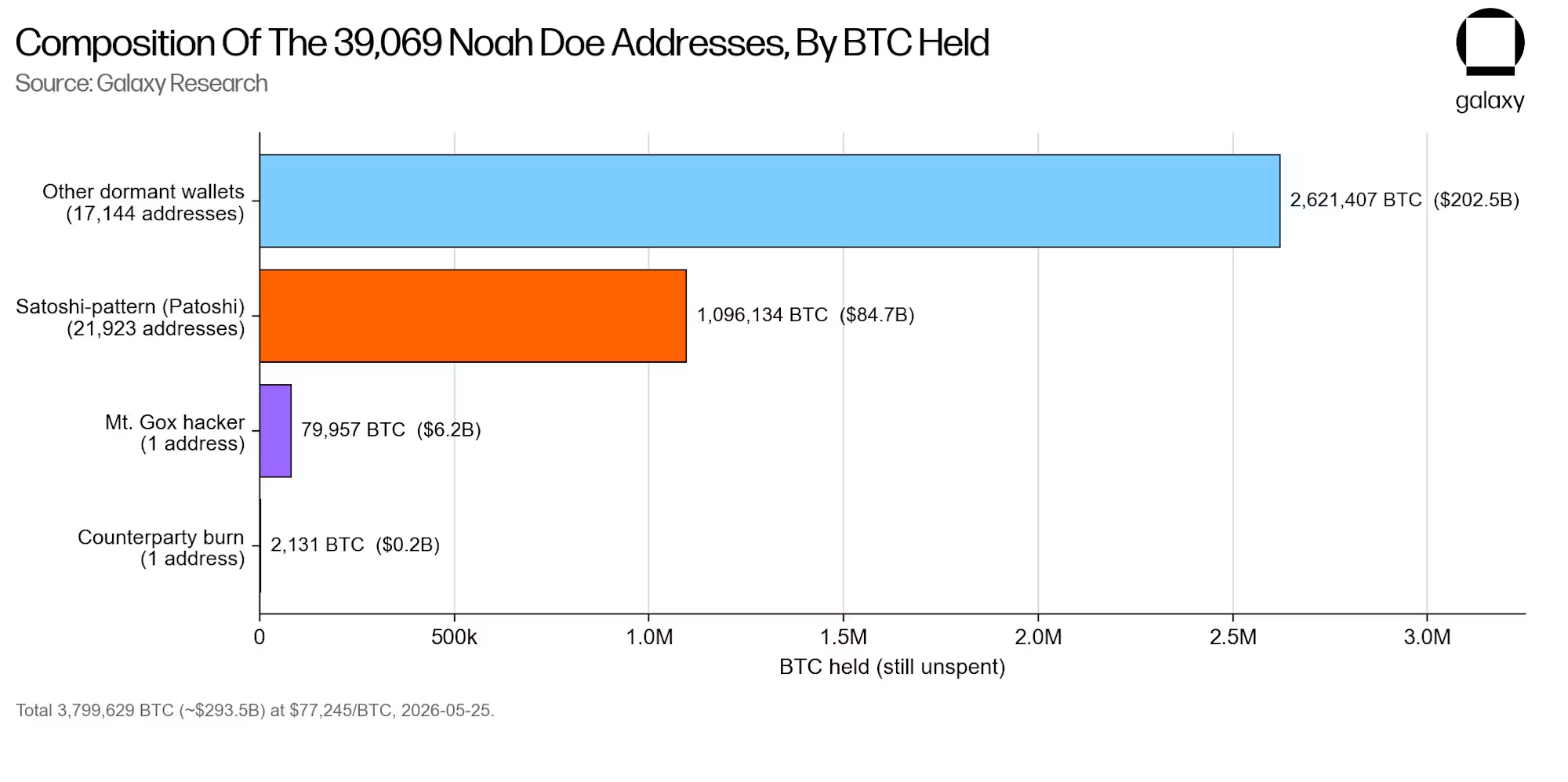
Composition of Addresses 'Found' by Noah Doe

Satoshi (Patoshi) Addresses

Comprising 21,923 addresses, approximately 1,096,134 Bitcoins (about $84.7 billion). These are early-mined Bitcoins linked to Bitcoin's creator through the 'Patoshi' nonce pattern. They have never moved.

Mt. Gox Hacker Address

Only 1 address, approximately 79,957 Bitcoins (about $6.2 billion). This is John Doe #1. These Bitcoins were stolen from the early Bitcoin exchange Mt. Gox and have been untouched since 2011. They are disputed property that investigators have tracked for years.

Counterparty Burn Address

Only 1 address, approximately 2,131 Bitcoins (about $160 million). This is John Doe #104, a provably unspendable 'burn' address. No one has ever held its key because, by design, such a key does not exist.

Other Dormant Addresses

7,144 addresses, approximately 2,621,407 Bitcoins (about $202.5 billion). These addresses contain a large number of early holders and exchange-era Bitcoins that have not moved for many years.

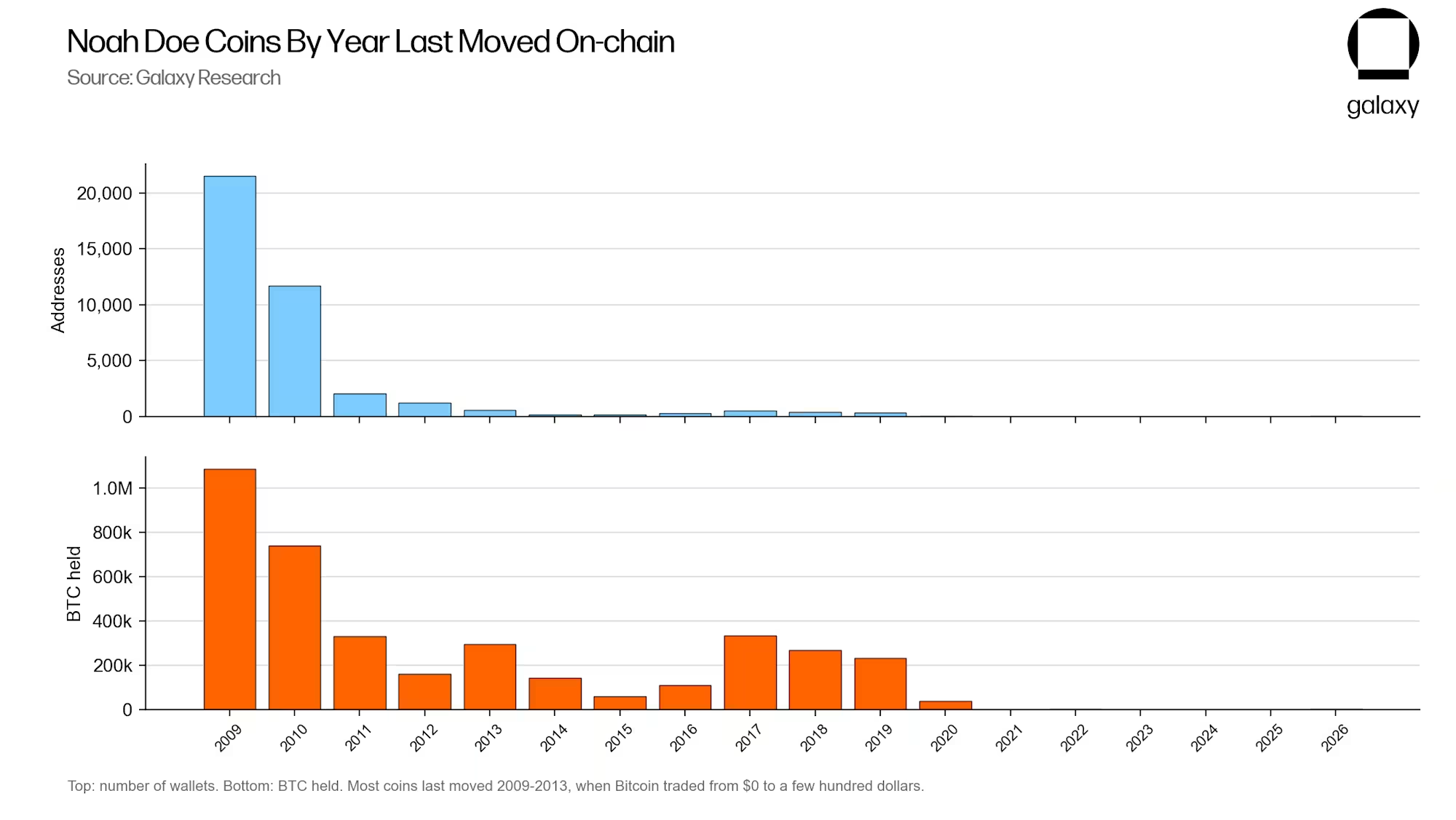
This dormancy is long-standing. If we sort each address by the year its Bitcoins last moved on-chain, we find most of the Bitcoins last moved in Bitcoin's early years. The vast majority of these Bitcoins last transacted between 2009 and 2013, during which Bitcoin's price soared from nearly zero to several hundred dollars.
But many of these addresses have been claimed before. In Kleiman v. Wright (Southern District of Florida, 2018), Australian businessman Craig Wright submitted a list of 16,404 early-block addresses he claimed belonged to him as part of his later-dismissed claim to be Satoshi Nakamoto.

We compared the Bitcoin addresses Wright claimed to own in the Kleiman litigation with Noah Doe's addresses to see their overlap.
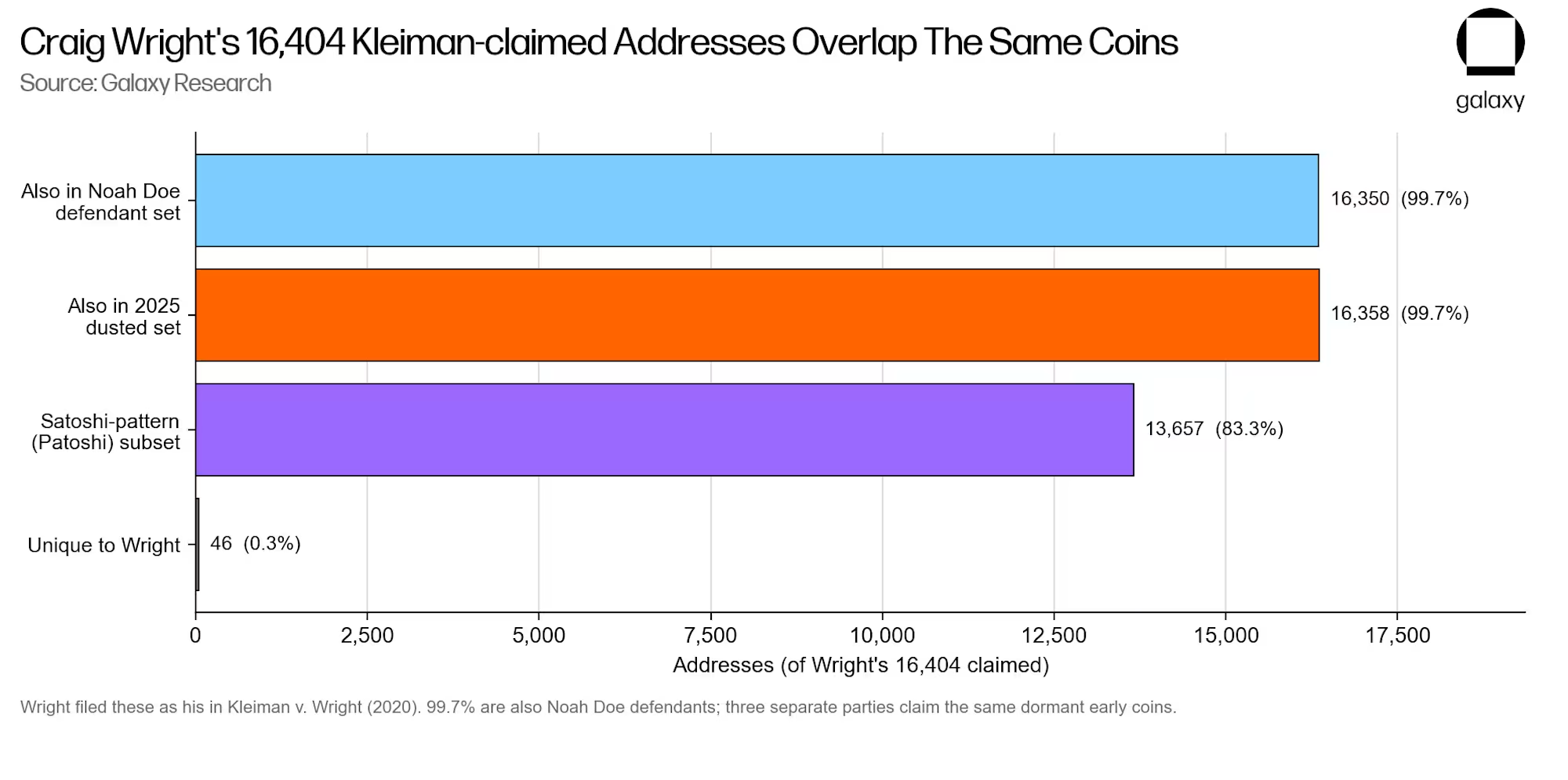
Address Overlap Between Noah Doe and Craig Wright

The overlap is almost identical. Of the 16,404 addresses Wright claimed, 16,350 (99.7%) are also claimed by Noah Doe's defendants, holding approximately 817,513 Bitcoins. We cannot determine if Craig Wright has any connection to the Noah Doe case, but the overlap is notable. Craig Wright has attempted for years to claim these Bitcoins through litigation but was found in contempt of court by a UK court in 2024.

Questionable Aspects of the Case

While we are not lawyers, just looking at the court record and relevant statutes, this case is full of doubts.

Does the Lost and Found Law Apply?

Before any valuation or service issues, there's a more fundamental question: the lost and found law was designed for physical objects that a finder picks up, holds, and delivers to the police. Noah Doe never held these coins or keys. He merely looked at public addresses on a ledger that anyone can read. Viewing a public address is far from holding lost property. Delivering a USB drive with listed addresses to the police is also different from actually delivering the lost item.

The statute envisions a finder who can return the item if the owner comes forward. But in this case, the finder never held the coins and could not possibly deliver them to anyone—neither to the police who allegedly have custody, nor to a claiming owner. The core issue goes beyond ownership; losing a private key does not deprive the true owner of any rights. The Bitcoin remains on-chain; the true key holder can move it at any time, which is exactly what hundreds of owners who lost their Bitcoin have done.

It seems clear that ownership cannot effectively transfer to a finder who can never touch the asset.

Valuation Is Not Credible

The average holding of a Noah Doe address is 97.25 Bitcoins, worth about $7.5 million; the median is 50.00 Bitcoins, worth about $3.86 million. Compared to these figures, the claim that each address is worth less than $10 is untenable. This appears to be a tactic to push these assets through the legal process at the fastest speed.

Two other details further undermine this valuation. The expert proposing the 'under $10' figure is not named in the filings, so this single number dictating the entire timeline cannot be examined or challenged. If the 'as-is recoverable' logic is applied universally, then almost all self-custodied Bitcoin would be valued near zero, which is diametrically opposed to how any user, especially one going through the trouble of filing this lawsuit, treats their Bitcoin.

Anonymity of the Parties

Noah Doe's use of anonymity in this case is also highly questionable. He seeks anonymity to avoid being targeted as a large holder, yet the rights he seeks would force the actual address holders to reveal their identities to defend their cryptocurrency. The protection the plaintiff wants for himself is precisely what he seeks to strip from all defendants.

Even if an individual could present a genuine personal safety theory, that theory exists to protect natural persons. ABC Company and XYZ Company are shell LLCs. A corporation has no physical entity to be threatened and no privacy to expose, so the logic of fearing extortion does not apply. Allowing two companies to claim trillions in property under shell names is astounding.

Moreover, New York State does not favor anonymous entities. New York courts rarely allow pseudonyms. While New York historically permitted anonymous LLC ownership, the state's LLC Transparency Act now mandates disclosure of beneficial ownership, though federal law has narrowed its scope to foreign-formed LLCs.

Potential Development of Subsequent Litigation

Even setting aside these details, the 'audacity' of this lawsuit becomes apparent. It is unthinkable that a New York court would award legal ownership of approximately $293 billion worth of Bitcoin (including some belonging to Satoshi Nakamoto) to anonymous individuals based on a dubious 'lost and found' theory with an under-$10 valuation. Courts are typically reluctant to entertain such novel and far-reaching cases, especially when property is disputed and judgments could have broad implications.

Since this is a declaratory action about property ownership, under CPLR 1012(a)(3), the true owners of the addresses have the right to intervene directly in the lawsuit; non-owners with a related interest may apply for permission to intervene under CPLR 1013. However, while the principle allows intervention, there is a massive practical obstacle. To intervene, an owner must come forward and prove control over the registered address, which is precisely the de-anonymization that cautious Bitcoin whales have spent a lifetime trying to avoid.

The defendant addresses are all pseudonymous and deliberately not publicly listed. Therefore, by the end of June 2026, about 30 days after service, a technical default judgment is almost certain to occur. A motion for default judgment will likely be filed in the summer. However, for many reasons, the court is unlikely to swiftly grant a default judgment fully satisfying all plaintiff's demands.

First, a declaration of ownership is not a default service provided by the clerk for a fixed sum; it requires an application to the court, and the court retains discretion to require a hearing and demand actual evidence. Second, the theory is novel and the stakes are enormous—factors that often trigger judicial skepticism, not 'rubber-stamp' approval. Furthermore, the validity of OP_RETURN service itself is debatable, and a questionable affidavit of service gives the court reason to proceed cautiously. Finally, any actual holder who intervenes could turn a previously uncontested case into a real contest.

Galaxy estimates the likelihood of the court granting a full ownership declaration in a default judgment is low, and even if it does rule, it's more likely to be after a hearing and in a narrowed scope.

What if the Plaintiff Wins?

Even if the plaintiff wins completely, they still cannot seize any Bitcoin. All they would hold is a New York State declaration, not a set of private keys. The principle 'Not your keys, not your coins' applies to them as well.

Therefore, the danger is not that the plaintiff could seize Satoshi's Bitcoin or any other Bitcoin mentioned in the Noah Doe defendant addresses. The danger is that if any of these Bitcoins are transferred to a centralized exchange or custodian, the plaintiff could present their New York judgment to that institution and attempt to place a lien on those Bitcoins. Such action could freeze assets, spark years of litigation, and force the holder who moved the Bitcoin decades later to come forward to prove ownership, thereby compromising their own anonymity.

The paper ownership certificate is leverage against regulated intermediaries and those who rely on them. This almost certainly explains why, even though a judgment may never directly affect the Bitcoin itself, it is still worth pursuing for those behind this case.


Perguntas relacionadas

QWhat is the core legal strategy used by 'Noah Doe' to claim ownership of the dormant Bitcoin addresses?

AThe core legal strategy is to apply New York State's lost property law, specifically Article 7-B of the Personal Property Law, to Bitcoin addresses. The plaintiff argues that these dormant addresses constitute 'lost property.' They physically delivered a USB drive listing the addresses to a police precinct, sent notifications via Bitcoin's OP_RETURN function, and published news releases as 'reasonable efforts' to find the owners. Crucially, they had an unnamed 'independent expert' value each address's 'as-is' worth at less than $10, which allows the fastest procedural pathway under the law for claiming ownership after a one-year period without the owner coming forward.

QAccording to the article, what is the potential risk to Bitcoin holders if the plaintiffs win the lawsuit?

AThe primary risk is not the direct seizure of the Bitcoins, as the plaintiffs would not gain the private keys. The risk is that the New York court judgment would act as a 'title defect' or a cloud on the title. If any of the Bitcoin from these addresses is later transferred to a regulated institution like a centralized exchange or custodial service, the plaintiffs could present the judgment to that institution and attempt to place a lien or freeze on those assets. This could force the actual owner to engage in lengthy litigation and potentially reveal their identity to defend their ownership, compromising their anonymity.

QWhat significant overlap does the article highlight between the addresses claimed by 'Noah Doe' and another controversial figure in the crypto space?

AThe article highlights a near-total overlap between the addresses claimed by 'Noah Doe' and those previously claimed by Craig Wright in the *Kleiman v. Wright* case. Craig Wright submitted a list of 16,404 early Bitcoin addresses, claiming they belonged to him as part of his (since discredited) claim to be Satoshi Nakamoto. Of those 16,404 addresses, 16,350 (99.7%) also appear on 'Noah Doe's' list of claimed addresses. These overlapping addresses hold approximately 817,513 Bitcoin.

QWhat are the main arguments presented in the article against the validity of the plaintiffs' case?

AThe article raises several key arguments against the case's validity: 1) **Misapplication of Law:** Lost property laws are designed for physical items one can pick up and hand over. The plaintiffs never possessed the Bitcoins or private keys; they only looked at publicly available address lists. 2) **Incredible Valuation:** Claiming each multi-million dollar address is worth 'less than $10' is a transparent procedural maneuver to speed up the legal process and is not credible. 3) **Hypocritical Anonymity:** The plaintiffs argue for anonymity for their own safety but seek a judgment that would force the actual address owners to potentially reveal their identities to defend their assets. 4) **Corporate Shells:** The involvement of anonymous LLCs (ABC and XYZ companies) further complicates the legitimacy, as corporations cannot claim the same personal safety risks as individuals.

QWhat does the article suggest is the most likely outcome of the lawsuit, and why?

AThe article, citing Galaxy's analysis, suggests it is unlikely the court will grant a full default judgment declaring complete ownership to the plaintiffs. The novelty of the legal theory, the astronomical sums involved, the questionable valuation and service of process (OP_RETURN notifications), and the court's likely caution all make a quick, rubber-stamp approval improbable. Instead, the court might require a hearing or issue a narrower ruling if it grants any judgment at all. Furthermore, any actual owner of the addresses who comes forward to intervene in the case could turn it into a contested proceeding, further reducing the chance of an easy win for the plaintiffs.

Leituras Relacionadas

The Midlife Crisis of Crypto GPs: No PMF, No Next Check from LPs

The article "The Midlife Crisis of Crypto GPs: No PMF, No Next LP Check" analyzes the shifting crypto fundraising landscape. It argues the era of selling grand visions to LPs is over; GPs must now offer products with clear Product-Market Fit (PMF). The author categorizes crypto fundraising products into three types: Primary (VC funds), Liquid (trading strategies), and CeFi/DeFi Native Yield. This summary focuses on the Primary market. Key points include: * **Market Shift:** LPs are impatient, demand immediate returns, and are skeptical of future promises. The "easy money" narrative has faded. * **GP Value Erosion:** LP learning curves have shortened (aided by AI), reducing the value of a GP's basic "crypto knowledge." Superior judgment is now rare. * **Weakened LP Motivations:** Traditional reasons for LPs to invest in crypto VC funds (capturing industry beta, gaining access, leveraging GP judgment) have weakened due to new products like ETFs and increased LP sophistication. * **Surviving in Primary:** The primary market will likely persist for: 1) large funds in endowment mandates treating it as a lottery ticket, 2) family offices/HNWIs using proprietary capital, 3) a few funds with proven recent outperformance, and 4) funds with strong ecosystem "deal-making" capabilities. * **Conclusion:** For most GPs, rebuilding trust requires starting over in a niche, demonstrating alpha-generating ability, or providing concrete value/services to LPs.

marsbitHá 3h

The Midlife Crisis of Crypto GPs: No PMF, No Next Check from LPs

marsbitHá 3h

Crypto GPs' Midlife Crisis: No PMF, No LP's Next Check

The article "The Midlife Crisis of Crypto GPs: No PMF, No LP's Next Check" analyzes the shifting crypto fundraising landscape. It argues that the era of LPs funding vague "vision" is over; GPs must now offer products with clear Product-Market Fit (PMF) to secure capital. The market has matured. LPs, disillusioned by the last cycle's failures and wary of long lock-up periods, now demand tangible, near-term returns rather than speculative narratives. The proliferation of accessible crypto ETFs and other liquid products has reduced the need for VC blind pools as an entry point. The author categorizes crypto fundraising products into three types: Primary (VC funds, with blind pools or clear pipelines), Liquid (alpha/beta, directional/market-neutral strategies), and CeFi/DeFi Native Yield (crypto-specific mechanisms like staking, farming). Focusing on the Primary market, the piece details why traditional LP rationales for investing in crypto VCs have weakened: easier beta access via ETFs, diminished "access" and "judgement" premiums as LPs build internal teams, and a widespread lack of proven superior returns from GPs. Ultimately, only specific players are likely to remain at the primary VC table: large funds with access to patient endowment capital, family offices/HNWIs investing proprietary capital, the few funds with demonstrable excess returns from the last cycle, and those with clear "deal-making" or ecosystem resource advantages. For others, the path forward is to rebuild trust by proving alpha-generation capability in a niche or providing concrete, valuable services.

链捕手Há 3h

Crypto GPs' Midlife Crisis: No PMF, No LP's Next Check

链捕手Há 3h

Trading

Spot
Futuros

Artigos em Destaque

O que é BITCOIN

Compreender o HarryPotterObamaSonic10Inu (ERC-20) e a Sua Posição no Espaço Cripto Nos últimos anos, o mercado de criptomoedas assistiu a um aumento na popularidade das moedas meme, cativando não apenas os traders, mas também aqueles que procuram envolvimento comunitário e valor de entretenimento. Entre estes tokens únicos está o HarryPotterObamaSonic10Inu (ERC-20), um projeto intrigante que mistura referências culturais no tecido das criptomoedas. Este artigo explora os principais aspetos do HarryPotterObamaSonic10Inu, examinando os seus mecanismos, a sua ética orientada pela comunidade e o seu envolvimento com o vasto panorama cripto. O que é o HarryPotterObamaSonic10Inu (ERC-20)? Como o nome sugere, o HarryPotterObamaSonic10Inu é uma moeda meme construída na blockchain Ethereum, classificada sob o padrão ERC-20. Ao contrário das criptomoedas tradicionais, que podem enfatizar a utilidade prática ou o potencial de investimento, este token prospera no valor de entretenimento e na força da sua comunidade. O projeto visa promover um ambiente onde utilizadores envolvidos possam reunir-se, partilhar ideias e participar em atividades inspiradas por diversos fenómenos culturais. Uma característica notável do HarryPotterObamaSonic10Inu é a zero taxa sobre transações. Este elemento atraente visa encorajar a negociação e o envolvimento da comunidade, isento de encargos adicionais que podem desencorajar os traders de pequena escala. A oferta total da moeda está fixada em mil milhões de tokens, uma cifra que marca a sua intenção de manter uma circulação substancial dentro da comunidade. Criador do HarryPotterObamaSonic10Inu (ERC-20) As origens do HarryPotterObamaSonic10Inu estão um pouco envoltas em mistério; os detalhes sobre o criador permanecem desconhecidos. O desenvolvimento deste token carece de uma equipa identificável ou de um plano explícito, o que não é raro no setor das moedas meme. Em vez disso, o projeto surgiu de forma orgânica, com o seu progresso a depender fortemente do entusiasmo e da participação da sua comunidade. Investidores do HarryPotterObamaSonic10Inu (ERC-20) No que diz respeito a investimentos externos e apoios, o HarryPotterObamaSonic10Inu também permanece ambíguo. O token não lista quaisquer fundações de investimento conhecidas ou apoio organizacional significativo. Em vez disso, o “sangue vital” do projeto é a sua comunidade de base, que informa o seu crescimento e sustentabilidade através da ação coletiva e do envolvimento no espaço cripto. Como Funciona o HarryPotterObamaSonic10Inu (ERC-20)? Como uma moeda meme, o HarryPotterObamaSonic10Inu opera principalmente fora dos quadros tradicionais que muitas vezes governam o valor dos ativos. Existem vários aspetos distintivos que definem como o projeto funciona: Transações Sem Taxas: Sem taxas sobre transações, os utilizadores podem comprar e vender o token livremente, sem a preocupação de custos ocultos. Envolvimento da Comunidade: O projeto prospera na interação da comunidade, aproveitando plataformas de redes sociais para criar entusiasmo e facilitar a participação. Discussões, partilha de conteúdo e envolvimento são elementos cruciais que ajudam a expandir o seu alcance e a fomentar a lealdade entre os apoiantes. Sem Utilidade Prática: Deve ser notado que o HarryPotterObamaSonic10Inu não oferece utilidade concreta dentro do ecossistema financeiro. Em vez disso, é classificado como um token principalmente para entretenimento e atividades comunitárias. Referência Cultural: O token incorpora de forma inteligente elementos da cultura popular para atrair interesse, conectando-se tanto com entusiastas de memes como com seguidores de criptomoedas. HarryPotterObamaSonic10Inu exemplifica como as moedas meme operam de forma diferente de projetos de criptomoedas mais tradicionais, entrando no mercado como construções sociais inovadoras em vez de ativos utilitários. Linha do Tempo do HarryPotterObamaSonic10Inu (ERC-20) A história do HarryPotterObamaSonic10Inu é marcada por vários marcos notáveis: Criação: O token surgiu de um meme viral, capturando a imaginação de muitos entusiastas de criptomoedas. Datas específicas de criação não estão disponíveis, sublinhando a sua ascensão orgânica. Listagem em Exchanges: O HarryPotterObamaSonic10Inu conseguiu entrar em várias exchanges, permitindo um acesso e negociação mais fáceis pela comunidade. Iniciativas de Envolvimento da Comunidade: Atividades contínuas direcionadas a melhorar a interação comunitária, incluindo concursos, campanhas em redes sociais e geração de conteúdo por fãs e defensores. Planos de Expansão Futura: O roteiro do projeto inclui o lançamento de uma coleção de NFTs, mercadorias e um site de eCommerce relacionado aos seus temas culturais, envolvendo ainda mais a comunidade e tentando adicionar mais dimensões ao seu ecossistema. Pontos-Chave sobre o HarryPotterObamaSonic10Inu (ERC-20) Natureza Orientada pela Comunidade: O projeto prioriza a contribuição coletiva e a criatividade, assegurando que o envolvimento dos utilizadores está na vanguarda do seu desenvolvimento. Classificação como Moeda Meme: Representa o epítome da criptomoeda baseada em entretenimento, destacando-se dos veículos de investimento tradicionais. Sem Afiliação Direta com o Bitcoin: Apesar da semelhança no nome do ticker, o HarryPotterObamaSonic10Inu é distinto e não tem qualquer relação com o Bitcoin ou outras criptomoedas estabelecidas. Foco na Colaboração: O HarryPotterObamaSonic10Inu é projetado para criar um espaço de colaboração e partilha de histórias entre os seus detentores, proporcionando uma via para a criatividade e o fortalecimento da comunidade. Perspectivas Futuras: A ambição de expandir além da sua premissa inicial para NFTs e mercadorias delineia um caminho para o projeto potencialmente entrar em avenidas mais mainstream dentro da cultura digital. À medida que as moedas meme continuam a capturar a imaginação da comunidade cripto, HarryPotterObamaSonic10Inu (ERC-20) destaca-se devido aos seus laços culturais e abordagem centrada na comunidade. Embora possa não se encaixar no molde típico de um token orientado para utilidade, a sua essência reside na alegria e camaradagem fomentadas entre os seus apoiantes, destacando a natureza em evolução das criptomoedas em uma era cada vez mais digital. À medida que o projeto continua a desenvolver-se, será importante observar como as dinâmicas comunitárias influenciam a sua trajetória no panorama em constante mudança da tecnologia blockchain.

1.6k Visualizações TotaisPublicado em {updateTime}Atualizado em 2024.12.03

O que é BITCOIN

Como comprar BTC

Bem-vindo à HTX.com!Tornámos a compra de Bitcoin (BTC) simples e conveniente.Segue o nosso guia passo a passo para iniciar a tua jornada no mundo das criptos.Passo 1: cria a tua conta HTXUtiliza o teu e-mail ou número de telefone para te inscreveres numa conta gratuita na HTX.Desfruta de um processo de inscrição sem complicações e desbloqueia todas as funcionalidades.Obter a minha contaPasso 2: vai para Comprar Cripto e escolhe o teu método de pagamentoCartão de crédito/débito: usa o teu visa ou mastercard para comprar Bitcoin (BTC) instantaneamente.Saldo: usa os fundos da tua conta HTX para transacionar sem problemas.Terceiros: adicionamos métodos de pagamento populares, como Google Pay e Apple Pay, para aumentar a conveniência.P2P: transaciona diretamente com outros utilizadores na HTX.Mercado de balcão (OTC): oferecemos serviços personalizados e taxas de câmbio competitivas para os traders.Passo 3: armazena teu Bitcoin (BTC)Depois de comprar o teu Bitcoin (BTC), armazena-o na tua conta HTX.Alternativamente, podes enviá-lo para outro lugar através de transferência blockchain ou usá-lo para transacionar outras criptomoedas.Passo 4: transaciona Bitcoin (BTC)Transaciona facilmente Bitcoin (BTC) no mercado à vista da HTX.Acede simplesmente à tua conta, seleciona o teu par de trading, executa as tuas transações e monitoriza em tempo real.Oferecemos uma experiência de fácil utilização tanto para principiantes como para traders experientes.

4.0k Visualizações TotaisPublicado em {updateTime}Atualizado em 2026.06.01

Como comprar BTC

O que é $BITCOIN

OURO DIGITAL ($BITCOIN): Uma Análise Abrangente Introdução ao OURO DIGITAL ($BITCOIN) OURO DIGITAL ($BITCOIN) é um projeto baseado em blockchain que opera na rede Solana, com o objetivo de combinar as características dos metais preciosos tradicionais com a inovação das tecnologias descentralizadas. Embora partilhe um nome com o Bitcoin, frequentemente referido como “ouro digital” devido à sua percepção como uma reserva de valor, o OURO DIGITAL é um token separado projetado para criar um ecossistema único dentro da paisagem Web3. O seu objetivo é posicionar-se como um ativo digital alternativo viável, embora os detalhes sobre as suas aplicações e funcionalidades ainda estejam em desenvolvimento. O que é o OURO DIGITAL ($BITCOIN)? OURO DIGITAL ($BITCOIN) é um token de criptomoeda explicitamente projetado para uso na blockchain Solana. Em contraste com o Bitcoin, que fornece um papel amplamente reconhecido como armazenamento de valor, este token parece focar em aplicações e características mais amplas. Aspectos notáveis incluem: Infraestrutura Blockchain: O token é construído na blockchain Solana, conhecida pela sua capacidade de lidar com transações de alta velocidade e baixo custo. Dinâmicas de Oferta: O OURO DIGITAL tem um fornecimento máximo limitado a 100 quatrilhões de tokens (100P $BITCOIN), embora os detalhes sobre o seu fornecimento circulante ainda não tenham sido divulgados. Utilidade: Embora as funcionalidades precisas não estejam explicitamente delineadas, existem indicações de que o token poderia ser utilizado para várias aplicações, potencialmente envolvendo aplicações descentralizadas (dApps) ou estratégias de tokenização de ativos. Quem é o Criador do OURO DIGITAL ($BITCOIN)? Neste momento, a identidade dos criadores e da equipa de desenvolvimento por trás do OURO DIGITAL ($BITCOIN) permanece desconhecida. Esta situação é típica entre muitos projetos inovadores no espaço da blockchain, particularmente aqueles alinhados com finanças descentralizadas e fenómenos de moedas meme. Embora tal anonimato possa fomentar uma cultura orientada pela comunidade, intensifica as preocupações sobre governança e responsabilidade. Quem são os Investidores do OURO DIGITAL ($BITCOIN)? As informações disponíveis indicam que o OURO DIGITAL ($BITCOIN) não tem apoiantes institucionais conhecidos ou investimentos proeminentes de capital de risco. O projeto parece operar num modelo peer-to-peer focado no apoio e adoção da comunidade, em vez de rotas de financiamento tradicionais. A sua atividade e liquidez estão principalmente situadas em exchanges descentralizadas (DEXs), como a PumpSwap, em vez de plataformas de negociação centralizadas estabelecidas, destacando ainda mais a sua abordagem de base. Como Funciona o OURO DIGITAL ($BITCOIN) A mecânica operacional do OURO DIGITAL ($BITCOIN) pode ser elaborada com base no seu design de blockchain e nas características da rede: Mecanismo de Consenso: Ao aproveitar o exclusivo proof-of-history (PoH) da Solana combinado com um modelo de proof-of-stake (PoS), o projeto assegura uma validação eficiente das transações, contribuindo para o alto desempenho da rede. Tokenomics: Embora mecanismos deflacionários específicos não tenham sido extensivamente detalhados, o vasto fornecimento máximo de tokens implica que pode atender a microtransações ou casos de uso de nicho que ainda estão por definir. Interoperabilidade: Existe o potencial para integração com o ecossistema mais amplo da Solana, incluindo várias plataformas de finanças descentralizadas (DeFi). No entanto, os detalhes sobre integrações específicas permanecem não especificados. Cronologia de Eventos Chave Aqui está uma cronologia que destaca marcos significativos relacionados ao OURO DIGITAL ($BITCOIN): 2023: O lançamento inicial do token ocorre na blockchain Solana, marcado pelo seu endereço de contrato. 2024: O OURO DIGITAL ganha visibilidade ao tornar-se disponível para negociação em exchanges descentralizadas como a PumpSwap, permitindo que os utilizadores o negociem contra SOL. 2025: O projeto testemunha atividade de negociação esporádica e potencial interesse em envolvimentos liderados pela comunidade, embora não tenham sido documentadas parcerias ou avanços técnicos notáveis até ao momento. Análise Crítica Forças Escalabilidade: A infraestrutura subjacente da Solana suporta altos volumes de transações, o que pode aumentar a utilidade do $BITCOIN em vários cenários de transação. Acessibilidade: O potencial preço de negociação baixo por token pode atrair investidores de retalho, facilitando uma participação mais ampla devido a oportunidades de propriedade fracionada. Riscos Falta de Transparência: A ausência de apoiantes, desenvolvedores ou um processo de auditoria publicamente conhecidos pode gerar ceticismo em relação à sustentabilidade e confiabilidade do projeto. Volatilidade do Mercado: A atividade de negociação depende fortemente do comportamento especulativo, o que pode resultar em volatilidade significativa dos preços e incerteza para os investidores. Conclusão O OURO DIGITAL ($BITCOIN) surge como um projeto intrigante, mas ambíguo, dentro do ecossistema em rápida evolução da Solana. Embora tente aproveitar a narrativa do “ouro digital”, a sua divergência do papel estabelecido do Bitcoin como reserva de valor sublinha a necessidade de uma diferenciação mais clara da sua utilidade pretendida e estrutura de governança. A aceitação e adoção futuras dependerão provavelmente da abordagem da atual opacidade e da definição mais explícita das suas estratégias operacionais e económicas. Nota: Este relatório abrange informações sintetizadas disponíveis até outubro de 2023, e desenvolvimentos podem ter ocorrido além do período de pesquisa.

92 Visualizações TotaisPublicado em {updateTime}Atualizado em 2025.05.13

O que é $BITCOIN

Discussões

Bem-vindo à Comunidade HTX. Aqui, pode manter-se informado sobre os mais recentes desenvolvimentos da plataforma e obter acesso a análises profissionais de mercado. As opiniões dos utilizadores sobre o preço de BTC (BTC) são apresentadas abaixo.

活动图片