A16z连续领投两轮的Goldfinch有何特别之处?

老雅痞Publicado em 2022-03-28Última atualização em 2022-03-27

Resumo

整个加密货币市场的TVL总额超过了2000亿美元,相比于一年前同时段的500亿美元增长4倍。

整个加密货币市场的TVL总额超过了2000亿美元,相比于一年前同时段的500亿美元增长4倍。然而,即使这种增长也大大低估了DeFi的真正潜力。这是因为所有这些借贷都是过度抵押的。如果有用户在这些defi协议上借1美元,就必须先拿出他们已经拥有的另一种资产的约1.5美元。

这种抵押要求阻碍了整个Defi系统的发展。这些贷款只对一小部分借款人有用--主要是保证金交易商和加密货币持有人。但对于世界上的其他人来说,他们之所以想借贷,首先是他们还没有自己需要的资金。

取消抵押品要求是加密货币进入全球债务市场的关键。DeFi有一个巨大的机会来改变获取资本的方式,但只有在它可以在没有抵押品的情况下进行贷款时才有可能。这将最终向世界上大多数人开放加密货币借贷。

传统金融市场痛点

传统上,银行承销费用很高,因为他们不了解借款人背景。他们为小额贷款人种类设定了一个门槛,并将可能出现的长尾现象剔除。例如,西班牙的一位居民,他想购买一辆卡车送货,另一个人在葡萄牙希望提供贷款给他人以赚取利息。但他们不值得银行花费时间匹配资金需求。

但是,如果社区能够提供这种服务呢?

如果我们能够消除银行的中介,并向世界各地的人们提供这些机会呢?从数以千计,甚至数以百万计的人中,他们可以识别和评估新的信贷来源。通过分散承销过程,DeFi可以让任何人以银行今天根本无法做到的方式进行贷款。

从新兴市场开始

从一开始,我们就想为那些能够受益最多的借款人和加密货币能够产生最大影响的地方建立。这促使我们从新兴市场的借贷业务开始。他们有最大的收益(和最高的需求),因为传统金融的低效率限制了可以流入这些市场的资本。加密货币市场是全球性的资本市场,可以为借贷双方提供更好的流动性溢价。

Goldfinch是什么?

Goldfinch是一个去中心化的协议,允许在没有加密货币抵押的情况下进行加密货币借贷。

目前加密货币借贷协议的一个核心限制是--它们需要抵押品。

通过纳入"通过共识信任"的原则,Goldfinch协议为借款人创造了一种基于其他参与者的集体评估来显示信用度的方式。而不是基于他们的加密货币资产。

该协议可以使用这种集体评估作为信号来自动分配资本。通过消除对加密货币抵押品的需求,并提供一种手段来获得被动收益,该协议极大地扩大了可以接触加密货币的潜在借款人和潜在的资本。

融资信息:

2021年6月消息,Goldfinch完成1100万美元A轮融资,a16z领投,MercyCorpsVentures、ACapital、AccessVentures和DivergenceVentures等参投。

2022年1月7日,Goldfinch宣布完成2500万美元A+轮融资,a16z领投。

知名对冲基金经理BillAckman、加密投资机构BlockTower和投资管理公司KingswayCapital参投。

a16z合伙人AriannaSimpson在公告中写道:“通过消除对加密抵押品的需求并提供被动收益的手段,Goldfinch正在大幅扩大对更多潜在借款人和资本提供者的贷款。”

核心团队信息
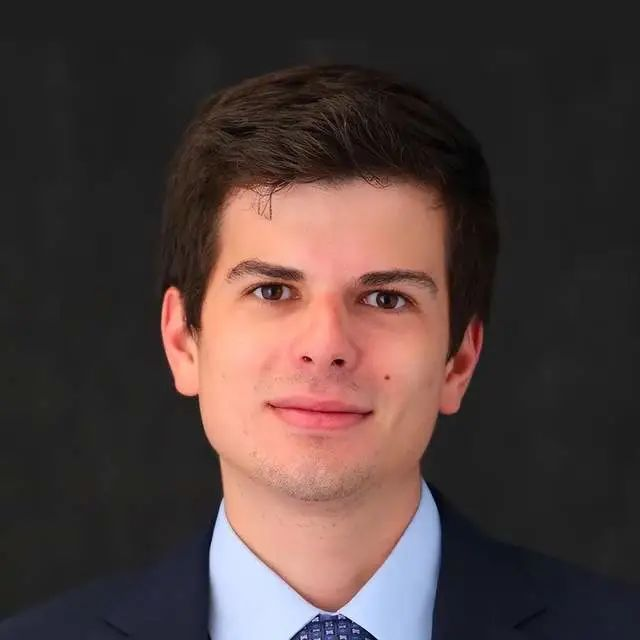
AaronCollett曾任Lendable、EQT、高盛等公司的亚洲项目负责人

AndrewHuelsenbeck,曾任BranchInternational的全球运营总监

AnnaSpisak,曾任Scratch.fi的设计主管,CloverHealth的设计经理
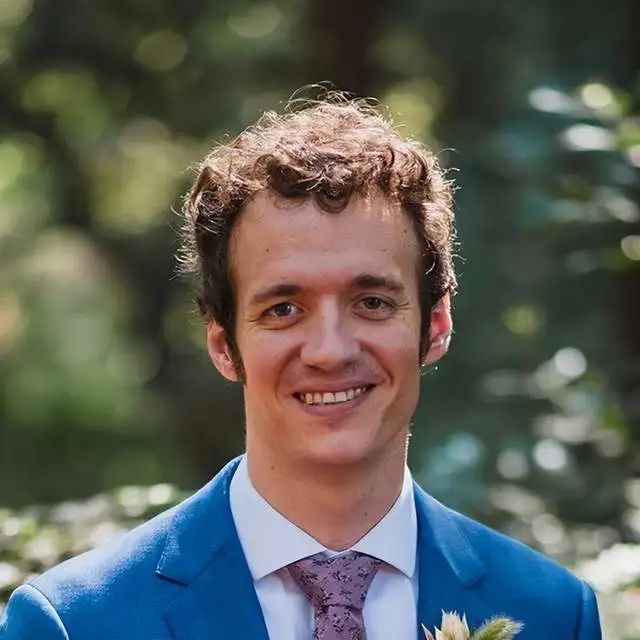
BlakeWest曾任Coinbase的高级工程师,HintHealth的第一位员工
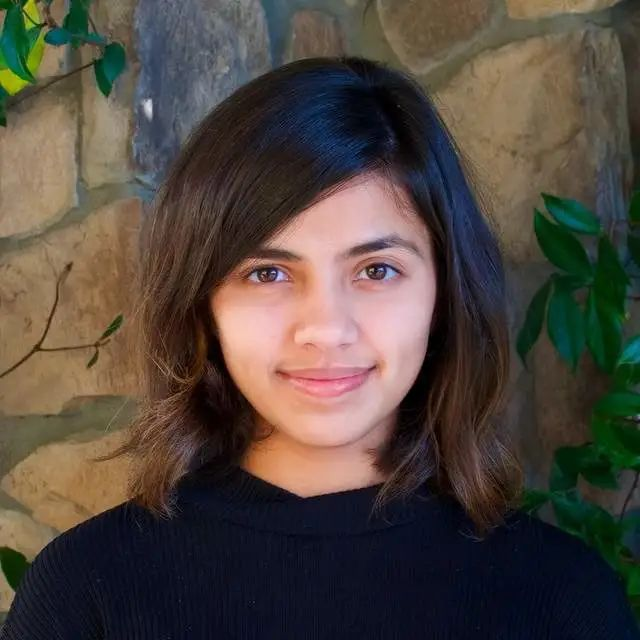
EzzaNaveed,曾任Minerva大学学士,Devsisters的社区营销人员
IanHinsdale曾任Giraf的创始人;Optimizely的工程师;IMF、世界银行的研究人员

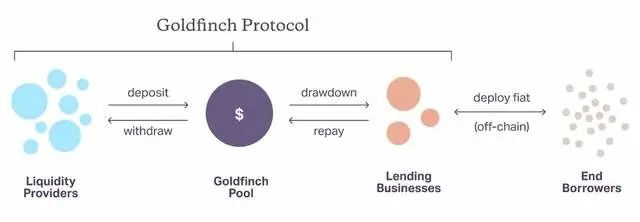
Goldfinch协议有四个核心参与者

借款人:寻求融资的参与者。

支持者:评估借款人,并决定是否提供第一损失的资本。

流动性提供者:向高级池提供资本,以获得被动收益。

审计员:投票批准借款人。
Goldfinch协议怎样运作?

在借款人可以申请贷款之前,他们必须得到协议去中心化审计师的批准。审计师是独立的实体,必须质押治理代币GFI,才能有机会验证借款人以换取奖励。审计师只评估借款人是否是他们声称的人,以防止欺诈活动,而不评估他们的信誉,审计员是由协议随机选择的。

经审计师批准后,借款人向支持者提出贷款条款。这些条款可能包括诸如寻求的金额、贷款期限、利率、借款人的背景以及如何使用资金等细节。

支持者评估借款人的信誉,如果他们同意条款,可以选择提供初级资金。初级部分是在发生违约时首先减记的高风险池。

从流动性提供者那里收集的高级池然后将资金分配给高级部分。高级池最多可以借出几倍于初级部分的金额。高级部分是低风险池。它首先收到付款,并且仅在初级部分无法完全覆盖违约时才被减记。为了补偿初级部分的支持者的额外风险和评估借款人的工作,他们将获得高级池所获得收益的20%。

高级池完成分配后,贷款过程完成,借款人可以使用资金。

数据分析:
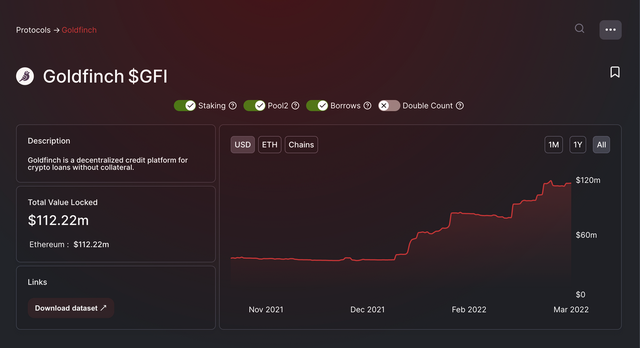
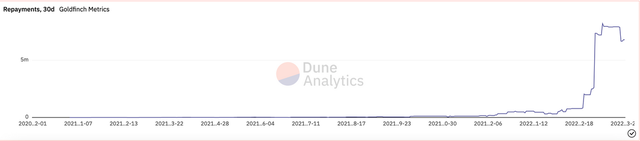
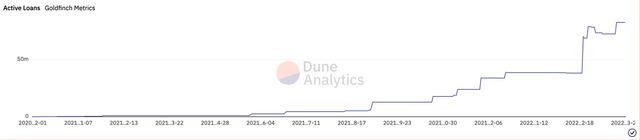
根据defillama的数据,截止3月27日,我们可以看到Goldfinch的TVL已经超过1.1亿美元,金额远远超过大部分借贷协议。近三十天偿还金额约为660万美元,总偿还金额超过1000万美元。
从一年前的25万美元增加到现在的8900万美元,增长356倍,为18个国家的大约20万多个借款人提供资金。这笔资金正被用于各种生产方式,包括肯尼亚的摩托车出租车、巴西的小公司以及印度低收入家庭的环保炉灶等等。
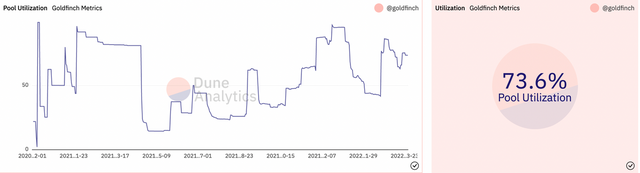
资金池使用率73.6%,由此可见资本流动性在这个借贷协议里的效率也是比较高。
迄今为止,已有35,000多人通过了KYC,并且有5,000多人作为流动性提供者和支持者积极参与该协议。此外,Goldfinch已迅速扩展到一个由来自世界各地的45K多人组成的繁荣社区。

有几个项目有一些类似的概念,例如Maple、TrueFi,但它们都是针对机构市场的。机构资产更充裕,违约风险更小,借贷量大。因此,对这些借款机构进行尽职调查的价值更高。另一方面,Goldfinch将目光投向了发展中国家,想要解决长尾用户的借贷问题。

经济模型

代币总供应量

最初的代币供应上限为114,285,714个GFI代币
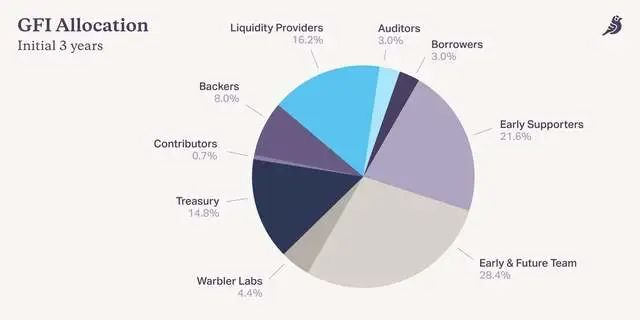
流动性供应商(16.2%)

支持者(8.0%)

审计师(3.0%)

借款人(3.0%)

贡献者(0.65%)

社区财政部(14.8%)

早期和未来团队(28.4%)

实验室(4.4%)

早期支持者(21.6%)

代币效用:治理

治理由社区DAO管理,并有能力通过去中心化的治理投票进行维护功能和参数调整,包括:

升级合约

改变协议配置和参数

设置GFI的奖励和分配

在发生紧急情况时暂停协议活动

任何人都可以通过提出建议、讨论和参与代币快照投票来参与治理。

现在没有通货膨胀,个人预计该协议在未来会包含轻微的通货膨胀(增发),以激励未来的积极参与者。不过将由社区进行投票做出决定。

潜在的风险

信用风险

信用风险是Goldfinch最关键的风险。尽管它具有将欺诈风险降至最低的激励结构,但与完全抵押的借贷协议不同,它仍然需要一定程度的信任。此外,即使没有欺诈,不可预见的情况,如过去两年所见的情况,也可能导致借款人无法支付。如果在高级池中出现违约,则可能会削弱贷方对协议降低风险能力的信心。

监管风险

美国不允许在证券法规之外进行这样的借贷投资,因此Goldfinch暂时避开美国市场,并依赖于其他地方的投资者网络,这些投资者主要是发展中国家,而这些国家历来获得贷款难的。例如肯尼亚、尼日利亚、乌干达和菲律宾通过该协议获得的贷款最多。

持续激励

支持者和审计员通过对借款人进行尽职调查来为协议执行一项重要任务。他们的工作很复杂,必须分析来自不同司法管辖区的具有独特风险的不同类型的借款人。协议必须通过不断激励他们来保持他们的积极性。如果协议产生的收益不够,可能需要通过代币增发来补偿。

结语

总的来说,Goldfinch金融是类似于贷款的融资平台,Goldfinch.Finance最显著的优势是,它可以在不需要加密货币抵押的情况下实现加密货币借款,极大地扩大了可能接触加密货币的潜在借款人和潜在的资本提供者。

稳定币的增长以及法定加密货币在全球范围内的扩张,如果Goldfinch的愿景实现,这也意味着资本从发展中国家流向新兴市场,将涵盖更广泛的社会阶层,实现真正意义上的金融民主化。

资料:

https://defillama.com/protocol/goldfinch

https://dune.xyz/goldfinch/goldfinch

https://goldfinch.finance/goldfinch_whitepaper.pdf

https://goldfinch.finance/#mission
Leituras Relacionadas

To Hike or Not Tonight: Economists Unanimous on 'No', Markets Price in a 30% Chance

Federal funds futures are repricing ahead of the July FOMC decision, as traders pay a higher premium for the risk of a surprise rate hike or more hawkish signals. This contrasts with economists, where a Reuters survey of 104 analysts unanimously expects rates to remain unchanged at 3.50%-3.75%, with 78 foreseeing no change through year-end. Yet, futures markets have priced in about a 30% probability of a 25-basis-point hike. The core debate, especially under new Fed Chair Kevin Warsh, centers on how the Fed will respond to the oil price shock from Middle East tensions. The market is not necessarily predicting a hike tonight but is hedging against two tail risks: an immediate rate increase, or a hold combined with communication that seriously opens the door for a September hike. This hedging activity has driven up open interest in Fed funds futures. Analysts are divided on how to weight the oil price surge in the Fed's reaction function. Hawkish voices (e.g., BofA) worry that completely dismissing the price pressure could challenge the Fed's inflation credibility in Warsh's first major test. Dovish views (e.g., Citi) argue the shock is primarily supply-driven and that overreacting with rate hikes could unnecessarily hurt growth, unless clear signs of secondary inflation emerge. Warsh's new tenure amplifies policy path uncertainty, as markets lack a stable baseline for his communication style. This environment forces traders to price in a wider range of outcomes, explaining the divergence between unanimous economist forecasts and market hedging. The key focus will be on Warsh's post-meeting commentary. If he downplays the oil shock and stresses anchored long-term expectations, hawkish pricing may recede. If he emphasizes the risk of broader price spillovers and prioritizes returning to 2% inflation, the market will interpret this as reopening the door for a September hike. This would sustain support for the USD, keep pressure on JPY (testing intervention thresholds), and challenge risk assets like stocks and crypto through higher discount rates and weaker sentiment. The baseline remains no action in July, but the communication will determine how far this repricing extends.

marsbitHá 27m

To Hike or Not Tonight: Economists Unanimous on 'No', Markets Price in a 30% Chance

marsbitHá 27m

The Semiconductor Industry's Most Obscure Chokepoint Material: It Has Multiplied in Price Unnoticed, and China Just Banned Its Export

"Helium: The Silent Choke Point in Semiconductors" Helium, despite being the universe's second most abundant element, is critically scarce on Earth. It cannot be synthesized artificially and escapes Earth's gravity once released, making it a non-renewable resource. Yet, it is indispensable for advanced semiconductor manufacturing, requiring ultra-high purity (99.9999%) for processes like wafer etching, leak detection, and thermal management in lithography tools, with no viable substitutes. This low-profile resource, whose price has doubled unnoticed, suddenly gained attention when China imposed an export ban on July 10th. The ban is a response to a severe global shortage triggered months earlier. In March, missile attacks damaged the world's largest helium production hub in Qatar's Ras Laffan, halting a third of global supply with repairs expected to take 3-5 years. Concurrently, Russia tightened export controls, and the US sold off its federal helium reserve. Approximately 200 specialized transport containers, each worth ~$1 million, were stranded with perishable cargo. Global spot prices skyrocketed, and chipmakers like TSMC warned of potential impacts. China, which imports over 84% of its helium (primarily from Qatar and Russia), faces a severe squeeze. Despite being helium-poor, China has developed domestic extraction technology over five years, processing byproduct gases from LNG plants to produce ultra-pure helium. Domestic output, while still only covering less than 20% of demand, enabled the recent export ban aimed at securing domestic supply for its own expanding chip industry. The industry now faces "Helium Shortage 5.0." With key global sources constrained for years, this invisible gas—once wasted on party balloons—has become a critical, geopolitically charged bottleneck for chips, healthcare (MRI machines), and beyond, forcing the world to finally treat it as the finite strategic resource it is.

marsbitHá 1h

The Semiconductor Industry's Most Obscure Chokepoint Material: It Has Multiplied in Price Unnoticed, and China Just Banned Its Export

marsbitHá 1h

Early Investor of Unitree Bets on a Brain-Computer Interface Company

"Wabo Technologies, a brain-computer interface (BCI) startup, has secured new funding from Vertex Ventures (under Temasek), Hongtai Fund, Chengdu Future Industry Fund, and Huifengda Capital. Vertex Ventures is known for its early bet on Unitree Robotics. Inspired by the sci-fi film "Avatar," founder Zhang Xingzhi has pursued human-machine interaction for over a decade. He established Wabo in late 2025, coinciding with China's push for BCI as a future industry. Unlike companies focused solely on medical hardware, Wabo positions itself as a model company. Its core mission is to develop a "Human Neural Intent Model" that decodes EEG, EMG, and behavioral signals to understand a user's goals, confirmations, corrections, and stop intentions before physical action, translating them into standardized control signals for machines, robots, or smart devices. The young, full-stack team, backed by academic collaborators from Tianjin University and Fudan University, quickly attracted investors. The company had previously raised a seed round from Ceyuan Capital. Investors were impressed by Wabo's systematic capabilities in data collection, signal processing, and engineering, seeing potential beyond a single hardware product toward a reusable layer of human intent interpretation. Applications span medical rehabilitation, smart homes, embodied AI, and even space exploration, with Wabo partnering with Tianjin University on pioneering "space BCI" research. Wabo plans a dual-headquarters strategy, with Shanghai focusing on high-end R&D and model development, and Chengdu handling hardware, product development, and supply chain. The BCI sector in China is heating up, with over 30 financing deals in early 2026. Zhang believes future competition will center on who can build a sustainable data-model-scenario loop. He predicts industry consolidation within three years, with only companies that master this闭环 surviving. The vision from "Avatar" is inching closer to reality."

marsbitHá 1h

Early Investor of Unitree Bets on a Brain-Computer Interface Company

marsbitHá 1h

Trading

Spot
活动图片