Terra's Bitcoin Reserves Hit $1 Billion Following Aggressive Buying On Price Dips

zycryptoPublicado em 2022-03-27Última atualização em 2022-03-27

Resumo

Terra has begun the purchase of $10 billion worth of Bitcoin to use it as a reserve asset.

Terra has begun the purchase of $10 billion worth of Bitcoin to use it as a reserve asset.

According to blockchain search and analytics engine Blockchair, Terra bought 5,934 BTC for approximately $260 million between 20th March and 24th March as part of its gradual accumulation plan for the said asset.

As of Saturday, 26th March, the network had accumulated a total of 15,390.9 BTC, bringing its total holdings to 24,954.95 BTC ($1,108,077,140.35). Terra, which is now the 40th largest BTC holder in the world plans on wrapping on Cosmos and depositing them in smart contracts supporting the algorithmic UST stable coin, with more purchases on the way.

Terra's BTC Reserves Hit $1 Billion Following Aggressive Buying On Bitcoin Price Dips
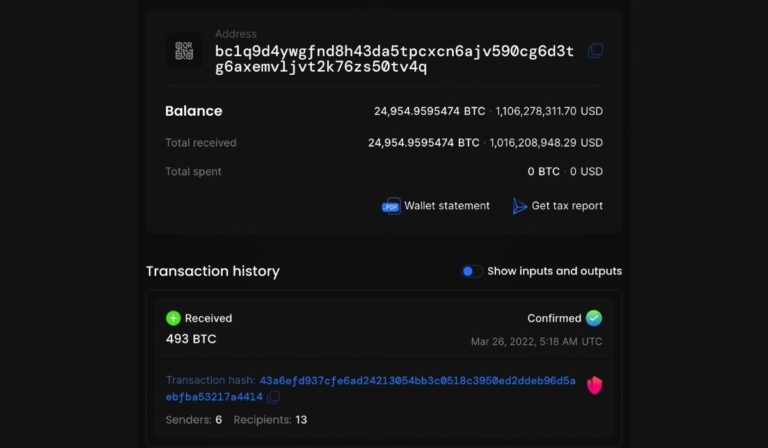
The purchase comes days after Do Kwon, founder of Terra and Terraform Labs announced that his firm was planning on purchasing Bitcoin worth $10 billion to back its UST stablecoin as part of its bigger strategy to decouple from centralized stablecoins while creating a more “sustainable and organic” stablecoin.

The plan to form a Bitcoin reserve for Terra’s UST has however been in the works, and as recently as last month, the Luna Foundation raised $1Billion for this purpose through a private sale of LUNA tokens.

After the event, Kwon stated that Terra would continue stacking its reserves “until it becomes mathematically impossible for idiots to claim de-peg risk for UST”. He thereafter outlined a $3 billion investment plan on Bitcoin before raising the bar to $10 billion. If Kwon’s purchase is to come to fruition, it would mean purchasing more than 232,018.50 BTC (at current prices) which is almost double what MicroStrategy holds.

Given the large sums involved, it is however sufficient to believe that the purchases will be rolled out gradually, catalyzing the ushering in of a “new monetary era of the Bitcoin standard”.

In the past two or so months, Terra’s ecosystem has been riding the DeFi wave, emerging out exceptionally strong due to its attractive UST stablecoin. As ZyCrypto reported, the ecosystem recently toppled Solana, Ethereum, Cardano, and Avalanche, becoming the most staked blockchain.

“One of the fastest-growing categories of applications on Terra has been neo banks that use stable coin rails to make transactions easier and to expose people to defy structured yields,” Kwon said in a podcast with ‘Udiverse’ on Tuesday.

That said, the purchase of $10 billion worth of Bitcoin could ignite a bullish run for the crypto asset as Terra continues to accumulate with no intention of selling. As stated, the process which will be gradual could also give Terra the much-needed attention, igniting a strong move for its native coin LUNA, which is currently trading at $90, up 110% in the past fifty days.
Leituras Relacionadas

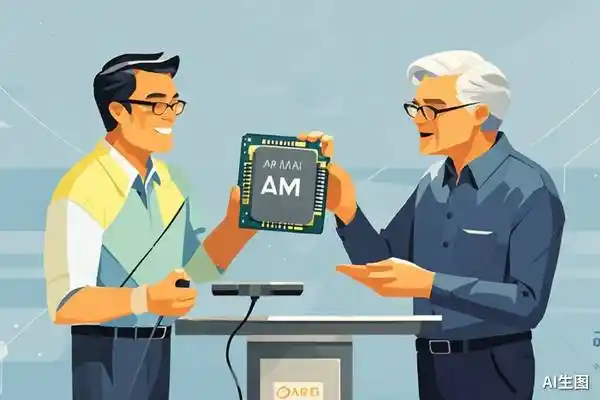
ByteDance Adopts Arm CPUs, Jensen Huang: So Sad I Didn't Buy Arm

**Summary:** At Computex 2026, Arm CEO Rene Haas announced that ByteDance and Oracle have adopted Arm's self-designed Arm AGI data center CPU. The company expects significant revenue growth from this product, projecting $20 billion in demand for the 2027/2028 fiscal years. Haas noted that restricting AI-capable CPUs from the US to China is nearly impossible due to their widespread applications. Arm's stock has surged dramatically this year, notably rising 16% after NVIDIA's Arm-based Vera CPU and RTX Spark announcements. A highlight was the informal, humorous on-stage conversation between Haas and NVIDIA CEO Jensen Huang. Huang joked about NVIDIA's failed attempt to acquire Arm and playfully lamented selling his Arm shares. Both executives showed a clear sense of camaraderie and shared regret over the missed merger. Key technical topics were discussed: 1. **AI PC Design:** Huang explained NVIDIA's RTX Spark superchip (with a 20-core Arm CPU) is designed for future AI agents that will autonomously run and use tools on PCs, blending local and cloud processing. 2. **Agent vs. OS:** Huang emphasized the operating system remains crucial, as AI agents rely on its APIs and tools to function. 3. **Growth Constraints:** He identified the shift to "useful AI" that generates profitable tokens as a primary driver for immense, almost limitless, computational demand. Haas outlined Arm's strategy across PC and data centers. For PCs, Arm collaborates with partners like NVIDIA and MediaTek, offering its compute subsystem (CSS) for custom SoCs. In data centers, its Arm AGI CPU (built on TSMC's 3nm process) has gained major partners including OpenAI, Meta, and now ByteDance and Oracle. Arm presented a multi-year roadmap for its in-house CPU line. The article concludes that while GPUs dominated the AI training race, the explosion of AI agents is shifting significant focus to CPUs for inference, state management, and tool orchestration. The industry is trending towards vertical integration, with companies like cloud providers designing chips and chip/IP firms offering full solutions, all competing to deliver more efficient computing per watt.

marsbitHá 13m

ByteDance Adopts Arm CPUs, Jensen Huang: So Sad I Didn't Buy Arm

marsbitHá 13m

New Wall Street Play: Yen Shorts Still Adding, But Japan Stocks Don't Rely on Carry Trade Unwinding

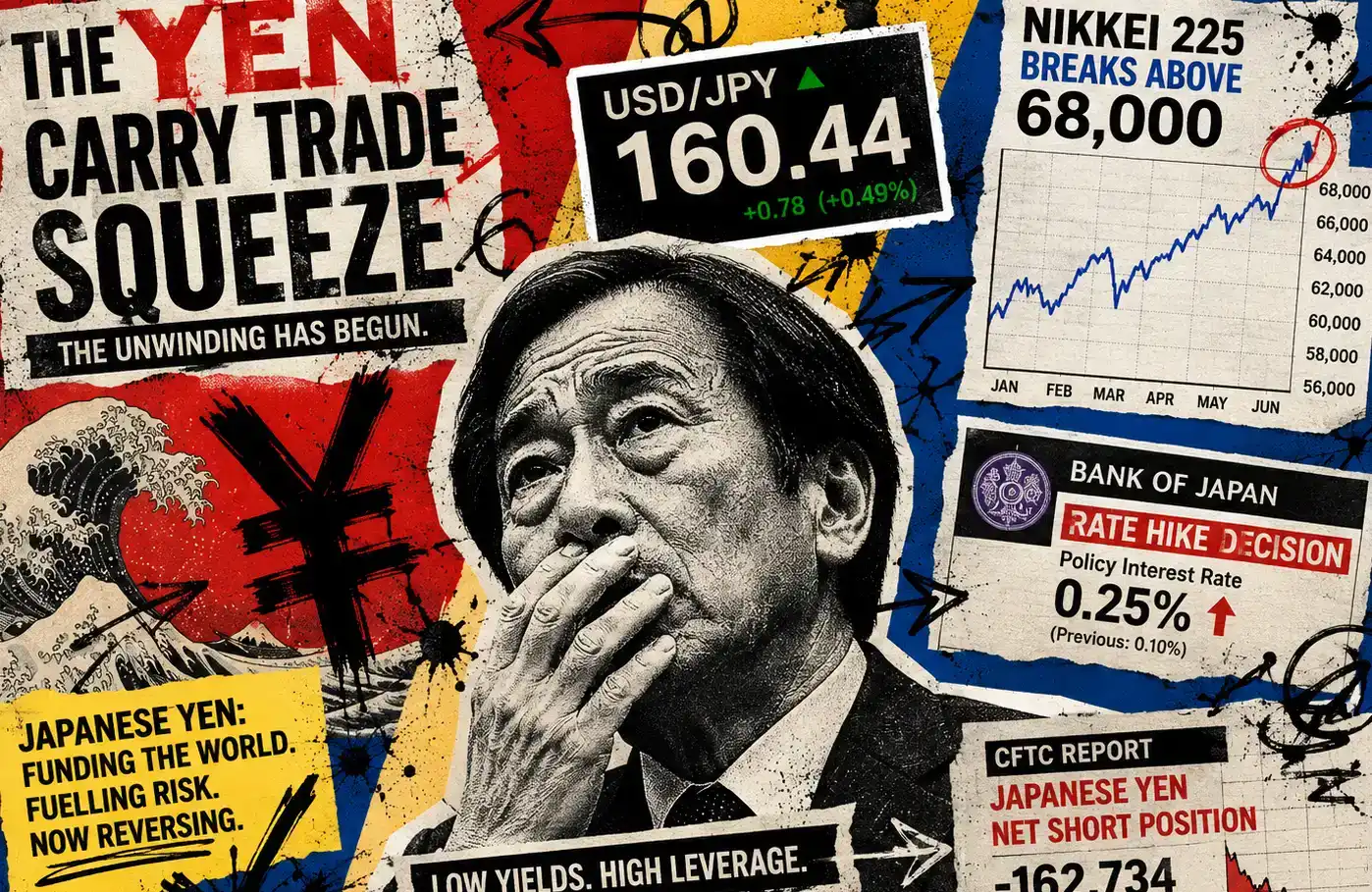
On June 3rd, USD/JPY hit 160.44, its highest level since July 2024, while the Nikkei 225 surged past 68,000 points. Contrary to popular narratives of an imminent "carry trade unwind" akin to August 2024, data reveals a more complex picture. Speculative net short positions in yen futures have actually increased, reaching -114,667 contracts by late May, suggesting traders are doubling down rather than retreating. Meanwhile, Japan's Finance Ministry conducted its largest-ever single-round FX intervention (11.73 trillion yen) in April-May but failed to hold the 160 yen line. The Nikkei's rally is not driven by carry trade dynamics. Foreign investors are aggressively buying Japanese stocks, with net purchases in 2026 running nearly 16 times higher than 2025 levels. This inflow is concentrated in AI and semiconductor-related stocks like SoftBank and Socionext, fueled by positive sector outlooks, rather than being a flight from unwinding yen shorts. Furthermore, the Nikkei has continued climbing despite the Bank of Japan's (BOJ) rate hikes to 0.75%. This disconnect exists because the current equity boom is fueled by AI-driven foreign investment, not reliant on cheap yen funding. However, this relationship remains fragile. Should the BOJ hike rates further (e.g., to 1.0%) while dollar weakness increases carry trade costs, the trajectories of the yen and Japanese stocks could reconverge, potentially triggering volatility.

marsbitHá 17m

New Wall Street Play: Yen Shorts Still Adding, But Japan Stocks Don't Rely on Carry Trade Unwinding

marsbitHá 17m

Broadcom's Q3 Guidance Misses Expectations by $12 Billion, After-Hours Trading Plummets Over 13%, AI Narrative "Cooling"?

On June 3, Broadcom released record Q2 FY26 results with revenue of $22.19B, up 48% YoY, and AI chip sales of $10.8B, up 143%. Adjusted EPS of $2.44 beat estimates. However, its Q3 AI semiconductor revenue guidance of $16B, while up over 200% YoY, fell roughly $1.2B (7%) short of analyst consensus expectations of $17.2B. This miss, coupled with slightly weaker-than-expected software revenue, triggered a severe market reaction. CEO Hock Tan maintained the FY26 AI revenue outlook of over $100B but did not raise it, disappointing investors who had priced in more robust growth. The stock plummeted over 13% in after-hours trading, erasing roughly $270B in market cap. The sell-off extended to peers like Marvell. A key concern for markets, particularly for Chinese optical module suppliers, was Tan's comment that the contribution of AI networking (e.g., Ethernet switches, optical interconnect chips) to AI revenue, currently near 40%, is expected to normalize to around 30% over time, signaling a potential peak in growth for that segment. Despite the guidance shortfall, Tan reiterated that AI demand remains "insatiable" and reaffirmed the long-term target of exceeding $100B in AI revenue by FY27. The reaction highlights the heightened sensitivity and premium valuation placed on AI-exposed stocks, where anything less than stellar guidance can prompt significant profit-taking. The broader question is whether this represents a cooling AI narrative or a correction in overstretched valuations.

marsbitHá 17m

Broadcom's Q3 Guidance Misses Expectations by $12 Billion, After-Hours Trading Plummets Over 13%, AI Narrative "Cooling"?

marsbitHá 17m

Trading

Spot
Futuros
活动图片