BTC can remain sturdy in the final days of 2022 despite this let down from miners

AmbcryptoPublicado em 2022-12-19Última atualização em 2022-12-19

Resumo

BTC miners have been experiencing an uptrend in hashrate and difficulty with the revenue not corresponding. BTC price will not be impacted by miners sell-off, should it ever occur.

Over the last few days, Bitcoin [BTC] holders have been worried about the coin’s price declining further due to miners selling their holdings. How much of the BTC supply do miners own, and is it enough to impact the market in the event of a sell-off?

""

Bitcoin declines

""

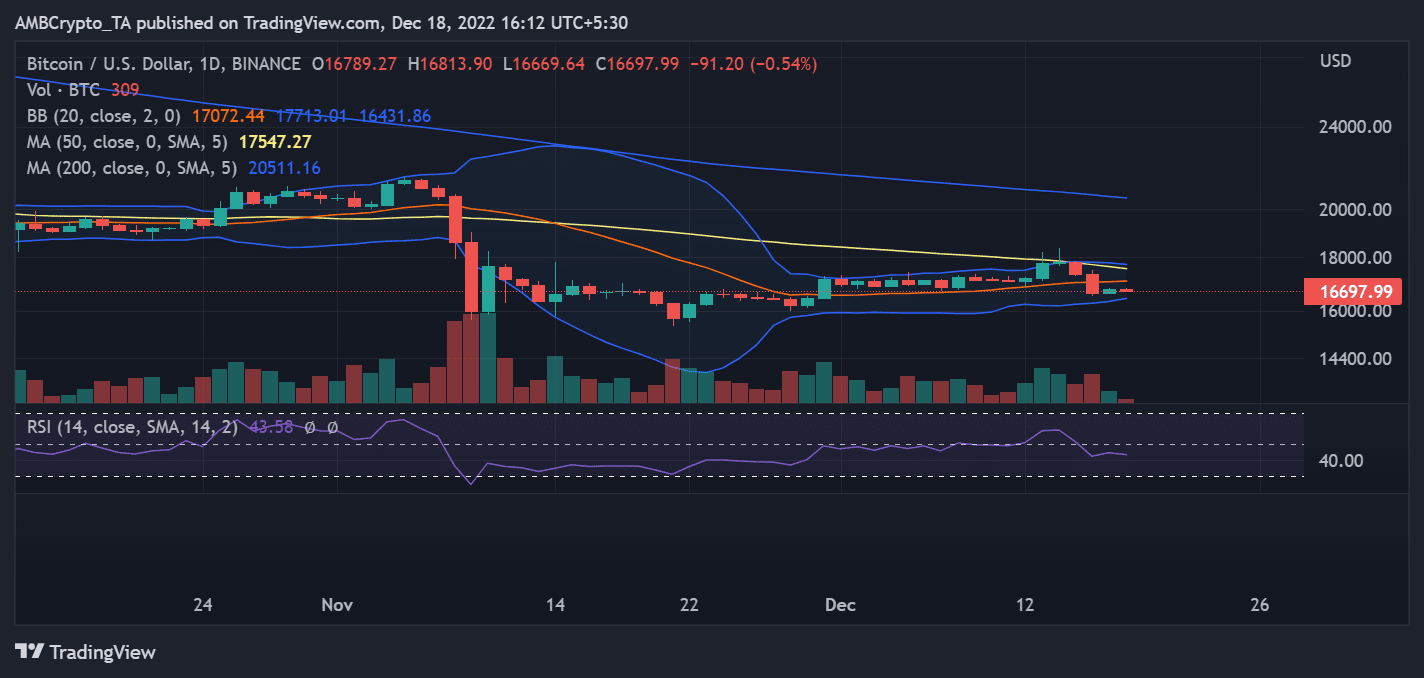
Bitcoin rose to around $18,000 on 13 December, raising hopes for where the price may go by the end of 2022. However, following the release of the FOMC report, the price fell, and at the time of writing, BTC was trading at about $16,000.

""

According to the location of the Relative Strength Index (RSI) metric on the TradingView daily timeframe chart, BTC was in a negative trend. As of the time of this writing, the RSI was below the 50 line. What does this signify in terms of mining profits?
Source: TradingView

""

Network difficulty and hashrate up, revenue down

""

The Network Difficulty indicator revealed a sharp rise in the amount of network difficulty required to process blocks and mine BTC. The network difficulty reached an all-time high of over 36 Terahash from late November to early December, setting a record for the year.

""

The indicator was high even though it decreased at the time of writing, sitting around 34k. Additionally, an analysis of the total hashrate statistic revealed that it had experienced an upward trend.

""

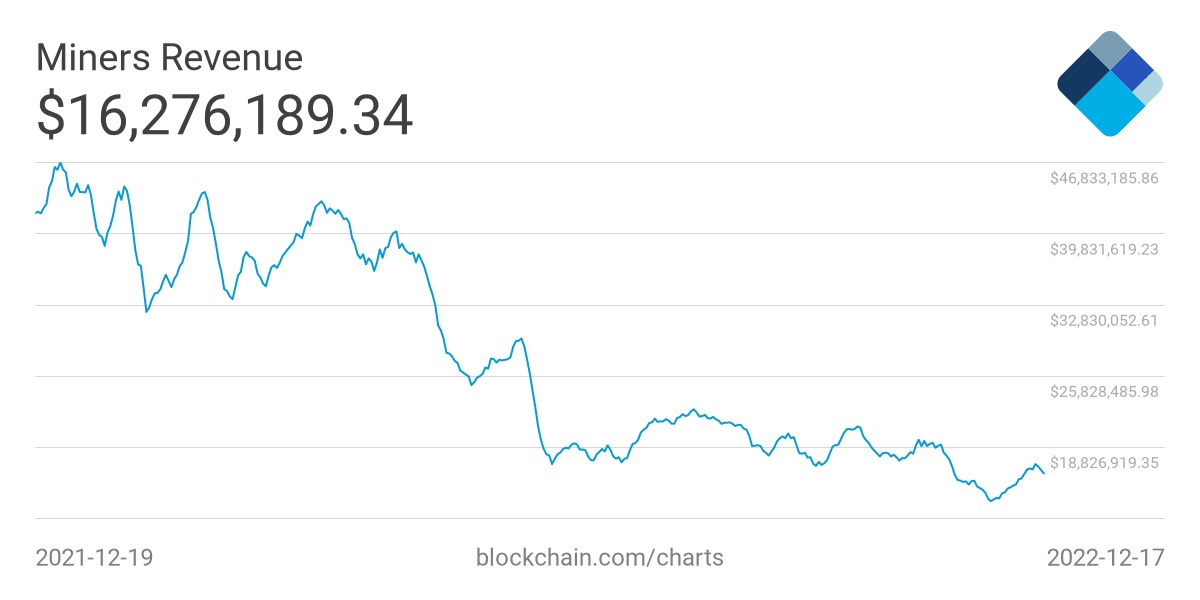
The profitability of mining had been trending in the other direction over the months, despite increases in hashrate and network difficulties. The statistic revealed that miners’ revenue has been dropping in recent months. The income was about $44,000 as of January.

""

However, as of the most recent data, the revenue had dropped to about $16, making it less viable to resolve blocks and generate BTCs. The revenue decreased further due to Bitcoin’s ongoing decline, which has led to miners’ fears of a sell-off. But what impact could their sell-off have on the market?
Source: Blockchain.com

""

Miners reserve vs circulating supply

""

Looking at the volume may help determine the effect that a selloff may have on BTC. At the time of writing, miners held over 16,000 BTC, worth about $1.8 million, according to data from CryptoQuant.

""

A chart observation also revealed that the reserve had decreased over time, which is understandable considering the reduction in the price of BTC.
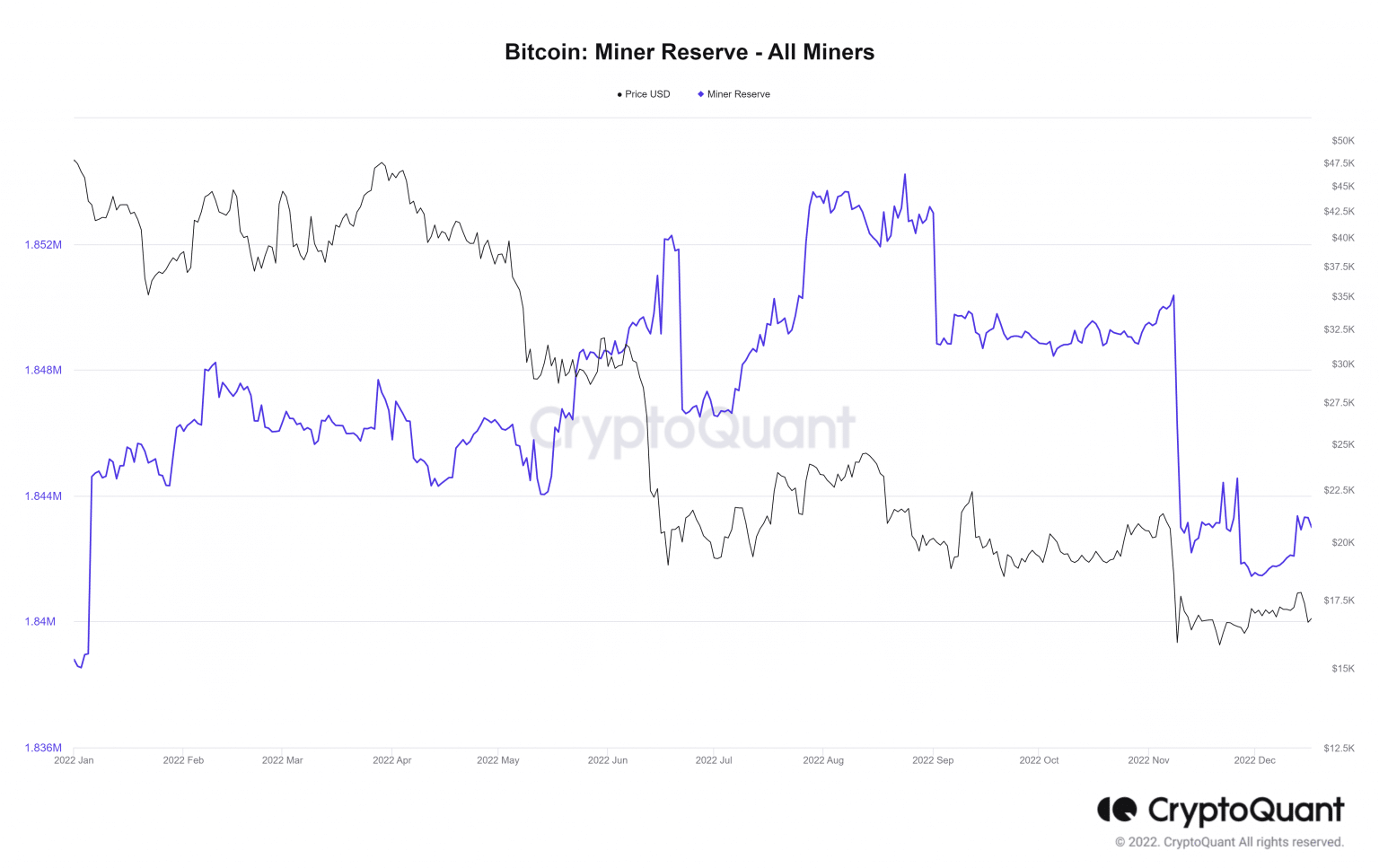
Source: CryptoQuant

""

Data from CoinMarketcap also indicated that there were currently approximately 19.2 million Bitcoins in circulation, which, at the current price, would be worth almost $300 billion. Therefore, if there is a sell-off of miners, the impact will be negligible, if any.

""

A further reduction in the price of BTC could be a possibility because, historically, equities and cryptocurrencies usually decline during this market period. This fall won’t be caused by a sell-off among miners, though.

""

365-days investors at a loss

""

An analysis of BTC’s profitability for investors who held it over the previous 365 days revealed that they were holding at a loss. The Market Value to Realized Value Ratio (MVRV) revealed that holders have been holding at a loss of over 32% over the previous 365 days.
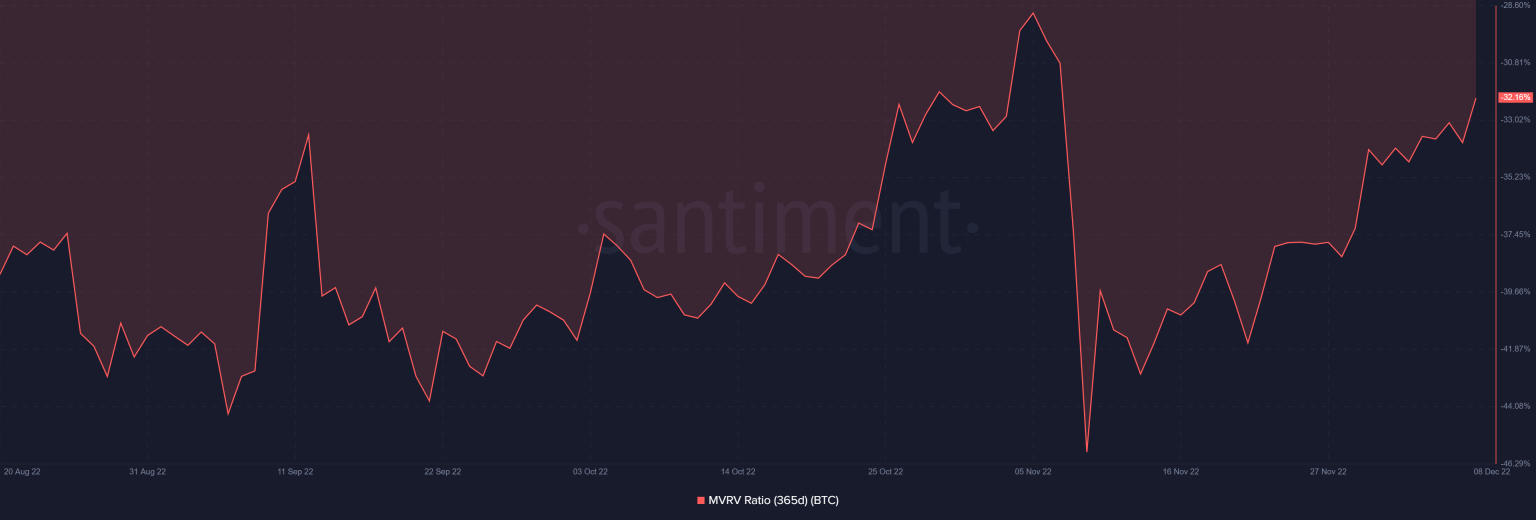
Source: Santiment


Leituras Relacionadas

Pi Network Price Forecast for August 2026: Will the August 11th Deadline Become a Catalyst for PI's Recovery?

Pi Network Price Forecast for August 2026: Will the August 11 Deadline Catalyze a Recovery? Pi Network (PI) traded at $0.0830 on July 30, up 1.13%, attempting to stabilize above its all-time low. The price is rebounding from the lower Bollinger Band around $0.07172. All key EMAs (20, 50, 100, 200-day) remain in a downtrend above the current price, with the 20-day EMA at $0.08810 acting as the first significant resistance level to confirm a recovery. August presents two key narratives. First, the Pi Core Team launched Protocol 26 with a hard deadline of August 11 for all node operators to upgrade; failure to do so results in disconnection. This is the final precursor to Protocol 27, a major technical upgrade planned for 2026. Second, a community debate challenges the widespread "GCV" (Global Consensus Value) concept, with a member stating there is no official GCV mechanism and that Mainnet apps price services independently. This could pressure price if holders selling on disillusionment. The 10-day price forecast table suggests a range of $0.072-$0.095 for early August amid Protocol 26 deadline pressure, $0.080-$0.110 in mid-August post-deadline clarity, and $0.085-$0.125 in late August, pending broader crypto market direction. The bullish case requires smooth Protocol 26 migration, clear Protocol 27 announcement, resolution of the GCV debate without major holder exits, and a close above the 20-day EMA. The bearish scenario involves node upgrade difficulties, GCV-related selling pressure, continued supply pressure from 775.8 million PI scheduled to unlock by December, and a fall back to or below the $0.07172 support zone.

cryptonews.ruHá 9m

Pi Network Price Forecast for August 2026: Will the August 11th Deadline Become a Catalyst for PI's Recovery?

cryptonews.ruHá 9m

Brale Claims New Protocol Can Eliminate a Major Obstacle to Scaling Custom Tokens

Stablecoin infrastructure firm Brale is launching a compatibility protocol, called ION, designed to solve a key bottleneck in the industry: moving the rapidly growing number of custom-branded stablecoins across different blockchains. The protocol allows participating stablecoins to move between blockchains by burning tokens on one network and minting an equivalent amount on another. Unlike most blockchain bridges, this model does not require pre-funded liquidity pools in each supported chain. While the $300 billion stablecoin market is dominated by Tether (USDT) and Circle’s USDC, a wave of new entrants—including banks, fintechs, crypto firms, and asset managers—are issuing their own tokens for payments, settlements, and tokenized assets. Over 350 such asset-pegged coins are already tracked, highlighting the need for infrastructure to connect this increasingly fragmented ecosystem. Brale, which supports over 100 stablecoin programs across more than 30 blockchains, argues that current interoperability models relying on liquidity pools or wrapped tokens are not scalable. These models require locking up capital in every supported network, creating an unsustainable capital requirement as the number of stablecoins and blockchains grows. Brale's founder and CEO, Ben Miln, stated that "liquidity between stablecoin programs is the No. 1 barrier to scaling individual stablecoins," noting there isn't enough capital in the world to solve the problem via liquidity pools. ION's burn-and-mint approach, similar to Circle's Cross-Chain Transfer Protocol (CCTP) but extended to any participating issuer, aims to provide a scalable alternative. The protocol will debut initially on testnet with partners including Monad, Rain, Coinflow, Turnkey, Etherfuse, Spark, and Canton.

cryptonews.ruHá 19m

Brale Claims New Protocol Can Eliminate a Major Obstacle to Scaling Custom Tokens

cryptonews.ruHá 19m

Trading

Spot
活动图片