Research: Miners sent 57K Bitcoin to exchanges in 2022; selling pressure decreasing

cryptoslatePublicado em 2022-12-19Última atualização em 2022-12-19

Resumo

On-chain data shows miners have been capitulating en masse throughout the year. However, this doesn't mean that they have been selling all of their BTC.

This year hasn’t been kind to Bitcoin miners as the invasion of Ukraine in February 2022 triggered a global energy crisis, pushing mining costs through the roof.

”“

In addition, the collapse of Luna in June tanked Bitcoin’s price to a two-year low, wiping out the little profitability miners had left.

”“

After a challenging summer with skyrocketing electricity prices, miners welcomed winter scarred by the FTX fallout and even more uncertain prices.

”“

The 2022 crisis hit both large and small mining operations. Large, publicly-listed mining companies were the ones hit the worst, as a hugely profitable 2021 led many to take on debt and embark on expensive expansion projects.

”“

The struggle miners have been through isn’t anecdotal – on-chain data shows an incredibly stressful year, according to CryptoSlate’s analysis.

”“

Miner revenue per Exahash has been dropping sharply since the beginning of the year. Revenue denominated in USD has seen significantly more volatility, spelling trouble for those that decided to sell their BTC holdings.
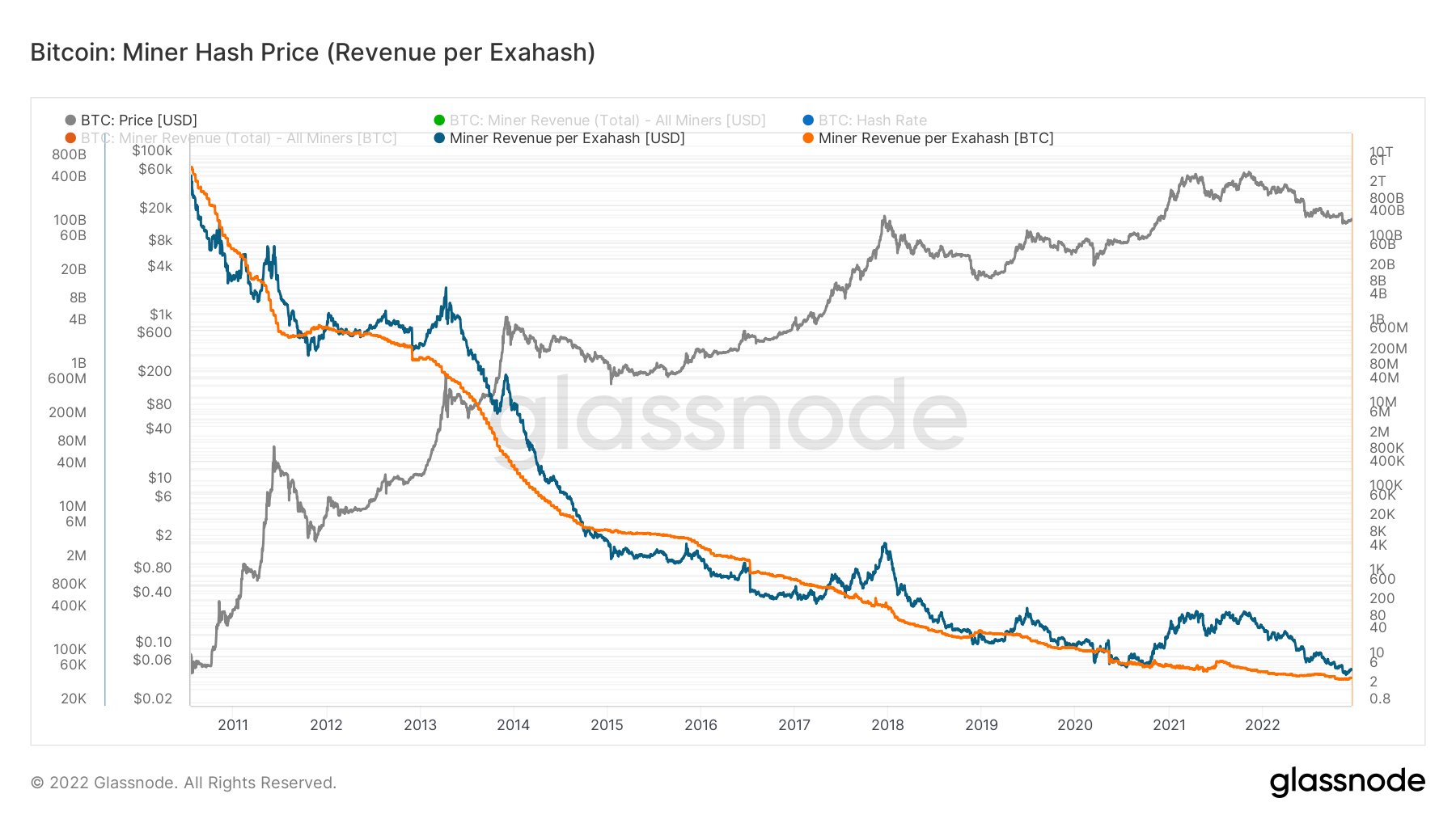
bitcoin miner revenue per exahash

Graph showing miner revenue per Exahash (Source: Glassnode)

”“

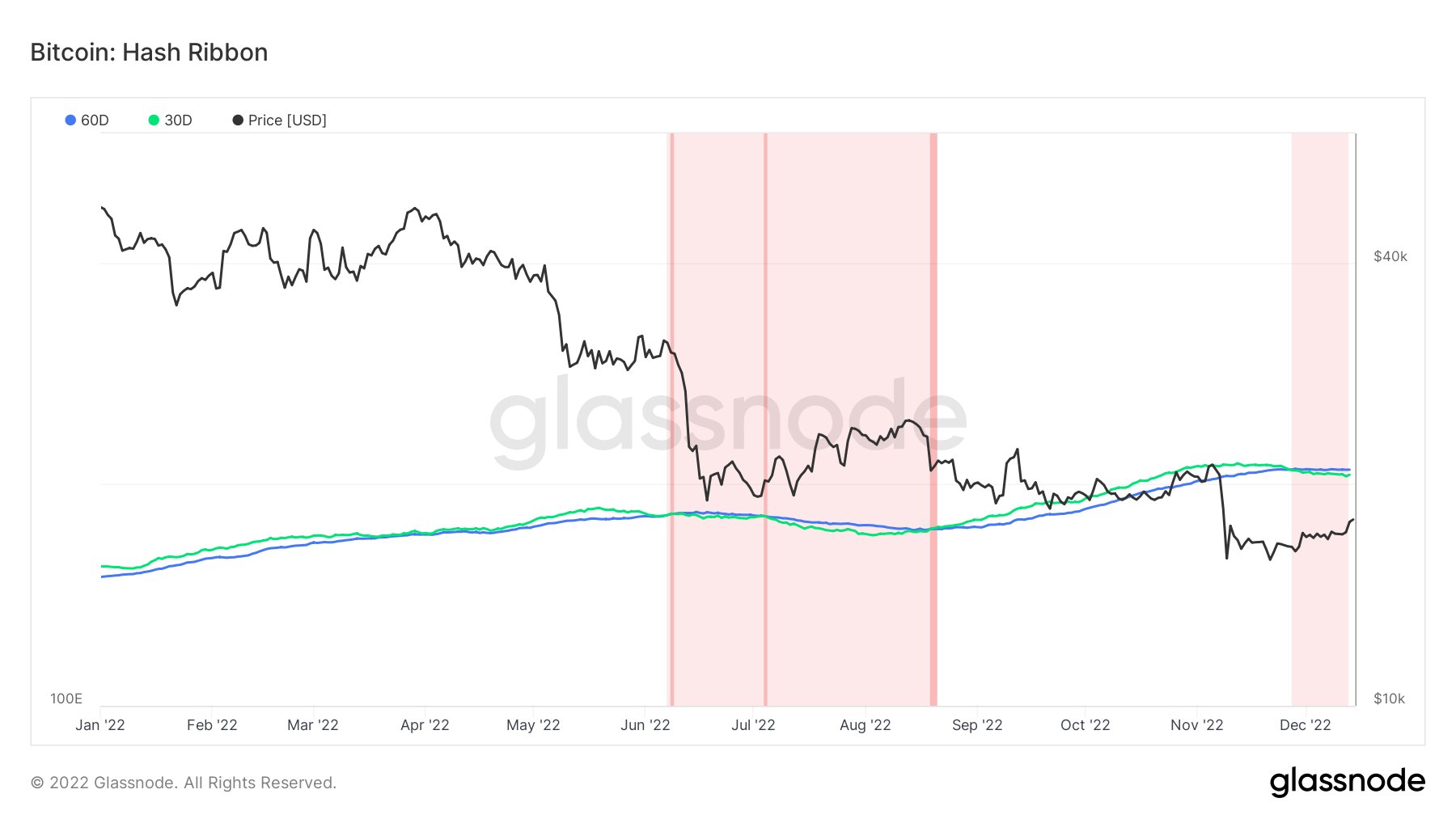
Looking at hash ribbons further confirms this trend. The metric analyzes the 30-day moving average and the 60-day moving average of the Bitcoin hash rate to determine when miners capitulate. When the 30-day MA drops below the 60-day MA, capitulation begins as Bitcoin becomes too expensive to mine. When the trend reverses, Bitcoin mining returns to being profitable.

”“

Since the beginning of the year, the market has seen three instances of these moving averages crossing — in June, July, and August. And now, the beginning of December saw the fourth reversal of moving averages, indicating another capitulation has begun.
bitcoin hash ribbons

Graph showing Bitcoin hash ribbons in 2022 (Source: Glassnode)

”“

On-chain data clearly shows miners have been capitulating en masse throughout the year. However, this doesn’t mean that they have been selling all their BTC.

”“

Data analyzed by CryptoSlate shows that there has actually been a notable decrease in the amount of BTC miners have been selling since the beginning of the year.

”“

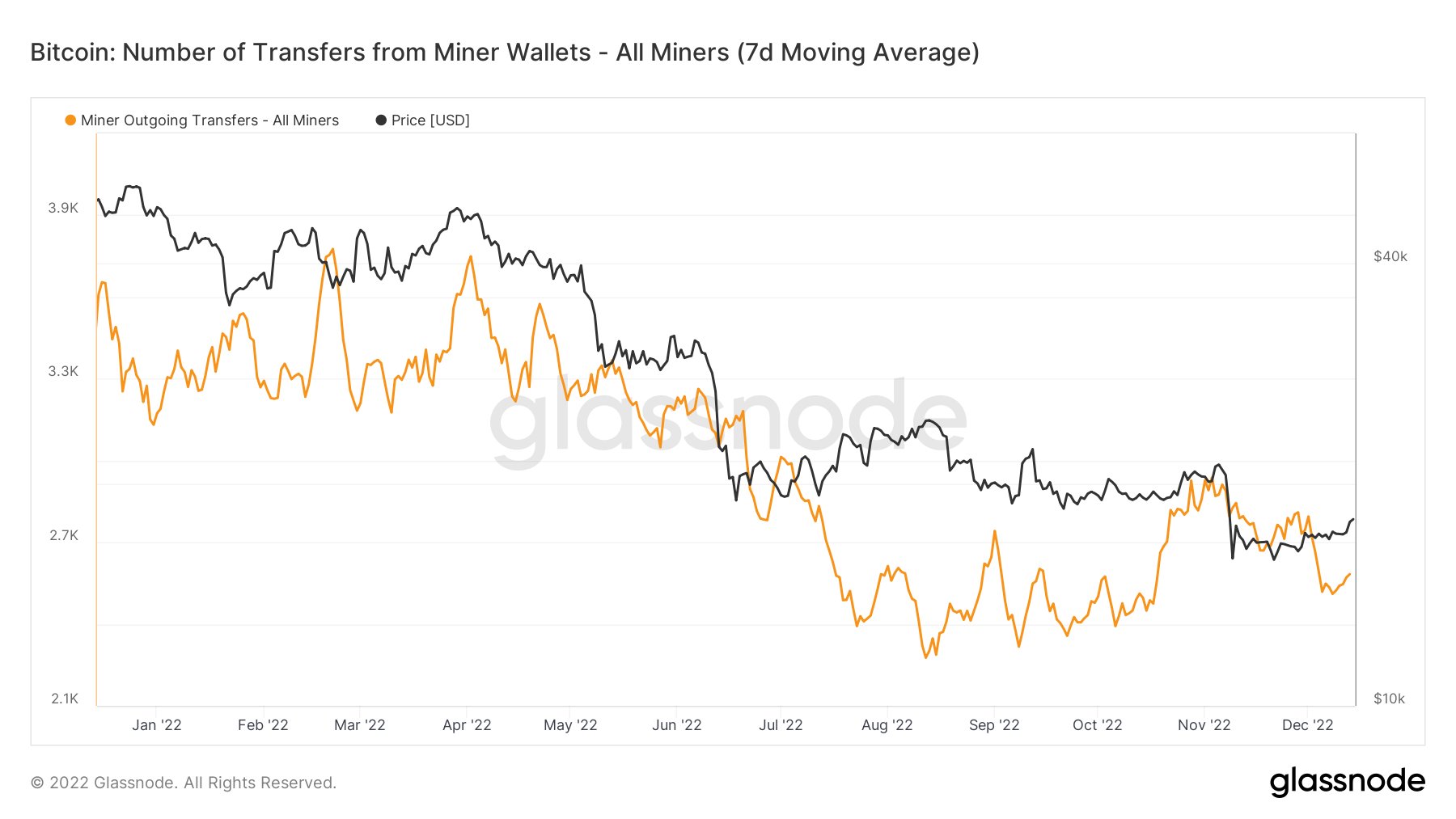
Looking at the number of outgoing transactions from miner wallets in 2022 reveals a decreasing selling pressure. Outside of a short-lived spike in outgoing transfers in mid-November, the trend has been steadily declining.
outgoing transfers from miner wallets

Graph showing the number of outgoing transfers from miner wallets in 2022 (Source: Glassnode)

”“

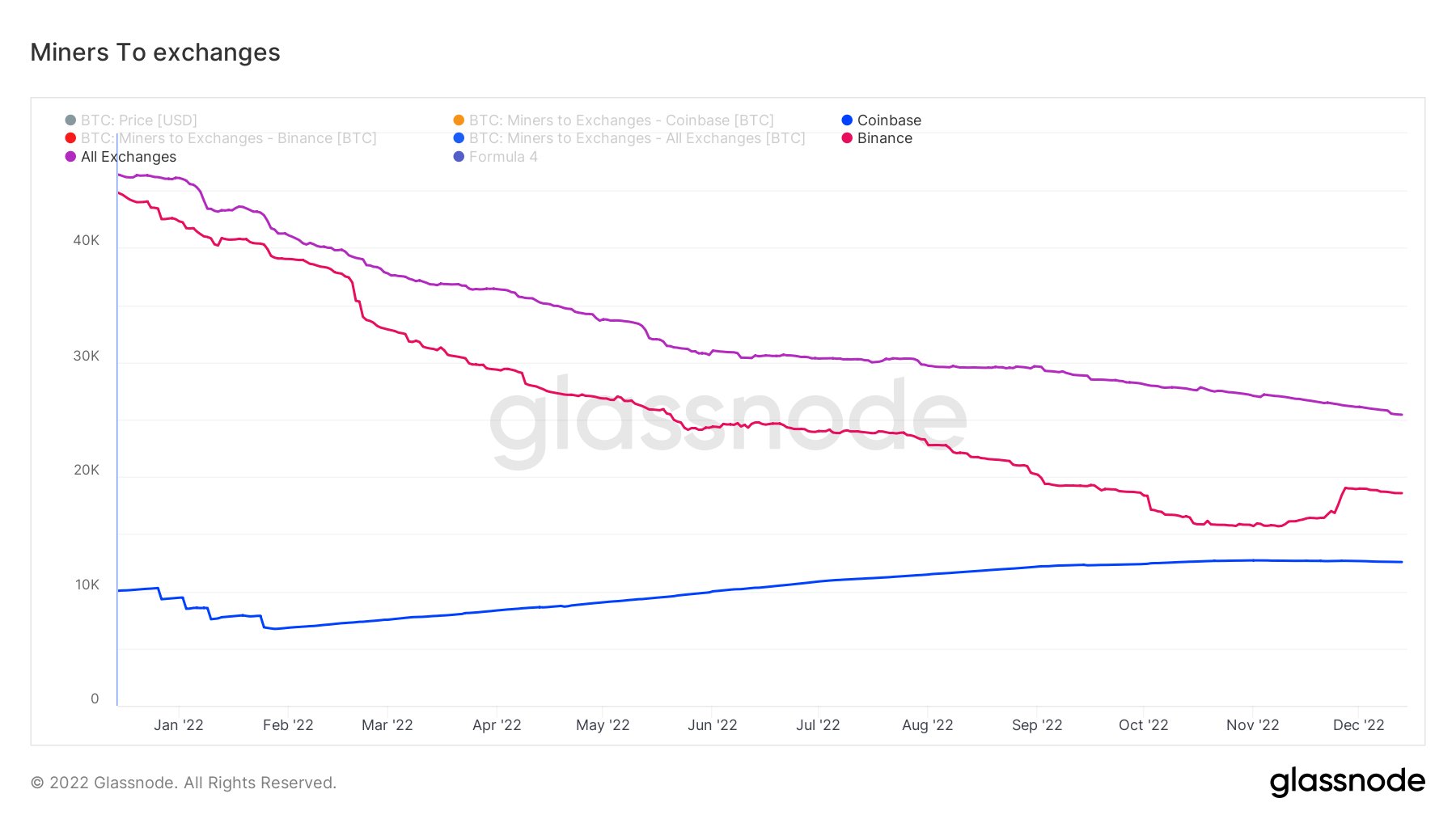
Transfers from miner wallets to exchanges further confirm this trend.

”“

Since the beginning of the year, miner transfers to all exchanges have been decreasing. Miners sent a total of around 57,000 BTC to exchanges in 2022, with 18,500 going to Binance and around 12,500 going to Coinbase.
miner transfers to exchanges

Graph showing transfers from miner wallets to exchanges in 2022 (Source: Glassnode)

”“

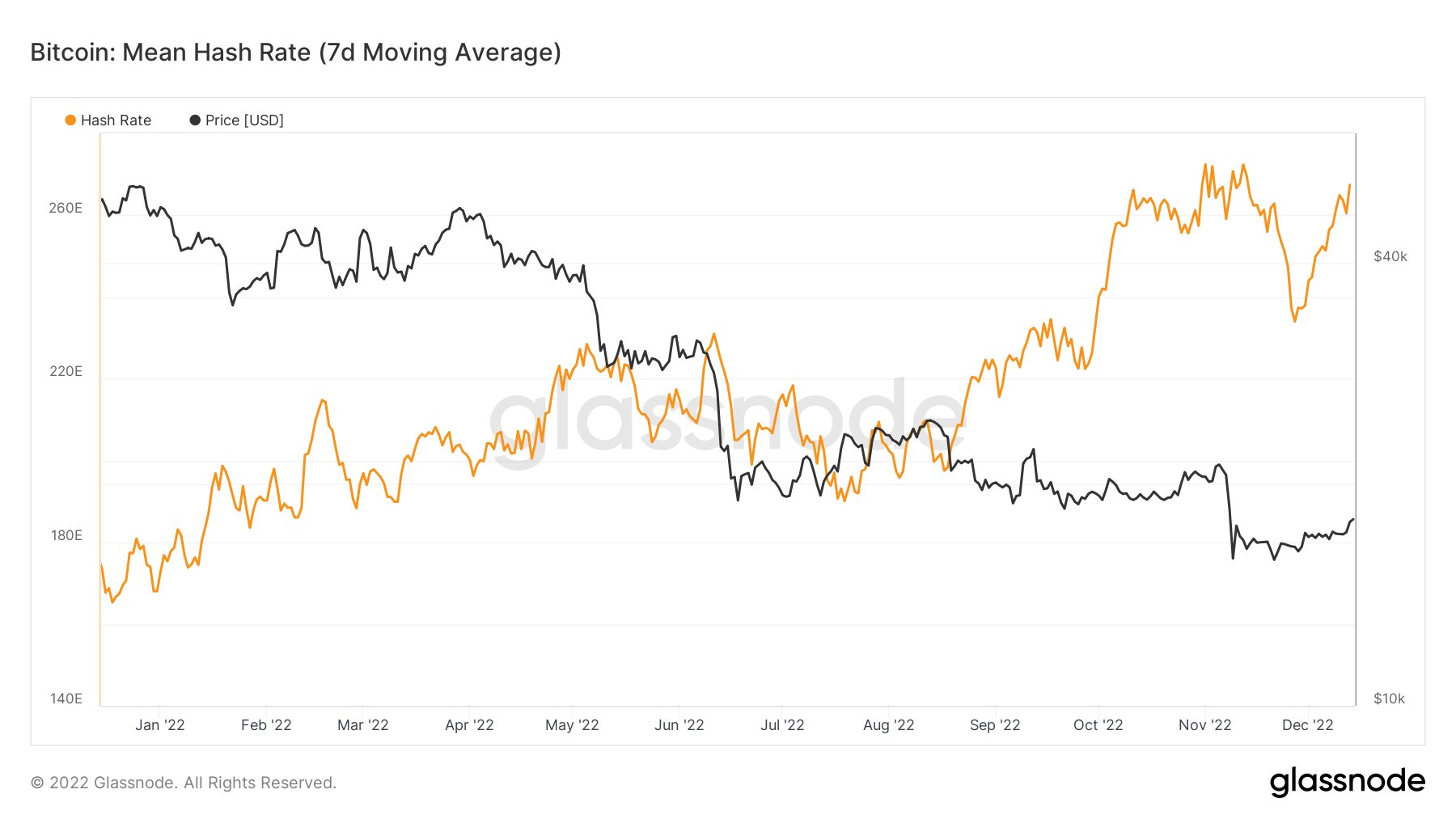
Diving deeper into Bitcoin’s hash rate reveals that the strength of the network hasn’t been compromised. The selling pressure driven up by rising electricity prices and skyrocketing hardware costs hasn’t affected the hash rate. In fact, Bitcoin’s hash rate is currently climbing back to the yearly high it recorded in mid-November — in spite of Bitcoin’s dropping price.
bitcoin price hash rate

Graph showing Bitcoin’s price and hash rate in 2022 (Source: Glassnode)

Leituras Relacionadas

Is the iPhone Moment for Embodied AI Coming Soon?

Is the "iPhone moment" for embodied AI approaching? This article, based on a roundtable discussion, presents expert insights on the current state and future of embodied AI. The consensus is that the pivotal "iPhone moment" is still distant. The field is likened to the "brick phone" era, with technology paths—such as VLA and world models—not yet converging. While robotic "motor skills" (e.g., walking) have matured, the "brain" (decision-making, generalization) remains far from commercial readiness. A major bottleneck is data: an estimated tens of millions of data points are needed for a breakthrough, but only around 500,000 currently exist globally. Currently, cost remains prohibitive for widespread labor replacement, making the economic case challenging. However, experts see a three-tiered market potential: a billion-level market for emotional companionship (e.g., entertainment, basic care), a trillion-level market for commercial services (e.g., guides, receptionists), and a massive, long-term opportunity for physical labor in factories and homes. The discussion suggests that while humanoid robots face hurdles, non-humanoid embodied AI applications (like existing service robots) can be deployed sooner. The ultimate vision is for AI to operate seamlessly in the physical world, not just behind screens. Regarding AI tools, participants noted their widespread use for boosting efficiency in coding, research, and teaching. However, they warned against over-reliance due to risks of AI "deception" and the erosion of critical thinking, emphasizing that core judgment must remain with humans. In summary, embodied AI holds immense promise but requires significant progress in brain models, data collection, and cost reduction before achieving its transformative potential. Its development is expected to be gradual, advancing through specific use cases rather than a single explosive moment.

marsbitHá 19m

Is the iPhone Moment for Embodied AI Coming Soon?

marsbitHá 19m

Wall Street Morning Report: U.S. Stocks Suffer Collective Setback, Apple Hits New High Against the Trend, Tonight's CPI and Waller's Hearing to Determine Interest Rate Path

Wall Street Morning Report: U.S. stocks fell collectively, while Apple hit a new record high. Key events including tonight's CPI data and Fed Chair Walsh's testimony will set the direction for interest rates. Markets experienced a sharp "risk-off" move due to escalating Middle East tensions and unexpected hawkish signals from the Federal Reserve. Major indices declined, with the Nasdaq Composite leading losses, down 1.55%. The VIX fear index surged over 14%. Geopolitical tensions spiked as the U.S. conducted consecutive airstrikes on Iran and announced a maritime blockade of Iranian ports, set to begin on July 15. This triggered a panic-driven rally in oil, with WTI crude soaring over 9% to breach $80 per barrel. Safe-haven flows bolstered the U.S. dollar and Treasury yields, while gold plunged nearly 3%, losing its $4,000 level. Rate markets now price a nearly 50% chance of a Fed rate hike in July, up significantly from prior expectations, following hawkish commentary from Fed Governor Waller. The tech sector, particularly AI-related stocks, faced intense selling pressure. The Philadelphia Semiconductor Index plunged 4%. Notable decliners included SK Hynix (down 9% on its second trading day as an ADR), Nvidia, AMD, and Intel. In contrast, Apple shares rose 0.63% to a record high, viewed as a stable haven away from the costly AI data center arms race. Key events to watch include the U.S. June CPI inflation data and Fed Chair Walsh's Congressional testimony tonight, which will critically influence the Fed's policy path. Major bank earnings also begin today. The formal implementation of the U.S. maritime blockade against Iran on July 15 and upcoming events like TSMC's Q2 earnings and a SpaceX Starship test flight remain in focus.

marsbitHá 1h

Wall Street Morning Report: U.S. Stocks Suffer Collective Setback, Apple Hits New High Against the Trend, Tonight's CPI and Waller's Hearing to Determine Interest Rate Path

marsbitHá 1h

Crude Oil Surges 10% in Intraday Trading! US Military Restores Blockade on Iran, Trump Warns of 'Heavy Blows' Tonight and Tomorrow, Imposes 20% Fee on Strait Shipping

Crude oil prices surged up to 10% intraday as tensions between the US and Iran escalated sharply. President Trump announced the reinstatement of a maritime blockade against Iran, targeting its ships and their customers, while stating the Strait of Hormuz would remain open to all other nations. He further declared that the US, as the "guardian" of the strait, would impose a 20% fee on all cargo transiting the strategic waterway to compensate for security costs. The US Central Command confirmed the naval blockade would commence on July 14 (GMT). Following Trump's statements, reports emerged of explosions near Iran's Larak Island and the port of Bandar Abbas, though Iranian authorities did not confirm their nature. Iran's Foreign Minister criticized the proposed 20% fee as excessive, asserting Iran's role as the guardian of the strait. An Iranian military spokesperson warned of a strong response to any unauthorized US interference in the waterway. The United Nations' International Maritime Organization (IMO) expressed opposition to charging tolls for passage through international straits, stating such measures lack legal foundation. Market reactions were pronounced, with Brent crude briefly surpassing $83 and WTI above $78. The situation intensified as Trump notified Congress of renewed hostilities with Iran, following US airstrikes on Iranian targets.

marsbitHá 1h

Crude Oil Surges 10% in Intraday Trading! US Military Restores Blockade on Iran, Trump Warns of 'Heavy Blows' Tonight and Tomorrow, Imposes 20% Fee on Strait Shipping

marsbitHá 1h

How to Regulate Single-Stock Leveraged ETFs? On Thursday, the Entire Market Is Watching This Korean Government Meeting

The highest-level economic coordination body in South Korea, the "F4" comprising the Ministry of Economy and Finance, the Financial Services Commission, the Bank of Korea, and the Financial Supervisory Service, will hold an emergency meeting on Thursday to discuss regulatory measures for single-stock leveraged ETFs. These products, launched just six weeks ago, have been widely blamed for exacerbating market volatility. The KOSPI's 8% plunge on Monday triggered the year's seventh trading halt, intensifying scrutiny. Regulators have expressed rare public regret over approving the products. FSS Governor Lee Bok-hyun stated he "regretted not doing everything possible to prevent" their introduction and acknowledged structural problems, citing massive retail investments and legal complications from a rushed rollout. Possible countermeasures under discussion include raising margin requirements, imposing daily price limits, and adjusting leverage caps. However, officials admit these may be temporary fixes. Data confirms the amplified volatility. Since the ETFs' launch, days with KOSPI moves exceeding 3% have nearly doubled. Trading halts have reached record levels, surpassing the 2008 financial crisis peak. The products allow 2x leveraged bets on giants like Samsung Electronics and SK Hynix. Their daily rebalancing to match returns is seen as mechanically fueling market swings. The outcome of Thursday's F4 meeting is highly anticipated, with expectations leaning towards stricter controls on leverage, investor access, or other structural constraints to curb the products' market impact.

marsbitHá 1h

How to Regulate Single-Stock Leveraged ETFs? On Thursday, the Entire Market Is Watching This Korean Government Meeting

marsbitHá 1h

Trading

Spot
活动图片