Ethereum’s pullback at this level offers an entry position for long trades

AmbcryptoPublicado em 2022-11-12Última atualização em 2022-11-12

Resumo

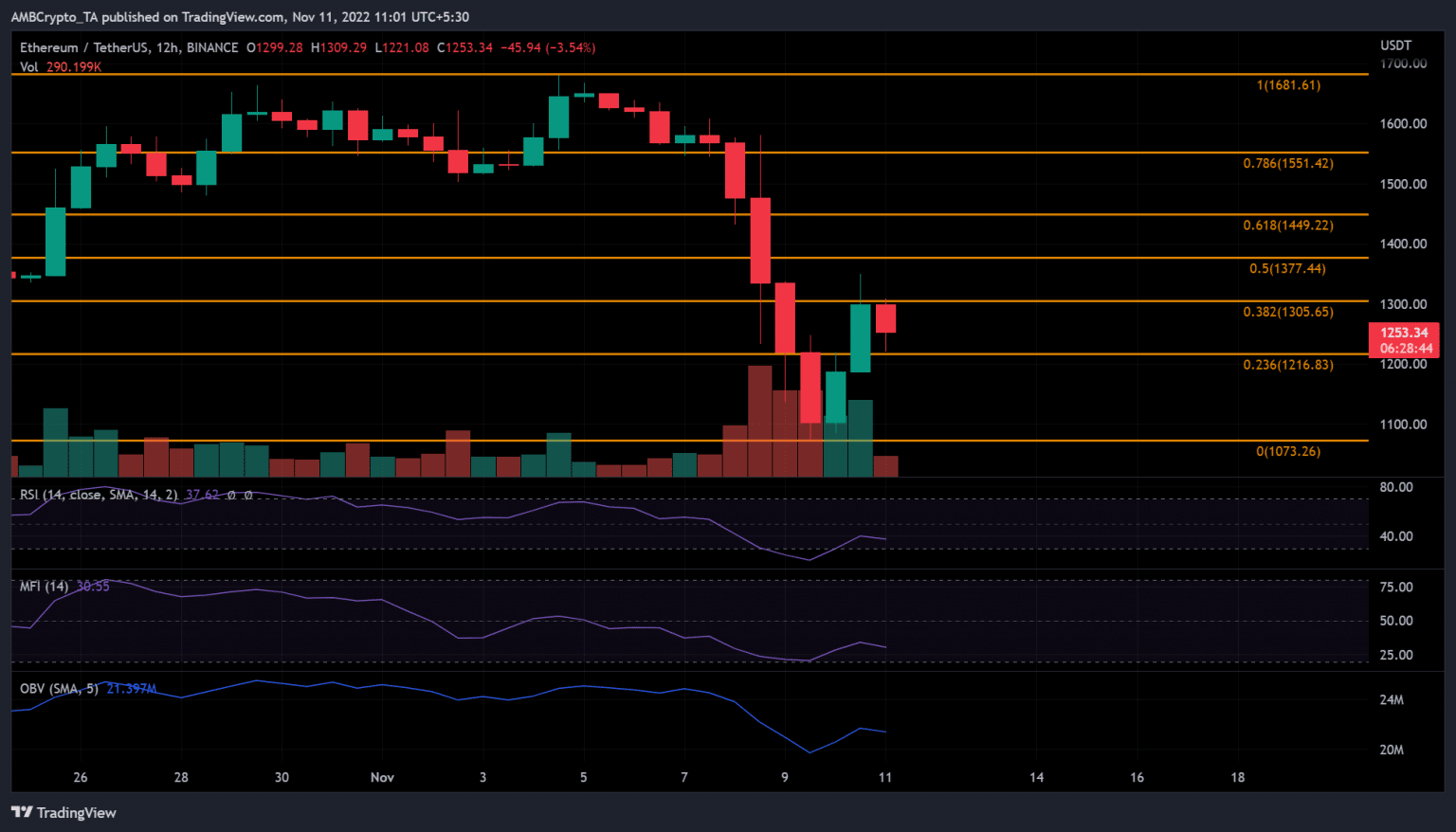
Ethereum is positively correlated to BTC. As such, it witnessed a sharp recovery from $1,182 after BTC pushed to the 17K mark. At press time, ETH was trading at $1,253 and nursing a price pullback to a Fib level that could offer buying opportunities.
Bitcoin (BTC) recovered from the 16.69K mark to 17K, injecting a lifeline into the industry. The king coin’s gains also boosted altcoins.

“”

Ethereum (ETH), the altcoin king, is positively correlated to BTC. As such, it witnessed a sharp recovery from $1,182 after BTC pushed to the 17K mark.

“”

At press time, ETH was trading at $1,253 and nursing a price pullback to a Fib level that could offer buying opportunities.

Source: TradingView

“”

BTC’s recovery nudged ETH into a price inflection, marking the zero Fib level as a support zone. At press time, ETH was healing off from a post-crash rally. We observed a price pullback on lower timeframe charts. The 12-hour timeframe chart exhibited the same trend.

“”

The resting zone has been established at the 0.236 Fib level ($1216). The RSI retraced from the oversold territory, showing a reducing sell pressure. Correspondingly, the MFI also retraced from the oversold entrance level, showing accumulation was well underway for buyers. As such, $1,216 presents long trade entry positions with $1305 and $1307 as targets.

“”

The bullish inclination only holds if bulls can unleash high buying pressure in the coming days or hours to sustain the upward momentum. At press time, the OBV showed a downtick after a recent upside, thus showing uncertainty about incoming volumes that could dictate a strong sell or buy pressure.

“”

A candlestick close below $1,073 would invalidate the bullish inclination. ETH’s drop beyond this level could extend it further downwards if bears gain leverage; hence, a stop loss below it is feasible.

“”

ETH active addresses increase after price recovery from $1000
Source: Glassnode

“”

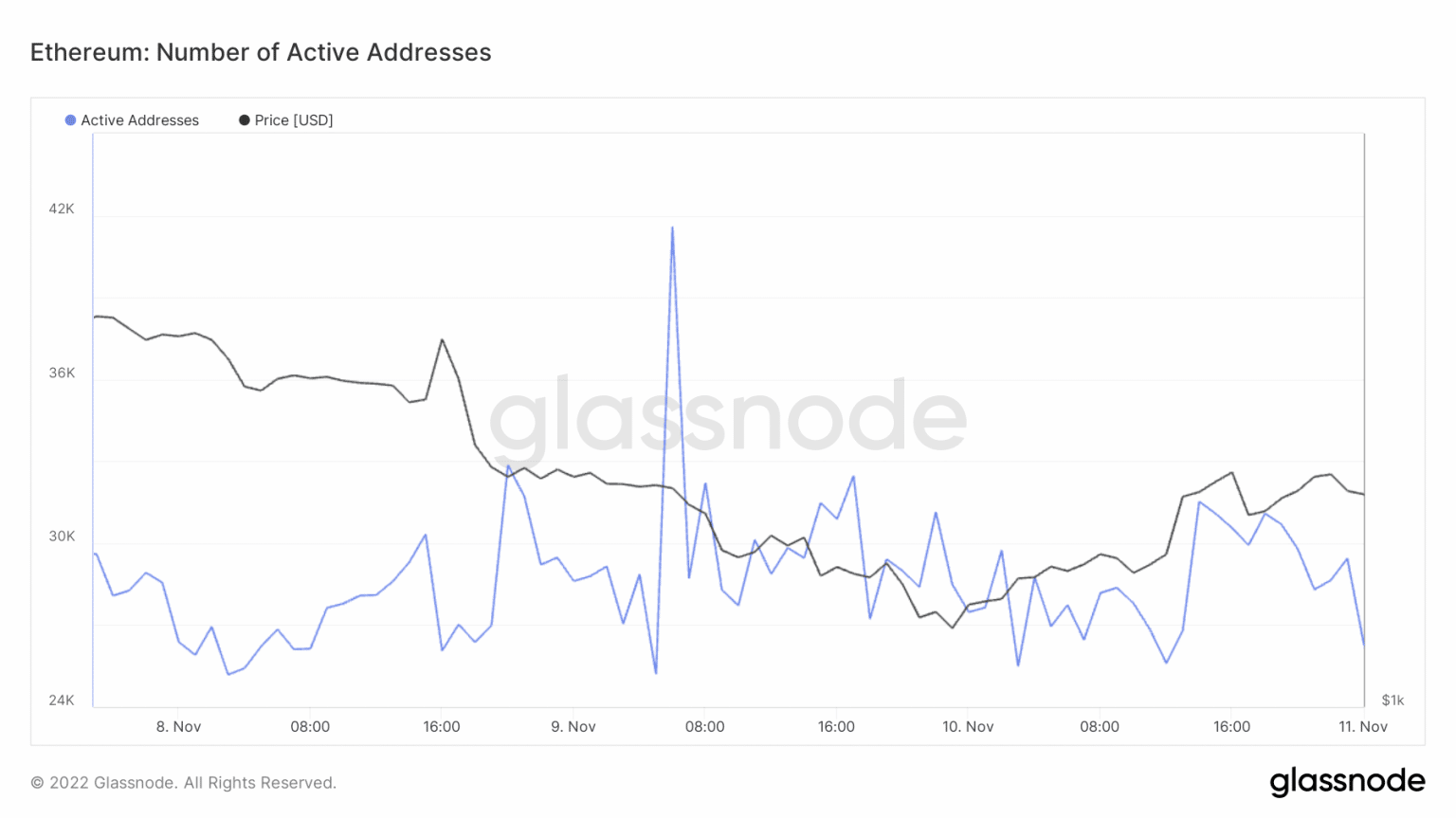
ETH’s active address increased after the sharp recovery from the $1,182 mark. This shows that more active addresses were involved in ETH trading when its price surged. However, at press time, ETH had dropped slightly to below $1,300, and active addresses were also reduced.

“”

The drop in active addresses likely indicates the current uncertainty on whether the ETH price will pump. ETH’s negatively weighted sentiment further confirmed this uncertainty, at the time of writing.

“”

Negative weighted sentiment exposes long-term ETH holders to more losses
Source: Santiment

“”

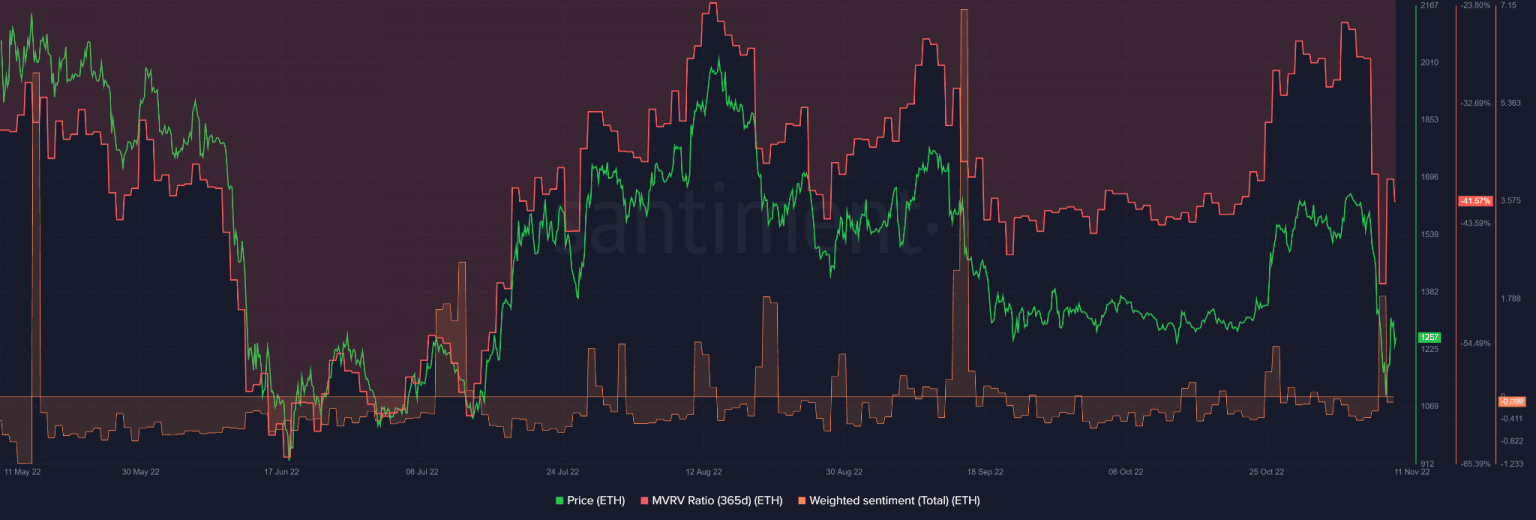
According to the on-chain analytics platform, Santiment, ETH’s weighted sentiment, slid into negative territory after enjoying a recent positive elevation. It means the aggregated sentiment around ETH was bearish, and a slight price drop is a testament to this.

“”

Unfortunately, the negative weighted sentiment is weighing down long-term ETH holders. The 365-day MVRV has been negative for most of the year, translating to losses.

“”

A bearish sentiment would extend the stay in the negative territory, exposing long-term ETH HODLers to more losses.

“”

A declining volume could deny bulls enough buying pressure
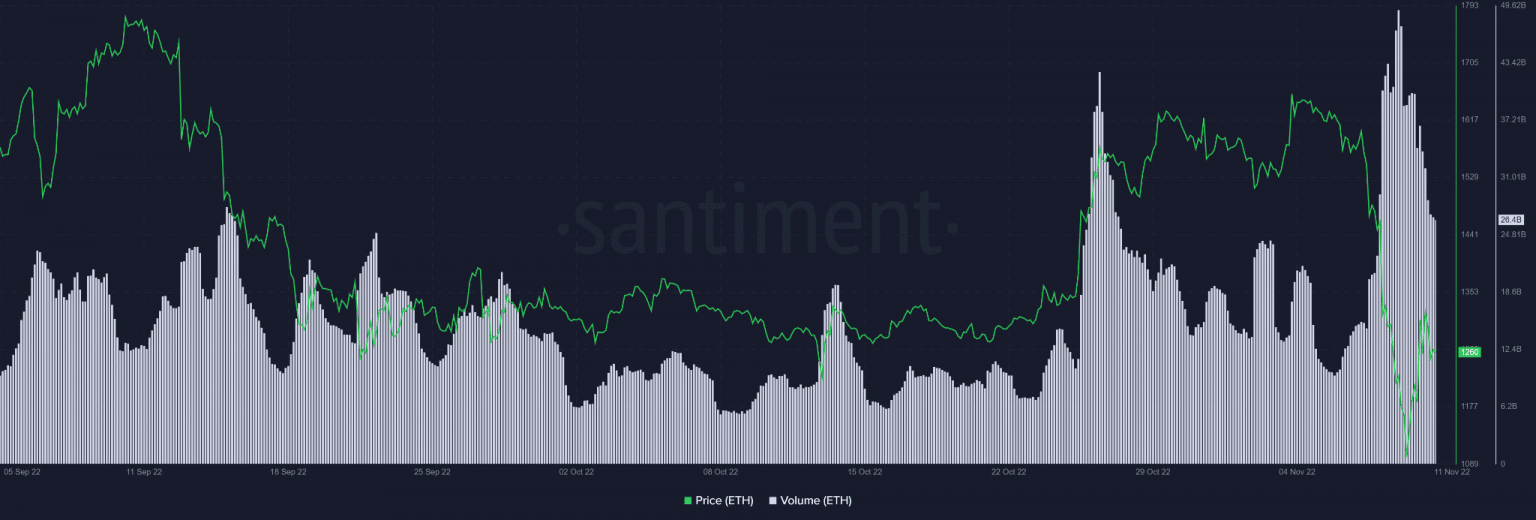
Source: Santiment

“”

The fall in volume, as shown by Santiment, could also undermine strong buying pressure to push the altcoin king upwards.

“”

Therefore, investors need to be patient and check if buying pressure can build in the coming days. Also, tracking BTC movement could give a clear direction on ETH’s next move.

Leituras Relacionadas

Net Profit Soars 1299.9%, Samsung's Q2 Reports the Most Profitable Quarter in History

Samsung Electronics posts record-breaking Q2 2026 results, driven primarily by explosive AI-driven demand for its semiconductor business. Revenue surged 130% year-on-year (YoY) to 171.5 trillion won, while operating profit skyrocketed 1,813.8% to 89.49 trillion won. Net profit reached 71.62 trillion won, a 1,299.9% increase YoY. The Device Solutions (DS) division, which includes memory chips, was the core engine, contributing over 99% of total operating profit. Sales for the DS unit hit a record 127.5 trillion won, with memory revenue reaching 120.8 trillion won, fueled by AI server demand for products like HBM. The company has begun mass production of next-generation HBM4. In contrast, the Device eXperience (DX) division, covering mobile phones and consumer electronics, reported an operating loss of 0.8 trillion won due to rising component costs, highlighting a significant performance split within the company. Other segments showed improvement: Samsung Display's profit rose to 0.7 trillion won, and Harman's profit recovered to 0.4 trillion won. Financially, Samsung's position strengthened dramatically, with cash and equivalents reaching 190 trillion won and operating cash flow hitting a record 105.1 trillion won. The company also engaged in significant share buybacks and dividend payments. Looking ahead, Samsung expects sustained strong demand from AI infrastructure, though acknowledges softer demand in some consumer segments.

marsbitHá 20m

Net Profit Soars 1299.9%, Samsung's Q2 Reports the Most Profitable Quarter in History

marsbitHá 20m

E Fund "Quits Drinking"

"Yi Fang Da 'Gives Up Alcohol'" - Summary The article analyzes the recent portfolio adjustments of star fund manager Zhang Kun, focusing on his flagship funds, the Yi Fang Da Blue Chip Select and Yi Fang Da Quality Select. The key trend highlighted is a significant and ongoing reduction in exposure to the consumer sector, particularly liquor (baijiu) stocks like Kweichow Moutai and Wuliangye, which were once core holdings. This shift is driven by several factors: a downturn in the consumer sector's business cycle post-pandemic, with slowing earnings growth for major players; a change in consumer behavior towards value over premium brands; and high channel inventory pressures, especially in the liquor industry. These fundamentals have led to a prolonged phase of valuation contraction for consumer stocks. Concurrently, market capital has rotated aggressively towards the high-growth technology sector, especially AI-related chains, which have dominated fund inflows. This style shift has further diminished the attractiveness of traditional consumer "core assets" for many funds. As a result, Zhang Kun's funds have drastically cut their consumer stock allocations. For example, the Blue Chip Select's baijiu holding proportion has fallen from over 40% to around 20%, and its overall top 10 holdings concentration dropped sharply. This mirrors a broader trend in the active equity fund industry, where allocations to consumer staples have plummeted to multi-year lows while technology holdings have surged. The article concludes that while the consumer sector's valuations are now at historical lows, offering some margin of safety, the fundamental outlook remains challenging due to weak macro consumption recovery and intense internal competition. Therefore, the sector is likely to see only sporadic rebounds rather than a sustained recovery, continuing to weigh on the performance of funds still heavily invested in it. Zhang Kun's timely reduction of Korean semiconductor holdings in his Asia Select fund amid a market crash is also noted as a contrast to his domestic strategy.

marsbitHá 49m

E Fund "Quits Drinking"

marsbitHá 49m

Trading

Spot
活动图片