[Special attention] Is there no pressure for APTOS price rise? Let's see the analysis

HuobiPublicado em 2022-10-27Última atualização em 2022-10-28

Resumo

After APTOS was launched into the mainstream exchanges, the market performance was strong and a breakthrough was planned.

The valuation of the public chain Aptos will reach 2.75 billion dollars if it is not online. The goal of the public chain Aptos is to build a scalable, secure, trusted and scalable smart contract platform.

Unlike Ethereum, which focuses on decentralization and security, Solana extends its performance to the extreme. Aptos tries to find a more balanced position between the two.

With the launch of the main network Aptos Autumn on October 17, the head exchanges simultaneously support the online trading of APT. The Layer1 public chain project APTOS expects that the TPS can reach 160000, and the project ushers in a period of rapid development.

It is worth noting that APTOS is an L1 blockchain, aiming to become the most secure and scalable blockchain in history. At the same time, Aptos was developed by former Meta employees, and its own popularity has become the focus of recent market attention. Of course, the core of its technological innovation is Move, which is based on Rust and can be said to be the fastest network application programming language in the world.

1. Price performance

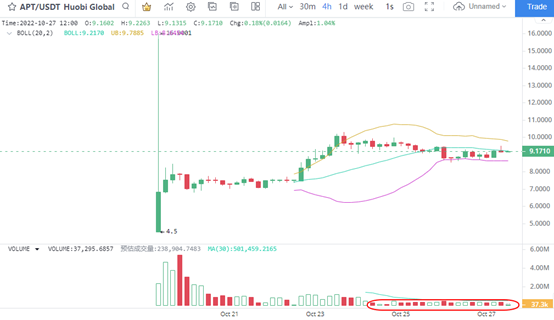
On October 19, after APTOS was listed and traded in Huabi Global, its price showed a strong performance. After rebounding from the daily level of $7.31, the price rose to the highest level of $10.29.
2. TVL value recovery

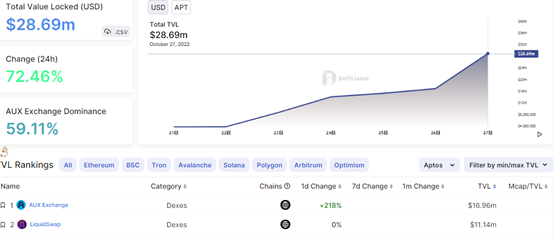
After APTOS was listed on the main exchange, its TVL on the chain also increased rapidly. According to the data on October 27, the data on the APTOS chain showed that there was a locked position worth US $28.69 million, an increase of 726% compared with the 3.47 million on October 21. Among them, AUX Exchange and LiquidSwap have the largest lock positions, reaching 16.96 million US dollars and 11.14 million US dollars, accounting for 97.9% of the total.
3. Aptos Token Economics

At 15:37 Taiwan time, Aptos officially announced its token economy overview on Twitter. The initial total supply of APT was 1 billion. The detailed token allocation is as follows:

Community:

51.02%, 510217359767 (510 million) pieces

Core contributors:

19.00%, 1900000000000 (190 million) pieces

Aptos Foundation:

16.50%, 165000000000 (165 million) pieces

investor:

13.48%, 134782640233 (134 million) pieces

Some 410217359767 (410 million) APTs of the community are held by the Aptos Foundation, and the remaining 100000000 (100 million) APTs are held by Aptos Labs.

In addition, the Aptos Foundation will distribute 410 million tokens within ten years in three types of situations:

125000000 APT (125 million) for ecosystem projects, grants and other community growth plans in support of community categories

5000000 APT to support Aptos Foundation's programs for foundation categories

The remaining 1/120 part of the community and foundation allocated is expected to be unlocked linearly every month in the next 10 years

The number of tokens held by investors is relatively small, accounting for 13.48% of the total number of tokens held, which is 134 million APTs.

From the perspective of the holding time of token holders, the lock in period of core contributors and investors is 4 years.

From the launch of the main network, all investors and current core contributors have a four-year unlocking period. The detailed unlocking conditions are as follows: no $APT will be unlocked in the first 12 months;

3/48 APTs will be unlocked every month from the 13th month to the 18th month (including the 18th month) after the release of the main website;

After the 19th month after the release of the main website, 1/48 APTs will be unlocked every month;

All APT tokens will be fully unlocked four years after the main network is launched.

Therefore, judging from the selling pressure, the market selling pressure of APT has not changed much since the launch of APT in major exchanges recently. In terms of trading volume, APT's trading volume after October 24 was in a shrinking state, which means that APT's price performance was relatively stable. From October 19 to October 24, APT continued to rise in volume, with the closing price rising by 9.32%. After the short-term shrinkage is over, we can continue to focus on low absorption opportunities and wait for the price to break through.
Leituras Relacionadas

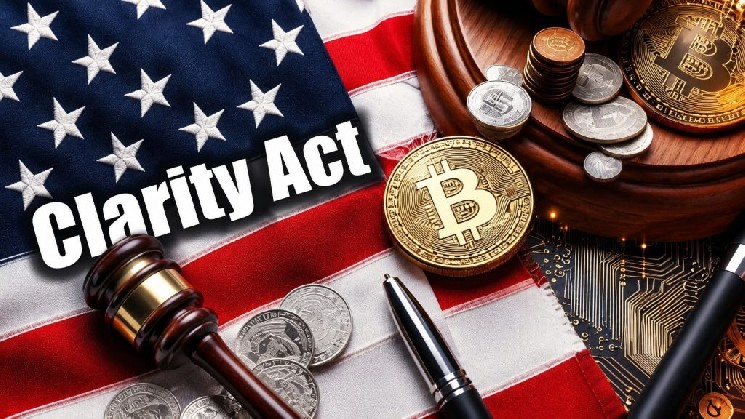
Uncertainty persists regarding cryptocurrency regulation, and there is a possibility of delay in passing the Clarity Act! Here are the details

The U.S. Senate's vote on the CLARITY Act, which aims to establish a legal framework for the crypto market, faces a potential delay. Priority on the Senate agenda is being given to a Russia sanctions bill and confirmations of federal officials, making a vote on the crypto bill after next week increasingly likely. Senate tradition of handling only one contentious bill at a time further complicates early consideration of the CLARITY Act. Key political disagreements persist, notably over provisions to restrict cryptocurrency trading by senior government officials and elected representatives, including potentially former President Donald Trump. A bipartisan consensus has not been reached. This uncertainty raises doubts about whether a vote can occur before the Senate's August recess. If disputes intensify, the bill's passage could be jeopardized not only for this year but potentially until 2026. Even if the Senate approves the bill, it would still require a revote in the House of Representatives and the President's signature to become law, potentially prolonging the establishment of a comprehensive regulatory framework long awaited by the crypto industry. The Clarity Act is considered crucial for clarifying which agencies will oversee digital assets, defining their legal status, and setting operational principles. Industry advocates argue its passage would boost institutional investor confidence and strengthen the U.S. position in the global digital asset market.

cryptonews.ruHá 1m

Uncertainty persists regarding cryptocurrency regulation, and there is a possibility of delay in passing the Clarity Act! Here are the details

cryptonews.ruHá 1m

SWIFT Shared Ledger Launches Live Pilot, How Will the 50-Year-Old Payment Network Reconstruct the Financial System?

SWIFT, a global financial messaging provider with a 50-year history, has launched a live pilot of a blockchain-based "shared ledger" in July 2026, involving 17 major banks. This marks a direct move by traditional finance to upgrade its core payment infrastructure using blockchain technology, transforming SWIFT's role from a messaging channel to a "value orchestration layer" for digital payments. The system is built on Hyperledger Besu (EVM-compatible) and integrates Chainlink's CCIP for cross-chain interoperability. It deepens the fusion of the ISO 20022 messaging standard with smart contracts to automate compliance (KYC/AML). The primary settlement medium in this network is "tokenized deposits"—digital representations of traditional bank deposits, not independent stablecoins—preserving the existing two-tier banking system. The move introduces "atomic settlement" (24/7, instant) but requires banks to adopt "pre-funding" models, increasing demands on liquidity management. It presents direct competitive pressure on native blockchain payment tokens (e.g., XRP) by offering an efficient, bank-backed alternative for cross-border settlement. Significant regulatory hurdles remain, including legal jurisdiction over cross-border digital assets, legal definitions of "settlement finality" for smart contracts, and balancing blockchain transparency with data privacy/localization laws. Technologies like zero-knowledge proofs may be needed to resolve privacy-compliance conflicts. Industry views are mixed: participating banks and SWIFT emphasize extending trusted, compliant finance into the digital realm with real-time efficiency, while crypto analysts warn of potential "liquidity backlash" as capital flows back to the traditional, now-tech-enhanced banking system. This pilot signifies that traditional finance and crypto are entering a phase of direct competition and fusion at the infrastructure level, likely leading to a future of interconnected, highly regulated financial networks rather than a fully decentralized system.

marsbitHá 11m

SWIFT Shared Ledger Launches Live Pilot, How Will the 50-Year-Old Payment Network Reconstruct the Financial System?

marsbitHá 11m

Trading

Spot
活动图片