Taper Landed: the Turning Point of The Cryptocurrency Market is Coming?

Huobi ResearchPublicado em 2022-02-18Última atualização em 2022-02-18

Resumo

As the Federal Reserve FOMC announced the launch of Taper after the meeting, the turning point of global liquidity growth has arrived.

Abstract:On November 4,as the Federal Reserve FOMC announced the launch of Taper after the meeting, the turning point of global liquidity growth has arrived. Taper means a diminishing marginal dollar liquidity,it may affect the price of Bitcoin. In addition, under normal circumstances, after the end of Taper, interest rate hikes will follow. Faced persistent inflation concerns, voices for accelerating Taper has become increasingly loud, which will have a bearing on bitcoin.

Author:William Lee, Huobi Research

Among the big names in the crypto community in 2021, a Twitter user named PlanB may be the most watched. This Dutch investor named PlanB created a Bitcoin price model based on S2F (Stock to Flow) and successfully predicted the Bitcoin price in the first three quarters of this year, stunned the market. Unfortunately, PlanB's model is likely to fail for the first time -it predicted bitcoin would reach at least 98,000 US dollars by the end of November. However, recent bitcoin price has fallen all the way to 57,000 US dollars, which is far from the predetermined target.
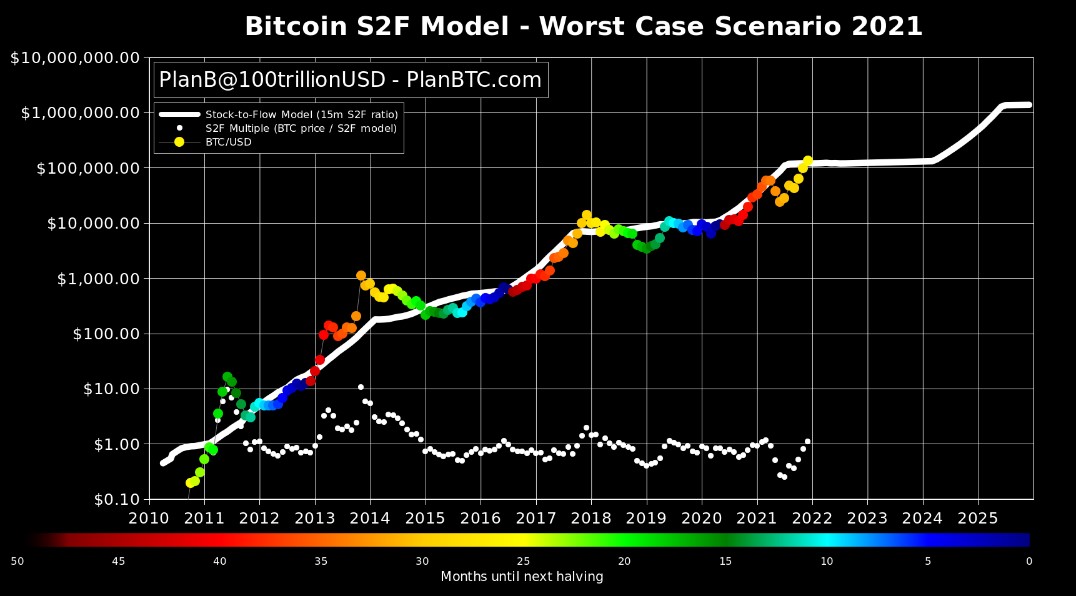
Figure 1. PlanB's Bitcoin S2F model

Sources:Tiwtter,Huobi Research

Why does the "victorious" Bitcoin S2F model suddenly fail? Because PlanB only considered the monthly SF ratio of Bitcoin and historical Bitcoin price data when constructing the model, but ignored the impact of external macro changes on the market.

As we all know, the background of the bitcoin price rise is the spread of COVID-19 around the world and the extremely loose monetary policies implemented by central banks to rescue the market. Due to the tremendous liquidity released by central banks to the market, many risky assets, including Bitcoin, have surged in the past year. However, on the 3rd of this month, as the Federal Reserve FOMC announced the launch of Taper after the meeting, the turning point of global liquidity growth has arrived.
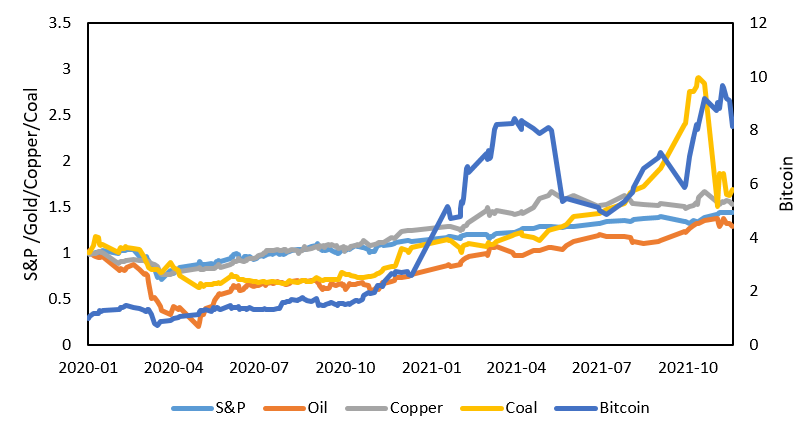
Figure 2. Changes in the prices of major global assets since 2020 (current price/initial price)

Sources:Wind,Huobi Research

So, what is Taper? Why should we pay attention to Taper?

When it comes to Taper, we must first understand what quantitative easing is. When the Federal Reserve launched quantitative easing in March last year, we discussed the difference between "interest rate cuts" and "quantitative easing"-cutting interest rates means lowering the "price of funds" and injecting liquidity into the market by controlling the borrowing costs of the market; and "quantitative easing" is to increase the "quantity of funds" and inject liquidity into banks through the continuous purchase of a large number of bonds, forcing banks to lend out even under conditions of zero interest rates, thereby increasing market liquidity. Therefore, quantitative easing is an unconventional policy that is forced to be implemented when interest rates cannot be lowered. The two main types of bonds purchased during the quantitative easing are Treasury and MBS. The more they purchase, the larger the Fed assets is.

We know that the original meaning of Taper is "gradual contraction". In the context of central bank monetary policy, "Taper" means "gradual reduction in quantitative easing." Therefore, Taper does not mean the end of quantitative easing ,or let alone tightening liquidity, rather, it means a gradual reduction in the scale of bond purchases in quantitative easing.

According to the minutes of this FOMC meeting, the Fed opened Taper in November, which signifies an increase in its holding by at least US$70 billion in US Treasury bonds and $35 billion in institution MBS this month, followed by a shrink of $10 billion in Treasury purchases and $5 billion MBS each month. A simple calculation, if you buy 15 billion dollars less each month, the total amount of $120 billion in assets purchased per month will be exhausted in 8 months. That is to say, putting an end in bond purchasing and quantitative easing in next June.
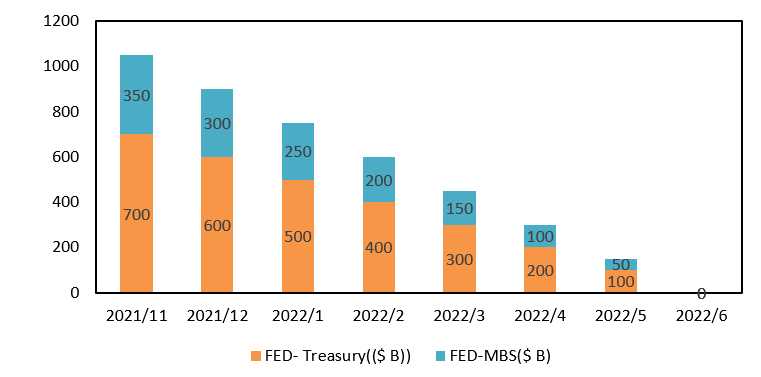
Figure 3. Forecast of the Fed's bond purchases during the Taper period

Sources: Huobi Reseach

So why should we pay attention to Taper? We know that Taper means a diminishing marginal dollar liquidity. While it does not change the expansion, or contraction, of liquidity itself, it may change the destination of fund flow or the degree of asset mismatch. Especially for Bitcoin, an extraordinarily risky asset, its sensitivity to changes in liquidity of dollars will be theoretically higher. (As we observed during March last year, due to the shortage of market liquidity, Bitcoin price dropped by nearly 50% in one day). Here we can recall the price trend of Bitcoin during the Fed's last round of Taper implementation.

As shown in the figure below, since the 2008 financial crisis, after nearly five years of quantitative easing, the Federal Reserve began to kick off the normalization of monetary policy to the market in 2013, and officially launched Taper. At that time, the overall process of Taper can be divided into 2 stages: 1) the price release stage from May 2013 to December 2013, and 2)the formal implementation stage from December 2013. The asset purchase scale was reduced from $85 billion to $75 billion per month. Since then, the scale of debt purchases has continued to decline until it completely withdrew from QE in October 2014. In order to eliminate the influence of quarterly factors on the Fed's balance sheet, we reflect the impact of Taper by calculating the year-on-year change in the size of the Fed's assets (note that Taper represents the deceleration of QE). From the figure below, we can clearly see that around the time when the Federal Reserve officially announced the launch of Taper in December, it was at the peak of Bitcoin's bull market in 2013. During the previous round of Taper, Bitcoin was trapped in a bear market.
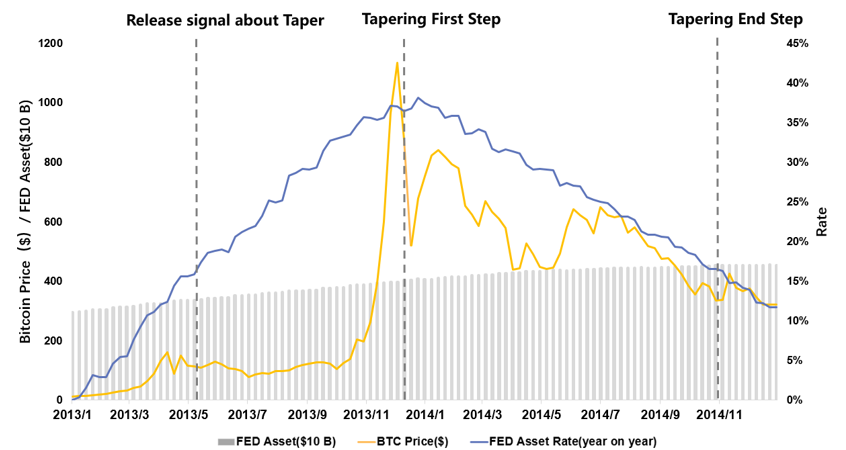
Figure 4. Bitcoin price movements during the last Round of Federal Reserve Taper Taper periods (2013-2014)

Sources: Wind,Huobi Reseach

So, what impact will this round of Taper have on the cryptocurrency market?

There are two special features: First, the starting point of this round is higher, but the speed of reduction is faster; Second, at the end of this round, the Fed's asset scale will be significantly higher than previous round. This has two implications: First, the market liquidity growth rate will slow down significantly, which means that it is difficult for various asset prices to rise wildly; Second, even if Taper ends, there will still be sufficient liquidity in the market. It is more likely that asset prices will continue to remain high.
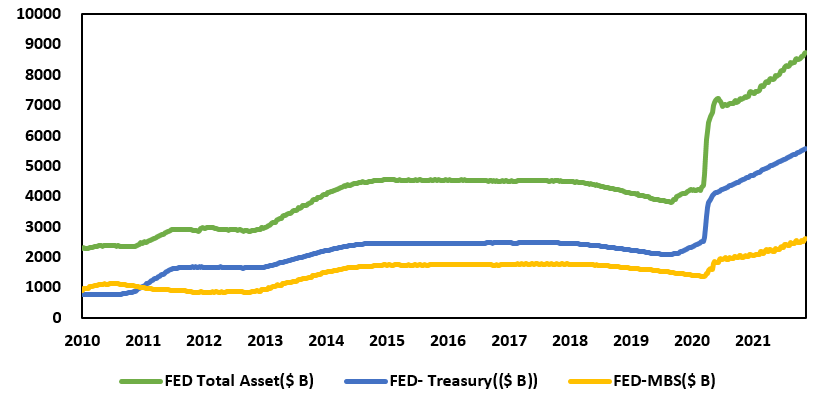
Figure 5. Changes in the size of FED assets

Sources:Wind,Huobi Research

However, story continues. According to regular operation of the Fed's monetary policy, after the end of Taper, interest rate hikes will follow, which means that liquidity will shrink, bringing about a huge impact on various risk assets.

First of all, we need to understand the Fed's monetary policy decision-making framework. According to the Federal Reserve Act, the goal of Federal Reserve monetary policy is to "maintain the growth of money and credit supply that echoes the long-term economic growth, so as to effectively 1) maximize employment, 2) price stability, and 3) moderate long-term economic growth." In order to achieve the above monetary policy goals, the Taylor Rule proposed by John B. Taylor in 1993 played an important role. The expression of Taylor's Rule is as follows:

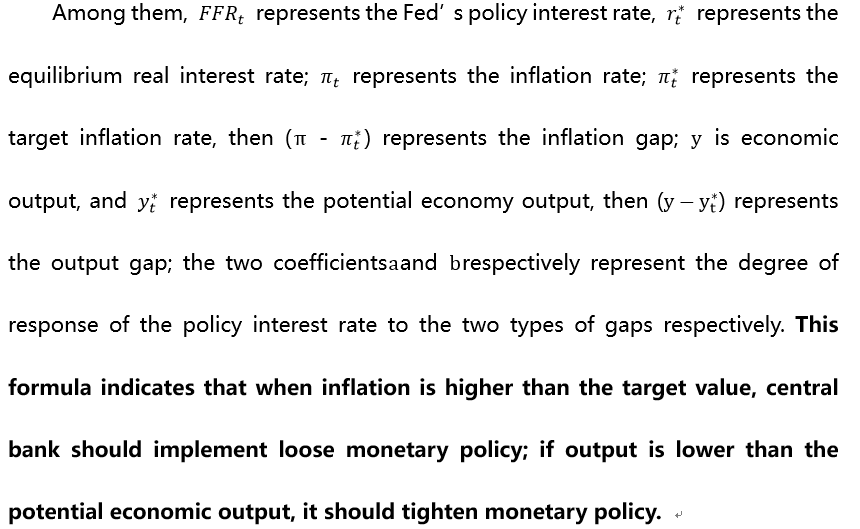
After 2014, based on the previous Taylor Rule, the Federal Reserve developed an optimal control policy so that the target interest rate of federal funds can minimize the deviation of the unemployment rate and inflation rate from the target; the latest monetary policy framework still does not diverge from the core logic of Taylor Rule.

Specifically, since 2012, the Federal Reserve has maintained a relatively stable long-term goal for eight years: consistently implementing the target of achieving 2% inflation in the long run, and reducing the expectation of long-term natural unemployment rate year by year responding to the constant restructure and adjustment of the labor market.

On August 27, 2020, the Federal Reserve introduced a new monetary policy framework in the "Long-term Goals and Monetary Policy Strategy Statement", which made major adjustments to specific targets for inflation and employment. For the first time, the Fed put forward the concept of an average inflation rate, that is, while emphasizing the long-term inflation expectations of 2%, it allows for a period of time to achieve an inflation rate moderately higher than 2%, which means the Fed’s tolerance for temporary high inflation improved. This is why, since the beginning of this year, inflation of the United States has set new highs frequently, but the Fed has not changed monetary policy; because inside of the Fed is still arguing whether inflation is "temporary" or not.
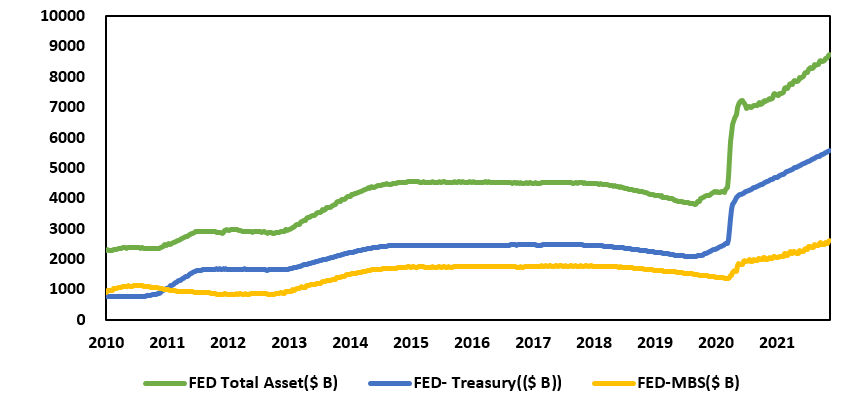
Figure 6. Changes in U.S. CPI since 2020

Sources:Wind,Huobi Research

However, since the summer of this year, inflation of the United States has remained above 4%. Confronted persistent inflation concerns, the Fed officially initiated Taper on November 4 , and announcing an end of QE by the end of next year. However, data released by the U.S. Department of Labor on November 10 illustrated that the CPI rose 6.2% year-on-year in October, reaching a 31-year high, which further aggravated the market’s concerns about inflation, voices for accelerating Taper has become increasingly loud. On November 19, a number of senior Federal Reserve officials hinted that they might speed up the Taper process. Speeding up Taper means speeding up the withdrawal of QE, which means that the turning point of liquidity will be advanced. Therefore, under the influence of market expectations, it is difficult for various high-risk assets, represented by Bitcoin, to continue to rise in the future, and even the possibility of further decline cannot be ruled out.


Leituras Relacionadas

CRCL 暴涨暴跌,COIN 跟着跳水:CLARITY Act 背后真正的利益战争

A recent draft of the CLARITY Act sparked market volatility, with Circle (CRCL) and Coinbase (COIN) stocks plunging. The core issue is Section 404 of the draft, which proposes prohibiting digital asset service providers from paying interest or rewards *solely* for holding payment stablecoins. The article argues this is not merely a technical debate over rewards, but a fundamental battle over the future role of stablecoins: Will they remain purely payment/transaction tools, or evolve into on-chain savings accounts that compete with bank deposits? US banks, fearing deposit outflow, have lobbied heavily for such restrictions. While Circle and Coinbase were both hit, their exposures differ. Circle's direct revenue primarily comes from reserve earnings, so the draft impacts its future growth narrative. Coinbase, however, relies heavily on USDC rewards and balances as part of its "Everything Exchange" platform strategy, making its growth engine more directly vulnerable. The analysis identifies three deeper layers often missed: 1) The political economy of preventing stablecoins from becoming savings substitutes. 2) The distinct impact on issuers (Circle) versus distributors/platforms (Coinbase). 3) The migration of yield demand to other tokenized securities (like MMFs) regulated under existing frameworks, as hinted in Section 505 of the same draft. In essence, three major battles are underway: banks defending their deposit base, Coinbase fighting for user entry and distribution rights, and Wall Street aiming to control the compliant path for tokenization. While a short-term headwind for crypto-native platforms, the article suggests this regulatory push could force the industry to build more sustainable value in real payment and B2B infrastructure.

marsbitHá 11m

CRCL 暴涨暴跌,COIN 跟着跳水:CLARITY Act 背后真正的利益战争

marsbitHá 11m

Tom Lee充值信仰:加密春天已至,ETH会涨到25万美元

Tom Lee, Chairman of BitMine (NYSE: BMNR), asserts that "Crypto Spring" has arrived and predicts ETH could reach $250,000. In his speech at "Proof of Talk 2026," he outlines five macro catalysts: the end of the Iran war reducing oil-price inflation, the likely passing of pro-crypto US legislation (the Clarity Act), a supportive White House, a crypto-friendly new Fed Chair (Kevin Warsh), and strong demographic-driven equity market growth. Lee argues that two key trends will drive ETH's value: Agentic AI/robotics, which will require blockchain for control and payments, and the massive tokenization of real-world assets (potentially a $300 trillion market). He believes Ethereum is poised to become a future monetary unit, with its price closely linked to software stocks that are already benefiting from AI. He notes the evolving role of the Ethereum Foundation, whose ETH holdings have shrunk to 0.1% of supply. He positions public treasury companies like BitMine—which holds 4.47% of ETH's circulating supply—as the new key ecosystem funders and validators. Finally, Lee promotes BitMine as a leveraged play on ETH's rise. He highlights BitMine's investments in AI/identity (via Eightco/ORBS), its massive ETH staking operation generating ~$1M daily, its stake in content creator MrBeast, and its upcoming inclusion in the Russell 1000 index, which could drive significant institutional buying. He concludes that if ETH reaches $25,000, BitMine's stock could rise dramatically from its current ~$18 price.

Odaily星球日报Há 28m

Tom Lee充值信仰:加密春天已至,ETH会涨到25万美元

Odaily星球日报Há 28m

Trading

Spot
Futuros

Artigos em Destaque

O que é BITCOIN

Compreender o HarryPotterObamaSonic10Inu (ERC-20) e a Sua Posição no Espaço Cripto Nos últimos anos, o mercado de criptomoedas assistiu a um aumento na popularidade das moedas meme, cativando não apenas os traders, mas também aqueles que procuram envolvimento comunitário e valor de entretenimento. Entre estes tokens únicos está o HarryPotterObamaSonic10Inu (ERC-20), um projeto intrigante que mistura referências culturais no tecido das criptomoedas. Este artigo explora os principais aspetos do HarryPotterObamaSonic10Inu, examinando os seus mecanismos, a sua ética orientada pela comunidade e o seu envolvimento com o vasto panorama cripto. O que é o HarryPotterObamaSonic10Inu (ERC-20)? Como o nome sugere, o HarryPotterObamaSonic10Inu é uma moeda meme construída na blockchain Ethereum, classificada sob o padrão ERC-20. Ao contrário das criptomoedas tradicionais, que podem enfatizar a utilidade prática ou o potencial de investimento, este token prospera no valor de entretenimento e na força da sua comunidade. O projeto visa promover um ambiente onde utilizadores envolvidos possam reunir-se, partilhar ideias e participar em atividades inspiradas por diversos fenómenos culturais. Uma característica notável do HarryPotterObamaSonic10Inu é a zero taxa sobre transações. Este elemento atraente visa encorajar a negociação e o envolvimento da comunidade, isento de encargos adicionais que podem desencorajar os traders de pequena escala. A oferta total da moeda está fixada em mil milhões de tokens, uma cifra que marca a sua intenção de manter uma circulação substancial dentro da comunidade. Criador do HarryPotterObamaSonic10Inu (ERC-20) As origens do HarryPotterObamaSonic10Inu estão um pouco envoltas em mistério; os detalhes sobre o criador permanecem desconhecidos. O desenvolvimento deste token carece de uma equipa identificável ou de um plano explícito, o que não é raro no setor das moedas meme. Em vez disso, o projeto surgiu de forma orgânica, com o seu progresso a depender fortemente do entusiasmo e da participação da sua comunidade. Investidores do HarryPotterObamaSonic10Inu (ERC-20) No que diz respeito a investimentos externos e apoios, o HarryPotterObamaSonic10Inu também permanece ambíguo. O token não lista quaisquer fundações de investimento conhecidas ou apoio organizacional significativo. Em vez disso, o “sangue vital” do projeto é a sua comunidade de base, que informa o seu crescimento e sustentabilidade através da ação coletiva e do envolvimento no espaço cripto. Como Funciona o HarryPotterObamaSonic10Inu (ERC-20)? Como uma moeda meme, o HarryPotterObamaSonic10Inu opera principalmente fora dos quadros tradicionais que muitas vezes governam o valor dos ativos. Existem vários aspetos distintivos que definem como o projeto funciona: Transações Sem Taxas: Sem taxas sobre transações, os utilizadores podem comprar e vender o token livremente, sem a preocupação de custos ocultos. Envolvimento da Comunidade: O projeto prospera na interação da comunidade, aproveitando plataformas de redes sociais para criar entusiasmo e facilitar a participação. Discussões, partilha de conteúdo e envolvimento são elementos cruciais que ajudam a expandir o seu alcance e a fomentar a lealdade entre os apoiantes. Sem Utilidade Prática: Deve ser notado que o HarryPotterObamaSonic10Inu não oferece utilidade concreta dentro do ecossistema financeiro. Em vez disso, é classificado como um token principalmente para entretenimento e atividades comunitárias. Referência Cultural: O token incorpora de forma inteligente elementos da cultura popular para atrair interesse, conectando-se tanto com entusiastas de memes como com seguidores de criptomoedas. HarryPotterObamaSonic10Inu exemplifica como as moedas meme operam de forma diferente de projetos de criptomoedas mais tradicionais, entrando no mercado como construções sociais inovadoras em vez de ativos utilitários. Linha do Tempo do HarryPotterObamaSonic10Inu (ERC-20) A história do HarryPotterObamaSonic10Inu é marcada por vários marcos notáveis: Criação: O token surgiu de um meme viral, capturando a imaginação de muitos entusiastas de criptomoedas. Datas específicas de criação não estão disponíveis, sublinhando a sua ascensão orgânica. Listagem em Exchanges: O HarryPotterObamaSonic10Inu conseguiu entrar em várias exchanges, permitindo um acesso e negociação mais fáceis pela comunidade. Iniciativas de Envolvimento da Comunidade: Atividades contínuas direcionadas a melhorar a interação comunitária, incluindo concursos, campanhas em redes sociais e geração de conteúdo por fãs e defensores. Planos de Expansão Futura: O roteiro do projeto inclui o lançamento de uma coleção de NFTs, mercadorias e um site de eCommerce relacionado aos seus temas culturais, envolvendo ainda mais a comunidade e tentando adicionar mais dimensões ao seu ecossistema. Pontos-Chave sobre o HarryPotterObamaSonic10Inu (ERC-20) Natureza Orientada pela Comunidade: O projeto prioriza a contribuição coletiva e a criatividade, assegurando que o envolvimento dos utilizadores está na vanguarda do seu desenvolvimento. Classificação como Moeda Meme: Representa o epítome da criptomoeda baseada em entretenimento, destacando-se dos veículos de investimento tradicionais. Sem Afiliação Direta com o Bitcoin: Apesar da semelhança no nome do ticker, o HarryPotterObamaSonic10Inu é distinto e não tem qualquer relação com o Bitcoin ou outras criptomoedas estabelecidas. Foco na Colaboração: O HarryPotterObamaSonic10Inu é projetado para criar um espaço de colaboração e partilha de histórias entre os seus detentores, proporcionando uma via para a criatividade e o fortalecimento da comunidade. Perspectivas Futuras: A ambição de expandir além da sua premissa inicial para NFTs e mercadorias delineia um caminho para o projeto potencialmente entrar em avenidas mais mainstream dentro da cultura digital. À medida que as moedas meme continuam a capturar a imaginação da comunidade cripto, HarryPotterObamaSonic10Inu (ERC-20) destaca-se devido aos seus laços culturais e abordagem centrada na comunidade. Embora possa não se encaixar no molde típico de um token orientado para utilidade, a sua essência reside na alegria e camaradagem fomentadas entre os seus apoiantes, destacando a natureza em evolução das criptomoedas em uma era cada vez mais digital. À medida que o projeto continua a desenvolver-se, será importante observar como as dinâmicas comunitárias influenciam a sua trajetória no panorama em constante mudança da tecnologia blockchain.

1.6k Visualizações TotaisPublicado em {updateTime}Atualizado em 2024.12.03

O que é BITCOIN

Como comprar BTC

Bem-vindo à HTX.com!Tornámos a compra de Bitcoin (BTC) simples e conveniente.Segue o nosso guia passo a passo para iniciar a tua jornada no mundo das criptos.Passo 1: cria a tua conta HTXUtiliza o teu e-mail ou número de telefone para te inscreveres numa conta gratuita na HTX.Desfruta de um processo de inscrição sem complicações e desbloqueia todas as funcionalidades.Obter a minha contaPasso 2: vai para Comprar Cripto e escolhe o teu método de pagamentoCartão de crédito/débito: usa o teu visa ou mastercard para comprar Bitcoin (BTC) instantaneamente.Saldo: usa os fundos da tua conta HTX para transacionar sem problemas.Terceiros: adicionamos métodos de pagamento populares, como Google Pay e Apple Pay, para aumentar a conveniência.P2P: transaciona diretamente com outros utilizadores na HTX.Mercado de balcão (OTC): oferecemos serviços personalizados e taxas de câmbio competitivas para os traders.Passo 3: armazena teu Bitcoin (BTC)Depois de comprar o teu Bitcoin (BTC), armazena-o na tua conta HTX.Alternativamente, podes enviá-lo para outro lugar através de transferência blockchain ou usá-lo para transacionar outras criptomoedas.Passo 4: transaciona Bitcoin (BTC)Transaciona facilmente Bitcoin (BTC) no mercado à vista da HTX.Acede simplesmente à tua conta, seleciona o teu par de trading, executa as tuas transações e monitoriza em tempo real.Oferecemos uma experiência de fácil utilização tanto para principiantes como para traders experientes.

4.1k Visualizações TotaisPublicado em {updateTime}Atualizado em 2026.06.02

Como comprar BTC

O que é $BITCOIN

OURO DIGITAL ($BITCOIN): Uma Análise Abrangente Introdução ao OURO DIGITAL ($BITCOIN) OURO DIGITAL ($BITCOIN) é um projeto baseado em blockchain que opera na rede Solana, com o objetivo de combinar as características dos metais preciosos tradicionais com a inovação das tecnologias descentralizadas. Embora partilhe um nome com o Bitcoin, frequentemente referido como “ouro digital” devido à sua percepção como uma reserva de valor, o OURO DIGITAL é um token separado projetado para criar um ecossistema único dentro da paisagem Web3. O seu objetivo é posicionar-se como um ativo digital alternativo viável, embora os detalhes sobre as suas aplicações e funcionalidades ainda estejam em desenvolvimento. O que é o OURO DIGITAL ($BITCOIN)? OURO DIGITAL ($BITCOIN) é um token de criptomoeda explicitamente projetado para uso na blockchain Solana. Em contraste com o Bitcoin, que fornece um papel amplamente reconhecido como armazenamento de valor, este token parece focar em aplicações e características mais amplas. Aspectos notáveis incluem: Infraestrutura Blockchain: O token é construído na blockchain Solana, conhecida pela sua capacidade de lidar com transações de alta velocidade e baixo custo. Dinâmicas de Oferta: O OURO DIGITAL tem um fornecimento máximo limitado a 100 quatrilhões de tokens (100P $BITCOIN), embora os detalhes sobre o seu fornecimento circulante ainda não tenham sido divulgados. Utilidade: Embora as funcionalidades precisas não estejam explicitamente delineadas, existem indicações de que o token poderia ser utilizado para várias aplicações, potencialmente envolvendo aplicações descentralizadas (dApps) ou estratégias de tokenização de ativos. Quem é o Criador do OURO DIGITAL ($BITCOIN)? Neste momento, a identidade dos criadores e da equipa de desenvolvimento por trás do OURO DIGITAL ($BITCOIN) permanece desconhecida. Esta situação é típica entre muitos projetos inovadores no espaço da blockchain, particularmente aqueles alinhados com finanças descentralizadas e fenómenos de moedas meme. Embora tal anonimato possa fomentar uma cultura orientada pela comunidade, intensifica as preocupações sobre governança e responsabilidade. Quem são os Investidores do OURO DIGITAL ($BITCOIN)? As informações disponíveis indicam que o OURO DIGITAL ($BITCOIN) não tem apoiantes institucionais conhecidos ou investimentos proeminentes de capital de risco. O projeto parece operar num modelo peer-to-peer focado no apoio e adoção da comunidade, em vez de rotas de financiamento tradicionais. A sua atividade e liquidez estão principalmente situadas em exchanges descentralizadas (DEXs), como a PumpSwap, em vez de plataformas de negociação centralizadas estabelecidas, destacando ainda mais a sua abordagem de base. Como Funciona o OURO DIGITAL ($BITCOIN) A mecânica operacional do OURO DIGITAL ($BITCOIN) pode ser elaborada com base no seu design de blockchain e nas características da rede: Mecanismo de Consenso: Ao aproveitar o exclusivo proof-of-history (PoH) da Solana combinado com um modelo de proof-of-stake (PoS), o projeto assegura uma validação eficiente das transações, contribuindo para o alto desempenho da rede. Tokenomics: Embora mecanismos deflacionários específicos não tenham sido extensivamente detalhados, o vasto fornecimento máximo de tokens implica que pode atender a microtransações ou casos de uso de nicho que ainda estão por definir. Interoperabilidade: Existe o potencial para integração com o ecossistema mais amplo da Solana, incluindo várias plataformas de finanças descentralizadas (DeFi). No entanto, os detalhes sobre integrações específicas permanecem não especificados. Cronologia de Eventos Chave Aqui está uma cronologia que destaca marcos significativos relacionados ao OURO DIGITAL ($BITCOIN): 2023: O lançamento inicial do token ocorre na blockchain Solana, marcado pelo seu endereço de contrato. 2024: O OURO DIGITAL ganha visibilidade ao tornar-se disponível para negociação em exchanges descentralizadas como a PumpSwap, permitindo que os utilizadores o negociem contra SOL. 2025: O projeto testemunha atividade de negociação esporádica e potencial interesse em envolvimentos liderados pela comunidade, embora não tenham sido documentadas parcerias ou avanços técnicos notáveis até ao momento. Análise Crítica Forças Escalabilidade: A infraestrutura subjacente da Solana suporta altos volumes de transações, o que pode aumentar a utilidade do $BITCOIN em vários cenários de transação. Acessibilidade: O potencial preço de negociação baixo por token pode atrair investidores de retalho, facilitando uma participação mais ampla devido a oportunidades de propriedade fracionada. Riscos Falta de Transparência: A ausência de apoiantes, desenvolvedores ou um processo de auditoria publicamente conhecidos pode gerar ceticismo em relação à sustentabilidade e confiabilidade do projeto. Volatilidade do Mercado: A atividade de negociação depende fortemente do comportamento especulativo, o que pode resultar em volatilidade significativa dos preços e incerteza para os investidores. Conclusão O OURO DIGITAL ($BITCOIN) surge como um projeto intrigante, mas ambíguo, dentro do ecossistema em rápida evolução da Solana. Embora tente aproveitar a narrativa do “ouro digital”, a sua divergência do papel estabelecido do Bitcoin como reserva de valor sublinha a necessidade de uma diferenciação mais clara da sua utilidade pretendida e estrutura de governança. A aceitação e adoção futuras dependerão provavelmente da abordagem da atual opacidade e da definição mais explícita das suas estratégias operacionais e económicas. Nota: Este relatório abrange informações sintetizadas disponíveis até outubro de 2023, e desenvolvimentos podem ter ocorrido além do período de pesquisa.

92 Visualizações TotaisPublicado em {updateTime}Atualizado em 2025.05.13

O que é $BITCOIN

Discussões

Bem-vindo à Comunidade HTX. Aqui, pode manter-se informado sobre os mais recentes desenvolvimentos da plataforma e obter acesso a análises profissionais de mercado. As opiniões dos utilizadores sobre o preço de BTC (BTC) são apresentadas abaixo.

活动图片