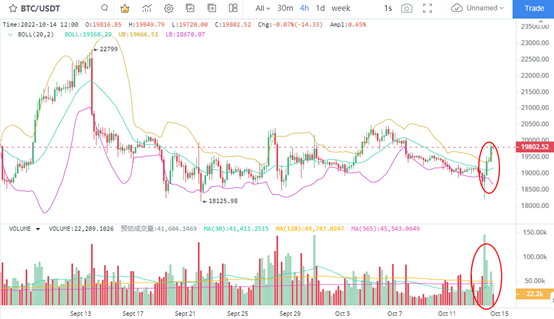
1. BTC rebounded slightly
BTC's 4-hour K chart shows that the price is in a short-term rebound state. After the BTC hit the minimum of 18190 dollars during the continuous decline, a technical rebound occurred soon. The rebound speed is very fast. BTC has returned to more than 19000 dollars, and it is currently operating around 19802 dollars. This shows that although BTC has a weak trend, it still operates within the range. The limited volume of BTC in the rebound stage also indicates that the possibility of market strength is not very high.
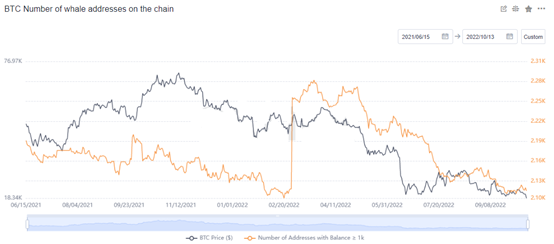
2. BTC is still issuing coins
From the perspective of the main players' coin holding direction, the number of addresses of whale accounts has not changed much recently, and they are still operating at a low level after continuous decline. The data on October 13 showed that the number of megawhales remained at 2115, the lowest since March 21. On March 21, there were 2282 addresses of the whale with more than 1000 BTCs, which is still reduced by 167 to 167000 BTCs. Therefore, BTC is currently in the low adjustment stage, and the main force has not yet shown signs of increasing its shareholding.
On the news side, the US inflation rate, according to the data released by the US Department of Labor on October 13, the US consumer price index (CPI) in September this year increased by 8.2% year-on-year, 0.4% higher than that in August, higher than the expectations of US economists. The core inflation rate in the United States reached the highest growth rate in 40 years. The sharp rise of inflation rate shows that the five interest rate hikes by the Federal Reserve this year have little effect on easing inflation pressure. Therefore, the expectation of interest rate increase is still strong, the expectation of US dollar rise and BTC callback still exists, and the current rebound of BTC may not last too long.
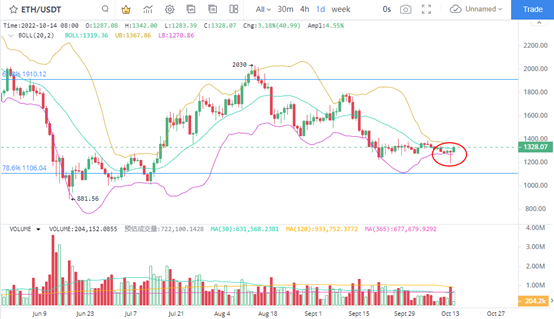
3. ETH Bollinger Line starts to expand
In terms of the daily K line, ETH prices and BTC rebounded at the bottom simultaneously, and prices completed a reverse pattern in the short term. During the bottoming period, ETH reached the lowest level of $1190. After the turnover rebounded in a short time, the turnover rate of ETH was limited. Prices are still fluctuating in the range. It is expected that ETH has a high upward space, but the price recovery needs the support of the overall market strength. In particular, the successful bottoming of BTC can further promote the ETH price.
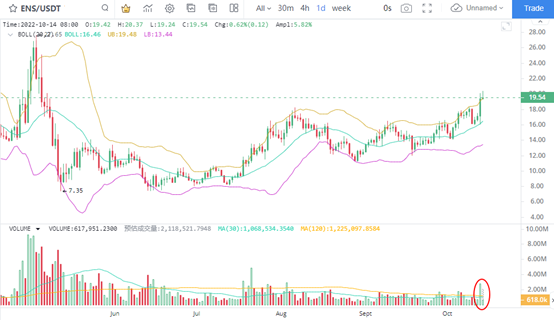
4. ENS Strong Breakthrough
The price of ENS increased to 18.2 ¥ within 24 hours, which was the currency with the highest increase among the top 100 currencies with market value. In terms of trading volume, the trading volume corresponding to ENS's daily K line was effectively enlarged, more than 5 times that of the previous day, so the daily K line closed up 23.8%. In fact, during the period when the price was in a clear recovery state, the cumulative increase of ENS since the bottom reached in June reached 135%. It is expected that the price can still challenge the previous high of $27, so holding the currency can continue to gain gains.
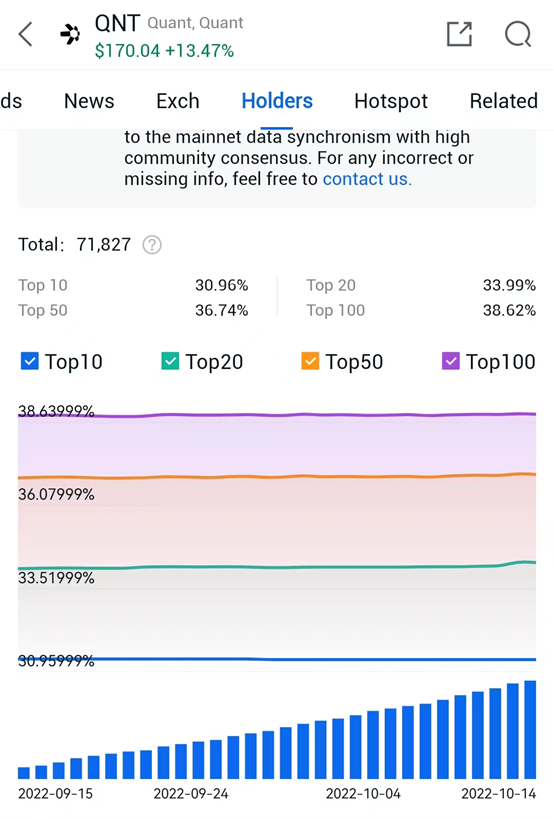
5. QNT is steadily rising
QNT's recent seven day increase has expanded to 23%, and prices remain strong. From the perspective of the number of coins held, the main players within the first 100 coins held did not show signs of continuous position reduction, indicating that the price rising trend of QNT may continue. Although the price rebounded from $40 to a maximum of $171, with a cumulative increase of 327%, it is still the stage of accelerated growth of QNT.